10 Easy Steps to Clean a Black Kitchen Sink
Many people struggle with keeping their black kitchen sinks looking sleek and spotless. It’s easy for water spots, soap scum, and stains to make them look dull and dirty fast. But don’t worry—you’re not alone, and cleaning your sink doesn’t have to be a hassle.
To clean your black kitchen sink easily, start by gathering soft sponges and mild cleaners like dish soap or a vinegar solution. Spray the sink to remove water spots and soap scum, then gently scrub in circular motions. Rinse thoroughly, dry with a microfiber cloth, and spot-treat stains with a baking soda paste.
Protect the finish by sealing it and regularly maintaining it with gentle products. Keep your sink looking sleek by following these simple steps—more tips await if you continue.
Key Takeaways
- Gather soft cleaning tools, mild soap, vinegar, baking soda, and a brush before starting for efficient cleaning.
- Spray the sink with a vinegar-water solution, let it sit, then gently scrub to remove water spots and soap scum.
- Use a baking soda paste on stubborn stains, scrub gently, then rinse thoroughly and dry with a microfiber cloth.
- Apply a specialized black sink cleaner or sealant to protect the finish and boost shine.
- Regularly wipe and dry the sink after use to prevent residue buildup and keep it looking glossy and new.
Why Black Kitchen Sinks Require Special Care
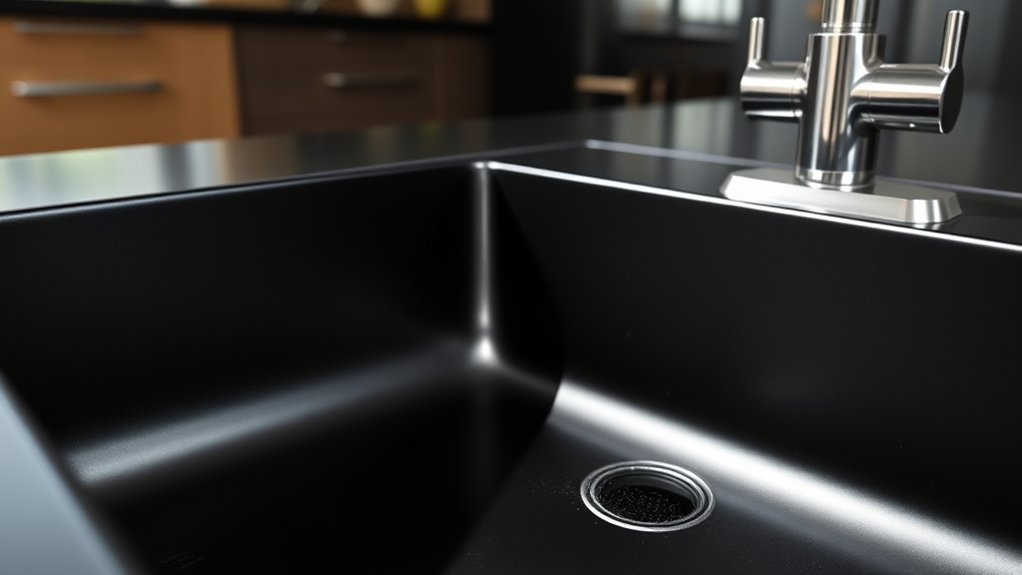
Black kitchen sinks require special care because their dark surface shows water spots, soap scum, and fingerprints more prominently than lighter colors. The black finish, while sleek and modern, demands regular attention to keep it looking good.
Black kitchen sinks need gentle cleaning to maintain their sleek, modern look and prevent water spots and fingerprints from standing out.
Because of surface durability concerns, harsh abrasives or strong chemicals can scratch or dull the finish, making the sink look worn over time. You need to be gentle during cleaning to preserve the surface’s integrity.
Even minor scratches can become more noticeable against the dark background, so avoid steel wool or rough scrubbers. Proper care helps prevent staining and keeps the black finish looking glossy and new.
By understanding that the surface durability depends on gentle, consistent cleaning, you can better protect your sink’s appearance. This extra attention helps your sink stay stylish without sacrificing its longevity.
In the end, a little extra care ensures your sink remains a durable and attractive centerpiece in your kitchen.
What Supplies Do You Need to Clean a Black Sink
To effectively clean your black sink, gather a few essential supplies that are gentle on the finish yet effective at removing water spots and grime. Start with a soft sponge or microfiber cloth to avoid scratching the surface, which is important for maintaining your sink’s sleek look.
You’ll also need a mild dish soap or a gentle cleaner compatible with your sink’s material. An old toothbrush or small brush is handy for cleaning around sink accessories and hard-to-reach corners.
For tougher stains or soap scum, consider using a non-abrasive cleaner or a baking soda paste. To keep your kitchen decor looking polished, avoid harsh chemicals or abrasive scrubbers.
A soft towel or microfiber cloth is perfect for drying and polishing the surface afterward. These supplies will help you clean effectively while preserving the beauty and integrity of your black sink.
How to Remove Water Spots and Soap Scum From Your Sink
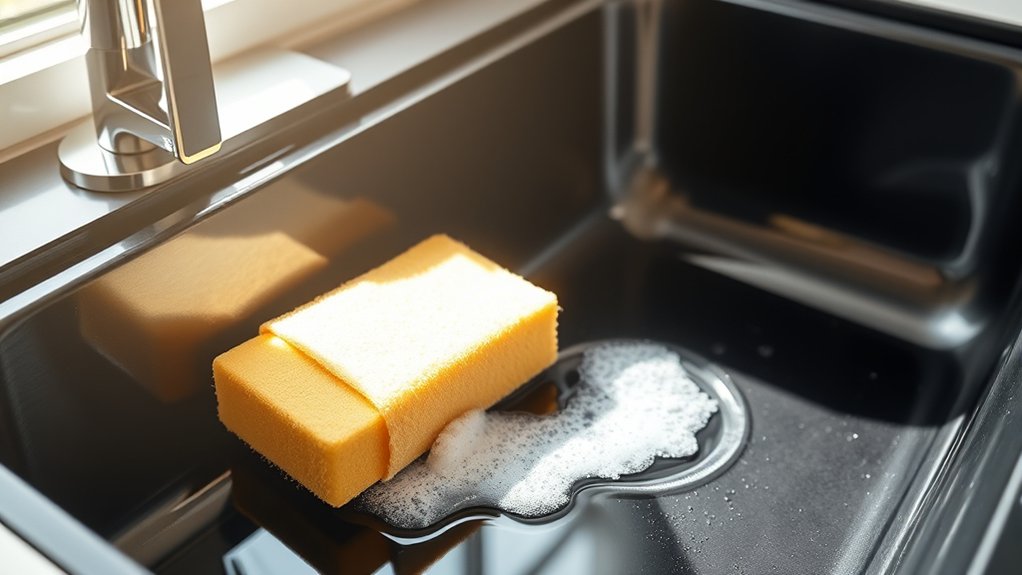
After gathering your supplies, it’s time to tackle water spots and soap scum that can dull your sink’s sleek appearance. Start by spraying the sink with a mixture of equal parts white vinegar and water. Let it sit for a few minutes to loosen water stains and soap scum buildup.
Use a soft cloth or non-abrasive sponge to scrub gently, paying attention to stubborn spots. Rinse thoroughly with warm water and dry with a microfiber cloth to prevent new water spots. To reduce future soap scum, wipe down the sink after each use and avoid leaving soap residue behind.
Regular cleaning with vinegar helps prevent soap scum buildup and keeps water spots at bay. For tough stains, a paste of baking soda and water can boost your cleaning power. Consistent maintenance will keep your black sink looking pristine and free of water spots and soap scum.
Choosing the Best Cleaning Products for Black Sinks
Choosing the right cleaning products is key to keeping your sink’s sleek, dark finish looking great without causing damage. For black sinks, go for gentle, non-abrasive cleaners that help maintain your kitchen’s style. Harsh chemicals can scratch or dull the surface, so pick pH-balanced or specially formulated black sink cleaners.
Regular cleaning is important to prevent stains and buildup, so make it part of your routine to keep your sink looking pristine. Here’s a quick guide to some effective products:
| Product Type | Recommended Use | Benefits |
|---|---|---|
| Mild Dish Soap | Daily cleaning | Gentle yet effective |
| Baking Soda Paste | Stubborn stains, scrubbing | Natural, non-abrasive |
| Glass Cleaner | Shine and streak removal | Boosts gloss, quick drying |
| Specialty Black Sink Cleaner | Deep cleaning, maintenance | Preserves color, protects surface |
Stick with these products and stay consistent with your cleaning schedule. That way, your black sink will stay flawless and your kitchen will look modern and inviting.
Step-by-Step: How to Scrub and Wash Your Black Sink
Sure! Here’s the modified version with a more conversational tone:
—
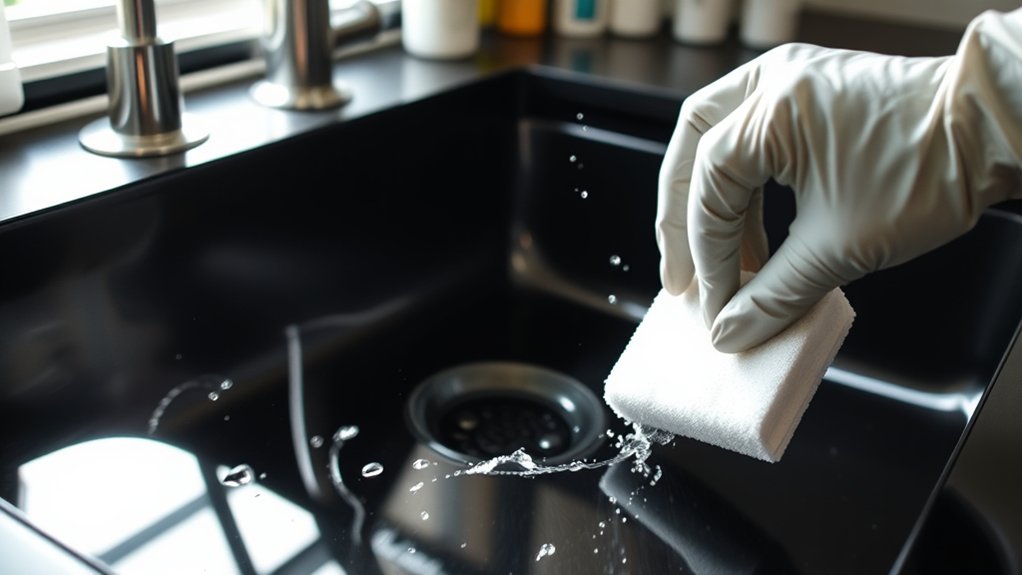
So, you’re ready to give your black sink a good scrub and wash? First things first, gather up all your cleaning supplies and pick out the right tools. You want to make sure you have everything you need so the process goes smoothly.
Once you’ve got your supplies, start scrubbing gently but thoroughly. Use effective techniques to tackle those stubborn stains and grime, but be careful not to scratch the surface. It’s all about finding the right balance.
Taking a systematic approach will really pay off. Work your way around the sink, making sure to cover every spot. Before you know it, your sink will be spotless and looking almost brand new!
Preparing Cleaning Supplies
Before you start scrubbing your black sink, gather all the cleaning supplies you’ll need. This step is essential to avoid interruptions and guarantee an effective clean. Remember, some cleaning myths suggest using harsh chemicals, but gentle solutions work best to preserve the sink’s finish.
First, pick a mild dish soap or a non-abrasive cleaner. Second, grab soft cloths or sponges—avoid abrasive scrubbers that could scratch. Third, collect sink accessories like a toothbrush for tight spots and a spray bottle for targeted cleaning.
Having these supplies ready helps you stay organized and efficient. Proper preparation ensures you won’t miss any spots and keeps your black sink looking sleek, avoiding damage from improper cleaning tools or harmful products.
Effective Scrubbing Techniques
Once you’ve gathered your supplies, it’s time to start scrubbing your black sink effectively. Use the right cleaning tools, like a soft sponge or non-abrasive scrub brush, to avoid scratching the surface.
Apply a gentle, non-abrasive cleaner or a mixture of baking soda and water to tackle grime and stains. Focus on areas with buildup, using circular motions to lift dirt without damaging the finish.
Be mindful of color maintenance; avoid harsh chemicals that can dull or discolor your black sink. Rinse thoroughly with warm water to remove loosened debris.
For stubborn spots, let the cleaner sit a few minutes before scrubbing again. Proper technique guarantees your sink stays sleek, shiny, and free from scratches, preserving its elegant appearance.
How to Remove Tough Stains and Residue Effectively
When faced with stubborn stains and residue in your black kitchen sink, tackling them promptly can prevent permanent damage and keep your sink looking pristine. To effectively remove black stains and residue, follow these steps:
- Apply a paste of baking soda and water directly to the stain. Let it sit for 15-20 minutes to loosen residues.
- Use a soft brush or sponge to scrub gently in circular motions, focusing on areas with residue buildup. This helps remove residue without scratching your sink.
- Rinse thoroughly with hot water, then wipe dry with a microfiber cloth. For persistent black stains, repeat the process or add a small amount of hydrogen peroxide to the baking soda paste for extra stain-fighting power.
These techniques help lift tough stains and residue, restoring your sink’s sleek look while preventing further damage.
How to Rinse and Dry for a Sparkling Finish
Have you ever wondered how to make your black kitchen sink truly shine? After cleaning and stain removal, rinsing and drying are key. Use a soft cloth or microfiber towel to remove excess water and prevent water spots. Rinsing with warm water washes away any remaining residues, guaranteeing your sink looks spotless. Dry thoroughly to achieve a sparkling finish and avoid streaks.
| Cleaning Tools | Purpose |
|---|---|
| Microfiber towel | Drying and polishing |
| Soft sponge | Gentle rinsing |
| Squeegee | Removing water efficiently |
Focus on gentle strokes when drying to avoid scratches. For stain removal, make sure all cleaning tools are clean to prevent re-staining. Rinsing and drying properly leaves your black sink with a smooth, shiny surface, making it look new.
This simple step boosts the overall cleanliness and gives your kitchen that polished, sparkling appeal.
How to Seal and Protect Your Black Sink’s Shine
To keep your black sink shining, it’s important to apply a protective sealant regularly. Proper sealing helps prevent stains, scratches, and water spots, keeping your sink looking new.
Regular sealing preserves your black sink’s shine and protects against stains and scratches.
Start by choosing a high-quality sealant designed specifically for sinks. Then, follow these easy sealing steps:
Clean thoroughly: Make sure your sink is spotless and dry before applying the sealant. Any dirt or moisture can affect the sealant’s effectiveness.
Apply evenly: Use a soft cloth or brush to spread the sealant smoothly across the surface. Pay extra attention to edges and corners for complete coverage.
Allow curing time: Let the sealant sit for the recommended period, usually 24 hours, so it can form a durable protective layer.
Regular sealing keeps your black sink sleek and protected from daily wear. Incorporate these steps into your routine to maintain its shine and beautiful appearance for years to come.
Tips to Prevent Water Spots and Dirt Buildup
Want to keep your sink looking its best? Just make a habit of wiping it down regularly. It’s a simple trick to prevent those annoying water spots and dirt from piling up.
And don’t forget to choose the right cleaning products. Using the wrong ones can leave streaks or even damage the surface, so it’s worth picking something gentle yet effective. After cleaning, always give the sink a quick dry with a soft cloth—this keeps it shiny and spotless.
Follow these easy steps, and you’ll have a sleek, clean sink with way less effort!
Regular Wiping Prevents Spots
Regular wiping is essential for keeping your black kitchen sink looking spotless. Consistent cleaning prevents water spots and dirt buildup, which can diminish its color contrast and appeal.
To keep it sleek, wipe down the sink after each use with a soft cloth to remove moisture.
Use a microfiber cloth for a streak-free shine that enhances the sink’s depth of color.
Don’t forget to focus on corners and edges to prevent residue from settling, keeping the surface even and vibrant.
Regular wiping not only preserves the rich black finish but also helps avoid dull spots that can mar its look.
Use Proper Cleaning Products
Choosing the right cleaning products is essential to prevent water spots and dirt buildup on your black kitchen sink. Using the proper cleaners makes your maintenance routine more effective and easier.
Look for gentle, non-abrasive cleaning hacks that are specifically formulated for dark surfaces. This helps avoid scratches and dullness on your sink.
Avoid harsh chemicals like bleach or ammonia, which can damage the finish or cause discoloration. Instead, opt for mild dish soap, vinegar, or specialized black surface cleaners.
These products help maintain the sink’s sleek look and prevent water spots from forming. Consistently using appropriate cleaning items is a simple tip to keep your sink looking pristine longer.
It also reduces the need for intensive scrubbing later. Proper product selection guarantees your sink stays spotless and well-preserved over time.
Dry Surfaces After Use
One of the simplest yet most effective ways to keep your black kitchen sink looking pristine is to dry it thoroughly after each use. This helps prevent water spots and mineral buildup, so you won’t need to clean as often.
To keep your sink spotless, use a soft cloth or microfiber towel to wipe down all surfaces right after you use it. Pay extra attention to corners and edges where water tends to collect.
Be sure to regularly check and dry the drain and faucet fixtures too. This helps prevent grime from building up and keeps everything looking fresh.
Final Tips to Keep Your Black Sink Looking Like New
To keep your black sink looking pristine, it’s important to establish a simple maintenance routine. Regular cleaning helps prevent stains and water spots that can dull its look.
Regular cleaning maintains your black sink’s shine and prevents stains and water spots.
Wipe down the surface daily with a soft cloth and a gentle, non-abrasive cleaner to remove dirt and residue. Avoid harsh chemicals that could dull the finish or cause discoloration.
Use a microfiber cloth or sponge to gently buff the surface, keeping its sleek appearance intact. Every now and then, apply a mild polish or a specialized black sink cleaner to restore shine and add protection.
Make sure to keep your sink dry after each use to prevent water spots and mineral buildup. By sticking to these tips, you’ll preserve both the look and durability of your black sink.
This way, it’ll stay a stylish and functional centerpiece in your kitchen for years to come.
Frequently Asked Questions
How Often Should I Clean My Black Kitchen Sink?
You should clean your black kitchen sink at least once a day to keep it looking its best.
When choosing cleaning tools, go for soft sponges or microfiber cloths to avoid scratching the surface.
Knowing your sink’s material, like granite or porcelain, helps you pick gentle cleaners that won’t cause damage.
Regular cleaning prevents buildup and keeps your sink shiny, so it stays stylish and functional for everyday use.
Can I Use Bleach on a Black Sink?
You might wonder if bleach is safe for your black sink. Be cautious because bleach can damage or discolor certain finishes.
For black sink maintenance, avoid harsh chemicals unless the manufacturer recommends them. Instead, use gentle cleaners to keep your sink looking sleek and new.
If you really need to use bleach, dilute it thoroughly and test it in a small, hidden area first. Don’t risk ruining your beautiful black sink.
Are Natural Cleaning Methods Effective for Black Sinks?
Yes, natural cleaning methods can be effective for black sinks. Eco-friendly options like baking soda, white vinegar, and lemon juice help remove stains and buildup without harsh chemicals.
You can try DIY cleaning tips such as making a paste with baking soda and water, then gently scrubbing the sink. Regular use of these eco-friendly solutions keeps your black sink looking great.
Plus, they’re safe for your home and the environment, making them a smart choice for everyday maintenance.
How Do I Prevent Scratches on My Black Sink?
To prevent scratches on your black sink, use gentle cleaning tools like soft sponges or cloths instead of abrasive scrubbers. Steer clear of metal brushes or steel wool, which can easily scratch the finish.
Make sure to wipe the sink regularly after use to remove debris that might cause scratches over time. Be cautious with heavy or sharp objects around the sink to keep its sleek look intact.
What Should I Do if My Black Sink Develops Stains?
If your black sink develops stains, start by making a paste with baking soda and water. Apply this to the stain and gently scrub with a soft cloth or sponge.
Rinse thoroughly and dry the sink. For stubborn stains, try using a mild cleaner that’s safe for black sinks.
Conclusion
With a little care, your black sink can stay sleek and shining like a mirror. Regular cleaning and proper protection are your best tools. Think of it as giving your sink a spa day!
Remember, a stitch in time saves nine, so wipe away water spots and soap scum promptly. Keep up with these simple steps, and your sink will continue to impress.
Your black kitchen sink will look stunning and stay clean longer with just a bit of effort. After all, beauty and cleanliness truly go hand in hand.