How You Can Cook Eggs in the Oven
Many people love the idea of perfectly cooked eggs, but getting that ideal texture can often feel tricky. Whether you’re aiming for runny yolks or firm whites, mastering oven-baked eggs might seem a bit daunting at first. You’re not alone—cooking eggs evenly in the oven is a common challenge, but with a few simple tips, you’ll be on your way to breakfast perfection.
To cook eggs in the oven, preheat it to 350°F and choose oven-safe containers like ramekins or muffin tins. Carefully crack eggs into greased dishes and bake for 12-15 minutes for runny yolks or longer for firmer ones.
Use water baths or rotate the trays for even cooking. Add vegetables or cheese for extra flavor. If you want to master perfect baked eggs, keep exploring these simple tips and tricks.
Key Takeaways
- Preheat the oven to 350°F and choose oven-safe containers like ramekins or ceramic dishes for baking your eggs.
- Carefully crack the eggs into greased containers, then bake for 12-15 minutes until the whites are set and the yolks are slightly runny.
- Using a water bath or tray with water helps regulate the temperature and prevents sticking or cracking.
- Add vegetables, cheese, or herbs before baking for extra flavor and nutritional benefits.
- To reheat leftovers, use the oven or microwave, making sure the eggs are cooled and stored properly to keep them fresh.
How to Prepare Your Oven for Baking Eggs
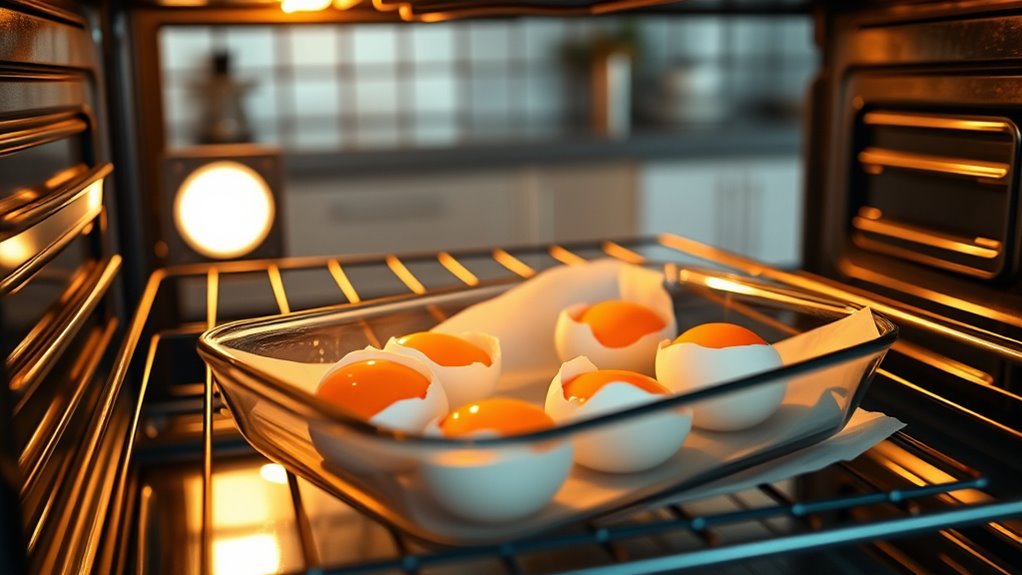
Before baking eggs, you need to prepare your oven properly. Start by setting your oven to the desired temperature, usually around 350°F (175°C), for even cooking. If you want to make egg poaching easier, consider using a water bath or a tray filled with a small amount of water; this mimics traditional poaching methods and keeps the eggs tender.
For oven roasting eggs, make sure your oven rack is positioned centrally for uniform heat distribution. Use oven-safe dishes or ramekins that fit comfortably inside your oven. Preheat the oven fully before adding the eggs to prevent inconsistent results.
If you’re experimenting with different techniques like oven roasting or egg poaching, ensure your oven is clean and free of any residue that could affect the flavor. Proper preparation helps your eggs cook evenly, whether you’re aiming for perfectly poached eggs or roasted ones, making your cooking process smoother.
Choosing the Best Oven-Safe Containers for Eggs
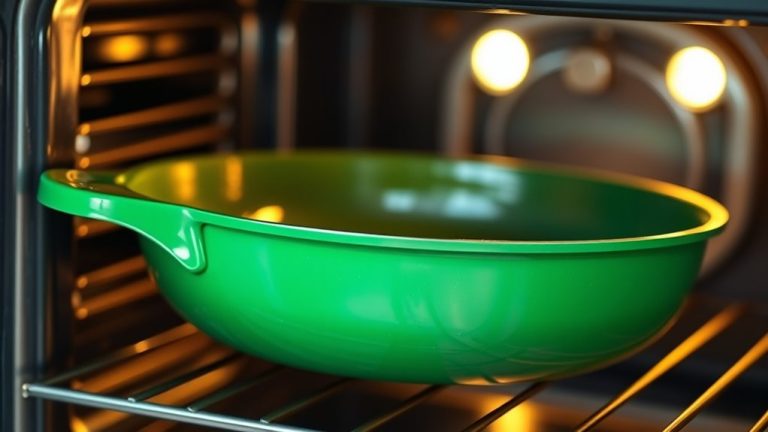
When you’re picking out containers for baking eggs, it’s important to choose materials that are oven-safe and won’t release any nasty chemicals into your food. You want something that can handle the heat without any worries!
Also, think about the size and shape of the containers. Make sure they fit comfortably in your oven and are easy to handle when you’re taking them in and out. It’s all about making your cooking process smooth and hassle-free.
And don’t forget about cleaning! Opt for containers that are simple to wash up afterward. That way, you can save some time and effort, so you can enjoy your delicious eggs without any extra stress.
Material Compatibility and Safety
Choosing the right oven-safe container is key for safely cooking eggs. Not all materials can handle high temperatures without warping or releasing harmful substances.
Avoid containers made from plastics or thin aluminum, as they might melt or leach chemicals. Glass and ceramic dishes are great options because they tolerate heat well and are non-reactive.
When handling hot containers, always use oven mitts to prevent burns. If you’re cracking an egg into a shell, make sure the shell is intact and free of cracks to avoid contamination.
Never use a shell as a cooking vessel. Instead, choose a suitable oven-safe dish that can withstand the oven’s heat while keeping your eggs safe and delicious.
Size and Shape Considerations
Choosing the right size and shape of your oven-safe container can really impact how evenly your eggs cook. Smaller containers are perfect for individual eggs, while larger ones are better for multiple servings.
Egg size also matters. Smaller eggs fit nicely in shallow dishes, but larger eggs might need deeper molds. The shape of the container is important too; round or oval shapes help distribute heat evenly, so your eggs don’t overcook or undercook.
Here’s a quick guide:
| Egg Size | Egg Shape | Best Container Type |
|---|---|---|
| Small | Round | Mini ramekins |
| Medium | Oval | Standard muffin tins |
| Large | Shaped like large eggs | Deep baking dishes |
| Extra Large | Wide oval | Casserole dishes |
| Jumbo | Tall oval | Larger loaf pans |
Picking the right container ensures perfect results every time.
Ease of Handling and Cleaning
Opting for oven-safe containers that are easy to handle and clean can make your egg-cooking experience much more convenient. Choose containers with non-slip grips and lightweight materials to prevent spills and make handling simpler.
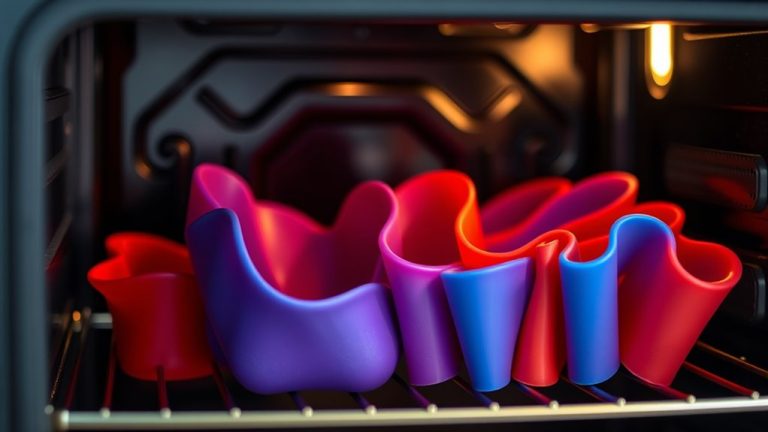
For cleanup, non-stick surfaces or silicone molds can save you time because they resist sticking and are easy to wipe clean. Avoid containers that crack or break under heat, as they can cause eggs to crack and create messes.
Smooth, dishwasher-safe options make cleanup quicker and easier, reducing the effort needed to scrub away residue. By selecting user-friendly containers, you’ll minimize accidents and keep your kitchen tidy, making oven egg-cooking hassle-free.
Step-by-Step Guide to Baking Eggs in the Oven
Have you ever wondered how to make perfectly baked eggs with minimal effort? Start by preheating your oven to 350°F, making sure it’s properly calibrated for even heat.
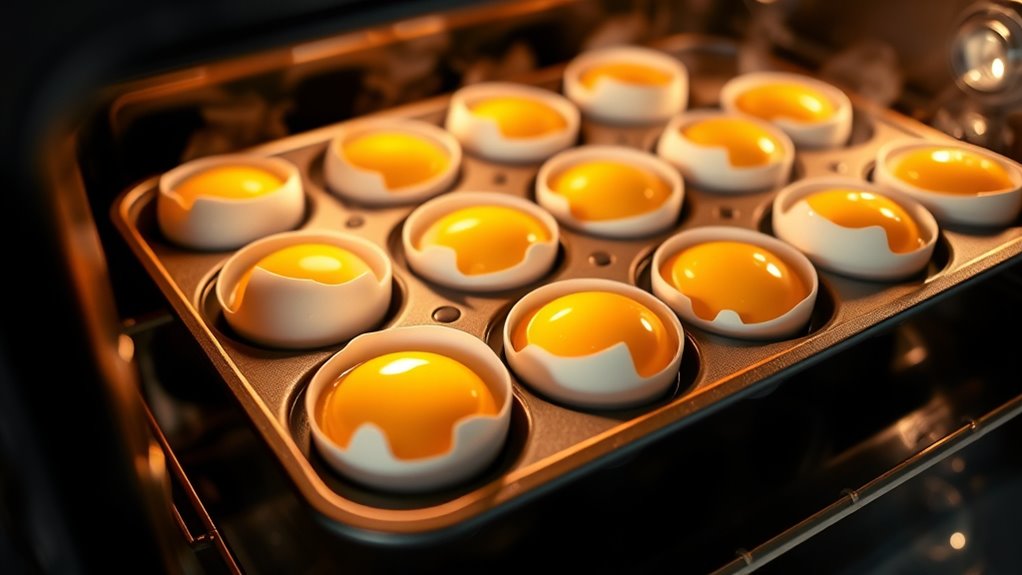
Gently crack each egg into a greased ramekin or muffin tin cup, being careful to avoid shells. Use a standard-sized egg and don’t overcrowd the cups for consistency.
Place the filled ramekins on a baking sheet to catch any spills. Bake for 12-15 minutes, then check for doneness by gently nudging one.
The yolk should be set but still slightly runny if you like. Keep in mind that oven calibration affects cooking times, so adjust if your oven runs hot or cold.
Once baked to your liking, carefully remove the ramekins with oven mitts. Let the eggs cool slightly before serving.
This simple method guarantees evenly cooked eggs with minimal fuss.
Tips for Perfectly Baked Eggs Every Time
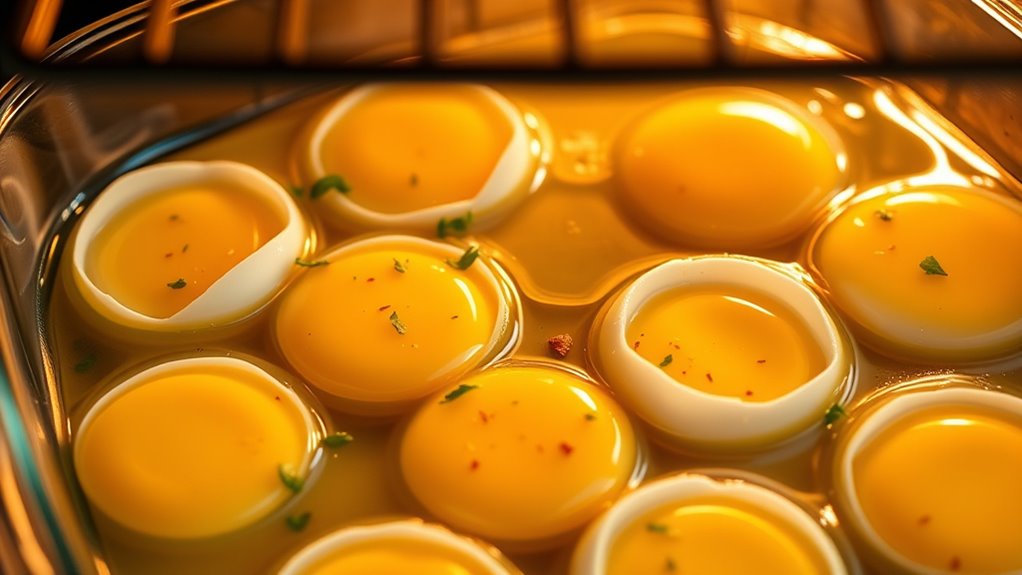
To guarantee your baked eggs turn out perfect every time, pay close attention to a few key tips. First, mastering egg cooking techniques is essential. Use a silicone or ramekin mold to ensure even cooking and prevent sticking.
When it comes to oven temperature tips, 350°F (175°C) is ideal for gentle, consistent results. Higher temperatures can cause eggs to cook too quickly and become rubbery, so stick to a moderate heat.
Keep an eye on the baking time—usually around 12-15 minutes—since overbaking can lead to dry, tough eggs. For a creamy texture, check for just-set whites and slightly runny yolks.
Furthermore, consider preheating your oven thoroughly to avoid uneven cooking. Using these egg cooking techniques combined with proper oven temperature tips ensures your baked eggs turn out tender, evenly cooked, and perfectly satisfying every time.
Adding Vegetables and Cheese to Your Baked Eggs
Adding fresh vegetables and cheese can really take your baked eggs to the next level. They add more flavor, texture, and a bit of brightness to the dish. Think about tossing in vegetables like spinach, bell peppers, or tomatoes — they keep things nutritious and colorful.
And don’t forget the cheese! Feta, cheddar, or mozzarella work great and add that rich, gooey goodness. Feel free to experiment with different combos until you find the one you love most. It’s all about making it your own!
Incorporating Fresh Vegetables
Ever wonder how to make your baked eggs more flavorful and nutritious? Incorporating fresh vegetables is a great way to do it. Choose crisp, colorful veggies like spinach, bell peppers, or cherry tomatoes for added texture and flavor.
Before adding them, check that your eggs are stored properly and keep your workspace clean to stay safe in the kitchen. Sauté or chop vegetables finely so they distribute evenly in your baking dish. For a vibrant mix, try combining different veggies.
Here’s a quick guide:
| Vegetable | Preparation Tip | Best for |
|---|---|---|
| Spinach | Sauté lightly | Softens and flavors |
| Bell Peppers | Dice evenly | Adds crunch |
| Cherry Tomatoes | Slice or halve | Juicy bursts |
Adding fresh vegetables boosts your baked eggs, making them colorful, tasty, and packed with nutrients.
Choosing the Right Cheese
Have you ever wondered how the right cheese can lift your baked eggs? Choosing the right cheese matters because not all melt the same way.
For smooth melting, go for cheeses like mozzarella, Gruyère, or Monterey Jack—they melt evenly and add creamy texture.
If you want a sharper flavor, cheddar or Parmesan work well, but they melt differently, giving a slightly firmer texture.
Fresh cheeses like ricotta or feta add richness and tang but don’t melt as smoothly, so use them sparingly.
Think about how you want your dish to look and taste. The trick is balancing meltability with flavor to keep your baked eggs cheesy and delicious without overpowering the eggs or veggies.
Troubleshooting Common Egg Baking Problems
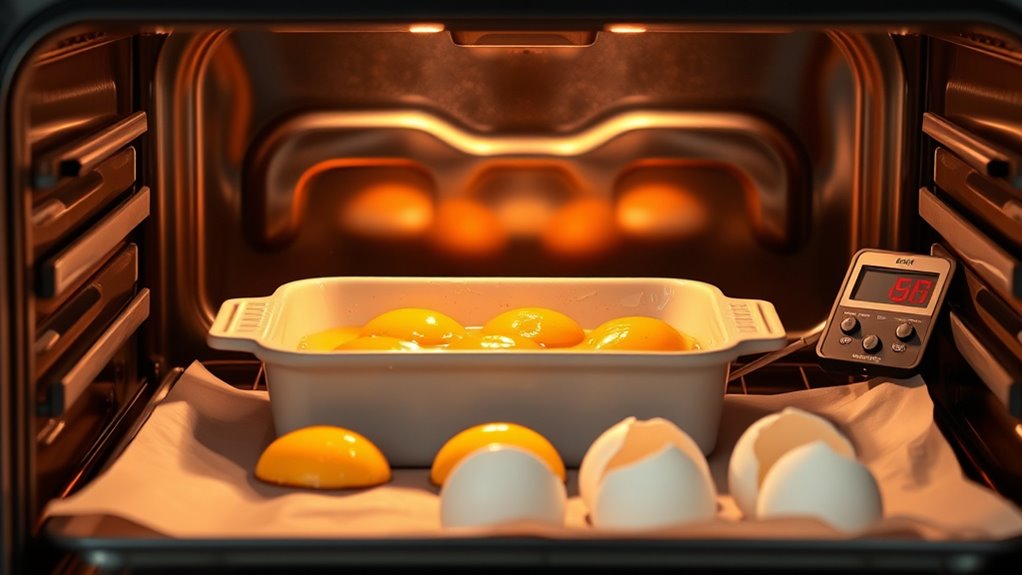
Despite your best efforts, you might encounter issues like uneven cooking, rubbery textures, or eggs that stick to the pan. To fix these problems, focus on a few key areas.
First, for eggs that stick, use a non-stick or well-greased baking dish. This prevents the egg shell from cracking and sticking, making cleanup easier.
Second, if the yolk is overcooked or too runny, adjust your baking time and temperature. Lower heat or shorter cooking times help you get the yolk just how you like it.
Lastly, uneven cooking often happens because of hot spots in your oven. Rotate the dish halfway through baking to promote even heat distribution.
How Long Do Baked Eggs Take? Timing Tips
Knowing the right baking time for eggs depends on how cooked you want them and your oven’s settings.
Baking time varies based on desired egg doneness and oven settings.
At 350°F (175°C), baked eggs usually take about 12-15 minutes for a runny yolk, 15-20 minutes for a slightly firmer yolk, and 20-25 minutes for fully set whites and yolks.
If you’re baking eggs in their shells, they might need a bit longer since the shell acts as an insulator and slows heat transfer.
For shells, aim for 20-25 minutes at 350°F to ensure they’re thoroughly cooked without overdoing it.
Always use a reliable thermometer to check your oven’s temperature, as differences can affect cooking times.
For the best results, check the eggs a few minutes before the shortest time to avoid overcooking, especially if you want a specific yolk consistency.
How to Store and Reheat Oven-Baked Eggs Safely
To guarantee your oven-baked eggs stay safe to eat and maintain their quality, proper storage and reheating are essential. First, let the eggs cool completely before storing them in an airtight container. Proper egg storage prevents bacteria growth and keeps the eggs fresh.
When reheating, always prioritize safety to avoid foodborne illnesses. Reheat in the microwave on medium power or in the oven at 350°F until warmed through, about 10-15 minutes.
Here’s how to do it right: Keep baked eggs in the refrigerator within two hours of cooking. Use a container with a tight lid to maintain freshness. Never reheat eggs more than once, as repeated reheating can affect both safety and texture.
Always check for signs of spoilage before eating. Following these steps will help your oven-baked eggs stay delicious and safe to enjoy later.
Creative Ways to Serve Oven-Baked Eggs
You can really get creative with oven-baked eggs by experimenting with different flavor combos—think fresh herbs, various cheeses, or colorful veggies. It’s a fun way to add some flair to your breakfast and keep things interesting.
And don’t be afraid to try out different serving ideas! You could make adorable egg cups, layer ingredients for a hearty breakfast bake, or even whip up a breakfast pizza. These options not only look appealing but also make your morning meal feel special and personalized.
Creative Egg Combinations
Once you’ve nailed the basic way of baking eggs in the oven, you can start experimenting with fun flavor combos. Adding different seasonings like herbs, spices, or hot sauce can really boost the taste.
Try using mini muffin tins or ramekins for a cool presentation. Here are some ideas to get you started:
- Veggie and Cheese – Mix chopped spinach, tomatoes, and shredded cheese into your eggs for a tasty mix.
- Breakfast Hash – Add cooked sausage, potatoes, and a pinch of paprika for a hearty bite.
- Herb and Smoked Salmon – Combine dill, chives, and smoked salmon for a more sophisticated flavor.
These ideas are perfect for customizing your oven-baked eggs and making every meal exciting.
Unique Serving Ideas
Enhance your breakfast game by exploring creative ways to serve oven-baked eggs that impress both visually and taste-wise. You can experiment with egg flavor variations by adding herbs, spices, or cheeses before baking, which raises the dish’s complexity.
For a striking presentation, try serving baked eggs in hollowed-out vegetables like bell peppers or avocados. This adds color and texture to your dish. Adjust the baking temperature carefully to achieve different textures—lower temps create runnier yolks, while higher temps firm them up.
Consider layering baked eggs over toast or grains for a hearty, layered look. These unique serving ideas make your breakfast more appealing and customizable, turning simple oven-baked eggs into a versatile, elegant meal.
Nutritional Benefits of Oven-Baked Eggs
Are oven-baked eggs a nutritious choice? Absolutely! They’re packed with essential nutrients and can be a healthy addition to your diet. Plus, with oven temperature control, you can cook eggs perfectly while keeping their nutritional value intact.
Here’s what makes them beneficial:
- High in Protein and Vitamins: Oven-baked eggs are rich in protein, B vitamins, and minerals like selenium that support your energy and immune health.
- Egg Shell Durability: Baking eggs gently helps keep their shells intact, reducing the risk of cracks that can cause nutrient loss.
- Healthy Cooking Method: Unlike frying, baking uses less added fat, making your eggs lower in calories and saturated fats.
Frequently Asked Questions
Can I Bake Eggs in a Microwave-Safe Dish Instead of a Traditional Oven?
Yes, you can bake eggs in a microwave-safe dish instead of using a traditional oven. Microwave cooking is quick and convenient, letting you prepare eggs in just a few minutes.
Just crack your eggs into the dish, whisk if you like, and microwave on medium power. Keep an eye on them so they don’t overcook. While oven baking gives even heat, microwave cooking is a faster way to get perfectly cooked eggs.
What Are Some Alternative Seasonings to Enhance Baked Eggs’ Flavor?
You can elevate baked eggs with herb combinations like dill, chives, and parsley, or spice blends such as paprika, cumin, and chili powder. Sprinkle fresh herbs for brightness or add spice blends for warmth and depth.
Try combining garlic powder with thyme for a savory boost or turmeric with coriander for an earthy touch. These alternatives create vibrant flavors, turning simple baked eggs into a delicious, flavorful dish.
How Do I Prevent Eggs From Sticking to the Container?
To prevent eggs from sticking, start by using egg container coatings like non-stick spray or butter on your baking dish. You can also place a non-stick baking mat at the bottom for extra protection.
These options create a smooth surface that helps eggs slide out easily after baking. Make sure to preheat your oven and let the eggs cool slightly before removing to avoid sticking and breakage.
Can I Bake Eggs Without Using Any Oil or Butter?
Yes, you can bake eggs without oil or butter by using techniques like in a ramekin or muffin tin lined with parchment paper.
Make sure your baking dish is non-stick or lightly greased to prevent sticking. Follow oven safety tips by preheating properly and avoiding overcooking.
This method keeps your eggs healthy and clean, offering a simple, oil-free way to enjoy baked eggs.
Are Oven-Baked Eggs Suitable for Meal Prep and Freezing?
Oven-baked eggs are great for meal prep and freezing if you follow proper egg storage and freezing techniques. You can prepare them in advance, store in airtight containers, and freeze for up to a month.
When reheating, do so gently to maintain texture. This method guarantees you have ready-to-eat eggs on hand, saving time and reducing waste.
Conclusion
Now that you know how to bake eggs in the oven, imagine waking up to the warm aroma filling your kitchen, with eggs perfectly puffed and golden. It’s a simple, hands-off way to start your day on a good note.
With just a few easy steps, you can create a breakfast that’s both delicious and satisfying. Whether you top them with cheese or load them with veggies, oven-baked eggs are super versatile.
So, grab your favorite containers and get ready to enjoy this flavorful, easy way to start your morning. Oven-baked eggs are a game-changer for busy mornings!