What Is the Standard Depth of Kitchen Cabinets?
Are you feeling overwhelmed trying to figure out the right kitchen cabinet sizes? You’re not alone—many people struggle with choosing the perfect depth for their cabinets to maximize space and functionality. Finding the right fit can make a big difference in how your kitchen looks and works.
The standard depth for kitchen cabinets is around 24 inches for base cabinets, which provide ample storage and support for countertops. Wall cabinets are typically shallower, ranging from 12 to 15 inches, to save space and avoid crowding the work area.
Choosing the right depth depends on your storage needs, appliance placement, and aesthetic preferences. If you want to learn more about selecting the perfect cabinet depths and avoiding common mistakes, keep exploring.
Key Takeaways
- Standard base kitchen cabinets usually have a depth of about 24 inches, with a range from 24 to 25 inches.
- Wall cabinets are generally shallower, measuring around 12 to 15 inches deep to make the best use of wall space.
- Common cabinet depths vary from 12 to 24 inches, which works well for different storage needs and appliances.
- Custom cabinets can be anywhere from 10 to 30 inches deep, tailored to fit specific spaces and design preferences.
- Choosing the right depth is important for easy access, efficient storage, and a balanced look in your kitchen.
What Are the Standard Depths for Kitchen Cabinets?
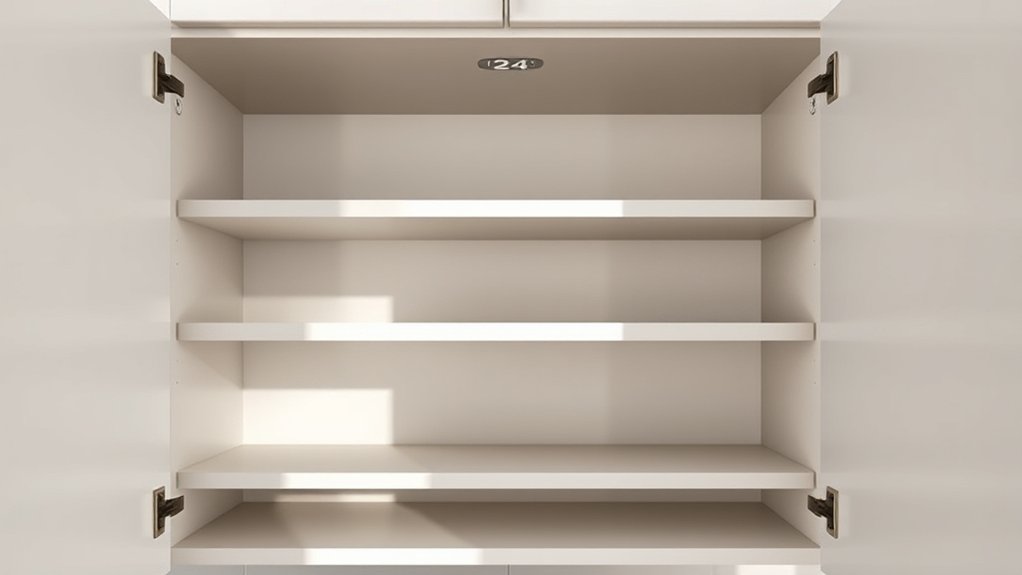
When planning your kitchen layout, understanding the standard depths for cabinets is essential. The typical depth for base cabinets is around 24 inches, which balances storage space with accessibility.
Wall cabinets usually have a depth of 12 to 15 inches, allowing you to maximize wall space without crowding countertops. These standard depths help maintain a cohesive kitchen aesthetic, ensuring everything looks uniform and functional.
The cabinet materials you choose, such as wood, laminate, or metal, can influence the overall look and durability. But the depth remains consistent to meet practical needs.
Knowing these measurements helps you select cabinets that fit well within your kitchen’s design while providing ample storage. Proper depth also improves safety and usability, making sure you can reach items comfortably without sacrificing style.
Why Is 24 Inches the Typical Depth for Base Cabinets?
The 24-inch depth for base cabinets strikes a practical balance between maximizing storage space and maintaining easy accessibility. This depth lets you store most kitchen essentials without overwhelming the space or making items hard to reach.
A 24-inch depth offers ample storage while keeping your kitchen accessible and visually balanced.
It also supports a consistent cabinet look, creating a clean, uniform appearance that boosts your kitchen’s overall design. When choosing materials, the 24-inch depth provides enough room for durable, attractive options like plywood, MDF, or solid wood.
This ensures your cabinets are both long-lasting and stylish. The standard depth simplifies installation and planning, making it easier to pick hardware and accessories that fit well.
Plus, it offers enough interior space for organizing utensils, pots, and pantry items efficiently. Overall, the 24-inch depth is a great choice for balancing functional storage with visual appeal.
It helps make your kitchen both practical and visually cohesive.
How Are Wall Cabinets Different in Depth From Base Cabinets?
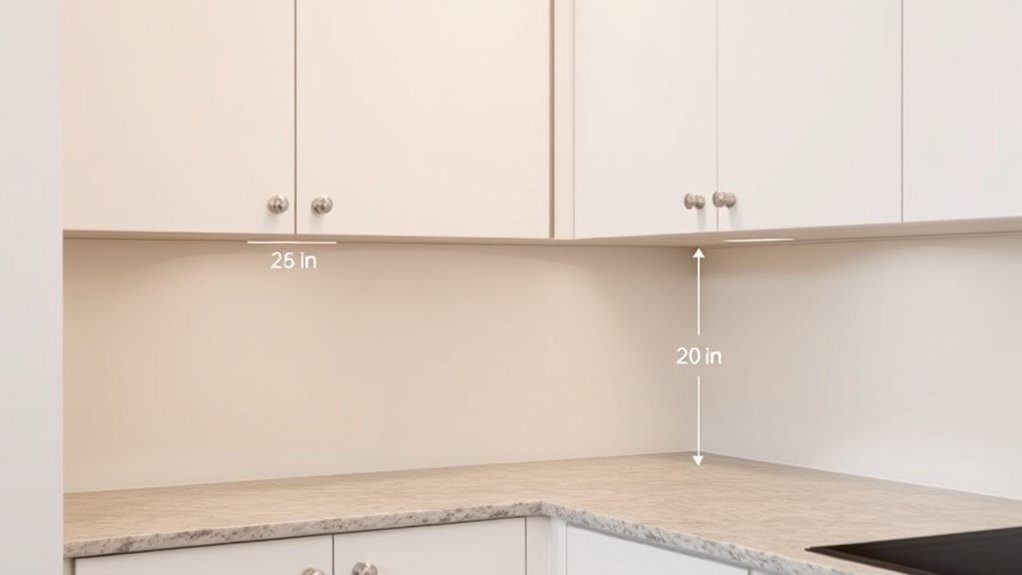
Wall cabinets are generally shallower than base cabinets, which makes them great for adding storage without taking up too much space. Usually, base cabinets are about 24 inches deep, while wall cabinets tend to be between 12 and 15 inches. This difference means you can store different things in each, and it also affects how easy it is to reach your items in the kitchen.
Wall vs. Base Depths
Understanding the difference in depth between wall and base cabinets is key to designing a functional kitchen. Wall cabinets are usually shallower, around 12 inches deep, leaving space for decorative accents and easy access to items.
In contrast, base cabinets are deeper—often 24 inches—to fit larger appliances and offer more storage. This difference affects how you organize your kitchen so wall cabinets don’t block sightlines or access.
Depth choices can also reflect your style or preferences, blending looks with practicality. Knowing these differences helps you create a balanced, efficient layout that maximizes storage while keeping things visually appealing and easy to use.
Standard Cabinet Measurements
Standard cabinet measurements vary quite a bit between wall and base cabinets, mainly in depth. Base cabinets usually range from 24 to 25 inches deep, giving plenty of storage space and a solid foundation for kitchen appliances.
Wall cabinets are generally shallower, typically between 12 and 15 inches deep. This helps keep the kitchen looking balanced and prevents anything from blocking walkways or sightlines.
| Cabinet Type | Typical Depth (inches) | Purpose |
|---|---|---|
| Base Cabinet | 24–25 | Storage and countertop support |
| Wall Cabinet | 12–15 | Space-saving and visual appeal |
| Both Types | Varies for finishes | Enhancing kitchen aesthetics |
| Custom | 10–30 (varies) | Tailored to design needs |
| Standard | Fixed ranges | Consistency in design |
These measurements impact the finishes and overall look of your kitchen. They help create a cohesive and functional layout that works well.
Functional Space Differences
Have you ever wondered how the depth difference between wall and base cabinets influences their functionality? Typically, base cabinets are deeper—around 24 inches—giving you plenty of space for storage and making it easier to access larger items.
Wall cabinets are usually about 12 inches deep. They save space and keep your countertops clear, but they also limit storage capacity. This difference affects how you organize your items and display decorative accents.
Deeper base cabinets can hide clutter better, making your kitchen look tidy. On the other hand, shallower wall cabinets are perfect for showing off decorative pieces or frequently used dishes, adding to your kitchen’s look.
When planning your color schemes, think about how depth impacts visual balance. Lighter, shallower cabinets can make your space feel more open, while deeper ones add depth and dimension.
What Factors Should You Consider When Choosing Cabinet Depths?
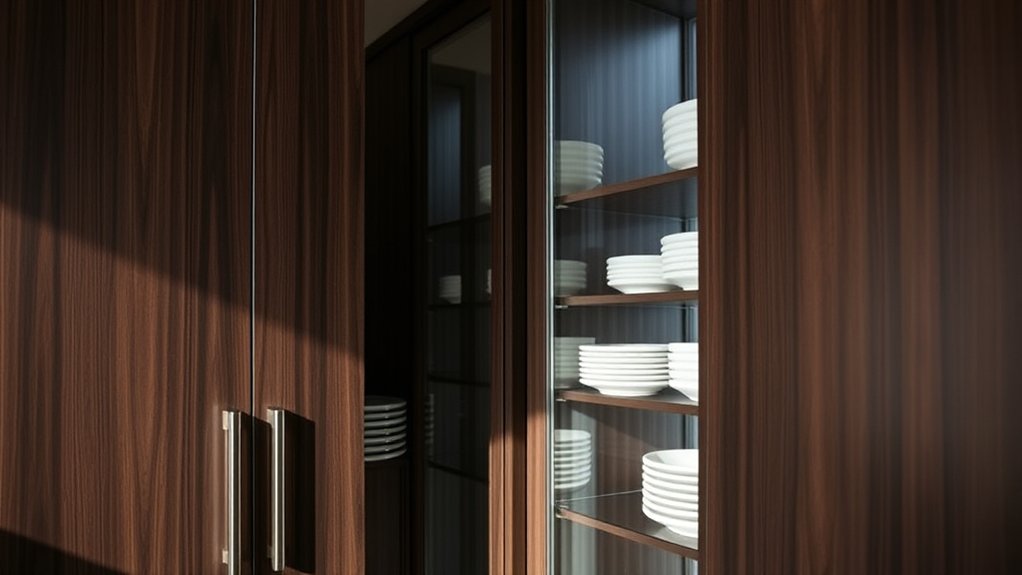
Choosing the right cabinet depth involves considering both your storage needs and the space available in your kitchen. Think about where appliances like microwaves or dishwashers will go, and make sure the cabinets don’t block access to them.
If you need easier access or plan to store larger items, deeper cabinets might be the way to go. But if you want your kitchen to feel more open, especially in smaller spaces, shallower cabinets can help achieve that look.
Material durability is also important. Some materials hold up better over time, especially in deeper or heavily used cabinets. Think about how often you’ll need to access different areas and whether the material can handle daily wear and tear.
Finally, measure your kitchen carefully. Balancing storage, accessibility, and style is key to choosing a cabinet depth that works best for your space and needs.
How Can You Pick the Best Cabinet Depth for Your Kitchen?
Looking to pick the best cabinet depth for your kitchen? Well, it really comes down to your space and how much storage you need. If your kitchen is a bit on the small side, shallower cabinets can be a great choice since they won’t make the space feel cramped. On the other hand, if you’re after more storage for pots, pans, or pantry items, then going with deeper cabinets might be the way to go.
Think about how you use your kitchen daily. Do you need quick access to frequently used items, or do you prefer having plenty of space for everything? Prioritizing functionality can help you find that sweet spot where your cabinets are both practical and comfortable to use. So, take a look at your space and your storage needs, and you’ll be able to choose the perfect cabinet depth for your kitchen!
Kitchen Space Constraints
When space is tight in your kitchen, choosing the right cabinet depth is key to making the most of the area without making it feel crowded. Your kitchen layout is a big factor in this decision since small spaces need careful planning.
Shallow cabinets, usually around 12 to 15 inches deep, can free up valuable floor and countertop space, helping the room feel less cramped. Be sure to check appliance clearances so cabinets don’t block doors or drawers on refrigerators, dishwashers, or ovens.
If your kitchen has narrow walkways or a small footprint, shallower cabinets can improve flow and make everything more accessible. Finding the right balance between cabinet depth and your layout helps you keep enough storage while keeping the space open and functional.
Functional Storage Needs
How do you determine the ideal cabinet depth to meet your storage needs? First, think about what you plan to store—pots, pans, or small appliances—and pick a depth that gives you enough space without making your kitchen feel crowded.
Standard depths usually range from 12 to 24 inches, but if you need to store larger items, deeper cabinets might be better. Consider the material—solid wood or laminate—as these affect durability and weight, which can influence how deep your cabinets should be.
If you want to add decorative accents, go for shallower cabinets with decorative fronts. This can boost your style without sacrificing too much storage space. Also, think about accessibility; deeper cabinets might need pull-out shelves or lazy Susans to make everything easier to reach.
Balancing your storage needs with the look you want is key. This way, your kitchen stays both practical and visually appealing.
What Are the Pros and Cons of Standard and Custom Depths?
Choosing between standard and custom depth kitchen cabinets involves weighing their pros and cons.
Standard depths are usually more affordable and easier to find, which makes installation quicker. They also come in a variety of finishes, so you can match your kitchen’s style easily.
But, they might limit your storage options and can feel less tailored to your space.
Custom depths give you the flexibility to meet specific needs, like fitting larger appliances or unique layouts.
They also let you choose materials that are more durable, so your cabinets last longer.
The downside is that custom cabinets tend to be more expensive and take longer to make.
In the end, if you value style options and durability, custom depths might be better.
But if you want a budget-friendly choice with quick installation, standard depths could be the way to go.
How Does Cabinet Depth Affect Storage and Functionality?
Cabinet depth directly impacts how much storage space you have and how functional your kitchen feels. Deeper cabinets can hold more items, making it easier to store large pots, pans, and decorative accents without clutter. Shallow cabinets, however, keep your space feeling open and streamlined, which is great for smaller kitchens or minimalist styles.
Think about these points:
Consider storage needs, accessibility, and aesthetic preferences when choosing cabinet depth for your kitchen.
- You can store larger appliances or display decorative accents more easily in deeper cabinets.
- Standard depths often balance storage capacity and ease of access.
- Shallow cabinets improve visibility and reduce the risk of items falling out.
- Deeper cabinets may require extra clearance when opening doors.
- Appliance compatibility is important; deeper cabinets can hide bulky appliances but might limit access.
Your choice influences both function and aesthetics. It’s essential to evaluate how cabinet depth matches your storage needs and decorative preferences.
Can You Customize Cabinet Depths During a Remodel?
Absolutely, you can customize cabinet depths during a remodel to really tailor your space to your needs. It’s a great way to make sure your storage works perfectly for your lifestyle and how you use your kitchen or other areas.
Plus, having the option to choose different depths means you can get creative with your design. Whether you want deeper cabinets for larger items or shallower ones for a sleeker look, it’s all about making your space both functional and personalized.
Flexibility in Design
During a remodel, customizing cabinet depths is a great way to tailor your kitchen’s storage to your needs. This flexibility helps create a cohesive look while boosting functionality.
You can add decorative accents like glass doors or trim details that reflect your style, or choose depths that match your color scheme for a seamless design.
Custom depths also let you incorporate display shelves for collectibles or dishware, and design storage solutions for pots and pans. Think about how different depths can highlight features like glass fronts or intricate trims.
With tailored cabinet depths, you can make the most of your space without sacrificing aesthetics. This approach helps you design a kitchen that’s both beautiful and highly functional, suited to your lifestyle and taste.
Impact on Storage Space
Adjusting cabinet depths during a remodel can significantly affect your storage space. If you choose deeper cabinets, you’ll have more room for larger items and bulky kitchenware. But keep in mind, they might be less accessible for everyday essentials.
On the other hand, shallower cabinets are easier to reach and use, though they limit how much you can store. Material choices also matter—thicker materials or decorative accents can add to the overall depth, which takes up more interior space.
Customizing cabinet depths lets you tailor your storage to fit your needs. Just think about how design elements like decorative accents might reduce internal capacity. It’s all about balancing style with functionality.
Custom Cabinet Options
Customizing cabinet depths during a remodel is completely doable and can be tailored to your storage needs. You can pick depths that make appliance placement easier and increase usable space. For example, deeper cabinets work well for bulky appliances, while shallower ones help keep your countertops clear.
Material choices also affect depth options since lighter materials make larger cabinets easier to handle. Think about varying depths for upper and lower cabinets to match your appliance setup. Shallow cabinets are great for spices and small items.
Deep drawers are perfect for pots, pans, and bulky appliances. You can also opt for custom inset or overlay doors for a seamless look. Adjustable shelves let you customize storage to fit your needs.
All these options help create a functional, personalized kitchen that suits your lifestyle perfectly.
How to Measure Your Space to Find the Perfect Cabinet Depth
To find the perfect cabinet depth for your space, start by measuring your kitchen area carefully. Use a tape measure to determine the available width, depth, and height where the cabinets will go.
Think about the material durability of your chosen cabinets, as sturdier materials often allow for deeper options without warping or damage. Aesthetics also matter; deeper cabinets can change how your kitchen looks, making it feel either more spacious or more enclosed.
When measuring, include the clearance space between cabinets and appliances. This way, doors can open fully and you can move around comfortably. If you’re replacing existing cabinets, check their depth to keep things consistent.
Don’t forget to measure the space in front of the cabinets too. This ensures there’s enough room for easy movement. Accurate measurements help you pick a cabinet depth that balances functionality with the overall look.
This way, your kitchen will be both practical and attractive, with cabinets that fit just right.
Common Mistakes to Avoid When Selecting Kitchen Cabinet Depths
Choosing the wrong cabinet depth can lead to frustration and costly mistakes, so it’s important to be aware of common pitfalls. One mistake is ignoring how decorative accents or handles will impact overall depth, which can make cabinets feel bulky or cramped.
Another is neglecting material choices, which influence weight and installation ease. Heavier materials might need deeper cabinets for proper support. You also risk selecting a depth that clashes with your countertop height or kitchen layout, reducing functionality.
Failing to measure available space can lead to cabinets that are either too shallow, limiting storage, or too deep, blocking movement. Lastly, overlooking how depth affects interior storage can cause inefficient use of space, especially for small appliances or utensils.
Keep these pitfalls in mind to ensure your cabinet depth complements your design, enhances usability, and prevents unnecessary expenses.
Frequently Asked Questions
Are There Industry Standards for Different Kitchen Layouts?
Yes, there are industry standards for different kitchen layouts that guide things like cabinet materials and installation methods. These standards help make sure your cabinets fit properly and work well.
For example, base cabinets are usually 24 inches deep, while wall cabinets tend to be around 12 inches deep. Sticking to these standards helps your kitchen stay functional and looks great.
Following these guidelines, along with good installation practices, ensures your kitchen is both practical and visually appealing. It also makes it easier to customize your space to fit your layout needs.
How Does Cabinet Depth Impact Appliance Placement?
You’ll find that cabinet depth greatly impacts appliance placement, especially with the standard 24-inch depth that offers plenty of clearance.
This depth makes sure your appliances fit comfortably without blocking counter space or creating clutter. If cabinets are shallower, you might have trouble fitting larger appliances or might have limited clearance, which can reduce efficiency.
On the other hand, deeper cabinets provide more storage but can cut into your countertop area. So, choosing the right depth is all about balancing appliance placement with the available counter space.
Can Custom Depths Improve Kitchen Workflow?
Yes, custom depths can really boost your kitchen workflow by making storage more efficient and accessible. When you customize cabinet depths, you can better fit specific appliances or cookware, reducing clutter and making everything easier to reach.
This tailored approach helps your kitchen run smoothly, cuts down on unnecessary movement, and makes the most of your space. Overall, it makes daily tasks more convenient and enjoyable.
What Are the Cost Differences Between Standard and Custom Depths?
Custom-depth kitchen cabinets usually cost more than standard ones because of extra labor and materials. If you pick high-quality materials, the price can go up even more.
But keep in mind, custom cabinets offer more storage space, which might save you money later by keeping things organized. While standard depths are easier on your budget upfront, custom depths are designed to fit your needs and make your space more functional.
How Does Cabinet Depth Influence Overall Kitchen Design Style?
Cabinet depth acts as the backbone of your kitchen’s aesthetic, shaping its style and functionality. When you choose a standard 24-inch depth, you create a balanced look that feels open yet practical.
It improves storage efficiency without overwhelming the space, allowing your design to flow seamlessly. Deeper or shallower cabinets can add a modern or traditional touch, respectively.
This makes your kitchen distinctly yours while maintaining a cohesive and stylish appearance.
Conclusion
Choosing the right cabinet depth is like planting seeds for a flourishing kitchen. When you pick wisely, your space blossoms with storage and ease, turning everyday tasks into a graceful dance.
Keep measurements precise and consider your needs carefully. Your kitchen’s potential is waiting to bloom.
Remember, the right depth isn’t just about inches. It’s about cultivating a cozy, functional home where every detail supports your culinary journey.
For standard kitchen cabinets, the typical depth is 24 inches. This depth offers a good balance of storage space and accessibility.
However, some cabinets, especially upper ones, are usually shallower, around 12 to 15 inches.
Knowing the standard depth helps you plan effectively, ensuring your kitchen is both practical and inviting.