How to Safely Use Drano in Your Kitchen Sink With a Garbage Disposal
Dealing with a clogged kitchen sink can be such a headache, especially when you’re in the middle of cooking or cleaning up. Many people struggle with stubborn blockages and worry about using harsh chemicals near their garbage disposal. If that sounds like you, you’re not alone.
Thankfully, there are safe and effective ways to clear those clogs without risking damage or mess.
To safely use Drano in your kitchen sink with a garbage disposal, first clear the area and remove standing water and debris. Choose a Drano formula designed for kitchen drains and pour it carefully into the drain, avoiding splashes or direct contact with your disposal.
Let it sit for the recommended time, then flush with hot water. If you’re unsure or want to avoid risks, keep exploring ways to handle clogs effectively.
Key Takeaways
- Check the label to make sure Drano is safe for use with garbage disposals and kitchen drains.
- Clear out any debris, remove standing water, and prepare the drain before applying Drano.
- Use Drano sparingly and follow the instructions on the bottle to avoid damaging your pipes or creating chemical hazards.
- Don’t pour grease or food scraps down the drain before or after using Drano, as this can cause clogs later on.
- Keep an eye on the disposal after using Drano. If you notice strange noises or slow drainage, it’s best to get a professional to check it out.
When and Why Is It Safe to Use Drano With a Garbage Disposal?
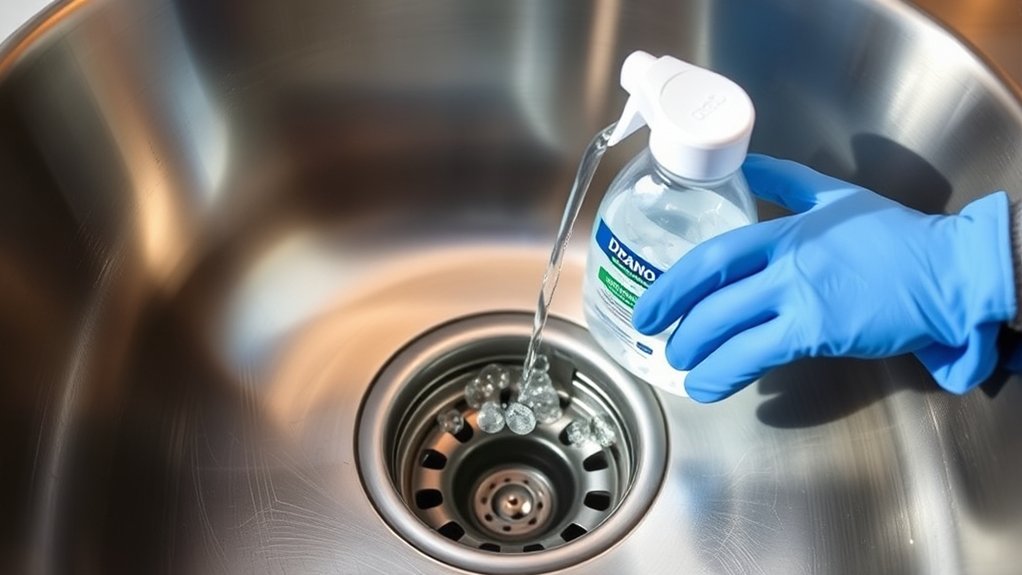
You should only use Drano with a garbage disposal if you’re sure the clog is caused by debris buildup that chemical drain cleaners can dissolve. When you pour Drano into your sink, it triggers chemical reactions that break down organic materials, making it easier for water to flow.
However, keep in mind that these reactions can produce heat and fumes, so proper ventilation is important. Also, think about the environment—chemical drain cleaners often contain harsh ingredients that can harm aquatic life if they reach waterways.
Chemical reactions can produce heat and fumes; ensure proper ventilation and consider environmental impact.
Using Drano unnecessarily or on the wrong kind of clog can make plumbing problems worse or damage your disposal. Only proceed if you’re confident the clog is due to typical debris and not foreign objects or grease, which Drano can’t fix.
Being cautious helps you avoid damage and also reduces the environmental impact of using these chemical products.
How to Prepare Your Sink for Drano Application
Before you pour in the Drano, it’s a good idea to clear out the area around the drain. Make sure there are no objects or standing water sitting in the sink. Just take a moment to remove any hair, soap scum, or debris that might be blocking the drain. Doing this helps ensure that the chemical can do its job more effectively. Plus, it makes the whole process safer and a lot less messy!
Clear Drain Area
Ensuring the drain area is clear before applying Drano helps the chemical work more effectively and reduces the risk of splashing or spills. Remove any standing water, food debris, or utensils from the sink to improve drain maintenance and promote better kitchen hygiene.
Clearing the area also prevents accidental contact with the chemical and allows for even distribution. Check the surrounding countertops and dispose of any loose items.
Use the following table to guarantee your sink is properly prepared:
| Item to Clear | Why It Matters | Tips |
|---|---|---|
| Food debris | Prevents clogs | Rinse sink thoroughly |
| Utensils | Avoid spills | Keep away during application |
| Standing water | Improves effectiveness | Remove excess water |
| Loose items | Ensures safety | Clear countertops |
This preparation helps your drain stay clean and functional.
Remove Obstructions Carefully
Carefully removing obstructions from your sink is essential to ensure Drano works effectively and safely.
Obstructions can cause water to back up and increase the risk of pipe corrosion if not cleared first.
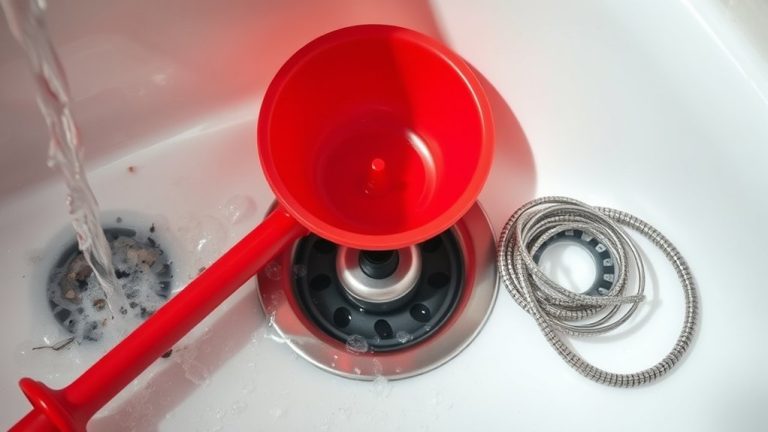
Use a plunger or a drain snake to dislodge debris, avoiding harsh tools that might damage your pipes.
Removing large blockages allows Drano to target the clog directly without reacting with trapped materials.
If you notice buildup or sliminess, take care of it before pouring the chemical solution.
Properly cleared drains reduce the chances of chemical reactions that could harm your pipes or cause leaks.
Take your time during this step to prevent accidental damage.
Make sure the area is free of obstructions and ready for safe Drano use.
Choosing the Right Drano Product for Kitchen Clogs
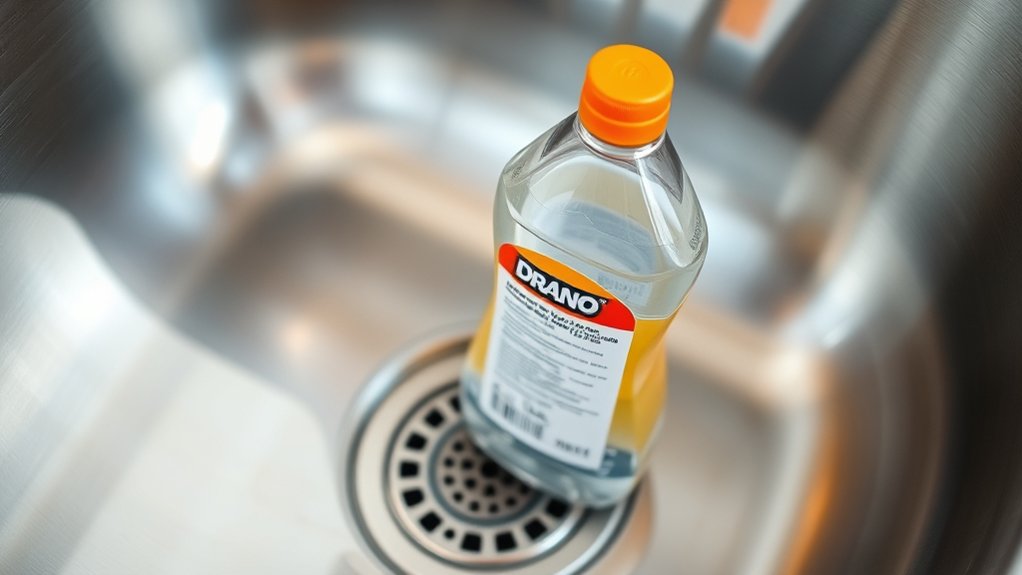
When you’re picking out a Drano for kitchen clogs, it’s a good idea to go for one that’s made specifically for kitchen drains. That way, you’re more likely to get the job done effectively.
Also, make sure it’s compatible with your disposal system. Using the wrong type could cause damage, which nobody wants.
Choosing the right formula is key — it helps you clear those stubborn clogs safely and without any hassle.
Suitable Formulations for Kitchens
Choosing the right Drano product for kitchen clogs is key to clearing blockages effectively without damaging your pipes or risking safety. When picking formulations, options like eco-friendly, enzymatic, and traditional chemical formulas are worth considering.
Eco-friendly options are biodegradable and less harmful to the environment. Enzymatic solutions break down organic matter naturally, reducing exposure to harsh chemicals. These are gentle yet effective, making them great for kitchens with disposals.
Traditional chemical formulas work well for stubborn clogs but should be used with caution. Always follow safety instructions and read labels carefully to ensure compatibility with your plumbing. This helps prevent long-term damage and keeps your household safe.
Compatibility With Disposal Systems
Selecting a Drano product that’s compatible with your disposal system is key to preventing damage and ensuring effective clog removal. Not all formulas are suitable for garbage disposals, as some can cause harmful chemical reactions over time.
Using the wrong Drano can lead to issues like corrosion or mechanical failure in your disposal. Always check the label to make sure the product is safe for disposal systems.
Choose Drano formulas that are specifically designed for kitchen sinks with disposals. These are less likely to cause chemical reactions that could harm your unit.
Avoid harsh chemicals or clog-specific formulas that aren’t labeled for disposal use. Picking the right product helps extend your disposal’s lifespan and clears clogs efficiently without risking costly repairs.
How to Safely Pour Drano Into Your Sink
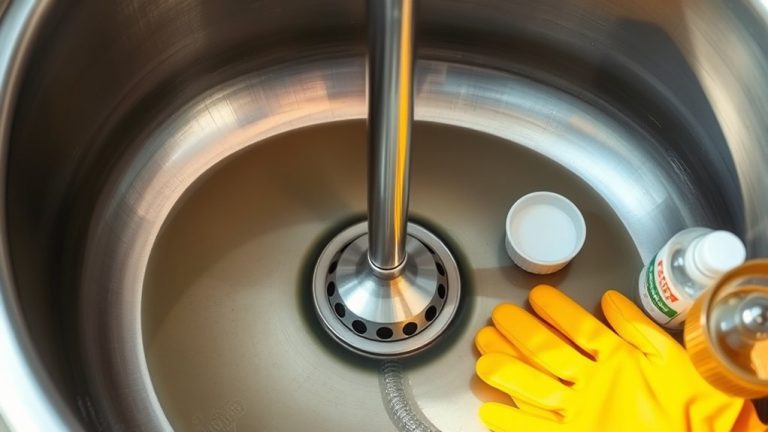
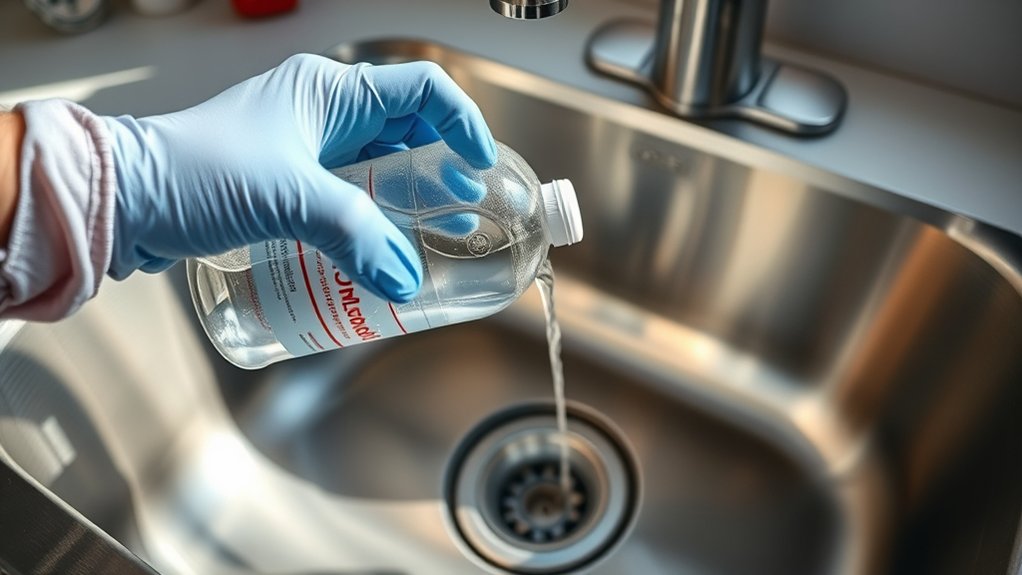
Before pouring Drano into your sink, it’s important to wear protective gloves and eye goggles to prevent any contact with the chemicals. Handling Drano carefully helps reduce risks and makes sure you’re following safety rules.
Always wear gloves and goggles when handling Drano to stay safe and avoid chemical contact.
To pour safely, first remove any standing water from the sink to prevent splashing. Then, pour the Drano slowly and directly into the drain, being careful to avoid splashes or spills.
Wait at least 15 minutes so the chemical reactions can clear the clog before running water. Always read the label for specific instructions and warnings.
Use a steady hand to avoid splashing, and never mix Drano with other cleaning agents, as this can cause dangerous reactions. Following these safety steps helps prevent accidents and makes sure the chemical works effectively.
What to Do After Using Drano in Your Kitchen Sink
After you’ve used Drano in your kitchen sink, it’s a good idea to give the sink a good rinse with plenty of water. This helps wash away any leftover chemicals and makes sure nothing harmful is sitting in the pipes.
Once you’ve rinsed everything out, take a quick peek at your disposal and drain to see if they’re working properly. Make sure there’s no strange smell or weird noises—just to be safe. Doing these simple steps can help prevent future clogs and keep your sink nice and safe to use.
Rinse Thoroughly With Water
Once the Drano has done its job, it’s important to rinse the sink thoroughly with water to wash away any leftover chemicals. This helps prevent ongoing reactions that could damage your pipes or cause leaks.
It also reduces the risk of chemical residues contaminating your water. To make sure everything is rinsed out properly:
- Turn on a steady stream of hot water and let it run for at least 2 minutes.
- Use a cup to pour more water directly into the drain, flushing out any remaining chemicals.
- Check that the water drains smoothly, which shows that debris and residues are gone.
This thorough rinsing helps stop chemical reactions from continuing and keeps your plumbing safe and clean.
Check Disposal Functionality
To make sure your sink is working properly after using Drano, it’s important to test the disposal system. Turn it on and run cold water to see if everything is functioning smoothly. Listen for any unusual noises or vibrations, which could mean a clog or mechanical issue.
If the disposal runs quietly and water drains quickly, your clog prevention efforts are working, and your disposal is in good shape. If you notice any problems, stop and troubleshoot before using chemicals again.
Regularly checking your disposal helps prevent future clogs and keeps it performing at its best. This way, you can catch issues early and avoid bigger problems down the line.
Is Drano Safe for Garbage Disposals?
Is Drano safe to use in a garbage disposal? Generally, no. Drano contains strong chemicals that can react with the disposal components. These reactions might damage the blades or pipes over time, leading to costly repairs.
Plus, using it often can make it harder to maintain your disposal. This can make your sink more prone to clogs and odors.
Here are three reasons to avoid using Drano in your garbage disposal:
- It can corrode metal parts and weaken the disposal’s structure.
- Chemical reactions may produce harmful gases or fumes.
- It can cause buildup or damage to the disposal’s motor and blades.
Instead, try natural methods like boiling water or baking soda with vinegar. If you’re dealing with stubborn clogs, it’s best to call a professional. Proper maintenance helps your disposal run smoothly and avoids chemical damage.
Troubleshooting Persistent Clogs in Your Kitchen Sink
Are stubborn clogs disrupting your kitchen sink’s drainage? First, try DIY fixes like using a plunger or a mixture of baking soda and vinegar to break up the blockage. These methods are safe and effective for minor obstructions, but avoid pouring excessive amounts of chemical drain cleaners, which pose chemical hazards to you and your plumbing.
If the clog persists, don’t rush to use harsh chemicals again, as repeated use can damage your pipes and disposal. Instead, consider removing the trap to manually clear out debris or use a drain snake for stubborn blockages.
Remember, chemical hazards are a real concern, especially if your sink contains a garbage disposal. Always follow manufacturer instructions and wear gloves. If these DIY solutions don’t work, it’s best to consult a professional plumber to avoid risking damage or injury.
Proper troubleshooting helps keep your sink functioning safely and efficiently.
Alternative Methods to Clear Kitchen Clogs Safely
When traditional DIY methods don’t work, trying alternative ways to clear kitchen clogs can be both safe and effective. Instead of harsh chemicals, you can use natural solutions that help break down debris through chemical reactions. Here are three great options:
1. Hot Water and Dish Soap
Pour hot water mixed with dish soap down the drain. The heat helps loosen grease, and the soap acts as a lubricant to ease the clog.
2. Baking Soda and Vinegar
Add half a cup of baking soda, then pour in half a cup of vinegar. Let it fizz for 15 minutes, then flush with hot water. This reaction helps break down organic buildup.
3. Manual Removal
Use a plunger or a drain snake to physically dislodge stubborn blockages. This direct method avoids chemicals and minimizes risks.
These safer alternatives keep your plumbing healthy while effectively clearing kitchen clogs.
Tips to Prevent Future Kitchen Sink Clogs
To keep your kitchen sink flowing smoothly, adopting simple habits can make a big difference in preventing future clogs. Start by maintaining your appliances regularly; clean your garbage disposal often to prevent buildup and avoid pouring grease or oil down the drain. These can solidify and cause blockages.
Be careful with kitchen decor items—small objects like jewelry or food wrappers can slip into the sink. Using a drain strainer helps catch debris before it enters your pipes. Run hot water after each use to flush away food particles and grease, keeping the pipes clear.
Keep an eye on your plumbing for slow drains and fix minor issues early. Properly maintaining your appliances and keeping your kitchen tidy not only protects your decor but also reduces clog risks. This saves you time and costly repairs.
Simple habits like these help your sink stay functional and your kitchen stay clutter-free.
When to Call a Professional Plumber
Sometimes, despite your best efforts, a clog or plumbing issue can become too stubborn to handle on your own. If you notice any of these signs, it’s time to call a professional plumber:
If DIY fixes fail, it’s time to call a professional plumber to prevent further damage.
- The clog persists after multiple attempts with Drano, risking harmful chemical reactions that can damage your pipes.
- You observe slow drainage combined with strange odors, indicating potential sewer line problems or environmental concerns.
- Water or waste backs up, and DIY solutions haven’t worked, which could mean a more serious plumbing failure.
Trying to clear tough clogs with chemicals can lead to dangerous reactions and harm the environment, especially if used improperly. A professional plumber can assess the situation safely, reducing risks to your plumbing system and the environment. Recognizing these signs early helps prevent costly repairs and lowers the environmental impact of chemical overuse.
Frequently Asked Questions
Can I Use Drano if My Garbage Disposal Is Already Clogged?
You shouldn’t use Drano if your garbage disposal is already clogged. Chemical reactions from Drano can damage disposals and pipes, especially when they’re blocked.
Instead, try disposal alternatives like manually removing debris or using a plunger. If these don’t work, consider calling a plumber.
Using chemical drain cleaners on a clogged disposal risks further damage and unsafe reactions, so it’s best to avoid them until you’ve cleared the blockage safely.
How Long Should I Wait Before Running My Disposal After Using Drano?
Think of your pipes like delicate dancers. They need the right timing to avoid a fall. After using Drano, wait at least 15-30 minutes before running your disposal.
This waiting time lets the chemical reactions finish and helps prevent pipe corrosion. Rushing too soon can cause damage or leave your clog unresolved.
Patience keeps your pipes healthy and your sink clear. Just a little wait goes a long way!
Is There a Risk of Damaging My Pipes With Repeated Drano Use?
Repeated use of Drano can pose risks to your pipes because chemical reactions can cause pipe corrosion over time. While it might seem effective, using it too often can weaken your pipe materials and increase the chance of leaks or damage.
To protect your plumbing, try to avoid using Drano excessively. Instead, consider alternative methods like mechanical cleaning or calling in a professional. Regular maintenance can help prevent buildup without risking long-term pipe damage from chemicals.
Can Drano Be Used in a Septic System With a Garbage Disposal?
Using Drano in a septic system with a garbage disposal is like tossing a toxic monster into a delicate eco-friendly garden. You risk damaging your system and harming beneficial bacteria.
Instead, choose eco-friendly alternatives like baking soda and vinegar to maintain your disposal. Regular disposal maintenance keeps pipes clear without risking septic failure.
What Are the Signs That I Should Stop Using Drano Immediately?
You should stop using Drano immediately if you notice strong chemical reactions like bubbling, discoloration, or a foul smell. These signs mean there could be pipe damage or dangerous reactions happening.
If your drain doesn’t clear after a few tries, continuing to use it could make things worse. It’s better to try alternative solutions like a plunger or natural drain cleaners instead.
If problems keep happening, it’s a good idea to call a professional. This helps avoid further damage or safety hazards.
Conclusion
Remember, using Drano safely with your garbage disposal requires patience and care. Think of it as channeling your inner Leonardo da Vinci to restore harmony to your kitchen.
Always follow the instructions carefully, and don’t hesitate to call a professional if the clog persists.
With a bit of elbow grease and some modern wizardry, your sink will be as clear as the waters of Avalon.
Happy plumbing!