How Much Does It Cost to Replace Your Kitchen Sink?
Replacing your kitchen sink is a common home improvement project that many people find daunting, especially when it comes to costs. If you’re feeling overwhelmed by potential expenses, you’re not alone. Understanding what influences the price can help you plan better and avoid surprises.
Replacing your kitchen sink costs between a few hundred to over a thousand dollars, depending on the sink style, material, and installation complexity. Simple models like stainless steel are budget-friendly, while high-end materials or custom styles raise the price.
Plumbing conditions, permits, and hidden repairs can also add to your expenses. To save money, choose practical options and plan ahead. If you want specific tips, continue exploring how to make your upgrade more affordable.
Key Takeaways
- Replacement costs depend on the sink type, material, style, and how complex the installation is, usually ranging from $200 to over $2,500.
- Plumbing conditions and hidden issues like water damage or outdated pipes can bump up the total cost.
- Labor, permits, inspection fees, and extra materials typically add $150 to $500 or more to the project.
- To keep costs down, choose durable, budget-friendly materials and standard sizes instead of custom options.
- Planning ahead and including warranties can help you save money by avoiding future repairs or replacements.
How Much Does It Cost to Replace a Kitchen Sink?
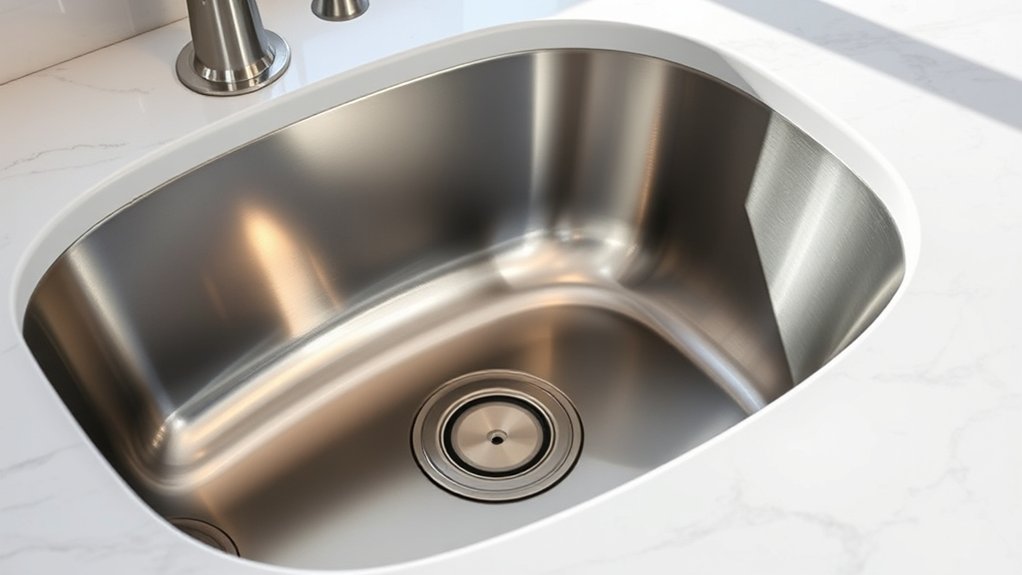
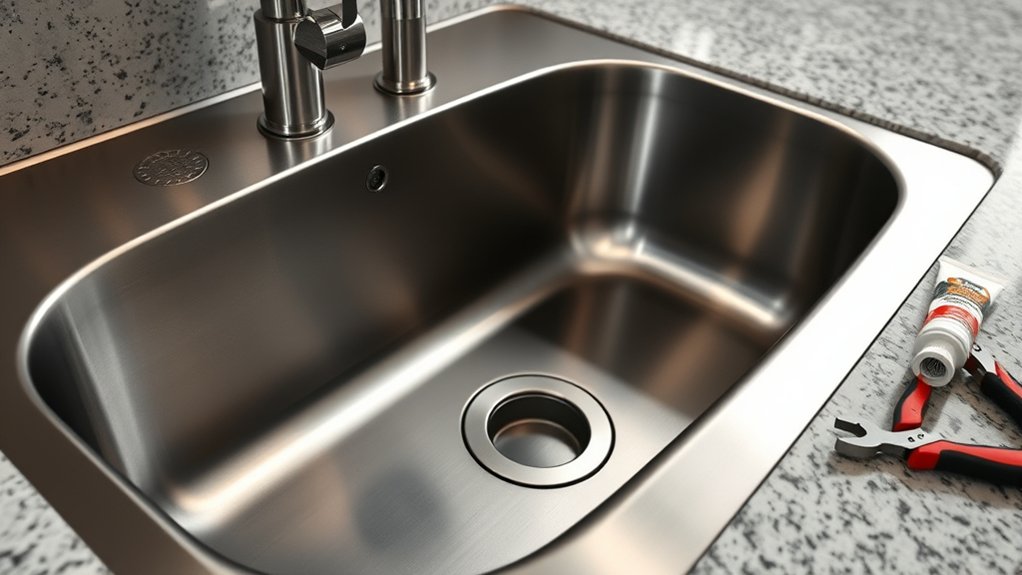
Replacing a kitchen sink can vary in cost depending on several factors, including the type of sink you choose and whether you handle the installation yourself or hire a professional. If you do it yourself, you’ll need tools like wrenches, pliers, and sealant.
These tools make the process smoother and safer, but improper installation can lead to leaks or damage. Before installing your new sink, it’s a good idea to clean the area thoroughly, including tools and surfaces, to prevent mold and grime buildup.
The cost of the sink itself can range from budget models to high-end materials, which affects your overall expense. If you hire a professional, labor costs will be added, increasing the total cost.
Whether you DIY or hire out, understanding these costs helps you plan better and ensures your kitchen sink replacement goes smoothly.
What Factors Affect Your Kitchen Sink Replacement Cost?
When you’re thinking about replacing your kitchen sink, a lot of factors come into play that can affect the overall cost. For starters, the material you pick is a big deal—some options are more expensive than others, so that can really impact your budget.
Then, there’s the plumbing work involved. If your new sink requires extra connections or modifications to the existing plumbing, that can add to the cost. And don’t forget about labor and installation fees, which can vary depending on where you live and how complex the job is. All of these things together help determine the final price of your sink replacement.
Material Choices Impact Price
The material you choose for your kitchen sink really impacts the overall cost, since different options come with different price tags. Your choice affects not just the initial expense but also things like how well it fits with your countertop and water efficiency.
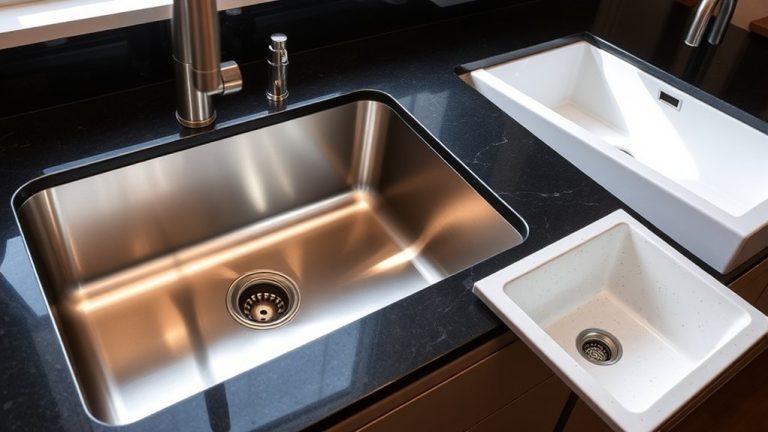
For example, stainless steel sinks are affordable, durable, and easy to maintain, which is why they’re so popular. Quartz composites give a sleek look but tend to cost more. Fireclay sinks are stylish but often pricey and fragile.
Keep in mind that some materials, like granite, might need extra reinforcement to prevent damage. The right material should balance your budget with durability, style, and functionality.
Think about how the material works with your countertop and your water-saving needs to make the best investment.
Plumbing Complexity Variations
While material choices influence your kitchen sink replacement budget, the complexity of your existing plumbing can also significantly impact costs. If your plumbing setup is outdated or has tight spaces, it may require extra work to reroute pipes or adjust fittings, which can increase labor time and expenses.
Choosing eco-friendly options like low-flow fixtures might add to the cost if they need specialized connections. If you’re restoring a vintage design, you could face challenges matching old plumbing components or adapting modern parts to antique setups.
These factors can make your project more intricate, requiring careful planning and potentially higher costs. Understanding the plumbing’s condition beforehand helps you anticipate additional expenses and choose suitable solutions, whether upgrading to eco-friendly fixtures or preserving vintage aesthetics.
Labor and Installation Fees
What factors influence the labor and installation fees when replacing a kitchen sink? Your costs depend on several elements, including the complexity of the work and your home’s specifics. Historical trends show that labor costs fluctuate with regional demand and contractor experience. Design aesthetics also play a role because more intricate or custom sink styles require extra time and skill.
Moreover, consider these factors:
- Existing plumbing complexity: Difficult connections or outdated setups increase labor time.
- Sink type and installation method: Undermount or vessel sinks often demand more effort.
- Additional repairs: Fixing damaged countertops or plumbing adds to costs.
Understanding these factors helps you anticipate expenses and select the right professional for your kitchen upgrade.
How to Choose the Right Kitchen Sink for Your Budget
Choosing the right kitchen sink within your budget starts with understanding your needs and priorities. If you’re eco-conscious, look for eco-friendly options made from sustainable materials like bamboo or recycled stainless steel. These can sometimes cost more upfront but save money over time with energy efficiency and durability.
If you’re interested in vintage restoration, you might find unique, older sinks that add character to your kitchen at a lower price. Consider the size and style that fits your space and daily tasks—single or double bowls, undermount or drop-in.
Remember, higher-quality materials like granite composite or fireclay may cost more but offer long-term durability. Set a realistic budget based on your overall kitchen renovation costs, and compare options within that range.
Should You DIY or Hire a Pro? Deciding What’s Best
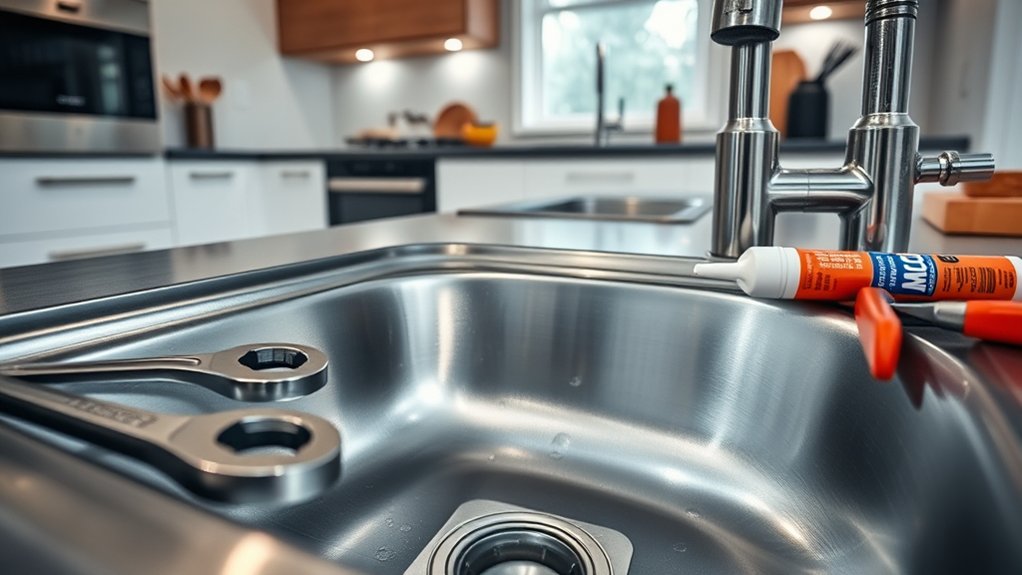
Deciding whether to tackle your kitchen sink replacement yourself or hire a professional depends on your skill level, the complexity of the job, and your comfort with plumbing tasks. If you’re thinking about DIY, weigh the risks carefully. Poor installation can lead to leaks, water damage, or plumbing issues down the line.
Before making a decision, consider these factors:
- DIY safety: Make sure you understand plumbing basics and follow safety precautions.
- Complexity of the job: If your sink has complicated connections or you’re unsure about removing old fixtures, a pro might be a better choice.
- Warranty coverage: Hiring a professional often includes a warranty, so you’re protected if problems come up later.
While DIY can save you money upfront, a professional’s warranty and expertise can save you time, stress, and costly mistakes. Ultimately, think about your comfort level and skills to decide what’s best for your situation.
What Are the Labor Costs for Replacing a Kitchen Sink?
Labor costs for replacing a kitchen sink vary depending on factors like location, complexity, and the plumber’s rates. Typically, you’ll pay between $150 and $500 for labor.
If you’re opting for eco-friendly options or custom designs, costs might go up a bit because of specialized installation needs. Here’s a quick breakdown of common scenarios:
| Job Type | Estimated Cost |
|---|---|
| Standard sink replacement | $150 – $300 |
| Eco-friendly or custom design | $250 – $500 |
| Additional plumbing work | $50 – $150 per hour |
| Installing new fixtures | $100 – $300 |
Remember, higher-end options like custom designs or eco-friendly features can increase labor costs. But they add value and make your kitchen more sustainable.
Hiring a professional ensures proper installation, especially for complex or custom sinks. It’s often worth the investment to avoid issues later on.
What Additional Materials Do You Need to Budget For?

When planning to replace your kitchen sink, you’ll need to budget for more than just the sink itself; additional materials are essential to ensure a smooth installation. These materials help everything function properly and last over time.
You might need new plumbing parts like pipes or fittings, especially if your existing setup is outdated. Consider eco-friendly options for fixtures and sealants, which are better for the environment and your health.
Don’t forget to check warranty considerations. Some sinks come with warranties that cover parts or labor, which can save you money if issues come up later.
Key additional materials include replacement plumbing components and connectors, sealants, caulk, and mounting hardware. Eco-friendly sealants and fixtures are also worth considering.
Budgeting for these essentials guarantees a trouble-free installation and long-lasting results. This way, your sink upgrade will be smooth and sustainable.
Hidden Costs to Watch Out for During Your Sink Replacement
When you’re swapping out your kitchen sink, there’s a good chance some hidden costs might pop up along the way. Things like unexpected plumbing repairs or permit and inspection fees can catch you off guard if you’re not prepared. It’s always a good idea to budget a little extra just in case.
Plus, there could be surprises beneath the surface, like structural issues that need fixing before you can install the new sink. These unexpected problems can add extra time and money to your project. Being aware of these potential costs ahead of time can help you plan better and avoid any surprises down the line.
Plumbing Repair Expenses
Plumbing repair expenses can unexpectedly add to your sink replacement costs, especially if hidden issues are uncovered during the process. You might find corroded pipes or outdated fittings that need immediate attention. These repairs can range from minor fixes to extensive pipe replacements, increasing your overall budget.
Be prepared for potential costs like replacing old or damaged water supply lines or fixing leaks caused by corroded fittings. Upgrading to eco-friendly options that conserve water and reduce long-term costs might also be necessary.
If you’re considering vintage styles or eco-friendly options, note that these upgrades might require specialized plumbing adjustments, which can increase expenses. Addressing hidden plumbing issues early can help prevent costly repairs later, keeping your sink replacement within budget while maintaining style and sustainability.
Permit and Inspection Fees
Hidden costs can catch you off guard during a sink replacement, especially if permits and inspections are overlooked.
Permit fees and inspection costs are essential to ensure your project complies with local codes.
Failing to get the necessary permits could lead to fines or having to redo work.
Inspection costs vary by area and scope of work, often adding to your overall budget.
Some municipalities charge flat fees, while others base fees on the project value.
Here’s a quick overview:
| Cost Type | Details |
|---|---|
| Permit Fees | Usually $50–$200, depending on your location |
| Inspection Costs | Ranges from $50–$150 per inspection |
| Permit Requirements | Necessary for plumbing and electrical work |
| Fines for Non-Compliance | Can be costly and hold up your project |
| Re-Inspection Fees | May be needed if issues come up |
Always check local regulations before starting your sink replacement.
Unexpected Structural Issues
Even with careful planning, unexpected structural issues can suddenly increase your sink replacement costs. You might find that your cabinets or flooring need structural reinforcement, which adds to the expenses.
A thorough foundation inspection is essential before you proceed, because hidden damage could compromise stability. Damaged framing or flooring beneath the sink area might be present, or you may need extra reinforcement to support the new sink.
Hidden water damage or rot can also weaken surrounding structures and often require specialized repairs. These issues can escalate costs quickly, so ignoring them isn’t a good idea.
Conducting an early foundation inspection helps identify potential problems, saving you from surprise expenses later. Being prepared for these hidden costs keeps your project on budget and ensures your kitchen remains safe and functional.
How Much Do Different Kitchen Sink Styles Cost?
When choosing a kitchen sink, the style you pick can really affect your overall cost. Modern trends include farmhouse, undermount, and integrated sinks, each with different price ranges.
Farmhouse sinks tend to be more expensive because of their large, deep basins and rustic look. They usually cost between $500 and $2,500. Undermount sinks offer a seamless appearance and easy cleaning, typically ranging from $200 to $1,200.
If you’re eco-conscious, there are eco-friendly options made from recycled glass or stainless steel. These materials can add to the cost but support sustainability. Prices for eco-friendly sinks generally fall between $300 and $1,500.
Tips to Save Money on Your Kitchen Sink Replacement
To save money on your kitchen sink replacement, start by setting a clear budget and sticking to it. Knowing your financial limits helps you focus on cost-effective choices without sacrificing your kitchen’s style. Consider these tips:
- Opt for a standard-sized sink to avoid extra installation costs and reduce the need for custom modifications.
- Reuse existing sink accessories if possible, or choose affordable replacements that match your current setup.
- Choose a durable, budget-friendly material that still complements your kitchen’s style, saving money over time.
Focusing on these aspects guarantees you get a functional, attractive sink without overspending. Remember, investing in quality sink accessories can improve your kitchen’s look and usability, but don’t go overboard. Staying within your budget while selecting practical options helps you achieve a stylish kitchen upgrade without unnecessary costs.
Next Steps: Planning Your Kitchen Sink Upgrade
Once you’ve set your budget and picked out a sink, the next step is to plan your upgrade. Start by checking out current design trends to make sure your new sink matches your kitchen’s style.
After choosing your sink and budget, plan your upgrade by exploring current design trends to match your kitchen’s style.
Think about options like farmhouse, undermount, or integrated sinks, and see how they fit with your overall decor. If eco-friendliness matters, look for models made from sustainable materials or with water-saving features.
Be sure to measure your space carefully so your new sink fits well and avoid any surprises. Decide if you want extra features like a built-in soap dispenser or a deeper basin.
Planning ahead helps you stay within your budget and makes the process smoother. Take some time to research reputable brands and read reviews to find a durable, stylish sink that matches your eco-conscious values and design preferences.
A good plan ensures a hassle-free upgrade and a kitchen that works perfectly for you.
Frequently Asked Questions
How Long Does a Kitchen Sink Replacement Typically Take?
A kitchen sink replacement usually takes about 2 to 4 hours, depending on your setup. You’ll start with drain installation and carefully remove the old sink.
Ensuring faucet compatibility is essential; if your new sink has different fittings, it might extend the process. You’ll also need time for sealing and testing the new installation.
With proper planning, the project moves smoothly, and you can enjoy your upgraded sink sooner.
What Are the Most Durable Materials for Kitchen Sinks?
Imagine a sink that can handle daily chaos with ease. Stainless steel, cast iron, or granite composite? These are the top durable options, each with their own strengths.
Stainless steel resists stains and dents, making it a popular choice. Cast iron is built to last and has a classic look thanks to its porcelain finish. Granite composite offers scratch resistance and looks beautiful too.
Choosing the right material depends on what you need, but all of these promise to keep your kitchen functional and stylish for years to come.
Can I Replace My Kitchen Sink Without Plumbing Experience?
You can replace your kitchen sink without plumbing experience, but it does require some DIY skills and patience. Start by turning off the water supply and carefully removing the old sink.
When installing the new sink, make sure all connections are tight and sealed properly to prevent leaks. Watching tutorials and following step-by-step guides can make the process easier.
If you’re feeling unsure, it’s a good idea to consider consulting a professional. This can help you avoid potential issues or water damage down the line.
What Warranties Are Available for Different Kitchen Sinks?
They say, “Better safe than sorry,” and that’s true when choosing a kitchen sink. Warranties vary by brand and model, offering coverage for defects and issues that may affect sink longevity.
Some come with lifetime warranties, while others cover only a few years. Always check warranty details before buying so you know your investment is protected.
This way, your sink stays functional and reliable for years to come.
Are There Eco-Friendly Options for Kitchen Sink Replacements?
Yes, eco-friendly options are available for kitchen sink replacements. You can choose sinks made from materials like recycled stainless steel, bamboo, or biodegradable composite.
Installing water-saving fixtures, such as low-flow faucets, helps conserve water and reduces your environmental impact. These choices not only benefit the environment but can also lower your utility bills over time.
Consider these sustainable options to make your kitchen greener and more efficient.
Conclusion
Replacing your kitchen sink is like tending a garden—you need the right tools, good planning, and a bit of patience to see it bloom. With careful budgeting and informed choices, you’ll turn a simple upgrade into a rewarding transformation.
Just like nurturing a plant, your attention to detail and willingness to learn will help your project flourish.
By understanding the costs involved, you’ll be better prepared to choose the right sink and avoid surprises.
Remember, the cost to replace your kitchen sink varies depending on materials, labor, and your specific needs.
With the right approach, replacing your kitchen sink can be affordable and satisfying, leaving you with a functional and beautiful kitchen oasis that’s worth every penny.