5 Simple Steps to Measure Your Kitchen Sink for Replacement
Are you tired of struggling to find the perfect kitchen sink replacement? You’re not alone—many people find measuring for a new sink confusing and frustrating. But don’t worry, with a few simple steps, you can get the right measurements and ensure your new sink fits perfectly.
To measure your kitchen sink for a replacement, start by clearing the area and using a tape measure to find the length and width across the top lip. Measure the depth from the rim to the bottom of the bowl, and note the bowl’s size.
Locate faucet and drain hole positions with precise measurements. Record all details carefully, including features and materials.
Keep going for more tips on ensuring your new sink fits perfectly and suits your needs.
Key Takeaways
- Clear the area around the sink so you have easy access, and use a tape measure to get accurate readings.
- Measure the overall length, width, and depth of your current sink to figure out what size you need.
- Take note of the position of the faucet, drain holes, and any extra features to ensure everything fits properly.
- Measure the bowl’s length, width, and depth to make sure it suits your daily tasks.
- Finally, jot down details about the material, style, and installation to find a replacement sink that matches perfectly.
How to Measure the Length and Width of Your Kitchen Sink
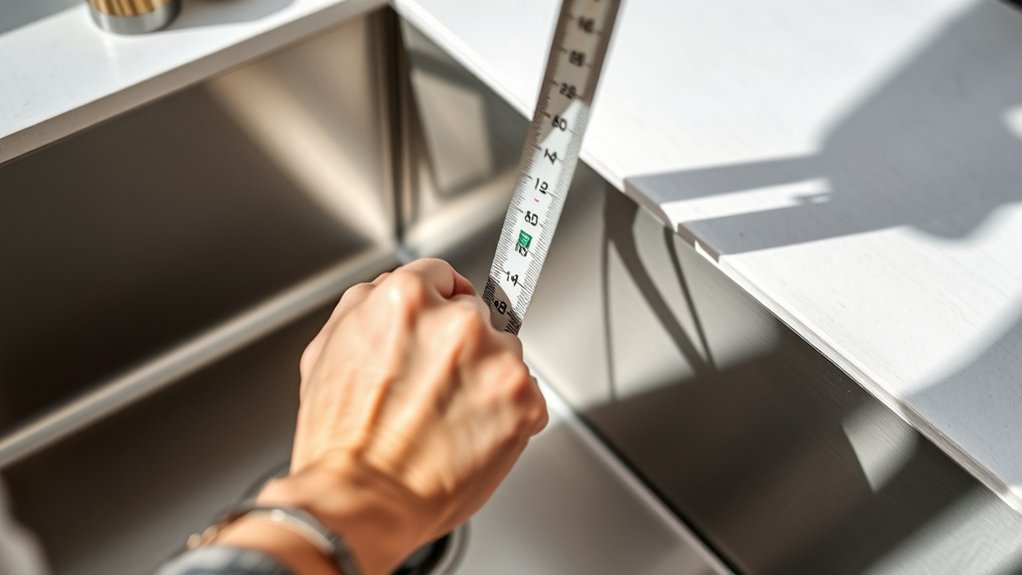
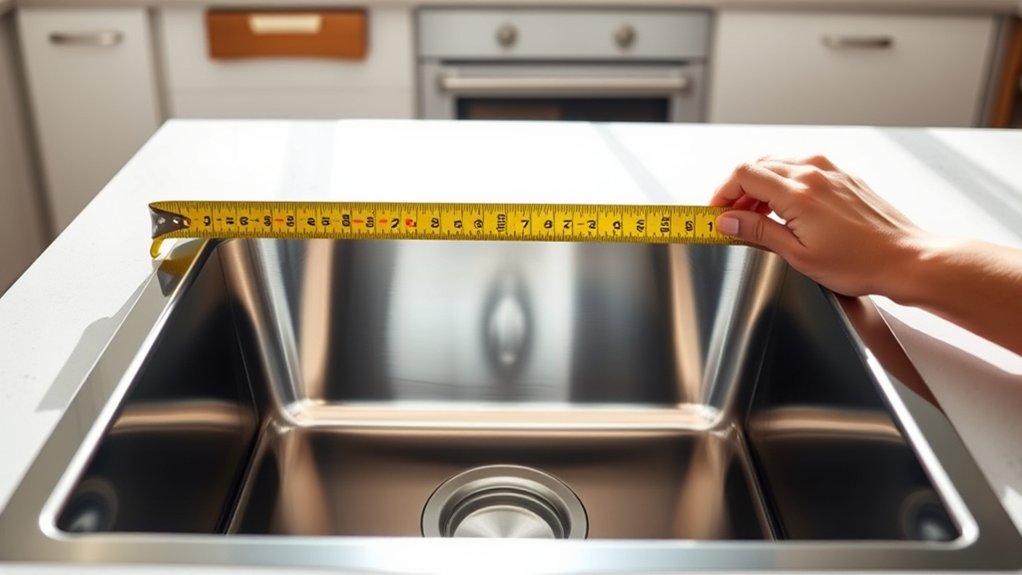
To measure the length and width of your kitchen sink accurately, start by clearing out the area around the sink so you have unobstructed access. Use a tape measure to get precise dimensions, measuring from edge to edge along the top lip for length, then across the front for width. Keep your tape straight and level for accuracy.
When choosing a replacement, consider material options like stainless steel, composite, or cast iron, as each has different installation tips and weight considerations. For example, stainless steel is lightweight and easy to install, while cast iron needs a sturdy support frame.
Be sure to record your measurements carefully, noting any irregularities or curves. Accurate measurements help you select a sink that fits perfectly and makes installation easier. Remember, taking precise measurements now reduces the need for adjustments later, saving you time and effort during your project.
Determining Depth and Bowl Size for a Perfect Fit
Once you’ve recorded your sink’s length and width, it’s time to focus on the depth and bowl size to guarantee a perfect fit. Accurate measurements assure your new sink complements your kitchen space and matches your needs.
Measuring depth and bowl size ensures a perfect fit for your kitchen needs.
Consider these key points:
- Depth measurement: Measure from the top edge down to the bottom of the bowl. Typical depths range from 7 to 10 inches, which affects how much water it can hold and how comfortable it is to use.
- Bowl size: Find the width and length of the bowl itself. Make sure it’s big enough for your daily tasks, like washing large pots or filling tall vases.
- Material options and installation tips: Different materials like stainless steel, composite, or porcelain have varying thicknesses. These differences impact the overall depth. Follow installation tips to account for these variations and ensure a snug, leak-free fit.
Locating Faucet and Drain Hole Placement
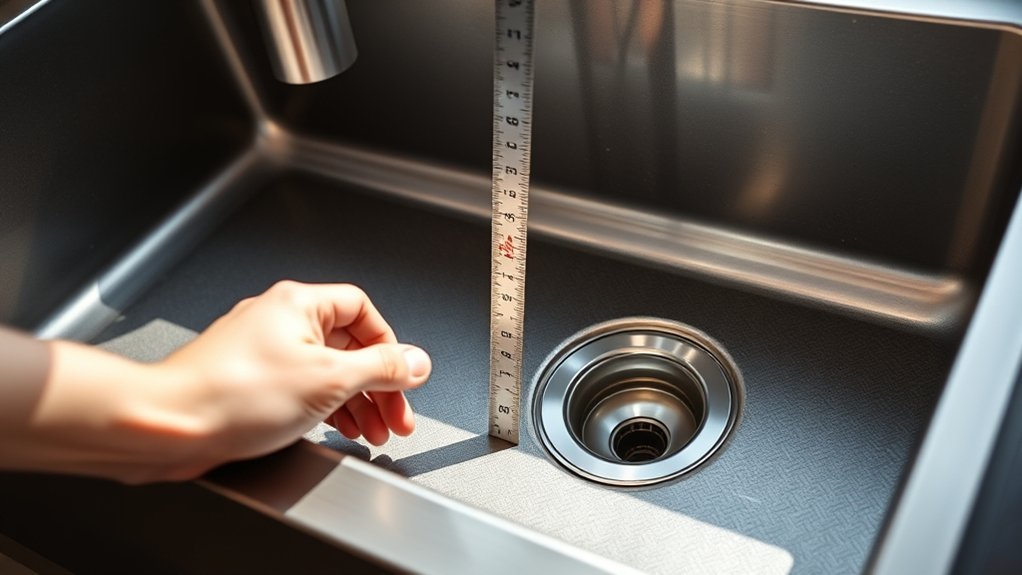
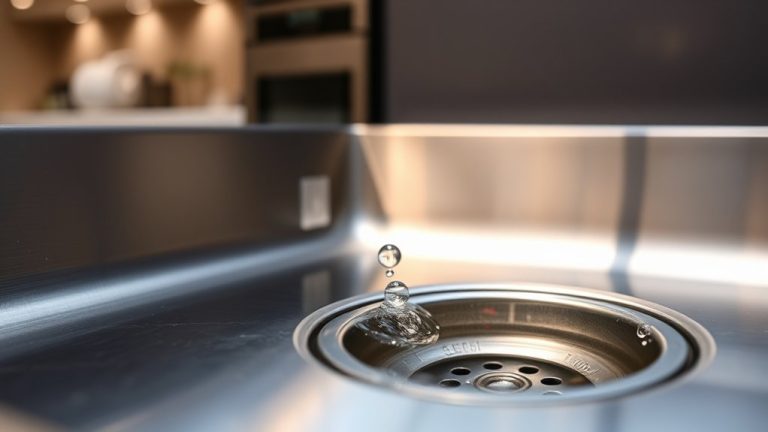
Have you thought about where to position the faucet and drain holes before installing your new sink? Proper placement guarantees faucet compatibility and makes installing the drain assembly easier. Measure carefully from the sink edges to the desired hole locations, keeping in mind the layout of your countertop and existing plumbing.
Most sinks have pre-drilled holes, but it’s a good idea to verify their positions for your faucet type and drain assembly. Use a template or a measuring tape to mark precise spots.
Here’s a quick visual to help you plan:
| Hole Type | Typical Placement | Notes |
|---|---|---|
| Faucet | Centered or offset | Depends on faucet style |
| Drain | Centered | Usually aligned with sink center |
| Soap Dispenser | Optional, near faucet | Check faucet compatibility |
| Air Gap | Near edge | For dishwasher connection |
Double-check measurements and compatibility before drilling to avoid misalignment or leaks.
Recording All Dimensions and Features of Your Sink
Before measuring for your replacement sink, it’s important to document all its dimensions and features accurately. This helps you pick a sink that fits perfectly and matches your kitchen’s style.
Start by noting the overall length, width, and depth of your current sink. Then, measure the location of the faucet holes, drain, and any extra features like soap dispensers or side bowls.
Be sure to record the material options—whether stainless steel, porcelain, or composite—and think about how they match your kitchen’s decor. Don’t forget to note the color so your new sink complements your cabinets and countertops.
To sum up:
- Record overall dimensions and feature placements.
- Note the material options that suit your needs.
- Keep track of color coordination for a cohesive look.
Having this detailed record makes it easier to choose a replacement that fits perfectly and keeps your kitchen both functional and stylish.
Using Your Measurements to Find the Right Replacement Sink
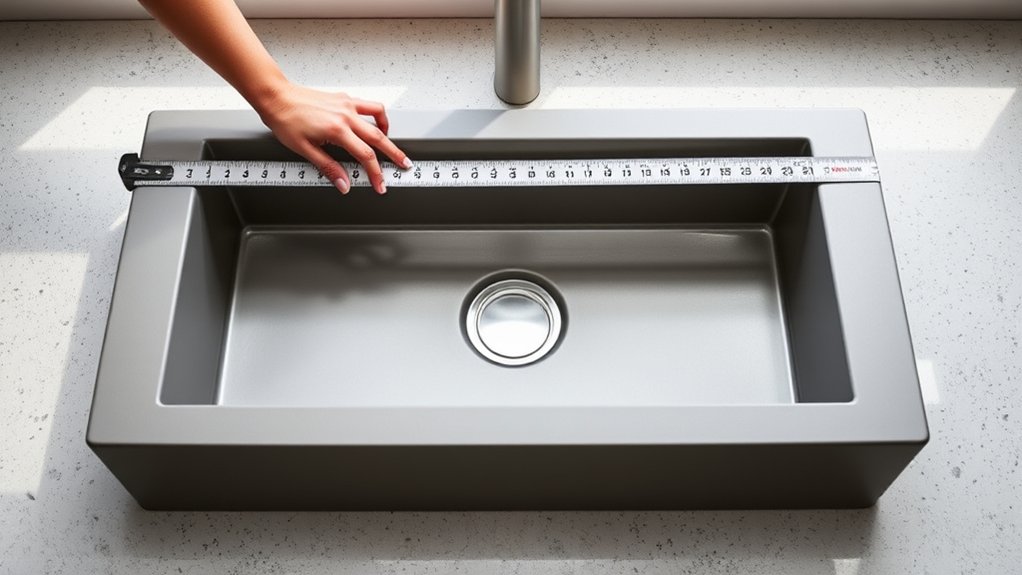
With your measurements and feature details in hand, you’re ready to find a replacement sink that fits perfectly and meets your needs. Start by exploring material options like stainless steel, porcelain, granite, or composite, and think about durability, maintenance, and your style preferences.
Next, consider style choices such as undermount, drop-in, or farmhouse designs to match your kitchen’s look and functionality. Use your measurements to filter sinks that will fit your cabinet opening and countertop cutout without needing modifications.
Pay attention to basin depth and width to make sure there’s enough space for daily tasks. Also, think about drain placement and whether you want one or two bowls for multitasking.
Frequently Asked Questions
What Tools Do I Need to Measure My Kitchen Sink Accurately?
You need a tape measure or ruler to accurately determine your sink dimensions. Use the tape measure to measure the length, width, and depth of your current sink.
Make sure to note the measurements precisely. Keep the tape straight and steady for the most accurate readings.
Have a pen and paper ready to record your measurements so you can easily refer to them when shopping for a new sink.
How Do I Measure for an Undermount Sink Installation?
To measure for an undermount sink installation, start by measuring the width and length of your existing cutout, making sure to include any overhang.
Check your material options like stainless steel, granite, or composite, since these can affect the required cutout size.
Be sure to verify the thickness of your countertop and compare your measurements to the sink’s specifications.
Getting these measurements right helps avoid gaps or fitting issues, making the installation process much easier.
Should I Measure the Countertop Cutout or the Sink Itself?
You should measure the countertop cutout, not the sink itself, to guarantee a proper fit. Focus on the dimensions of the cutout, including length, width, and the size of the opening, so you can match it with your new sink.
Also, check the sink depth to make sure it fits comfortably under your cabinet and countertop. Accurate measurements help you avoid gaps or overhangs, making installation smoother and ensuring your sink fits perfectly.
How Do I Account for Existing Plumbing Constraints?
You should definitely consider existing plumbing constraints when measuring your sink.
Check if any plumbing adjustments are needed by looking at how your drainage lines fit with the new sink’s setup.
Take note of where the pipes and fittings are located, and make sure there’s enough space for any modifications.
Make sure the sink’s drain lines up properly with your current plumbing to avoid surprises later.
This will make the installation smoother and save you from costly changes down the line.
What Additional Features Should I Consider When Choosing a New Sink?
When choosing a new sink, consider material options like stainless steel, porcelain, or granite for durability and aesthetics. These materials can really impact the look and longevity of your sink.
Style considerations include undermount or top-mount designs that match your kitchen decor. Think about what fits best with your overall kitchen style and your personal preference.
Also, look into features such as integrated drainboards, soundproofing, or multiple bowls for added convenience. These extras can make your daily kitchen tasks easier and more enjoyable.
These additions can improve functionality and complement your kitchen’s look, ensuring your new sink fits seamlessly into your space.
Conclusion
Armed with your precise measurements, you’re now ready to find a sink that fits perfectly, just like a key fitting into a lock. Remember, a well-chosen sink isn’t just about function. It’s about creating a space where memories are made, much like the timeless stories of a well-loved kitchen.
Trust your measurements, and soon your kitchen will be renewed with a sink that feels as if it was made just for you. Choosing the right size makes all the difference in creating a seamless and beautiful kitchen space.