Unclog Your Double Kitchen Sink Without Garbage Disposal in 5 Simple Steps
Dealing with a clogged double kitchen sink can be a real hassle, especially when you don’t have a garbage disposal to help. Many people struggle with stubborn blockages that disrupt their daily routine. But don’t worry—you’re not alone, and there are simple ways to get your sink flowing smoothly again.
To unclog your double kitchen sink without a garbage disposal, start by removing the sink stoppers or strainers to access the drain openings. Use a plunger to dislodge any blockages, then pour a mixture of baking soda and vinegar before rinsing with hot water.
If the clog persists, remove and clean the P-trap for deeper debris. Exploring these steps further will help you clear stubborn drains effectively and prevent future issues.
Key Takeaways
- Remove the sink stoppers and clear any visible debris from both drain openings.
- Use a plunger on each side to dislodge localized clogs with vigorous pumping.
- Pour a baking soda and vinegar mixture down the drains, then flush with hot water.
- Detach and clean the P-trap to remove accumulated grease, hair, or debris.
- Repeat the process if necessary, and consider using a drain snake for stubborn blockages.
How to Unclog a Double Kitchen Sink Quickly
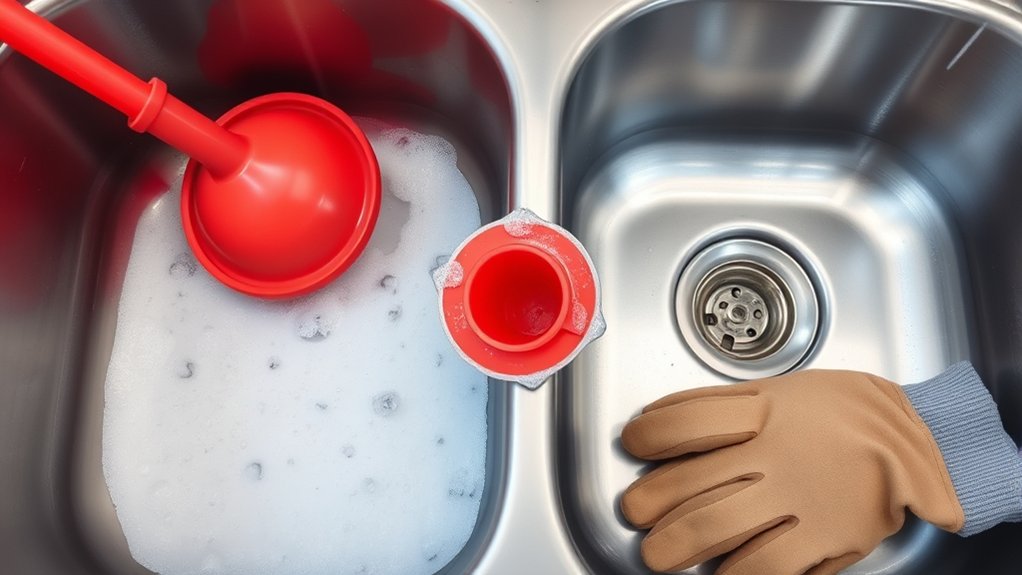
When your double kitchen sink starts to drain slowly or backs up, acting quickly can prevent a full clog. Start with a drain inspection to spot any potential blockages. Remove the sink stoppers or strainers to access the drain openings.
Address slow drains promptly by inspecting and clearing blockages to prevent full clogs and costly repairs.
Use a flashlight to look inside for any visible debris or buildup. If you see a clog, try a sink plunger—cover the drain openings and pump vigorously to loosen the blockage. If that doesn’t work, consider using a drain snake or auger to clear stubborn obstructions.
Regular pipe maintenance helps prevent future clogs. Avoid pouring grease or large food particles down the drain. After clearing the clog, flush the pipes with hot water to wash away remaining debris.
Taking these steps quickly keeps your pipes in good shape and reduces costly repairs. Routine drain inspection and maintenance are key to keeping your double sink flowing smoothly.
Common Causes of Double Sink Clogs
Double sink clogs often come from common household habits and everyday debris. Over time, grease, food particles, and soap scum can build up in your pipes, causing blockages.
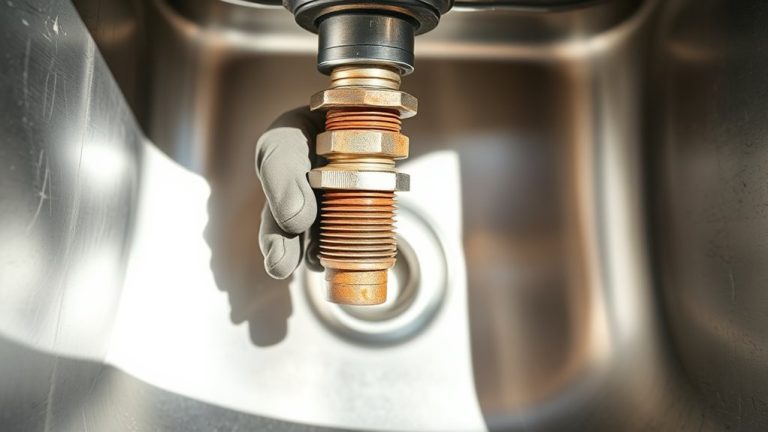
Pipe corrosion, especially in older plumbing, weakens pipe walls and creates rough surfaces that trap debris more easily. Improper installation can also lead to frequent clogs, as misaligned pipes or inadequate slopes prevent proper drainage.
Imagine debris catching on jagged pipe surfaces or standing water backing up because of poor pipe alignment. To visualize:
- Grease and oil solidifying in pipes
- Food scraps sticking to corroded pipe walls
- Poorly fitted connections trapping debris
- Water not flowing smoothly due to improper slope
Understanding these common causes helps you prevent future clogs and keep your double sink working well. Regular inspections and proper installation are key to avoiding these issues altogether.
Essential Tools for Clearing Your Sink
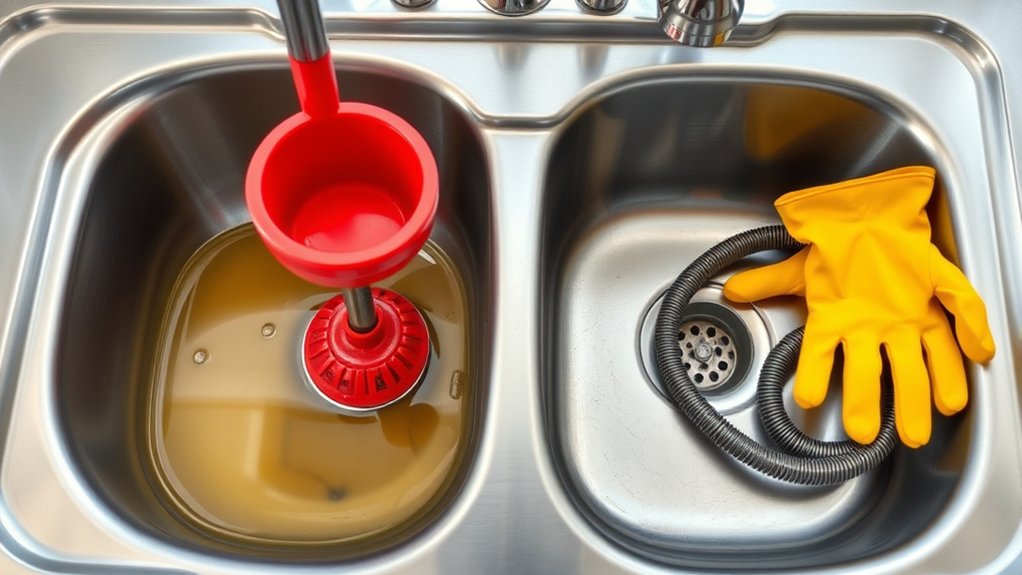
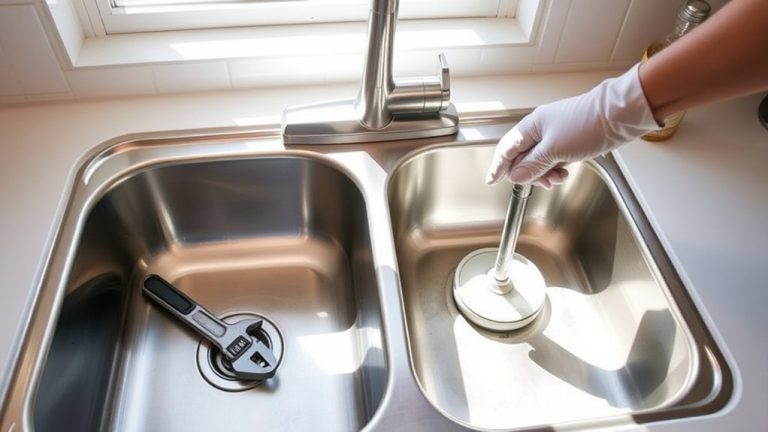
To effectively clear a clogged sink, you’ll need a few essential tools on hand. A plunger is your first line of attack, helping dislodge blockages without using chemicals.
A drain snake or auger is also vital for pipe maintenance, allowing you to reach deep into pipes and clear stubborn clogs. Keep a pair of rubber gloves nearby to protect your hands during sink cleaning and maintenance.
A bucket or small container is useful for catching water when loosening pipes or removing debris. A flashlight can help you see inside the pipes clearly.
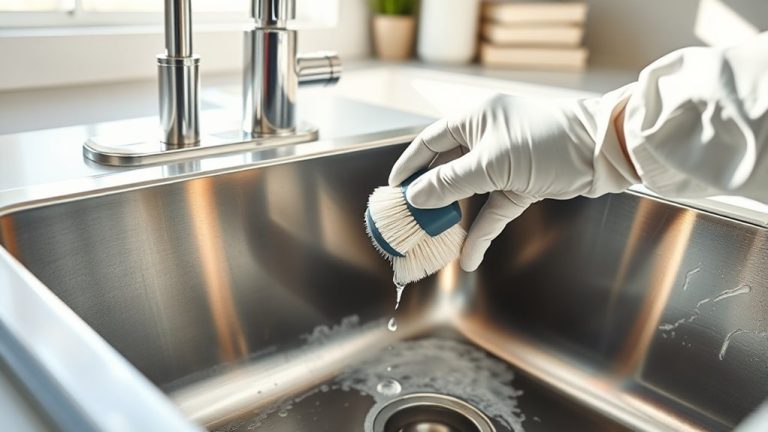
Furthermore, a drain brush or flexible cleaning tool can help scrub away buildup around the drain opening. Having these tools ready makes the process smoother and more efficient, saving you time and effort.
With the right tools, you’ll be well-equipped to tackle sink clogs and keep your double kitchen sink functioning properly.
Step-by-Step Guide to Fixing Your Sink Drain
Start by removing any standing water from the sink using a cup or small container. This clears the way for effective drain cleaning and pipe maintenance.
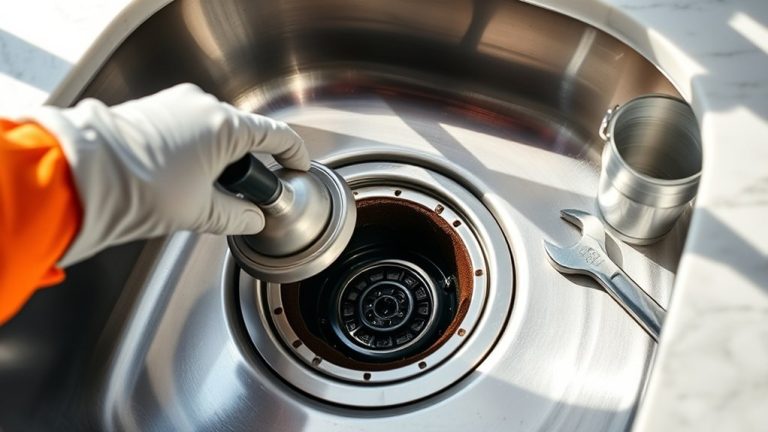
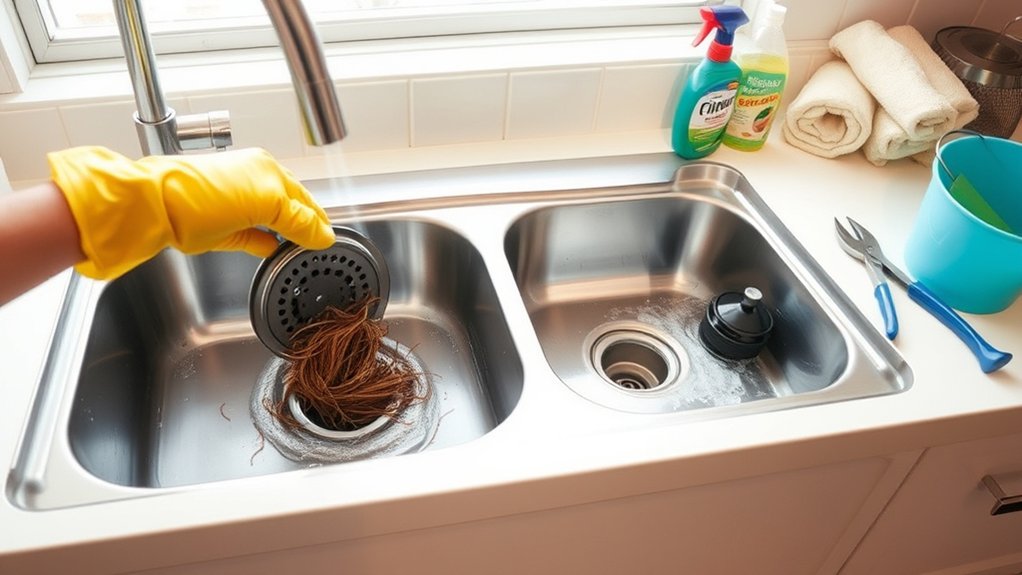
Next, remove the sink stopper or drain cover to access the drain opening. Visualize a tangled mess of hair and grease blocking the pipe, a slimy buildup coating the walls, tiny debris caught in the grid, and the shiny metal of the pipe interior.
Use a plunger to dislodge the clog, working it vigorously for a few minutes. If that doesn’t work, pour a mixture of baking soda and vinegar down the drain. Let it fizz and break up the blockage.
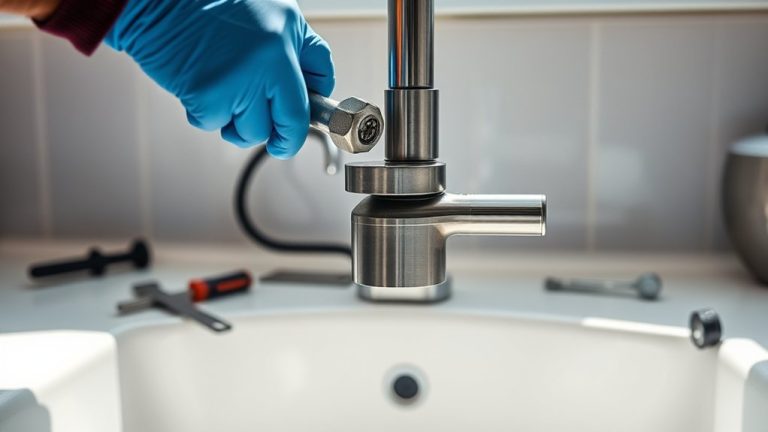
Follow with hot water to flush everything through. For stubborn clogs, you may need to remove and clean the P-trap, checking for debris or buildup.
Regular drain cleaning and pipe maintenance prevent future issues and keep your sink flowing smoothly.
When to Call a Plumber and How to Prevent Future Clogs
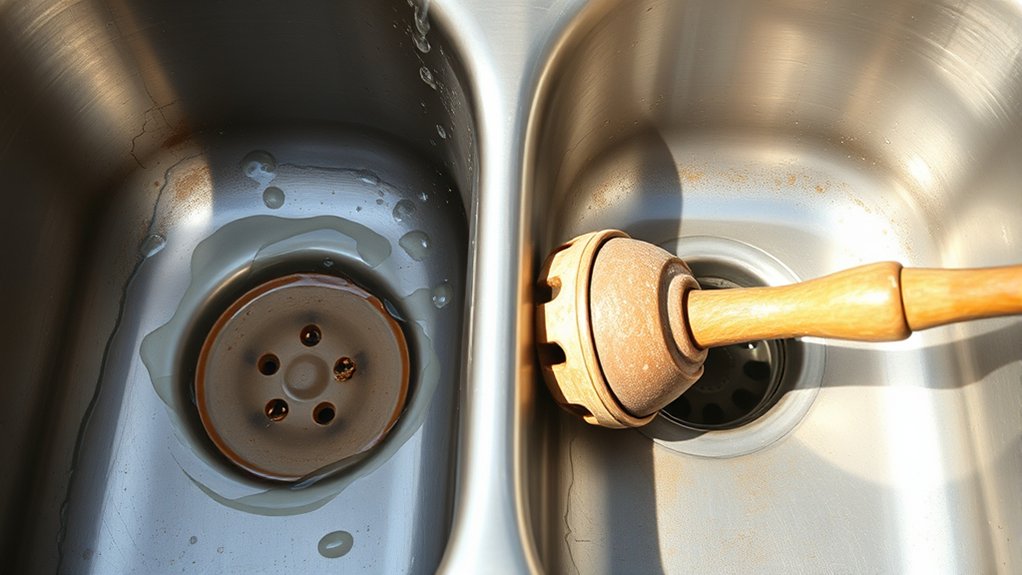
While minor clogs can often be fixed with DIY methods, you should call a plumber if you notice persistent or recurring blockages, foul odors, or slow drainage that doesn’t improve after your efforts.
Call a plumber if blockages, odors, or slow drainage persist despite DIY efforts.
You might also need professional help if you experience emergency leaks or suspect pipe corrosion, which can cause more significant damage.
Addressing these issues early prevents costly repairs and water damage.
To prevent future clogs, avoid pouring grease or large food particles down the drain, and use strainers to catch debris.
Regularly flushing your pipes with hot water or a safe enzyme cleaner can help keep buildup at bay.
Also, schedule routine inspections, especially if your plumbing is aging, to catch corrosion or leaks before they worsen.
Staying proactive with maintenance not only extends the life of your plumbing but also keeps your double sink functioning smoothly, saving you time and money down the line.
Frequently Asked Questions
Can Natural Remedies Effectively Unclog Double Kitchen Sinks?
Yes, natural remedies can effectively unclog double kitchen sinks. You might want to try using a plunger first, applying steady pressure to loosen the blockage.
If that doesn’t do the trick, enzyme solutions are a good option. They break down organic matter causing the clog and may take a few hours or overnight to work.
How Often Should I Clean My Sink Drain to Prevent Clogs?
Think of your drain as a garden that needs regular tending. You should perform preventive cleaning once a month to keep it flowing smoothly.
Regular drain maintenance prevents buildup of grease, hair, and debris, reducing the risk of clogs. By staying proactive, you maintain a healthy, clear sink.
This helps you avoid messy blockages and keeps your kitchen running efficiently. A well-maintained drain makes your sink as inviting as a beautifully cared-for garden.
Are There Eco-Friendly Alternatives to Chemical Drain Cleaners?
Yes, there are eco-friendly options to chemical drain cleaners. You can use biodegradable solutions like baking soda and vinegar, which effectively break down clogs without harming the environment.
These eco-friendly options are safe for your pipes and reduce chemical exposure. Simply pour baking soda down the drain, followed by vinegar. Let it fizz, then flush with hot water.
It’s a natural, sustainable way to keep your drains clear.
What Household Items Can I Use to Clear a Stubborn Clog?
You can use DIY tools like a plunger or a drain snake to clear stubborn clogs. These are simple and effective household items you probably already have.
Pour hot water, then add baking soda and vinegar to help break down the debris. This natural method is eco-friendly and usually does the trick.
You can also try removing the trap under your sink to clear stubborn blockages manually. It’s a straightforward plumbing technique that often works well.
How Do I Identify if the Clog Is in the Trap or Further Down?
Like Sherlock Holmes investigating a mystery, start with pipe inspection. Remove the trap and check for standing water or debris. This helps you pinpoint where the clog might be.
If water drains slowly or not at all from the trap, the clog is probably deeper in the pipe. If water backs up in the sink, the clog could be further down the drain line.
This method helps you figure out if the clog is in the trap or further along the pipe.
Conclusion
By following these simple steps, you can easily unclog your double kitchen sink without a garbage disposal, saving you time and money.
Regular maintenance can prevent about 80% of drain clogs, helping you avoid future headaches. Staying proactive keeps your sink flowing smoothly and extends its lifespan.
So, next time a clog strikes, you’ll be confident to tackle it head-on. This way, you can avoid costly plumber visits and keep your kitchen running efficiently, even without a garbage disposal.