Can Pyrex Go in the Oven?
Many people love using Pyrex for baking and cooking, but they often wonder if it’s safe to put in the oven. You’re not alone—knowing how to handle Pyrex properly can be confusing, especially with so many different types out there.
Yes, you can put Pyrex in the oven, but only if it’s made from borosilicate glass and used correctly.
Make sure to inspect it for cracks and avoid sudden temperature changes, as thermal shock can cause it to crack or shatter.
Preheat your oven gradually and handle hot dishes carefully.
To keep your Pyrex safe and ensure it lasts longer, it’s important to follow proper precautions—more helpful tips are just ahead.
Key Takeaways
- Traditional Pyrex made from borosilicate glass is generally oven-safe up to 450°F.
- Always check the manufacturer’s instructions to confirm if your Pyrex is oven-safe.
- Avoid sudden temperature changes to prevent thermal shock and potential breakage.
- Preheat the oven and gradually warm the Pyrex dish for safe baking.
- Do not place hot Pyrex on cold surfaces or add cold liquids immediately after baking.
Is Pyrex Oven Safe? What You Need to Know
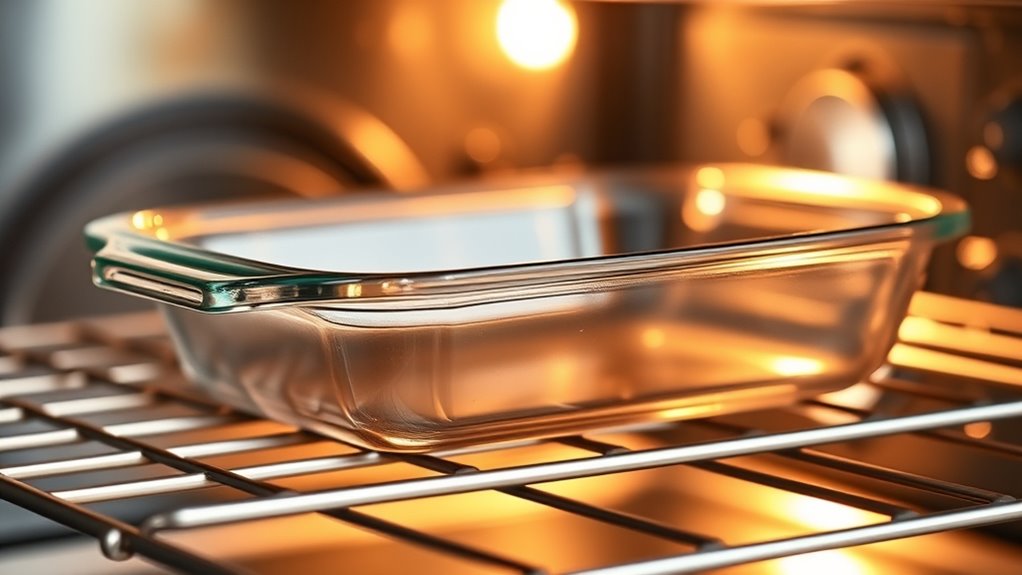
Many people wonder if Pyrex is safe to use in the oven, and the answer depends on the type of Pyrex you have. Traditional Pyrex has impressive durability thanks to its borosilicate glass, which can handle temperature changes.
Pyrex safety in the oven depends on whether it’s made from borosilicate or soda-lime glass.
But some newer Pyrex products are made from soda-lime glass, which isn’t as heat-resistant. These can crack or shatter if exposed to sudden temperature shifts. To stay safe, always check the manufacturer’s instructions before putting your Pyrex in the oven.
If you’re worried about Pyrex’s durability, you might want to consider options like tempered glass or ceramic bakeware. These also handle oven temperatures well and might be more reliable in some cases.
While Pyrex generally works great in the oven when used correctly, knowing which type you have is key. Proper use and understanding your specific piece can help prevent accidents and keep your kitchen safe.
How Does Pyrex Handle Heat? Understanding Its Material
Pyrex is made from borosilicate glass, which is pretty great at handling high temperatures. It’s designed to withstand heat, so you can usually put it in the oven without much worry. But, of course, it’s good to know its limits so you don’t accidentally damage it.
While Pyrex resists heat well, pushing it beyond its temperature threshold can lead to thermal shock or cracking. That’s why it’s important to use it within the recommended temperature range. Knowing how Pyrex handles heat helps you use it safely in the oven and avoid any mishaps or damage.
Material Composition and Safety
Understanding how Pyrex handles heat starts with its unique material composition. Made primarily of borosilicate glass, it has impressive durability and resistance to thermal shock. This means it can handle quick temperature changes without cracking, which many users confirm.
The glass’s composition provides strength and safety when used in the oven. Borosilicate glass resists thermal expansion and contraction, making it reliable for high oven temperatures. It minimizes the risk of shattering during heating.
Pyrex is safe for oven use as long as you follow proper guidelines. User experiences highlight its dependable performance under typical conditions. This composition makes Pyrex a trusted choice for baking, cooking, and storage.
Heat Resistance Limits
Although borosilicate glass is known for its thermal stability, it has specific heat resistance limits you should be aware of. Pyrex’s temperature tolerance generally allows it to withstand oven temperatures up to 450°F (232°C).
Exceeding this can cause it to weaken or break, so it’s best to follow manufacturer guidelines for safe use. Here’s a quick overview of the temperature ranges and their effects on Pyrex:
| Temperature Range | Effect on Pyrex | Recommendation |
|---|---|---|
| Up to 450°F | Safe, no damage | Use within limits |
| 451°F – 500°F | Risk of damage | Avoid high temps |
| Over 500°F | Likely breakage | Do not exceed |
Sticking to these guidelines will help keep your Pyrex safe and intact during cooking.
Thermal Shock Risks
While borosilicate glass is designed to handle rapid temperature changes better than regular glass, it’s still susceptible to thermal shock if not used carefully. Sudden temperature shifts can cause the glass to crack or shatter, affecting its durability.
To minimize risks, avoid pouring cold liquids into hot Pyrex or placing it directly from the freezer into a hot oven. Always preheat your oven and let the dish gradually warm up.
Be cautious of rapid temperature changes, sudden cooling or heating, and direct contact with flames or stovetops. Also, avoid using damaged or scratched glass and exposing it to extreme temperature differences quickly.
Understanding these factors helps protect your Pyrex from thermal shock, ensuring its glass durability remains intact and safe for oven use.
Preparing Your Pyrex Dish for Baking Safely
Before placing your Pyrex dish in the oven, it’s important to prepare it properly to guarantee safe baking. Start with simple steps like inspecting your dish for cracks or chips, which can weaken its structure.
Make sure your Pyrex is clean and dry to prevent any unwanted reactions or thermal stress. When handling the dish, use oven mitts to protect yourself from the heat and avoid sudden temperature changes.
Ensure your Pyrex is clean and dry to prevent reactions and thermal stress during baking.
Familiarize yourself with your baking essentials, like preheating the oven and placing the dish on a stable, heat-resistant surface. Always avoid drastic temperature shifts—don’t transfer a cold Pyrex directly from the fridge into a hot oven.
Instead, let it reach room temperature or warm it gradually with warm water. Proper preparation helps prevent accidents and ensures your Pyrex can handle the heat, making your baking safe and successful.
Do’s and Don’ts When Baking With Pyrex
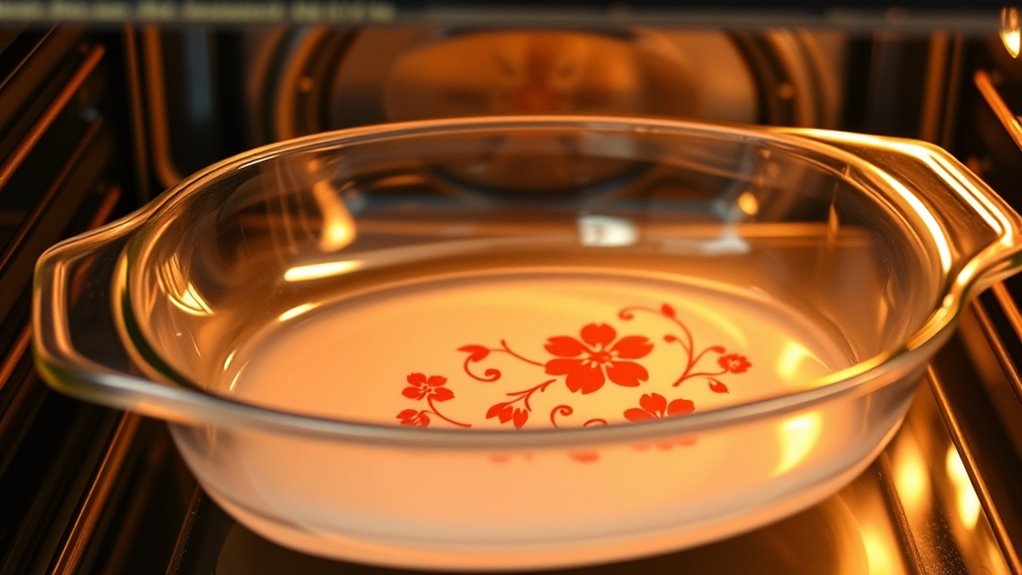
When baking with Pyrex, it’s important to follow some do’s and don’ts to stay safe and keep your glassware in good shape. Always avoid sudden temperature changes, like moving Pyrex straight from the fridge into a hot oven, to prevent thermal shock. Use oven mitts when handling hot dishes, and never place Pyrex directly on a stovetop or open flame.
Be mindful of using other types of bakeware, such as ceramic or metal, if your recipe requires specific techniques. Here are some helpful tips: preheat your oven before putting in your Pyrex, and don’t use damaged or chipped pieces because they could break during baking.
Allow hot Pyrex to cool down gradually before washing it, and never expose it to direct heat sources or open flames. If you need to switch to different bakeware, consider other options for certain recipes. Following these simple guidelines will help ensure safe baking and extend the life of your glassware.
How to Spot Damage or Stress in Pyrex Before Use
Inspect your Pyrex thoroughly before each use to make sure it’s safe for baking. Look for damage like chips, cracks, or sharp edges that could get worse with heat. Small cracks might seem minor but can expand during oven use, risking breakage.
Check for signs of stress such as discoloration, cloudiness, or warped shapes, which mean the glass has weakened. Pay close attention to the rims and corners, where damage is most likely to happen. If you see any damage or stress signs, don’t use the dish in the oven.
Even tiny flaws can weaken your Pyrex and cause it to shatter unexpectedly. Handle your Pyrex gently and store it properly to avoid damage. Regularly inspecting it before each use helps catch issues early, keeping your baking safe and stress-free.
Best Practices for Preheating and Temperature Changes
When you’re preheating your Pyrex, it’s really important to do it gradually. This helps prevent any thermal shock that could crack or break the glass. So, try not to go from freezing cold straight into a hot oven or vice versa.
Instead, use gentle techniques like starting with a cold oven or slowly warming up the dish. Taking your time with the temperature changes will help keep your bakeware safe and in good shape.
Gradual Heating Importance
Gradual heating is essential to prevent thermal shock and protect your Pyrex from cracking or breaking. When you heat your glass slowly, it allows for even heat distribution, reducing stress buildup. This stress relief minimizes the risk of sudden fractures caused by rapid temperature changes.
To achieve proper gradual heating, consider these best practices:
- Start with a cold or room temperature Pyrex piece
- Preheat your oven gradually
- Avoid placing cold Pyrex directly into hot ovens
- Use a low to moderate heat setting initially
- Allow the Pyrex to warm up along with the oven
Following these steps guarantees your Pyrex can handle oven temperatures safely, maintaining its integrity and longevity. Remember, patience with gradual heating makes all the difference in preserving your glassware’s durability.
Avoid Rapid Temperature Shifts
To protect your Pyrex from cracking or shattering, it’s important to avoid rapid temperature shifts. Sudden changes in temperature can cause uneven thermal expansion, which stresses the glass and increases the chance of breakage.
Proper temperature management means not moving your dish directly from a hot oven to a cold surface or the other way around. Instead, let your Pyrex cool gradually after baking. Likewise, don’t pour cold liquids into hot Pyrex, as this quick change can stress the glass.
Controlling how fast your dish heats up or cools down reduces the risk of damage. Gentle, steady temperature changes help preserve your Pyrex’s integrity and keep it safe for oven use.
Proper Preheating Techniques
Proper preheating of your Pyrex ensures even heat distribution and reduces the chance of thermal shock. Follow these steps carefully to get it right:
Always set your oven to the desired temperature before placing your Pyrex dish inside. This helps prevent sudden temperature changes that could cause cracking.
Avoid putting cold Pyrex into a hot oven. Let it come to temperature gradually to protect the glass.
Use a consistent preheating process to ensure the oven heats evenly and safely. This helps your dish cook uniformly.
Make sure your oven is fully preheated before adding your dish. This guarantees even cooking and prevents surprises.
Check your oven’s temperature with a thermometer, especially if it tends to run hot or cold. This helps you maintain accurate heat for safe baking.
Common Mistakes That Can Crack or Break Pyrex
One of the biggest mistakes that can crack or break Pyrex is exposing it to sudden temperature changes. For proper care, avoid moving it directly from the fridge or freezer into a hot oven. Rapid temperature shifts create stress that can cause cracking or shattering.
Also, don’t store Pyrex improperly by stacking heavy objects on top, which can cause chips or fractures. Always handle your Pyrex carefully and inspect it for cracks before each use. Using damaged or chipped pieces increases the risk of breakage when heating.
Avoid extreme temperature differences, like pouring cold liquids into hot Pyrex or vice versa. These actions weaken the glass over time. Follow the manufacturer’s guidelines for temperature limits and don’t skip preheating steps.
Proper Pyrex care ensures your dishes stay intact whether for storage or cooking and helps prolong their lifespan. Being cautious with temperature changes and handling is key to preventing damage.
Using Pyrex for Baking, Roasting, and Casseroles
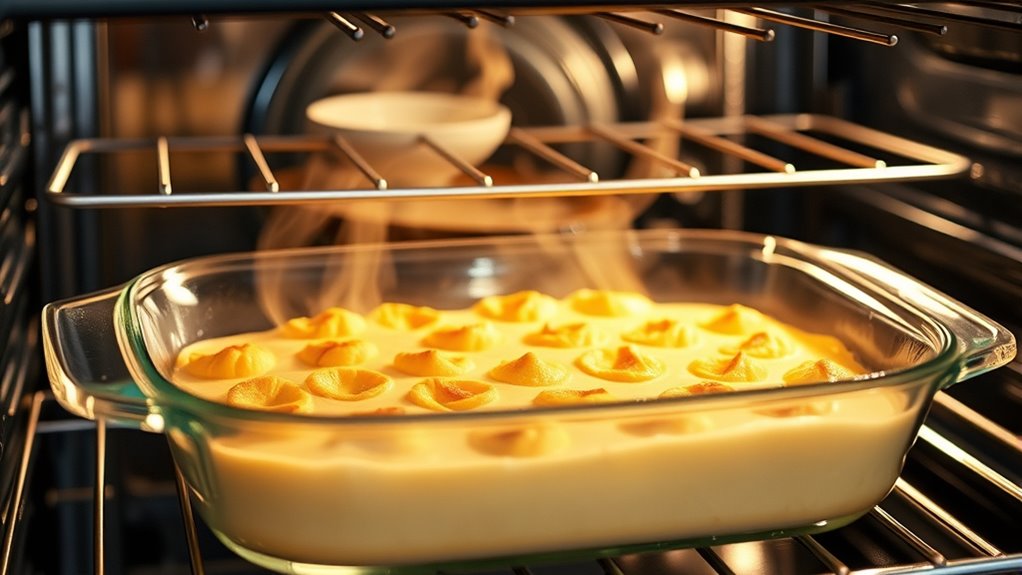
When you’re using Pyrex for baking, roasting, or making casseroles, it’s a good idea to keep some safety tips in mind so everything goes smoothly. First off, make sure the dishes you’re using are labeled as oven-safe—that way, you know they can handle the heat without any issues.
Also, try to avoid sudden temperature changes. For example, don’t take a cold Pyrex dish straight from the fridge and put it into a hot oven, as this can cause it to crack. Choosing the right Pyrex dish for your recipe is key to making sure your cooking turns out safe and successful.
Oven Safety Tips
While Pyrex is popular for its durability, you should still follow basic oven safety tips to prevent accidents. Always check the oven temperature before placing your dish inside because extreme heat can cause thermal shock.
Handle hot Pyrex carefully using oven mitts or pot holders to prevent burns. Avoid sudden temperature changes like adding cold liquids to hot dishes, as this can cause cracking.
Make sure your dish is oven-safe and properly supported on a stable rack. Finally, let your Pyrex cool slightly before cleaning or moving it to prevent breakage.
- Preheat oven to the recommended temperature
- Use oven mitts for safe handling
- Avoid sudden temperature shifts
- Confirm dish is oven-safe
- Let dishes cool before cleaning
Suitable Pyrex Dishes
Pyrex dishes are versatile and great for baking, roasting, and making casseroles.
When choosing the right materials, look for oven-safe labels on Pyrex dishes. They’re usually made from borosilicate or tempered soda-lime glass.
These materials can handle high temperatures without cracking or shattering. If your dish isn’t labeled oven-safe, it’s best not to use it in the oven.
If you’re looking for alternatives, consider ceramic, stoneware, or metal bakeware. They can also withstand oven temperatures well.
Always check the manufacturer’s guidelines to make sure your dish is oven-safe. Using the right dish helps prevent accidents and ensures even cooking.
This makes your baking, roasting, and casserole dishes successful and hassle-free.
Safely Removing Hot Pyrex From the Oven
Carefully grasp the hot Pyrex with oven mitts or thick kitchen towels to protect your hands from burns. Using proper hot glove techniques is essential for safe dish handling. Once removed from the oven, place the Pyrex on a heat-resistant surface or cooling rack. Avoid putting it directly on cold or hard surfaces, as this can cause thermal shock.
Keep these tips in mind:
- Use oven mitts or heat-resistant gloves for a secure grip
- Handle the dish gently to prevent slipping or cracking
- Set the hot Pyrex on a heat-safe surface to cool
- Let the dish cool gradually before cleaning or storing
- Never pour cold liquids into a hot dish to prevent breakage
Following these steps will keep you safe and help preserve your Pyrex during dish handling after oven use.
What to Do If Your Pyrex Cracks or Breaks
If you notice your Pyrex has cracked or broken, act quickly to prevent injury or more damage. Carefully handle the broken pieces, and wear gloves to avoid cuts. Dispose of shattered glass in a sturdy container to prevent accidents.
Don’t use the dish further if it has a crack, as heat or pressure could cause it to break completely. For crack prevention, avoid sudden temperature changes and handle your Pyrex gently.
If the damage is minor, you might try using a specialized heat-resistant glass adhesive. But keep in mind, this isn’t always reliable for cooking or oven use.
Ultimately, replacing cracked or broken Pyrex is the safest choice. Never cook or bake with damaged Pyrex, since weakened glass can shatter unexpectedly.
Always inspect your Pyrex before use to prevent cracks and ensure it lasts longer. Safety should always come first.
Frequently Asked Questions
Can Pyrex Withstand Sudden Temperature Changes Without Breaking?
Pyrex can handle sudden temperature changes because of its glass durability, but it’s still important to be careful.
It’s designed to resist thermal shock, so it usually manages quick oven-to-cold shifts well.
However, exposing it to extreme or uneven temperature changes might cause it to break.
To keep your Pyrex safe, avoid rapid cooling or heating and always follow the manufacturer’s instructions for temperature changes.
Is All Pyrex Glassware Oven Safe or Only Specific Types?
Not all Pyrex glassware is oven safe. Only Pyrex made from borosilicate glass or specifically labeled as oven-safe is suitable for oven use. Check the Pyrex materials and manufacturer’s guidelines before baking.
Using non-oven-safe Pyrex for oven cooking can cause breakage or shattering. Always verify the Pyrex usage instructions to guarantee safe oven baking, and avoid sudden temperature changes to protect your glassware.
How Long Can Pyrex Be Exposed to High Oven Temperatures Safely?
You can typically expose Pyrex to high oven temperatures for about 30 minutes, as long as it has good heat resistance and isn’t subjected to sudden thermal shock.
To keep it safe, avoid rapid temperature changes like moving it from the freezer straight into a hot oven.
Always check the manufacturer’s guidelines. Remember, even durable Pyrex can crack if exposed to extreme or uneven heat, so keep an eye on your baking times.
Can Pyrex Be Used in a Microwave Oven Safely?
Yes, you can use Pyrex in a microwave oven safely because of its microwave safety and glass durability. Pyrex is designed to withstand microwave heat without cracking or breaking, making it a reliable choice for heating food quickly.
Just confirm the dish isn’t damaged or chipped, as that could compromise its durability. Always follow manufacturer guidelines to maintain safety and extend the lifespan of your Pyrex.
Are There Differences Between Vintage and Modern Pyrex Regarding Oven Safety?
Think of vintage Pyrex as a relic of durability, built to withstand oven heat with timeless strength. In contrast, modern Pyrex, crafted with advanced materials, offers reliable oven safety but may not match vintage’s resilience.
While both are designed for oven use, vintage pieces often handle higher temperatures better. Modern variants prioritize safety and clarity.
Always check labels, but your classic vintage Pyrex might just be your most trusted oven companion.
Conclusion
Remember, your Pyrex is like a trusted friend—worthy of care and respect.
Handling it gently and knowing its limits will keep your culinary adventures smooth and stress-free.
Sometimes, even the best intentions can cause a little hiccup, but it’s all part of the journey.
With patience and attention, your Pyrex will continue to serve you well, turning everyday moments into cherished memories.
And yes, Pyrex can go in the oven—just make sure it’s oven-safe and avoid sudden temperature changes.
That way, each bake becomes a little more special, and your Pyrex stays in great shape for years to come.