How You Cook Frozen Broccoli in the Oven
Cooking frozen broccoli in the oven can be tricky—getting that perfect crispy yet tender texture is something many people struggle with. If you’ve ever ended up with soggy or undercooked florets, you’re not alone.
Luckily, with a few simple tips, you can turn frozen broccoli into a delicious side dish or snack in no time.
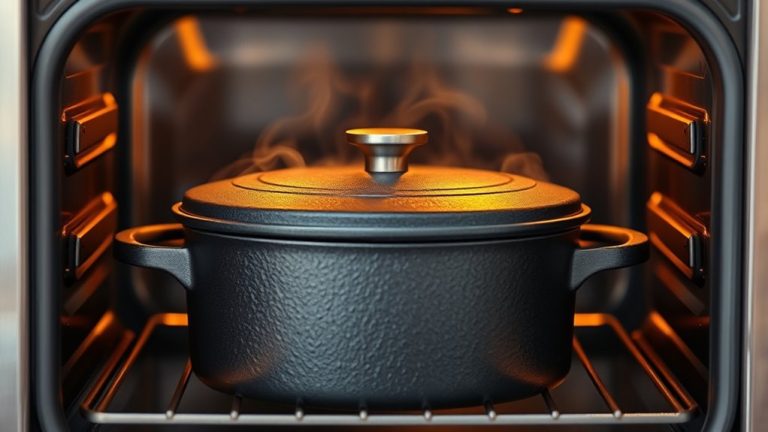
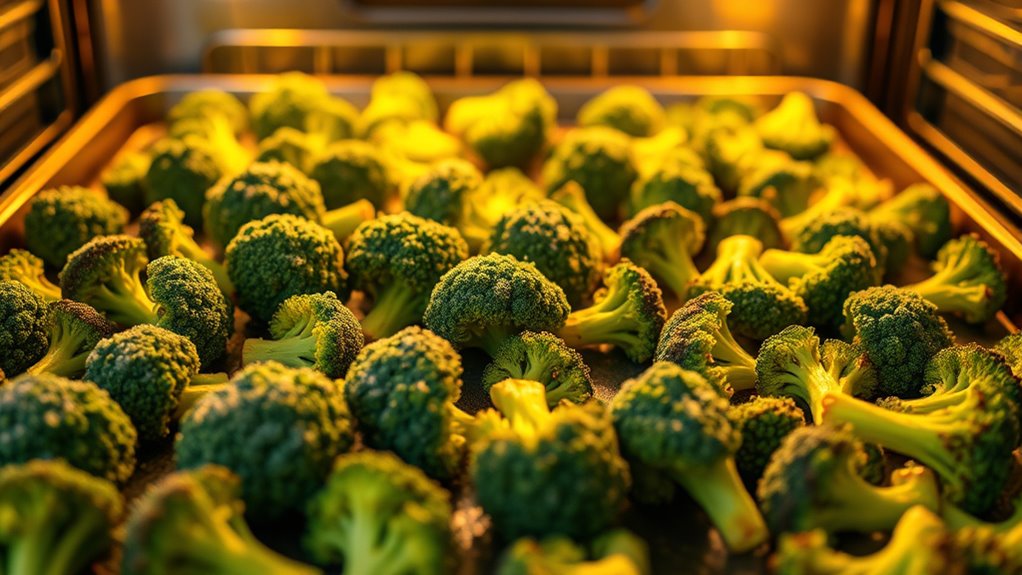
To cook frozen broccoli in the oven, start by preheating it to 400-425°F. Toss the florets with oil and your favorite seasonings like garlic or lemon, then spread them in a single layer on a parchment-lined baking sheet.
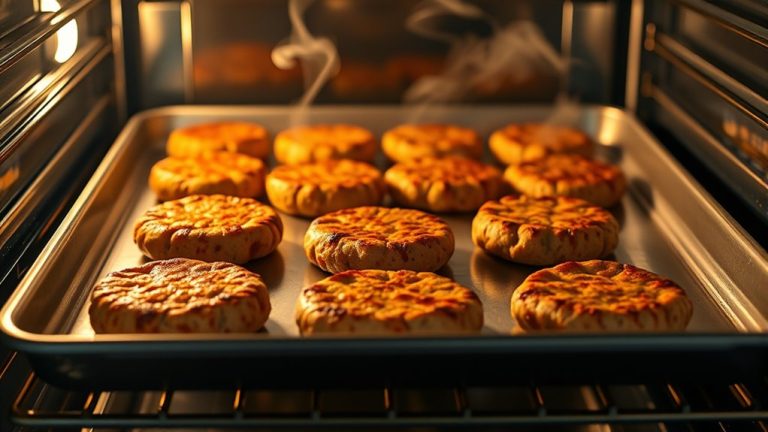
Roast for about 20-25 minutes, tossing halfway, until crispy and tender.
For tips on achieving perfect texture and flavor, plus troubleshooting advice, delve into more details below.
Key Takeaways
- Preheat the oven to 400°F to 425°F and spread frozen broccoli in a single layer on a parchment-lined baking sheet.
- Toss the broccoli with oil and seasonings like garlic, lemon, or Parmesan before roasting.
- Roast for 20 to 25 minutes, flipping halfway, until crispy and tender.
- Make sure not to overcrowd the pan to get even crispiness, and drain any excess moisture before roasting.
- Reheat leftovers in the oven or microwave, and add extra seasonings or toppings if you like.
How to Prepare Frozen Broccoli for Oven Roasting
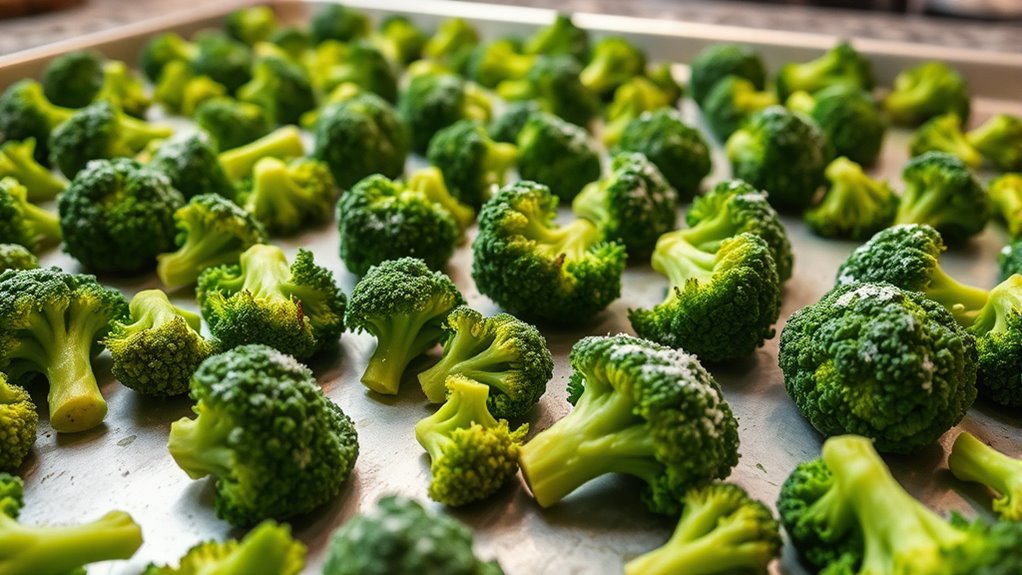
Before roasting, you need to prepare your frozen broccoli properly. Start by choosing the right broccoli varieties, like florets or spears, depending on how you prefer the texture.
Rinse the frozen broccoli under cold water to remove any ice crystals and excess moisture. This helps you get a crisp texture once it’s roasted.
Rinse frozen broccoli to remove ice crystals for a crisp, perfectly roasted texture.
Pat it dry thoroughly with a clean towel or paper towels to prevent steaming during roasting. While frozen, broccoli keeps most of its nutrients, including fiber, vitamins C and K, and antioxidants, making it a healthy choice.
You can also toss the broccoli with a bit of olive oil and seasoning at this stage to boost the flavor. Proper preparation ensures even roasting and helps maximize the nutritional benefits.
Taking these steps guarantees your frozen broccoli cooks evenly and keeps its vibrant color and crunch, giving you a delicious, nutrient-rich side dish.
Choosing the Best Oven Temperature and Cooking Time
To get perfectly roasted frozen broccoli, you want to set your oven to the right temperature and keep an eye on the clock. Usually, 400°F is a good bet because it helps everything cook evenly and get that nice, crispy edge. But hey, if you like your broccoli softer, you can lower the temperature a bit, or crank it up if you want it extra crispy.
And about the time—most batches take around 20 to 25 minutes, but it’s always a good idea to check a little earlier just to make sure it’s just how you like it. So, keep an eye on it, and you’ll be enjoying delicious roasted broccoli in no time!
Optimal Temperature Settings
Selecting the right oven temperature and cooking time is key to perfectly roasted frozen broccoli. For the best results, set your oven between 400°F and 425°F.
This range helps lock in the broccoli’s nutrients while ensuring it roasts evenly and gets a slight crisp. Cooking at too high a temperature can cause burning and make cleaning more difficult due to grease or char.
On the other hand, cooking at too low a temperature might leave your broccoli soggy, which can lead to nutrient and flavor loss. Regularly cleaning your oven after roasting helps keep it efficient and prevents buildup.
Using the right temperature control ensures you get great taste and texture while preserving the nutritional value of your broccoli.
Ideal Cooking Duration
Choosing the right cooking duration is key to perfectly roasted frozen broccoli. Usually, you’ll want to roast it for about 20 to 25 minutes at the right temperature, turning halfway through. This helps the broccoli become tender with a slight crisp on the edges.
Keep in mind that different broccoli types, like florets or stalks, might need a little adjustment in cooking time. Proper timing keeps the nutrients like vitamins C and K intact while boosting flavor.
Avoid overcooking, which can lead to mushiness and nutrient loss. For the best results, check around the 20-minute mark and adjust based on your preferred texture. With the right timing, you’ll enjoy delicious, nutritious roasted broccoli every time.
Step-by-Step Guide to Roasting Frozen Broccoli
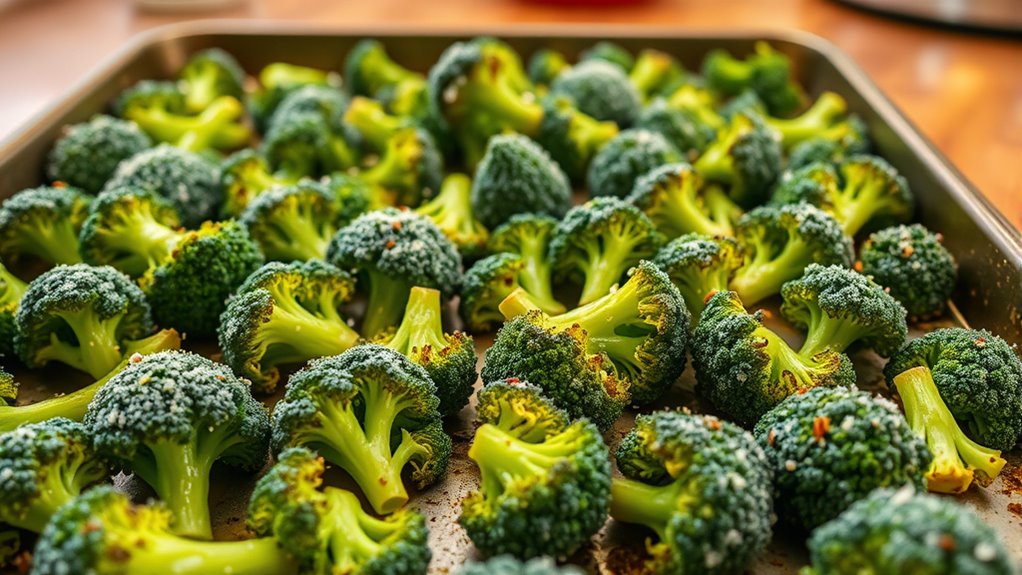
Sure! Here’s a more conversational version of the text:
To roast frozen broccoli just right, start by tossing it with a little oil and your favorite seasonings. Don’t be shy with the spices — it’s what makes it tasty! Keep an eye on the clock so you don’t overdo it, and remember to give the broccoli a good toss halfway through. That way, it’ll get evenly crispy and delicious. Follow these simple steps, and you’ll end up with perfectly roasted broccoli every single time!
Preparing Frozen Broccoli
Before roasting, you need to prepare your frozen broccoli properly. Start by checking the package for any instructions, then rinse the broccoli under cold water to remove ice crystals. This helps prevent steaming during roasting, ensuring it stays crispy.
Keep in mind that broccoli’s nutritional content remains high whether fresh or frozen, so you still get plenty of vitamins and fiber. With various broccoli types available—like standard green, purple, or Romanesco—you can choose your favorite for flavor and appearance.
Once rinsed, pat the broccoli dry with a towel to remove excess moisture. This promotes even roasting. Breaking apart any large florets helps them cook uniformly. Proper prep helps you get the best flavor and texture when roasting your frozen broccoli.
Seasoning and Oil Use
Seasoning and oil are key to transforming frozen broccoli into a flavorful, crispy side. Using the right seasonings and oils boosts both flavor and texture.
For seasonings, try garlic powder, paprika, lemon zest, or a sprinkle of Parmesan. These add depth and brightness to your dish.
When choosing oils, options like olive oil, avocado oil, or melted coconut oil work great. They help create a good balance of flavor and crunch.
Make sure to coat the broccoli evenly with oil, but don’t use too much to avoid sogginess. A light, even coating is all you need.
Here’s a quick guide:
| Seasoning Options | Oil Types |
|---|---|
| Garlic powder | Olive oil |
| Paprika | Avocado oil |
| Lemon zest | Melted coconut oil |
| Parmesan cheese (optional) | Sesame oil (for flavor) |
| Red pepper flakes (for heat) |
Feel free to adjust the seasonings to suit your taste for the perfect roasted broccoli.
Roasting Time and Tips
Once your broccoli is evenly coated with oil and seasonings, it’s time to focus on roasting. Typically, roast frozen broccoli at 400°F (200°C) for 20-25 minutes. Stir or flip the pieces halfway through to ensure even cooking and crispiness.
Keep an eye on the texture; for more tender broccoli, reduce roasting time slightly. Different frozen broccoli varieties, like florets or stalks, may take a bit longer or shorter, so adjust accordingly.
Remember, roasted broccoli retains much of its nutrition, especially fiber, vitamins C and K, and antioxidants. Avoid overcooking, as it can diminish these nutrients.
Proper roasting enhances flavor and texture, making frozen broccoli a delicious, healthy side dish.
How to Achieve Crispy and Tender Roasted Broccoli
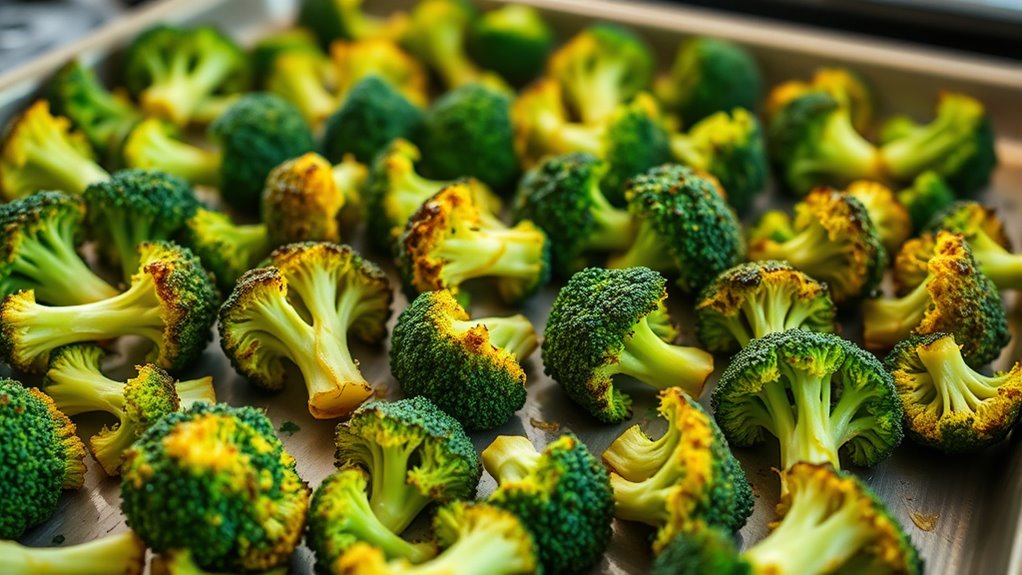
To get crispy and tender roasted broccoli, start by spreading the frozen florets evenly on a baking sheet lined with parchment paper. This helps everything cook evenly and become crispy. Use fresh broccoli varieties like Calabrese or sprouting broccoli for the best flavor and texture. Proper storage is also key—keep your frozen broccoli airtight and avoid moisture to prevent sogginess.
Here are four simple tips to perfect your roast:
- Preheat your oven to 425°F (220°C) for that crispy exterior.
- Toss the florets with a light coating of oil—avocado or olive oil work well.
- Arrange them in a single layer to allow good air circulation and even browning.
- Flip or toss halfway through cooking to ensure they become crispy and tender all over.
Follow these steps, and you’ll get a nice balance of crunch and softness that makes your roasted broccoli irresistible.
Flavor Tips: Adding Garlic, Lemon, or Parmesan
Adding garlic, lemon, or Parmesan can boost your roasted broccoli with bold and fresh flavors. These simple additions enhance broccoli’s natural taste while making it more appealing.
Garlic adds a savory kick, lemon offers bright acidity, and Parmesan introduces a salty, umami depth. Be sure to incorporate these ingredients after roasting to preserve their flavors.
Remember, frozen broccoli keeps its nutrition, including vitamins C and K, but it can mute flavors slightly. Fresh additions like garlic and lemon brighten the dish, transforming frozen broccoli into something flavorful.
Parmesan melts beautifully over hot broccoli, adding richness. To help you decide, here’s a quick guide:
| Flavor Option | Best Use |
|---|---|
| Garlic | Minced or roasted for a savory boost |
| Lemon | Zested or juiced for a fresh, tangy flavor |
| Parmesan | Sprinkled after roasting for umami richness |
| Combination | Mix garlic and lemon for a vibrant, layered taste |
| Timing | Add cheese after roasting to prevent burning |
Common Mistakes to Avoid When Roasting Frozen Broccoli
When roasting frozen broccoli, try not to overcrowd your baking sheet. If you pile too much on, the broccoli can end up steaming rather than roasting, and nobody wants soggy florets! Also, be sure to drain off any excess water before tossing it in the oven—that extra moisture can make your broccoli limp instead of crispy.
And don’t forget the oil! Skimping on it can really affect the texture, so make sure to use enough to coat the florets well. That way, you’ll get that delicious, roasted crunch everyone loves.
Overcrowding the Baking Sheet
Overcrowding the baking sheet is a common mistake that can ruin your roasted broccoli’s texture. When you pack too much onto the sheet, the vegetables don’t cook evenly, which can lead to soggy or unevenly roasted florets.
To prevent this, spread the broccoli in a single layer to ensure even heat exposure. Make sure your baking sheet is large enough so the veggies aren’t crowded.
If you’re roasting different types of vegetables or varying sizes, adjust the cooking time accordingly. Keep in mind that roasting and steaming need different spacing to get the best results.
Skipping Proper Draining
Have you overlooked the importance of draining frozen broccoli before roasting? Skipping proper thawing and draining can leave too much moisture on the vegetables, making them soggy instead of crispy.
To avoid this, use tools like a fine-mesh strainer or paper towels to thoroughly drain and pat dry the broccoli after thawing. Removing excess water helps with even roasting and crispiness.
If there’s too much moisture on the broccoli, it can interfere with browning and flavor development. Taking that extra step to drain well is simple but essential for perfect roasted broccoli.
Proper draining helps you achieve that crispy texture you want, making your roasted broccoli tastier and more visually appealing.
Not Using Enough Oil
Using enough oil is key to getting perfectly roasted broccoli. Without enough oil, your roasting can turn out uneven and less flavorful.
To get those crispy edges and better flavor, follow these simple tips:
- Use at least 2 tablespoons of oil per pound of frozen broccoli.
- Toss the florets well so they’re evenly coated.
- Choose oils with high smoke points, like avocado or olive oil.
- If needed, drizzle a little extra oil before roasting.
Skipping this step leaves you with dry, bland broccoli that sticks to the pan. Adequate oil helps lock in moisture, cooks evenly, and makes everything crisp and delicious.
Don’t underestimate the power of enough oil for perfect roasted broccoli.
How to Store Leftovers and Reheat Them Properly
Storing leftovers properly keeps them fresh and safe to eat later. To get the most nutritional benefits, quickly cool your cooked broccoli and store it in an airtight container. This helps with meal prep, saving you time and reducing waste.
Reheat leftovers in the oven or microwave until steaming hot, making sure to heat evenly. This keeps the texture and flavor intact. Use a microwave or oven for best results.
| Time to Store | Proper Container | Reheating Method |
|---|---|---|
| Within 2 hours | Airtight plastic or glass | Oven or microwave |
| Keep for 3-4 days | Sealed to prevent moisture loss | Avoid overcooking |
| Freeze for longer storage | Freezer-safe containers | Thaw before reheating |
| Reheat evenly | Label with date & contents | Maintain texture |
Following these steps helps keep your nutrients intact, supports healthy meal prep, and cuts down on food waste.
Serving Ideas for Your Roasted Frozen Broccoli
Once your roasted frozen broccoli is ready, the next step is to find tasty ways to serve it. Broccoli has long been valued for its health benefits, making it a versatile addition to many meals. Adding it to your diet can boost fiber, vitamins C and K, and antioxidants.
Once prepared, roasted frozen broccoli can be a delicious, nutritious addition to any meal.
Here are some ideas to elevate your dish:
Toss it with olive oil, lemon juice, and grated Parmesan for a simple, flavorful side. Mix it into pasta salads or grain bowls for extra crunch and nutrients. Top with a dollop of hummus or Greek yogurt for added protein and creaminess.
Serve alongside grilled chicken or fish to create a well-rounded, healthy meal. These options highlight broccoli’s rich history as a nutritious veggie while boosting its flavor and appeal.
Experimenting with these ideas can turn roasted frozen broccoli into the star of your plate.
Troubleshooting Tips for Perfectly Cooked Broccoli
Even when you follow the recipe closely, achieving perfectly cooked broccoli can sometimes be tricky. One common mistake is overcooking, which can turn broccoli mushy and dull its vibrant color.
To maintain broccoli nutrition, aim for a tender-crisp texture by checking it a few minutes before the suggested cooking time. If your broccoli turns out too soft, reduce the oven temperature or shorten the cooking time.
Conversely, if it’s too firm, give it a few extra minutes. Remember, frozen vegetable myths often suggest they’re less nutritious, but roasting preserves most of the nutrients, especially if you avoid overcooking.
Proper spacing on the baking sheet allows even heat circulation, preventing uneven cooking. Using a high-quality olive oil and seasoning evenly can also help you achieve a flavorful, perfectly roasted result.
Troubleshooting these common issues ensures your broccoli is both nutritious and delicious every time.
Frequently Asked Questions About Roasting Frozen Broccoli
Have questions about roasting frozen broccoli? You’re not alone. Here are some common questions to help you get the best results, while also maximizing nutritional benefits and exploring different broccoli varieties.
- Can I roast any broccoli variety? Yes, you can roast different varieties like Romanesco or purple broccoli, but cooking times may vary slightly.
- Will roasting frozen broccoli affect its nutritional benefits? Not significantly. Roasting preserves most nutrients, especially when cooked at proper temperatures.
- Should I thaw the broccoli before roasting? No, roasting directly from frozen is recommended for crunchiness and flavor.
- How do I choose the best broccoli for roasting? Look for fresh, brightly colored varieties with tight buds. Frozen works well for convenience and nutrition.
Roasting frozen broccoli is simple and retains many of its nutrients, making it a healthy choice.
Frequently Asked Questions
Can I Roast Frozen Broccoli Without Thawing It First?
Yes, you can roast frozen broccoli without thawing it first. It just needs a little more time and a higher heat to get crispy.
Toss the frozen broccoli with oil and your favorite seasonings, then spread it out on a baking sheet. Roast at 425°F, stirring a few times, until the edges turn golden and crispy.
This method is quick and keeps the broccoli flavorful and tender without any extra steps.
How Do I Prevent Frozen Broccoli From Becoming Soggy?
Think of your oven as a dry desert, where moisture escapes and preserves the plant’s resilience. To prevent frozen broccoli from becoming soggy, make sure to spread it out in a single layer and avoid overcrowding.
Roast at high heat to quickly lock in crispness, and consider tossing it with a little oil beforehand. These steps help keep the texture perfect, giving you crispy, flavorful broccoli every time.
Is It Necessary to Season Frozen Broccoli Before Roasting?
You don’t have to season frozen broccoli before roasting, but doing so really boosts the flavor and makes it tastier.
For added flavor, toss the broccoli with olive oil, salt, pepper, and your favorite seasonings like garlic powder or paprika.
You can also add lemon juice or Parmesan after roasting for an extra zest.
Seasoning beforehand helps the flavors meld, but you can also season after roasting for a fresh pop of flavor.
Can I Roast Frozen Broccoli Alongside Other Vegetables?
Yes, you can roast frozen broccoli alongside other vegetables. Just keep in mind that you’ll want to choose vegetables that have similar cooking times for the best results.
Spread everything evenly on a baking sheet and toss with oil and your favorite seasonings. This helps everything roast evenly and gets those tasty, crispy edges.
Keep an eye on the vegetables so they don’t overcook. Stir them halfway through to ensure they cook evenly.
If you do it right, all your veggies will come out tender, flavorful, and perfectly roasted together.
How Do I Know When Roasted Frozen Broccoli Is Fully Cooked?
You know roasted frozen broccoli is done when it turns a vibrant green with crispy edges. To guarantee flavor improvement and texture preservation, look for tender florets that are slightly browned.
The broccoli should be easily pierced with a fork and smell fragrant. If it’s still soggy or pale, give it a few more minutes.
Properly roasted, it strikes a perfect balance of crispiness and tender bite.
Conclusion
Roasting frozen broccoli is quick, easy, and surprisingly delicious. Some people think it loses nutrients compared to fresh, but studies show frozen vegetables keep most of their vitamins, making them a healthy choice.
Just follow these simple steps to get crispy, tender florets every time. The process is straightforward and doesn’t require thawing beforehand.
Next time you want a healthy side, remember that frozen broccoli can be just as tasty and convenient as fresh. It’s a great option for a quick, nutritious meal.
Give it a try and enjoy perfect roasted frozen broccoli every time!