Can Silicone Go in the Oven?
Are you tired of flipping through endless pages of baking tips, only to wonder if your favorite silicone bakeware is oven-safe? Many people struggle with figuring out what materials can handle high temperatures and what might not. You’re not alone—navigating the world of bakeware can be confusing.
Yes, silicone can go in the oven if it’s made from food-grade silicone and used within its temperature limits, typically between 40°F and 450°F. It’s safe for baking, thanks to its heat-resistant properties and non-stick surface.
Just make sure to check that your bakeware is oven-safe and follow the manufacturer’s guidelines.
If you want to know more about how to choose, care for, and replace silicone bakeware, keep exploring.
Key Takeaways
- Silicone bakeware is heat-resistant and safe for oven use within specific temperature ranges, usually up to 450°F (232°C).
- Always look for oven-safe labels or certifications like “FDA-approved” before using silicone in the oven.
- Silicone can handle high temperatures without melting, but going beyond the manufacturer’s recommended limits might cause damage.
- Avoid placing silicone directly over open flames or broilers, as extreme heat can damage the material.
- Proper care and regular inspection help keep silicone bakeware safe and effective for oven baking.
What Is Silicone Bakeware and How Is It Made
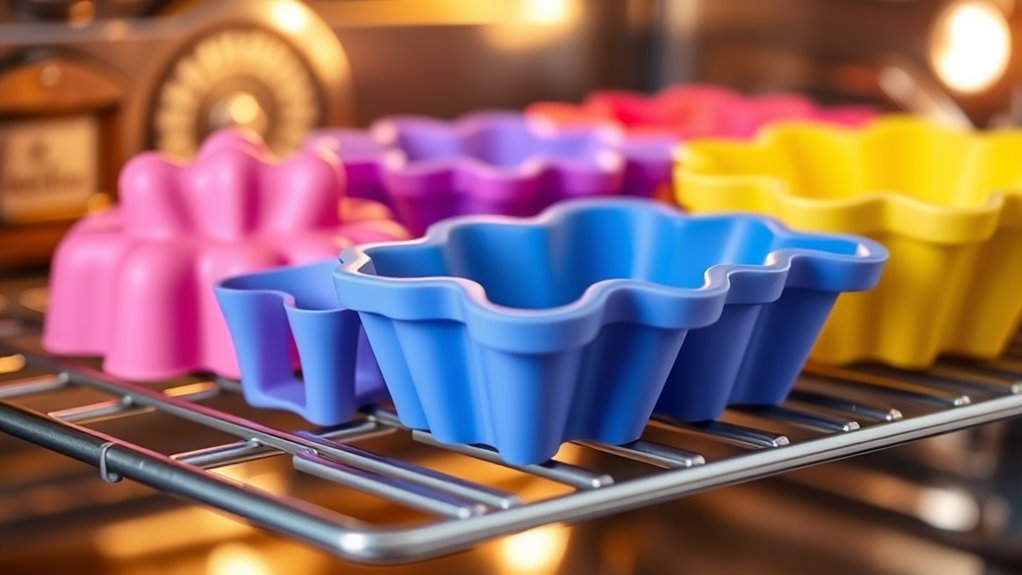
Silicone bakeware is a popular kitchen tool made from a flexible, durable material called food-grade silicone. This material has unique properties like flexibility, non-stick qualities, and odor resistance.
It’s created by mixing silicone with other compounds to form a moldable, heat-resistant silicone rubber. These features make silicone perfect for baking, as baked goods release easily and cleanup is simple.
Most silicone bakeware is made through injection molding, where liquid silicone is injected into molds and then cured. This process results in a tough, long-lasting product.
The benefits of silicone bakeware include even heat distribution and the ability to withstand a wide temperature range. This makes it suitable for many baking tasks. Its lightweight, foldable design adds extra convenience.
How Does Silicone Tolerance to Heat Work?
Because of its unique chemical structure, silicone can withstand high temperatures without breaking down or releasing harmful substances. Its flexible backbone made of silicon-oxygen bonds is highly stable under heat.
Silicone’s properties that help it resist heat include low thermal expansion and excellent insulating qualities. When exposed to heat, silicone molecules stay intact, preventing the material from melting or degrading.
Unlike plastics, silicone has a high heat tolerance because its structure doesn’t soften or become brittle at oven temperatures. This makes it perfect for baking and cooking.
Silicone’s structure prevents it from softening or becoming brittle, making it ideal for baking and cooking.
Its ability to endure extreme temperatures without losing shape or releasing toxins makes silicone bakeware safe and durable, even in the oven. Understanding this helps explain why silicone is so popular for oven-safe kitchen tools.
What Temperatures Can Silicone Bakeware Handle?
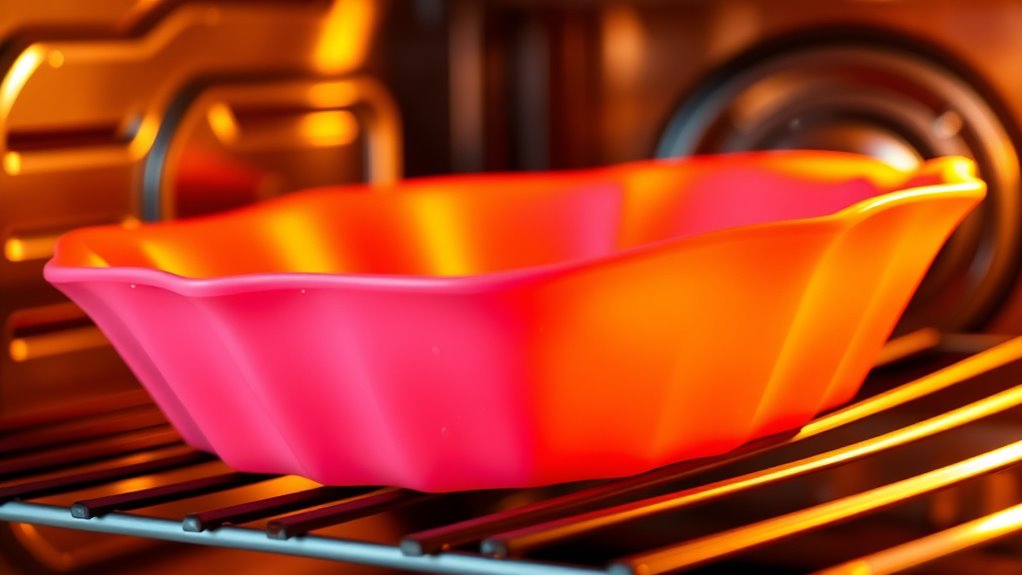
Silicone bakeware is designed to handle a wide range of temperatures, making it versatile for various cooking and baking needs. Its silicone properties let it withstand high heat without melting or warping, typically tolerating temperatures between 40°F (4°C) and 450°F (232°C).
This broad temperature range means you can safely use it in the oven, microwave, or freezer. Silicone’s heat conduction isn’t as efficient as metal, so it heats evenly but more slowly. This slow heat transfer helps prevent hot spots and overcooking.
Always check the manufacturer’s guidelines for specific temperature limits, as some silicone bakeware may have a lower or higher maximum temperature. Overall, knowing its temperature tolerance ensures safe and effective use, whether baking cakes, roasting vegetables, or reheating leftovers.
How to Tell If Your Silicone Bakeware Is Oven-Safe
Want to make sure your silicone bakeware is oven-safe? It’s pretty simple—just take a quick look at the labels and certifications on the packaging or the item itself. Usually, they’ll tell you the temperature range it can handle, so you can be confident it’s good for your baking plans.
If you’re still unsure, don’t hesitate to reach out to the manufacturer. Better safe than sorry, right? That way, you can avoid any potential damage to your bakeware or oven and enjoy your baking session stress-free.
Material Certifications and Labels
To find out if your silicone bakeware is oven-safe, start by checking the material certifications and labels stamped or printed on it. These labels give you important clues about safety and whether the product meets oven use standards.
Look for markings like “FDA-approved,” “LFGB,” or other recognized safety certifications. They show that the silicone complies with strict safety rules and has been tested for food contact safety.
These labels also indicate that the silicone can handle oven temperatures without issues. Avoid products without clear certification labels, as they might not meet safety standards or be suitable for high-heat use.
Always double-check the labels before using your silicone bakeware in the oven to make sure it’s safe and reliable.
Temperature Tolerance Limits
Understanding the temperature limits of your silicone bakeware is key to safe oven use. Since durability and heat resistance can vary between products, always check the manufacturer’s guidelines.
Most oven-safe silicone can handle temperatures up to 450°F (232°C). Some high-quality options even tolerate higher temperatures. Look for labels or packaging that specify the maximum temperature.
If the information isn’t listed, check the manufacturer’s website. Exceeding these limits can cause the silicone to warp, break down, or release harmful chemicals.
To be extra safe, test your bakeware’s temperature tolerance with a thermometer if you’re unsure. Knowing your silicone’s heat resistance helps prevent damage and keeps your baked goods safe and intact.
Types of Silicone Suitable for Baking
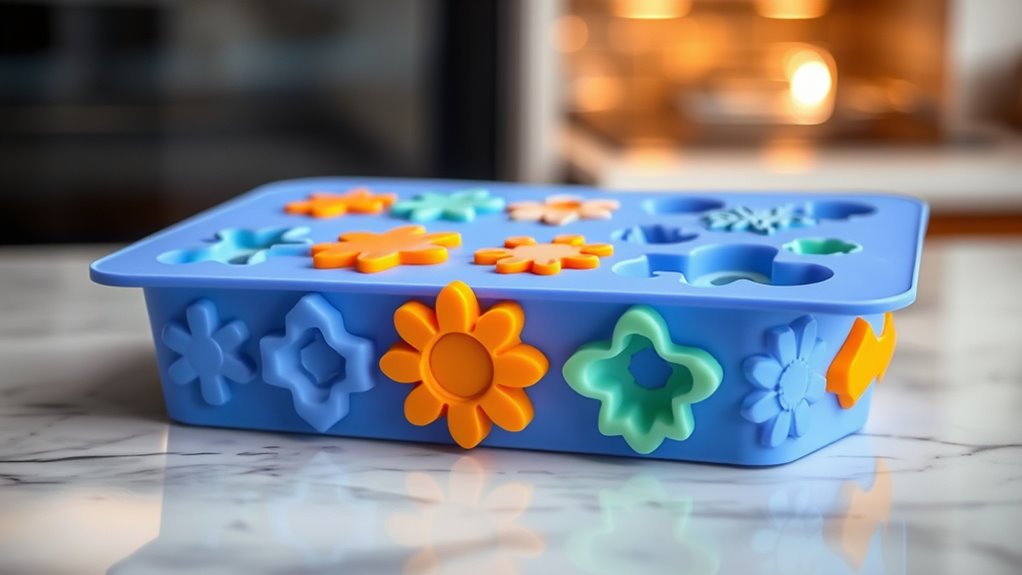
When selecting silicone for baking, it’s important to choose products specifically designed for culinary use, as not all silicone materials meet safety standards. Food-grade silicone is the best choice because it’s formulated to withstand high temperatures without degrading or releasing harmful chemicals.
Look for silicone bakeware labeled as “oven safe” and compliant with food safety certifications like FDA or LFGB. These silicone materials offer excellent baking performance, guaranteeing your baked goods release easily and maintain their shape.
Non-food-grade silicone may contain fillers or additives that could compromise safety or durability. Furthermore, high-quality silicone bakeware tends to be more flexible, heat-resistant, and long-lasting.
Avoid cheaper options that may not meet rigorous safety standards, as they could affect your baking results and safety. Picking the right silicone assures your oven creations are safe, efficient, and of consistent quality.
How to Use Silicone Bakeware Safely in the Oven
Using silicone bakeware in the oven is pretty straightforward, but there are a few things you should keep in mind to stay safe. First off, always check the temperature guidelines. Different silicone bakeware can handle different heat levels, so make sure you know the maximum temperature it can withstand. This way, you can avoid any melting or warping during baking.
It’s also a good idea to go for high-quality silicone bakeware from reputable brands. When you choose durable, well-made products, you’re more likely to get consistent, safe results every time you bake. So, just keep these tips in mind, and you’ll be able to enjoy hassle-free baking with your silicone tools!
Proper Temperature Guidelines
Making sure your silicone bakeware is used within the correct temperature range is essential for safety and optimal performance. Silicone can handle high temperatures, but going beyond the recommended limits can cause warping or melting.
Always check the manufacturer’s guidelines for maximum temperature limits, which usually range from 428°F to 450°F (220°C to 232°C). Staying within these limits helps keep the silicone intact and prevents damage.
Keep in mind that different brands might have slightly different tolerances, so it’s best to follow their specific advice. Avoid using silicone bakeware in a broiler or over open flames, as extreme heat can compromise its safety.
Proper temperature guidelines ensure your silicone bakeware performs well and stays safe to use in the oven.
Selecting Quality Silicone Bakeware
Choosing high-quality silicone bakeware is key for safe and successful oven use because not all silicone products are made the same. Good silicone is more durable and can handle high temperatures without warping or breaking.
Pay attention to the design of the bakeware. Well-made silicone molds have sturdy edges and a non-slip base to keep them stable while you’re baking.
To pick the best silicone bakeware, consider these factors:
- Look for FDA approval and food-grade certification.
- Make sure the silicone is heat-resistant up to at least 450°F.
- Check that the silicone is flexible and durable.
- Choose products with thoughtful designs that make removal and cleaning easier.
Investing in quality silicone means safer oven use and longer-lasting bakeware.
Mistakes to Avoid When Baking With Silicone
One common mistake when baking with silicone is not properly preparing the mold beforehand. Many people think silicone bakeware needs greasing, but that’s a myth. Silicone molds usually release baked goods easily without any added fat.
Not greasing silicone molds is a common mistake; they typically release baked goods easily on their own.
Another mistake is ignoring oven temperature guidelines. Some believe silicone can handle any heat, but going beyond the recommended temperature can cause warping or damage. It’s important to follow the manufacturer’s instructions.
Using damaged or poorly made silicone molds is another common error. They can leak or bake unevenly, so always check your bakeware before use.
Rushing to cool baked goods immediately after taking them out of the oven can cause warping or cracking. Be patient and let them cool gradually for the best results.
To avoid these mistakes, follow the instructions that come with your silicone bakeware, understand common myths, and handle your molds with care. Proper preparation and knowledge will help you bake safely and successfully.
Pros and Cons of Using Silicone Bakeware in the Oven
Silicone bakeware has become popular with home bakers because of its many advantages, but it also has some downsides to consider. Its flexibility makes it easy to remove baked goods without damage, and cleaning up is quick since it’s dishwasher safe.
One of the main benefits is its non-stick surface, which means you often don’t need to grease it beforehand. However, this can sometimes affect how well baked goods brown.
On the downside, silicone can warp or become misshapen over time. Also, its heat resistance isn’t as high as traditional materials, so some brands might not hold up at very high temperatures.
Here are some key points to think about:
- Flexibility – Makes removal easy but can cause stability issues.
- Non-stick surface – Reduces need for greasing but may affect browning.
- Ease of cleaning – Dishwasher safe, saving time.
- Heat resistance – Suitable for many recipes, but some brands may not withstand very high temperatures.
Balancing these advantages and disadvantages will help you decide if silicone bakeware is right for your cooking needs.
How to Care for and Maintain Your Silicone Bakeware
Properly caring for your silicone bakeware guarantees it stays in good condition and performs well over time. Silicone care involves simple maintenance tips that keep it clean and durable.
Always wash your bakeware with warm, soapy water after each use. Avoid abrasive scrubbers that could damage the surface. For stubborn residue, soak it in warm water first, then gently scrub.
Avoid using harsh chemicals or metal utensils that can cause scratches. To maintain its flexibility and prevent warping, store silicone bakeware flat or stacked without heavy weight on top.
Keep it away from direct heat sources or sharp objects. Periodically check for tears or cracks, and replace if damaged. Proper maintenance extends the lifespan of your silicone bakeware.
This also guarantees safe, non-toxic baking. By following these silicone care tips, you’ll keep your bakeware in excellent condition for years of reliable use.
When to Replace Your Silicone Bakeware for Safety
You know, it’s a good idea to replace your silicone bakeware if you start to see cracks, tears, or any discoloration. Those are usually signs that the material is breaking down and it might not be safe to use anymore. Also, if you’ve been using it at temperatures higher than what’s recommended, that can weaken the silicone and potentially cause safety issues down the line.
When it’s finally time to get rid of your old bakeware, make sure to follow proper disposal guidelines. This way, you’re helping to reduce environmental harm and doing your part to be eco-friendly.
Signs of Material Deterioration
Over time, silicone bakeware can show signs of wear that affect its safety and performance. When the silicone starts to break down, it becomes weaker and more likely to fail during use. Keep an eye out for visual clues that it might be time to replace your bakeware.
Look for cracks or tears on the silicone surface—that’s a clear sign it’s deteriorating. Discoloration or stains that won’t come off are also warning signs. If the surface feels sticky or tacky after cleaning, it’s a sign of damage.
Warped or distorted shapes indicate the silicone’s structure has been compromised. These signs mean the material is no longer safe for baking. Ignoring them could lead to particles breaking off into your food.
Regularly inspecting your silicone bakeware helps ensure it stays in good condition and safe to use. If you notice any of these signs, it’s best to replace your bakeware to avoid potential health risks.
Temperature Limits and Safety
While silicone bakeware is generally heat-resistant, it’s important to pay attention to its temperature limits for safety. Most silicone can handle up to 450°F (232°C), but properties can vary.
Exceeding these limits can cause the material to warp or deteriorate. Over time, high heat can weaken silicone, increasing the risk of cracks or tears.
If your bakeware starts to discolor, warp, or becomes sticky, it’s a good idea to replace it. Proper maintenance and following manufacturer guidelines help keep it safe and effective.
When in doubt, replacing worn or damaged silicone is the best way to prevent safety hazards during baking.
Proper Disposal Guidelines
Knowing when to replace your silicone bakeware is key for safety, especially if it shows signs of damage or wear. Damaged silicone can leach chemicals or harbor bacteria.
When it’s time to dispose of it, look into recycling options and proper disposal methods to help reduce environmental impact. Here are some important signs that it’s time to replace your bakeware:
- Cracks, tears, or holes in the silicone
- Persistent stains or odors even after cleaning
- Warping or melting from high heat exposure
- Loss of flexibility or deformation
If your bakeware is damaged, check if there are local recycling programs for silicone or specialized recycling facilities. Avoid tossing it in the regular trash if possible. Proper disposal methods help cut down waste and protect the environment, making sure you’re safely managing your silicone bakeware when it’s no longer usable.
Frequently Asked Questions
Can Silicone Bakeware Withstand High-Temperature Baking Processes?
Silicone bakeware can withstand high-temperature baking processes because of its excellent heat resistance.
You’ll find that it maintains its shape and performance even at oven temperatures up to 450°F (232°C).
For ideal baking results, make sure your silicone bakeware is labeled oven-safe.
With proper use, silicone helps you achieve even baking, and its flexibility makes it easy to remove baked goods without sticking or damage.
Is It Safe to Use Silicone Bakeware in a Conventional Oven?
A stitch in time saves nine, so you should know that using silicone bakeware in a conventional oven is generally safe if you follow the guidelines. Check the silicone types; most are heat-resistant up to 450°F, making them suitable for oven temperatures.
Always verify the manufacturer’s instructions to confirm your silicone bakeware can handle your baking needs without melting or releasing harmful substances. This helps keep your cooking safe and stress-free.
Are There Any Health Concerns With Silicone Leaching Into Food?
Silicone safety concerns are minimal because high-quality silicone is food contact safe and doesn’t leach harmful chemicals when used properly. When you use silicone bakeware at oven temperatures, it remains stable and unlikely to release toxins.
To guarantee safety, choose food-grade silicone, avoid using damaged or low-quality products, and follow manufacturer guidelines. This way, you can enjoy the convenience of silicone without worrying about health risks from leaching into your food.
How Does Silicone Compare to Metal or Glass Bakeware in Heat Distribution?
Silicone offers excellent heat retention, which helps it distribute heat evenly during baking and leads to better baking results.
Unlike metal, silicone heats more gradually, reducing hot spots. It’s also more flexible and less prone to breaking than glass.
While metal provides quick heat transfer, silicone’s even heat distribution makes it great for delicate baked goods.
Can Silicone Bakeware Be Used Under a Broiler or in a Microwave?
Silicone bakeware is like a versatile chameleon, adapting to your culinary needs. You can safely use it under a broiler or in a microwave because of its impressive durability, but only within recommended temperature limits.
While silicone is generally safe for microwave use, check for broiler safety, as extreme heat can compromise its integrity. Always follow manufacturer guidelines to guarantee your silicone stays resilient and functional.
Conclusion
So, yes, silicone can go in the oven—if you check its temperature limits first. Ironically, what makes silicone popular is also what could make it dangerous if used improperly.
Just keep an eye on those temp ratings, avoid sudden temperature jumps, and you’ll bake safely. Because nothing says “trust me” like a piece of kitchenware that’s both flexible and potentially hazardous—until you follow the rules, of course.
Happy baking! Remember, always verify that your silicone bakeware is oven-safe before using it in the oven. Silicone is a great choice for baking if you stick to its temperature guidelines.