How You Can Safely Put Foil in Your Toaster Oven
Many people struggle with safely using foil in their toaster ovens. It’s a common concern because improper use can lead to accidents or damage. So, if you’re wondering how to do it right, you’re not alone.
To safely use foil in your toaster oven, always choose heavy-duty, high-temperature foil and avoid covering vents or touching heating elements. Secure the foil tightly without wrinkles, and keep it away from the oven’s heat sources.
Never line the bottom or block airflow, and use trays or baking sheets instead of placing foil directly on the rack. For more tips on safe foil use and alternatives, you’ll find helpful details further on.
Key Takeaways
- Use heavy-duty, high-temperature foil and make sure it’s flat, tightly secured, and free of wrinkles or tears.
- Keep foil away from vents, heating elements, and oven walls to prevent overheating and fire risks.
- Don’t cover the entire food or block airflow. Leave space for proper ventilation and even cooking.
- Avoid lining the oven bottom with foil to reduce fire hazards and ensure proper heat circulation.
- Always follow your manufacturer’s guidelines. Consider alternatives like parchment paper or silicone mats for extra safety.
Is It Safe to Use Foil in Your Toaster Oven?
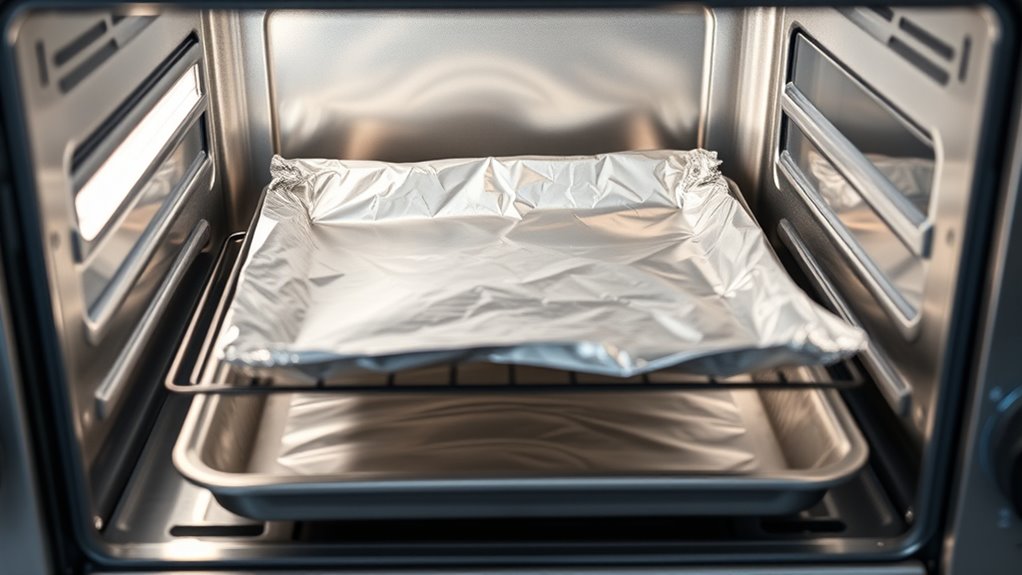
Is it safe to use foil in your toaster oven? It can be, but you need to be cautious with your cooking accessories to keep everything safe. Using foil improperly can lead to problems like overheating or sparks, which could damage your appliance or even cause a fire.
When you line the crumb tray or the bottom of the oven with foil, make sure it doesn’t cover vents or touch the heating elements. This helps prevent heat buildup and potential damage. Always avoid wrapping entire foods or blocking airflow, as this can cause uneven cooking or food safety issues.
How to Choose the Right Foil for Your Toaster Oven
Choosing the right foil for your toaster oven guarantees safe and effective cooking. When selecting foil, go for heavy-duty types that can handle high temperatures without tearing or melting.
Thin or cheap foils might puncture or cause uneven heating, which could be a fire hazard. If you prefer alternatives, try silicone baking mats or oven-safe parchment paper—they’re safer and reusable.
Always choose non-reactive, food-grade foil to avoid chemical leaching. Avoid using regular household foil that’s too thin or damaged, as it can spark or cause electrical issues.
Check your toaster oven’s manufacturer guidelines to make sure the foil or alternative is compatible. Picking the right material helps prevent accidents and keeps your cooking safe.
How to Line Your Toaster Oven With Foil Safely
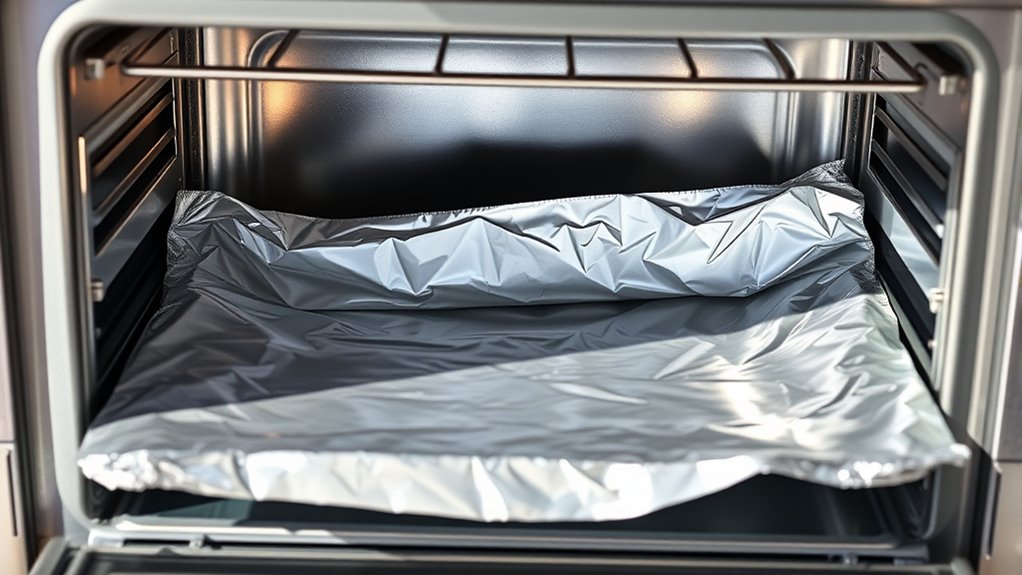
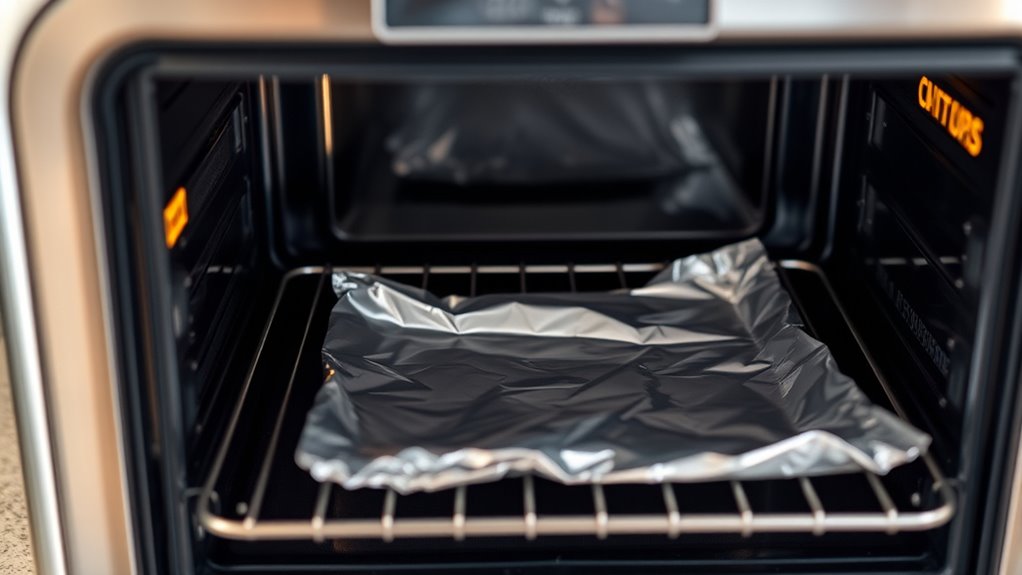
When you’re lining your toaster oven with foil, it’s best to go for heavy-duty foil. This kind is sturdier and less likely to tear, which helps keep things safe.
Just a quick heads-up—make sure you don’t cover the vents with the foil. Blocking those vents can lead to overheating and even start a fire, so it’s really important to keep them clear.
Also, be sure to secure the edges of the foil properly. That way, you won’t have any surprises or accidents while you’re cooking.
Following these simple tips will help you use foil safely and get the best results in your toaster oven.
Use Heavy Duty Foil
Ever wondered how to line your toaster oven safely without causing damage or fire hazards? Using heavy duty aluminum foil is your best bet. Heavy duty foil is thicker and more durable than standard foil, so it’s less likely to tear or develop holes that could expose heating elements or cause fires.
It’s designed to withstand higher temperatures and heavy use, making it perfect for lining the oven. When you use heavy duty foil, be sure to place it carefully, avoiding contact with heating elements or vents. This helps prevent sparks or fires.
Always press the foil flat and secure it firmly, avoiding wrinkles or gaps. This way, you’ll protect your oven and safely contain drips and spills without risking damage or hazards.
Avoid Covering Vents
While heavy duty foil can help protect your toaster oven, it’s important to avoid covering the vents with foil. Blocking vents can hinder proper airflow, which affects your oven’s performance and safety.
Foil durability is crucial; if you cover vents, the foil may tear or melt due to trapped heat. Covering vents also disrupts the toaster oven’s insulation, causing uneven heating and potential overheating of internal components.
This can damage the appliance or pose a fire risk. Always keep vents clear to guarantee proper circulation and maintain the oven’s integrity.
If you need to shield certain areas, use foil only on surfaces away from vents. Make sure airflow isn’t obstructed. Proper vent management helps keep your toaster oven safe and working efficiently.
Secure Foil Edges Properly
To line your toaster oven with foil safely, it’s important to secure the edges properly so the foil doesn’t shift or tear during use. Carefully fold the foil around the edges of the baking tray or oven bottom, making sure the edges are smooth and tight.
This keeps the foil flat and helps prevent it from coming loose or catching fire. Avoid leaving loose or crumpled edges that can lift or tear easily. Use your hands to press the foil firmly against the surface.
Double-check that all edges are flat and securely tucked in. Properly securing the foil edges helps keep the surface even and reduces safety hazards while you’re using the oven.
Can You Use Foil to Cook in a Toaster Oven?
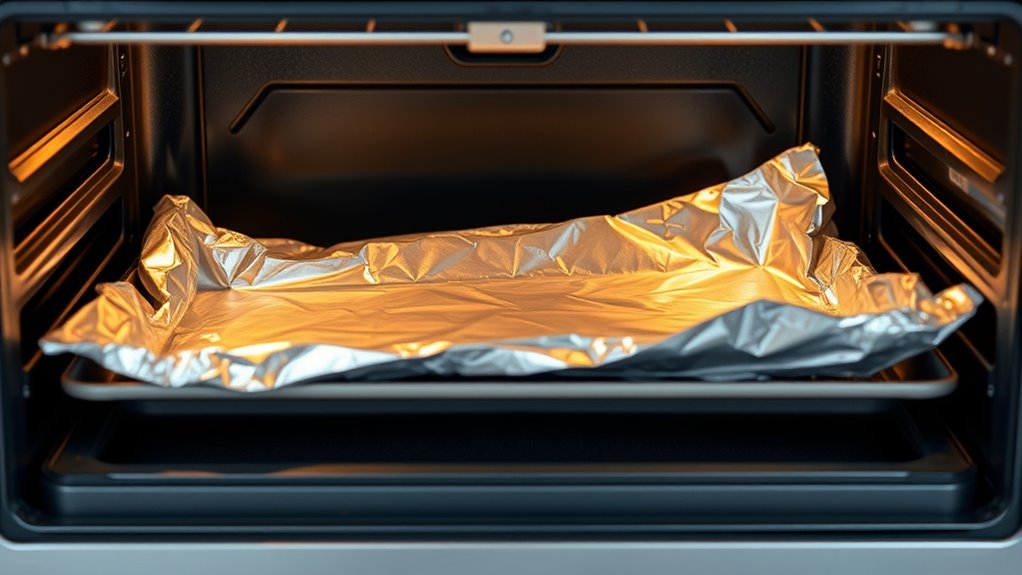
Sure, you can use foil in a toaster oven, but it’s important to be careful with how you do it. You want to make sure the foil isn’t blocking the airflow or touching the heating elements, because that can cause problems.
If you’re not careful, it can lead to fire hazards or uneven cooking. The key is to follow some simple safety tips so you can enjoy the benefits of using foil without risking damage or danger.
Proper Foil Placement
Is it safe to place foil directly on the oven rack? Generally, it’s best to avoid doing so because foil can block heat circulation and potentially damage your toaster oven. Instead, use foil on a baking sheet or a tray made for toaster ovens.
If you’re thinking about lining the bottom to catch drips, leave some space around the edges. This helps prevent heat buildup and reduces fire risk. When considering foil alternatives, parchment paper or silicone mats are safer options that won’t interfere with your toaster oven’s safety.
Proper foil placement ensures even cooking and makes your oven safer to use. Remember, the goal is to protect your oven without compromising safety or performance. Always follow your manufacturer’s guidelines and avoid placing foil where it can touch the heating elements.
Potential Fire Hazards
Wondering if using foil in your toaster oven could pose a fire risk? It’s a valid concern when thinking about cooking safety and fire prevention.
Improper foil placement or using foil that touches heating elements can easily spark a fire. Foil can also trap heat, causing it to overheat and ignite.
Avoid lining the bottom of the oven with foil, as this blocks airflow and increases fire hazards. Always make sure foil is used carefully, without covering vents or the heating elements directly.
If you’re not cautious, you risk damaging your appliance or creating a dangerous situation. Following proper safety guidelines when using foil helps prevent fires and keeps your cooking environment safe.
Stay vigilant and prioritize fire prevention at all times.
Safe Cooking Tips
Using foil in a toaster oven can be safe if you follow some precautions, but it needs careful handling. To stay safe in the kitchen and verify that your cookware is compatible, keep these tips in mind:
- Avoid covering the entire tray; leave space around the edges to prevent heat buildup.
- Use only oven-safe foil; check labels to make sure it can handle toaster oven temperatures.
- Keep foil away from heating elements; contact can cause sparks or fires.
- Clean up spills immediately; foil can trap grease, which increases fire risk if left unattended.
Following these tips helps prevent accidents and confirm that your foil use is safe and effective during cooking.
How to Prevent Fire Hazards When Using Foil in Your Toaster Oven
To prevent fire hazards when using foil in your toaster oven, always make sure the foil doesn’t touch the heating elements or walls of the appliance. Overlapping or crumpled foil can spark or cause fires, so keep it flat and centered.
Instead of foil, think about using parchment paper or silicone mats. They’re safer options and make cleanup easier. After you’re done, remember to recycle foil properly. Recycling helps reduce waste and protect the environment.
Here’s a quick comparison:
| Aspect | Foil Recycling | Alternative Wraps |
|---|---|---|
| Recyclability | Recyclable if clean and flat | Varies, often compostable |
| Safety | Risk of fire if not used carefully | Safer, lowers fire risk |
| Usage | Good for cooking, but watch contact | Great for baking and steaming |
Using the right wrap keeps your toaster oven safe and eco-friendly.
Common Mistakes to Avoid When Using Foil in Your Toaster Oven
While foil can be helpful in your toaster oven, some common mistakes can turn it into a safety hazard. First, never line the bottom of the oven with foil because it can block heat and cause damage.
Second, avoid covering the entire rack. This can restrict airflow and lead to uneven cooking or even fire risks. Third, keep foil away from heating elements—touching them can cause sparks or melting.
Finally, don’t rely only on foil for recipes with high heat or dripping ingredients. Instead, try oven-safe pans or silicone mats. These options are safer and still let you experiment with your cooking.
How to Clean and Maintain Your Toaster Oven After Using Foil
After you’ve used foil in your toaster oven, it’s a good idea to remove any leftover bits or debris. This helps prevent future issues and keeps everything running smoothly.
Make sure to give the interior a good clean regularly — it’s the best way to keep your oven functioning safely and efficiently. And while you’re at it, take a moment to check for any signs of damage. Catching problems early can save you from bigger headaches down the line and ensure your toaster oven stays safe to use.
Remove Debris Regularly
Regularly removing debris from your toaster oven is key to keeping it safe and working well. Debris buildup can cause foil to wear out faster and block vents, which might lead to overheating or uneven cooking.
After each use, check for foil remnants and toss out any debris right away. Make sure to clear crumbs and food particles from the bottom tray so vents don’t get clogged.
It’s also a good idea to inspect the vents often and remove any debris or foil pieces that have accumulated. Use a soft brush or cloth to gently clean around the heating elements and vents, helping to keep airflow smooth.
Clean Interior Components
Using foil in your toaster oven can sometimes leave residue or cause minor messes inside. To keep it tidy, wipe down the interior components with a damp cloth once it’s cooled. For stubborn spots, use a gentle cleaner. Regular cleaning ensures better baking with foil and prevents buildup that can affect performance.
When recycling foil, make sure to remove crumbs or debris first to avoid contamination. Here’s a quick overview:
| Step | Action | Tips |
|---|---|---|
| Remove debris | Wipe with a damp cloth | Do this after each use |
| Clean racks | Soak and scrub if needed | Use a non-abrasive sponge |
| Interior panels | Use a mild cleaner | Avoid harsh chemicals |
Keeping your oven clean improves safety, efficiency, and makes baking more enjoyable.
Inspect for Damage
Inspecting your toaster oven for damage is an important step to ensure safe and efficient use after using foil. Carefully look inside and check the heating elements for any signs of wear or damage caused by foil.
Check the heating elements for dents, cracks, or burn marks. Then, look at the crumb tray and interior walls for foil residue or tears. Make sure no foil shards are stuck in the vents or around the heating elements.
Also, verify that your oven’s safety features, like door latches, are still working properly. If you find any damage, think about foil recycling options or try alternative cooking methods to avoid problems in the future.
Regular inspections can help extend your oven’s lifespan and keep it safe for everyday use.
Are There Safer Alternatives to Foil for Easy Cleanup?
If you’re looking for safer alternatives to foil for easy cleanup in your toaster oven, there are several options that can help you get similar results without the risks.
Eco-friendly options like silicone baking mats are reusable and heat-resistant, making them a sustainable choice. Baking parchment is another great option; it provides a non-stick surface that catches drips and crumbs, making cleanup easier.
Unlike foil, parchment paper can handle the heat of toaster ovens and reduces the risk of fires or melting. Both options help prevent food from touching heating elements and keep your oven cleaner.
Using these alternatives not only makes cleanup simpler but also promotes safer and more environmentally conscious habits. Just remember to check the temperature limits on baking parchment to make sure it’s suitable for your cooking needs.
These options make cleanup easier and reduce potential hazards associated with foil.
When Should You Avoid Using Foil in Your Toaster Oven?
Are there times when you should steer clear of foil in your toaster oven? Absolutely. Using foil improperly can cause safety hazards and damage your appliance.
When you’re baking foods that release juices or grease, avoid foil that touches the heating elements. It can cause sparks or fires.
If your toaster oven lacks proper ventilation, foil can trap heat and increase fire risk. Consider foil alternatives like oven-safe baking sheets or silicone mats instead.
When you’re broiling, don’t cover the racks with foil. This blocks heat flow and may lead to uneven cooking or fire hazards.
If your toaster oven has a non-stick coating, avoid foil altogether. It can scratch or damage the surface, making fire prevention less effective.
Knowing when to skip foil helps keep your toaster oven safe and working well. Always prioritize fire prevention and choose safer options when needed.
FAQs: Troubleshooting Foil Safety and Usage in Toaster Ovens
Many common questions about foil use in toaster ovens boil down to safety concerns and proper handling. You might wonder if foil can cause fires or damage your appliance.
To guarantee toaster oven safety, avoid lining the entire oven interior with foil, as it can block heat and airflow. If you’re worried about spills, consider using foil only to cover food or to line a baking tray, not the oven walls.
Avoid lining oven walls with foil; use it to cover food or trays to ensure safety and proper airflow.
For those concerned about foil risks, foil alternatives like silicone mats or oven-safe parchment paper work well and are safer options. Always keep foil away from heating elements to prevent sparks or fires.
If you notice any signs of damage or overheating, stop using foil immediately. Remember, the goal is to protect your oven and yourself.
When in doubt, consult your toaster oven’s manual or opt for safer, oven-approved alternatives.
Frequently Asked Questions
Can Foil Damage My Toaster Oven’s Heating Elements?
Foil can damage your toaster oven’s heating elements if used improperly. When foil touches the heating elements or blocks airflow, it can cause overheating or even fires.
Always follow kitchen safety guidelines and avoid lining the entire oven with foil. Remember to recycle foil responsibly after use, making sure it’s clean.
This keeps your appliance safe and helps with foil recycling, reducing waste. Use foil carefully to protect your oven and the environment.
Is It Safe to Use Aluminum Foil With Certain Foods?
You can safely use aluminum foil with certain foods, but be aware of potential hazards like fire risks or blocking airflow.
When lining your toaster oven, avoid placing foil directly on heating elements.
For safer options, try silicone baking mats or parchment paper. These alternatives reduce risks and prevent damage.
They help you cook with peace of mind while exploring versatile ways to prepare your favorite dishes.
How Does Foil Affect Cooking Times and Temperature?
Using foil can impact cooking temperature and times, depending on its thickness. Thinner foil may reflect heat, slightly increasing cooking time or temperature, while thicker foil distributes heat more evenly.
When you cover food with foil, it traps heat, potentially speeding up cooking or preventing browning. Always adjust your cooking temperature and time accordingly.
Choose the right foil thickness to guarantee even, safe cooking without overheating or undercooking your food.
Are There Specific Brands of Foil Recommended for Toaster Ovens?
You should choose brands like Reynolds or Alcan for reliable foil. These brands are known for their quality and consistency.
But beware—foil thickness is vital. Thinner foils might tear easily, which can be a fire hazard. Thicker ones can withstand high heat and help prevent sticking.
To guarantee safety and peak cooking performance, pick a reputable brand that offers foil designed for oven use.
Using the right foil will make your toaster oven work better, and you’ll feel more confident while cooking.
What’s the Best Way to Dispose of Used Foil Safely?
To dispose of used foil safely, start by crumpling it into a ball to remove any food residues. Then, check if your local recycling program accepts foil.
Cleaning the foil helps it get recycled properly, which reduces its environmental impact. Avoid throwing foil in the regular trash because it takes years to decompose.
Recycling your foil minimizes waste and supports eco-friendly practices. It’s a simple step that can make a positive difference for the environment.
Conclusion
Using foil in your toaster oven can make cleanup easier, but always follow safety guidelines to prevent fires. Did you know that nearly 80% of toaster oven fires happen because of improper use of materials like foil?
Choosing the right foil is important. Make sure it’s heavy-duty and doesn’t have any tears or holes that could cause sparks. When lining your oven, avoid covering the heating elements or vents.
Be careful not to let the foil touch the heating elements or sides of the oven. This can cause sparks or fires. Also, never line the entire oven with foil, as it can block airflow and cause overheating.
By following these tips and avoiding risky practices, you can enjoy hassle-free cooking with your toaster oven. Stay cautious, and your toaster oven will serve you safely and effectively for years to come—especially if you use foil safely.