How to Safely Clean Your Dutch Oven: Should You Put It in the Dishwasher?
Many people love cooking with a Dutch oven but worry about the best way to keep it clean without damaging it. You’re not alone—proper care can be confusing, especially with so many cleaning myths out there.
You should avoid putting your Dutch oven in the dishwasher because it can cause damage, such as stripping seasoning on cast iron or chipping the enamel on enameled versions. Harsh chemicals, high heat, and water jets can lead to rust, cracks, or surface scratches.
Hand washing with mild soap, warm water, and soft scrubbing tools is the safest way to maintain your Dutch oven’s lifespan. If you’re curious about proper cleaning techniques, you’ll find helpful tips below.
Key Takeaways
Most traditional cast iron Dutch ovens aren’t dishwasher safe, so it’s best to hand wash them to avoid rust and damage.
Enameled Dutch ovens are more resistant to dishwashers, but harsh detergents and abrasives can still cause chipping or discoloration.
When cleaning, use hot water, a soft sponge, and mild detergent. Avoid abrasive scrubbers or heavy-duty chemicals that could damage the surface.
Always dry your Dutch oven thoroughly after washing, and applying a light coat of oil helps maintain the seasoning and prevent rust.
Check the manufacturer’s instructions before using the dishwasher. Generally, hand washing is the safest method for all Dutch ovens.
Can You Put Your Dutch Oven in the Dishwasher? What You Need to Know
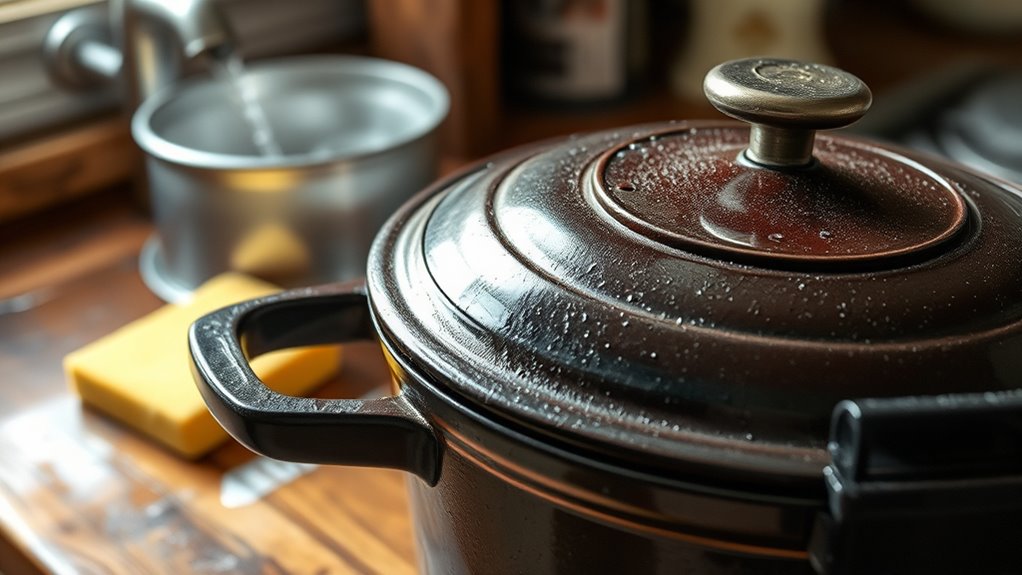
Many people wonder if they can toss their Dutch oven in the dishwasher, but the answer depends on the material. Most traditional Dutch ovens, like cast iron, aren’t dishwasher safe because harsh cleaning chemicals and high heat can damage the seasoning or cause rust.
For safety reasons, always check the manufacturer’s instructions before using a dishwasher. Using a dishwasher can also compromise cooking safety, as leftover food residues or chemicals might not be fully removed, leading to contamination or odors.
Dishwasher detergents are often too abrasive for delicate finishes and can strip away seasoning. If you prefer to use a dishwasher, opt for enameled Dutch ovens, which are more resistant to cleaning chemicals and easier to clean.
Still, hand washing remains the safest and most effective way to preserve your Dutch oven’s quality and ensure safe cooking.
How Are Dutch Ovens Made and How Does That Affect Cleaning?
The way Dutch ovens are built really affects how you should clean them. The materials and how they’re made determine their durability and what cleaning methods work best.
Traditional cast iron ovens are made by pouring molten metal into molds. This creates a sturdy, porous surface that needs seasoning and gentle cleaning to keep it in good shape.
Enameled Dutch ovens have a porcelain coating applied during manufacturing. This makes them less reactive and easier to clean. Plus, they’re more resistant to stains and rust.
The material also impacts whether you can use abrasive scrubbers or need to avoid certain cleaning products. For cast iron, it’s best to be gentle so you don’t damage the seasoning layer.
Enameled versions are more scratch-resistant but can chip if handled roughly. Knowing how your Dutch oven is made helps you pick the right cleaning method and keep it in great condition without causing damage.
Are Dishwasher Risks Different for Enameled and Cast Iron Dutch Ovens?
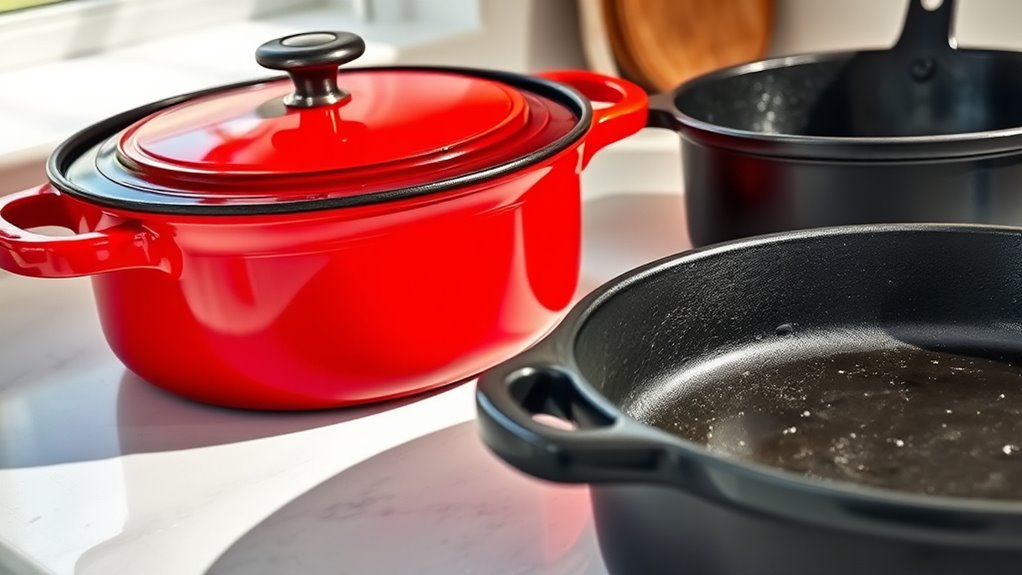
Dishwasher risks are quite different for enameled and cast iron Dutch ovens, so it’s good to know how each material reacts to the dishwasher environment.
Enameled Dutch ovens are more sensitive. Harsh detergents and high heat can chip or damage the enamel, which reduces their durability. It’s best to keep them on gentle cycles and avoid abrasive cleaners.
Cast iron, on the other hand, relies on a well-maintained seasoning layer. Dishwashers can strip this away, leading to rusting or damage. Hand washing and re-seasoning regularly help keep cast iron in good shape.
| Material | Dishwasher Risks | Key Considerations |
|---|---|---|
| Enameled | Chips, cracks, reduced durability | Use gentle cycle and avoid abrasives |
| Cast Iron | Stripping seasoning, rusting | Hand wash and re-season regularly |
| Enameled Durability | Fades over time with repeated dishwasher exposure | Better to keep hand-washed |
| Cast Iron Seasoning | Loss of seasoning affects non-stick qualities | Maintain seasoning after cleaning |
What Are the Risks of Dishwashing Your Dutch Oven?
While dishwashing might seem easy, it can actually be risky for your Dutch oven, especially if it’s not made for the dishwasher. The high heat and strong water jets can damage the surface, causing warping or cracking.
For enameled Dutch ovens, harsh cleaning chemicals and intense water pressure can chip or dull the glaze. This can make your pot less safe to use and shorten its lifespan.
Cast iron models are even more vulnerable. Dishwasher detergents can strip away the seasoning, which can lead to rust and deterioration over time.
Using the dishwasher also exposes your Dutch oven to chemicals that might not be safe for delicate surfaces, increasing the chance of corrosion. The agitation from washing can bump the cookware against other items, leading to scratches or dents.
In the end, relying on the dishwasher can reduce your Dutch oven’s lifespan and create safety risks. Hand cleaning is generally the better, safer choice.
How to Hand Clean Your Dutch Oven the Right Way
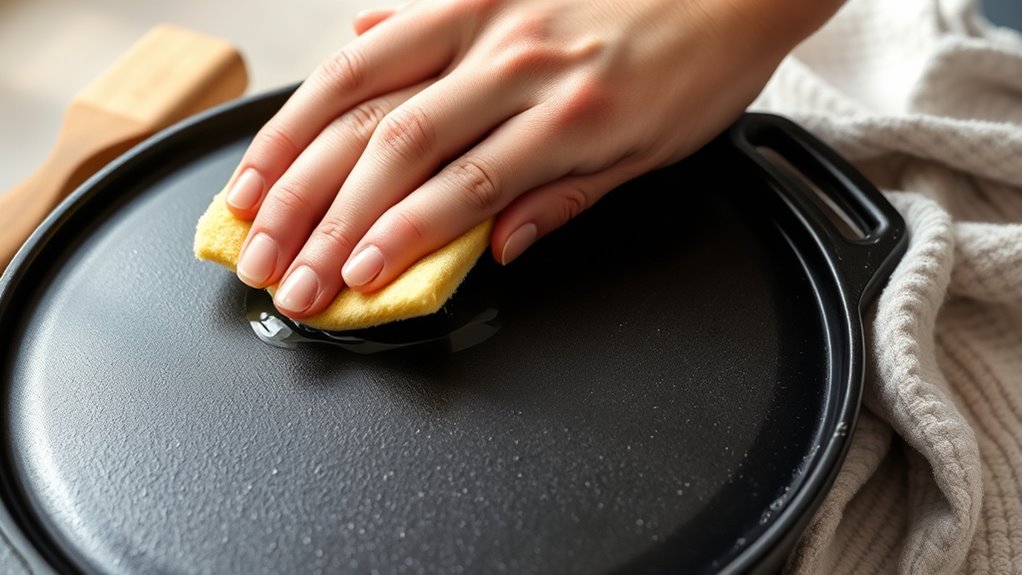
When you’re hand cleaning your Dutch oven, it’s best to use gentle methods like soft sponges or brushes. This helps keep the surface nice and intact without causing any scratches or damage. After cleaning, make sure to dry it thoroughly—this step is super important to prevent rust or corrosion from sneaking in.
Taking the time to clean and dry your Dutch oven properly really pays off. It helps maintain that great non-stick surface and keeps your oven in good shape for years to come.
Gentle Cleaning Techniques
To preserve your Dutch oven’s seasoning and prevent damage, it’s important to use gentle cleaning techniques. Avoid harsh abrasives or soap, which can strip away the seasoned surface.
Instead, use warm water and a soft brush or sponge to remove food residues. For stubborn spots, a paste of coarse salt and water works well as a gentle scrub.
When cleaning, think about the material: cast iron needs minimal soap, while enameled Dutch ovens can handle mild soap if necessary. Always focus on maintaining the seasoning that develops over time, as it improves non-stick performance.
Proper Drying Methods
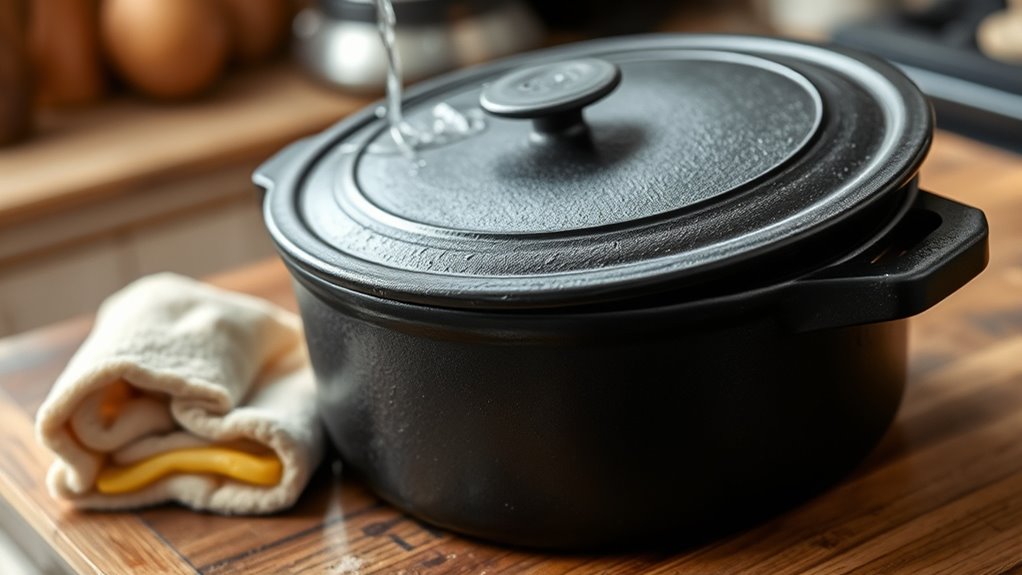
Proper drying is essential to prevent rust and keep your Dutch oven performing well. After washing, make sure to dry the cookware thoroughly with a clean towel or by placing it on low heat on the stove.
This step helps prevent moisture buildup, which can lead to rust, especially if your Dutch oven is made of cast iron. Store it in a dry, well-ventilated space to support its durability.
Proper drying not only preserves the seasoning but also extends the lifespan of your cookware. Always check for residual moisture before storing, and consider applying a light coat of oil if needed.
Cleaning Cast Iron Dutch Ovens: Do’s and Don’ts
When it comes to cleaning your cast iron Dutch oven, you want to make sure you’re doing it the right way. Proper techniques help protect the seasoning and keep rust at bay. After all, nobody wants their trusty Dutch oven to lose its non-stick coating or develop those pesky rust spots.
Proper Cleaning Techniques
Cleaning your cast iron Dutch oven requires careful attention to avoid damaging its seasoning. To keep it safe to use and durable, use gentle cleaning methods. Steer clear of harsh soaps or steel wool, which can strip away the seasoning.
Instead, rinse with hot water and use a brush or non-abrasive scrubber. For stubborn residue, simmer water inside the oven to loosen debris, then wipe it clean. Always dry thoroughly to prevent rust.
| Do’s | Don’ts |
|---|---|
| Use hot water and a brush | Use soap excessively |
| Dry immediately after cleaning | Soak overnight |
| Apply a light coat of oil | Put in dishwasher unless seasoned for it |
| Store in a dry place | Leave wet or uncovered |
Avoiding Damage and Rust
To prevent damage and rust, you need to handle your Dutch oven carefully during and after cleaning. Avoid harsh scrubbing tools that can strip the seasoning or scratch the surface.
Use gentle brushes or non-abrasive sponges, and dry your Dutch oven thoroughly with a clean towel to prevent moisture buildup. Store it in a dry place, and consider using Dutch oven accessories like silicone mats or lids to protect the surface.
Proper drying and storage are essential for maintaining its rust resistance. Remember, cooking safety includes handling your cast iron properly—avoid leaving it damp or exposed to humidity for long periods.
Maintenance and Seasoning
Maintaining your Dutch oven’s seasoning is key to ensuring it performs well and lasts for years to come. Proper seasoning creates a natural non-stick surface and protects against rust.
When cleaning, avoid harsh chemicals that can strip away the seasoning. Instead, use hot water and a stiff brush or non-abrasive scrub pad.
After cleaning, dry the oven thoroughly and apply a light coat of oil to preserve the seasoning. Store your Dutch oven in a dry, accessible spot to prevent moisture buildup.
Regular maintenance includes reseasoning when needed, especially after scrubbing. Remember, preserving the seasoning improves cooking performance and extends your Dutch oven’s lifespan.
Proper care keeps your cookware in top shape and ready for every meal.
How to Keep Your Enameled Dutch Oven’s Surface Looking New
Keeping your enameled Dutch oven’s surface looking new involves gentle care and mindful cleaning habits. To protect its finish, always use soft sponges or cloths instead of abrasive scrubbers. Avoid harsh cleaning chemicals that can damage the enamel; stick to mild dish soap and warm water. Kitchen safety is essential—wear gloves if cleaning with stronger solutions, and ensure proper ventilation.
Here’s a quick reference:
| Do’s | Don’ts |
|---|---|
| Use soft sponges | Use steel wool or abrasive pads |
| Clean with mild soap | Scrub with harsh chemicals |
| Rinse thoroughly | Use bleach or harsh cleaners |
| Dry immediately | Leave to air dry, which may cause spots |
| Store in a dry place | Stack with rough materials |
Treat your Dutch oven with care, and it’ll stay shiny and new for years.
Tips for Removing Stubborn Food Residues Safely
Even with gentle cleaning, some food residues can stubbornly cling to your Dutch oven’s surface. To remove these safely, try effective hacks that won’t damage your cookware.
Start by soaking the Dutch oven in warm, soapy water for at least 15 minutes. This helps loosen stuck-on food. Then, gently scrape with a non-abrasive sponge or nylon brush—avoid steel wool, which can scratch the enamel.
Soak in warm, soapy water for 15 minutes, then gently scrape with a non-abrasive sponge to remove food residues.
For tougher spots, make a paste with baking soda and water. Apply it to the residue and let it sit for a while before scrubbing. You can also simmer a mixture of water and vinegar inside the pot to help break down stubborn residues.
Keep these tips in mind to protect your Dutch oven’s surface. Remember, patience is key, and always opt for gentle methods to avoid damaging the enamel or seasoning.
When Should You Use Gentle Scrubbing Tools? What to Avoid
You should turn to gentle scrubbing tools whenever you’re dealing with delicate surfaces or light stains that don’t need aggressive cleaning. For these situations, avoid harsh chemicals that can damage your Dutch oven’s surface or seasoning.
Instead, choose mild soap and warm water, using soft sponges or non-abrasive pads. Steer clear of abrasive pads, which can scratch or remove the seasoning layer, especially on seasoned cast iron.
When cleaning, don’t rely on heavy-duty chemicals that might corrode or discolor your cookware. If stubborn spots stick around, a gentle scrub with a soft brush or non-abrasive scrubber is safer.
Always avoid metal scouring pads or steel wool, as they can cause permanent damage. Remember, gentle tools and mild cleaners help preserve your Dutch oven’s longevity, keeping it in good shape without harming its seasoning and non-stick properties.
How to Dry and Store Your Dutch Oven for Long-Term Care
After cleaning your Dutch oven, make sure to dry it thoroughly to prevent rust and keep its seasoning intact. Proper drying helps your cookware stay in great shape for years to come. Once it’s dry, apply a light coat of oil to protect the surface from moisture and maintain the non-stick layer.
When storing, avoid stacking heavy objects inside, as this can damage the surface. Keep the lid slightly open or place a paper towel underneath to allow airflow and prevent moisture buildup. Regularly inspecting your Dutch oven for rust or damage is also a good idea.
How often you clean it depends on how often you use it, but cleaning after each use helps prevent buildup and keeps it in top condition. For long-term care, store your Dutch oven in a cool, dry place away from humidity to extend its lifespan.
Remember to keep the lid slightly open for better airflow, and avoid stacking heavy items inside. Proper drying and thoughtful storage will make sure your Dutch oven stays non-stick, rust-free, and ready for your next cooking adventure.
Frequently Asked Questions
Can I Use Harsh Detergents on My Dutch Oven?
You shouldn’t use harsh detergents on your Dutch oven. These strong cleaning methods and detergents can damage the seasoning or the enamel finish.
Stick to mild dish soap and warm water for regular cleaning, and avoid abrasive scrubbers. For stubborn stains, use a gentle scrub brush or salt.
Using gentle detergents helps preserve your Dutch oven’s quality. This way, it lasts longer and performs better.
How Often Should I Deep Clean My Dutch Oven?
You should deep clean your Dutch oven every few months or when you notice stubborn stains or rust. Regular cleaning helps maintain its seasoning and prevents buildup.
After cleaning, make sure it’s thoroughly dried and re-season if needed. Store it in a dry place, maybe with a paper towel inside to absorb moisture.
Deep cleaning keeps your Dutch oven in great shape, which boosts its longevity and cooking performance.
What Are Signs My Dutch Oven Needs Replacing?
You’ll know it’s time to replace your Dutch oven when the material shows significant damage, like deep cracks or chips, which can affect its safety and how well it works.
If it’s cast iron, rust or losing its seasoning also means it’s time for a new one. Keep in mind, how often you clean it impacts how long it lasts.
Regular maintenance helps keep it in good shape. If repairs can’t fix it or restore its quality, it’s best to get a new Dutch oven for safe, effective cooking.
Is It Safe to Use Metal Utensils With My Dutch Oven?
Yes, you can use metal utensils with your Dutch oven, but try to avoid abrasive scrubbers to prevent damaging the seasoning.
When cleaning, opt for gentle methods like vinegar and steer clear of metal utensils that could scratch the surface.
Be careful not to chip or scrape, and always use utensils that won’t harm the enamel or cast iron.
This will help your Dutch oven stay in great shape longer.
Can I Clean My Dutch Oven in the Microwave?
You might be surprised, but you shouldn’t put your Dutch oven in the microwave. Microwaving isn’t microwave-safe and can damage the cookware or cause safety hazards.
Instead, opt for cleaning alternatives like hand washing with warm soapy water or using a brush for stubborn spots. Soaking it can also help loosen stuck-on food.
These methods protect your Dutch oven’s integrity and ensure safe, effective cleaning without risking damage or safety issues.
Conclusion
Treat your Dutch oven like a treasured storybook—handle it gently, preserve each chapter’s shine, and avoid harsh pages. Just as a well-loved book needs careful cleaning to keep its story alive, your Dutch oven thrives with gentle care and respect.
By choosing the right cleaning method, you guarantee it remains a dependable companion for many delicious meals to come.
Remember, kindness is the key—your Dutch oven will thank you with every tasty dish you create.
And when it comes to cleaning, you might wonder if you should put it in the dishwasher. Usually, it’s best to avoid that, especially with seasoned or cast iron Dutch ovens. Hand washing with warm water and a soft brush is gentler and helps maintain its non-stick surface.