
What Happens When You Put a Stainless Steel Pan in the Oven?
Many home cooks worry about heating their stainless steel pans safely and effectively. You’re not alone—figuring out how your cookware reacts to oven use can be confusing. Understanding what happens when you put a stainless steel pan in the oven can help you avoid accidents and keep your tools in top shape.
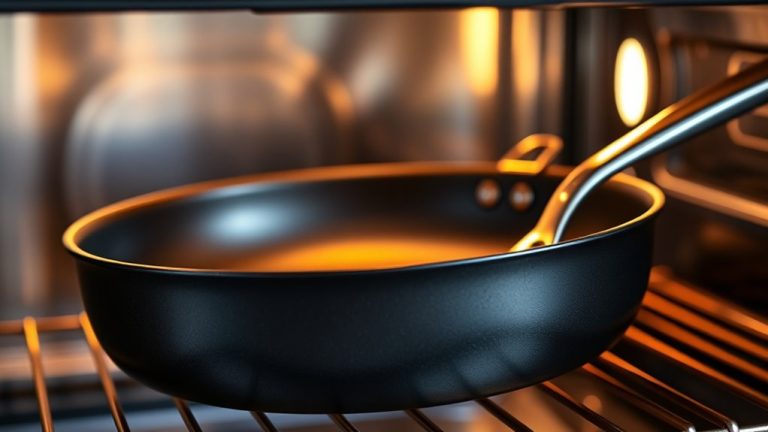
When you put a stainless steel pan in the oven, it can handle high temperatures if it’s oven-safe and your handles are designed for oven use. Keep in mind, excessive heat or sudden temperature changes may cause warping or discoloration.
Handles made from metal usually hold up well, but plastic or rubber handles might melt or degrade. To guarantee safety and longevity, follow proper techniques and care tips—more insights will help you make the most of your cookware.
Key Takeaways
- Stainless steel pans can handle high oven temperatures, usually up to 500°F or more, without warping or releasing harmful chemicals.
- Make sure handles and lids are oven-safe by checking the manufacturer guidelines to avoid melting or damage during use.
- Preheating the oven properly and increasing the temperature gradually helps prevent warping, discoloration, and uneven cooking.
- Excessive or uneven heat can cause warping, discoloration, or damage to the pan’s structure and coatings.
- Taking care of your pan after baking, like cleaning it properly and avoiding sudden temperature changes, helps it last longer and stay safe to use.
Can You Use a Stainless Steel Pan in the Oven?

Yes, you can generally use a stainless steel pan in the oven. Stainless steel is known for its durability, making it a popular choice for oven-safe cookware.
Its material safety guarantees it can handle high temperatures without releasing harmful chemicals or warping. Unlike some materials, stainless steel keeps its shape even when exposed to intense heat.
You can confidently use it for roasting, baking, or broiling. Just be sure to check the manufacturer’s guidelines to confirm oven safety.
Most high-quality stainless steel pans can handle oven temperatures up to 500°F or more. Keep in mind, handles and lids should also be oven-safe if you plan to use them in the oven.
Is It Safe to Put Stainless Steel Pans in the Oven?
Putting a stainless steel pan in the oven is generally safe, as long as the pan is designed for oven use. Most stainless steel cookware can handle high temperatures, making it great for baking, roasting, and simmering.
Always check the manufacturer’s instructions to ensure oven safety. This helps prevent damage to the pan or unintended effects on your recipes.
Using the right pan also makes cleaning easier since stainless steel resists rust and stains better than other materials.
Here’s a quick guide to oven-safe stainless steel pans:
| Feature | Benefit |
|---|---|
| Oven-safe handle | No melting or warping during baking |
| Tempered steel construction | Handles high heat without damage |
| Dishwasher safe | Easy to clean and maintain |
Knowing your cookware’s limits helps you cook confidently and keep your kitchen in top shape.
How Do Stainless Steel Pans React to Oven Temperatures?

Stainless steel pans are designed to withstand high oven temperatures, but their reaction depends on the specific heat level and duration. When you use them for different cooking techniques, they generally perform well because of their durability.
Their reaction to oven heat also depends on the cookware’s features, like non-stick coatings or plastic parts. High temperatures can cause discoloration or warping if the pan isn’t rated for intense heat.
For roasting or baking, stainless steel pans usually hold up well, making them versatile tools in your kitchen. Just keep in mind that prolonged exposure to extreme heat may weaken the pan’s structure over time.
Properly preheating and avoiding sudden temperature changes can help maintain their integrity. Overall, stainless steel pans react predictably to oven temperatures, making them a reliable choice for many cooking techniques.
Will the Handles on My Stainless Steel Pan Hold Up in the Oven?
While many stainless steel pans are designed to withstand oven heat, the handle durability depends on the materials used. Some pans feature stainless steel handles, which generally tolerate high temperatures without issues thanks to good material compatibility.
However, handles made from plastic or rubber are more prone to damage or melting when exposed to oven heat, as these materials aren’t built for high temperatures. Always check your pan’s manufacturer guidelines to confirm handle tolerance.
If the handle is riveted or securely attached, it’s more likely to stay intact during oven use. Avoid putting pans with glued or plastic handles in the oven, as these can loosen or melt.
Does Oven Heat Cause Warping or Discoloration in Stainless Steel Pans?
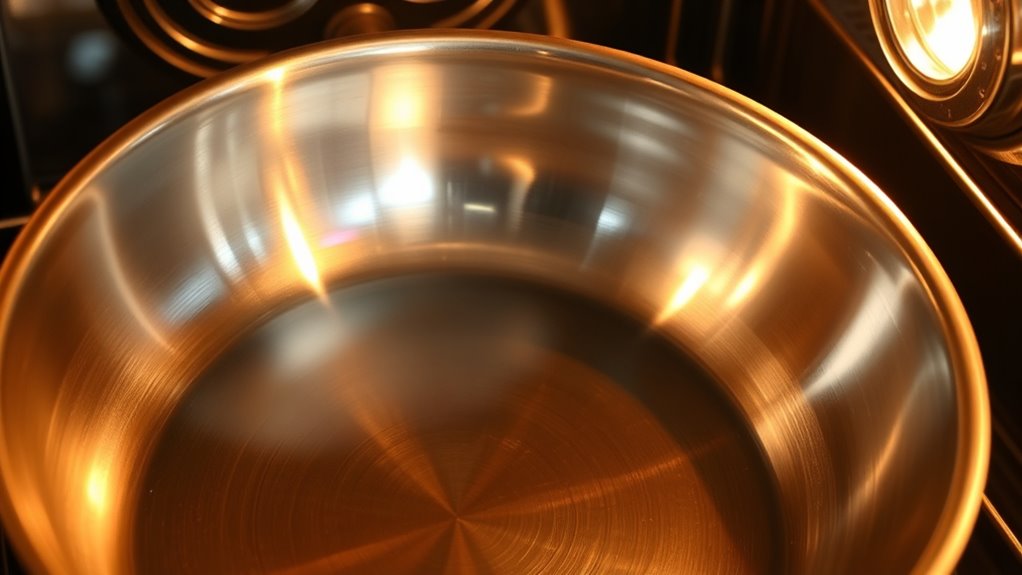
Oven heat can sometimes cause stainless steel pans to warp or discolor, especially if you’re not careful with how you use them. When the oven gets really hot, it can weaken the metal or even cause it to bend out of shape. Plus, uneven heating might be an issue if the temperature isn’t set properly or if the pan isn’t designed to handle high heat.
Discoloration is pretty common too and usually happens when the pan is exposed to intense heat or certain types of food that stain the metal. To keep your pans in good shape, it’s best to stick to the recommended oven temperatures and avoid sudden changes in temperature, like taking a hot pan straight out of the oven and plunging it into cold water. That way, you’ll help prevent warping and discoloration and keep your pans looking great for longer.
Heat-Induced Warping Risks
Ever wonder if exposing your stainless steel pan to oven heat can cause it to warp or discolor? High oven temperatures can lead to heat-induced warping, mainly due to thermal expansion. Repeated heating and cooling may weaken the pan’s structure over time.
While stainless steel is durable, excessive or uneven heat can distort its shape. For example, high oven temperatures accelerate thermal expansion, increasing the risk of warping.
Rapid temperature changes also contribute by causing material fatigue, which can weaken the pan. Uneven heating at specific points can lead to warping in localized areas.
Staying within safe temperature limits helps prevent warping caused by thermal expansion and material fatigue.
Discoloration Causes and Effects
Exposure to high oven temperatures can cause stainless steel pans to develop discoloration, often appearing as rainbow-like hues or dark stains.
This color change comes from thin oxide layers forming on the surface, which change how light reflects off the metal. You might see surface marks or streaks that seem permanent, but they’re usually harmless.
These marks are just a visual effect of heat interacting with the metal’s surface, not damage to the pan’s integrity. While discoloration might look concerning, it doesn’t affect the pan’s performance or safety.
If you want a pristine look, you can clean the surface with baking soda or special stainless steel cleaners. Remember, discoloration is mainly cosmetic and doesn’t mean the pan is warped or damaged.
Proper Oven Usage Tips
Using your oven correctly can help prevent warping or discoloration in stainless steel pans. Avoid rapid temperature changes and preheat gradually for better results.
Stick to recommended cooking techniques that distribute heat evenly, like using oven racks to avoid hotspots. Stainless steel is durable but sensitive to thermal shock, which can cause warping.
Thicker cast iron pans handle sudden temperature shifts better. Always follow the manufacturer’s guidelines for maximum oven temperatures and don’t go beyond them.
When roasting or baking, use moderate heat settings. Avoid placing a cold pan directly into a hot oven to prevent damage. Proper oven use helps your stainless steel pan stay in good shape longer.
This ensures your pan maintains its appearance and performance over time, making it a reliable kitchen tool.
How High Can You Safely Oven-Use a Stainless Steel Pan?
Stainless steel pans are known for their durability and ability to withstand high temperatures, making them a popular choice for oven use. Generally, you can safely oven-use a stainless steel pan up to 500°F (260°C).
However, it’s essential to check your pan’s manufacturer guidelines, as some may have specific temperature limits. When cooking with induction, stainless steel pans heat quickly and evenly, so they’re great for oven-to-stovetop recipes.
Just remember, high heat can make cleaning more challenging. Stainless steel can develop stubborn stains if not cleaned properly.
To maximize your pan’s lifespan, avoid sudden temperature changes and always wipe away food residues promptly. Keep these tips in mind:
- Use oven mitts to handle hot pans safely
- Never exceed the manufacturer’s recommended temperature
- Regularly clean stainless steel to prevent buildup
What Are the Best Practices for Oven-Using Stainless Steel Pans?
To get the best results and extend the lifespan of your stainless steel pan, it’s important to follow some key best practices when oven-cooking.
First, use proper cooking techniques, like gradually preheating the pan to prevent warping and sticking. Always check that your cookware is oven-safe and review the manufacturer’s guidelines for maximum temperatures.
Avoid sudden temperature changes, such as moving a hot pan straight from the stove to the oven, which can cause warping or damage. Use oven mitts and proper tools to handle the pan safely, and consider using a silicone or heat-resistant handle cover if needed.
When cooking, don’t overcrowd the pan. Use enough oil or liquid to promote even heating and prevent sticking. After oven use, let the pan cool gradually before cleaning to avoid warping.
Following these practices helps preserve your cookware and ensures it performs well in your oven.
Common Mistakes to Avoid When Using Stainless Steel Pans in the Oven
One mistake people often make is using pans that don’t have oven-safe handles. These handles can melt or warp when you crank up the heat, which is definitely something you want to avoid.
You also want to keep an eye on your pan’s temperature limits. Going beyond the recommended heat can not only damage the pan but also pose safety risks.
Using Non-Oven Safe Handles
Using handles that aren’t oven-safe can lead to serious accidents or damage your cookware. Non-oven safe handles often lack the necessary durability and might not handle high heat well, risking melting or breaking. Always check if the handle material is suitable for oven temperatures.
Be mindful of these common mistakes:
- Attaching handles made from plastic or other low-heat materials that can melt or warp.
- Overlooking the need for sturdy, oven-safe handles for heavy cookware.
- Ignoring manufacturer guidelines about handle durability and material compatibility.
Using handles designed for oven use helps ensure safety and the longevity of your cookware. Avoid shortcuts that could compromise its integrity, and always verify if the handle can withstand oven conditions.
Ignoring Temperature Limits
Ignoring the recommended temperature limits for your stainless steel pan can lead to serious problems. Excessive heat can damage the pan’s coating, causing it to break down or warp, which affects cooking and how long the pan lasts.
Overheating can also cause stubborn stains or discoloration that are tough to remove during oven cleaning. Plus, high temperatures might weaken the pan’s structure, risking warping or even deforming the metal.
Always check your pan’s temperature guidelines before putting it in the oven. Avoid pushing beyond safe limits to keep it in good shape. Proper temperature control not only protects your pan but also makes oven cleaning easier, preventing burnt-on residues.
This helps keep your cookware looking new longer and ensures better cooking results.
How to Care for Your Stainless Steel Pan After Oven Use
After removing your stainless steel pan from the oven, it’s important to clean it promptly to prevent food residue and grease from hardening. Proper cleaning techniques help keep your pan in top shape and ready for your next meal.
Start by soaking the pan in warm, soapy water to loosen any stubborn bits. Use a non-abrasive scrubber to clean the surface without scratching.
For storage, make sure the pan is completely dry before putting it away to prevent water spots or corrosion. Avoid stacking heavy items on top to prevent dents or scratches.
Here are some key steps:
- Wash with warm water and mild detergent immediately after use
- Use a non-abrasive scrubber for stubborn stains
- Dry thoroughly with a soft cloth before storing
Following these simple care tips will extend your pan’s lifespan and keep it looking shiny and new.
When Should You Replace Your Stainless Steel Pan Due to Wear and Tear?
Eventually, your stainless steel pan will show signs of wear that mean it’s time to replace it. Over time, the durability decreases because of material deterioration, which affects how well it performs and its safety.
You should think about replacing your pan if you notice warped bottoms, loose handles, or scratched surfaces that mess with heat conduction. Cracks or discoloration are also signs of serious deterioration.
Here’s a quick table to help you spot when it’s time for a new pan:
| Indicator | Cause | Impact |
|---|---|---|
| Warped bottom | Excessive heat or misuse | Uneven cooking, poor heat transfer |
| Loose or damaged handles | Wear and tear | Safety risk during handling |
| Deep scratches or pits | Material deterioration | Food sticking, bacterial buildup |
| Discoloration or staining | High heat, chemical exposure | Looks bad, possible contamination |
| Cracks or chips | Impact or stress | Leaking or breakage |
If you see any of these signs, it’s best to replace your stainless steel pan. That way, you keep enjoying top performance and stay safe while cooking.
Frequently Asked Questions
Can I Use a Stainless Steel Pan for Broiling in the Oven?
Yes, you can use a stainless steel pan for broiling in the oven. Its durability allows it to handle high temperatures without warping or melting.
Just make sure to use proper cleaning techniques afterward. Soaking and scrubbing with gentle brushes will help keep it in good shape.
Stainless steel’s heat resistance makes it great for broiling, but avoid using any non-stick coatings or handles that aren’t oven-safe.
Does Oven Heat Affect the Seasoning of Stainless Steel Pans?
Oven heat can affect the seasoning durability of your stainless steel pan, especially if you use high oven temperatures.
Repeated exposure to heat may cause the seasoning layer to wear down or become less effective.
To keep your pan’s seasoning in good shape, avoid very high temperatures and clean it properly after each use.
This helps preserve the seasoning and keeps your pan non-stick for longer.
Are Stainless Steel Pans Suitable for Baking or Only Roasting?
Like a trusty sword in a knight’s hand, stainless steel pans are versatile, making them suitable for baking and roasting. Their durability withstands high oven temperatures, so you can confidently use them for various dishes.
This cookware’s resilience and heat retention make it a reliable choice from stovetop to oven. You’ll find that these pans excel at both baking bread and roasting vegetables, proving their true versatility in your kitchen.
How Do I Prevent Food From Sticking When Oven-Cooking With Stainless Steel?
To prevent food from sticking when oven-cooking with stainless steel, make sure your pan has a good non-stick coating or use plenty of oil or butter.
Preheat the pan properly to ensure even heat distribution, which helps reduce sticking. Avoid overcrowding the pan so food has space to cook evenly.
Let your food develop a natural sear before flipping. These simple steps make cooking smoother and cleanup easier.
Can I Use My Stainless Steel Pan on a Grill or Open Flame After Oven Use?
Yes, you can use your stainless steel pan on a grill or open flame after oven use. It’s like a trusty knight ready for the next battle. Just make sure the pan is cool and handle it carefully to avoid warping or damage.
For pan safety, avoid sudden temperature changes and always check if your cookware is grill-safe. Alternative cookware options might be better for high direct heat, but stainless steel holds up well.
Conclusion
In the end, using your stainless steel pan in the oven is like unleashing a culinary superhero—robust, versatile, and ready for anything you throw at it. Just make sure to check the handles, avoid extreme temperatures, and give it proper care afterward.
With these tips, your stainless steel pan will last longer than you might expect, outliving many other kitchen tools by a mile. So go ahead, bake, roast, and sear—your stainless steel hero is ready for action!