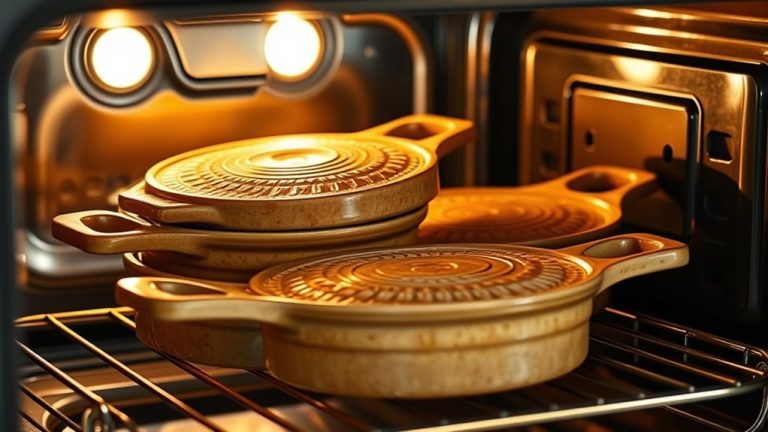
What Makes Ceramic Plates Go in the Oven?
Many people struggle with finding ceramic plates that can actually go in the oven without breaking or warping. It can be frustrating to invest in beautiful dishes only to discover they aren’t oven-safe.
To make ceramic plates oven-safe, they need to be made from durable materials, properly glazed, and crafted to handle high heat without cracking or warping. Look for labels or manufacturer instructions that confirm oven safety.
Factors like glaze quality, firing process, and material composition also play a role in resistance to thermal shock. If you keep exploring, you’ll find out how design and handling influence their oven performance and longevity.
Key Takeaways
- Ceramic plates need to be labeled or marked as oven-safe, so you know they can handle high temperatures safely.
- Good material choices and manufacturing methods, like kiln firing and strong glazes, make plates more oven-friendly.
- When glazes fuse during firing, they create a non-porous, heat-resistant surface perfect for oven use.
- Designs that resist thermal shock and plates with the right thickness help prevent cracking during quick temperature changes.
- Gradually heating plates in the oven reduces stress from the heat and lowers the chance of damage.
Can You Safely Put Ceramic Plates in the Oven?
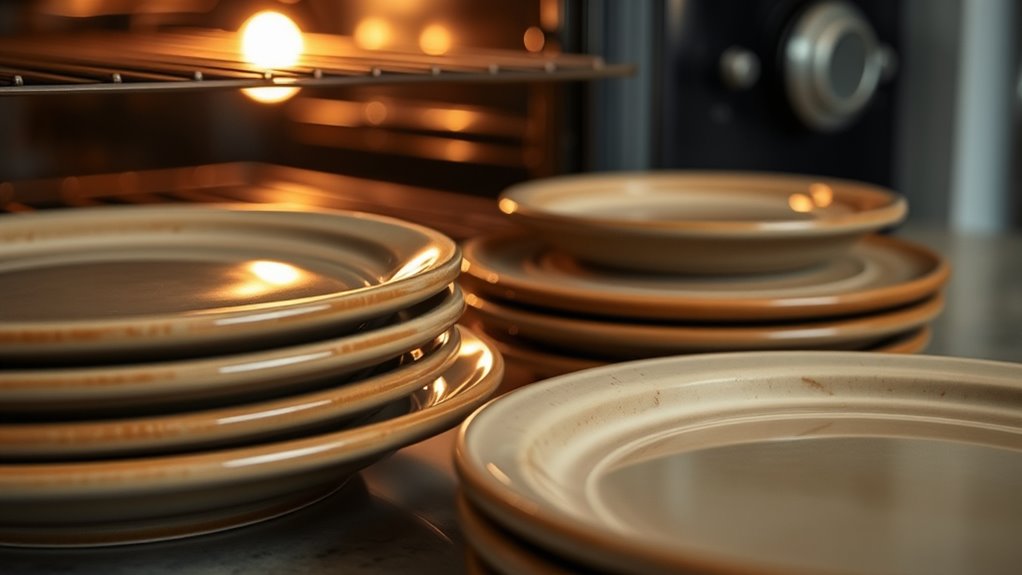
Many ceramic plates are safe to use in the oven, but it’s important to check their labels or manufacturer instructions first. Knowing the recommended cooking temperature is essential; some ceramics can handle high heat, while others may crack or break.
Check labels and manufacturer instructions before oven use to ensure ceramic plates won’t crack or break.
Look for plates labeled as oven-safe, which usually specify a maximum temperature—often around 350°F to 500°F. Food compatibility also matters because some ceramics are glazed or contain materials that aren’t suitable for oven use.
If your plate is designed for baking or oven cooking, you can confidently use it to heat or bake food. But avoid placing plates with decorative or metallic glazes in the oven, as these can cause damage or fumes.
Always preheat the oven and never subject ceramic plates to sudden temperature changes. When in doubt, follow the manufacturer’s guidelines to keep your ceramic plates safe and functional during oven use.
What Materials Make Ceramic Plates Oven-Safe?
The materials in ceramic plates really play a big role in how well they hold up in the oven. Basically, the type of clay used and how it’s processed can make a difference. Some clays are better suited for oven use because they’re more durable and less likely to crack under heat.
Then there’s glazing and firing—these steps are super important too. Proper glazing not only gives the plates a nice finish but also helps them withstand high temperatures. Firing at the right temperature helps strengthen the ceramic, making sure it doesn’t break or warp when you pop it in the oven.
Durability of Clay Compositions
Ceramic plates become oven-safe mainly because of the materials used in their composition. The key factors are clay strength and composition stability, which determine how well the plate withstands high temperatures.
Stronger clay materials resist cracking and warping during oven use, ensuring durability. Composition stability means the clay keeps its shape without deforming or breaking down under heat.
When the clay has high strength and stable composition, the plate can handle repeated heating without damage. This resilience is essential for oven-safe ceramics because it prevents failures during thermal shocks.
Glazing and Firing Processes
The process of glazing and firing is key to making ceramic plates safe for oven use. When you add a glaze, it creates a smooth, glass-like surface that seals the ceramic, stopping liquids from seeping in and helping it handle high temperatures.
During firing, the glaze melts and bonds to the surface, making the plate more durable and heat resistant. The firing also affects the finish—whether you want it glossy, matte, or textured—impacting how it looks and works.
Decorative techniques like colored glazes or patterns are baked into the surface during firing. This ensures they won’t chip or fade over time. Proper glazing and firing make sure your ceramic plates can handle oven heat reliably for cooking, reheating, or serving.
How Do Glazes Impact Oven Safety of Ceramic Plates?
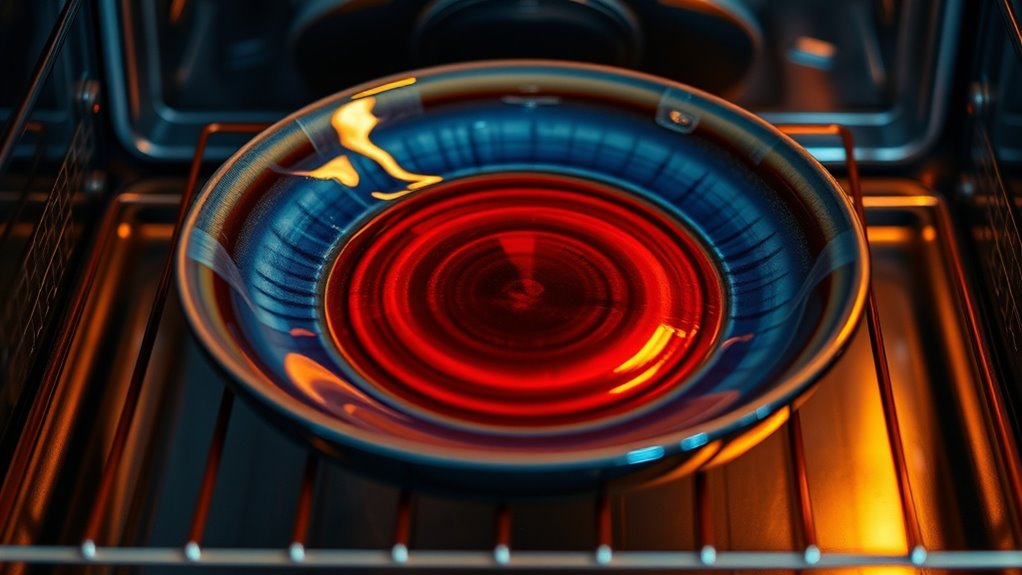
Ever wondered how glazes affect the oven safety of ceramic plates? The key lies in glaze chemistry and firing temperature. When glazes are formulated correctly, their chemical composition ensures they can handle high temperatures without cracking or leaching harmful substances.
The firing temperature is really important. If it’s too low, the glaze might not fully melt, leading to weak spots that can chip or absorb moisture. Too high, and the glaze could melt excessively, causing uneven surfaces or dangerous fumes.
Safe ceramic glazes are designed to fuse seamlessly with the clay body during firing. This creates a durable, non-porous surface that prevents bacteria buildup and stops any chemicals from leaching into your food during oven use.
How Manufacturing Processes Ensure Ceramic Plates Are Oven-Ready
Manufacturing processes are essential in making sure ceramic plates are oven-ready by carefully controlling each step to ensure durability and heat resistance. Traditional techniques like kiln firing and precise clay mixing have their roots in artisanal practices focused on quality and strength.
Manufacturing ensures ceramic plates are oven-ready through careful, traditional techniques emphasizing durability and heat resistance.
These old methods influence modern production, blending artistic influences to improve both the look and function of the plates. During manufacturing, raw materials are carefully chosen and processed to handle high temperatures without cracking or warping.
The shaping step, whether by molding or slip casting, makes sure the plates have even thickness and density, which is crucial for proper heat distribution. Firing at specific temperatures then stabilizes the ceramic, locking in its strength and heat-resistant qualities.
Glazing, inspired by centuries-old artistic traditions, is applied to create a protective, non-porous surface that can withstand oven conditions. By merging historical techniques with modern technology, manufacturers produce ceramic plates that are safe and reliable for oven use.
Why Is Thermal Shock Resistance Important for Oven-Use Ceramics?
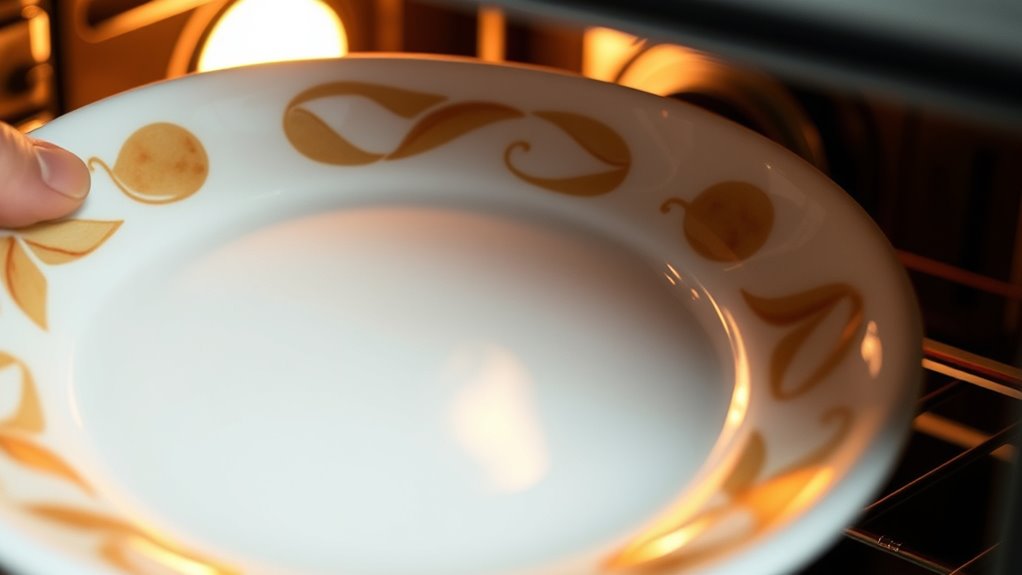
Your ceramic plates need to have good thermal shock resistance so they can handle sudden temperature changes in the oven without breaking. It’s pretty important because, when you put a cold plate into a hot oven or take a hot dish out, the rapid temperature shift can cause cracks if the material isn’t up to the task.
The key here is the material’s composition and how the plates are designed and made. These factors really affect how well the ceramics can handle those quick temperature swings. When you understand what makes a ceramic more resistant to thermal shock, you can pick the right ones that won’t crack or break during use, giving you peace of mind and longer-lasting dishes.
Material Composition Matters
Since ceramics in ovens are exposed to rapid temperature changes, their material composition is really important for withstanding thermal shock. The type of clay and minerals added influence how well the ceramic resists cracking or breaking.
High-quality materials create a dense, uniform structure that can handle thermal stress. This stability helps preserve decorative patterns and prevents color from fading or warping.
If the composition isn’t ideal, the ceramic might develop hairline cracks or lose its aesthetic appeal over time. Understanding what makes up the material helps you pick a durable, oven-safe plate.
A good choice will keep your ceramic plates looking great and functioning well despite repeated heating and cooling cycles. Ultimately, the right material composition keeps your plates both beautiful and practical.
Rapid Temperature Changes
When ceramic plates are exposed to sudden temperature changes, they risk thermal shock, which can cause cracking or breaking. Rapid temperature shifts lead to expansion and contraction in the material, stressing its structure.
If the temperature change happens too quickly, the ceramic can’t adapt fast enough, resulting in cracks or breaks. That’s why thermal shock resistance is so important for oven-use ceramics—you need plates that can handle these shifts without getting damaged.
High thermal shock resistance means the ceramic can withstand quick heating or cooling while keeping its integrity. This quality ensures your plates stay safe and durable even when exposed to sudden temperature changes.
Choosing ceramics with good thermal shock resistance helps prevent unexpected breakage and extends the lifespan of your ovenware.
Design and Manufacturing
Design and manufacturing processes are key to improving the thermal shock resistance of oven-use ceramics. They ensure these ceramics can handle quick temperature changes without cracking.
During production, careful control of material composition and firing techniques helps create a sturdy structure that resists thermal stress.
Adding color patterns and decorative finishes requires precision to avoid weaknesses that could reduce thermal shock resistance.
Proper glazing also plays a role by creating a smooth, non-porous surface that minimizes thermal expansion.
When you choose ceramics made with these considerations in mind, you’re getting dishes that look great and can handle oven use.
Ultimately, thoughtful design and manufacturing make sure your ceramic plates can safely handle temperature fluctuations, keeping their look and strength over time.
How to Identify If Your Ceramic Plate Is Oven-Safe
To figure out if your ceramic plate is oven-safe, start by checking the bottom for any labels or markings. Many oven-safe ceramics, especially those meant for actual use, will have symbols like a baking dish or temperature indicators.
Check the bottom for labels or symbols to determine if your ceramic plate is oven-safe.
If you see a mark indicating it’s oven-safe, you can use it in the oven without worries. Keep in mind, some decorative plates are just for display and not meant for heat, so always verify first.
You can also look for manufacturer information, which often explains whether the plate can handle oven heat. If there are no markings, try testing it carefully by gradually heating it to a low temperature.
Remember, not all beautifully crafted ceramic art pieces are oven-safe. Always check thoroughly to avoid damage or accidents.
Proper identification ensures your ceramic plates are both beautiful and safe for functional use in the kitchen.
Signs That a Ceramic Plate Is Not Oven-Safe
Even if a ceramic plate looks attractive and well-made, it doesn’t automatically mean it’s oven-safe. Check the bottom or back for labels or symbols that indicate oven safety. If you see a “microwave safe” label but no mention of oven use, that’s a warning sign.
Cracks, chips, or crazing—those fine lines on the surface—are signs the plate might not handle high heat. Using it in the oven could cause further damage or breakage. Artistic designs or painted patterns can sometimes fade or blister when heated, showing the plate isn’t meant for oven use.
Also, if the ceramic feels unusually lightweight or different from other oven-safe dishes, it might be a sign of lower quality. Remember, some decorative pieces are made to look nice but aren’t functional in high temperatures. Always check the manufacturer’s instructions before putting a ceramic plate in the oven to stay safe and avoid damage.
Tips for Gradually Heating Ceramic Plates to Prevent Cracks
When heating ceramic plates, taking gradual steps can greatly reduce the risk of cracks. Start by placing the plate in a cold oven, then turn it on low heat. Slowly increase the temperature in small steps over 15-20 minutes, giving the ceramic time to adapt without sudden thermal shocks.
This careful process helps preserve your kitchen’s look by preventing damage that could mar the plate’s appearance. Make sure your ceramic plates are clean before heating, and clean them gently to avoid scratches or weakening the material.
Avoid exposing plates directly to high heat or rapid temperature changes, as these can cause cracks or breaks. Being patient during the heating process keeps your ceramic ware intact and your collection looking great.
Following these simple steps will help your plates stay beautiful and functional, ready to serve in your well-maintained kitchen.
Does Thickness or Shape Affect Oven Compatibility?
The thickness and shape of ceramic plates really affect how well they work in the oven. Shape is especially important—flat, wide plates spread heat evenly and help prevent warping or cracking. Tall or irregularly shaped plates can trap heat unevenly, which puts stress on the material.
Thickness also plays a role. Thinner plates heat up quickly but are more likely to crack under thermal stress. Thicker plates hold heat better and last longer, but they take more time to warm up.
When choosing a ceramic plate for oven use, go for a balanced design—flat with moderate thickness. This helps ensure even heating and reduces the chance of damage. Avoid overly thick or oddly shaped plates, as they may not handle oven temperatures well.
Paying attention to shape and thickness helps you pick a ceramic piece that can safely and effectively handle oven heat.
What Should You Do If Your Ceramic Plate Cracks in the Oven?
If you notice your ceramic plate has cracked in the oven, it’s important to act quickly to prevent further damage or potential hazards. First, turn off the oven and let it cool completely to avoid burns.
Carefully remove the cracked plate using tongs or oven mitts to stay safe in the kitchen. Avoid using the cracked plate for cooking or serving, as it can worsen the damage or shatter unexpectedly.
If the crack is minor, you might try ceramic repair techniques, but only if the plate is oven-safe and food-grade. For bigger cracks or serious damage, it’s best to discard the plate safely and replace it to prevent injuries.
Always check your ceramics regularly for damage and avoid putting compromised plates back in the oven. Keeping an eye on their condition helps keep your kitchen safe and makes your plates last longer.
When in doubt, it’s safest to replace damaged ceramics to prevent accidents and injuries.
Frequently Asked Questions
Can Ceramic Plates Withstand High-Temperature Broiling?
Yes, ceramic plates can handle high-temperature broiling if they’re specifically made for it.
You need to make sure their thermal expansion properties are suitable and that the glaze can handle intense heat without cracking or crazing.
Always check the manufacturer’s instructions because some ceramics are designed to tolerate high temperatures, while others aren’t.
Properly designed ceramic plates won’t warp or break during broiling, so you can use them safely and effectively.
Are There Specific Brands Known for Oven-Safe Ceramic Plates?
Some brands are legendary for oven-safe ceramic plates, almost like the superheroes of dinnerware! You’ll want to check out brands with stellar reputations and glowing reviews, like Corelle or Emile Henry.
These brands are known for their durability and ability to withstand oven heat without breaking a sweat. Trust the reviews and reputation, and you’ll find plates that can handle your fiery culinary adventures with ease!
How Do Different Glazes Affect Heat Resistance?
Different glazes impact heat resistance based on their composition and thermal expansion properties. A glaze with a balanced mix of silica, flux, and alumina handles high temperatures better, preventing cracking or crazing.
If the glaze’s thermal expansion matches the ceramic body, it manages heat stress more effectively. Look for glazes designed for oven use to ensure they have compatible expansion.
This helps keep your ceramic plates safe and durable in the oven.
What Is the Maximum Oven Temperature Ceramic Plates Can Handle?
Ceramic plates made from high-quality ceramic material usually handle oven temperatures up to 500°F (260°C). However, this can vary depending on their specific glaze and how they were made.
Always check the manufacturer’s temperature tolerance before putting them in the oven. Some ceramics are built for higher heat, while others aren’t designed for it.
To avoid cracking or damage, don’t exceed the recommended temperature. Gradual heating also helps keep the plate in good shape.
Can Ceramic Plates Be Used in Microwave Ovens?
Yes, ceramic plates can be used in microwave ovens. Ceramic material generally boasts good heat resistance, making it safe for microwave use.
Think of it as a sturdy shield that withstands microwave waves without cracking or breaking. Just make sure your ceramic plate is labeled microwave-safe, as some ceramics may contain metallic glazes or decorations that aren’t microwave-friendly.
Always double-check to keep your meal safe and your dish intact.
Conclusion
When it comes to oven safety, knowing your ceramic plates is key. Understanding materials, glazes, and manufacturing processes helps you use them confidently without worry.
Thermal shock resistance and proper handling are your best allies. Think of them like a dance partner guiding you gracefully through the heat.
With a little care, your ceramic plates will serve you well. They turn everyday meals into moments of warmth and wonder.
And remember, choosing oven-safe ceramic plates means enjoying both safety and style every time you cook.