Can Stainless Steel Go in the Oven?
Many home cooks worry about whether their favorite cookware can handle the heat of the oven. If you’re wondering, “Can stainless steel go in the oven?” you’re not alone. Many people struggle with understanding what types of cookware are oven-safe and how to use them properly.
Yes, you can safely use stainless steel in the oven, as it can withstand high temperatures often up to 500°F or more, especially if it’s high-quality and designed for oven use.
Look for cookware labeled as “oven-safe” and check handle materials, preferring metal or silicone handles.
It’s important to preheat and avoid rapid temperature changes. If you keep these tips in mind, you’ll be able to cook confidently.
More details follow to help you get the most out of your stainless steel cookware.
Key Takeaways
- Stainless steel is usually oven-safe up to 500°F to 550°F, but it depends on the quality and the manufacturer’s guidelines.
- Always check for oven-safe labels and symbols on your cookware before putting it in the oven.
- Metal or silicone handles are better because plastic or rubber ones might melt at high temperatures.
- High-quality stainless steel with multiple layers tends to handle heat better and cooks more evenly.
- Preheat your oven properly and avoid sudden temperature changes to prevent warping or damage.
Is Stainless Steel Safe for Oven Use?
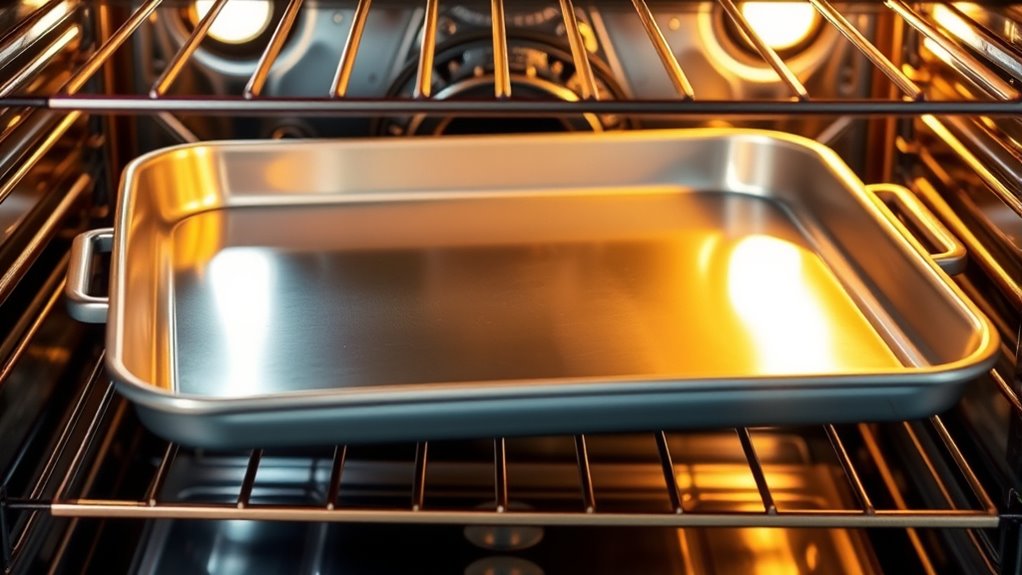
Is stainless steel safe for oven use? Yes, stainless steel is generally safe because it handles heat really well. Unlike some materials, it won’t warp or melt at high temperatures, making it a dependable choice for oven cooking.
Stainless steel is safe for oven use, as it handles high heat without warping or melting.
Its durability means it can usually handle oven temperatures up to 500°F or even higher, depending on the quality. When you use stainless steel cookware, you also get even heat distribution, which helps your food cook thoroughly.
Just make sure any handles or lids are oven-safe too, since some may not tolerate extreme heat. Overall, stainless steel’s heat resistance makes it a versatile and safe option for baking, roasting, and broiling.
As long as it’s designed for oven use, you can confidently put your stainless steel cookware in the oven without worry.
How Can You Tell If Your Stainless Steel Cookware Is Oven-Safe?
Wondering if your stainless steel cookware can go in the oven? The first thing to do is check the manufacturer’s labels. They usually have specific instructions or symbols that tell you if it’s oven-safe.
Also, take a quick look at the handles. If they’re made from heat-resistant materials like silicone or metal, you’re probably good to go. But if the handles are plastic or rubber, they might not hold up in the oven.
Just a few simple steps like these can help make sure your cookware is safe for oven use without any surprises.
Check Manufacturer Labels
Checking the manufacturer labels on your stainless steel cookware is the quickest way to see if it’s oven-safe. Labels usually give you essential details about the cookware, including whether it can handle oven use.
Look for symbols or wording like “oven-safe” or specific temperature limits. Pay attention to stainless steel grades since some are more heat-resistant than others. Different types, such as fry pans or stockpots, may also have different oven tolerances.
Always verify if the label explicitly states oven safety and note any temperature restrictions listed. Identifying the stainless steel grade and cookware type can give you extra confidence.
Trust manufacturer guidance over assumptions, especially if you’re unsure about the specific stainless steel grades or cookware types. Proper labeling helps ensure safe oven use and prevents damage or safety hazards.
Examine Handle Materials
Examine the handle materials on your stainless steel cookware to see if it’s oven-safe. Handle types include stainless steel, silicone, plastic, or rubber, each with different heat resistance levels.
Metal handles, especially stainless steel, usually withstand oven temperatures well. But plastic or rubber handles often aren’t oven-safe because they can melt or degrade under high heat.
Silicone handles might tolerate moderate oven temperatures, but check the manufacturer’s guidelines to be sure. Always consider how the handle is constructed—solid, riveted, or glued—and whether it’s rated for oven use.
When in doubt, consult the manufacturer’s instructions or look for oven-safe symbols. Using proper handle materials ensures safety, durability, and good performance when moving from stovetop to oven.
What Oven Temperatures Can Stainless Steel Handle?
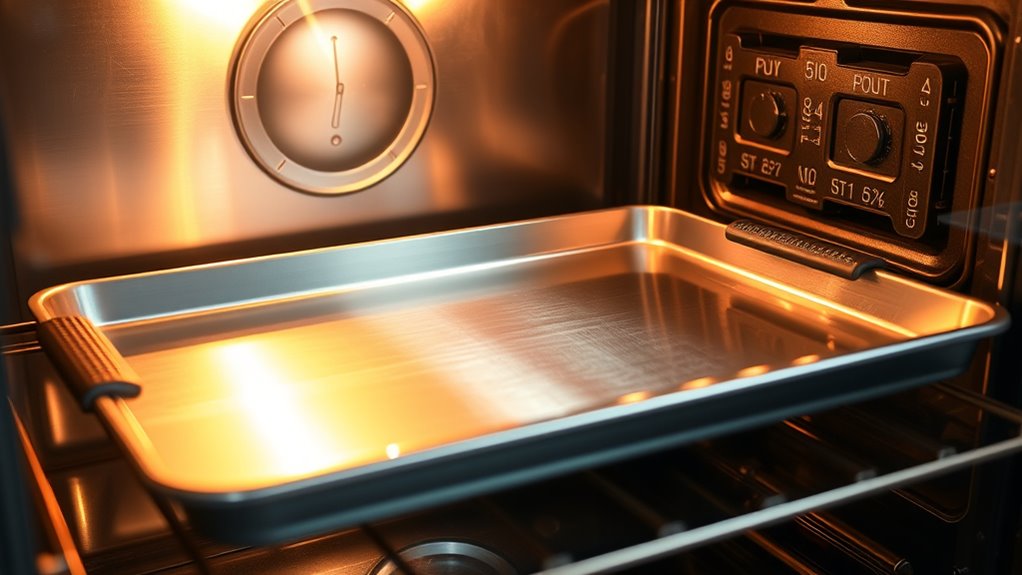
Stainless steel cookware is known for its durability, but it’s important to know its temperature limits to avoid damage. Most stainless steel alloys can safely handle oven temperatures up to 500°F (260°C).
The key factor is the thermal conductivity of stainless steel, which affects how heat is spread across the pan. Thinner or lower-quality stainless steel might warp or discolor at high temps, so check your cookware’s specific limits.
Thermal conductivity determines heat distribution; lower-quality stainless steel may warp or discolor at high temperatures.
Many high-grade stainless steel alloys can handle temperatures up to 550°F (288°C) without issues. Thicker pans also help distribute heat evenly and can withstand higher temperatures.
Always look at the manufacturer’s guidelines, since some stainless steel pans have specific temperature restrictions. Knowing your cookware’s thermal properties helps you cook safely and prevents warping or damage.
Which Types of Stainless Steel Are Best for Oven Cooking?
When you’re picking stainless steel for oven cooking, it’s all about how well it handles high temperatures, resists corrosion, and can stand up to frequent use. You want something sturdy that won’t warp or degrade after lots of baking and roasting. Some types of stainless steel are just better suited for these hot, demanding conditions, so your cookware can last a long time.
Knowing the differences between the types of stainless steel can really help you choose the best one for your kitchen. It’s all about finding that perfect balance between durability, heat resistance, and corrosion resistance, so you can enjoy cooking without worries.
Compatibility With Oven Temperatures
Not all stainless steel cookware is created equal when it comes to oven temperatures. It’s important to know which types can handle high heat without warping or degrading. The best stainless steel for oven use offers excellent oven performance and thermal conductivity, ensuring even heat distribution.
Typically, cookware with an aluminum or copper core improves thermal conductivity, making your cooking more efficient. Look for features like multi-layer construction with aluminum or copper layers, a thick, durable stainless steel exterior, and oven-safe labels indicating high-temperature tolerance.
These features help the cookware withstand high oven temperatures, preventing warping or damage. Keep in mind that the overall design and build quality directly impact how well your stainless steel performs in the oven. Choosing the right type is key for safe, reliable oven use.
Corrosion Resistance and Durability
Since durability and resistance to corrosion are key for oven cooking, choosing the right stainless steel can really extend your cookware’s lifespan. Different grades vary in how well they handle heat, moisture, and acidic foods.
Type 304 stainless steel is known for its excellent corrosion resistance and is a popular choice in kitchenware, making it reliable for oven use. On the other hand, Type 430 has lower corrosion resistance but costs less.
A durability comparison shows that 304 withstands repeated high-temperature cycles better, which helps reduce warping and degradation over time. Picking the right grade ensures your oven cookware stays durable, corrosion-free, and safe for long-term use.
How to Prepare Your Stainless Steel Pans for Oven Use
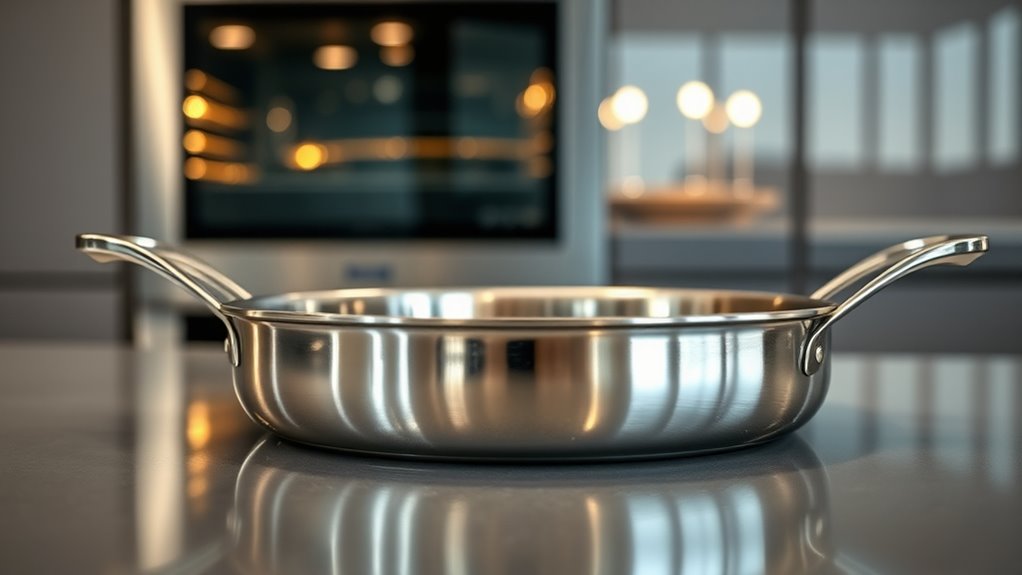
Before using your stainless steel pan in the oven, it’s important to make sure it’s properly prepared. Doing so helps ensure it can handle the heat without warping or getting damaged.
Start by checking the manufacturer’s guidelines to confirm your pan is oven-safe. Then, give it a quick clean to remove any residue or oils from manufacturing that could affect heat distribution.
Check the manufacturer’s guidelines and clean your pan to ensure safe, even oven cooking.
To prepare your pan well, avoid sudden temperature changes, which can damage the metal. Preheat the oven before placing the pan inside to promote even heating.
If your pan has non-metal handles, make sure they are oven-safe or protect them from direct heat.
Following these steps will help optimize your pan’s heat tolerance and extend its lifespan. Verifying proper preparation makes for safer, more efficient oven cooking.
Can Non-Stick Coated Stainless Steel Cookware Go in the Oven?
Can non-stick coated stainless steel cookware go in the oven? Yes, but there are some precautions to keep in mind.
Non-stick benefits include easy food release and simple cleanup, which make them popular. But many non-stick coatings can’t handle high oven temperatures, usually limited to around 350°F (175°C).
Check your cookware’s manufacturer guidelines to see if it’s oven-safe. If the coating is labeled oven-safe, you can use it in the oven, just don’t go beyond the recommended temperatures.
Keep in mind, non-stick coatings can break down over time when exposed to high heat. This can reduce their effectiveness and potentially release fumes.
If you’re worried about durability or want to avoid coating issues, consider alternatives like stainless steel or cast iron. These materials can handle higher oven temperatures with no problem.
They also tend to offer better heat distribution and last longer, especially for oven-cooked dishes.
Best Practices for Cooking With Stainless Steel in the Oven
Cooking with stainless steel in the oven requires some key practices to guarantee ideal results and avoid common pitfalls. First, always preheat your oven to promote even heat distribution, which is essential for consistent cooking. Use medium to high heat settings to prevent sticking and warping.
When handling stainless steel cookware, master your cooking techniques—such as using enough oil and avoiding sudden temperature changes—to minimize sticking and scorching. To optimize your cooking experience, keep these tips in mind:
- Use oven-safe stainless steel cookware rated for high temperatures
- Preheat your pan and oven together for even heat distribution
- Avoid overcrowding the pan to promote even cooking and browning
Following these best practices helps you take advantage of the benefits of stainless steel, like excellent heat distribution, for perfect results every time.
Common Mistakes to Avoid When Using Stainless Steel in the Oven
One mistake people often make is ignoring the temperature limits of their stainless steel cookware. Pushing it beyond the recommended heat can cause warping or even damage the pan, so it’s always good to check the manufacturer’s guidelines.
Another thing to watch out for is using abrasive cleaners. They can scratch up the surface and make your cookware look worn out faster, so it’s best to stick with gentle cleaning methods.
And don’t forget about preheating! Skipping that step can lead to uneven cooking or sticking issues. Just give your oven and pan a few minutes to heat up properly before you start cooking.
Overlooking Temperature Limits
Even though stainless steel cookware is known for its durability, many people overlook its temperature limits. This can lead to warping or damage, so it’s important to understand what your cookware can handle.
High heat can weaken stainless steel, causing warping or discoloration. To prevent this, keep in mind that most stainless steel performs best between 500°F and 1200°F. Exceeding this range can cause damage.
Avoid using high heat settings for long periods, especially on sensitive burners. It’s also a good idea to check the manufacturer’s guidelines for your specific cookware.
Using Abrasive Cleaners
Using abrasive cleaners on stainless steel cookware can do more harm than good, especially when used improperly. Abrasive scrubbers can scratch the surface, leading to dull spots and potential corrosion over time.
Instead of harsh cleaning techniques, opt for gentle methods like a soft cloth or non-abrasive sponge. When cleaning, avoid steel wool or gritty powders that can damage the finish.
If stubborn stains or burnt-on food appear, soak the cookware first and then use mild cleaning agents. Remember, less aggressive cleaning tools are more effective and help preserve the cookware’s appearance and longevity.
Proper cleaning techniques protect your stainless steel from scratches and keep its sleek, shiny look, even after oven use.
Ignoring Proper Preheating
Ignoring proper preheating can cause stainless steel cookware to warp, stick, or heat unevenly. Preheating is key to ensuring consistent cooking results and preventing damage.
When you skip this step, hot spots can form, and food might stick to the surface. To prevent this, always give your oven enough time to reach the right temperature before adding your cookware.
Let your stainless steel pan heat gradually for even heat distribution. Start with medium heat, then adjust as needed for the best cooking results.
Proper preheating helps your cookware perform better and avoids mishaps. It’s a simple step that makes your cooking safer, more efficient, and more consistent. Don’t skip it — your food and cookware will thank you.
How to Clean and Maintain Your Oven-Safe Stainless Steel Cookware
To keep your oven-safe stainless steel cookware looking its best and performing well, regular cleaning and proper maintenance are key. Use gentle techniques like warm water, mild dish soap, and a soft sponge to remove stuck-on food without scratching the surface.
For stubborn stains, make a paste with baking soda and water. Gently scrub with a non-abrasive pad. Always dry your cookware right after washing to prevent water spots and keep its shine.
Here’s a quick visual guide:
| Cleaning Techniques | Maintenance Tips |
|---|---|
| Use warm water and mild soap | Avoid metal utensils that can scratch the surface |
| Apply baking soda paste for tough stains | Store cookware properly to prevent dents |
| Dry thoroughly after washing | Use non-abrasive pads to preserve the finish |
Following these simple tips will help keep your stainless steel cookware in top shape for years to come.
Troubleshooting: What to Do If Your Stainless Steel Pan Warps or Gets Damaged
Stainless steel pans can sometimes warp or get damaged if exposed to sudden temperature changes or rough handling. When that happens, it’s important to assess what’s going on and take steps to prevent further damage.
First, avoid using the warped pan for cooking. Uneven heat can make the damage worse. Focus on proper maintenance to prevent future issues, like gradually heating the pan to avoid rapid temperature shifts.
Avoid using warped pans and gradually heat to prevent further damage. Proper care helps maintain your cookware’s condition.
To troubleshoot, check how severe the warping is. Minor warping might not affect how the pan works, but if it impacts cooking, consider replacing it.
Use the pan only on low to medium heat to avoid further damage from heat expansion. Store and handle your cookware carefully, avoiding sudden temperature changes and rough handling.
Frequently Asked Questions
Can Stainless Steel Cookware Withstand Broiler Temperatures?
Yes, stainless steel cookware can handle broiler temperatures because it’s durable. But, it’s important to check the specific stainless steel’s durability and the manufacturer’s guidelines to make sure it’s rated for high heat.
Most stainless steel pans can handle broiler limits well, but try to avoid sudden temperature changes to prevent warping or damage. Always double-check your cookware’s heat resistance to make sure it’s safe and effective under broiler conditions.
Does Dishwasher Cleaning Affect Stainless Steel Oven Safety?
Dishwasher cleaning generally doesn’t affect stainless steel oven safety if you follow proper maintenance. Use mild detergents and avoid harsh chemicals, as they can damage the finish.
Make sure the oven is cool before cleaning and avoid submerging electronic parts. Proper dishwasher safety measures, like avoiding high heat or abrasive scrubbers, help keep the oven in good shape.
Regular, gentle cleaning keeps your stainless steel appliance looking great and working properly.
Are There Specific Brands Recommended for Oven-Safe Stainless Steel?
Yes, some brands are better for oven-safe stainless steel because of their durability and heat resistance. Reputable brands like All-Clad, Cuisinart, and Calphalon are known for designing cookware specifically for oven use.
These brands use high-quality stainless steel that can handle high temperatures without warping or degrading. Always check the product specifications to make sure the cookware is labeled oven-safe and can handle your desired temperature.
How Does Oven Use Impact Stainless Steel’s Non-Stick Properties?
Like a knight in shining armor, stainless steel cookware withstands oven use, but it’s not magic. Its non-stick properties rely on stainless steel coatings, which don’t improve with heat.
When you bake, heat distribution in stainless steel pans can cause uneven cooking and may affect how food sticks. To keep non-stick qualities intact, avoid high temperatures.
Choose cookware with quality stainless steel coatings designed for oven use. That way, you’ll get better results and keep your cookware in good shape.
Is It Safe to Use Stainless Steel With Other Metals in the Oven?
Yes, it’s safe to use stainless steel with other metals in the oven, but you should think about metal compatibility and heat distribution.
Make sure the metals are oven-safe and won’t react negatively with each other. Using compatible metals helps ensure even heat distribution, which prevents hot spots that could cause warping or damage.
Always check the manufacturer’s guidelines to avoid safety risks. And try to avoid mixing incompatible metals to keep your cookware in good shape.
Conclusion
So, next time you’re tempted to toss that shiny stainless steel pan into the oven, remember: it’s more than just a pretty face. With the right care and attention, your stainless steel can handle the heat like a pro.
Just avoid turning it into a warped, discolored relic of kitchen mishaps. Nobody wants a pan that’s seen better days—unless you’re into modern art, in which case, go ahead and experiment!
In short, stainless steel can go in the oven, but always check the manufacturer’s guidelines to be sure. Proper care ensures your pan stays in top shape and ready for whatever you cook next.