What Happens When You Put Aluminum in the Oven?
Are you tired of worrying about whether your aluminum foil or pans are safe to use in the oven? You’re not alone—many people struggle with understanding how aluminum behaves under high heat. It’s a common concern that can lead to hesitation during cooking.
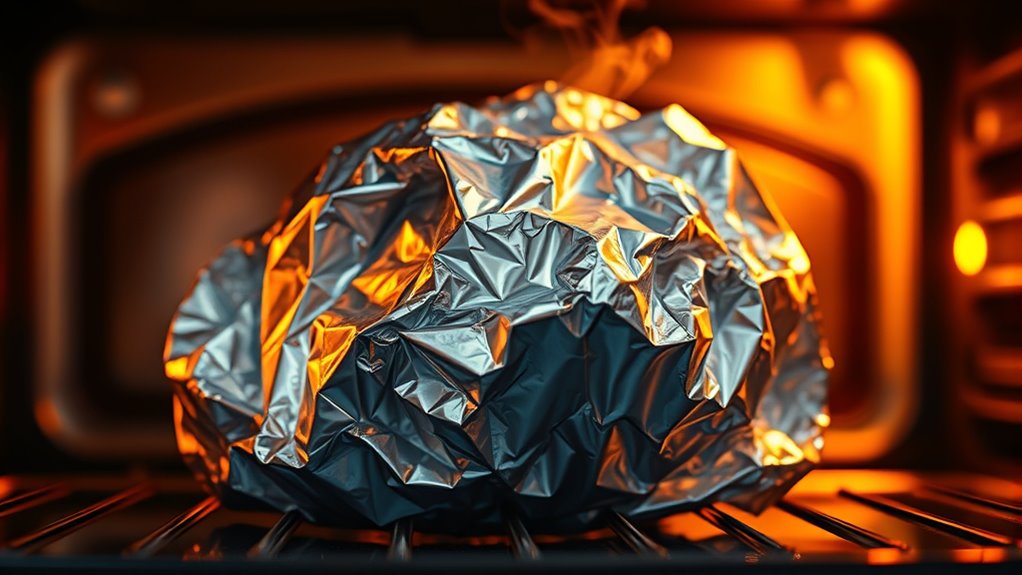
When you put aluminum in the oven, it stays solid and heats quickly, thanks to its excellent thermal conductivity. It won’t melt or catch fire during typical cooking temperatures but can soften or warp if exposed to prolonged high heat.
Aluminum is generally safe if used properly, especially once coated or alloyed. However, acidic foods can cause minor reactions, so it’s good to be cautious.
Want to uncover how to use aluminum safely and avoid common mistakes? Keep going to learn more.
Key Takeaways
- Aluminum heats quickly and evenly, making it perfect for baking and cooking at high temperatures.
- It stays solid below its melting point of 1,221°F and usually doesn’t melt during normal oven use.
- Aluminum forms a protective oxide layer that prevents rust and keeps it strong over time.
- Prolonged high heat or acidic foods can cause aluminum to corrode or leach small amounts into your food.
- Using food-grade aluminum foil properly helps keep it safe and prevents damage to your cookware and appliances.
What Happens When You Put Aluminum in the Oven?
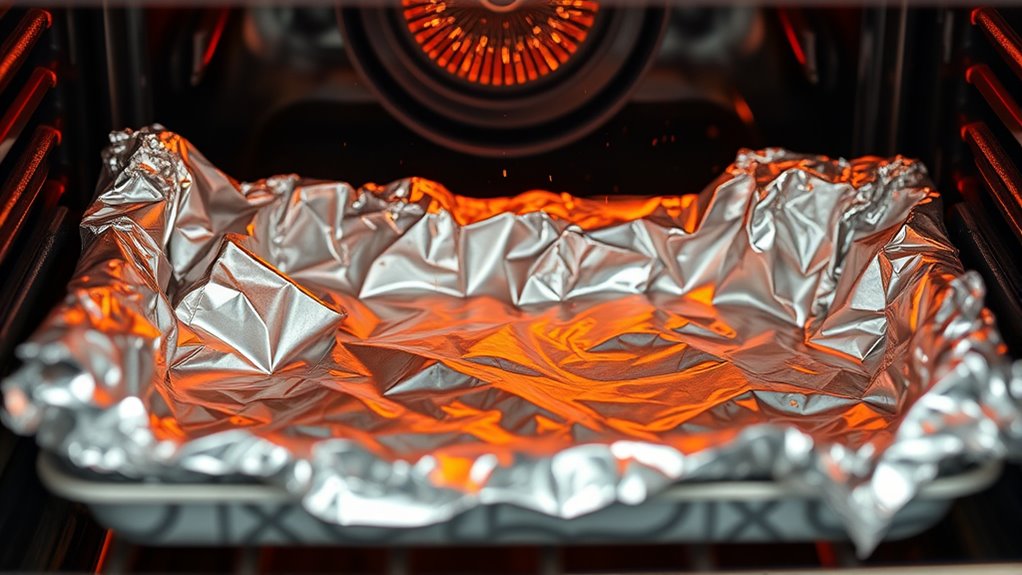
When you put aluminum in the oven, it heats up quickly because aluminum is a good conductor of heat. As it warms, a natural process called oxide layer formation happens on its surface. This oxide layer acts as a protective barrier, preventing further aluminum corrosion.
Unlike some metals that rust or corrode easily, aluminum develops this thin, stable oxide film almost immediately when exposed to heat and oxygen. This layer helps keep the aluminum intact and minimizes deterioration over time.
However, if you use aluminum repeatedly at high temperatures, the oxide layer can become thicker, which might affect how the metal interacts with other ingredients. Still, in most baking situations, this oxide formation doesn’t compromise its safety or strength.
Instead, it serves as a natural defense, making sure aluminum remains durable and effective for cooking and baking.
Is It Safe to Use Aluminum Pans for Baking?
Aluminum pans heat up pretty quickly and spread heat evenly, which is why lots of people like using them for baking. They’re super handy and get the job done well.
That said, you might be a bit curious about whether using aluminum pans is safe. Some folks worry that aluminum can leach into the food during baking, and wonder if that could be a health risk. It’s definitely something to think about—balancing how effective these pans are with any safety concerns before you start baking away with aluminum.
Aluminum’s Heat Conductivity
Because aluminum conducts heat so effectively, it heats up quickly and distributes warmth evenly across its surface. This makes it a popular choice for baking pans. Its excellent heat conductivity means your baked goods cook uniformly without hot spots.
Aluminum’s thermal properties come from its metal structure, which allows rapid heat transfer. When manufacturing aluminum pans, recycled aluminum is often used to support sustainability and reduce environmental impact.
During recycling, scrap metal is melted and refined before forming into pans. This process helps maintain aluminum’s natural ability to distribute heat efficiently, making it an ideal material for baking.
Its consistent heat transfer helps you achieve perfectly baked results. That gives aluminum pans an edge in both home and professional kitchens.
Potential Health Risks
Is it safe to use aluminum pans for baking? While aluminum is generally considered safe, some health concerns come from prolonged exposure to aluminum particles, especially if pans are scratched or damaged. You might wonder about aluminum leaching into your food, so here’s what you should know:
- Food acidity: Acidic foods can increase aluminum leaching, which might pose health risks over time.
- Quantity ingested: Small amounts usually pass through your system, but eating too much could lead to health issues.
- Environmental impact: Using aluminum pans supports recycling, reducing environmental harm and conserving resources. But improper disposal can make the environmental impact worse.
In the end, moderation and proper care help balance safety and environmental benefits.
How Does Aluminum React to High Temperatures?
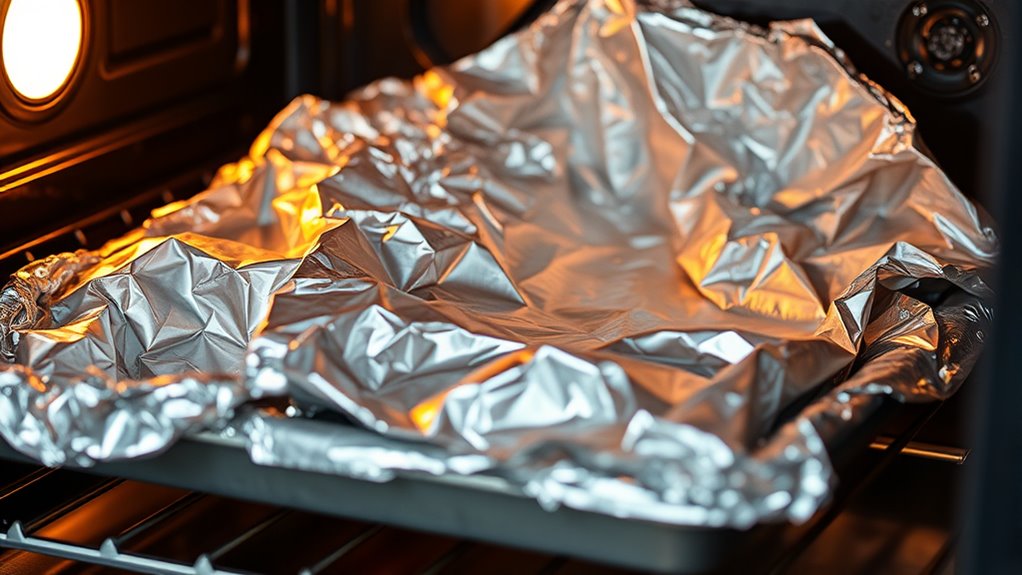
When exposed to high temperatures in an oven, aluminum undergoes noticeable changes that can impact its structure and properties.
Aluminum alloying, which mixes aluminum with other metals, can change how it reacts to heat. This can make it either more resistant or more prone to deformation. Pure aluminum, on the other hand, has a relatively low melting point of around 1,221°F (665°C).
When heated extensively, pure aluminum can soften or weaken. High temperatures can also cause aluminum to oxidize, forming a thin layer of aluminum oxide. This layer acts as a protective barrier against further corrosion.
This oxidation process is important in aluminum recycling, where heating helps break down scrap material for reuse. However, prolonged heat exposure can lead to warping or discoloration, especially if the aluminum isn’t properly coated or treated.
Does Aluminum Melt or Burn in the Oven?
Aluminum usually won’t melt or burn in a standard oven because its melting point is quite high—around 1,221°F (665°C)—which is above most cooking temperatures. Its durability comes from its aluminum alloy properties, making it resistant to melting during normal use.
However, under extreme conditions like very high heat or prolonged exposure, some concerns come up. Aluminum can corrode if it’s exposed to certain acidic or alkaline foods, but this process is slow at oven temperatures.
Since aluminum’s melting point is higher than typical oven temperatures, it generally stays solid while you’re cooking. Prolonged exposure to high heat might cause surface oxidation, but that doesn’t mean it’s burning or melting.
Are There Fire Risks From Heating Aluminum?
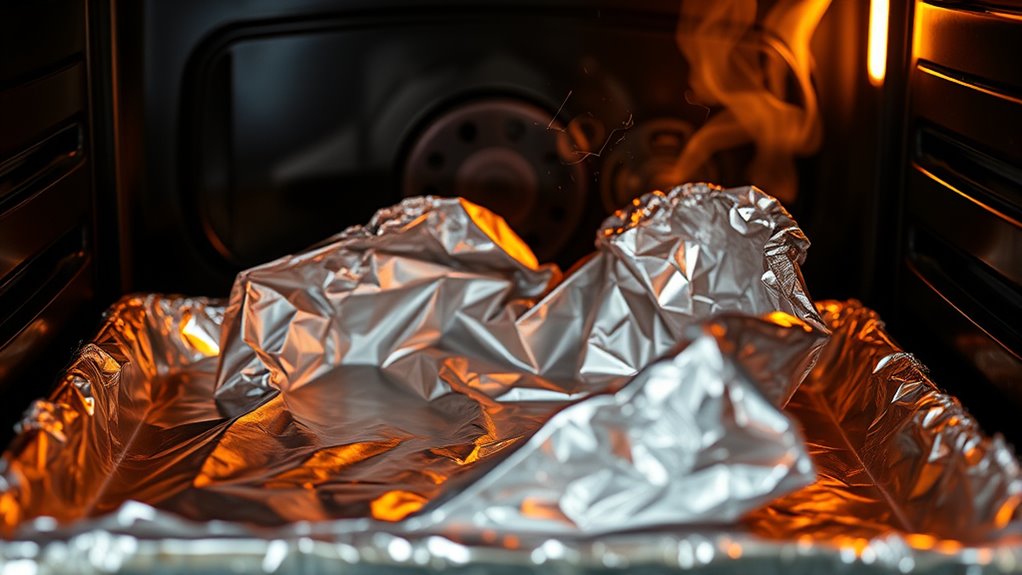
Heating aluminum in the oven generally doesn’t pose a fire risk because it remains solid at typical cooking temperatures. Aluminum’s melting point is around 1,221°F (665°C), which is way above standard oven heat, so it won’t ignite or cause flames.
Its safety is also connected to aluminum recycling. Scrap aluminum is often melted down in controlled environments, not exposed to open flames or heat sources like an oven. During aluminum manufacturing, strict rules prevent fires by carefully managing molten metal.
When you heat aluminum in your kitchen, these safety measures aren’t a concern because the metal stays stable. The main risk is if aluminum pieces are combined with flammable materials or used improperly, which could cause sparks. But that’s not a fire hazard from the aluminum itself.
Is Using Aluminum Foil in the Oven Safe?
Using aluminum foil in the oven is generally safe when used properly, but there are some important considerations to keep in mind. First, make certain it doesn’t come into direct contact with heating elements, as this can cause sparks or fires.
Using aluminum foil safely requires avoiding contact with heating elements to prevent sparks or fires.
Second, avoid lining the oven bottom entirely because melted foil can damage the appliance and make recycling more difficult. Third, remember that aluminum manufacturing involves recycling old foil, so using it responsibly helps reduce waste and energy use.
While aluminum foil can handle high temperatures, improper use may cause safety issues. To stay safe, always follow the manufacturer’s instructions carefully.
Using foil properly also supports eco-friendly practices since recycling aluminum conserves resources and reduces environmental impact. Overall, when used correctly, aluminum foil is a safe and environmentally friendly choice for oven cooking and baking.
Can Aluminum Contaminate Food or Cause Safety Issues?
While concerns about aluminum leaching into food are common, research shows that the amount transferred during typical cooking is minimal and unlikely to pose health risks. Aluminum is widely used in manufacturing, and much of it is recycled through aluminum recycling processes, reducing environmental impact.
When you cook with aluminum, only tiny particles may transfer to your food, especially at high temperatures or when acidic ingredients are involved. These small amounts are generally considered safe, as the body can handle trace aluminum exposure without harm.
Concerns about contamination often stem from the widespread use of aluminum in manufacturing, but studies have not conclusively linked typical aluminum exposure from cookware to health problems. Overall, the risk of aluminum contamination causing safety issues is low, especially when using aluminum products as intended.
Proper use and avoiding damaged foil or cookware help minimize any potential transfer.
When Is It Okay to Use Aluminum in Cooking?
Aluminum cookware and foil are safe to use when they’re in good condition and suited for their intended purpose. You should consider using aluminum when the cookware is free of scratches, dents, or corrosion, which can affect safety and performance. Its lightweight nature makes it easy to handle for everyday cooking, and high thermal conductivity ensures even heat distribution.
Use aluminum in these situations:
- When preparing quick, high-heat dishes because it heats up fast and spreads heat evenly.
- For wrapping and storing leftovers, especially when recycling aluminum foil after use, which supports aluminum recycling efforts.
- When using disposable trays or pans, often made from aluminum, offering convenience and easier cleanup.
Understanding how aluminum is recycled and manufactured helps you appreciate its sustainability. Using aluminum properly ensures safety, efficiency, and environmental responsibility in your cooking habits.
How Can You Use Aluminum Safely During Baking?
If you’re using aluminum during baking, it’s important to handle it carefully to stay safe. Make sure you use proper wrapping techniques so the foil doesn’t tear or leak while you’re baking.
Try to keep aluminum foil in contact with the food only when you really need to, and avoid letting it touch acidic ingredients like tomatoes or citrus, since that can cause reactions.
When you’re working with aluminum foil, handle it gently to prevent any accidents, and don’t forget to dispose of it properly after you’re done. That way, you can enjoy safe and effective baking every time!
Proper Aluminum Wrapping Techniques
Using aluminum foil safely during baking means knowing the right wrapping techniques to avoid accidents and get even cooking. First, be careful when tearing the foil so you don’t create sharp edges that could cut you.
Second, don’t wrap food too tightly. It can trap moisture and mess with how your food cooks. Also, lining your baking sheets with foil makes cleanup easier and keeps food from touching the pan directly, which is safer.
Proper wrapping also includes recycling aluminum foil whenever you can. Using recycled foil helps reduce waste and is better for the environment. Remember, making aluminum impacts the planet, so recycling helps cut down that footprint.
When wrapping, keep the shiny side facing the food. It reflects heat better and helps with even cooking. Following these simple tips makes baking safer and more eco-friendly.
Avoiding Aluminum Contact With Food
While wrapping food properly can help prevent direct contact with aluminum foil, it’s also important to think about how you handle the foil itself during baking. To avoid aluminum contact with your food, use silicone or parchment paper as a barrier when possible.
If you need to wrap food, avoid tightly sealing aluminum foil directly on the surface, which can promote aluminum corrosion from moisture and heat. Be mindful of aluminum foil’s reactivity; over time, repeated use can weaken the foil and increase the risk of leaching.
Recycling aluminum is a good practice, but it’s best to minimize foil contact with food to reduce potential health risks. Proper handling helps keep your food safe and prevents unnecessary aluminum exposure during baking.
Using Aluminum Foil Safely
When baking with aluminum foil, taking simple precautions can greatly reduce health risks. To do this safely, consider these tips:
- Use non-reactive aluminum foil. Avoid direct contact with acidic foods, which can cause aluminum to leach into your food. Instead, choose food-grade aluminum packaging to minimize exposure.
- Limit foil reuse. Discard used foil to prevent contamination and ensure proper aluminum recycling, which helps reduce environmental impact.
- Avoid overheating. Excessively high temperatures can cause foil to degrade or release particles. Always follow the recommended baking temperatures.
Common Mistakes to Avoid When Using Aluminum in the Oven
One common mistake is not properly preparing the aluminum foil or pan before putting it in the oven. Wrinkles or unsecured edges can cause uneven cooking or leaks, especially when covering dishes.
Avoid using damaged or thin aluminum foil, which can tear easily and create messes. Remember, producing aluminum takes a lot of energy, so recycling it after use helps cut down on environmental impact.
When handling aluminum foil, be mindful of its recyclability. Bending or crumpling it can make recycling harder. Also, don’t reuse foil multiple times, since it may weaken and cause oven messes or even fires.
Using foil improperly can also mess with heat transfer, affecting how your food cooks. Always check that your aluminum foil or pans are oven-safe and in good condition to prevent accidents.
Proper preparation and disposal not only protect your cookware but also support sustainable aluminum recycling practices.
Frequently Asked Questions
Can Aluminum Foil Cause Smoke or Fumes When Heated?
Yes, aluminum foil can cause smoke or fumes when heated, especially if it touches high heat or food with acids or salts. When heated, foil oxidizes and releases fumes that might be irritating or harmful.
To avoid this, don’t use aluminum foil at very high temperatures and keep it away from direct flames. Make sure your kitchen is well-ventilated to help minimize any fumes released.
Staying safe while cooking means being mindful of how you use foil and ensuring good airflow in your cooking area.
How Does Aluminum Affect the Taste of Baked Foods?
Did you know that aluminum oxidation can subtly influence taste? When you bake with aluminum, small amounts of metal might leach into your food, possibly changing the flavor.
You might notice a metallic taste, especially in acidic dishes like tomatoes or citrus. While it’s generally safe in moderation, prolonged exposure can make this effect more noticeable.
To avoid this, try using non-reactive cookware for sensitive recipes. That way, you can keep your food’s natural flavors intact.
What Are the Environmental Impacts of Using Aluminum in Cooking?
When you use aluminum in cooking, think about how it affects the environment. Recycling aluminum cuts down on mining, saves energy, and cuts pollution.
Disposable aluminum foil can add to waste and pollution if it’s not recycled properly. Recycling aluminum helps reduce environmental harm.
Try to avoid using too many single-use aluminum products. Instead, choose reusable options whenever you can to lower your ecological footprint and support sustainability.
Are There Specific Types of Aluminum Cookware Safer for Oven Use?
Think of aluminum cookware safety as a guiding star—certain types are more trustworthy in the oven. Look for oven-compatible aluminum options like anodized aluminum or those labeled as oven-safe.
These types resist high heat better and won’t warp or leach. They’re specifically designed for oven use, making them safer choices. Always check the manufacturer instructions to confirm you’re selecting the right, oven-safe aluminum for your needs.
How Should Aluminum Cookware Be Properly Cleaned After Oven Use?
After using your oven, it’s important to clean your aluminum cookware promptly to prevent residue buildup.
Use warm, soapy water and a non-abrasive sponge to gently scrub the baking surface. Avoid harsh abrasives that could scratch the aluminum.
For stubborn spots, soak the cookware first to loosen any stuck-on residue.
Regular cleaning helps keep your cookware looking good and working well, preventing corrosion or discoloration over time.
Conclusion
So, next time you pop aluminum foil or pans in the oven, keep in mind that a simple coincidence—like a forgotten foil tear—could lead to unexpected messes or safety issues.
With proper use and attention, you can enjoy hassle-free baking, keeping your kitchen safe and your food delicious.
It’s funny how a small detail can make all the difference. So stay cautious, and let aluminum work for you, not against you.
Remember, understanding what happens when you put aluminum in the oven helps you avoid accidents and makes your cooking safer and more efficient.