What Happens When You Put Cold Glass in the Oven?
Many people struggle with safely handling glassware when baking or cooking, and putting cold glass in the oven is a common worry. You’re not alone—this mistake can lead to broken dishes and messy accidents. Understanding what happens can help you avoid mishaps and keep your kitchen safe.
Putting cold glass in the oven causes it to undergo rapid temperature changes, which leads to internal stress and increases the risk of cracking or shattering. When the warm oven heats the glass quickly, uneven expansion happens, especially around edges and corners.
This sudden shift makes the glass more vulnerable to breaking.
If you’d like to learn how to safely handle such situations and prevent accidents, keep exploring these important tips.
Key Takeaways
- Cold glass put in a hot oven heats up quickly, causing it to expand rapidly. This sudden change can put stress on the glass and might cause it to crack or shatter.
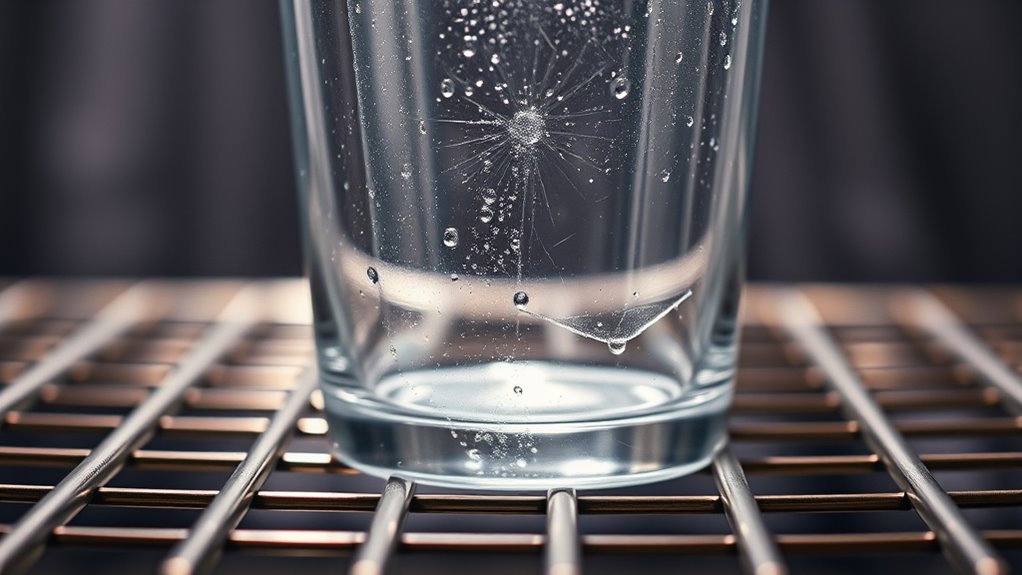
- When the temperature changes suddenly, it creates thermal shock. This can lead to surface crazing, tiny fissures, or small cracks inside the glass.
- If the oven heats unevenly, some parts of the glass, especially around edges and corners, can experience more tension. This uneven stress can make the glass break more easily.
- Using glass that isn’t oven-safe or is too thin makes it more likely to get damaged when exposed to high temperatures.
- To avoid problems, it’s best to preheat the oven gradually and handle the glass carefully. This helps reduce thermal stress and lowers the chance of breaking.
What Causes Glass to Break When Heated?
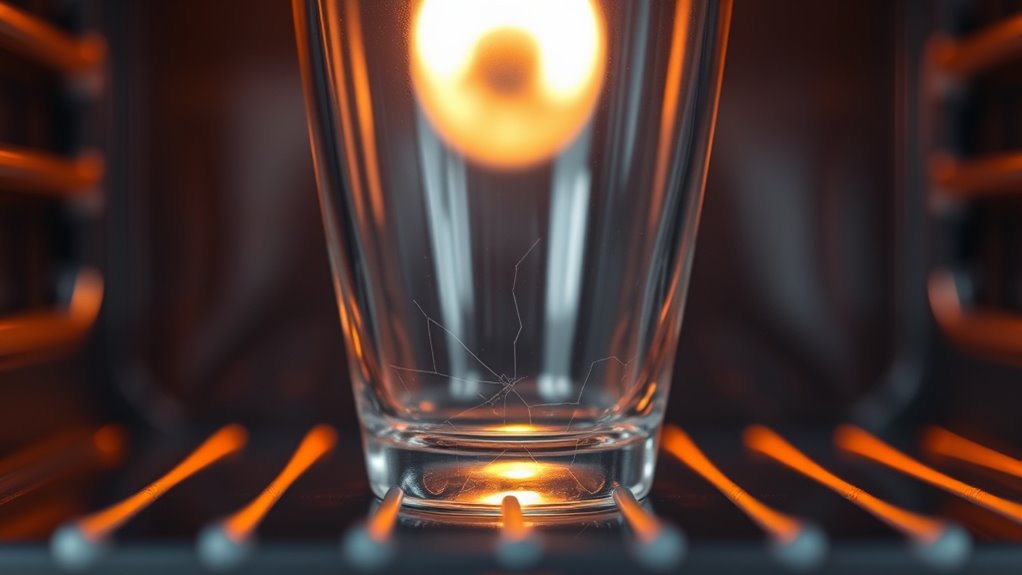
When glass is heated unevenly or too quickly, it’s prone to breaking because it can’t expand uniformly. The key factor here is glass composition, which determines how well it handles heat. Different types of glass have varying heat resistance; for example, borosilicate glass is designed to withstand high temperatures, while regular glass isn’t.
When exposed to sudden temperature changes, the outer surface heats faster than the inside, creating stress. If your glass lacks sufficient heat resistance, this stress can cause cracks or shattering. Even high-quality glass can produce stress points if heated too rapidly.
The material’s ability to expand evenly depends on its structure and composition. That’s why understanding your glass type is essential before heating it. Properly designed glass with good heat resistance minimizes the risk of breakage, but uneven heating remains a common cause of damage.
How Does Glass React to Sudden Temperature Changes?
Sudden temperature changes make glass react unpredictably because it can’t adjust its structure quickly enough. When cold glass is exposed to high heat, the rapid shift stresses the internal bonds formed during manufacturing.
Different types of glass, like soda-lime or borosilicate, respond differently depending on their composition. How the glass is made affects its ability to handle quick temperature changes.
Imagine the glass like this:
| Cold Glass | Hot Oven |
|---|---|
| Tight internal bonds | Rapid expansion occurs |
| Low flexibility | Cracks or shatters might happen |
| Uniform structure | Uneven stress builds up |
This shows how various glass types react based on their makeup and manufacturing. These factors influence whether the glass can withstand sudden temperature shifts without breaking.
Understanding Thermal Expansion in Glass
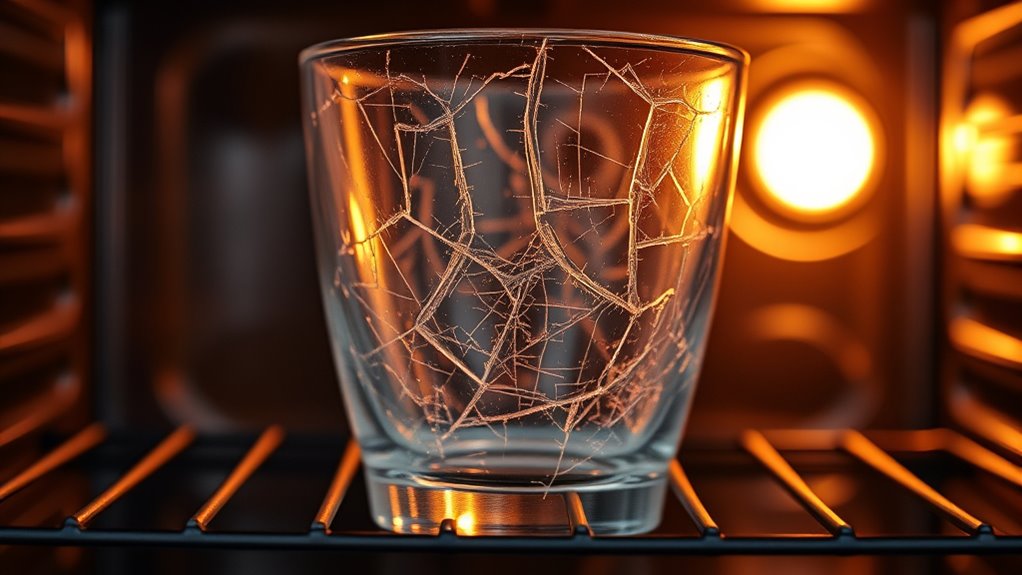
When you heat up cold glass, it tends to expand. But if the heating isn’t even, some parts might expand faster than others, which can lead to cracking or breaking. That’s why it’s important to be careful with how you heat the glass.
You’ll notice that stress tends to build up around certain spots, especially where the temperature changes quickly. Getting a good grip on how temperature differences affect the glass can really help you avoid causing damage when you’re heating it up.
Rapid Expansion Risks
Have you ever wondered what happens to glass when it experiences rapid temperature changes? When you quickly heat cold glass, the outer surface expands faster than the interior, creating stress within the material. This rapid expansion can cause the glass to crack or shatter unexpectedly.
During manufacturing processes, controlled heating prevents these risks. But sudden temperature shifts bypass safety measures, increasing the chances of breakage. In glass recycling, understanding thermal expansion helps ensure the integrity of recycled products, as uneven heating can weaken the structure.
When you put cold glass in the oven, the risk of rapid expansion damage rises because the material can’t handle sudden temperature changes smoothly. Recognizing these risks highlights why gradual heating is so important to prevent the glass from breaking due to thermal stress.
Stress Concentration Areas
As glass heats unevenly, certain areas become stress concentration points where the material is more vulnerable to cracking. Your glass’s composition influences these zones; different ingredients expand at varying rates, creating internal stresses. Manufacturing processes also play a role—improper cooling or uneven heating can leave flaws or microcracks that intensify stress points.
When exposed to rapid temperature changes, these areas can’t uniformly accommodate the expansion, leading to concentrated stress. This is especially true around edges, corners, or inclusions within the glass. Recognizing these stress concentration areas helps you understand where cracks may start.
If the glass’s internal structure isn’t uniform, these vulnerabilities become even more likely. Properly considering glass composition and manufacturing methods can reduce these stress points, making your glass more resistant to thermal stress.
Temperature Gradient Effects
Understanding thermal expansion in glass is important because different parts of the material respond to temperature changes at different rates. When you put cold glass into a hot oven, a temperature gradient forms.
This causes the outer surface to heat and expand faster than the inside. The uneven expansion can produce effects like color change, where stress-induced microcracks change how light interacts with the surface.
You might also see surface texture changes, such as small cracks or roughness, as the glass adjusts to the new temperature. These effects show how thermal gradients create internal stresses, which can lead to cracks or shattering.
Recognizing these phenomena helps you understand why sudden temperature shifts are risky. It also highlights the importance of gradual heating to prevent damage.
Why Is Cold Glass More Likely to Break in a Hot Oven?
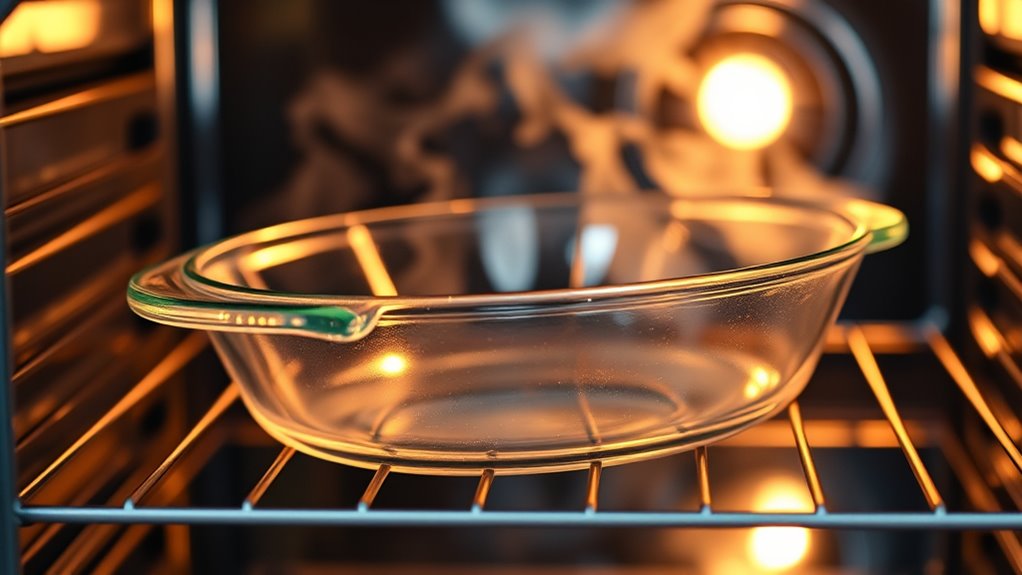
When you place cold glass into a hot oven, the sudden temperature change creates stress inside the material. The glass heats up quickly and expands, but if it’s cold, the outer layers expand faster than the inner parts.
This uneven expansion causes internal tension, making the glass more likely to crack or shatter. The color of the glass also plays a role—darker glass absorbs more heat, increasing the risk of uneven expansion and breakage at high temperatures.
Lighter or clear glass heats more evenly, but it still faces stress when moving from cold to hot. The sharp temperature difference weakens the glass’s structure, especially if it isn’t designed to handle rapid changes.
How Can You Tell If Your Glassware Is About to Break?
You might see some cracks or chips on your glassware before it actually breaks, so it’s a good idea to keep a close eye on it. If you notice any damage like that, it’s probably time to replace or handle it carefully.
Also, sudden changes in temperature can weaken the glass, making it more likely to shatter unexpectedly. So, try to avoid moving hot glass straight into cold water or exposing it to extreme temperature shifts.
Being aware of these signs early can really help you avoid any accidents, especially when you’re using your glassware in the oven or microwave.
Visible Cracks and Chips
Visible cracks and chips are clear warning signs that your glassware might be on the verge of breaking. These imperfections often happen due to flaws during manufacturing or from exposure to sudden temperature changes.
When glass experiences quick temperature shifts, stress builds up, making cracks more likely. You might see small fractures running across the surface or chips along the edges. These flaws weaken the overall structure and increase the risk of breakage if heated further.
Take a close look at your glassware for signs like:
- Fine, hairline cracks spreading from the edges inward
- Chips that create jagged or uneven surfaces
- Discoloration or cloudiness near existing cracks
Spotting these issues early can help prevent accidents, especially with glass that’s already weakened by thermal shock or manufacturing flaws.
Sudden Temperature Changes
Cracks and chips already weaken your glassware, making it more vulnerable to sudden temperature shifts that can cause it to break. When exposed to rapid changes, your glass’s composition struggles to expand evenly, especially if it’s been compromised. You can often tell if your glassware is about to break by inspecting for stress signs.
Watch for these warning signs:
| Warning Signs | Causes |
|---|---|
| Cracks appearing | Uneven expansion from temperature changes |
| Warping | Glass composition mismatch |
| Noise when heated | Rapid oven temperature change |
| Surface crazing | Small fissures from thermal shock |
| Discoloration | Excessive heat exposure |
Understanding your oven temperature limits and how your glass reacts helps prevent breakage. Sudden shifts, especially with cold glass, risk shattering. Always handle your glassware with care to avoid accidents.
Tips for Preheating and Handling Glass Bakeware Safely
Preheating glass bakeware properly is key for safe and successful cooking. But it’s just as important to handle it carefully to avoid accidents. Always check the glass color—transparent or lightly tinted glass heats more evenly, which helps prevent shattering.
Preheat and handle glass bakeware carefully to ensure safe, even cooking and prevent accidents.
When preheating, think about the baking time. Longer periods at the right temperature help avoid rapid temperature changes that could stress the glass.
To handle your glass bakeware safely, use oven mitts with a good grip so you don’t drop it when it’s hot. Place the hot bakeware on a stable, heat-resistant surface before removing it from the oven.
Avoid sudden movements or impacts that could cause cracks or breaks. Proper handling keeps everything safe and intact.
How to Safely Transition Glass From Cold to Hot Temperatures
When moving glass bakeware from cold to hot, it’s important to do so gradually to prevent thermal shock. Historically, artisans would slowly warm the glass in a cool oven or at room temperature before exposing it to higher heat.
Modern innovations have made this process easier, with tempered glass and oven-safe materials designed to handle rapid temperature changes. To be safe, avoid sudden shifts by placing cold glass in a preheated oven or warming it gradually with low-temperature steps.
Handle your glass gently and avoid direct contact with extreme heat sources. Some newer glassware has reinforced designs and special coatings that help distribute heat evenly, which reduces the risk of breakage.
Common Mistakes That Lead to Glass Breakage During Baking
One of the most common mistakes that lead to glass breakage during baking is exposing the dish to sudden temperature changes. For example, putting it directly into a hot oven straight from the fridge or freezer.
Rapid shifts in temperature cause stress within the glass, making it more likely to crack or shatter. Ignoring oven insulation can also make things worse by increasing heat transfer and the risk of thermal shock.
When you don’t allow the glass to warm gradually, it experiences uneven expansion. Imagine placing a cold dish on a hot oven rack—quick heat causes rapid, uneven expansion.
Poorly insulated ovens can create hot spots, exposing your glassware to sudden temperature spikes. These mistakes, combined with ignoring proper oven conditions, can really increase the chances of breakage.
Always think about gradual temperature changes and proper oven setup to keep your glassware safe during baking.
Choosing Oven-Safe Glassware for Baking
Choosing the right oven-safe glassware starts with understanding which types are designed to handle baking temperatures. Look for glass that’s explicitly labeled as oven-safe, like tempered or borosilicate glass. These materials can handle high heat without cracking or shattering.
Avoid decorative glassware with glass designs, as the added decorations might not be oven-safe and could break under heat. Also, don’t reuse beverage containers like bottles or jars for baking—they’re usually not meant for oven temperatures and can be unsafe.
When choosing glassware, always check the manufacturer’s instructions and labels. Using proper oven-safe glassware helps ensure even heat distribution and reduces the chance of breakage.
What Should You Do If Your Glass Breaks in the Oven?
If your glass breaks in the oven, the first thing you want to do is stay safe. Make sure to wear gloves to protect your hands, and keep everyone else away from the area so no one gets hurt. Then, turn off the oven and give it plenty of time to cool down completely before you start cleaning up.
Once it’s cooled, carefully pick up the bigger pieces with a broom and dustpan. Be gentle so you don’t push shards further into the oven or onto the floor. After that, it’s a good idea to vacuum or wipe the area thoroughly to make sure there are no tiny glass fragments left behind. Better safe than sorry!
Safety Precautions After Breakage
When glass breaks in the oven, safety should be your top priority. First, turn off the oven and let it cool completely. Never try to clean or remove glass while it’s hot.
Wear thick gloves and use a broom and dustpan to carefully sweep up larger shards. Avoid direct contact to prevent injury. Keep in mind that glass is designed to withstand oven temperatures, but sudden changes can cause it to break.
Be cautious of tiny, nearly invisible fragments that can cause injury or damage. Keep the area well-ventilated to avoid inhaling dust or fumes.
Always check your oven’s manual for specific safety tips, especially if your glassware was tempered or specially made for oven use. Safety first helps prevent injuries and further damage.
Proper Cleanup Procedures
Once you realize your glass has shattered inside the oven, your first step is to turn off the appliance and let it cool completely before trying to clean it up. Carefully remove larger shards with tongs or a scraper, avoiding direct contact.
Use a vacuum with a hose attachment to pick up smaller, scattered pieces. Make sure you don’t spread glass further as you clean. Wrap broken shards in thick paper or a cloth before discarding to prevent injury.
Clean the oven thoroughly with warm, soapy water. Pay attention to areas with heat resistant coatings that might trap tiny fragments. Consider recycling the glass responsibly—check local guidelines for glass recycling.
Proper cleanup not only guarantees safety but also prepares your oven for safe future use. It helps prevent damage to heat resistant coatings and other components.
Frequently Asked Questions
Can Cold Glass Withstand High Oven Temperatures Without Breaking?
Cold glass generally can’t handle high oven temperatures without breaking because of thermal shock. When you put cold glass in a hot oven, the sudden temperature change makes the glass expand unevenly, which can lead to cracks or shattering.
To keep your glassware safe, always bring it to room temperature before baking or exposing it to high heat. This helps prevent thermal shock and keeps your glass intact for safe, effective cooking.
How Long Should Cold Glass Be Preheated Before Baking?
You should preheat your cold glass for about 20 to 30 minutes before baking.
Use a gradual preheating method, starting the oven at a lower temperature and slowly increasing it. This helps ensure even heat distribution.
Preheating this way allows the glass to warm uniformly, reducing the risk of cracking.
Does the Type of Glass Affect Its Thermal Shock Resistance?
You notice that some glass shatters easily, while others can handle sudden heat.
This is because the material properties and glass composition influence thermal shock resistance.
Different types of glass, like borosilicate or soda-lime, have varied abilities to handle rapid temperature changes.
Knowing this can help you choose the right glass to prevent cracking or breaking, keeping your baking safe and stress-free.
Are There Specific Brands Known for Oven-Safe Cold Glassware?
You should look for brands known for glass durability and oven safety, like Pyrex or Anchor Hocking. These brands have a solid reputation for producing cold glassware that withstands thermal shock, reducing breakage risks.
When choosing oven-safe glassware, always check the manufacturer’s guidelines to verify it’s specifically designed for oven use. Trusting reputable brands helps you avoid surprises and keeps your baking safe and efficient.
What Are the Safety Risks of Sudden Temperature Changes in Glass Bakeware?
Think of your glass bakeware as a delicate dance partner. Sudden moves, like thermal shock from rapid temperature changes, can cause it to shatter unexpectedly.
This risk increases if you don’t adapt your recipe or preheat gradually. It can lead to dangerous breakage or even injury.
Always allow your glass to warm gradually and adjust your recipes accordingly. This keeps the dance smooth and safe.
Conclusion
Remember, your glassware is like a delicate song—harmony depends on gentle shifts. When you rush from cold to hot, you’re forcing it to dance to a fiery tune it wasn’t ready for. This can easily cause it to shatter, ruining your beautiful melody.
Treat your glass with patience and respect, and it’ll serve you well, like a trusted partner in your culinary symphony. Sudden temperature changes can be risky, so always handle your glassware carefully.
Handling cold glass in the oven is especially tricky. Putting it directly into a hot oven can cause stress on the material, increasing the risk of breakage.
To keep your glassware safe, always let it come to room temperature first or gradually warm it up. When you do this, your glass can perform safely in the oven without risking shattering.
Remember, putting cold glass in the oven can lead to cracks or shattering, so always be cautious. Handle your glassware with care, and your baking adventures will shine safely and brightly.