How You Cook Burgers in the Oven
Cooking burgers in the oven is a game-changer, especially if you’re tired of dealing with uneven stovetop results or messy grill cleanup. Many people struggle to get that perfect juicy, well-cooked burger without turning the kitchen into a disaster. Don’t worry—you’re not alone, and oven-cooked burgers can be just as delicious and easy to prepare.
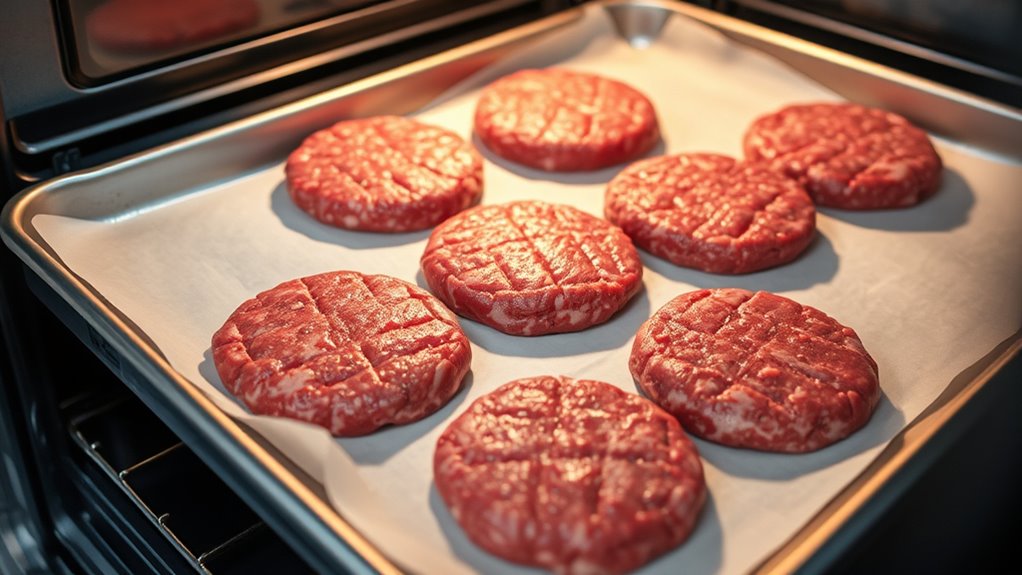
To cook burgers in the oven, start by shaping your patties about ¾ inch thick and seasoning them well.
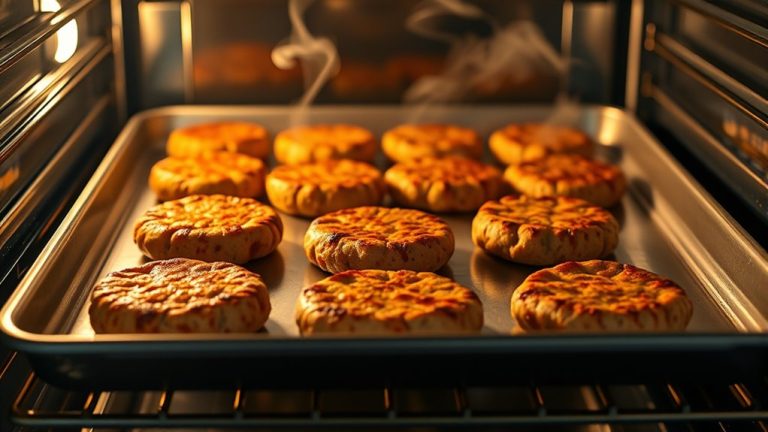
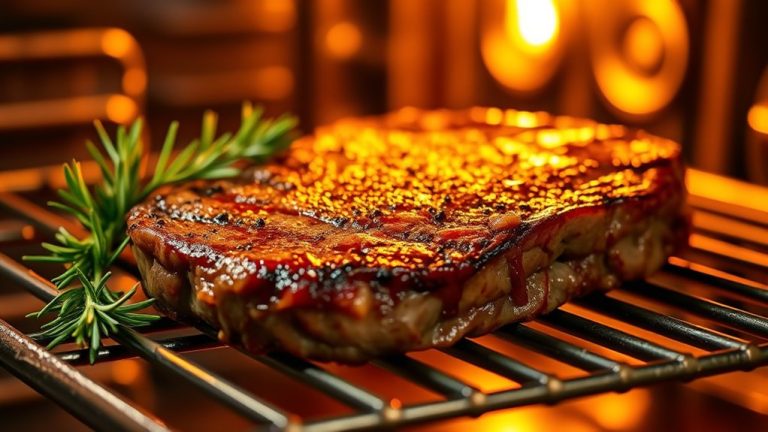
Preheat your oven to 375°F or 400°F, then place the patties on a rimmed baking sheet, preferably on a wire rack for even crispiness.
Bake for about 15-20 minutes, checking with a meat thermometer for your desired doneness.
If you want tips on achieving perfect texture and presentation, keep exploring the details ahead.
Key Takeaways
- Shape your patties about ¾ inch thick, making a little indentation in the center, then season generously before baking.
- Preheat your oven to 375°F or 400°F, depending on how well done you want the burgers, and use a suitable baking sheet.
- Place the burgers on a wire rack or foil-lined pan to help them cook evenly and make cleanup easier.
- Bake for 15-20 minutes, and use a meat thermometer to check that the internal temperature is between 140°F and 160°F.
- Let the burgers rest for a few minutes, then assemble with buns and your favorite toppings for serving.
Why Oven-Baked Burgers Are a Game-Changer
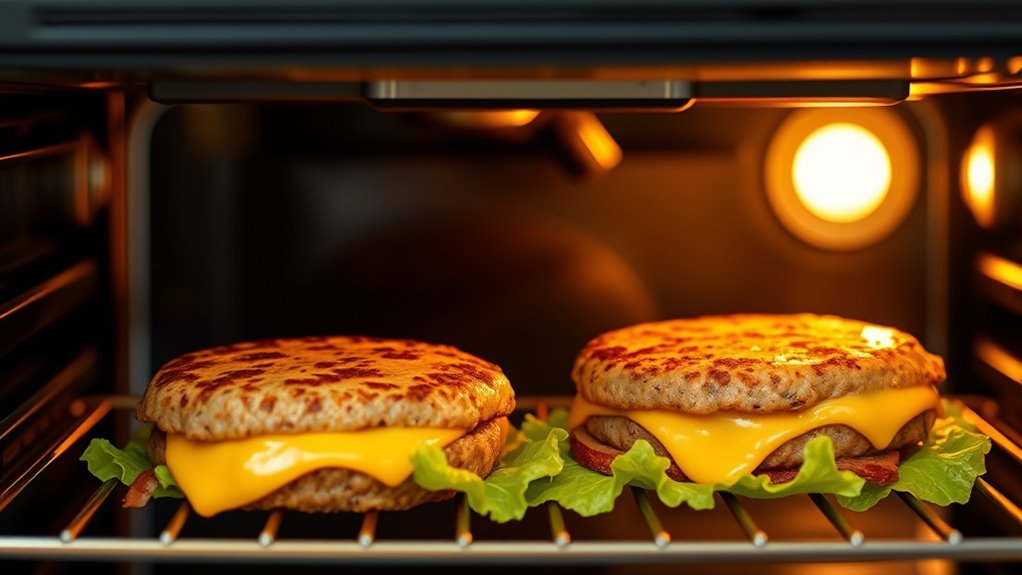
Oven-baked burgers are a game-changer because they offer a simple, mess-free way to cook perfect patties every time. You can choose from a variety of burger buns, customizing your sandwiches to fit any taste or dietary need.
Oven-baked burgers provide a easy, mess-free way to cook perfect, customized patties every time.
Whether you like sesame seed buns, whole wheat, or brioche, the oven lets you assemble everything ahead of time and bake without worries. It’s a convenient way to get everything ready in one go.
When it comes to cheese, oven baking ensures even, gooey coverage. You can layer cheese directly onto the patties before baking, so it melts uniformly for a delicious, cohesive bite.
This method cuts out stovetop flipping or microwave shortcuts, reducing mess and stress. Plus, it gives you consistent results with juicy, well-cooked burgers topped with perfectly melted cheese.
Preparing Your Oven-Baked Burgers
Before you place your burgers in the oven, it’s important to prepare them properly to guarantee they cook evenly and stay juicy. Start by shaping your burger patties to about ¾ inch thick, making a small indentation in the center to prevent bulging. Season both sides generously with salt, pepper, and other baking essentials like garlic powder or paprika for added flavor. For uniform cooking, ensure patties are similar in size and thickness.
| Ingredient | Purpose |
|---|---|
| Salt & Pepper | Improve flavor and juiciness |
| Indentation | Prevents puffing during baking |
| Even Patties | Ensures consistent cooking |
This simple prep helps achieve perfectly cooked burgers in the oven, with a tender interior and flavorful crust. Proper preparation is key to delicious, juicy results every time.
Choosing the Right Baking Sheet or Rack
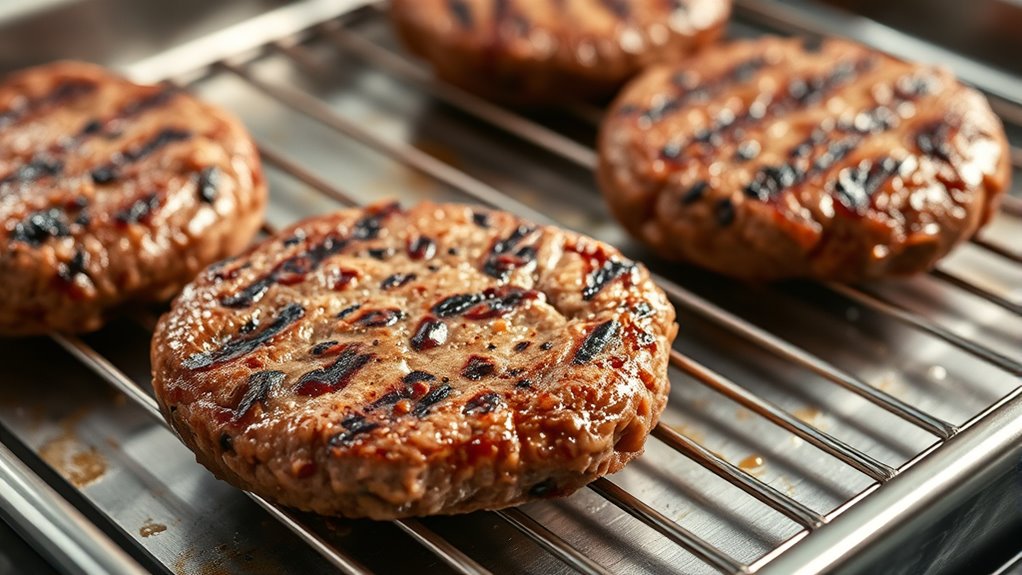
When choosing a baking sheet or rack for cooking burgers, it’s important to think about how well heat moves around the meat to ensure even cooking. Your choice affects not only how evenly the burgers cook but also how easy cleanup will be.
Look for sturdy, rimmed baking sheets that keep juices from spilling and allow air to circulate. For cooling racks, pick a wire rack that fits inside your baking sheet to improve airflow, helping fat drip away and making the burgers crispier.
Choose sturdy, rimmed baking sheets and wire racks that fit inside to enhance airflow and crispiness.
Material matters too. Non-stick or silicone-coated sheets make cleanup easier, while stainless steel offers durability and even heat distribution. Make sure the size and shape fit your oven and the number of burgers you’re cooking so they have enough space for proper heat circulation.
Choosing the right baking sheet and rack can really make a difference in how successful your oven-baked burgers turn out.
How to Season and Add Flavor to Your Burgers
Ever wonder how to make your burgers burst with flavor? The secret is in how you season and add flavor. Start with simple spice blends like paprika, garlic powder, onion powder, and black pepper. These enhance the natural beef taste without overpowering it.
For extra juiciness and flavor, try marinades like soy sauce, Worcestershire, or a splash of balsamic vinegar. Marinate the meat for 30 minutes to an hour so the flavors really soak in.
You can also mix herbs like chopped parsley or cilantro directly into the ground meat for a fresh taste. Just remember to season evenly and generously so each bite is packed with flavor.
Don’t forget to taste your seasoning mix before applying it to make sure it suits your preference. With the right spice blends and marinades, your burgers will be irresistibly flavorful.
Setting the Right Temperature and Cooking Time
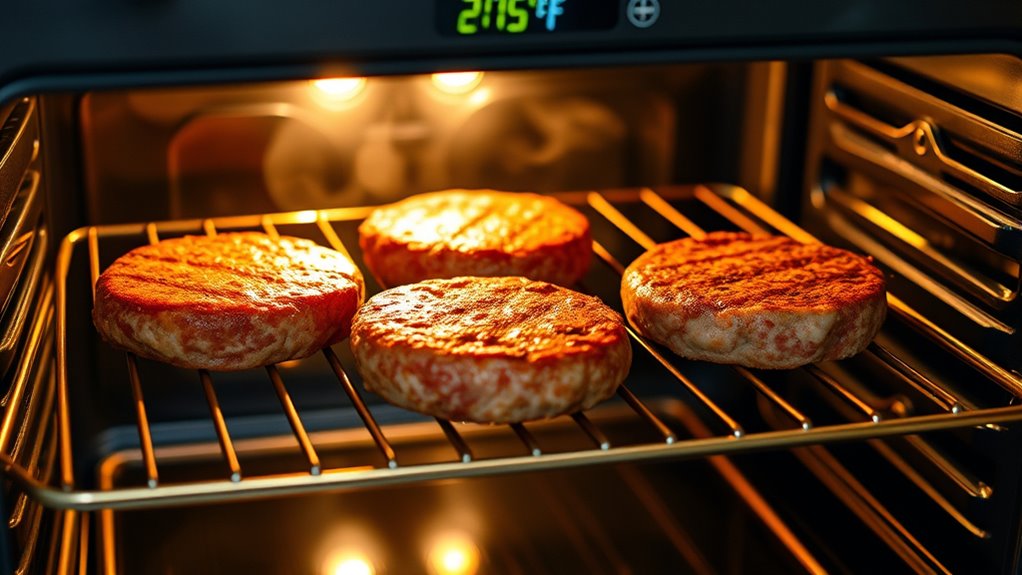
Getting the temperature right is key to perfectly cooked burgers in the oven. Using the right techniques and kitchen tools helps ensure your burgers reach the desired doneness without overcooking or undercooking.
For best results, preheat your oven to 375°F (190°C) for medium or 400°F (200°C) for well-done. Make sure to use a reliable oven thermometer to keep an accurate check on the temperature.
Choose a baking sheet or oven-safe skillet that distributes heat evenly so your burgers cook uniformly. Adjust the cooking time based on the thickness of your burgers; usually, 15-20 minutes works well.
Should You Use Foil, Parchment, or a Rack When Baking?
Using foil, parchment, or a rack when baking can really change how easy cleanup is and how evenly your burgers brown. If you want that nice, crispy texture, a rack is the way to go because it lets air circulate all around the food. That way, everything gets evenly cooked and crispy on all sides.
On the other hand, foil and parchment are great if you’re looking to make cleanup super simple. They catch the drips and mess, so you can just toss them away afterward, saving you some time and effort.
Think about what’s more important to you — that perfect crispiness or an easy cleanup — and choose your baking setup accordingly.
Ease of Cleanup
When it comes to making cleanup easier after baking burgers, choosing the right setup can make a big difference. Using foil, parchment, or a rack affects how simple oven cleaning will be afterward and how well you can manage burgers and toppings.
Foil-lined pan catches drippings and grease, making oven cleaning quicker. It’s a straightforward way to keep things tidy.
Parchment paper prevents sticking and reduces mess, but it might not contain all the grease. It’s good if you want easy cleanup without too much fuss.
Rack elevates burgers, so they don’t sit in drippings, which helps keep them neat. But it does mean extra cleaning afterward.
No lining leads to more baked-on residue, which makes cleanup more effortful.
Choosing the right method depends on how much mess you’re willing to scrub afterward. For easy oven cleaning and minimal fuss with burgers and toppings, foil is often the best choice.
Browning and Crispiness
Choosing the right setup for baking burgers really impacts how they turn out in terms of browning and crunch. Using a wire rack lets hot air circulate around the meat, giving it a crispy exterior. If you cover the burger with foil or parchment, moisture gets trapped, making the burgers softer.
If you want a crunchier crust, go with a rack—especially if you’re adding toppings like cheese or grilled onions that benefit from crispiness. The type of bun you choose also matters; sturdy buns can hold toppings without getting soggy and help boost overall crispiness.
For extra browning, you can briefly broil the burgers at the end. Keep in mind, the setup you pick not only affects browning but also how well toppings stay in place. Overall, a rack is your best bet for baking crispy, flavorful burgers.
How to Achieve Crispy Edges and Juicy Burgers
Achieving crispy edges while keeping your burgers juicy starts with the right preparation and cooking technique. Focus on how you handle the meat and toppings to get that perfect balance.
Start by choosing high-fat ground beef for flavor and moisture. Before cooking, form patties slightly larger than your bun options and make a small indent in the center to prevent puffing up.
Choose high-fat ground beef, form slightly larger patties, and indent centers to prevent puffing during cooking.
When baking, place the burgers on a wire rack over a baking sheet to promote even crispiness. For extra crunch, brush the edges with a little oil before baking.
To elevate flavor, spread a tasty burger sauce just before serving. This adds moisture and richness without sacrificing crispiness.
For buns, opt for toasted brioche or sturdy sesame seed varieties that won’t get soggy. Using these techniques, your burgers will boast crispy edges and juicy centers, making every bite satisfying.
Checking for Perfect Doneness
To guarantee your burgers are cooked to perfection, it’s important to check their internal temperature instead of just looking at them. Use a meat thermometer and insert it into the center of the patty.
For medium, aim for 140°F to 145°F; for well-done, target 160°F. Once you hit your desired temperature, your burger is safely cooked and juicy.
Remember, toppings like cheese, lettuce, and tomato can change how it looks, so don’t rely on visuals alone. Your bun choices also matter; a softer bun might get soggy if the burger is overcooked or too hot.
Always check the temperature before assembling, especially if you want a specific doneness level. Properly cooked burgers make sure the flavors are just right and safe to eat, making your oven-cooked burger experience enjoyable and satisfying.
Serving Tips and Customizing Your Oven Burgers
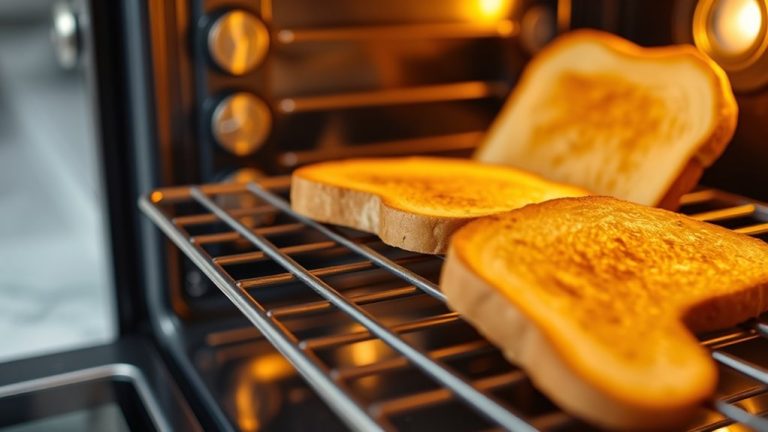
- Use toasted buns for added crunch and warmth.
- Add condiments like ketchup, mustard, or special sauce for extra zest.
- Include crispy bacon or sautéed mushrooms for richness.
- Offer a variety of cheese options so everyone can customize their burger.
This approach makes your oven-cooked burgers versatile and appealing, perfect for any taste or occasion.
Cleaning Up After Baking Your Burgers
After you finish baking your burgers, cleaning up promptly can make the process much easier. Start by removing any leftover grease or crumbs with paper towels or a spatula. Then wash your kitchen tools like tongs, baking sheets, and racks right away to prevent food from hardening.
Use warm, soapy water for easier cleanup and avoid scrubbing too harshly on non-stick surfaces. Once cleaned, dry your tools thoroughly to prevent rust. For storage, wipe down countertops and put your kitchen tools in designated drawers or containers to keep things organized.
If grease spills onto the oven or surrounding surfaces, use a gentle cleaner suitable for oven cleaning to wipe it away. Keeping your workspace tidy not only simplifies cleanup but also helps maintain your oven’s condition, making it ready for your next cooking adventure.
Frequently Asked Questions
Can I Cook Frozen Burger Patties in the Oven?
Yes, you can cook frozen burger patties in the oven. It’s a great grilling alternative when you’re indoors.
Preheat your oven to 400°F. Place the patties on a baking sheet and season them with your favorite spices.
Cook for about 20-25 minutes, flipping halfway through. This method keeps the burgers juicy and flavorful, making it easy to enjoy a delicious meal without firing up the grill.
How Do I Prevent Burgers From Sticking to the Baking Sheet?
To prevent burgers from sticking to the baking sheet, line it with parchment paper or lightly oil the surface. This creates a non-stick barrier that makes removal easy.
It’s similar to grilling in that it stops the burgers from sticking and helps keep them intact. Plus, you can season your burgers well before baking to form a flavorful crust.
That crust also helps reduce sticking and keeps your burgers juicy. Proper preparation makes oven-cooked burgers just as delicious as grilled ones.
Is It Safe to Cook Burgers at High Temperatures?
Cooking safety is essential, so cooking burgers at high temperatures can be safe if you follow proper guidelines. Keep your oven temperature around 400-450°F to ensure the burgers cook evenly and reach a safe internal temperature of 160°F.
High oven temperatures help sear the meat, locking in flavor and juices. But always use a meat thermometer to prevent undercooking or overcooking, making sure your burgers are safely prepared.
Can I Add Cheese During the Baking Process?
Yes, you can add cheese during the baking process. Just place slices of cheese on top of the burgers during the last few minutes of cooking.
Keep an eye on the cheese to see it melt perfectly, adding flavor and that gooey texture everyone loves. This way, the cheese melts evenly and makes your burgers even tastier.
With a little attention, you’ll end up with cheesy, flavorful burgers straight from the oven—just as delicious as grilling.
What’s the Best Way to Store Leftovers Safely?
To store leftovers safely, you should quickly refrigerate or freeze the food to keep it safe to eat. Using airtight containers or wrapping the burgers tightly with plastic wrap or aluminum foil helps prevent spoilage.
Make sure to store them in the coldest part of your fridge, ideally within two hours of cooking. Proper storage techniques help prevent bacteria growth and keep your leftovers fresh.
This way, you can enjoy your leftovers later without worrying about foodborne illness.
Conclusion
Imagine the sizzling, juicy burger on your plate, its aroma filling your kitchen. No smoke or splatters in sight. Baking burgers in the oven offers a clean, hands-off experience that’s just as flavorful as grilling.
With crispy edges and tender insides, you get the best of both worlds. So, adopt the easy, mess-free method and turn your oven into your new favorite burger station. It’s delicious, effortless, and perfectly cooked every time with oven-cooked burgers.