
Can You Put a Plate in the Oven?
Many people struggle with figuring out what dishes are safe to put in the oven, especially when it comes to plates. It can be confusing to know which ones will hold up without cracking or shattering.
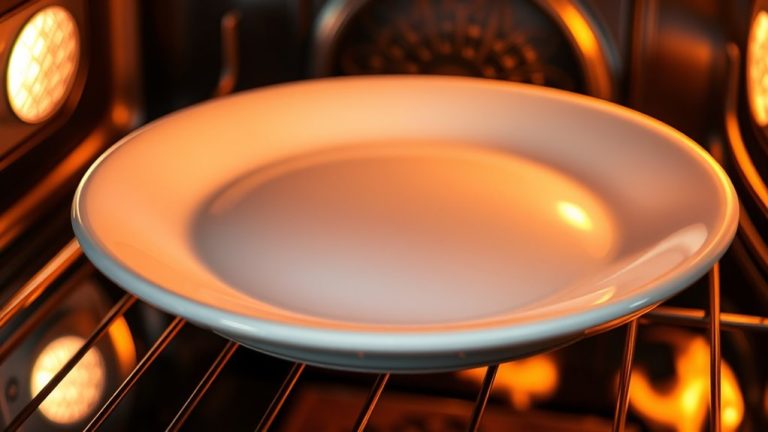
You can put some plates in the oven if they’re labeled as oven-safe and made from heat-resistant materials like ceramic or tempered glass. However, not all plates can handle high temperatures—plates with metallic accents or decorative elements may crack, shatter, or cause damage.
To be safe, check for manufacturer labels or test carefully before baking. If you want to know how to identify oven-safe plates and avoid risks, there’s more to learn.
Key Takeaways
- Only use plates labeled as oven-safe or ovenproof. Avoid decorative or metallic designs.
- Check for manufacturer markings or symbols that show the plate is oven-compatible before heating.
- Ceramic, tempered glass, and stoneware are usually safe, but steer clear of regular glass or non-heat-resistant materials.
- Don’t use plates that are damaged, chipped, or crazed, as they can crack or shatter in the oven.
- Always handle hot plates carefully, and avoid sudden temperature changes to prevent damage or safety hazards.
Are All Plates Safe to Put in the Oven?
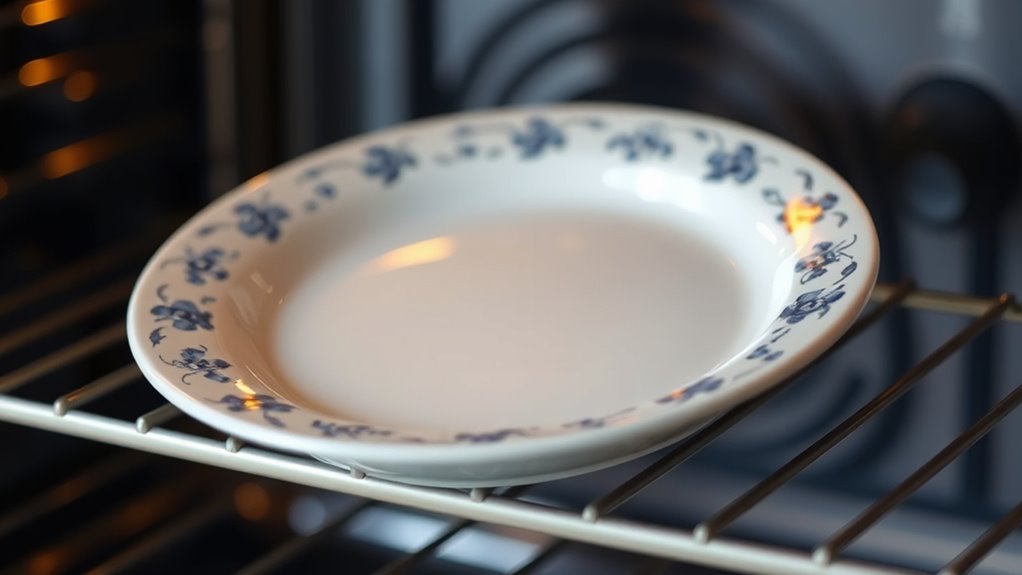
Not all plates are safe to put in the oven, so it’s important to check before you heat up your dish. Many plates have decorative elements like intricate designs or metallic accents that aren’t oven-safe. These decorations can melt, crack, or even cause damage to your oven if heated.
Not all plates are oven-safe; check for decorations or markings before heating to prevent damage.
Think about the material too. Ceramic or glass plates labeled as oven-safe are usually fine, but plates with plastic or non-heat-resistant coatings aren’t. When you’re preparing to bake, remember that oven cleaning instructions matter as well.
Some plates are designed to withstand high temperatures, while others can stain or warp easily. Always look for manufacturer markings or labels that indicate oven safety. If you’re unsure, it’s better to use a plate specifically made for baking or oven use.
This way, you can avoid accidents and keep your dishes looking great without risking damage to your oven or tableware.
How to Identify Oven-Safe Plates at Home
Want to figure out if your plates are safe to use in the oven? It’s pretty straightforward—start by checking the bottom for any labels or symbols. Sometimes, manufacturers put little icons that show whether the dish can handle oven heat.
Next, give your plate a quick visual inspection. Look for a smooth surface without chips or cracks. If it’s in good shape, that’s a good sign it might be oven-safe. But if you’re still unsure, you can do a simple test or just double-check the manufacturer’s guidelines. Better safe than sorry!
Material Indicators to Check
Checking the material indicators on your plate is the first step to guarantee it’s oven-safe. Look for labels or symbols on the bottom, like “oven-safe,” “microwave-safe,” or specific temperature limits.
Many plates made of ceramic, glass, or certain metals are oven-compatible, but always verify. Avoid plates with plastic or painted decorations not labeled for oven use, as these can melt or release toxins.
Being diligent with material indicators is essential for maintaining kitchen safety and proper cookware maintenance. If you’re unsure, check the manufacturer’s guidelines or test the plate in a low-temperature oven first.
This careful approach helps prevent accidents, preserves your dishware, and ensures safe cooking practices in your kitchen.
Visual Signs of Safety
When checking if a plate is oven-safe visually, look for specific signs that it can handle high heat. Make sure the decorative patterns are smooth and part of the glaze, not painted or applied on the surface, as those can crack or peel when heated.
Also, observe if the color stays consistent. Fading or discoloration after washing or exposure suggests it might not be oven-safe. Check the overall finish—glossy and even surfaces usually mean it’s more durable under heat.
Be cautious of plates with cracks, chips, or crazing, as these flaws weaken their ability to withstand oven temperatures. Remember, intact decorative patterns and stable color are good signs, but always double-check with the manufacturer if you can.
Which Materials Are Oven-Safe for Plates?
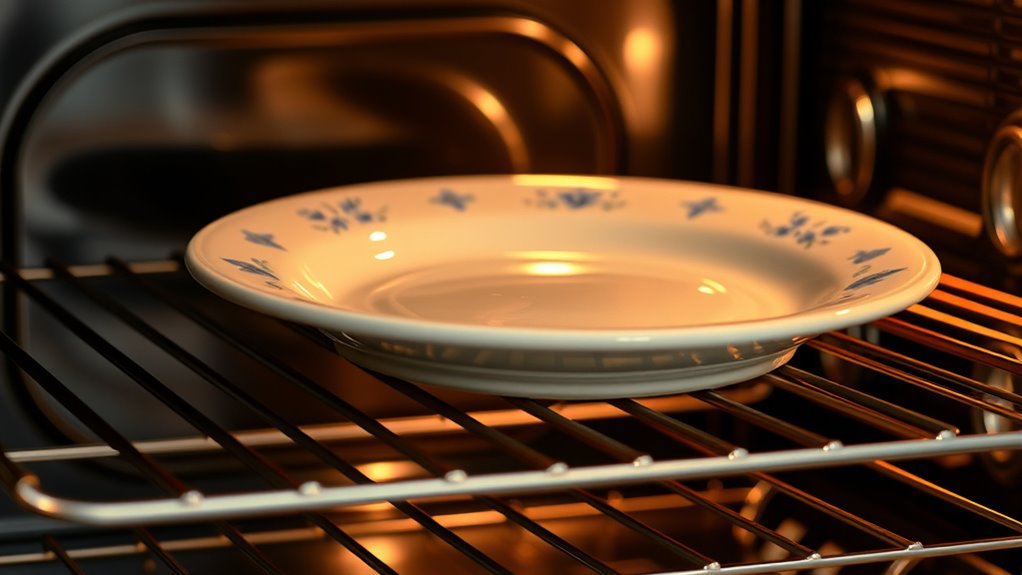
Not all plates are designed to withstand the high temperatures of an oven, so choosing materials that are oven-safe is essential. Ceramic and stoneware plates are usually good options because they can handle oven heat without damage.
Look for plates labeled as oven-safe or heat-resistant. These are tested for high temperatures and are safer to use in the oven. Glass plates made from tempered or borosilicate glass are also oven-safe, but avoid using regular glass, which can crack or shatter.
When considering plate decoration, opt for simple designs that won’t be affected by heat. Keep in mind that some decorative elements like metallic accents may not be oven-safe.
Also, check if the plates are dishwasher safe, as this often indicates durability and heat resistance. Always verify manufacturer instructions before using plates in the oven to ensure safety and prevent damage.
Using the right material helps keep your plates intact and safe for oven cooking or reheating.
Materials You Should Never Put in the Oven
Certain materials can pose serious safety risks or get damaged if you put them in the oven. For example, plates with delicate or non-oven-safe decoration may crack, discolor, or even release harmful fumes when exposed to high heat.
Avoid putting delicate or non-oven-safe decorated plates in the oven to prevent damage or hazards.
Avoid using plates that aren’t specifically labeled oven-safe, especially those with metallic accents or intricate designs. These can create sparks or damage your oven.
Many plates marked as dishwasher compatible aren’t necessarily oven safe. The dishwasher label just means they resist water and detergents, not high temperatures.
Putting non-oven-safe porcelain, glass, or ceramic plates in the oven can lead to cracking or shattering. Always check for oven-safe symbols or labels before trying to use a plate in the oven.
When in doubt, it’s safer to use cookware specifically designed for baking. That way, you avoid damaging your dishes or risking injury by experimenting with materials not meant for high heat.
How to Read Oven-Safe Labels on Your Plates
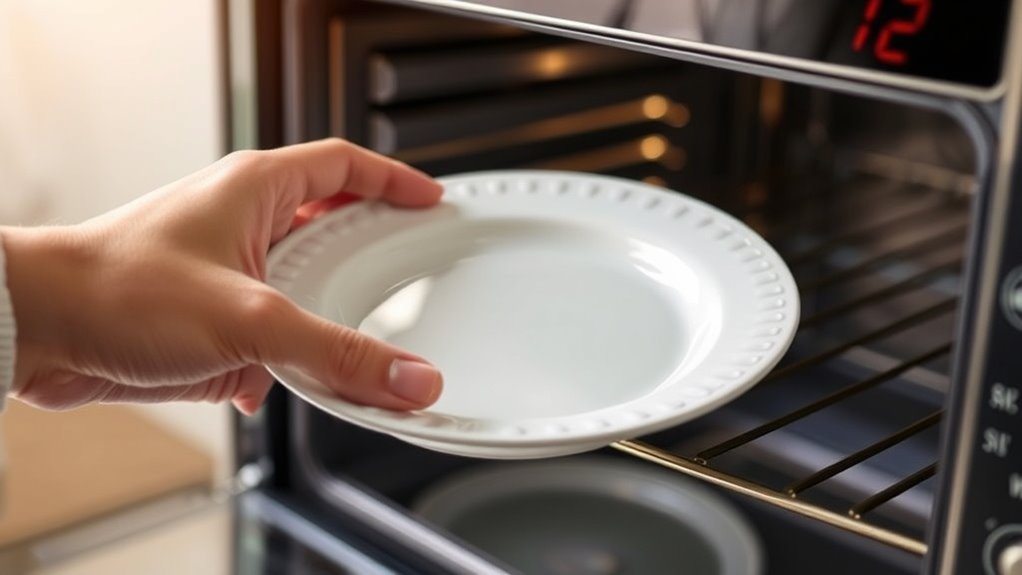
Ever wonder how to quickly tell if a plate is oven-safe? Start by checking the bottom or back for labels or symbols. Many oven-safe plates will have a clear mark, like an oven icon or words such as “ovenproof” or “oven-safe.”
Be cautious with decorative patterns—some may be painted or glazed with materials that aren’t heat-resistant. If your plate has a ceramic glaze, make sure it’s specifically labeled as oven-safe. Some glazes can crack or release harmful fumes when heated.
Look for a temperature rating, which tells you the maximum heat the plate can handle. If there’s no label, try contacting the manufacturer or testing the plate gradually at lower temperatures before using it in the oven.
Tips for Using Oven-Safe Plates Without Cracking or Breaking
To prevent your oven-safe plates from cracking or breaking, handle them carefully before and during use. Always check the manufacturer’s guidelines and avoid sudden temperature changes, which can cause thermal shock.
Before using, inspect your plates for any chips or cracks that could get worse in the oven. Proper cleaning with gentle, non-abrasive cleaners helps keep their structure strong.
When stacking or storing plates, keep them separated with padding to avoid accidental damage. For extra safety, match your plates with kitchen decor that highlights their oven safety, which can help prevent mishandling.
Use oven mitts to handle hot plates carefully. Avoid placing cold plates directly into a hot oven, as this can cause cracking. Let plates cool gradually after use to prevent thermal shock.
Always store plates properly and avoid stacking them without padding. Following these simple tips will help keep your oven-safe plates in good shape and extend their lifespan.
Common Mistakes When Using Plates in the Oven
A lot of people make the mistake of using plates that aren’t really oven-safe. That can cause the plates to crack or even break, which nobody wants. It’s important to check if your plates can handle the heat before putting them in the oven.
Also, paying attention to temperature limits is a big deal. If you ignore the recommended heat settings or pick the wrong material, it can lead to accidents or damage to your plates. So, just being mindful of these things can help you use your plates safely and get your oven dishes just right.
Using Non-Oven Safe Plates
Have you ever tried placing a regular ceramic plate in the oven only to find it cracking or breaking? Using non-oven safe plates can lead to damage, safety hazards, and ruined meals. These plates aren’t designed to withstand high oven temperatures, so they may crack under heat or during cleaning.
Always check for oven safety labels before use. Remember, non-oven safe plates aren’t heat-resistant and can crack or shatter at high oven temperatures. This not only damages the plate but can also cause safety issues.
Improper use can also damage your oven and ruin your meal. Always follow the manufacturer’s instructions for oven safety. Be careful when cleaning plates to avoid residue buildup, which can cause uneven heating.
Avoid these mistakes to keep your plates intact and safe for oven use.
Ignoring Temperature Limits
Ignoring temperature limits is a common mistake that can quickly ruin your dish and damage your plates.
When you set the oven temperature too high, you risk cracking or warping plates not built for intense heat. Many plates have specific temperature thresholds for safe use, and exceeding those limits compromises their durability.
Even if a plate looks sturdy, it might not withstand extreme oven heat. Always check the manufacturer’s guidelines to guarantee your plate can handle the oven temperature you plan to use.
Pushing beyond recommended limits can lead to unexpected breakage or damage, ruining both your dish and your plate. To prevent this, monitor oven temperature carefully and stick within the recommended range for your plates’ durability.
Overlooking Plate Material Safety
Even if a plate looks sturdy, you might forget to check if its material is oven-safe. This can lead to unexpected breakage or damage. Many people overlook labeling or material type before putting plates in the oven. Using non-oven-safe plates can cause cracks, shattering, or even dangerous spills.
To avoid this, keep these points in mind:
- Look for oven-safe symbols or labels
- Avoid plates with metallic trims or decorations
- Check the material: ceramic, glass, or stoneware are usually safe
- Store plates properly to prevent chips or damage
- Match plates with your kitchen decor for a cohesive look
Being mindful of plate safety helps keep your oven experience safe and your plates intact. Proper storage and material awareness also extend their lifespan and keep them looking great.
How to Safely Test Your Plates for Oven Use
Before putting your plate in the oven, it’s important to test if it can handle the heat safely. A simple way is to do a quick oven test to check its durability.
Start by placing the plate on an oven-safe tray. Then, heat your oven to 350°F (175°C). Bake the plate for 15 minutes, then carefully remove it and let it cool.
If the plate stays intact without cracks or warping, it’s probably oven safe. Keep in mind, cleaning your oven can affect the plate’s strength; residues or grime might weaken it over time.
| Step | Action |
|---|---|
| 1 | Place plate on an oven-safe tray |
| 2 | Bake at 350°F for 15 minutes |
| 3 | Cool and check for cracks or warping |
This test helps make sure your plate is safe to use in the oven and prevents damage during cooking.
Best Alternatives to Oven-Safe Plates for Baking and Roasting
When you’re looking for alternatives to oven-safe plates, it’s important to think about how well the material can handle heat and how safe it is to use. For example, glass or metal pans are usually better at dealing with high temperatures compared to other options. Just make sure to follow safety tips so you don’t accidentally cause any accidents. Knowing which materials are safe and understanding their limits can help you bake or roast with confidence—no worries about damaging your cookware or risking injury.
Suitable Material Types
If you don’t have traditional oven-safe plates, there are several alternative materials that work well for baking and roasting. Picking the right one depends on their material and compatibility with oven accessories.
Some materials are more heat-resistant and durable, making them suitable for oven use. Here are some common options:
- Ceramic and Porcelain: Stylish and oven-safe, these are great for many plate styles.
- Glass (Tempered or Borosilicate): Heat-resistant and transparent, perfect for baking.
- Metal (Stainless Steel or Aluminum): Very durable, ideal for roasting and broiling.
- Stoneware: Keeps heat well, making it good for baking bread or casseroles.
- Silicone: Flexible and heat-resistant, perfect for molds and certain oven accessories.
Always check the specific oven safety of each material before using it.
Heat Resistance Levels
Choosing the right material for oven use depends heavily on its heat resistance level. When selecting alternatives to oven-safe plates, consider how well the material withstands high temperatures without cracking or breaking.
For food presentation, you want durable options that maintain their appearance after baking or roasting. Ceramic craftsmanship offers excellent heat resistance, making ceramic dishes a popular choice.
Many ceramic materials can handle oven temperatures up to 500°F, allowing you to bake or roast directly on them. Just remember, not all ceramics are created equal—check for oven-safe labels or specifications.
Using materials with appropriate heat resistance ensures your dishes stay intact, preserves their aesthetic appeal, and prevents accidents. The right choice enhances your cooking experience, combining functionality with attractive presentation.
Safety Precautions to Follow
Even when choosing alternative materials for oven use, it’s really important to follow safety precautions to avoid accidents or damage. Always check if your tableware design or kitchen decor has oven-safe labels.
Avoid plates with metallic trims or decorative finishes that can crack or release harmful fumes when heated. Handle hot items carefully with oven mitts to prevent burns.
Keep flammable materials away from the oven area. Make sure your chosen alternative materials are heat-resistant and suitable for the temperature you’ll be using.
What to Do If Your Plate Cracks or Breaks in the Oven
When you notice a crack or a break in your oven-safe plate, it’s important to act quickly to prevent further damage or safety hazards.
First, stop using the plate immediately. Cracks can get worse with heat, risking shattering during oven use.
Stop using cracked plates immediately to prevent shattering and safety hazards during oven use.
If the plate is used for decoration, consider replacing it to keep the look and prevent accidents.
For broken pieces, carefully remove them from the oven and clean the area to avoid cuts.
Never try to repair a cracked plate with adhesives or tape, as these won’t hold up in the oven.
Check if the plate is dishwasher safe, but avoid putting cracked or broken items in the dishwasher—they can harbor bacteria or cause more damage.
Always inspect your oven-safe plates regularly for damage.
Replace any that show cracks or chips to stay safe.
Frequently Asked Questions
Can Ceramic Plates Withstand High Oven Temperatures?
Ceramic plates can usually withstand high oven temperatures if they’re designed for oven use, but it’s important to check their oven temperature limits first.
Be mindful of plate layering; avoid stacking multiple ceramic plates, as this can cause cracking. Always follow the manufacturer’s guidelines.
Generally, oven-safe ceramic plates handle temperatures up to 450°F (232°C). If you’re unsure, try testing with a lower temperature first to avoid any damage or safety issues.
How Long Can I Keep a Plate in the Oven Safely?
Ever wondered how long you can keep a plate in the oven safely? It really depends on what material it’s made of and how heat-resistant it is.
Typically, ceramic or heat-resistant glass plates can stay in the oven for about 20 to 30 minutes at moderate temperatures without any issues.
But if you leave it in longer, there’s a risk it could crack or break. Always check your plate’s material and manufacturer guidelines first.
That way, you can be sure you’re using it safely and avoiding any damage or accidents.
Are There Specific Oven Temperatures for Different Plate Materials?
Yes, different plate materials need specific oven temperature guidelines for safety. For example, ceramic and glass plates usually can handle up to 350°F.
Porcelain or stoneware might be able to handle slightly higher temperatures, but it’s always best to check the manufacturer’s instructions first. This helps prevent cracks or breakage.
Sticking to the recommended oven temperatures keeps your plates safe and intact, so they stay in good condition for longer.
Can I Use a Plate in the Oven for Broiling?
You can use a plate in the oven for broiling if it’s oven-compatible and safe for high temperatures.
Check the plate’s safety and oven compatibility first—look for oven-safe labels or materials like ceramic or glass designed for baking.
Avoid using plastic, melamine, or non-oven-safe plates, as they can melt or crack.
Always confirm the plate can withstand broiling temperatures to prevent accidents or damage.
How Do I Clean Oven-Safe Plates After Use?
To clean oven-safe plates after use, first let them cool completely. If they’re dishwasher safe, load them into your dishwasher with mild detergent for an easy clean.
If not, wash them by hand with warm, soapy water, avoiding abrasive scrubbers. Check if they’re microwave safe—if so, you can use the microwave to loosen any stuck-on food.
Always dry thoroughly before storing to prevent damage.
Conclusion
Remember, not all plates are fit for the oven—don’t risk turning your modern kitchen into a blacksmith’s forge! Always check labels and materials, and test safely if unsure.
Using oven-safe plates is as essential as Henry’s invention of the printing press. Think of it as a game-changer in your culinary adventures.
When in doubt, opt for alternatives to keep your dishes intact and your kitchen safe. If you want to avoid mishaps, always choose oven-safe plates.
Happy baking!