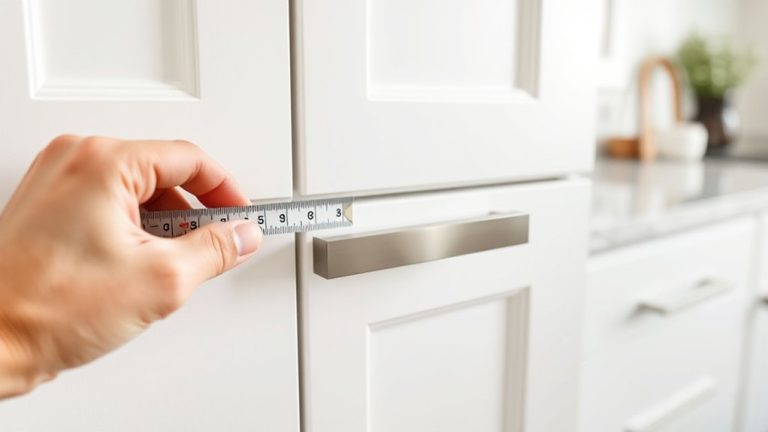
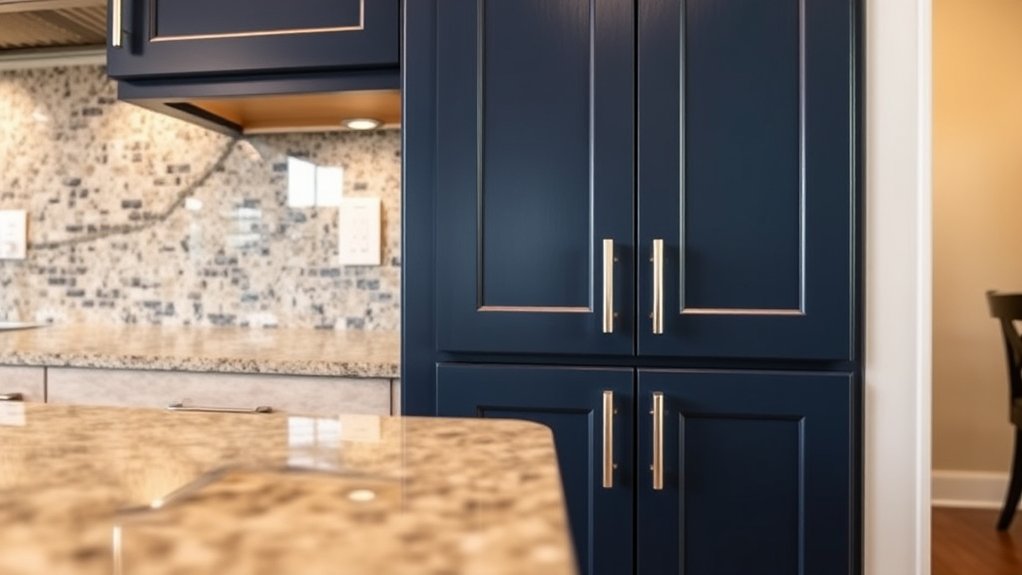
How Much Does Kitchen Cabinet Refacing Cost?
Thinking about giving your kitchen a fresh new look but feeling overwhelmed by the cost? You’re not alone—many homeowners struggle with balancing style upgrades and budget constraints. Kitchen cabinet refacing is a popular choice that can transform your space without breaking the bank.
Kitchen cabinet refacing generally costs between $4,000 and $8,000 when done professionally, depending on the materials you choose and the complexity of your kitchen.
If you do it yourself, it could be as low as $1,000 to $3,000 for supplies, but it requires skills and time.
Higher-end materials like solid wood cost more, while laminate options save money.
To find out which options fit your budget best, keep exploring the details below.
Key Takeaways
- Cabinet refacing usually costs between $4,000 and $8,000, depending on the materials you choose and how big the project is.
- Your material choices, like laminate, veneer, or solid wood, can really affect the total cost and how long the cabinets last.
- Doing the refacing yourself can save money, costing around $1,000 to $3,000, but hiring pros typically costs between $4,000 and $8,000.
- Keep in mind, extra expenses might include hardware updates, finishes, or even adding interior lighting.
- To save some cash, consider choosing simpler styles, neutral colors, and look out for sales when shopping for materials.
What Is Kitchen Cabinet Refacing and How Does It Work?
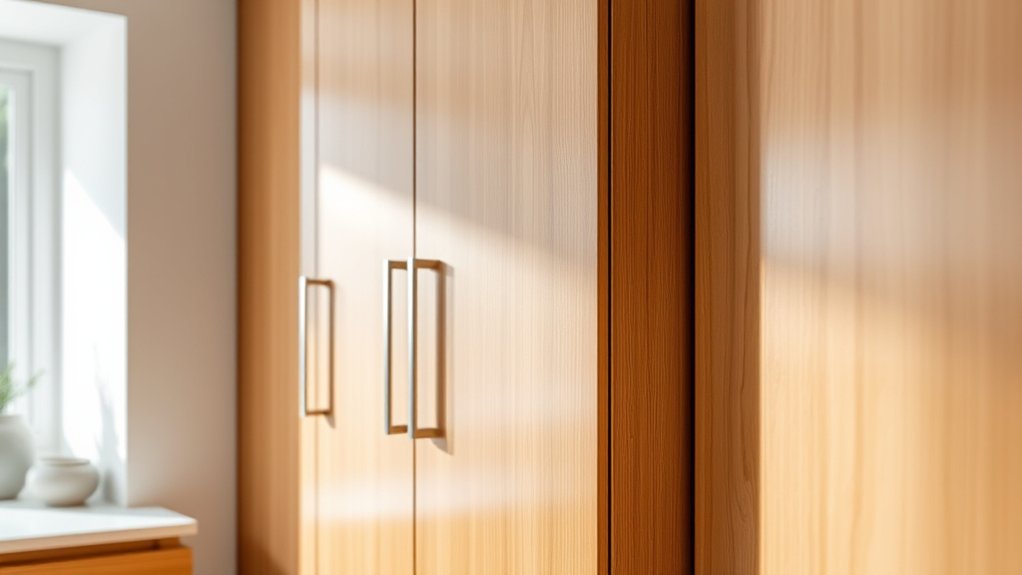
Kitchen cabinet refacing is a budget-friendly way to give your cabinets a fresh look without replacing everything. You keep your existing cabinet boxes and only swap out the doors and drawer fronts for new ones, instantly updating your kitchen’s style.
This process often includes upgrading your interior lighting to brighten the space and highlight your new cabinets. You might also want to replace or upgrade your appliances to match the new look, making everything feel cohesive.
Refacing is faster than a full cabinet replacement, usually taking just a few days. It also causes less disruption in your home, making it a great option if your cabinet frames are still solid but you want a modern update.
What Factors Influence the Cost of Cabinet Refacing?
The materials you choose can really make a difference in the total cost. For example, going for higher-end options like solid wood or custom finishes tends to cost more. It’s all about what kind of look and durability you’re aiming for and how much you’re willing to spend.
On top of that, the extent of the work matters too. If you’re just refacing the cabinets, it’ll generally be less expensive. But if you decide to replace hardware or add new features, that can add to the overall price. Knowing these factors can help you plan your budget better and make smarter choices for your cabinet makeover.
Material Choices Impact Price
Have you ever wondered how the choice of materials can really impact the cost of cabinet refacing? The materials you pick, like wood, veneer, or laminate, directly influence your budget.
High-end options such as custom kitchen color finishes or premium hardware can increase costs but also boost durability and style. Cheaper materials save money upfront but might need replacing sooner.
Here’s a quick comparison:
| Material Type | Cost Impact |
|---|---|
| Solid wood | Higher |
| Veneer | Moderate |
| Laminate | Lower |
| High-end hardware | Significant increase |
| Basic hardware | Budget-friendly |
Choosing quality finishes and hardware can make your kitchen look better but will affect your overall refacing costs.
Scope of Work
Several key factors influence the overall cost of cabinet refacing, and understanding these can help you plan your project more effectively.
The scope of work varies depending on your kitchen layout, which affects how many cabinets need attention and the complexity of the job. If your cabinets require extensive repairs or replacement of structural components, costs will rise.
The choice of cabinet hardware also plays a significant role; upgrading knobs and handles can add to expenses but improve the overall look.
The amount of surface area to be refaced, the intricacy of cabinet design, and whether you’re reconfiguring your layout all impact the price.
Being clear on these factors helps ensure your project stays within budget while achieving the desired transformation.
How Much Does DIY vs. Professional Cabinet Refacing Cost?
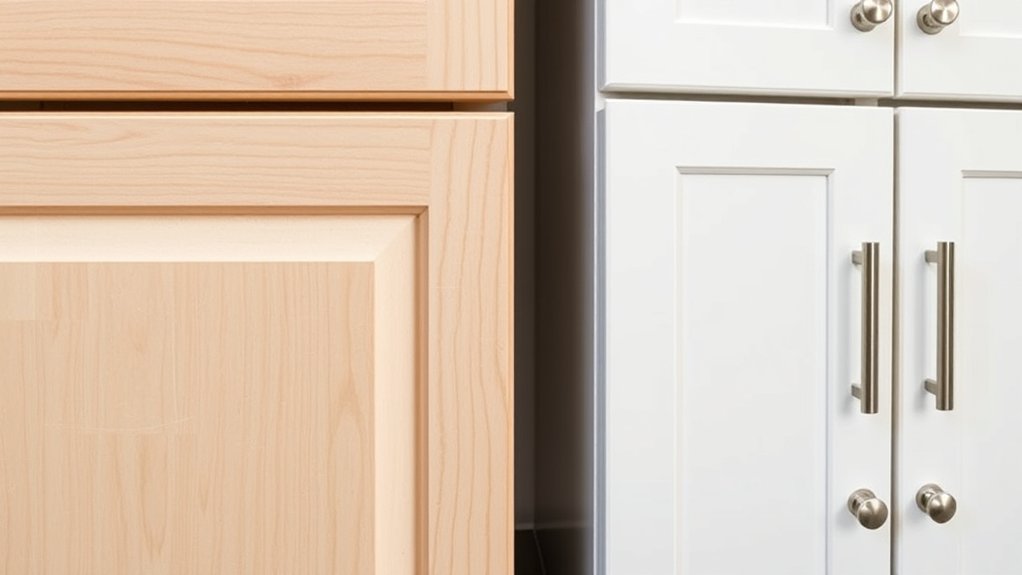
Wondering how much you’ll spend on cabinet refacing, whether tackling it yourself or hiring a professional? DIY options usually cost less upfront, often between $1,000 and $3,000 for materials and tools.
That said, this approach takes time, effort, and some skill. You’ll need to consider furniture arrangement and lighting adjustments to match the new look. If you’re comfortable with basic carpentry and patient, you can save money doing it yourself.
On the flip side, hiring a pro might cost between $4,000 and $8,000 depending on the scope and materials used. Professionals bring experience, faster turnaround, and ensure your cabinets look flawless and your kitchen’s style improves.
While DIY might seem more budget-friendly, think about potential mistakes and how they could affect your kitchen’s design flow. This includes furniture layout and lighting upgrades, so weigh those factors before deciding.
What Are Your Material Options and How Do They Affect Budget?
Your choice of materials really affects both your budget and the overall look of your cabinets. For example, options like laminate, wood, or acrylic each come with different price tags and levels of durability. Usually, higher-quality materials will last longer and look better, but they can also cost more upfront.
On the flip side, budget-friendly options might save you some money initially, but they could end up needing more maintenance or replacements down the line. So, it’s all about finding that sweet spot between what you want aesthetically and what fits within your budget. Think about your style preferences and how much you’re willing to invest to get the cabinets you love.
Material Durability and Cost
Choosing the right materials for your kitchen cabinet refacing can really affect both durability and your budget. Solid wood options like oak or maple are durable, but they tend to be more expensive, which might impact your overall costs.
Laminate and thermofoil are more affordable and resistant to moisture, making them great choices for busy kitchens. Keep in mind, upgrading appliances or adding new lighting can often cost more than the materials themselves.
Cheaper materials may save you money upfront but might need more repairs or replacements over time, increasing your long-term costs. On the other hand, durable materials tend to last longer and need less maintenance.
Balancing your material choice with your overall renovation plan helps keep your kitchen functional and attractive without overspending.
Style and Finish Options
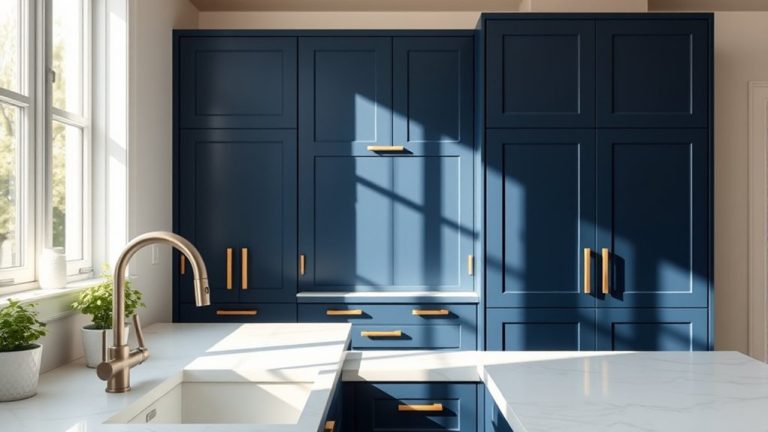
The style and finish of your cabinets really shape the look of your kitchen and your budget. Popular colors like navy or matte black often cost more than classic whites or wood tones.
Your finish choice, such as high-gloss or matte, also affects the price. Glossy finishes tend to be pricier because they’re more durable and shiny.
Hardware options, from simple knobs to fancy pulls, add to the cost but can totally change your kitchen’s style. Modern hardware might be more budget-friendly, while custom or designer pieces will increase the overall cost.
In the end, your choices of colors, finishes, and hardware not only influence how your kitchen looks but also how much you’ll spend on refacing your cabinets.
How Much Do Additional Costs Add to Your Cabinet Makeover?
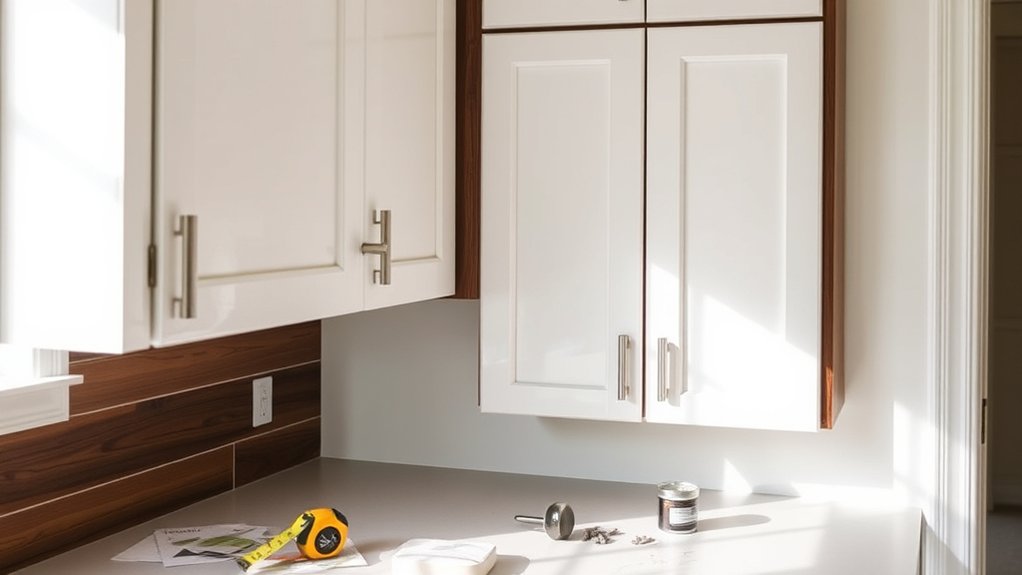
Additional costs can really add up and impact your overall cabinet makeover budget. That’s why it’s smart to think about these expenses early on in your planning.
For example, paint options can vary a lot in price depending on the quality and finish you pick. High-end paints might cost more, but they can give you a smoother, longer-lasting look.
Hardware upgrades also add to your costs. Upgrading knobs, pulls, and hinges can make a big difference in how your cabinets look and work.
Even small details like these can quickly add up, especially if you choose custom or designer finishes. Labor costs for installing hardware or special paint finishes can also bump up your total budget.
It’s a good idea to set aside a contingency fund for surprises along the way. By thinking about these extra costs upfront, you’ll be better prepared and avoid surprises once the work starts.
What Are the Costs of Laminate, Veneer, and Solid Wood Cabinets?
The costs of laminate, veneer, and solid wood cabinets can really vary a lot, depending on the materials used and their quality. It’s a good idea to think about not just the price, but also how durable each option is and how long it’s likely to last. That way, you can get a better sense of the overall value you’re getting for your money.
Plus, each of these cabinet types has its own unique look, so your choice can really change the vibe of your kitchen’s design. Whether you’re after something budget-friendly or something that feels more luxurious, there’s definitely a variety of options to consider.
Material Cost Differences
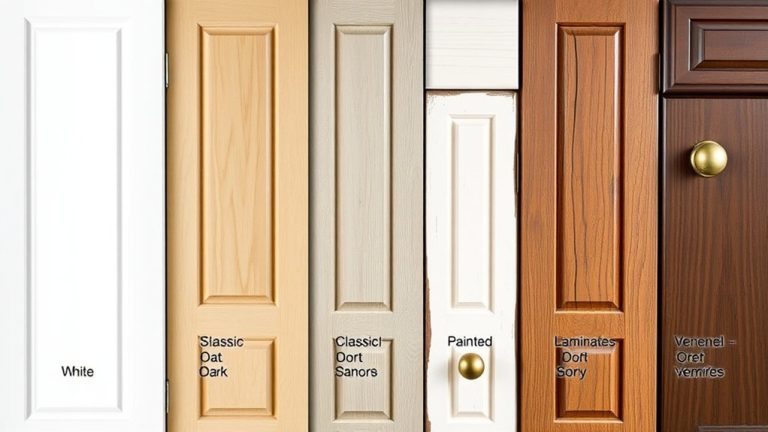
Choosing the right material for your kitchen cabinets can really impact your overall refacing budget. Laminate cabinets are the most affordable option, offering a wide range of colors and styles that make matching your decor easy.
Veneer cabinets come in the middle price range, giving you a more natural wood look at a moderate cost. Just keep in mind that you might need to select hardware carefully to match their aesthetic.
Solid wood cabinets are the most expensive, but they provide unmatched quality and lots of customization options. Your choice will affect not only the initial cost but also installation and future maintenance.
Durability and Longevity
When thinking about durability, laminate cabinets are a great option because they resist scratches, stains, and moisture. They’re also budget-friendly for long-term use.
Veneer gives a natural look but can be more vulnerable to moisture and scratches. It’s nice but might need more care over time.
Solid wood cabinets are super durable and can last for decades if you take good care of them. Pairing them with stylish hardware and thoughtful color choices makes them even more appealing.
Your choice of material affects both how long your cabinets last and how much maintenance they’ll need. Here’s a quick comparison to help you decide:
| Material | Durability Level | Maintenance Needs |
|---|---|---|
| Laminate | High | Easy, resistant to scratches and stains |
| Veneer | Moderate | Sensitive to moisture and scratches |
| Solid Wood | Very high | Regular upkeep and refinishing needed |
| Cost | Varies | Investment in lasting quality |
| Longevity | Long-lasting | Years of beauty with proper care |
Aesthetic Variations
Understanding the costs of different cabinet materials is key to balancing aesthetics and budget. Laminate cabinets usually cost less and come in a wide range of colors and sleek finishes that mimic more expensive materials.
Veneer options give you a natural wood look at a lower price, with subtle variations in grain and color. Solid wood cabinets are more costly but offer rich textures and timeless appeal, plus easy customization of colors and hardware styles.
Your choice impacts the overall look of your kitchen, from modern to traditional styles. Hardware styles like sleek handles or vintage knobs can further enhance the aesthetic.
Weighing these material options based on your style preferences and budget will help you find the perfect balance of beauty and affordability.
How Can You Save Money When Refacing Your Cabinets?
Refacing your cabinets can be more affordable than replacing them entirely, especially if you know where to cut costs. Start with budget tips like choosing simpler door styles or sticking to neutral colors, which tend to be less expensive.
Comparing costs through detailed estimates helps you find the most budget-friendly options without sacrificing quality. Consider doing some work yourself, like removing old cabinet doors or cleaning surfaces, to save on labor costs.
Shopping for materials during sales or at discount stores can significantly cut expenses. You might also choose less costly finishes or veneers instead of high-end options, giving your kitchen a fresh look without overspending.
When Should You Invest in High-End Materials?
Investing in high-end materials makes sense when your goal is to achieve a durable, luxurious look that lasts for years. If your kitchen is your main space for entertaining or family gatherings, upgrading to premium cabinet finishes can make a big impact.
Invest in high-end materials for durability and a luxurious, lasting kitchen aesthetic.
High-quality materials also stand up better to daily wear and tear, saving you money in the long run. Consider high-end options if you plan to upgrade your lighting—such as layered, accent, or smart lighting—to highlight the craftsmanship and boost the ambiance.
If you’re thinking about appliance upgrades, investing in premium cabinet materials will help create a cohesive, upscale look that complements modern, sleek appliances. These choices make your kitchen more beautiful, functional, and resilient.
If you’re committed to long-term value and a high-end aesthetic, now’s the perfect time to choose premium materials.
How to Get Accurate Quotes From Contractors?
Getting accurate quotes from contractors is key to avoiding unexpected costs and keeping your project on budget. Be specific about what you need, whether it’s furniture restoration or kitchen organization. Clear communication helps contractors understand exactly what you want, so there are no surprises later.
When requesting estimates, give detailed descriptions and photos of your current cabinets and layout. This helps contractors provide precise quotes that reflect your project’s scope.
Use the table below to compare quotes and ensure you’re getting a fair price:
| Contractor | Price Estimate | Notes |
|---|---|---|
| Contractor A | $3,200 | Includes hardware replacement |
| Contractor B | $3,500 | Adds custom finishes |
| Contractor C | $3,000 | Basic refacing, no extras |
Getting multiple quotes lets you spot any discrepancies and ask questions. Don’t hesitate to ask about timelines, materials, or their experience with kitchen organization and furniture restoration. Doing this helps you get an accurate, thorough estimate.
Is Cabinet Refacing Worth It Compared to a Full Remodel?
Deciding whether cabinet refacing is worth it depends on your goals and budget, especially when you compare it to a full kitchen remodel. If you just want a fresh look without changing the layout or appliances, refacing can be a budget-friendly option.
Cabinet refacing is a budget-friendly way to refresh your kitchen’s look without changing the layout or appliances.
It can also brighten up your kitchen by choosing modern finishes that reflect light better. If your current layout works well and your appliances are fine, refacing lets you update your cabinets without the hassle of moving everything around.
But if you want a bigger kitchen, a different layout, or upgraded appliances, a full remodel might be better. It gives you more options for customizing lighting, placement, and overall space.
In the end, if your main goal is cosmetic updates and saving money, refacing could be worth it. For bigger changes, a full renovation offers more long-term benefits.
Frequently Asked Questions
How Long Does Cabinet Refacing Typically Take?
Cabinet refacing usually takes about 2 to 5 days, depending on how big and complex the project is.
During this time, your cabinets will be transformed with different techniques, like replacing hardware and applying new veneer or paint.
You can typically stay in your home while the work is happening. A professional team makes sure everything runs smoothly and with minimal disruption to your daily routine.
What Warranties Are Available on Cabinet Refacing Projects?
You’ll find warranty coverage varies depending on the contractor and materials used, but most offer at least a one-year warranty on cabinet durability. Some providers extend warranties up to five years for added peace of mind.
Always ask your contractor about warranty specifics, including what’s covered and any limitations. This helps ensure your cabinet refacing project is protected.
Can Cabinet Refacing Increase My Home’s Resale Value?
Refacing your cabinets can boost your home’s resale value, especially if you update cabinet color and hardware styles.
For example, a homeowner in Chicago refreshed their kitchen with sleek, modern hardware and a bright, neutral cabinet color, attracting buyers. These upgrades make your kitchen look fresh and appealing, increasing its overall value.
Are There Eco-Friendly Options for Cabinet Refacing Materials?
Yes, you can choose eco-friendly options for cabinet refacing. Look for sustainable materials like bamboo, reclaimed wood, or FSC-certified plywood to help reduce environmental impact.
You can also opt for eco-friendly finishes such as low-VOC or water-based paints and stains. These choices help minimize indoor air pollution.
How Do I Choose the Best Contractor for Cabinet Refacing?
Just like choosing a trusty steed, selecting the right contractor for cabinet refacing is essential.
You should check their experience with various cabinet styles and material options, ask for references, and review their portfolio.
Make sure they’re licensed and insured.
Trust your instincts during consultations, and don’t forget to compare quotes.
The best contractor will communicate clearly, offer eco-friendly options if needed, and deliver quality craftsmanship that aligns with your vision.
Conclusion
Think of cabinet refacing like giving your kitchen a fresh coat of paint. It’s a budget-friendly way to change up your space without tearing everything out.
Just like updating a room can breathe new life into your home, refacing can do the same without the hefty price tag. It’s a smart way to refresh your kitchen without the cost of full replacement.
By understanding your options and working with trusted professionals, you’ll turn your kitchen into a stunning, functional space. This shows that small changes can make a big impact, especially with kitchen cabinet refacing.