5 Simple Steps to Clean Kitchen Cabinets
Many homeowners find it challenging to keep their kitchen cabinets looking fresh and clean. With daily use, grease, dust, and stains can quickly pile up, making your space look tired and cluttered. If you’re tired of struggling with stubborn grime, you’re not alone—keeping cabinets spotless can feel like a never-ending task.
To clean your kitchen cabinets, start by gathering supplies like mild soap, vinegar, and microfiber cloths, then clear and wipe down the surfaces.
Next, remove dust from inside and outside, paying attention to corners and handles.
For stubborn grease and stains, use a gentle soap solution or a baking soda paste.
Finally, keep your cabinets looking great by regularly maintaining hardware and touch-ups.
If you want to get every detail just right, continue with these simple tips.
Key Takeaways
- Clear surfaces and remove hardware so you can access all areas easily.
- Dust and wipe exterior surfaces with a damp microfiber cloth.
- Clean interior shelves with a mild soap solution, removing dust and grime.
- Tackle grease and stains using baking soda paste or gentle cleaners.
- Reassemble, touch up paint if needed, and do regular maintenance to keep everything looking fresh.
Your Complete Guide to Cleaning Kitchen Cabinets
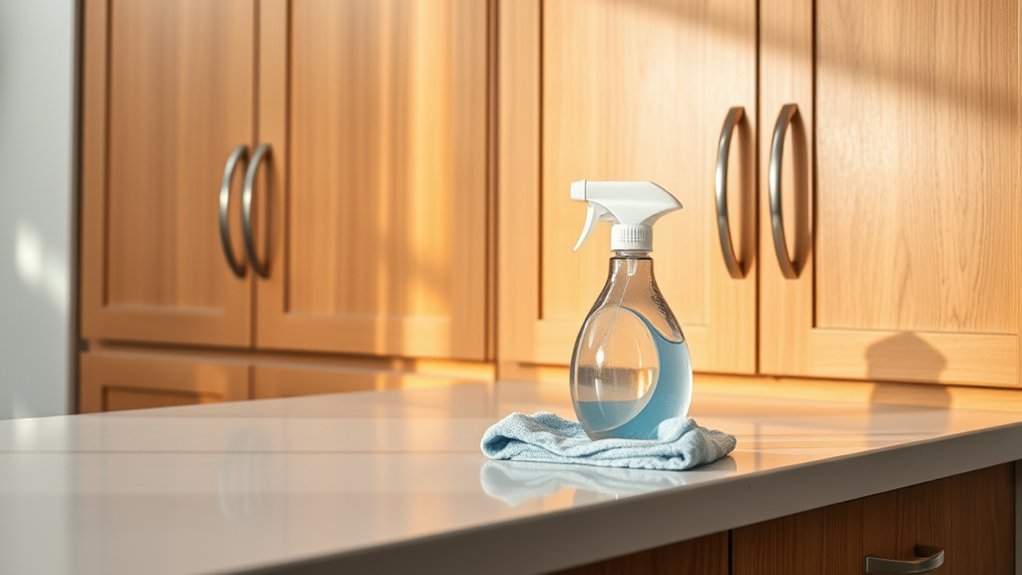
Cleaning kitchen cabinets might seem intimidating, but with the right approach, it’s quick and manageable. Start by clearing the cabinet surfaces to improve organization, making it easier to access every corner.
Cleaning cabinets is simple with the right steps—clear, wipe, and organize for a fresh, well-maintained kitchen.
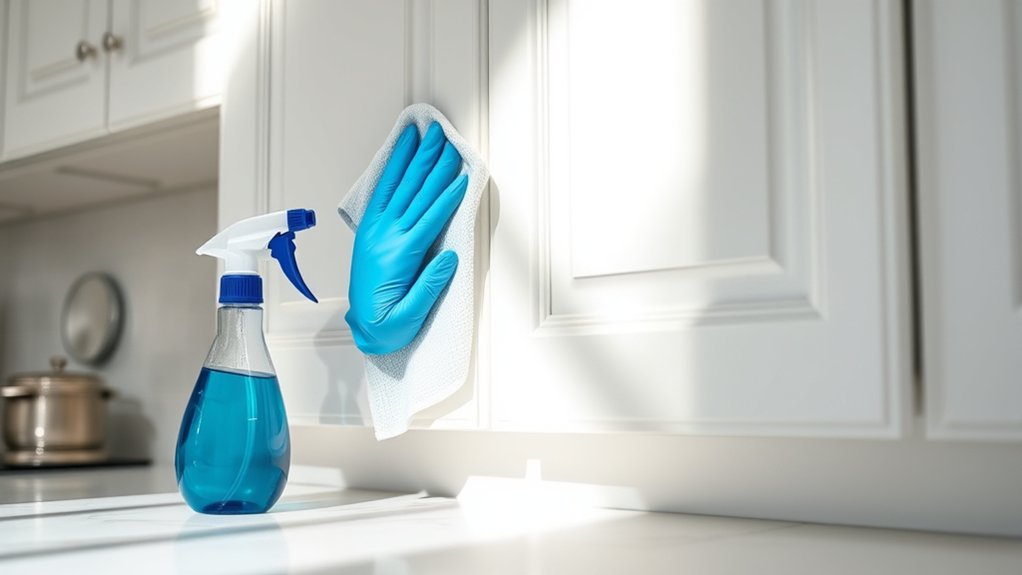
Wipe down the exterior with a gentle cleaner to remove grease and grime. For the interior, use a soft cloth and mild soap to clean shelves and drawers, paying attention to corners and edges.
While you’re at it, check for chipped or peeling paint. This is a great time for touch-ups to restore your cabinets’ appearance. If needed, lightly sand rough spots before applying fresh paint or stain.
Keeping cabinets organized not only makes them look better but also extends their lifespan. Once everything is cleaned and touched up, reassemble carefully.
Regular maintenance like this will make future cleanings faster and keep your cabinets looking fresh and well-maintained.
Gather Supplies and Prep Your Kitchen for Deep Cleaning
Before diving into deep cleaning, gather all the supplies you’ll need to make sure everything goes smoothly. Start with basic cleaners like mild soap, vinegar, and a microfiber cloth.
You’ll also want a screwdriver to remove cabinet hardware and a bucket for rinsing. To keep your kitchen organized, empty shelves first and set aside any items that need cleaning or reorganization.
Use this table to prepare:
| Supplies | Purpose | Additional Tips |
|---|---|---|
| Microfiber cloths | Wipe down surfaces | Use separate cloths for hardware and surfaces |
| Mild cleaner | Clean cabinet exteriors | Avoid harsh chemicals |
| Screwdriver | Remove cabinet hardware | Keep hardware in a safe place |
| Bucket | Rinse cleaning tools | Keep handy for quick rinses |
| Basket or box | Shelf organization | Label for easy reassembly |
Having everything ready minimizes interruptions and makes your kitchen prep more efficient.
Remove Dust and Surface Dirt From Cabinets
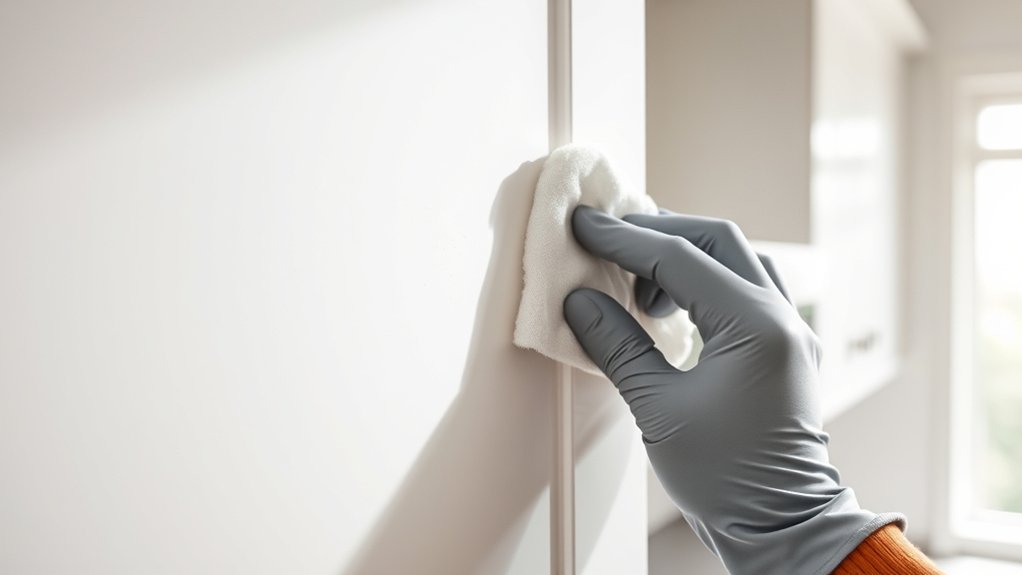
Since dust and surface dirt tend to settle on cabinet surfaces over time, it’s important to remove them before tackling deeper cleaning tasks. Start by wiping down the exterior of your cabinets with a soft, damp cloth. Pay special attention to the cabinet hardware, like handles and knobs, which can trap dirt. Use a gentle cleaner if needed, but avoid harsh chemicals that could damage finishes.
For interior shelving, remove items and dust thoroughly using a microfiber cloth or duster. Be sure to clean corners and edges where dust tends to accumulate. Taking these steps guarantees your cabinets look fresh and are prepared for more detailed cleaning later.
Removing surface dirt also helps prevent scratching or spreading grime during deeper cleaning. This quick, thorough dusting sets a solid foundation for keeping your kitchen cabinets spotless and well-maintained.
Tackle Grease and Stains Effectively
Grease and stains can quickly build up on kitchen cabinet surfaces, especially around cooking areas. To keep your cabinets looking fresh, it’s important to remove grease effectively and treat stains early.
Start by mixing warm water with a bit of dish soap, then wipe the surfaces with a microfiber cloth to loosen grease. For tougher stains, make a paste with baking soda and water, apply it directly, and let it sit for a few minutes before gently scrubbing.
You can also use a commercial degreaser if the grease buildup is stubborn. Just be sure to test any cleaning solution on a small, hidden spot first. Regular maintenance makes cleaning easier and prevents stubborn stains.
Maintain Your Cabinets for a Long-Lasting Shine
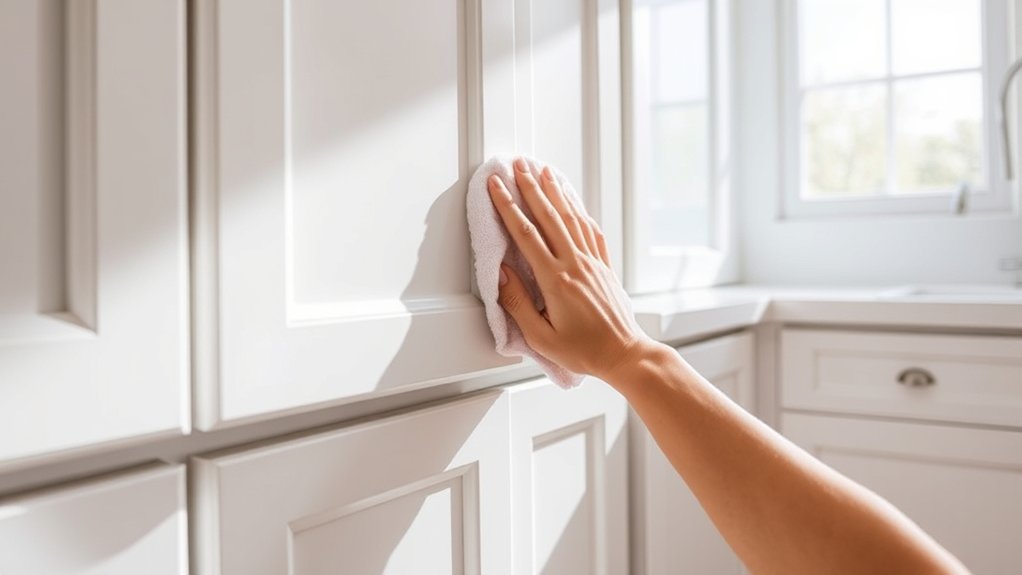
To keep your kitchen cabinets looking their best over time, regular maintenance is key. Clean the hardware and interior shelves often to prevent dust and grime from building up. Use a gentle cleaner and a soft cloth on the hardware, making sure screws stay tight.
For the inside shelves, remove items first, then vacuum or dust. Wipe down with a damp cloth to keep everything fresh. Doing regular checks helps you catch problems early, like loose hardware or damaged surfaces.
| Maintenance Task | Frequency |
|---|---|
| Clean cabinet hardware | Every 2-3 months |
| Wipe interior shelving | Monthly |
| Tighten loose hardware | As needed |
| Inspect for damage | Quarterly |
| Refinish or touch-up | Annually |
Sticking to these steps keeps your cabinets looking shiny and new. Proper upkeep also makes sure the hardware works smoothly and your cabinets stay durable for years to come.
Frequently Asked Questions
How Often Should I Deep Clean My Kitchen Cabinets?
You should deep clean your kitchen cabinets every six months to keep them organized and prevent grime buildup.
Regularly wiping down surfaces with DIY cleaning tips helps keep them looking fresh. During deep cleans, focus on corners and handles, using gentle yet effective cleaning solutions.
This routine ensures your cabinets stay spotless and well-maintained, making your kitchen more inviting and easier to organize over time.
Are Natural Cleaning Solutions Safe for All Cabinet Finishes?
Natural cleaning solutions are generally safe for most cabinet finishes, but they can still cause chemical reactions if mixed with harsh cleaning agents. It’s always a good idea to test a small, hidden area first—like you’re dipping your toes before swimming.
Natural cleaners like vinegar or baking soda work well without damaging finishes. Just avoid using too much or mixing them with strong chemicals to keep your cabinets looking their best.
Can I Clean Cabinets With Vinegar Without Damaging the Wood?
Yes, you can clean cabinets with vinegar without damaging the wood if you follow some simple precautions and prioritize wood safety. Dilute white vinegar with water—about one part vinegar to two parts water—to lower its acidity.
Avoid soaking the wood and always test a small, hidden area first to make sure it doesn’t cause any damage. Use a soft cloth to gently wipe the surface, and dry thoroughly afterward to prevent moisture damage.
This method keeps your cabinets clean while keeping the wood safe.
What Should I Do if Paint or Finish Peels During Cleaning?
Think of your cabinet as a delicate painting, and peeling paint or finish as cracks in the masterpiece. When this happens, gently scrape away loose paint. Then, apply a fresh coat of paint or finish to repair it.
Use paint repair techniques and finish touch-up methods to blend the repair seamlessly. This restores your cabinet’s beauty and keeps your kitchen looking flawless. It’s like restoring a treasured artwork to its original glory.
How Can I Prevent Future Grease Buildup on Cabinets?
To prevent future grease buildup on your cabinets, make sure your kitchen has proper ventilation. Good airflow helps cut down on moisture and grease that can settle on surfaces.
You might also want to apply grease-resistant coatings to your cabinet surfaces. It’s like giving them an extra layer of protection against grease and splatters.
Regularly wipe your cabinets with a damp cloth and a mild cleaner. Keeping them clean makes it easier to prevent stubborn grease from sticking over time.
These simple steps will help keep your cabinets looking fresh and make cleaning easier in the long run.
Conclusion
With these five simple steps, you’ve transformed your cabinets from tired to dazzling, like a fresh coat of paint on a weathered canvas. Each swipe and scrub is a brushstroke restoring their original luster, turning your kitchen into a sanctuary of cleanliness and craftsmanship.
Keep up this routine, and your kitchen cabinets will shine like stars in a clear night sky—timeless, resilient, and endlessly inviting. Your kitchen’s renewed glow will be a proof of your dedication and care, showing how effective regular cleaning can be.