How Much Do Kitchen Cabinet Costs Depend on These 10 Factors?
Thinking about updating your kitchen cabinets? You’re not alone—many people struggle with figuring out how much they’ll really cost. It’s a big decision, and costs can vary widely depending on several factors.
Your kitchen cabinet costs depend on several factors like materials, finishes, and style choices. Premium woods, custom colors, or intricate designs will increase expenses, while simple styles and basic materials save money. The size and features, such as pull-out shelves or soft-close hinges, also affect the price.
Installation challenges and your location can add costs, and opting for reputable brands might cost more but ensure better quality. To find out how all these aspects come together, investigate further.
Key Takeaways
- Cabinet costs depend heavily on material quality, with premium woods and eco-friendly options driving up expenses.
- The design complexity, style, and size of your cabinets also play a big role in the overall price.
- Hardware finishes and installation challenges can add extra costs, especially for custom or intricate setups.
- The reputation of the brand and how durable the materials are affect both the long-term value and the initial investment.
- Regional factors and supplier choices influence prices, balancing quality, availability, and market demand.
Understanding the Costs of Kitchen Cabinets
Understanding the costs of kitchen cabinets is essential before you start your renovation, as prices can vary widely based on materials, styles, and quality. One key factor influencing cost is the range of color options available. Basic finishes like white or natural wood tend to be more affordable, while custom colors or painted finishes can increase the price.
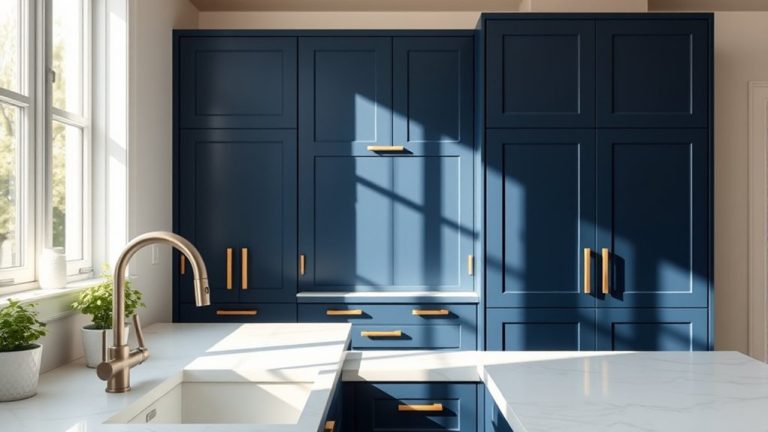
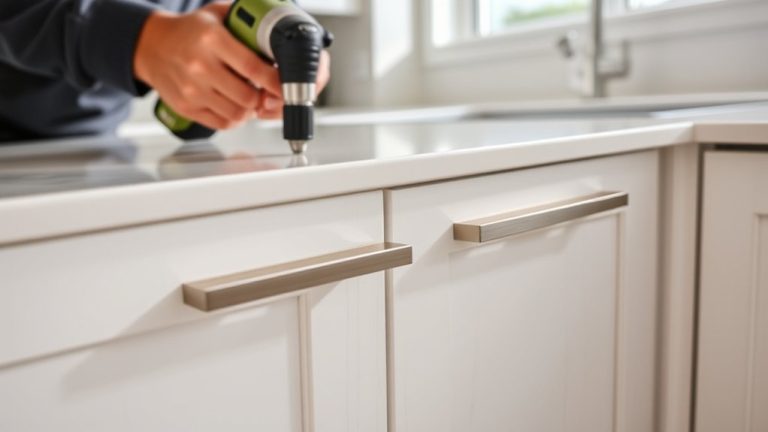
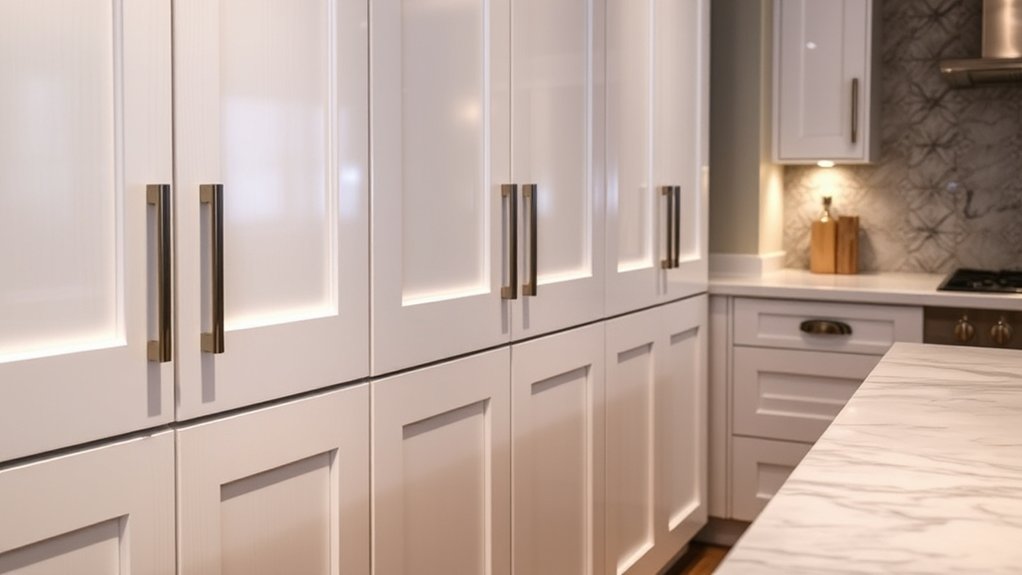
Furthermore, hardware finishes play a significant role. Simple brushed nickel or chrome hardware is usually less expensive, whereas specialty finishes like matte black or antique bronze can add to your budget. The choice of hardware not only impacts aesthetics but also affects overall costs.
Keep in mind that more elaborate or custom color options and premium hardware finishes typically come with higher price tags. By understanding these elements, you can better plan your budget and select options that balance style and affordability without surprises down the line.
Factors That Impact Kitchen Cabinet Prices
Several key factors directly influence the cost of your kitchen cabinets, and being aware of them can help you make informed decisions. One major factor is the style you choose. Vintage styles often come with higher prices because of their unique designs and craftsmanship.
Eco-friendly options can also impact your budget. Sustainable materials like reclaimed wood or low-VOC finishes tend to cost more but offer long-term environmental benefits. The complexity of the cabinet design, such as intricate moldings or custom features, can add to the overall expense.
Furthermore, the quality of materials plays a significant role. Premium hardwoods versus laminate can make a big difference in price. The finish and paint choices also influence costs, especially if you opt for custom or specialty finishes.
Knowing how these factors affect price lets you balance style, sustainability, and budget. This way, you can ensure your kitchen cabinets meet your needs without overspending.
Choosing Materials That Fit Your Budget and Style
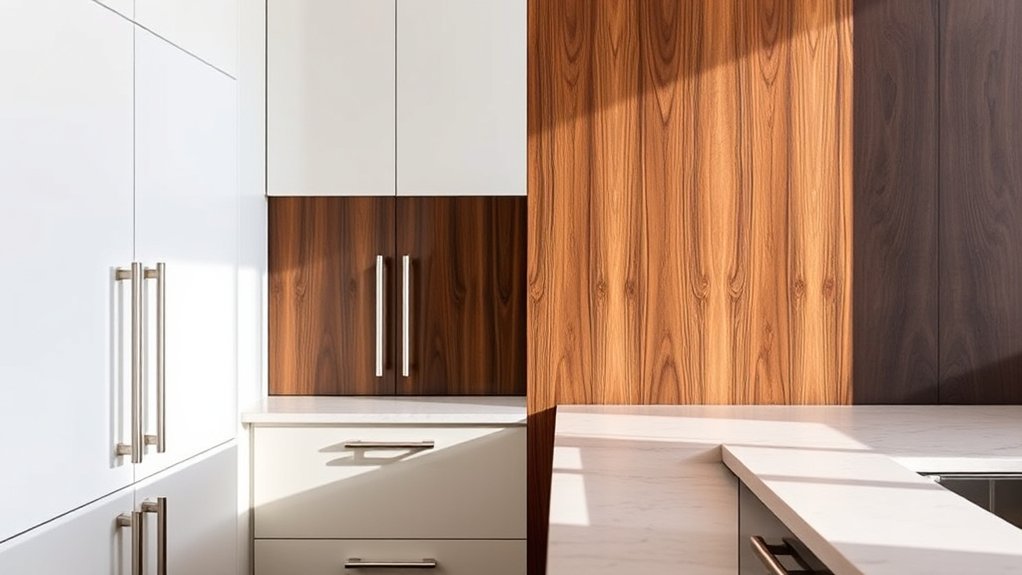
Choosing the right materials for your kitchen cabinets means balancing your style preferences with your budget. If eco-friendly options are important to you, consider materials like bamboo or recycled wood. They’re sustainable and often affordable, letting you create a stylish, environmentally conscious kitchen without overspending.
For a vintage look, reclaimed wood or cabinetry with distressed finishes are great choices. These materials add character and charm to your space. Plus, they can be cost-effective and help achieve a timeless style that fits many budgets.
Keep in mind that high-end materials like solid hardwoods or custom finishes tend to be more expensive. Weigh their benefits against your financial limits to make the best choice.
If you’re on a budget but want a stylish kitchen, options like laminate or veneer can mimic expensive woods at a lower cost. Ultimately, choosing materials that match both your style and financial goals will ensure your kitchen cabinets look great and suit your lifestyle.
Selecting a Cabinet Style and Design for Your Space
How do you select a cabinet style and design that perfectly complements your space? First, consider your overall color schemes. Light colors can make a small kitchen feel more open, while darker tones add warmth and sophistication.
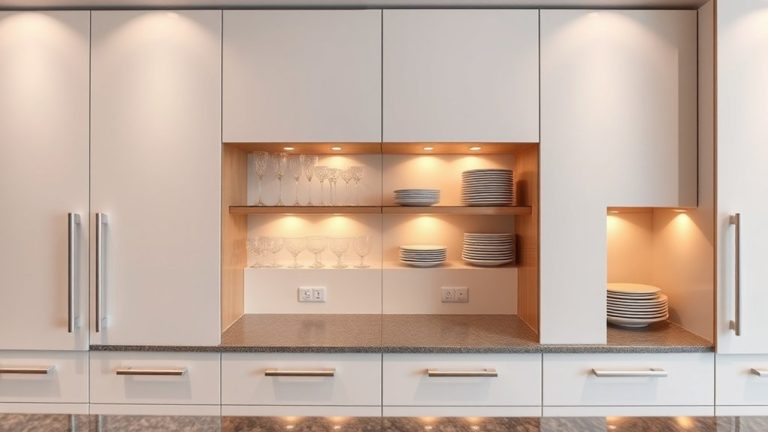
Think about the mood you want to create. Next, pay attention to cabinet lighting. Proper lighting highlights your chosen style and enhances the colors, making your cabinets a focal point.
For a modern look, sleek, minimal designs with clean lines work well. Traditional styles often feature ornate details and raised panels. If your space has a rustic vibe, go for distressed finishes and natural wood textures.
How Cabinet Size and Storage Options Affect Costs
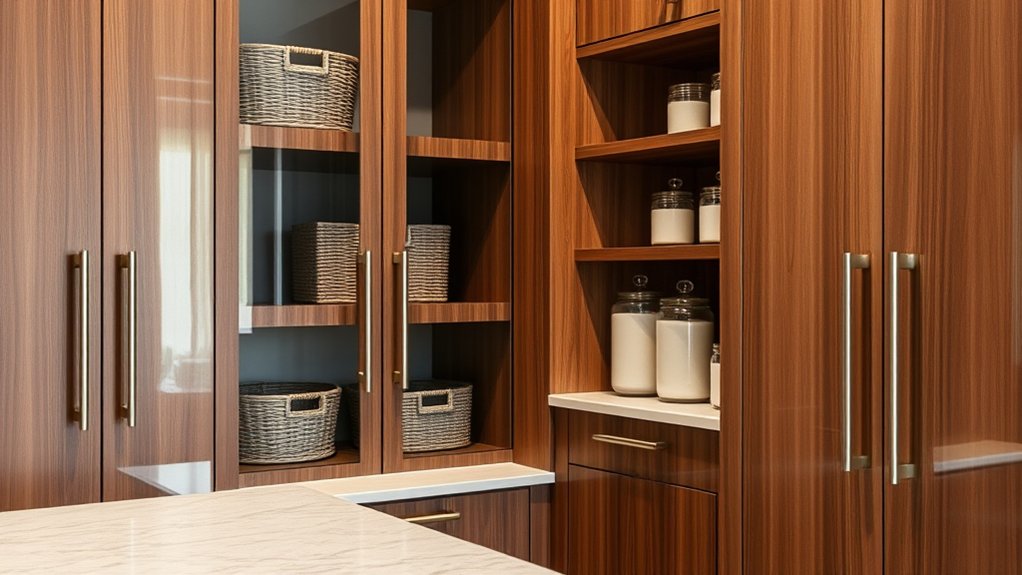
Ever wondered how the size of your cabinets and storage options influence your overall kitchen costs? Cabinet dimensions directly impact the price, as larger cabinets require more material and labor, increasing expenses. Opting for full-height or taller cabinets can add to your budget but also maximize storage.
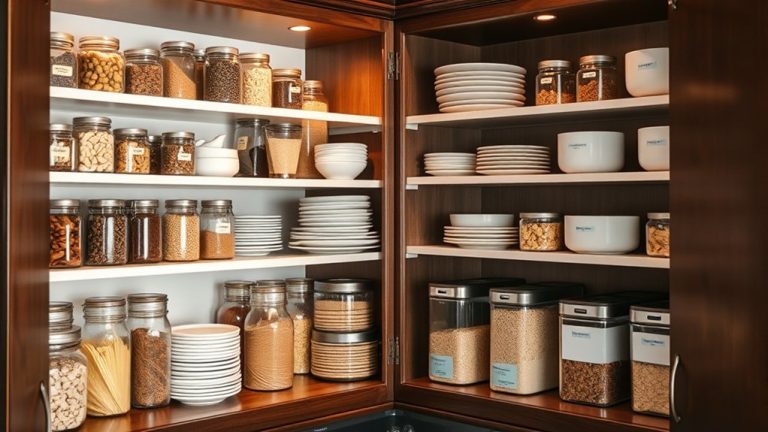
Storage configurations also play a role. Customized or innovative setups like pull-out shelves or built-in organizers may cost more upfront but can save you money long-term by improving functionality. Smaller cabinets are generally less expensive, but if you need more storage, you might consider combining several smaller units. Sometimes, this can be more costly than a few larger ones.
The complexity of your storage options, such as adding features like lazy Susans or multiple drawers, will also influence costs. Ultimately, finding the right balance between cabinet size and your storage needs ensures you get the functionality you want without overspending.
How Hardware and Finishes Influence Your Budget
The hardware and finishes you choose can really impact your kitchen budget. Options like knobs, pulls, and hinges vary a lot in price depending on their material and design.
High-end choices such as brass or custom hardware cost more but can give your kitchen a more polished look. Cheaper finishes like basic paint or laminate help keep costs down.
Premium finishes like lacquer, veneer, or specialty paints tend to be pricier. They also affect durability—spending more on quality finishes can save you money on repairs or replacements later.
Keep in mind that intricate hardware or elaborate finishes can add up quickly. Finding a balance between style and budget is key.
Simple, functional hardware paired with durable finishes can give you a stylish yet affordable kitchen. Your choices directly influence your overall costs, so think about both looks and longevity when selecting hardware and finishes.
Custom Cabinets: When and Why They Cost More
When you go for custom cabinets, you’ll usually see your costs go up. That’s because they’re made with higher quality materials and offer more personalized design options. Basically, the more complex the design and the more you want to customize, the more you’ll end up paying. It’s helpful to understand these factors so you can decide if investing in custom cabinets makes sense for your kitchen and your budget.
Material Quality and Selection
Why does material quality considerably impact the cost of custom cabinets? Higher-quality materials usually last longer and can handle daily wear and tear better.
Premium woods like oak, cherry, or maple cost more but give you strength and a polished look. Surface finishes also matter; high-end options like lacquer, polyurethane, or hand-applied stains boost appearance and protect the wood.
These finishes add to the overall cost, but cheaper materials or finishes might save money upfront. However, they can wear out faster or get damaged sooner, leading to replacements or repairs.
When choosing materials, you’re balancing durability and looks with your budget. Investing in better quality costs more upfront but pays off with better performance and a more refined look over time.
Design Complexity and Customization
Design complexity and customization significantly impact your cabinet costs because more detailed designs need extra planning, skilled craftsmanship, and precise manufacturing. When you customize, you might focus on features like better ergonomics for easier access, which can raise the price.
Choosing eco-friendly materials also tends to cost more due to their sustainability and higher quality. Custom cabinets often feature unique designs that match your style and space, making them stand out.
They may include advanced features like soft-close hinges or pull-out shelves for added convenience. Specialized finishes or eco-friendly materials also add to the overall cost.
All these factors require more labor and attention to detail, which increases the price. Customization lets you tailor your kitchen to your needs, but it does come with a higher investment, especially with eco-friendly and ergonomic options.
Installation Challenges That Can Increase Expenses
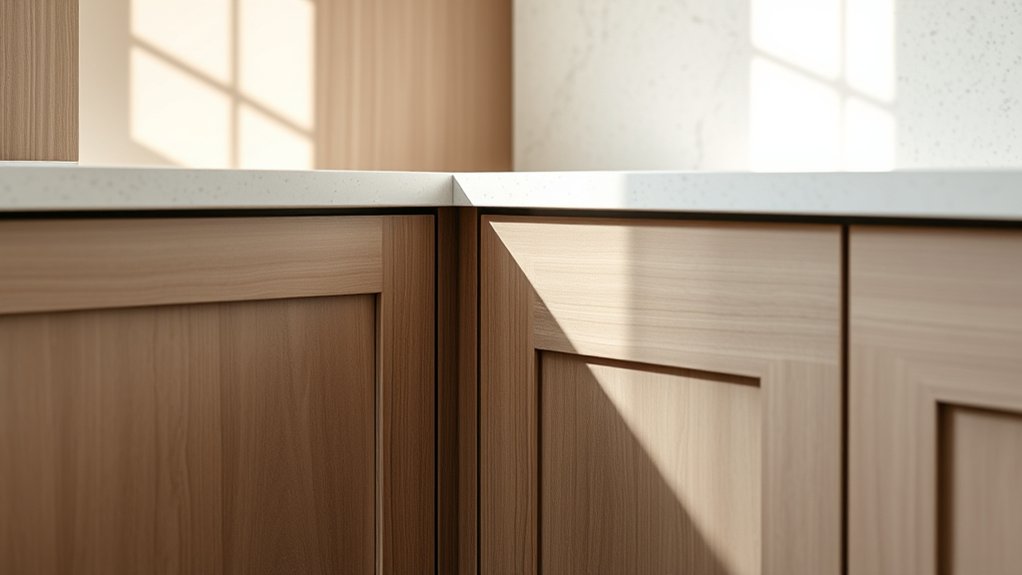
Installing new kitchen cabinets can become more expensive than expected if certain challenges aren’t anticipated. One common issue is countertop integration, which can require precise measurements and adjustments to ensure a seamless fit. If the existing countertop needs modification, it can add labor and material costs.
Plumbing adjustments also pose a significant challenge. If your plumbing isn’t in ideal locations, you may need to hire a plumber to move pipes or install new fixtures. These changes can delay installation and increase expenses.
Furthermore, uneven walls or floors might require shimming or leveling, adding to the complexity. If your cabinets or countertops are custom-made, the installation process can become even more complicated, requiring extra care and precision.
Failing to plan for these potential challenges can lead to unexpected costs and longer installation times. Being prepared for these issues helps you avoid surprises and keeps your project on budget.
Picking the Right Brand for Quality and Price
Picking the right brand is pretty important because it can influence both the quality of the product and how much you’ll spend. It’s a good idea to look into what other people are saying—check out reviews and the brand’s reputation to get a sense of how reliable they are.
You’ll want to find that sweet spot between price and durability so you’re not overspending but still getting something that lasts. And don’t forget to see if the brand offers good warranties and customer support—that way, your investment is protected in the long run.
Brand Reputation Significance
When choosing kitchen cabinets, understanding the importance of brand reputation can save you both time and money. A well-regarded brand often shows consistent quality and reliable customer support.
To evaluate this, consider factors like customer reviews. Reading feedback helps you gauge overall satisfaction and spot common issues.
Check the brand’s history to see how long they’ve been around and their reputation for durability. Also, look for industry awards or certifications that confirm quality standards.
Prioritizing reputable brands means investing in cabinets that are built to last and crafted well. A strong reputation usually means better customer service and post-sale support, making your purchase safer and more satisfying.
Price-Quality Balance
Finding the right balance between price and quality is key to getting the best value for your investment. When choosing kitchen cabinets, think about how they fit your kitchen layout and if they support appliance integration smoothly.
Cheaper options might save you money upfront but can compromise durability or style. This can affect your kitchen’s overall look and how well it functions.
On the other hand, higher-quality brands often offer better craftsmanship, sturdy materials, and improved features that suit your specific needs.
Warranty and Support
While it might be tempting to focus only on price and looks, paying attention to a brand’s warranty and customer support is key for long-term happiness. Good warranty coverage means repairs or replacements are handled without extra cost, saving you money and hassle.
Strong customer support ensures you can get quick help if something goes wrong, reducing disruptions. When choosing a brand, think about these factors:
- The length and details of the warranty, including what damages or defects are covered.
- Support options like phone, email, or in-store help.
- The brand’s reputation for friendly, helpful service.
Focusing on these areas helps you avoid future headaches and keeps your kitchen cabinets in great shape over time.
How Your Location and Supplier Choice Affect Costs
Your location and choice of supplier play a big role in determining your kitchen cabinet costs. Different regions influence prices due to local labor, material costs, and demand.
For example, urban areas with higher living costs tend to have more expensive cabinets, while rural areas might offer lower prices but fewer options. The reputation of your supplier also impacts costs.
Well-established, reputable suppliers often charge more but provide better quality assurance and craftsmanship. Cheaper or lesser-known suppliers might cut costs with lower-quality materials or less skilled labor, which can affect durability over time.
Local supply chain availability also influences pricing. If materials need to be imported or transported long distances, expect higher costs. When choosing a supplier, consider both cost and reputation.
A reputable local supplier may be more expensive initially but could save you money later through better durability and customer support, ultimately affecting your total cabinet expenses.
Frequently Asked Questions
How Long Does the Average Kitchen Cabinet Installation Process Take?
The average kitchen cabinet installation usually takes about 1 to 3 days.
The type of cabinet material, like wood or laminate, can influence how long it takes. More complex or custom options might need more time.
It’s a good idea to plan for a few days of work, especially if you’re replacing all your cabinets.
Things like the size of your kitchen and how complicated the project is can also impact the timeline.
Are There Eco-Friendly Cabinet Options Available Within a Budget?
Yes, eco-friendly cabinet options are available within a budget. You can choose sustainable materials like bamboo, recycled wood, or FSC-certified plywood, which often cost less than traditional options.
Budget-friendly choices include pre-finished or ready-to-assemble cabinets made from sustainable materials. Comparing prices and focusing on these options can help you find environmentally responsible cabinets that fit your budget.
You don’t have to sacrifice style or quality to be eco-conscious. With a little research, you can find beautiful, sustainable cabinets that work for your space and wallet.
What Warranties Are Typically Offered on Different Cabinet Types?
Think of warranty coverage as a safety net catching your investment. Most cabinet materials like solid wood or MDF come with warranties that last from 1 to 10 years.
Custom cabinets often have longer warranties, while stock options might have shorter coverage. Always check the warranty details so you understand what’s covered.
This could include things like material defects or workmanship issues. Knowing this helps ensure your cabinets are protected against unexpected problems down the road.
How Can I Maximize Storage Without Increasing Costs?
You can maximize storage without increasing costs by choosing custom finishes that add visual appeal without extra expense. Incorporate smart hardware upgrades like pull-out shelves or soft-close hinges to improve functionality.
Use vertical space efficiently with taller cabinets or open shelving. These options make the most of your available area without adding to your budget.
Opt for versatile storage solutions like adjustable shelves. They let you customize your space as needed, keeping things organized and accessible.
These strategies help improve your kitchen’s storage and style while keeping costs reasonable. You’ll stay organized and look great without breaking the bank.
Do Open-Concept Kitchens Affect Cabinet Pricing Differently?
Open-concept kitchens often lead to higher cabinet costs because of their larger size and the need for seamless design integration. You might pay more for custom cabinetry that blends well with the overall space, ensuring a cohesive look.
The open concept impacts pricing by requiring quality materials and finishes that complement the design. This makes cabinets both functional and visually appealing, which can increase your overall investment.
Conclusion
So, while it’s tempting to chase the cheapest cabinets, remember that your kitchen’s look and longevity often depend on what you’re willing to spend.
Ironically, skimping now might mean shelling out more later for repairs or replacements.
By understanding these factors, you’ll make smarter choices. Maybe even enjoy the process a bit.
A beautiful, functional kitchen isn’t just about saving money. It’s about investing in a space you’ll love for years to come.