6 Simple Steps to Measure New Kitchen Cabinet Doors
Getting your new kitchen cabinet doors just right can be tricky, and you’re not alone in feeling a bit overwhelmed. Many people struggle with measuring accurately, which can lead to doors that don’t fit properly.
To measure your kitchen cabinet doors, start by using a stable surface and a tape measure to get accurate width and height. Measure from hinge side to opposite edge, including any overlay style, and mark the points precisely.
Check both top and bottom for consistency, accounting for door thickness. Double-check your measurements to avoid errors.
If you keep going, you’ll find detailed tips to perfect your measurements and guarantee a flawless fit.
Key Takeaways
- Use a flat, stable surface to accurately measure the width and height of your existing cabinet doors.
- Measure from outer edge to outer edge, keeping the tape straight and aligned for the best results.
- Record measurements near the hinges and opposite edges to account for any hardware influences.
- Decide on a consistent gap of about 1/8 inch, then measure from the top to where the hardware will sit.
- Think about door thickness and your overlay style to figure out hinge placement and ensure a proper fit.
Why Accurate Measurement Matters When Replacing Kitchen Cabinet Doors
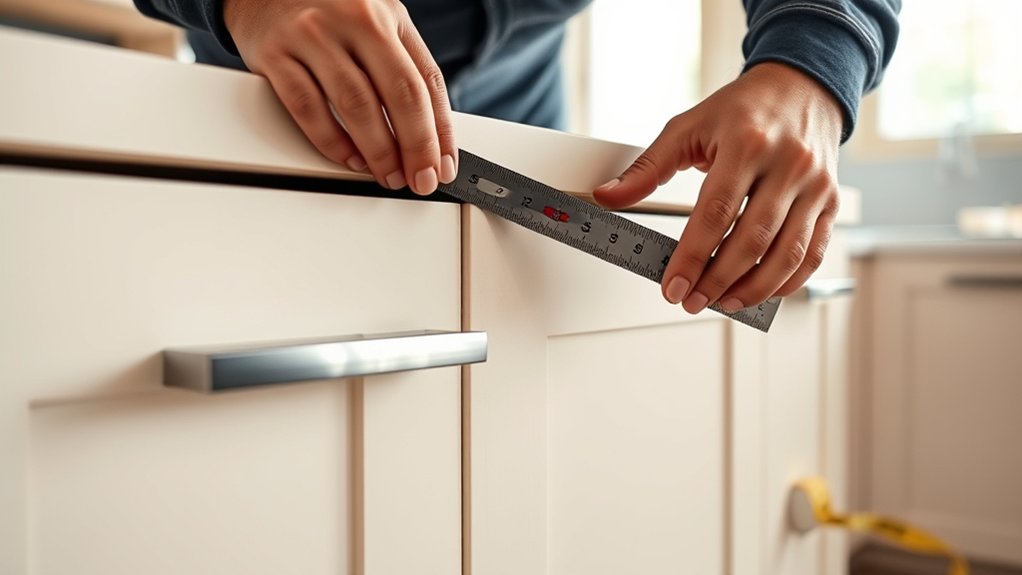
Accurate measurement is key when replacing kitchen cabinet doors because even small mistakes can lead to doors that don’t fit right. Ill-fitting doors can look unprofessional and may not work properly.
Getting the measurements right helps your new doors line up perfectly with your cabinets, giving your kitchen a sleek, cohesive look that matches current decorating trends. If your measurements are off, gaps or uneven fits can make your kitchen look less polished.
Proper measurements also make choosing the right hardware—like handles, knobs, and pulls—much easier. When your measurements are accurate, you can pick hardware that fits seamlessly and enhances your style.
If your measurements aren’t precise, hardware placement can be tricky, making opening and closing awkward. Taking careful measurements from the start helps you avoid costly mistakes, saves time, and keeps your kitchen looking stylish and functioning smoothly.
How to Measure the Width of Your Cabinet Doors Correctly
To measure the width of your cabinet doors correctly, start by finding a flat, stable surface to work on. This helps ensure your measurements are accurate and consistent.
Next, carefully open the door and look at the hardware, like the hinges, to see where the door attaches. This will help you identify the full width, including any gaps.
Here’s how to do it:
- Use a tape measure or a ruler to measure from one outer edge of the door to the other, keeping the tool straight.
- Record the measurement, making sure to measure at the widest point across the door.
- Check near the hinges—sometimes hardware can affect the width—so measure both from the hinge side and the opposite edge for accuracy.
Getting the right width measurement is key to making sure your new cabinet doors fit perfectly, especially when planning for hinges and hardware placement.
Finding the Right Height for Your New Cabinet Doors
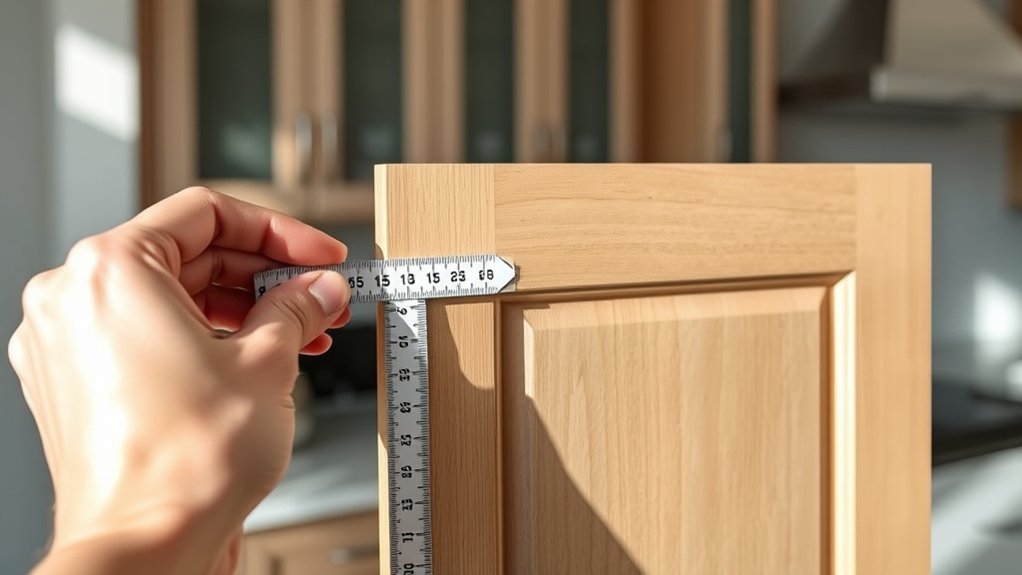
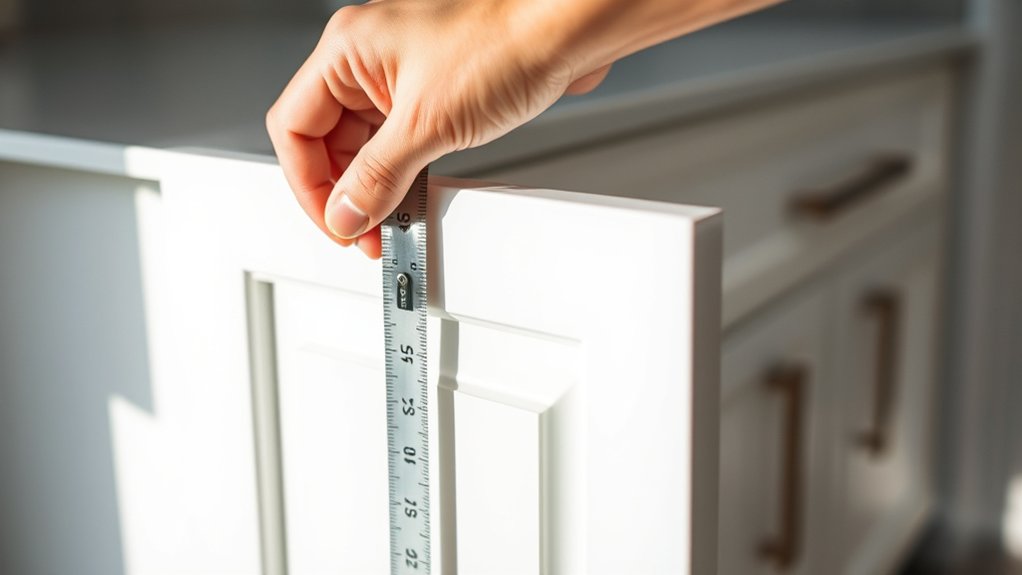
When choosing the right height for your new cabinet doors, it’s important to measure carefully to ensure a seamless fit and balanced look. Start by figuring out the gap you want between the door and the cabinet frame, which is usually about 1/8 inch for a clean appearance.
Keep in mind that where you place the hinges is key. They are typically installed 1 to 2 inches from the top and bottom edges. This helps the doors hang evenly and work smoothly.
Also, think about your hardware, like handles or pulls, since they can affect the height. Measure from the top of the cabinet to where you want the hardware to sit, so nothing gets in the way.
Once you’ve figured out the right height, mark these points carefully on the doors before drilling or attaching hardware. Accurate measurements will make your cabinet doors hang perfectly with consistent alignment and a professional look.
Tips for Using a Tape Measure for Precise Results
Using a tape measure correctly is key to getting accurate measurements for your cabinet doors. Keep these tips in mind to ensure you’re precise.
First, extend the tape fully and lock it in place. This helps keep it steady, especially for wider doors or hardware that sticks out. It prevents slack that can throw off your measurement.
Next, always measure from edge to edge. Avoid gaps caused by uneven cabinet surfaces or decorative hardware that might protrude. Accurate contact points matter.
Finally, double-check your measurements by taking at least two readings from different spots. This is especially helpful if your cabinets have intricate designs or irregular surfaces.
Considering Door Thickness and Overlay Styles in Your Measurements
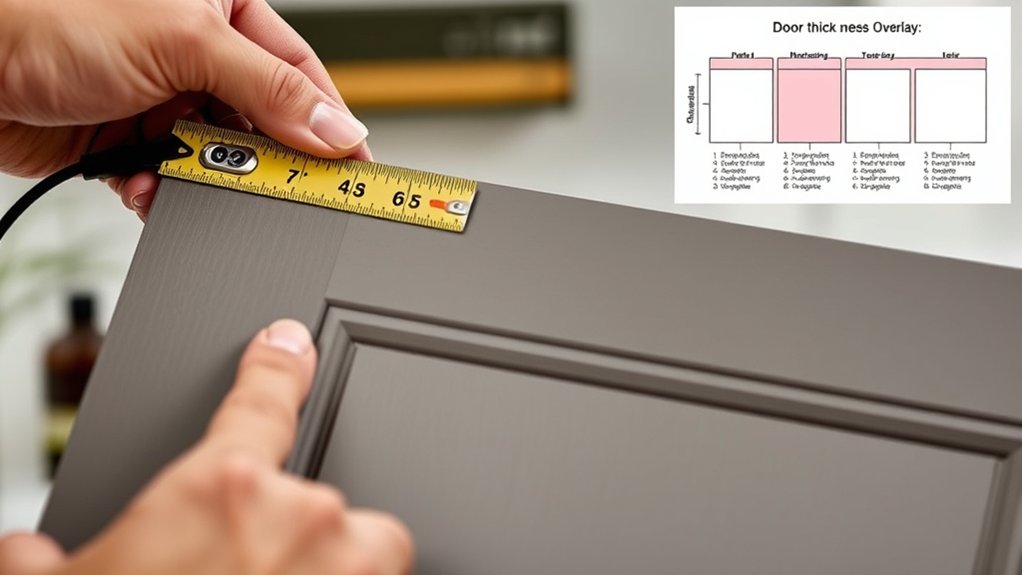
When you’re measuring for new cabinet doors, it’s important to think about the thickness options you have. The thickness can really change how the door fits and how it looks once it’s installed. So, making sure you get the right measurements takes this into account.
Also, don’t forget about the overlay style you choose. The overlay determines how much of the cabinet frame is visible once the door is on. Different styles can affect your measurements, so it’s good to be precise. Using accurate techniques helps you factor in these details, ensuring your new doors fit perfectly and look great.
Understanding Door Thickness Options
Have you thought about how door thickness affects your cabinet measurements? The thickness of your cabinet doors can influence hinge placement and how the doors look overall. Thicker doors often need different hinges or adjustments to ensure a proper fit.
Most cabinet doors are ¾ inch thick, but some styles can range from ½ inch to 1 inch. This variation impacts hinge placement and how smoothly the doors open and close.
The material of your cabinet doors—like solid wood, MDF, or plywood—also affects thickness. Different materials offer varying durability and weight, which can influence your choice.
If you’re going for full overlay doors that sit flush with the cabinet frame, precise measurements based on door thickness are essential. This ensures everything fits and functions properly.
Knowing your options helps you pick the right door thickness for your cabinet material. It also guarantees proper hinge alignment for a clean, professional look.
Overlay Style Impact
Overlay style really impacts how you measure for new cabinet doors, especially when thinking about door thickness. Different styles—full, partial, or inset—change how the doors sit on the cabinet frame, which affects your measurements.
Full overlay doors cover most of the frame, so you need precise measurements to get a proper fit and a seamless look. Partial overlays show more of the frame and need different spacing considerations.
When choosing hardware, think about how the overlay affects handle placement and visibility. Also, color coordination matters—matching door styles with hardware and finishes creates a cohesive look.
Getting accurate measurements of your overlay style is key. It ensures your new doors fit perfectly, complement your cabinetry, and enhance your overall kitchen design.
Accurate Measurement Techniques
To guarantee your new cabinet doors fit perfectly, it’s important to consider both door thickness and overlay style when measuring. Accurate measurements help create a seamless look, especially when you’re thinking about decorative hardware and kitchen lighting.
Here’s what you should do:
- Measure the full door height and width, including any overlay, to ensure it fits well and clears everything.
- Take into account door thickness by measuring from the front to the back, adjusting for your overlay style to avoid gaps.
- Double-check your measurements with a tape measure, keeping in mind how decorative hardware might affect door placement and the lighting that highlights your cabinets.
Following these steps will help you get a precise fit, making installation easier and boosting your kitchen’s overall look.
Double-Check Your Measurements Before Ordering New Doors
Before placing your order, it’s really important to double-check your measurements to make sure everything fits perfectly. Small errors can lead to mismatched hinge types or issues with your countertops.
To get accurate measurements, measure multiple times and compare your notes. It’s better to be safe than sorry.
Here’s a quick checklist:
| Step | What to Check | Why it Matters |
|---|---|---|
| 1 | Width and height | Ensures doors fit properly |
| 2 | Depth of cabinet | Affects hinge placement and clearance |
| 3 | Door overlay | Determines hinge type needed |
Double-check these dimensions carefully. Make sure your measurements match your existing cabinet style, especially if you’re choosing new hinges or countertops.
Frequently Asked Questions
Can I Measure Cabinet Doors Without Removing Them?
Yes, you can measure cabinet doors without removing them. Just use a tape measure to note the height and width directly on the door surface. Make sure the tape is straight and snug against the door for an accurate measurement.
Keep decorating tips in mind by choosing paint or finishes that match your space. Regular cabinet maintenance, like tightening hinges, helps keep doors aligned and makes future measurements more precise.
What Tools Are Best for Measuring Cabinet Doors Accurately?
You should use measuring tools like a tape measure or a ruler to get accurate dimensions of your cabinet doors. A tape measure is flexible and great for measuring length, width, and height, so you get precise measurements.
For smaller or detailed areas, a ruler or a combination square works really well. Always double-check your measurements to make sure they’re correct.
That way, your new doors will fit perfectly and look great in your kitchen.
How Do I Account for Warping or Uneven Surfaces?
When measuring for new cabinet doors, you should account for warping correction and surface leveling.
First, check for any warping by inspecting the doors with a straight edge or level. If surfaces are uneven, use shims or a leveling compound to smooth them out before measuring.
Take multiple measurements at different points to guarantee accuracy, adjusting for any irregularities so your new doors fit perfectly despite warping or uneven surfaces.
Should I Measure Multiple Doors or Just One?
You should measure multiple doors to ensure accuracy and account for any variations. Doors can warp or shift slightly over time, which can affect how they fit and how hardware works.
By measuring several doors, you can spot any inconsistencies and choose the most accurate dimensions for your replacements. This way, you’re less likely to run into issues during installation.
Taking multiple measurements helps make sure your new cabinet doors will align properly, making the whole project smoother and more successful.
How Often Should I Re-Measure Before Ordering?
You should re-measure your cabinet doors whenever you notice any changes in their size or if you’re unsure about your previous measurements. Using reliable measuring tools helps ensure your measurements stay consistent.
It’s a good idea to measure at least twice to confirm accuracy before placing your order. This way, you can avoid costly mistakes and make sure your new doors fit perfectly.
Regular re-measurements help keep your project on track and guarantee a seamless upgrade.
Conclusion
By mastering these simple steps, you’ll transform your kitchen into a seamless space, with each measurement fitting perfectly.
Think of your new cabinet doors as the finishing touch on a masterpiece—precise, deliberate, and full of potential.
When you double-check your measurements, you’re tuning your tools for success and making sure everything lines up just right.
This extra care ensures your kitchen’s new look will shine brighter than ever, truly a work of art.
Measuring your cabinet doors carefully is the key to a smooth, beautiful renovation.