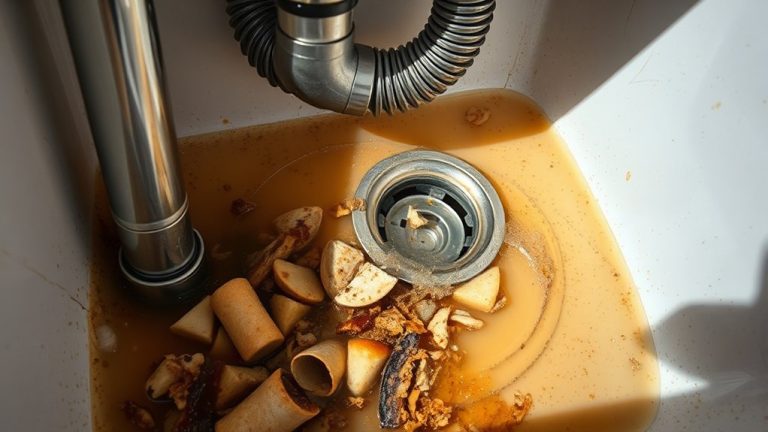
10 Steps to Unclog Your Double Kitchen Sink With Standing Water
Dealing with a double kitchen sink filled with standing water can be super frustrating. You’re not alone—many people struggle with clogs, especially in busy kitchens where things get messy fast.
Luckily, there are simple steps you can take to clear things up and get your sink draining smoothly again.
If your double kitchen sink is filled with standing water, start by inspecting for visible debris and trying a plunger on both sides.
Gather tools like a drain snake, gloves, and a bucket, then remove and clean the trap underneath.
Use a plumbing snake to clear stubborn blockages deeper in the pipe.
Clean your overflow and air gap, then flush the drain with hot water and a bit of detergent.
Test the drain, and if it persists, professional help may be needed—more tips follow if you continue.
Key Takeaways
- Turn off the disposal and remove any visible debris from both sink drains for an initial look.
- Use a plunger on each sink opening with a good seal to push out the standing water.
- Insert a drain snake into the drain and twist it to break up stubborn clogs deeper in the pipe.
- Remove and clean the trap to clear out any debris that might be causing the blockage.
- Flush the drain with hot water and a baking soda-vinegar mixture to dissolve grease and clear remaining obstructions.
What Causes a Double Kitchen Sink to Clog?
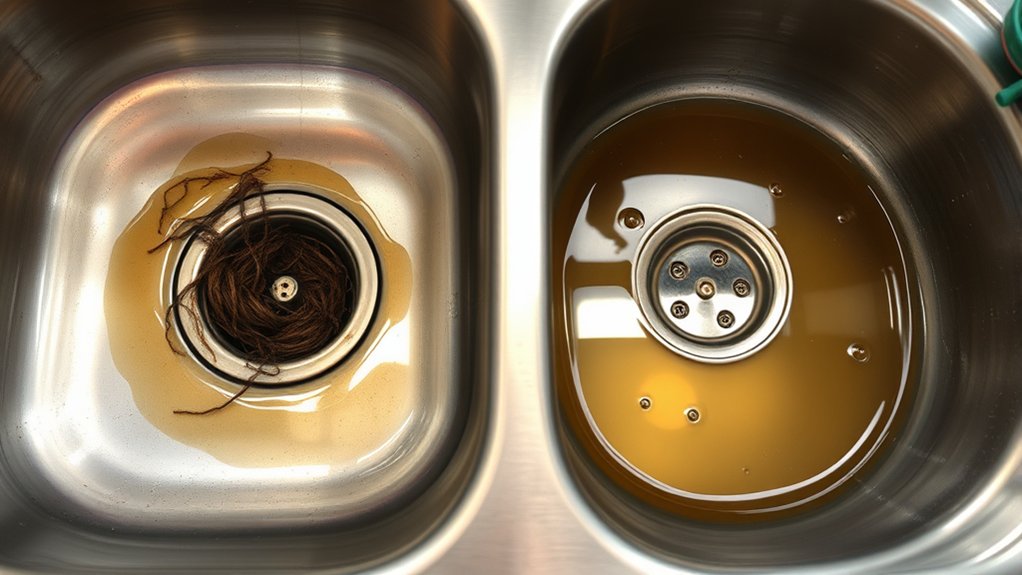
Clogs in double kitchen sinks often happen because debris, grease, and food particles build up in the pipes over time. When you use your sink, leftover food, soap scum, and oils can start to stick to the pipe walls.
If you don’t clean the drain regularly or practice proper maintenance, these materials can cause blockages by narrowing the passage. Poor kitchen decor choices, like decorative sink covers or improper strainers, can trap debris and make clogs worse.
Neglecting to clear food scraps or grease from dishes before washing also speeds up buildup. Remember, keeping your sink in good shape isn’t just about looks; it’s about preventing these common clogs.
Regularly inspecting and cleaning your pipes, along with mindful waste disposal, helps keep drainage smooth. Proper maintenance keeps your kitchen running efficiently and avoids emergency fixes.
Quick Fixes to Try Before You Start
Before grabbing any tools, take a quick look in the disposal area to see if there’s any obvious blockage or debris. Sometimes, a simple visual check can save you a lot of trouble.
Then, give the sinks a try with a plunger—both of them, just to be safe. Sometimes, a good plunge is all it takes to loosen up a minor clog without needing to go any further. These quick fixes can often clear up minor obstructions and help you avoid a more complicated repair.
Check the Disposal Area
Have you checked the disposal area yet? Sometimes, a simple blockage there causes standing water in your sink. Start by inspecting the disposal for any visible debris or jammed objects.
Make sure the disposal is turned off before sticking your hand in to clear out any obstructions. Regular disposal maintenance is key to clog prevention, so clean the area and remove buildup.
If you notice a foul smell or persistent clog, run water and turn on the disposal briefly to see if it clears the blockage. Avoid forcing anything down, which could make the clog worse.
Addressing issues in the disposal promptly helps keep proper drainage and prevents future clogs. This saves you time and potential plumbing costs down the line.
Use a Plunger First
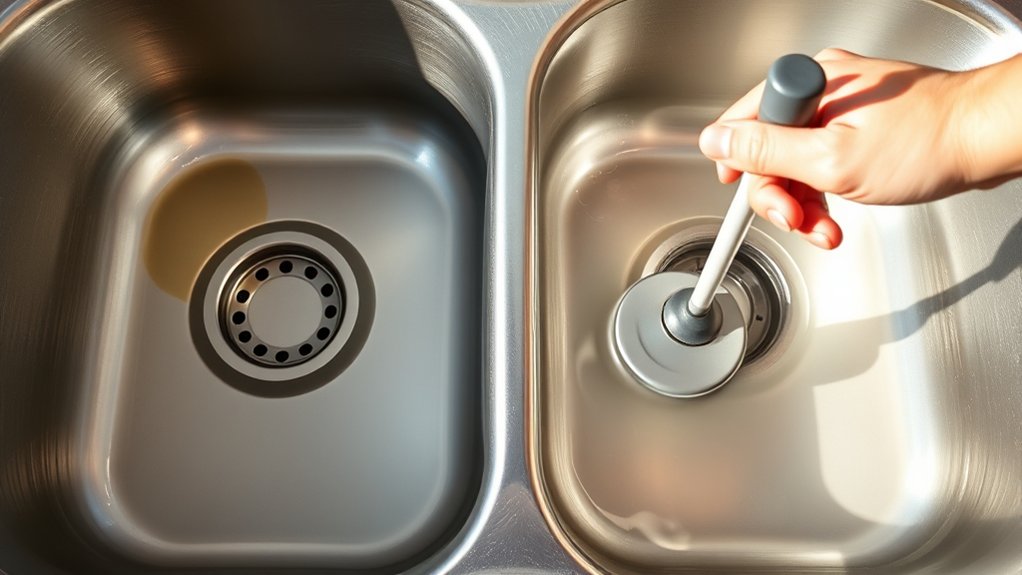
Start by grabbing your plunger and making sure you have a good seal over the drain openings. Cover both sink openings completely and create a tight seal with the plunger.
When you push and pull, air pressure builds up and helps dislodge the clog. For the best results, focus on steady, vigorous plunges and keep consistent pressure without lifting the plunger.
Use a rubber gasket if you have one, as it makes a better seal. Proper technique maximizes air pressure, increasing the chances of clearing the blockage.
If the water starts to drain or bubbles appear, you’ve likely loosened the clog. Remember, a good seal and steady effort are key.
If the clog persists, you can try other methods, but starting with a plunger is often your quickest fix.
Gather Essential Tools and Supplies for Unclogging
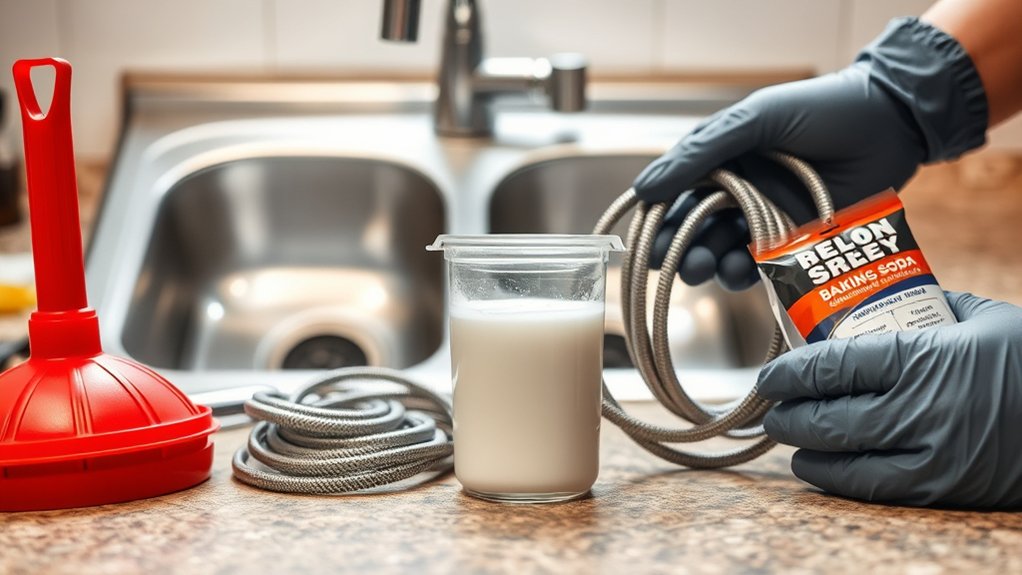
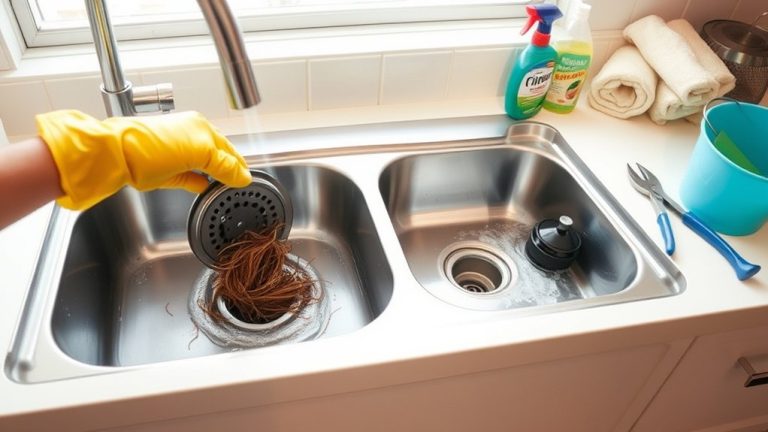
Before you get started, it’s a good idea to gather all the tools and supplies you’ll need. Having a plunger, a drain snake, some gloves, and a bucket on hand will make the whole process much easier.
Make sure to keep these items nearby so you can reach them quickly when you’re ready to tackle the clog. Storing them in a handy spot will save you time and hassle later on.
Necessary Tools Checklist
To effectively unclog your double kitchen sink, gathering the right tools is essential. Having the proper supplies makes sink maintenance easier and helps prevent damage to your kitchen decor. You’ll need a few basic items:
- A plunger designed for sinks
- A drain snake or auger
- Rubber gloves and a bucket
These tools help you tackle clogs without resorting to harsh chemicals that could harm your pipes or kitchen decor. A plunger creates pressure to dislodge blockages, while a drain snake reaches deeper into the pipes. Rubber gloves protect your hands during the process, and the bucket catches any water or debris.
Ensuring you have these tools ready will make your unclogging process smoother and keep your double sink functioning properly.
Safe Supply Storage
Having your essential tools and supplies stored safely and within easy reach ensures you’re prepared when a clog strikes. Proper management and storage prevent accidents and help you access items quickly in emergencies.
Organize your tools in a designated spot, like a labeled box or cabinet, to avoid misplacing them. Keep hazardous substances, such as drain cleaners, out of children’s reach for added safety.
Regularly check your supplies for expiration or damage. Use the table below to keep your storage tidy and efficient:
| Item | Location | Safety Precautions |
|---|---|---|
| Plunger | Under sink cabinet | Keep dry, avoid spills |
| Gloves | Drawer | Store away from chemicals |
| Drain snake | Toolbox | Handle carefully |
| Chemical cleaners | High shelf | Locked, out of children’s reach |
How to Remove and Clean Your Double Kitchen Sink Trap
Removing and cleaning your double kitchen sink trap is pretty simple and can really help improve drainage. Just place a bucket underneath the trap to catch any water or debris before you start.
Use a wrench to loosen the slip nuts on both ends of the trap, then carefully remove it. Take a good look inside for hair, grease, or food particles, and give it a thorough clean.
Remember these tips for trap cleaning: wear gloves for safety and hygiene, and grab an old toothbrush or brush to scrub away any buildup. Also, check for cracks or damage and replace the trap if needed.
Cleaning your traps regularly helps prevent clogs and odors. Keeping them free of debris also lowers the chances of future blockages. Once it’s clean, reassemble the trap by tightening the slip nuts securely to avoid leaks.
This simple step keeps your sink flowing smoothly and helps maintain your plumbing system in good shape.
Using a Plumbing Snake to Dislodge Stubborn Clogs
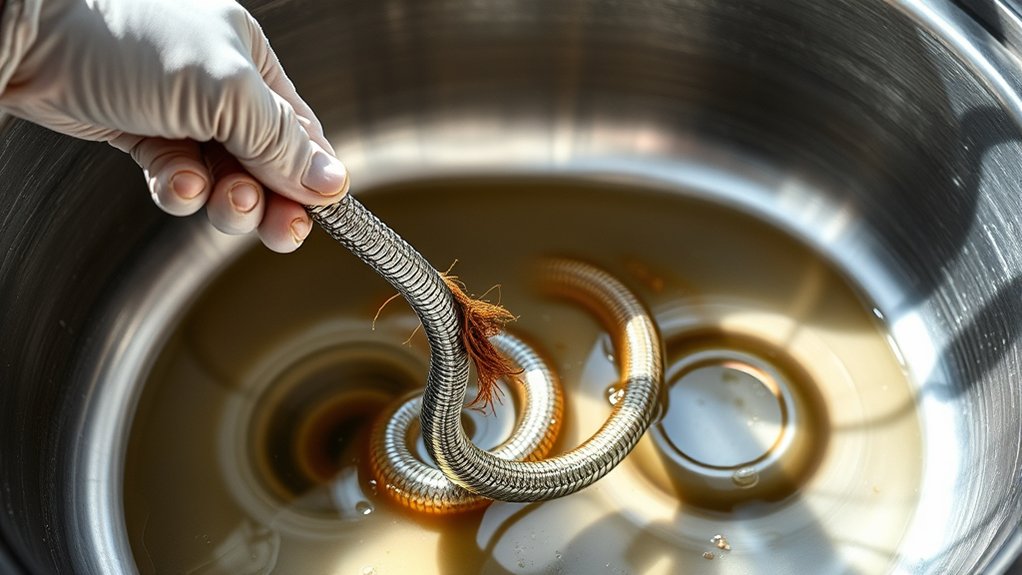
After cleaning out the trap, if your sink still drains slowly or water remains standing, a stubborn clog might be deeper in the pipes. Using a plumbing snake is a good way to tackle those tough clogs.
Insert the snake into the drain, turning the handle clockwise to break up or hook the clog. Keep pushing until you feel resistance, then rotate and pull out the snake along with any debris.
Here’s a quick guide to using a plumbing snake:
| Step | Action |
|---|---|
| 1 | Insert the snake into the drain opening |
| 2 | Turn the handle to dislodge the clog |
| 3 | Push further if you feel resistance |
| 4 | Pull out the snake and debris |
How to Use Baking Soda and Vinegar for Natural Drain Cleaning
Wondering how to naturally clear a stubborn drain without harsh chemicals? Using baking soda and vinegar is a simple, eco-friendly method that uses household remedies to break down clogs.
First, pour about half a cup of baking soda directly into the drain. Follow this with half a cup of vinegar; you’ll see bubbling and fizzing, which helps loosen debris. Cover the drain with a plug or cloth to keep the reaction concentrated.
Pour baking soda, then vinegar, cover to trap the fizz—let it work before rinsing with hot water.
Wait 15-30 minutes for the mixture to work its magic. Then, flush with hot water to clear out the loosened clog.
Remember, this method is most effective for minor blockages and is gentle on your pipes. For best results, consider these points:
- Use boiling water for added cleaning power
- Repeat the process if needed
- Combine with other household remedies for stubborn clogs
This approach offers an eco-friendly alternative to chemical drain cleaners.
Make Sure Your Drain’s Air Gap and Overflow Are Clean
Hey, it’s a good idea to check your drain’s air gap regularly. Just a quick peek can help prevent blockages and keep everything draining smoothly. If you notice any debris or buildup, give it a little clean so water can flow freely.
And don’t forget about the overflow openings! Make sure they’re clear of any gunk or debris so water doesn’t get stuck and cause problems. Keeping these parts clean is a simple way to avoid clogs and ensure your sink stays in tip-top shape.
Inspect Air Gap Regularly
Regularly inspecting the air gap and overflow helps keep your drain clear and prevents backups. Proper maintenance makes sure water flows smoothly and reduces the chance of clogs.
Look for debris, soap scum, or mineral buildup that can block the openings. Check for signs of slow drainage or blockages, and clear any debris around the air gap and overflow openings.
Make sure all components are securely connected. Regular inspections help catch problems early and save you from costly repairs down the line.
Keeping the air gap and overflow clean is key to preventing clogs and maintaining good drainage. Make these checks part of your routine to keep your double sink working smoothly.
Clear Overflow Openings
To keep your drain clear, it’s important to regularly clean the overflow openings and air gap. This helps prevent clogs and keeps water flowing smoothly.
Check the overflow openings in your sink and remove any soap scum, grime, or blockages that might slow drainage. Use a small brush or pipe cleaner to keep these areas clean.
Maintaining the overflow openings improves air flow and prevents standing water. It also helps your sink look tidy and well-maintained.
If you neglect this step, water can back up and cause unsightly buildup. Make it a habit to inspect and clean the overflow openings periodically.
Doing so ensures your double kitchen sink functions efficiently and stays free of clogs.
Flush Your Drain With Hot Water and Detergent
If your sink is still draining slowly despite previous efforts, flushing the drain with hot water and detergent can help break down grease and soap buildup. This simple step supports your drain maintenance and keeps your cleaning schedules effective. Hot water dissolves greasy residues, while detergent helps lift stubborn grime from pipes.
To get the best results, consider these tips:
- Use boiling water carefully to avoid damaging pipes.
- Add a few drops of dish soap or a mild detergent to boost cleaning.
- Follow up with cold water to rinse away loosened debris.
Regularly flushing your drains with hot water and detergent prevents buildup and reduces the risk of future clogs. Incorporating this into your routine helps keep drainage efficient and reduces the need for harsher chemicals or professional help. Remember, consistent drain maintenance saves you time and money over the long run.
Test Your Drain and Know When to Call a Plumber
After flushing your drain with hot water and detergent, it’s important to check if the clog is gone. Fill the sink and run water to see if it drains smoothly. If water still pools or drains slowly, the blockage is still there.
At this point, think about how your kitchen decor affects your decision. A pristine space might make you hesitant to try DIY fixes that could cause damage. If you notice persistent clogs or water standing after several attempts, it’s time to call a plumber.
Also, consider appliance maintenance. Regular checks of your plumbing system can help prevent future problems. Trying to fix stubborn clogs beyond this point could risk damaging pipes or fixtures, especially if you’re not familiar with plumbing.
Knowing when to call a professional ensures your double sink stays functional without costly repairs or messing up your kitchen’s look. When in doubt, a licensed plumber will get the job done safely and efficiently.
Tips for Preventing Future Double Sink Clogs
Preventing double sink clogs starts with mindful habits that keep debris and grease from building up in your pipes. Regularly scrape food scraps into the trash or compost, and avoid pouring grease down the drain, as it solidifies and causes blockages.
Prevent double sink clogs by avoiding grease and scraping food scraps into the trash or compost.
Maintaining your appliances also helps prevent clogs. Clean your garbage disposal and drain filters frequently to catch buildup early.
To keep things flowing smoothly, consider these tips:
- Use drain strainers to catch hair, soap scum, and food particles.
- Incorporate drain-friendly kitchen decor, like covered waste bins, to reduce waste disposal mishaps.
- Schedule routine appliance maintenance to keep your plumbing in top shape.
Frequently Asked Questions
How Often Should I Clean My Double Kitchen Sink Drain?
You should clean your double kitchen sink drain at least once a month to prevent buildup and odors. Regular maintenance helps keep everything running smoothly.
You can pour hot water down the drains, use a mixture of baking soda and vinegar, or remove debris promptly. These simple steps can make a big difference.
If your kitchen gets a lot of use, consider cleaning the drains more often. Staying consistent with your cleaning routine helps avoid clogs and keeps your sink hygienic.
Can Hair Cause Double Sink Clogs More Than Food Debris?
Hair buildup can cause double sink clogs more than food debris because hair easily tangles and sticks in pipes, forming dense blockages. Visualize hair strands entwining with soap scum and grease, creating a stubborn clog.
While food debris also contributes, it typically flushes away more easily if you rinse thoroughly. Regularly cleaning your drains and avoiding hair in the sink can help prevent these stubborn clogs from forming.
Are Chemical Drain Cleaners Safe for Double Kitchen Sinks?
Chemical drain cleaners aren’t always safe for double kitchen sinks because of chemical safety concerns. They can damage pipes or fittings over time, especially if used improperly.
For better drain maintenance, consider natural solutions like baking soda and vinegar, or try a plunger first. Always read product labels carefully, and avoid using harsh chemicals too often to keep your pipes healthy and working smoothly.
What Signs Indicate a Severe Clog in My Double Sink?
You’ll notice severe clogs if your double sink drains very slowly or not at all, and if standing water persists despite attempts to clear it.
Gurgling sounds or foul odors also signal a serious issue.
In such cases, a plumbing inspection can pinpoint blockages. If pipes are damaged or heavily clogged, pipe replacement might be necessary to restore proper drainage and prevent future problems.
How Long Does It Typically Take to Unclog a Double Sink?
They say “a stitch in time saves nine,” and that’s true for sink issues. Unclogging your double sink usually takes about 30 minutes to an hour if you have the right plumbing tools.
Quick sink maintenance and prompt action stop minor problems from turning into bigger ones. Using a plunger or drain snake can help get the job done faster.
Be patient, and your sink will be draining smoothly again in no time!
Conclusion
Just like a wise old oak withstands storms, your drain can stay clear with proper care. By following these steps, you’re wielding the tools of a seasoned plumber, preventing future backups and keeping your kitchen flowing smoothly.
Remember, a little maintenance now saves you from bigger messes later. Think of it as tending your own digital garden. Stay vigilant, and your double sink will serve you well, rain or shine.
Keeping your double kitchen sink clear with standing water is easier than you think—just follow these simple steps.