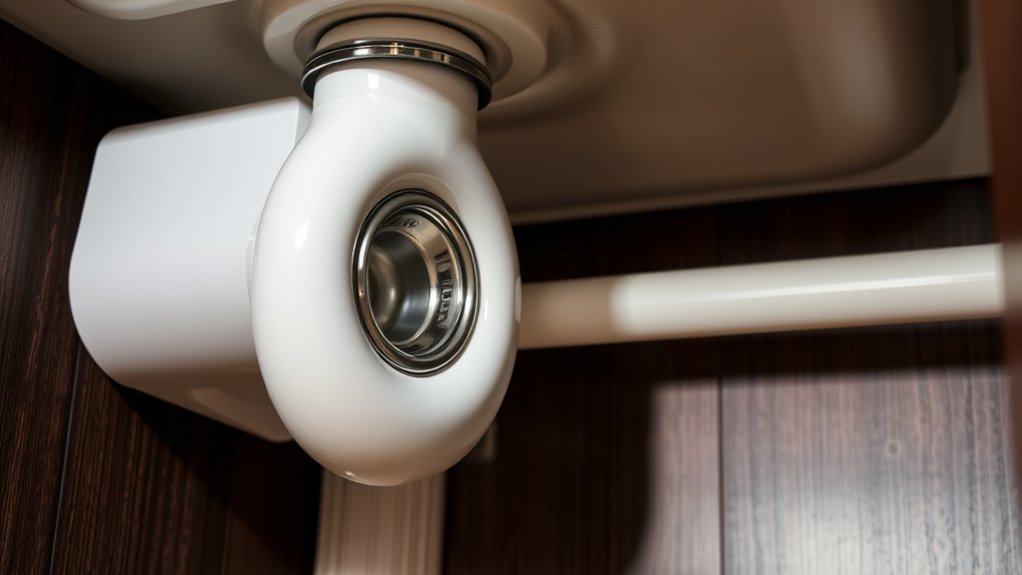
What Size P Trap for Kitchen Sink?
Are you tired of dealing with leaks, bad odors, or drainage problems under your kitchen sink? You’re not alone—many people struggle with choosing the right P trap size for their setup. Finding the perfect fit can seem tricky, but getting it right makes a big difference.
For a kitchen sink, the most common P trap size is 1 1/2 inches in diameter, which fits standard drain openings and waste lines. Make sure to measure your sink’s drain outlet and the distance to the wall or floor to select the right length and connection type.
Using the proper size prevents leaks, odors, and drainage issues. If you want to learn more about selecting and installing the perfect trap, keep exploring the details below.
Key Takeaways
- Common P trap sizes for kitchen sinks are 1 1/4-inch and 1 1/2-inch diameters.
- Measure your sink drain outlet and pipe length to pick the right trap size.
- Make sure the trap’s threading and connection type match your existing plumbing for a proper fit.
- Use a 1 1/2-inch trap for standard kitchen sinks with larger drain openings.
- Check the space under your sink to ensure the trap’s length fits and won’t cause drainage problems.
Why P Trap Size Is Important for Your Kitchen Sink
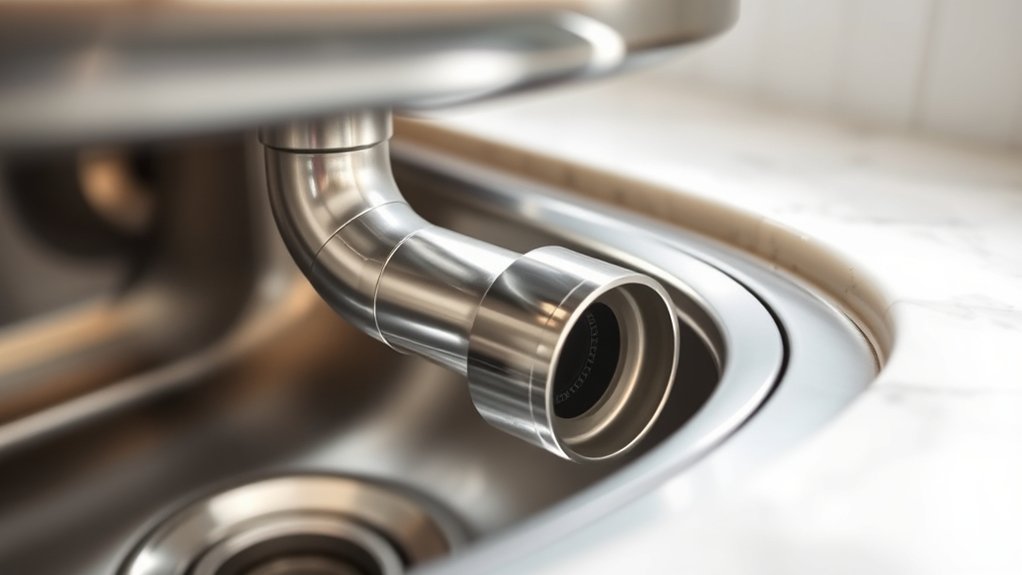
Have you ever wondered why choosing the right P trap size matters for your kitchen sink? Your drain pipe’s size directly affects how well your plumbing works.
Using the wrong P trap size can cause leaks, clogs, or poor drainage. Plumbing codes set standards to make sure everything fits and functions properly, so it’s important to follow them.
Using the correct P trap size prevents leaks, clogs, and drainage issues by ensuring proper fitting and compliance.
If the P trap is too small, it might not create a proper seal, letting odors escape and gases get into your home. If it’s too large, it could waste water or cause drainage problems.
Matching the trap size to your drain pipe ensures a secure connection and keeps you compliant with local plumbing rules.
Getting the right size also helps prevent future issues, saving you time and money.
Standard P Trap Sizes Used in Kitchen Plumbing
In kitchen plumbing, standard P trap sizes are designed to fit most sinks and drain setups, ensuring a reliable seal and proper drainage. Typically, these traps come in 1 1/4-inch and 1 1/2-inch diameters, with length variations to suit different configurations.
Over time, historical plumbing practices influenced these sizes, aiming for compatibility and efficiency. Modern traps often incorporate eco-friendly materials, reflecting a shift toward sustainability.
Consider these key points:
- Common sizes include 1 1/4-inch and 1 1/2-inch diameters
- Lengths range from 6 to 12 inches for versatility
- Early designs prioritized durability, evolving into eco-conscious options
- Standardization makes replacement and repair easier
- More traps now use environmentally friendly materials like recyclable plastics
Understanding these sizes helps you choose the right trap, balancing traditional practices with sustainable innovations.
How to Measure Your Sink for the Correct P Trap Size
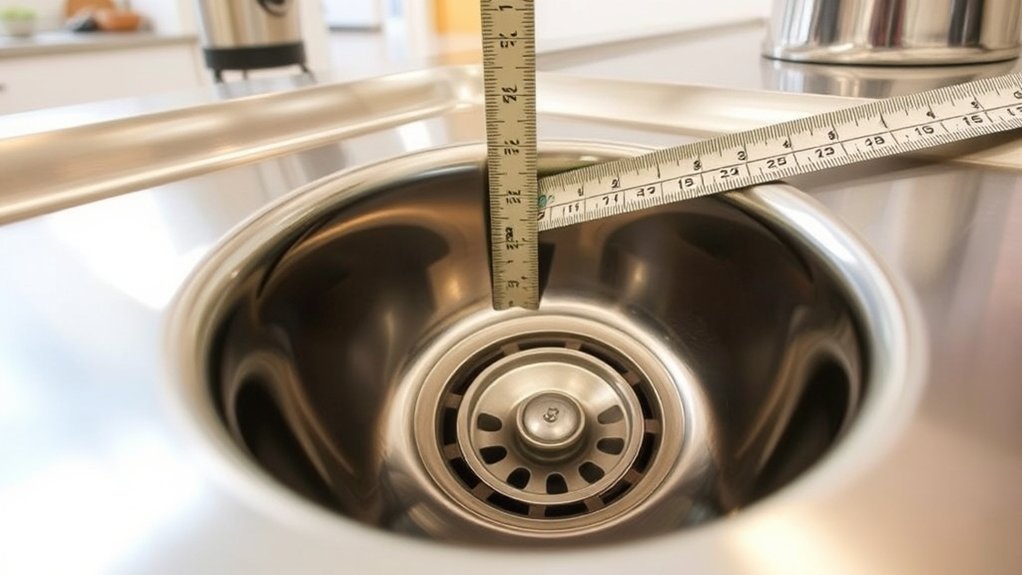
To find the right P trap size for your sink, start by measuring the drain opening and the distance from the drain outlet to the wall or floor where the trap will connect. Use a measuring tape to get accurate dimensions, noting both the diameter of the drain opening and the length needed for a proper fit.
Measure drain diameter and outlet distance to ensure a proper-fitting P trap.
This helps keep your sink’s design looking neat and ensures the plumbing stays discreet and visually appealing. When measuring, think about not just the size but also the material’s durability.
A sturdy, durable material will last longer, especially in busy kitchens. If your drain opening is standard, a typical 1 1/4-inch or 1 1/2-inch trap might work, but always double-check your measurements before buying.
Getting the right measurements prevents leaks, reduces the need for adjustments, and helps you choose a trap that fits well and looks good with your sink.
Key Factors to Consider When Choosing a P Trap Size
When you’re selecting a P trap, the first thing to keep in mind is making sure the pipe diameter matches your sink’s drain and waste lines. It’s pretty important because if they don’t line up, you might run into some issues later on.
Also, take a good look at the space underneath your sink. You want to make sure the P trap will fit comfortably without causing any obstructions. Picking the right size not only keeps things running smoothly but also helps prevent leaks and other problems down the line.
Pipe Diameter Compatibility
Choosing the right P trap size really depends on making sure it matches your pipe diameter. Using an improperly sized trap can cause leaks or drainage problems, so it’s important to verify it fits smoothly with your existing plumbing.
Make sure the trap diameter matches your drain pipe exactly to ensure a secure connection and prevent leaks. It’s also key to balance design looks with functional needs so everything works well and looks good.
Material durability matters too—pick a trap made from sturdy materials that will last long-term. Confirm that it’s compatible with your sink and pipe materials to avoid any mismatches.
A properly fitting trap not only improves performance but also keeps the appearance clean and neat. It helps support smooth drainage and reduces clogging risks, making your plumbing work efficiently.
Focusing on compatibility guarantees your system runs smoothly and looks cohesive. It’s all about choosing the right size so you don’t have to do unnecessary modifications or sacrifice style for function.
Space Constraints Consideration
Space constraints play a crucial role in selecting the right P trap size, especially in tight or cluttered plumbing areas. Historically, plumbing was less standardized, making space more challenging to optimize.
Today, modern designs often incorporate eco-friendly materials, which can be thinner yet durable, helping you save valuable space. When working in limited areas, measure carefully to ensure the P trap fits comfortably without interfering with other components or access points.
Consider the overall layout of your plumbing system and choose a size that works for both current needs and future maintenance. Being mindful of space constraints ensures efficient drainage and easier installation.
Ultimately, balancing historical plumbing standards with eco-friendly innovations helps you select a P trap that maximizes space while maintaining functionality.
Common P Trap Sizes and Their Typical Uses
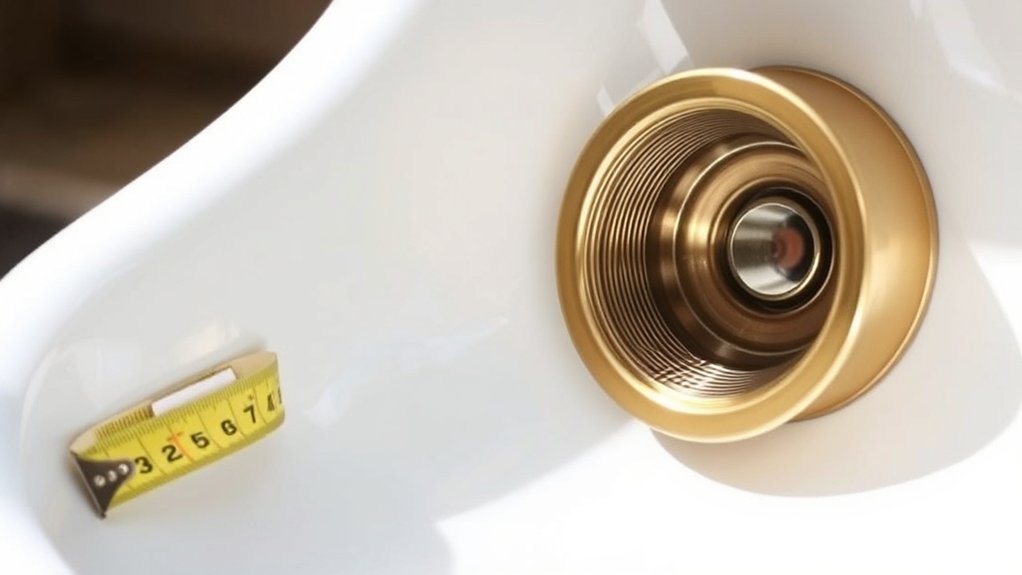
P trap sizes for kitchen sinks usually range from 1 1/4 inches to 2 inches in diameter, with each size suited for different plumbing setups. The most common sizes are 1 1/4 inches for smaller sinks and 1 1/2 inches or 2 inches for larger or commercial-style sinks. Picking the right size helps ensure proper drainage and prevents leaks.
P trap material varies and includes options like PVC, ABS, and metal. These materials can influence how durable the trap is and how much it costs. P traps also come in different colors, such as white, black, or metallic finishes, to match your sink’s look.
Brass or chrome P traps are often preferred because they resist corrosion, especially in exposed areas. The size you need depends on your sink’s drain outlet, your plumbing setup, and your personal preferences for material and color.
Choosing the right size and material not only keeps your plumbing working smoothly but also helps it look good. Proper sizing and material choices are key to a functional and attractive kitchen plumbing system.
When selecting a P trap, consider compatibility with your sink drain outlet to ensure a snug fit. Durability is important too, especially if the trap will be exposed to water or frequent use.
Aesthetic matching is also worth thinking about, especially if your plumbing is visible. And don’t forget, ease of installation and maintenance can save you time and hassle down the line.
Finally, make sure the P trap suits your specific plumbing configuration to avoid future problems. With the right choice, your sink will drain properly and look great for years to come.
How to Check If Your Current P Trap Fits Your Sink
First things first, grab a tape measure and check the diameter and length of your existing P trap. You want to see if it lines up with your sink’s drain outlet—that way, you know it’s the right size.
Then, take a close look at the fittings where the trap connects to the drain pipes. Make sure everything lines up properly and fits snugly without any leaks or gaps. If everything matches up and looks good, your current P trap should be just fine. But if it’s not fitting right or there are leaks, it might be time to consider replacing it.
Measure Existing P Trap
To see if your current P trap fits your sink, you’ll need to measure its dimensions and compare them to the new trap’s specs. Focus on key details like the trap’s diameter, length, and connection types.
Also, check the color options and material types because these impact how it looks and how durable it is. When measuring, use a tape measure to get accurate readings of the inlet and outlet sizes. This helps ensure they match your sink’s drain and tailpiece.
Check Sink Compatibility
Wondering if your current P trap fits your sink properly? First, look under your sink and inspect the connection points. Make sure the P trap lines up with the drain outlet and the wall pipe.
Check if the trap’s size and threading match the drain and your plumbing tools. Proper fit is key to keeping your kitchen looking neat and avoiding leaks.
Use a tape measure to confirm the diameter and length of your existing trap. If it doesn’t match, adjust or replace it as needed.
Ensuring compatibility helps prevent future plumbing issues and keeps your kitchen space tidy. A correctly fitting P trap is important for both functionality and your overall decor.
Double-check connections before installation to save time and effort later.
Troubleshooting Drainage and Odor Problems Caused by P Trap Size
When the P trap size isn’t right for your kitchen sink, drainage problems and bad odors tend to happen. A trap that’s too small doesn’t seal off sewer gases well enough, so odors can escape into your kitchen.
On the other hand, an oversized trap can slow down drainage or cause clogs. To troubleshoot these issues, start by checking if the P trap matches the manufacturer’s recommended size.
Make sure the trap is securely sealed and tight. Also, look for any clogs or buildup inside the trap or along the drain line that could block flow.
Inspect for leaks or cracks in the trap that might let odors escape. Regular cleaning and maintenance can keep your sink smelling fresh and functioning properly.
Finally, consider how your sink’s setup matches your kitchen decor, combining practical solutions with aesthetic appeal.
When and Why to Upgrade Your P Trap for Better Performance
If your sink is still draining slowly or you’re noticing persistent odors even after cleaning, it might be time to think about replacing your P trap. Upgrading it can really improve how well your sink drains and help prevent leaks from happening down the road.
Knowing these signs is key — it helps you figure out when a simple upgrade can make a big difference and save you some hassle later on.
Signs You Need Replacement
A clear sign you need to replace your P trap is persistent foul odors lingering around your sink, even after cleaning. This suggests the trap might be cracked or clogged, letting sewer gases escape.
You might also notice frequent leaks or water pooling around the base of your sink, which can disrupt your kitchen’s look. If your P trap looks corroded or rusty, it’s definitely time for an upgrade to keep things running smoothly.
Other signs include unpleasant smells despite cleaning, visible corrosion or rust, continuous leaks or pooling, frequent clogging or slow drainage, and noticeable cracks or damage.
Addressing these signs quickly helps your sink work efficiently, supporting your cooking tips and keeping your kitchen looking polished.
Replacing the P trap restores proper drainage and stops unpleasant odors from affecting your space.
Benefits of Upgrading
Upgrading your P trap can significantly boost your sink’s performance and hygiene. A new trap helps reduce odors, prevents leaks, and ensures smooth drainage—key for keeping your kitchen clean.
If you’re remodeling your kitchen or updating its style, choosing the right size and type of P trap can improve both function and look. A properly fitted trap complements your decor and keeps odors from lingering.
For outdoor kitchens or garden projects, upgrading your P trap ensures outdoor drainage works perfectly. It helps your outdoor space stay clean and odor-free.
Consider this table when selecting your upgrade:
| Benefit | Why It Matters |
|---|---|
| Odor Control | Keeps your kitchen smelling fresh |
| Leak Prevention | Avoids water damage and mess |
| Improved Drainage | Faster, clog-free flow |
| Aesthetic Compatibility | Matches your kitchen decor |
Tips for Installing the Right P Trap Size Step-by-Step
Choosing the correct P trap size is essential to guarantee a proper fit and prevent leaks or clogs in your kitchen sink. To make sure everything fits smoothly, measure your drain opening accurately and pick a trap that works with your bathroom fixtures and pipe materials.
Follow these simple step-by-step tips:
- Turn off the water supply and clear out the space beneath the sink.
- Carefully remove the old trap and check the pipe connections.
- Match the new P trap size to your existing pipe diameter.
- Use a level to make sure the trap is properly aligned.
- Tighten the fittings securely, but don’t over-tighten, as that could crack the pipe.
Pay attention to the pipe materials since plastic and metal fixtures might need different connectors. Proper measurement and fitting are key to avoiding leaks and odors. Making sure your P trap is the right size and installed correctly will keep your sink working smoothly and help your fixtures last longer.
What to Do If Your P Trap Doesn’t Fit or Odors Persist
If your P trap doesn’t fit correctly or unpleasant odors keep coming from your sink, it’s time to troubleshoot. First, check your P trap for proper installation and make sure it’s the right size and type.
Poor maintenance can cause leaks or odors, so clean out any debris or buildup that might be causing blockages. If it still doesn’t fit, try replacing it with an appropriately sized trap or adjusting the fittings.
Persistent odors could mean there’s a crack or a bad seal. In that case, you might need a new trap or some sealant. If replacing the trap doesn’t fix the smell or fit issues, look into alternative drainage options like an S-trap or different piping setups.
These options can sometimes give you a better fit or help control odors, especially in tricky installations. Always double-check that all connections are tight and airtight to prevent leaks and lingering smells.
Frequently Asked Questions
Can a P Trap Be Adjusted to Fit Different Sink Sizes?
Yes, a P trap can often be adjusted to fit different sink sizes. Look for models with flexible or adjustable sections, which help accommodate various installations.
Make sure the material matches your plumbing system, like PVC or metal, for durability. During installation, double-check measurements and follow tips like sealing joints properly to prevent leaks.
Adjusting the trap is usually straightforward, making it a versatile choice for different sink setups.
Are There Differences in P Trap Sizes for Different Types of Kitchen Sinks?
Yes, p trap sizes vary depending on your kitchen sink type, which can affect the materials and installation tips.
For standard sinks, a 1 1/4-inch trap usually works best, while larger or commercial sinks may need a 1 1/2-inch trap.
Consider the p trap materials, like PVC or metal, for durability and compatibility.
Always measure carefully, check your sink’s drain outlet, and follow installation tips to ensure a proper fit and a leak-free connection.
How Long Does a Typical P Trap Last Before Needing Replacement?
A typical P trap lasts about 5 to 10 years, depending on the material and how much it’s used. To get the most out of it, pick a trap made of tough materials like PVC or brass, which resist corrosion.
When installing, make sure everything is aligned properly and all connections are tight to avoid leaks. Regularly check for cracks or any buildup inside the trap.
If you notice persistent odors or leaks, it’s a good sign it needs replacing. Keeping the trap in good shape helps maintain proper drainage and keeps your space hygienic.
Do P Trap Sizes Vary by Geographic Region or Plumbing Code?
Yes, P trap sizes can vary based on regional standards and plumbing regulations. You should check your local codes because they dictate the appropriate size for your area.
While most residential kitchen sinks use a 1 1/4-inch trap, some regions might require different dimensions. Always follow your local plumbing regulations to guarantee proper fit and compliance.
This helps prevent potential drainage issues or code violations.
Can an Incorrect P Trap Size Cause Water Leakage or Damage?
Like a misstep in a dance, an incorrect P trap size can lead to water leaks or damage, disrupting your plumbing harmony. Using the right P trap material and following proper installation tips guarantees a snug fit and prevents issues.
An oversized or undersized trap causes poor sealing, risking leaks. Always verify your sink’s specifications and adhere to local plumbing codes for peak performance and to protect your home from water damage.
Conclusion
Choosing the right P trap size is like finding the perfect key for a lock. It guarantees your sink drains smoothly and odors stay out.
Measure carefully and consider your sink’s needs. If things aren’t working, don’t hesitate to upgrade.
With the right fit, you’ll keep your kitchen running seamlessly, much like a well-conducted orchestra. When it comes to a kitchen sink P trap, size really does matter.
Trust your instincts, and remember, a small adjustment can make a world of difference.