
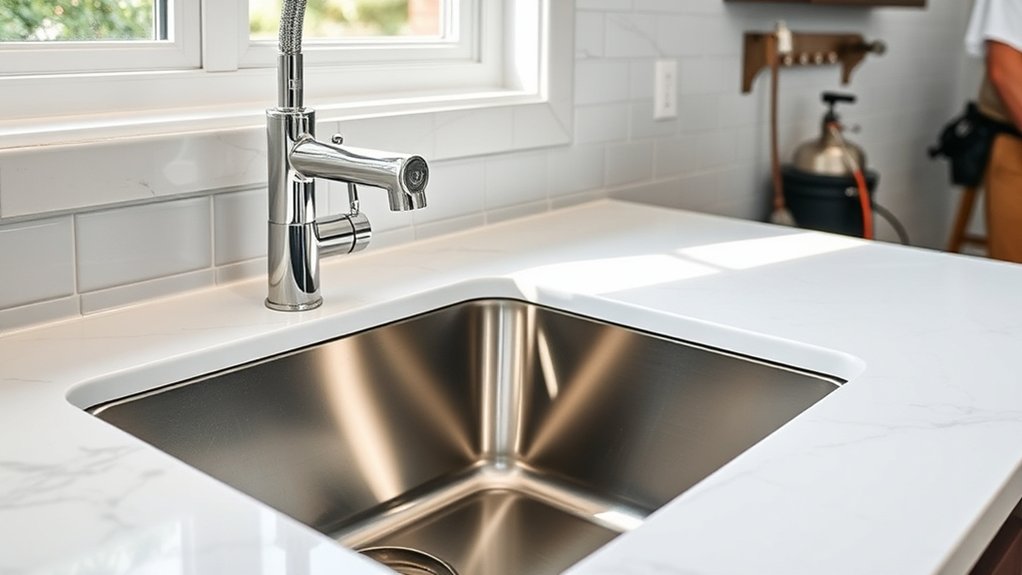
How Much Does It Cost to Install a Kitchen Sink?
Are you thinking about upgrading your kitchen sink but feeling overwhelmed by the costs? You’re not alone—many homeowners struggle with figuring out how much a new sink will actually set them back.
Installing a kitchen sink typically costs between $200 and $600 for a basic setup, covering removal, plumbing, and sealing. However, prices can increase if you choose premium materials, need complex plumbing work, or add custom features like soap dispensers or integrated accessories.
Unexpected costs can also pop up, like damaged cabinets or old plumbing issues. To keep expenses in check and explore upgrade options, keep reading for more details.
Key Takeaways
- Basic installation costs usually range from $200 to $600, which covers removal, plumbing, and sealing.
- If you’re going for a premium or custom sink, expect to pay from several hundred to several thousand dollars, depending on materials and features.
- The type of sink material, like stainless steel, composite, or cast iron, impacts both the total cost and how complicated the install will be.
- Sometimes, extra costs pop up from rerouting plumbing, fixing damaged cabinetry, getting permits, or handling unexpected issues during installation.
- Doing it yourself can save you money, but there’s a risk of leaks or improper fitting. Hiring a professional helps ensure everything’s installed correctly and meets code.
How to Decide What Kitchen Sink Fits Your Budget and Needs
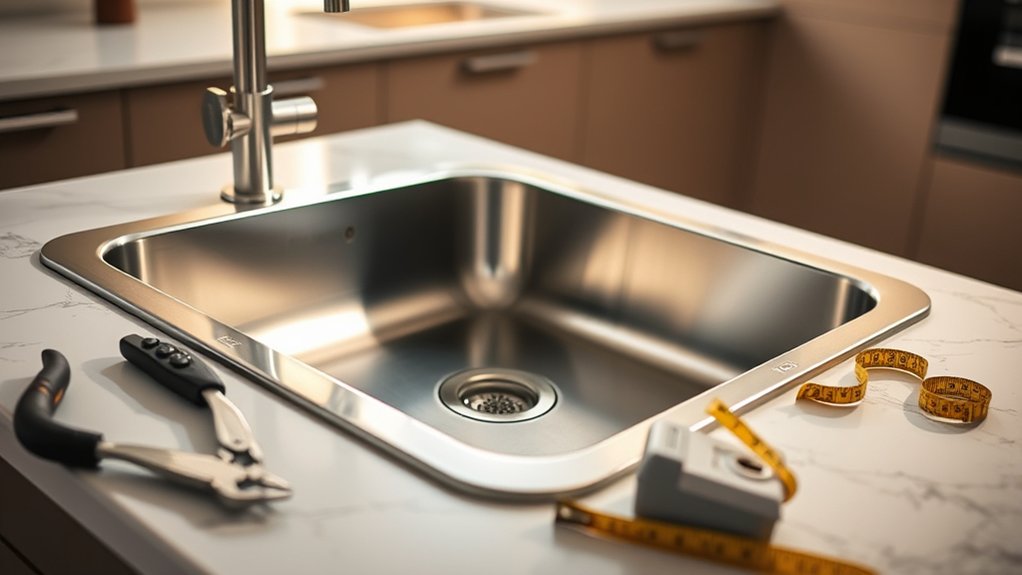
Choosing the right kitchen sink starts with understanding your budget and specific needs. Your kitchen design influences your choice, especially if you want a seamless look or a statement piece.
Consider whether you prefer a single or double basin, as this impacts both functionality and cost. If you’re aiming for appliance integration, look for sinks that can easily accommodate accessories like built-in cutting boards or colanders, which can add convenience and style.
Think about the material—stainless steel, composite, or porcelain—each varies in price and durability. If your kitchen has limited space, a compact or corner sink might be ideal.
Balancing your budget with your needs means prioritizing features that matter most, like ease of cleaning or compatibility with existing fixtures.
Key Factors That Impact Your Kitchen Sink Installation Cost
Your choice of sink material can really impact how much your installation costs. For example, stainless steel and composite sinks tend to be priced differently, so that’s something to keep in mind.
On top of that, the complexity of your plumbing setup plays a big role. If your existing plumbing needs significant modifications, it can drive up both the labor costs and the overall project expense.
Getting a good handle on these factors can help you estimate your total budget more accurately and avoid surprises down the line.
Material Choice Costs
The type of material you choose for your kitchen sink significantly affects the overall installation cost. Different options vary in durability, look, and price, which can impact your budget.
For instance, stainless steel is durable, affordable, and easy to clean, making it a popular choice. On the other hand, farmhouse sinks made of fireclay offer a rustic style but tend to be more expensive.
Other materials include porcelain, which provides a classic look but can chip easily. Granite composite is resilient and has a modern appearance, though it comes at a higher price.
Cast iron sinks are heavy and durable but often require costly installation. Fireclay sinks are stylish but fragile if mishandled and tend to be on the pricier side.
Choosing the right material involves balancing your budget, style preferences, and how long you want your sink to last.
Plumbing Complexity Levels
Plumbing complexity plays a big role in how much it costs to install a kitchen sink. If your plumbing is simple, with easy access to existing pipes, the price stays lower.
But if your home needs rerouting water lines or upgrading old pipes, you can expect higher costs. Adding water-saving features like eco-friendly fixtures can make things more complex but save you money in the long run.
Installing eco-friendly materials, such as recycled piping or sustainable fittings, might also increase initial costs because of extra labor or specialized parts. The more complex the plumbing system, the more time and skill your plumber needs.
This will raise the overall installation costs. Considering these factors helps you budget well and choose features that balance efficiency with your project’s scope.
How Much Does a Basic Kitchen Sink Installation Usually Cost?

Installing a basic kitchen sink usually costs between $200 and $600, depending on factors like the type of sink, how complex the install is, and where you live.
This price covers removing the old sink, connecting the plumbing, and making sure everything is sealed properly. Simpler installs are generally cheaper, especially if your kitchen design makes access easy.
Basic models with standard features tend to be more affordable. But if you’re adding new appliances or updating your kitchen’s style, costs can go up.
Getting a professional to do the install can help prevent leaks and make sure everything works smoothly.
When choosing a sink, make sure it fits your kitchen design and layout.
It’s also smart to check that new appliances will work well with your current setup to avoid future issues.
Older homes may need extra plumbing adjustments, which could increase costs.
Upgrading fixtures can improve functionality, but that might add to your overall expenses.
Don’t forget to consider any costs for permits or inspections if required in your area.
Compare Different Types of Kitchen Sinks and Their Costs
Choosing the right kitchen sink depends on your budget, style preferences, and functional needs, as different types come with varying costs. You can opt for stainless steel sinks, which are durable and affordable, or go for composite granite options, offering a modern look with a slightly higher price.
Selecting a kitchen sink involves balancing budget, style, and functionality for lasting satisfaction.
Cast iron sinks provide strength but tend to be more expensive and heavier to install. If you’re eco-conscious, consider sinks made from eco-friendly materials like recycled glass or bamboo composites, often costing more upfront but supporting sustainability.
Kitchen sink accessories, such as built-in drainboards or integrated soap dispensers, can add to the overall cost but improve functionality. Remember, your choice impacts not only initial costs but also long-term maintenance and durability.
Comparing these options helps you find a balance between style, sustainability, and budget, making sure you get a sink that fits your needs now and in the future.
Should You Do It Yourself or Hire a Professional?
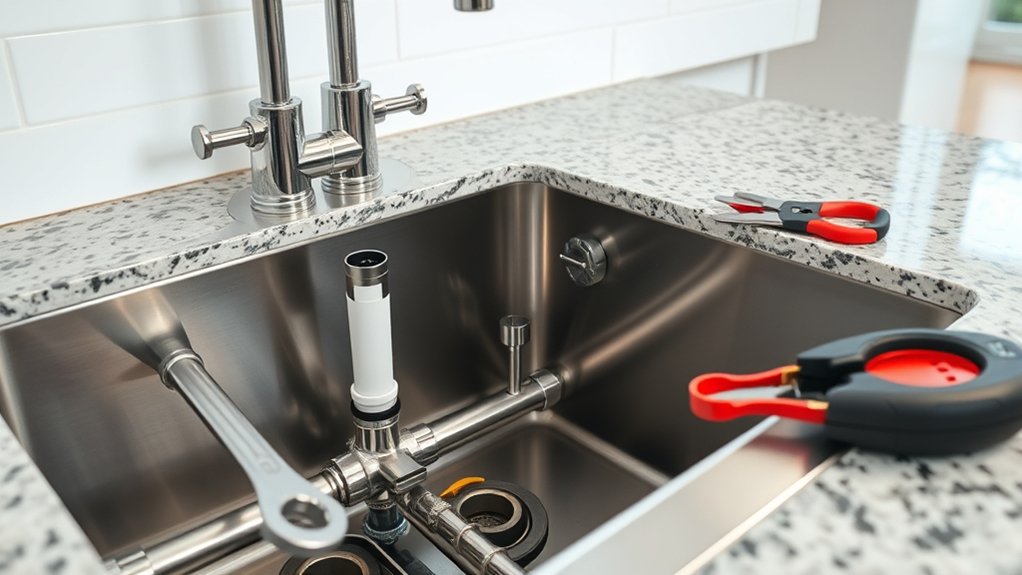
Deciding whether to tackle your kitchen sink installation yourself or hire a professional depends on your experience, tools, and comfort level with plumbing projects.
If you’re confident in your skills, have the necessary tools, and understand DIY safety, you might handle the installation yourself. However, if plumbing isn’t your strong suit, hiring a licensed professional guarantees proper installation and compliance with local codes.
Consider these factors:
- Knowledge of plumbing connections and drainage systems
- Access to specialized tools required for installation
- Potential risks of leaks or water damage from improper setup
- Ensuring the work meets local building codes and regulations
- The importance of professional licensing for quality assurance
While a DIY approach can save money, it’s essential to weigh the risks of mistakes against the safety and quality a licensed professional provides. When in doubt, hiring a pro can protect your home and give you peace of mind.
How Plumbing Changes Affect Your Installation Budget
When planning your kitchen sink installation, it’s important to think about any plumbing changes that might be needed. Upgrading your plumbing can affect your overall budget, especially if existing pipes need rerouting or if the water pressure isn’t enough for your new fixture.
Low water pressure might mean installing a new pressure regulator or upgrading pipes, which can add to your costs. Also, the compatibility of fixtures matters—if your new sink has different connections or needs specific fittings, you might need adapters or custom modifications.
These adjustments can increase both labor and material costs. A simple swap might be easy, but if you need major plumbing changes, expect higher expenses. Consulting a professional beforehand can help you spot potential issues that could blow up your budget.
Understanding these factors will help you be prepared for any extra costs related to plumbing changes during your kitchen sink install.
Unexpected Expenses During Sink Installation
Unexpected expenses can catch you off guard during sink installation, especially if unforeseen issues come up once the work starts. You might face delays that push back the timeline and increase labor costs.
Hidden fees can also pop up unexpectedly, like charges for extra materials or permits. Be prepared for surprises such as uncovering old plumbing that needs replacing or damaged cabinets that require repairs.
These issues can significantly raise your overall cost. Extra labor due to plumbing problems, costs for removing and disposing of old fixtures, and permit or inspection fees not initially included are common surprises.
Damaged countertops or cabinetry needing repairs and additional parts or custom fittings can also add to your expenses unexpectedly. Planning ahead helps you avoid these unexpected costs.
Budgeting for Upgrades and Custom Features
Planning for upgrades and custom features helps you avoid surprises with unexpected costs later on. When setting your budget, think about how interior design choices and water-saving options might affect your expenses.
Upgrades like a touchless faucet or eco-friendly fixtures can increase your initial costs but save you money in the long run. Here’s a quick overview to help you decide:
| Feature | Cost Range | Benefit |
|---|---|---|
| Water-saving fixtures | $100 – $300 | Cuts down on water bills |
| Custom cabinetry | $500 – $2,500 | Enhances your kitchen’s look |
| Premium finishes | $200 – $1,000 | Adds style and durability |
Balancing your style preferences with eco-friendly features can keep your kitchen functional and stylish while keeping costs manageable.
Costs for Premium or Custom Kitchen Sinks
Opting for a premium or custom kitchen sink can significantly impact your overall renovation budget. These sinks often have luxury finishes and artistic designs that enhance your kitchen’s look.
Expect to pay much more than standard models, with prices ranging from a few hundred to several thousand dollars. Custom sinks let you include unique materials, intricate patterns, and personalized details, which can increase costs even more.
When planning your budget, consider these factors:
- Use of high-end materials like copper, brass, or custom stone
- Handcrafted artistic designs and detailed craftsmanship
- Luxury finishes such as matte, polished, or brushed surfaces
- Unique shapes or custom-sized sinks for specific space needs
- Extra features like built-in accessories or integrated drainboards
A premium or custom sink can boost your kitchen’s visual appeal but requires careful planning to keep costs within your budget.
Handling Complex or Unusual Sink Installations
Handling complex or unusual sink installations can sometimes bump up your costs, especially if the setup is unique or the space is tight. These kinds of installations often need more time and specialized skills to get everything just right. It’s helpful to keep these factors in mind so you’re not caught off guard by any extra expenses down the line.
Unique Sink Configurations
Unique sink configurations often involve complex or unconventional setups that can significantly impact installation costs. These designs might feature unusual shapes, multiple basins, or integrated accessories, all requiring specialized skills.
When working with unique designs or materials, your installer needs extra expertise, which can raise labor fees. Custom-cut countertops to fit odd sink shapes are common in these setups.
Installing multi-basin or integrated sinks also adds complexity. Incorporating unusual materials like copper or stone can require special handling and tools.
Modifying existing plumbing for unconventional layouts is another challenge. Ensuring proper sealing and support for heavy or fragile materials is crucial to avoid issues later.
All these factors can increase costs due to the extra time, precision, and materials needed. If your sink has a one-of-a-kind design or uses unconventional materials, expect higher installation fees compared to standard models.
Challenging Plumbing Situations
Challenging plumbing situations often involve complex or unusual sink installations that standard setups don’t typically face. You might run into issues with inconsistent water pressure, which can affect how the faucet works and water flows.
Making sure your faucet is compatible is super important, especially if you’re installing a high-end or unconventional model. Sometimes, you’ll need to adjust existing plumbing or upgrade pipes to handle increased water demand or pressure swings.
In some cases, rerouting pipes or modifying countertops is necessary to fit unique sink configurations. These tasks require careful planning and precise work to avoid leaks or future problems.
Addressing these issues can raise installation costs, but doing it right will ensure your sink functions well and lasts longer. Usually, expert help is needed to resolve complex plumbing challenges effectively.
Frequently Asked Questions
What Are the Typical Labor Costs for Professional Kitchen Sink Installation?
You’ll typically spend $150 to $350 on labor for professional kitchen sink installation, depending on plumbing complexity and material selection.
If your plumbing setup is straightforward, costs stay lower. But if it’s more complex or requires rerouting pipes, expect higher charges.
The type of sink material also influences the installation difficulty, which impacts labor costs. Always get multiple quotes to find the best deal for your specific project.
How Long Does a Standard Kitchen Sink Installation Usually Take?
Like the clock striking noon, a standard kitchen sink installation usually takes about 2 to 4 hours. During this time, you’ll consider design choices and material options to make sure your new sink fits just right and looks great in your space.
Rushing through the process can cause mistakes, so patience is really important. Skilled pros work efficiently to get the job done right without unnecessary delays, helping your kitchen stay functional and beautiful.
They make sure your vision becomes a reality smoothly, so you can enjoy your new sink sooner.
Are There Any Additional Permits or Inspections Required?
Permits required for installing a kitchen sink depend on your local regulations, so it’s best to check with your city or county building department.
The inspection process ensures your installation meets plumbing codes, covering things like proper connections and drainage. Usually, you’ll need a permit before starting the work.
Once the job is done, an inspection is scheduled to verify everything is up to code. Forgetting to get permits or passing inspections can lead to fines or problems selling your home.
What Warranties or Guarantees Come With Professional Installation?
When you hire a professional, you usually get warranty coverage and installation guarantees that protect your investment. Most contractors offer warranties that cover parts and labor for a certain period, so any issues can be taken care of at no extra cost.
Be sure to ask about the specific warranty coverage and guarantees before hiring. That way, you’ll know exactly what’s included and can enjoy peace of mind knowing your kitchen sink installation is protected.
How Can I Estimate the Total Cost Before Starting the Project?
Imagine throwing a party without knowing your guest list—that’s like estimating costs without planning. To estimate your sink installation, think about material choices and design ideas.
Research prices for sinks, cabinets, and fixtures. Then, add in labor costs. Visiting local stores or browsing online suppliers for quotes can help you get accurate numbers.
Don’t forget to consider unexpected expenses that might come up. Creating a detailed budget with all these elements helps you avoid surprises and keeps your project financially on track.
Conclusion
While it might seem like a straightforward task, installing a kitchen sink can actually uncover hidden costs and challenges. Many believe it’s an easy DIY project, but professional installation often saves you headaches and money in the long run.
So, don’t underestimate the complexity. Investing in quality and expert help guarantees your sink functions smoothly and lasts longer. When it comes to installing a kitchen sink, sometimes paying a bit more upfront is the smartest decision you can make.