Effective Ways to Get Rid of Ants in Your Kitchen Sink
Dealing with ants in your kitchen sink is a common frustration that many people face. If you’re tired of battling these tiny invaders, you’re definitely not alone. Luckily, there are simple, effective ways to get rid of ants and keep your kitchen pest-free.
To get rid of ants in your kitchen sink, start by cleaning thoroughly to remove food debris and scent trails. Seal entry points around pipes with caulk or steel wool, and keep the area dry.
Use natural repellents like vinegar, lemon peels, or cinnamon, or place bait traps along ant trails. For persistent infestations, consider chemical insecticides carefully and safely.
Keep up with routine maintenance to prevent future problems—more effective tips are just ahead.
Key Takeaways
- Identify and seal entry points around pipes and drains with caulk or steel wool to prevent ants from getting in.
- Remove food debris, clean the sink thoroughly with hot, soapy water, and keep the area dry to eliminate what attracts them.
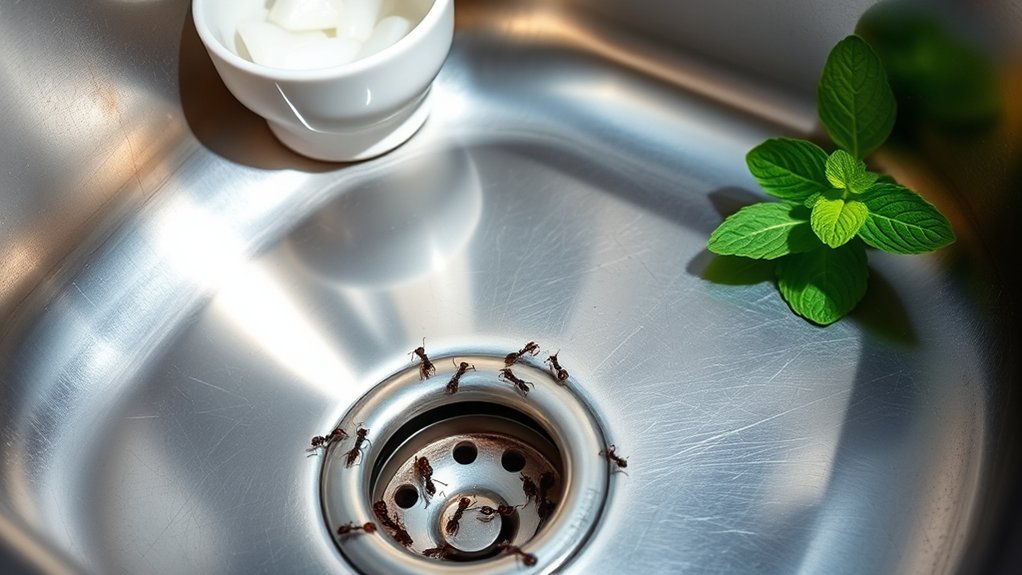
- Use natural repellents like vinegar, lemon peels, or peppermint oil around sink edges and drain openings.
- Place bait traps near ant trails and entry points to target and eliminate entire colonies effectively.
- Keep up with routine cleaning, fix leaks, and store food in airtight containers to prevent future infestations.
How Do Ants Invade Your Kitchen Sink and Why Is It a Problem?
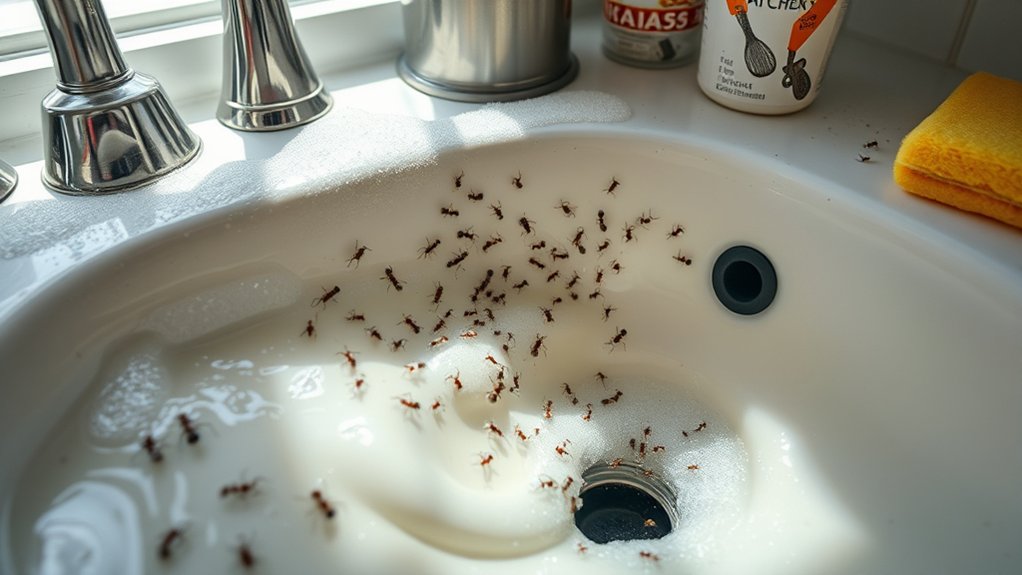
Have you ever wondered how ants find their way into your kitchen sink? Different ant species are good at spotting moisture and food, making your sink super attractive to them. They follow scent trails left by other ants to communicate and navigate.
Ants are tiny and persistent, often sneaking in through tiny cracks or gaps around pipes and drains. Once inside, they look for water and crumbs, turning your sink into their new home. Their invasion isn’t just annoying; it can also cause contamination and spread bacteria.
Different ant species have their own habits, but they all seek damp environments and easy food access. Their ability to quickly build trails and colonies makes it important to understand how they invade. Recognizing their pest behavior helps you act fast to prevent a big infestation and keep your kitchen clean.
Signs You Have an Ant Infestation in Your Sink Area
If you start noticing faint, winding trails of ants around your sink, that’s a pretty good sign they’re hanging out nearby. Sometimes, you might also see some strange residue or tiny bits of debris on the edges of your sink—that’s often left behind by the ants. Catching these signs early is really important so you can take action before the infestation gets out of hand.
Visible Ant Trails
Are you noticing thin, dark lines marching across your kitchen sink or nearby surfaces? That’s a clear sign of visible ant trails. These trails are an important part of ant trail identification and show their movement patterns.
To confirm an infestation, look for these signs:
- Continuous Lines: Narrow, steady lines of ants following a single path.
- Frequent Movement: Constant ant activity along the trail, showing they’re foraging.
- Leading to Food or Water Sources: Trails often connect to hidden entry points, food crumbs, or moisture.
Unusual Sink Residue
Unusual residue around your sink can be a sign that ants are nearby. You might see oily or powdery streaks that don’t look like regular cleaning marks.
This residue is often left behind by ants as they leave scent trails or secretions to guide others. Pay attention to any sticky or greasy film that seems out of place.
Such residues can attract more ants and help them find their way around your sink. If you notice this unusual residue, it’s a strong clue that ants are active nearby, even if you don’t see them directly.
Dealing with these signs early can prevent a full-blown ant infestation from developing.
How to Clean Your Sink and Remove Food Sources That Attract Ants
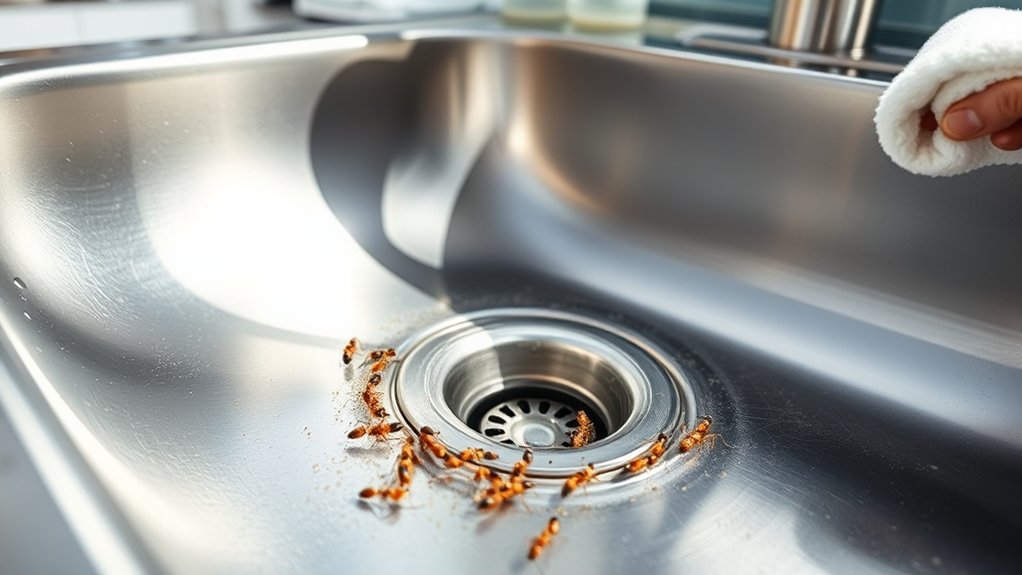
To keep ants at bay, it’s really important to give your sink a good cleaning. Make sure to wipe down all the surfaces regularly and get rid of any food bits or crumbs that might be hiding there. It’s those tiny leftovers that can attract ants, so staying on top of cleaning is key.
Also, don’t forget to keep the area dry. Ants are drawn to moisture, so wiping up water spills and avoiding standing water can make a big difference. By staying consistent with these habits, you’ll make your sink less inviting and help keep those pesky ants away.
Remove Food Residues Thoroughly
A clean sink is essential for stopping ants from coming into your kitchen. Food debris left behind can quickly attract them, so it’s important to clean thoroughly.
To remove food residues effectively:
- Take out all visible food debris from the sink and drain.
- Use a scrub brush or sponge with hot, soapy water to clean every corner.
- Rinse well to wash away any leftover particles and residue.
Doing these steps regularly makes sure no food source is left that could attract ants. Focus on cleaning all areas where crumbs or food might hide. Remember, even tiny crumbs can draw ants, so diligent cleaning is your best defense.
Stick to these habits consistently for a pest-free sink. Regular cleaning is key to keeping ants away and maintaining a spotless kitchen.
Keep Sink Area Dry
Keeping your sink area dry is really important because moisture attracts ants and makes them want to settle in. Regularly wipe down your sink fixtures to remove any water residue, and make sure no standing water is left behind.
Check around the sink for plumbing leaks, since even small drips can create a damp environment that attracts ants. Fix any leaks quickly to get rid of this moisture source.
After cleaning, dry the sink thoroughly with a cloth, especially around faucets and the drain. Avoid leaving dishes or wet sponges in the sink, as they add to the dampness.
Keeping the area dry interrupts the ants’ environment and discourages them from nesting nearby. Staying on top of moisture levels is a simple but effective way to control ant problems in your kitchen sink.
Natural Remedies to Repel Ants in Your Kitchen Sink
When ants invade your kitchen sink, natural remedies can be a safe and effective way to keep them away. Herbal repellents are popular because they’re safe and smell nice.
Natural remedies like herbal repellents are safe, pleasant-smelling ways to keep ants out of your sink.
You can try DIY deterrents like these:
Vinegar and Water Solution: Mix equal parts vinegar and water, then spray around your sink’s edges. The strong scent messes with ant trails.
Lemon Peels: Place lemon peels near drain openings. The citrus scent helps repel ants and keeps them from coming back.
Cinnamon or Peppermint Oil: Dab a few drops of these oils on cotton balls and put them in problem spots. Their aroma acts as a natural barrier.
These herbal repellents are easy to make and safe for your household. Applying them regularly can effectively keep ants out of your sink without harsh chemicals.
Effective Commercial Baits and Traps for Ant Control
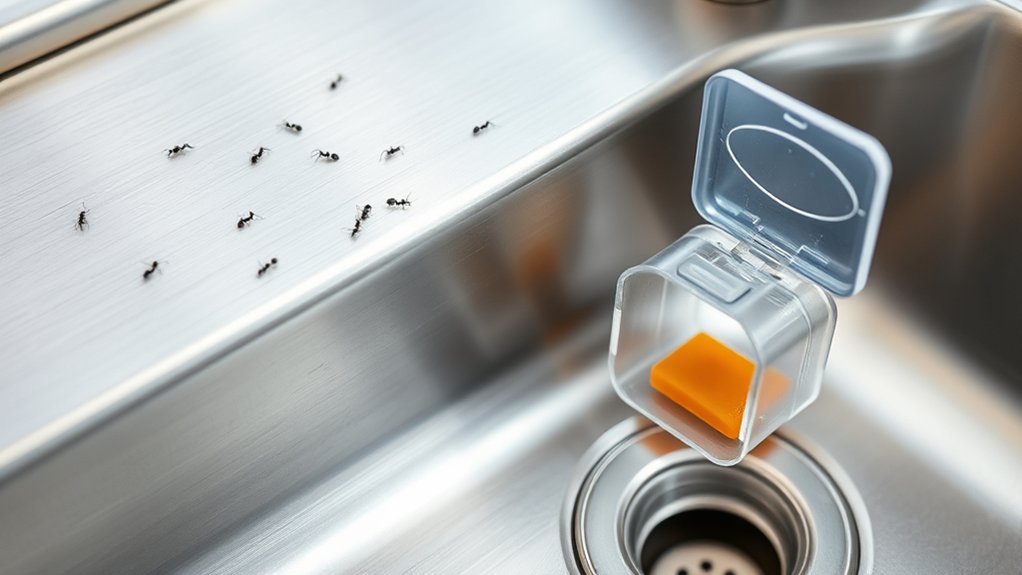
Commercial baits and traps are great tools to help control ants in your kitchen sink. When you’re picking out a bait, it’s important to choose one that’s specifically designed for the type of ant you’re dealing with. Different ants can require different treatments, so reading the label can really make a difference.
Also, where you place the traps matters. Put them along ant trails and near entry points to get the best results. This way, the ants are more likely to come into contact with the bait, which helps eliminate the colony faster.
Best Commercial Baits
Choosing the right commercial bait can make a big difference in controlling ants in your kitchen sink. To get the best results, pick products that are suited to the specific ant species you’re dealing with.
Different species respond best to certain types of bait. Here are some top options:
- Sweet Baits: Perfect for sugar-loving ants like odorous house ants.
- Protein Baits: Great for larger ants such as fire ants.
- Gel Baits: Easy to apply and attract a variety of ant species.
Always check the label to make sure the bait targets the ants in your home. Using the right bait helps ants carry it back to their colony, boosting your chances of complete eradication.
Effective Trap Placement
Placing ant traps strategically is key to getting rid of pests around your kitchen sink. Knowing how ant colonies behave helps you spot their entry points and where they hang out.
Focus on putting traps along ant trails, near cracks, or close to the sink where they’re most active. Target both their foraging paths and nest entrances to stop the colony from growing.
Keep traps at the same height and in the same spots. Moving them around too much can make them less effective. Remember, ants follow established routes, so placing traps along these helps catch workers carrying bait back to the colony.
Proper trap placement is essential for controlling the entire ant colony efficiently.
How to Seal Entry Points and Keep Ants Out for Good
Sealing entry points is essential to keep ants out of your kitchen sink permanently. You need to identify and block their access to prevent entry altogether. Start by inspecting the area around your sink for cracks, gaps, or holes.
Once you find these openings, you can seal them with caulk or sealant to make sure no tiny spaces remain. Installing or repairing weatherstripping around pipes and baseboards is also helpful to close any gaps.
For larger openings around plumbing or vents, use steel wool or wire mesh to block access. Taking these steps will help keep ants out for good.
Best Practices for Sink Hygiene to Prevent Future Ants
Maintaining clean sink habits is key to preventing ants from coming back. Ants are attracted to moist, food-rich spots, so your sink can become a magnet if not cleaned properly. Regularly scrub the sink and drain to clear away food debris, soap scum, and standing water that draw insects.
Wipe down countertops and sink edges to remove crumbs and residues that encourage ant activity. Don’t forget to pay special attention to drain covers and pipes, as they can hide residues and moisture, giving ants a place to nest.
Knowing how insects behave helps you target these attractants better. Avoid leaving dirty dishes or spills overnight, because these can become ongoing food sources for ants.
Keep the area dry and well-ventilated to reduce humidity, which ants prefer. By staying consistent with hygiene and removing their favorite habitats, you’ll make it less likely for ants to set up shop in your sink.
When and How to Safely Use Chemical Insecticides
Using chemical insecticides can be effective for eliminating ants when other methods haven’t worked, but it’s essential to prioritize chemical safety and follow instructions carefully. Know when to use insecticides—only after trying non-chemical options like cleaning and sealing entry points.
Use chemical insecticides only after trying non-chemical methods, and always follow safety instructions carefully.
Choose the right insecticide type, such as bait stations, sprays, or dusts, based on the severity of the infestation. To apply insecticides safely:
- Read labels thoroughly and follow dosage instructions exactly.
- Keep insecticides away from children and pets, and avoid spraying near food or water sources.
- Use protective gear like gloves and masks to prevent inhalation or skin contact.
Creating a Routine to Keep Your Kitchen Ant-Free
Establishing a consistent cleaning routine is key to stopping ants from coming back to your kitchen. Knowing how ants behave helps you find their entry points and nesting spots.
Regularly wipe down countertops, sinks, and cabinets to remove crumbs and food residues that attract ants. Keep your kitchen clean by cleaning up spills promptly and storing food in airtight containers.
Pay attention to hidden spots where ants might hide or forage, like under appliances or behind furniture. Sweeping and mopping floors daily also helps break up ant trails and discourages them.
Sticking to this routine makes your kitchen less inviting to ants. Over time, it reduces their food sources and keeps their numbers down.
Top Tips for Maintaining a Pest-Free Kitchen Sink
Keeping your kitchen sink pest-free isn’t just about regular cleaning; it’s about focusing on specific tips that stop ants from getting a foothold. Knowing how ants behave and how to identify pests helps you target the problem more effectively.
First, take a moment to check your sink and nearby areas for signs of ants or trails. Catching these early can make a big difference.
Inspect your sink and surrounding areas regularly to spot early ant signs and prevent infestations.
Next, seal up any cracks or gaps around pipes and countertops to block their entry points. This simple step can prevent many pests from sneaking in.
Also, don’t leave food or water out in the open, because ants are attracted to moisture and crumbs. Keeping things tidy reduces their interest in your space.
After each use, give your sink a thorough clean to wipe away scent trails that ants follow. This helps keep them from coming back.
By combining these habits, you’ll lower the chances of ants establishing a permanent home in your kitchen.
Frequently Asked Questions
What Types of Ants Are Commonly Found in Kitchens?
You’ll commonly find pavement ants, odorous house ants, and sugar ants in kitchens. These ants have different foraging habits that lead them to food and water sources like your sink.
Pavement ants usually build nests outside but will forage indoors, while odorous house ants release a smell when crushed. Sugar ants are attracted to sweet residues left behind.
Knowing these species helps you target their specific behaviors and get rid of them effectively.
How Long Does Natural Ant Repellents Typically Last?
Natural ant repellents usually last anywhere from a few days to a week. How long they stay effective depends on factors like their natural lifespan and the environment.
Their effectiveness tends to fade over time, especially when exposed to water, heat, or sunlight. To keep ants away consistently, it’s best to reapply these remedies every few days.
Regular reapplication helps ensure the repellents stay effective longer and keeps ants at bay.
Can Ants Cause Damage to Plumbing or Sink Fixtures?
Ants don’t usually cause plumbing damage, but their behavior can lead to plumbing issues.
They tunnel into pipes or fixtures searching for water, which might create tiny blockages or cracks that cause leaks.
Think of it like a tiny army marching through your plumbing, potentially weakening it over time.
While rare, persistent ant activity can contribute to minor damage, so keeping ants out helps protect your sink and plumbing system.
Are There Eco-Friendly Methods to Eliminate Ants?
Yes, there are eco-friendly ways to get rid of ants. Natural repellents like vinegar, lemon juice, or essential oils such as peppermint and tea tree can do the trick.
You can also use chemical alternatives like borax mixed with sugar, which are safe for the environment. These methods disrupt ant trails and keep them away from your sink area.
They provide safe, effective solutions that protect both your home and the planet.
How Do I Prevent Ants From Returning After Treatment?
To keep ants at bay after treatment, you’ll want to master ant control techniques and adopt kitchen sanitation practices. Seal any cracks or entry points, wipe down surfaces regularly, and store food properly.
Think of it as creating an uninviting fortress. Ants hate clean, sealed spaces. Consistency is key; treat the problem areas and stay vigilant.
With these steps, you’ll turn your kitchen into an ant-free zone. No magic required!
Conclusion
By staying vigilant and keeping your sink spotless, you create a fortress ants can’t breach. Imagine your kitchen gleaming, free of trails and crumbs, as if untouched by tiny invaders.
Regular cleaning, natural repellents, and smart habits form your defense, turning your sink into a safe haven.
With consistency, you’ll watch those pesky ants disappear, leaving behind a clean, peaceful space where only your reflection and the sparkle of a well-maintained kitchen remain.
Using effective methods to get rid of ants in your kitchen sink is key. Keep things tidy and free of food debris, and try natural repellents like vinegar or lemon.
When you combine good habits with these tricks, your kitchen becomes a place where ants don’t stand a chance.