What Causes My Kitchen Sink to Get Clogged?
Are you tired of dealing with a clogged kitchen sink that just won’t drain? You’re not alone—many people struggle with this pesky problem and wish there was an easy fix. Understanding what causes these clogs can help you keep your sink flowing smoothly.
Your kitchen sink can clog due to debris like jewelry or wrappers, tiny food particles, and grease that solidify inside pipes. Soap scum, mineral buildup from hard water, and plumbing flaws also contribute to blockages.
Small objects or hair can slip through strainers and trap debris, making clogs worse. Running hot water and using strainers help prevent issues. Keep going to uncover more tips on avoiding these common causes and keeping your sink flowing smoothly.
Key Takeaways
- Food debris and small objects can slip past strainers and build up over time, leading to blockages.
- Grease and fats tend to solidify inside pipes, trapping debris and making the drain narrower.
- Soap scum and mineral buildup from hard water create sticky layers that make drainage harder.
- Plumbing design flaws like sharp bends and incorrect slopes can cause debris to collect and clog.
- Not doing regular maintenance or preventative care lets clogs develop and get worse.
What Causes Kitchen Sink Clogs and How Can You Prevent Them?
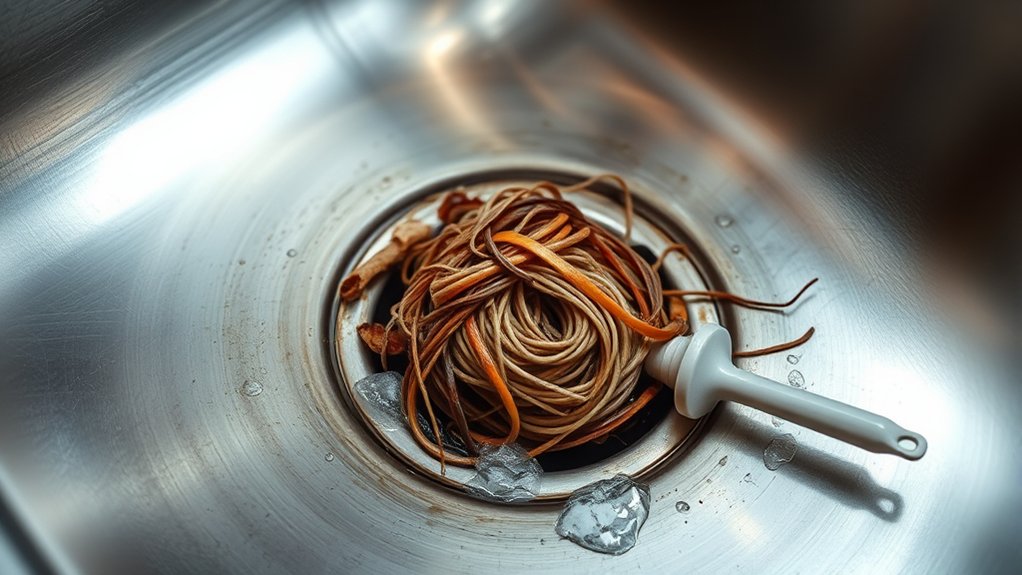
Kitchen sink clogs usually happen because debris gets trapped in the drain. Over time, grease, soap scum, and food bits build up, making the passage narrower and slowing water flow.
Regular cleaning helps prevent these blockages by removing grime and buildup. Using a drain strainer to catch larger debris and emptying it often is a good habit.
Avoid pouring fats or oils down the drain because they solidify and cause clogs. Running hot water after washing dishes helps wash away leftover grease and soap scum.
Every so often, try a mixture of baking soda and vinegar to break down minor blockages and keep the drain clear. Sticking to these habits reduces stubborn clogs and keeps your sink working smoothly.
Good kitchen cleaning and drain maintenance are simple but effective ways to avoid costly plumbing problems in the future.
How Food Debris Contributes to Sink Blockages
Food debris can really pile up in your drain pretty quickly, and that can lead to clogs happening more often as time goes on. When tiny bits of food sneak past your sink’s strainer, they tend to stick together and form blockages that are hard to clear.
Plus, if you have grease in the mix, it can cool down and solidify, trapping even more bits of food and debris. All of these little things add up and can cause your sink to drain slowly or even back up completely.
Food Particles Accumulate Quickly
When you rinse dishes or toss leftovers, tiny food particles often slip down the drain without you noticing. These bits can quickly build up, leading to stubborn clogs over time.
To avoid this, focus on good kitchen cleaning habits and conserving water. Here are some ways food debris can cause problems:
- Small pieces cling to dishes and sneak into the drain during rinsing.
- Food scraps mix with grease, creating sticky blockages.
- Leftovers left in the sink can dry out and harden, trapping debris.
- Flushing food waste without straining speeds up buildup.
Scraping food into the trash or compost and avoiding excessive water flow can cut down on debris. Keeping your sink clear helps prevent clogs, saves water, and makes cleaning easier.
Grease Traps in Food
As grease and food particles mix during cooking or dishwashing, they tend to stick together and slide down the drain. Grease traps are there to catch this mixture, stopping it from clogging your pipes.
But if you don’t clean these traps regularly, food contamination can build up, leading to blockages. Over time, trapped grease hardens and mixes with food debris, creating stubborn buildup that’s tough to remove.
This buildup can block water flow and increase the chance of a clog further down your plumbing. Keeping your grease traps well-maintained is key to making sure your sink works smoothly.
How Do Grease and Fats Clog Your Kitchen Sink?
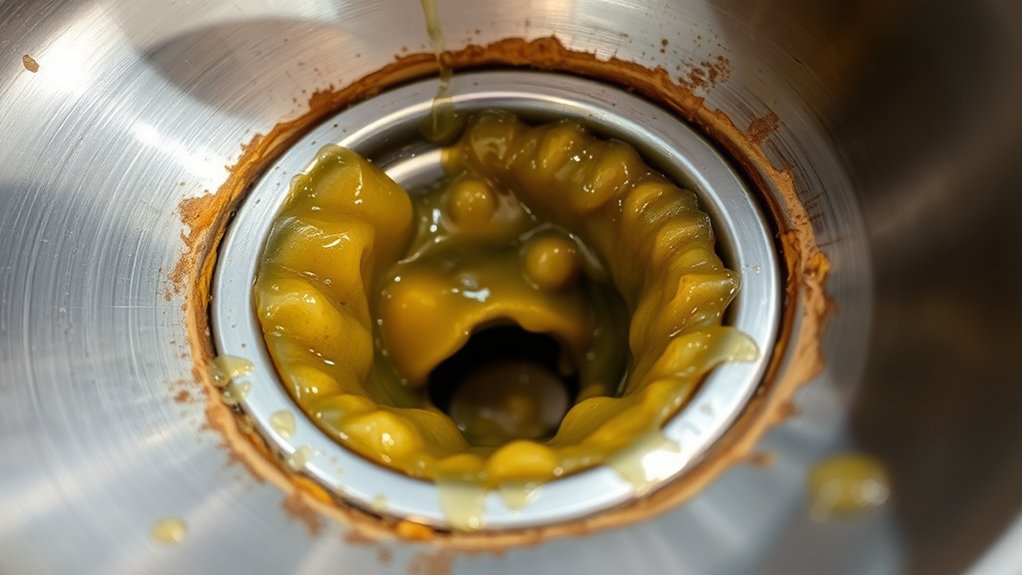
Grease and fats are especially troublesome because they don’t dissolve in water. When you pour them down the sink, they cool and harden, sticking to pipe walls and causing blockages over time.
Grease and fats harden in pipes, causing blockages and slow drainage over time.
This buildup can lead to stubborn clogs and slow drainage. To avoid this, don’t pour grease directly into the sink. Instead, let it cool and toss it in the trash.
Run hot water while using your garbage disposal to help push fats through the pipes. You can also insulate your pipes to keep them warm, which helps prevent fats from solidifying.
Finally, clean your garbage disposal regularly with ice and citrus peels to break down grease buildup and keep everything flowing smoothly.
What Role Does Soap Scum Play in Clogging Drains?
Soap scum, which forms from the minerals in hard water combining with soap residue, is a common culprit behind drain clogs. When you wash dishes or hands, soap residues cling to surfaces and mix with minerals like calcium and magnesium.
Over time, this mixture creates a sticky layer that sticks to the pipes’ interior walls. As more soap residues and minerals build up, bubbles form, trapping debris and slowing water flow. The bubbles can catch dirt, hair, and other particles, turning into a stubborn blockage.
Soap scum doesn’t dissolve easily, so it gradually builds up, narrowing your drain’s passage. If you ignore it, this layer thickens and hardens, making water drain less effectively. Regular cleaning can help prevent soap scum buildup.
Using less soap or switching to liquid soap that’s less prone to mineral residue can also help reduce soap scum formation and keep your drain clear.
Can Small Objects Slip Down and Block Your Sink?
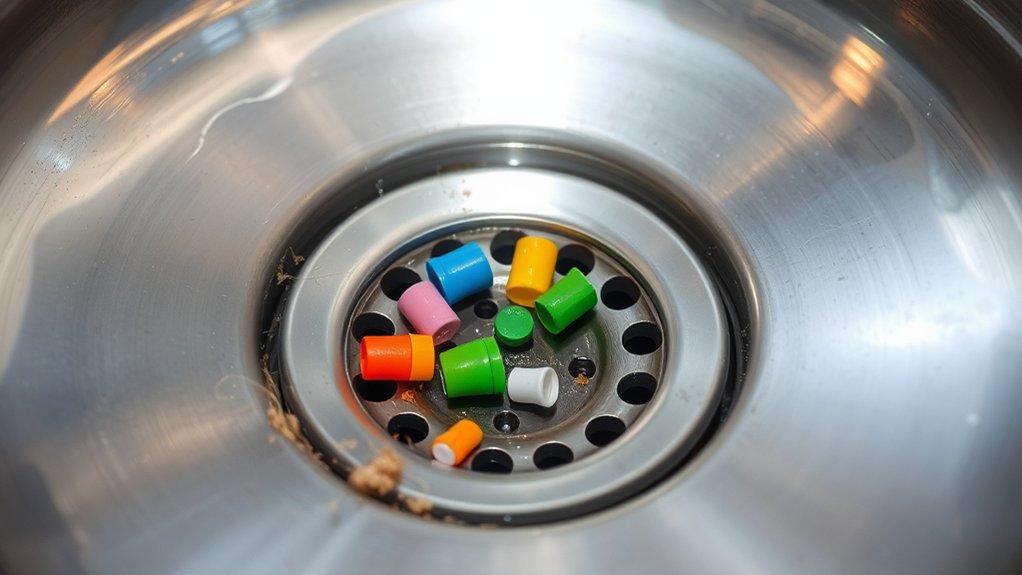
Small objects can easily slip down your sink drain if you’re not careful, especially when washing dishes or cleaning. These tiny items can cause blockages, leading to slow drainage or clogs. To avoid problems and keep your sink working smoothly, be mindful of what you toss in the drain.
Here are some common small objects that might slip through:
- Jewelry like rings or earrings
- Small utensils such as bottle openers
- Food wrappers or bits of packaging
- Bottle caps or screw-on lids
Even tiny items might seem harmless, but over time they can build up and clog your pipes. Always check the sink area and keep small objects away from the drain. Installing a drain cover can catch these items before they slip down. Remember, small objects causing blockages are a common issue in kitchen sinks but are easy to prevent with good habits.
How Hair and Fibers Cause Kitchen Sink Clogs
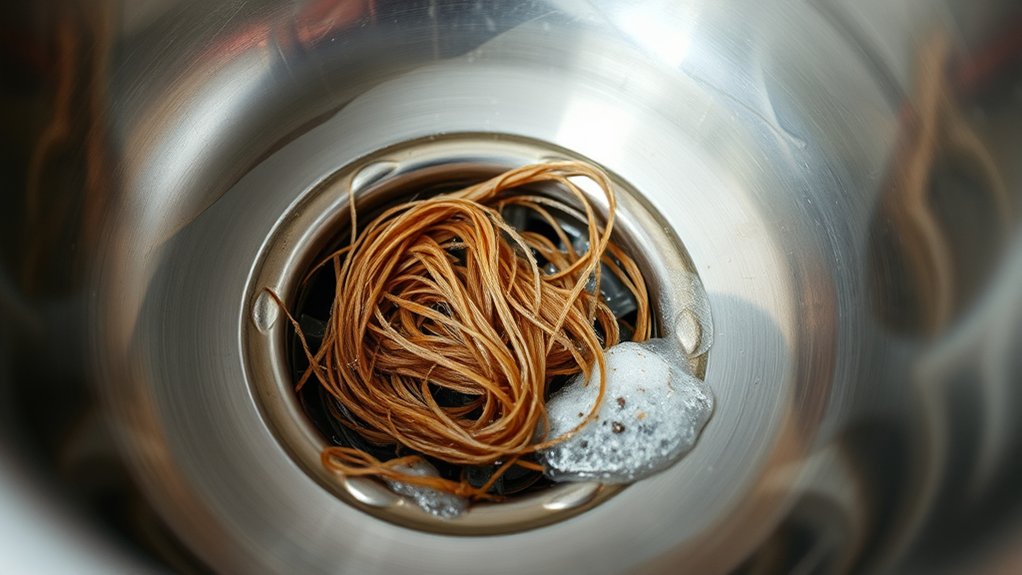
Hair and fibers often cause kitchen sink clogs because they easily get tangled together and stick to other debris, forming stubborn blockages. Hair buildup is common, especially if you wash long or thick hair down the drain regularly.
As hair fibers shed, they combine with soap scum, grease, and food particles, creating a tangled mass that resists water flow. Synthetic or natural fibers from cleaning cloths or food packaging can also contribute to clogging.
These tiny fibers are lightweight and cling to other debris, making it easier for blockages to form over time. The more hair and fibers that collect, the harder it becomes for water to drain properly.
Regularly clearing out hair and cleaning the drain can prevent fiber buildup from turning into a stubborn clog. Without intervention, this buildup can lead to slow draining or even a complete blockage in your kitchen sink.
How Hard Water Buildup Leads to Clogs
Hard water can contribute to sink clogs because the minerals it contains, like calcium and magnesium, tend to build up over time. These mineral deposits accumulate inside pipes and drains, narrowing the passageways and slowing down water flow. As water hardness increases, so does the chance of clogs.
Think of mineral deposits from hard water sticking to pipe walls, creating a rough surface that traps debris. Over time, these deposits harden into solid masses, making the pipes smaller. This buildup can cause water to back up, leading to slow drainage or full blockages.
Regular mineral accumulation also makes your plumbing more prone to other blockages from hair, grease, and debris. Monitoring water hardness and using water softeners can help prevent these issues, reducing mineral deposits and keeping your drains clear longer.
Do Plumbing Design Flaws Cause Drainage Problems?
Plumbing design flaws can significantly contribute to drainage problems because they interfere with the natural flow of water and debris through your pipes. A poorly planned layout might create dead zones or areas where water stalls, which increases the chance of clogs.
For example, sharp bends or unnecessary joints can slow down water flow, leading to debris and grease buildup. Also, if the pipes aren’t properly sloped, water can’t drain correctly, causing standing water and blockages.
The type of pipe materials used also matters. Older clay or brittle PVC pipes are more likely to crack or leak, trapping debris and causing backups. A good plumbing system considers proper pipe diameter, smooth interior surfaces, and the right slope to keep things flowing smoothly.
If your plumbing layout is flawed or you’ve used subpar materials, you’re more likely to face drainage issues and frequent clogs.
Tips to Keep Your Kitchen Sink Flowing Freely
To keep your kitchen sink flowing freely, regular maintenance and mindful habits are key. Proper kitchen upkeep helps prevent buildup and reduces the chances of clogs.
Here are four easy tips to keep your drain running smoothly:
- Use a drain strainer to catch food particles and debris before they get into the pipes. It’s a simple way to prevent blockages.
- Avoid pouring grease or oil down the drain since they solidify and can cause stubborn clogs.
- Run hot water after each use to wash away soap scum and small particles that might stick around.
- Schedule periodic drain cleaning with a safe enzyme-based cleaner or a mix of baking soda and vinegar. This helps break down any buildup before it becomes a problem.
When Should You Call a Plumber for a Clog?
If you’ve tried everything and your drain still won’t clear up, it’s probably time to call in a plumber. Sometimes, a clog can be stubborn, and no amount of snaking or chemical drain cleaners seem to do the trick.
Also, if you notice persistent bad smells coming from your drain, that’s a sign something deeper might be going on. Ignoring these issues can turn small problems into bigger, more expensive repairs later on. So, don’t wait too long—getting a professional involved early can save you time and money.
Persistent Drain Blockages
Persistent drain blockages can be really frustrating, especially when simple plunging or chemical cleaners don’t work. If your sink stays slow or completely clogged despite regular cleaning and maintenance, it’s probably time to call a plumber.
You should think about professional help if:
- The clog keeps coming back even after trying drain snakes or chemical cleaners multiple times.
- Water drains slowly or backs up when you use the sink.
- You notice bad odors that won’t go away, which could mean a deeper issue.
- The clog is caused by a build-up of grease or debris that home tools can’t fix.
Ignoring these signs can lead to bigger plumbing problems. When you’re unsure, a professional plumber can quickly diagnose the issue and prevent further damage.
Unpleasant Odors Persist
Unpleasant odors that linger despite regular cleaning often indicate a deeper clog or buildup in your plumbing. If smells stick around even after running your garbage disposal or using drain cleaning products, it’s a sign that debris or grease has built up beyond the surface.
Food particles can stick to pipes, creating bacteria and mold that produce foul odors. Sometimes, the smell comes from a clog deep within the drain line, which simple cleaning can’t reach.
If you notice these persistent odors and normal drain cleaning doesn’t do the trick, it’s time to call a plumber. A professional can do a thorough drain cleaning and check for hidden blockages, helping prevent further damage and bringing fresh air back to your kitchen.
Frequently Asked Questions
Can Tree Roots Cause Kitchen Sink Clogs?
Yes, tree roots can cause kitchen sink clogs. They often seek moisture and can sneak into pipes through tiny cracks or damaged spots.
As roots grow, they can damage the pipes, creating new entry points for more roots and debris. This can lead to slow drains or even complete blockages.
It’s important to inspect and repair pipes if you suspect root intrusion. Doing so can prevent further damage and save you from costly repairs.
How Does Mineral Buildup Affect Drain Flow?
Mineral buildup can really slow down your drain flow by creating a rough, abrasive layer inside the pipes. Over time, deposits like calcium and limescale build up, making the pipe diameter smaller and more resistant.
This buildup can also cause pipe corrosion, weakening the material and leading to leaks or blockages. Regularly flushing your drain with vinegar or using a professional drain cleaner can help prevent mineral deposits from forming and keep everything flowing smoothly.
Are Chemical Drain Cleaners Safe for Pipes?
Chemical drain cleaners are generally safe for pipes if used correctly, but they can pose risks to your drain maintenance over time. They contain strong chemicals that may corrode older or fragile pipes, especially if used excessively.
Always check the chemical safety instructions, use them sparingly, and consider alternative methods for clog removal. Proper drain maintenance helps prevent buildup, reducing reliance on harsh chemicals and protecting your plumbing system.
Can Aging Pipes Increase Clog Risk?
Imagine your pipes as fragile veins, weakening with age. As they corrode, they become more prone to blockages, like debris trapping in a rusted maze. Aging pipes definitely increase clog risk.
Regular maintenance tips—such as inspecting for corrosion and avoiding harsh chemicals—are essential. By caring for your plumbing’s health, you’ll prevent buildup and keep your sink flowing smoothly.
Think of it like a steady heartbeat in a well-maintained system. Taking care of your pipes now can save you headaches later.
Does Using a Garbage Disposal Prevent Clogs?
Using a garbage disposal can help prevent kitchen sink clogs if you practice proper kitchen maintenance and disposal usage. It grinds up food scraps, reducing the chances of large particles blocking your pipes.
However, avoid putting grease, fibrous vegetables, or non-food items down the disposal. Regularly running hot water helps keep everything flowing smoothly.
When used correctly, your disposal can be an effective tool to maintain a clear, clog-free sink.
Conclusion
Think of your kitchen sink as a delicate stream, easily blocked by the debris you let flow.
By preventing food scraps, grease, soap scum, and small objects from slipping in, you keep the current moving smoothly.
Regular maintenance is your shield against stubborn clogs.
When trouble strikes and the flow stops, don’t hesitate—call a plumber.
Keep your sink’s river flowing freely, and it’ll serve you well, a symbol of harmony in your daily routine.
Understanding what causes your kitchen sink to get clogged can help you prevent future problems and maintain a smooth-running drain.