Best Kind of Caulk for Kitchen Sinks?
Dealing with leaks or gaps around your kitchen sink can be frustrating and messy. You’re not alone—many people struggle with finding the right caulk to keep water where it belongs. Choosing the best caulk is key to preventing water damage and keeping your kitchen looking fresh.
For a watertight, long-lasting seal around your kitchen sink, silicone caulk is often your best choice. It offers excellent water resistance, flexibility, and adheres well to ceramic, metal, and plastic surfaces.
If you’re looking for durability, polyurethane caulk is also a great option, especially for areas that shift or experience movement.
To get professional results and avoid common mistakes, keep in mind surface prep and application tips. If you want more details, keep exploring how each type suits different needs.
Key Takeaways
- Use silicone caulk for waterproof, flexible sealing on ceramic, metal, or plastic kitchen sink surfaces.
- Match the caulk color and sheen to your sink or countertop for a seamless, professional look.
- Choose mold-resistant and water-resistant caulk to prevent mold growth and ensure it lasts.
- Make sure the caulk adheres well to surfaces and can handle movement without cracking.
- Properly prepare your surfaces and use quality tools for a smooth, long-lasting application.
How to Choose the Best Caulk for Your Kitchen Sink

Are you unsure which caulk is best for your kitchen sink? To make the right choice, consider color matching first. Pick a caulk that closely matches your sink or countertop to create a seamless look. If color matching isn’t a priority, clear or white caulk works well with most surfaces.
Next, think about your budget considerations. While high-end caulks with advanced features cost more, they often last longer and resist mold better. Cheaper options may be suitable for quick repairs but might need frequent reapplication.
Also, check the caulk’s durability, water resistance, and flexibility. These are key for a kitchen environment with constant moisture. Remember, investing a little more upfront can save you time and money later.
Ultimately, balancing your aesthetic preferences with budget constraints will help you choose the best caulk for your kitchen sink. This will ensure a neat, long-lasting seal.
Matching Caulk to Your Sink and Countertop Materials
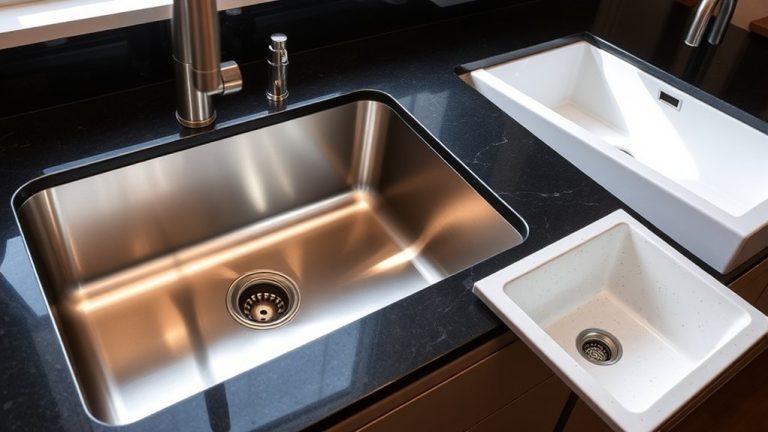
Matching caulk to your sink and countertop materials is essential for a polished, cohesive look. Color matching helps the caulk blend seamlessly with your surfaces, whether you have a white ceramic sink or a granite countertop.
Matching caulk to your surfaces creates a seamless, polished, and cohesive kitchen look.
For a subtle appearance, choose a caulk that closely matches the color of your sink or countertop. If you want the caulk to be less noticeable, go for clear or neutral shades.
Aesthetic considerations also involve texture and sheen. Matte caulk works better with matte finishes, while glossy caulk complements shiny surfaces. Take your time to pick a color and finish that match your overall kitchen style.
Proper matching not only boosts visual appeal but also makes repairs and maintenance less noticeable. Thoughtful color matching helps your sink area look neat, intentional, and well-designed.
Top Caulk Types for Kitchen Sinks: Pros and Cons
When you’re picking out caulk for your kitchen sink, think about how tough and flexible it needs to be. After all, the sink gets a lot of daily use, so you want something that can keep up. You also want a product that’s easy to work with, so you can get a neat, professional-looking finish without too much fuss. We’ll take a look at some of the top caulk types out there that strike a good balance between durability, flexibility, and ease of application—so you can pick the perfect one for your project.
Durability and Flexibility
Durability and flexibility are key factors to think about when selecting caulk for your kitchen sink. They show how well the seal can handle daily use and movement.
A durable caulk resists cracking, shrinking, and mold, helping your seal last longer. Flexibility lets the caulk expand and contract with temperature changes and sink movements without breaking.
If looks are important, choosing a color that matches your sink and counter can make everything blend seamlessly. Also, consider eco-friendly options—some caulks have fewer chemicals and are better for the environment.
Both durability and flexibility help keep your sink leak-free and look great over time. Picking the right caulk with these qualities means your sink stays functional and attractive for years.
Ease of Application
Choosing the right caulk for your kitchen sink really comes down to how easy it is to apply. You want something that glides smoothly and looks seamless, so color matching is key.
Some caulks come in different shades, making it easier to blend with your sink and countertop. Using tools like caulk guns also helps you get a neat, even bead, which cuts down on mess and rework.
Silicone-based caulks are generally easy to use, offering smooth application and good adhesion. Acrylic or latex caulks can be even simpler if you prefer easy cleanup with water.
Silicone Caulk: The Top Waterproof Choice
Silicone caulk is the top waterproof choice for kitchen sink applications because of its excellent sealing properties and flexibility. It sticks well to surfaces like ceramic, metal, and plastic, helping prevent water leaks.
When choosing silicone caulk, think about the color to match your sink or countertop for a seamless look. Also, pay attention to the thickness—thicker application can fill gaps better and create a waterproof seal.
Here’s a quick comparison:
| Feature | Why It Matters |
|---|---|
| Caulk color | Matches sink for a nice, finished look |
| Caulk thickness | Fills gaps fully, keeping everything waterproof |
With silicone, you’ll get a durable, flexible seal that resists mold and mildew. It’s perfect for kitchen sinks because its waterproof nature keeps your sink dry and protected from water damage.
Polyurethane Caulk: Best for Long-Lasting Durability
Polyurethane caulk is a great choice if you’re looking for something that lasts a long time. It resists water really well, so it’s perfect for kitchen sinks that are always around moisture. You won’t have to worry about it breaking down quickly.
One of the best things about polyurethane caulk is how well it sticks. It stays attached over time, even when you’re cleaning the sink frequently. And because it stays flexible, it can move a bit without cracking or leaking. All in all, it’s a reliable option for a durable, long-lasting seal.
Superior Water Resistance
Ever wondered which caulk offers the best water resistance for your kitchen sink? Polyurethane caulk is your top choice for superior water resistance. Its dense, flexible seal keeps water from seeping through gaps, protecting your cabinets and countertop.
When choosing a caulk color, go for shades that blend seamlessly with your sink and surrounding surfaces. This ensures a neat, professional look. Applying polyurethane caulk requires precise tools like a caulk gun to get a smooth, even bead.
If applied properly, this caulk resists moisture, mold, and mildew. It maintains a durable seal over time. Its water-resistant qualities make it perfect for areas constantly exposed to moisture, giving you peace of mind that your sink stays dry and leak-free for the long haul.
Excellent Adhesion Properties
Because durability is key in kitchen environments, polyurethane caulk stands out for its excellent adhesion properties. It bonds strongly to most surfaces, including porcelain, metal, and tile, ensuring a secure seal that won’t peel or crack over time.
This strong adhesion helps prevent water leaks and damage, making it perfect for sink areas. Plus, polyurethane caulk offers color matching options, so you can choose a shade that blends seamlessly with your sink and countertop for a clean look.
Its mold resistance adds another layer of durability by preventing mold and mildew growth in damp conditions. This combination of adhesion, color matching, and mold resistance makes polyurethane caulk a top choice for long-lasting, reliable sealing in your kitchen sink.
Long-Lasting Flexibility
While durability is key for kitchen sink caulking, staying flexible over time is just as important. It helps the seal adapt to movement and prevents cracks from forming.
Polyurethane caulk offers long-lasting flexibility, moving with shifts without cracking or peeling. Its texture stays soft yet resilient, ensuring a watertight seal.
When choosing polyurethane, think about the caulk color so it matches your sink or countertop seamlessly. Flexibility allows the caulk to handle expansion and contraction caused by temperature changes, avoiding future damage.
Keep in mind how well the caulk stretches without breaking, resists cracking over the years, and matches your decor. Also, consider how easy it is to apply based on its texture and what maintenance is needed to keep it flexible.
This way, your kitchen sink stays sealed and functional for years to come.
Latex Caulk: Easy to Apply and Clean Up
Latex caulk is a popular choice for sealing kitchen sinks because it’s simple to work with and easy to clean up afterward. You can easily match the caulk color to your sink or countertop, creating a seamless look.
Applying latex caulk only needs basic tools like a caulk gun, a utility knife, and a damp cloth. These help you get clean, precise lines and a smooth finish.
Latex caulk is forgiving, so if you make a mistake, you can quickly wipe it away and reapply. Cleanup is straightforward—just use soap and water before the caulk dries.
This makes it a convenient option for DIY projects or quick repairs. Its ease of use reduces frustration and saves time, especially if you’re new to caulking.
Butyl Rubber Caulk: Great for Flexible Seals
If you need a seal that can move with your sink and resist shifting or cracking over time, butyl rubber caulk is an excellent choice. Its flexibility makes it perfect for areas prone to movement or slight shifts, ensuring a long-lasting seal.
When choosing this caulk, consider the color to match your sink or countertop for a seamless look. Keep in mind, if you ever need to remove or replace it, caulk removal can be straightforward with the right tools.
Butyl rubber caulk also sticks well to various surfaces, providing a reliable seal. Here are some key points to think about:
- Its high flexibility helps prevent cracks over time
- Caulk color options allow for aesthetic customization
- Easy caulk removal simplifies maintenance
- Suitable for sealing around sinks and fixtures
- Best applied when surfaces are clean and dry for maximum adhesion
How to Pick the Right Caulk Based on Your Kitchen Needs
When you’re selecting caulk for your kitchen sink, it’s helpful to think about how it interacts with your surfaces and plumbing materials. You want something that sticks well and keeps everything sealed tight.
Also, consider how much movement there is around your sink—if there’s a lot of shifting or flexing, go for a flexible caulk that can handle that without cracking. And of course, choosing a water- and mold-resistant formula is super important so you can keep your kitchen clean and free from mold issues.
Picking the right caulk means you’ll get a durable, leak-proof seal that lasts for a long time, making your kitchen a safer, more comfortable space.
Material Compatibility Considerations
Choosing the right caulk depends a lot on what materials you’re sealing because not all caulks stick well to every surface. You should check compatibility to make sure you get a durable, effective seal.
For example, silicone works great on non-porous surfaces like glass and metal, while acrylic-based caulks are better for painted drywall. Think about matching the color so it blends seamlessly with your sink and countertop.
It’s also important to consider the environmental impact. Low-VOC or eco-friendly options help reduce indoor pollution.
Key things to keep in mind include surface compatibility, how well it sticks, color matching for looks, safety and environmental factors, and resistance to moisture and temperature changes.
Flexibility and Movement Needs
Selecting the right caulk depends on how much movement and flexibility your sink area experiences. If your sink gets a lot of use or shifts slightly, go for a flexible caulk that can expand and contract without cracking.
Caulk texture matters too. Smoother options like silicone give a seamless look and stay flexible better, while textured caulk can hide imperfections.
Color is important as well. Picking a shade that matches your sink or countertop creates a clean, unified appearance, especially if there’s slight movement.
If your sink is in a high-movement zone, choose a caulk with high elasticity to prevent gaps or damage over time.
Matching caulk texture and color carefully ensures both good function and a nice look in your kitchen.
Resistance to Water and Mold
Since your sink area is constantly exposed to water, making sure the caulk resists moisture and mold growth is key for long-lasting durability. You want a sealant that keeps mold at bay and stands up to frequent water contact.
When choosing, look for mold-resistant formulas for longevity, waterproof properties to prevent leaks, and surfaces that are easy to clean to reduce mold buildup. It’s also helpful to find color options that blend with your sink and countertop.
Don’t forget to compare costs to find solutions that are both effective and affordable. Opting for high water and mold resistance in your caulk saves you time and money on repairs.
While some options may cost more upfront, they tend to last longer and need fewer replacements. Prioritize durability and ensure it matches your kitchen’s style to make the best choice.
Applying Caulk: Tips for a Smooth, Professional Finish
To achieve a smooth, professional finish when applying caulk around your kitchen sink, focus on preparation and technique. Start by choosing a caulk color that matches or complements your sink and countertop for a seamless look.
Proper tool selection is vital; a quality caulking gun ensures steady application, while a silicone or caulk finishing tool helps create clean, even lines. Before applying, clean and dry the area thoroughly to guarantee good adhesion.
Cut the caulk tube tip at a 45-degree angle, making an opening just wide enough for controlled flow. When applying, steady your hand and use slow, even pressure on the gun.
Smooth the bead immediately with your finger or the finishing tool, applying gentle pressure to shape the caulk. For best results, work in small sections, inspecting your work frequently and reapplying as needed to maintain a consistent, professional appearance.
Common Caulking Mistakes and How to Avoid Them
Even experienced DIYers can make common mistakes when caulking around a kitchen sink, which can lead to leaks, unsightly finishes, or the need for rework. One mistake is rushing the caulk removal process, which can leave old residue that prevents proper adhesion.
Using the wrong caulk type or ignoring mold prevention measures also causes problems, especially in moist environments. Overfilling the joint or applying caulk unevenly results in an untidy look and potential gaps.
Not smoothing the caulk properly can trap air bubbles, weakening the seal. Failing to clean the surface thoroughly before application hampers adhesion and promotes mold growth.
To avoid these mistakes, properly remove old caulk before applying new. Use mold-resistant, high-quality caulk and make sure to clean and dry surfaces thoroughly.
Smooth the caulk for a clean finish and follow the manufacturer’s instructions carefully. This will help ensure a professional-looking, durable seal.
Frequently Asked Questions
How Often Should I Reapply Caulk in My Kitchen Sink?
You should reapply caulk in your kitchen sink every 1 to 2 years to keep it working well. How long it lasts can depend on how much you use and clean the sink, so check for cracks or gaps often.
Regular reapplication helps ensure a proper seal, which prevents leaks and water damage. If you notice the caulk is deteriorating or mold is forming, it’s probably time to reapply.
Staying on top of this makes your sink area cleaner and safer, so keep an eye out and reapply when needed.
Is Mold-Resistant Caulk Necessary for Kitchen Sinks?
Yes, mold-resistant caulk is necessary for kitchen sinks because it helps prevent mold growth in damp, hard-to-reach areas.
Mold prevention is important for keeping a healthy environment and avoiding unpleasant odors. Mold-resistant caulk also makes the seal more durable, so it lasts longer despite constant exposure to water and moisture.
Using this type of caulk saves you time and effort in maintenance and helps keep your kitchen cleaner.
Can I Use the Same Caulk for the Faucet and Sink?
You can use the same caulk for both the faucet and sink, but make sure it’s suitable for each surface.
With the right caulking tools, you can achieve a clean, seamless look. Consider color options that match or complement your fixtures for a polished finish.
Don’t put all your eggs in one basket—use different caulks if the materials require it, ensuring a durable and leak-free seal that lasts.
What Is the Best Way to Remove Old Caulk?
To remove old caulk, start with a utility knife or a caulk removal tool to carefully cut along the edges.
Use a caulk remover gel or a mixture of vinegar and water to soften the caulk, making it easier to scrape away.
Employ removal techniques like gentle scraping and wiping with a damp cloth.
For stubborn residues, a silicone caulk remover is effective, ensuring your surface is clean and ready for fresh caulk.
Does Caulk Need Sealing After Application?
Yes, caulk generally needs sealing after application to ensure a waterproof, long-lasting seal. When choosing caulk, think about the color to match your sink or tiles, and pick a texture that’s suited for kitchen use, like smooth or silicone-based for flexibility.
Proper sealing helps prevent water leaks and mold growth. Take your time to smooth the caulk evenly and let it cure completely for the best results.
Conclusion
Choosing the right caulk for your kitchen sink might seem simple, but it’s your secret weapon against leaks and water damage.
With the right sealant, you’ll prevent problems that can turn your kitchen into a disaster zone faster than you can say “flood.”
So, pick wisely, apply carefully, and keep that sink watertight. Because a good seal isn’t just a fix, it’s your first line of defense against chaos.
When it comes to kitchen sinks, silicone caulk is generally the best choice. It’s waterproof, flexible, and resistant to mold and mildew.
Look for a 100% silicone caulk labeled for kitchen and bathroom use for the best results.