Disinfect Your Kitchen Sink Naturally Without Bleach
Many people struggle with keeping their kitchen sinks clean and germ-free without relying on harsh chemicals like bleach. It can feel overwhelming to find effective, natural ways to disinfect that also smell fresh and don’t involve toxic ingredients. You’re not alone in wanting a safer, eco-friendly solution that works.
To disinfect your kitchen sink naturally without bleach, start by sprinkling baking soda over the surface and pouring vinegar to activate a fizzing reaction. Let it sit for 5-10 minutes, then gently scrub with a soft brush. Rinse thoroughly and finish by rubbing lemon halves or adding a few drops of tea tree or eucalyptus oil for antimicrobial benefits and freshness.
Keep your sink clean and germ-free with these simple tips—if you continue, you’ll uncover even more effective techniques.
Key Takeaways
- Mix vinegar and baking soda to create a fizzing reaction that helps break down bacteria without using harsh chemicals.
- Scrubbing the sink with lemon halves not only cleans naturally but also leaves a fresh scent and adds antibacterial benefits.
- Add a few drops of tea tree or eucalyptus essential oil to your cleaning mix for extra antimicrobial power.
- After cleaning, rinse the sink thoroughly with warm water to wash away residues and bacteria.
- Keep your sink hygienic by wiping and rinsing regularly, and try to keep clutter to prevent germs from building up.
Why Disinfecting Your Kitchen Sink Naturally Is Important
Disinfecting your kitchen sink naturally is important because it helps eliminate harmful bacteria and germs without exposing yourself to harsh chemicals. Your sink can be a breeding ground for bacteria from food scraps, grease, and water residue, which can spread illnesses.
Regular natural disinfection keeps your sink hygienic and safe for daily use. Proper plumbing maintenance also plays a role, preventing leaks and mold buildup that can hide germs.
Sink accessories like soap dispensers, strainers, and spray nozzles can trap bacteria if not cleaned often. That’s why natural disinfectants are essential for keeping them clean.
Using eco-friendly solutions ensures you don’t introduce toxic chemicals into your kitchen environment. Consistent natural cleaning routines protect your health and extend the life of your plumbing fixtures and accessories.
How Natural Disinfectants Kill Germs in Your Sink
Natural disinfectants kill germs in your sink by disrupting their cell structures or neutralizing their ability to reproduce. They work through specific chemical reactions that break down bacterial walls or deactivate enzymes essential for microbial survival.
For example, vinegar’s acetic acid penetrates cell membranes, causing leakage and cell death. Likewise, essential oils like tea tree oil contain compounds that interfere with microbial functions, leading to their destruction.
The effectiveness of these disinfectants depends on proper ingredient sourcing. Using high-quality, pure ingredients ensures potent chemical reactions. When choosing natural ingredients, sourcing from reputable suppliers guarantees their potency and safety.
Unlike synthetic chemicals, natural disinfectants rely on these targeted chemical reactions to eliminate germs without harmful side effects. By understanding how these reactions work, you can confidently use natural disinfectants to keep your sink hygienic and safe.
Proper ingredient sourcing ensures you get the most effective and reliable results.
Choosing the Best Natural Ingredients for Sink Disinfection
How do you choose the best natural ingredients for sink disinfection? First, prioritize kitchen safety by selecting ingredients proven to eliminate germs without harmful chemicals. Look for eco-friendly products like white vinegar, lemon juice, and tea tree oil, which are naturally antibacterial and safe for your family.
Consider the environmental impact of your choices—opt for ingredients that are biodegradable and sustainably sourced. Lemon juice not only disinfects but also leaves a fresh scent, while tea tree oil offers potent antimicrobial properties. Baking soda is also effective for scrubbing and deodorizing without toxicity.
Avoid ingredients with artificial fragrances or harsh chemicals that could compromise your health or harm the environment. When choosing natural disinfectants, read labels carefully and verify their efficacy.
Step-By-Step Guide to Cleaning Your Sink With Vinegar and Baking Soda
First things first, grab some vinegar and baking soda to make your cleaning mixture. You want enough to cover the whole sink area, so don’t be shy! Once you’ve got your ingredients, sprinkle the baking soda all over the sink and then pour in the vinegar. It’ll fizz up — that’s normal, and it’s doing its magic.
After you’ve applied the mixture, just give it a few minutes to sit and work on breaking down any grime or stains. When you’re ready, rinse everything away with plenty of water, and your sink will be looking fresh and clean in no time!
Preparing Your Cleaning Solution
Have you ever wondered how to create an effective and eco-friendly cleaning solution for your sink? Start by gathering equal parts of white vinegar and water, which serve as your main disinfectants.
Add a few tablespoons of baking soda to the vinegar mixture. This reacts to lift grime and neutralize odors. To keep your sink sparkling and support plumbing maintenance, avoid harsh chemicals and focus on natural ingredients.
Proper kitchen organization helps you keep these supplies accessible, making regular cleaning easier. Mix the vinegar and water in a spray bottle for easy application. Keep baking soda handy in a shaker for spot cleaning.
This simple, natural solution guarantees your sink stays clean, fresh, and safe without relying on bleach or other harmful chemicals.
Applying and Rinsing Properly
Once you’ve prepared your natural cleaning solution, it’s time to put it into action. Start by applying the mixture evenly across your sink, focusing on areas with grime or stains. To guarantee effective cleaning, follow these steps:
- Spread the vinegar and baking soda mixture all over the surface, letting it fizz and loosen dirt.
- Let it sit for 5-10 minutes to break down grime and disinfect.
- Scrub gently with a soft brush or sponge, paying attention to the drain and edges to keep your plumbing in good shape.
- Rinse thoroughly with warm water, making sure all residue is washed away and your sink is spotless. This supports your kitchen organization and hygiene.
Proper application and rinsing will make your sink shine and keep your plumbing in top shape.
How to Use Lemon and Essential Oils to Disinfect and Freshen Your Sink
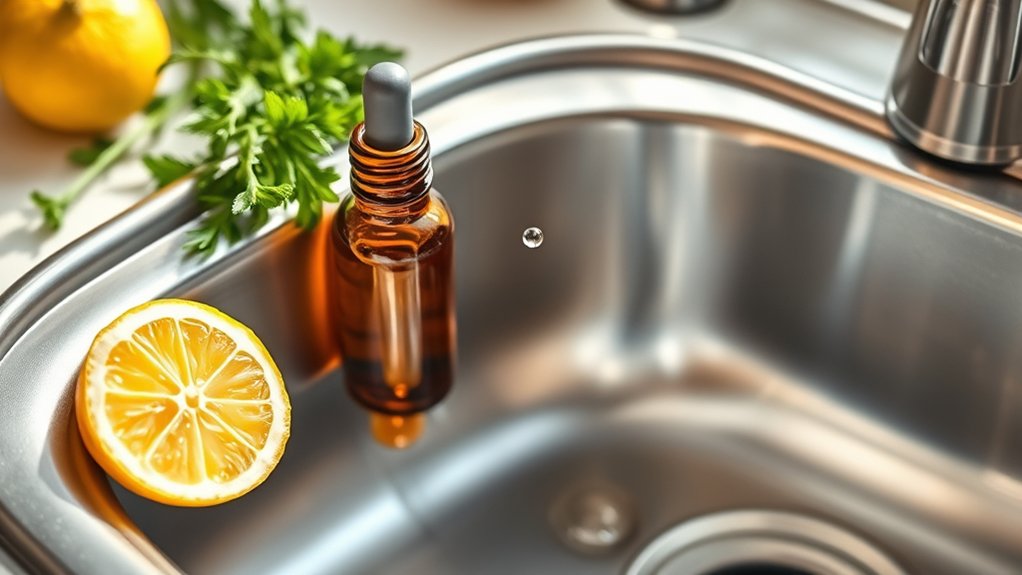
Lemon and essential oils are natural, effective ways to disinfect and refresh your kitchen sink without harsh chemicals. Lemon benefits include its natural antibacterial properties and fresh scent, making it a great addition to your cleaning routine.
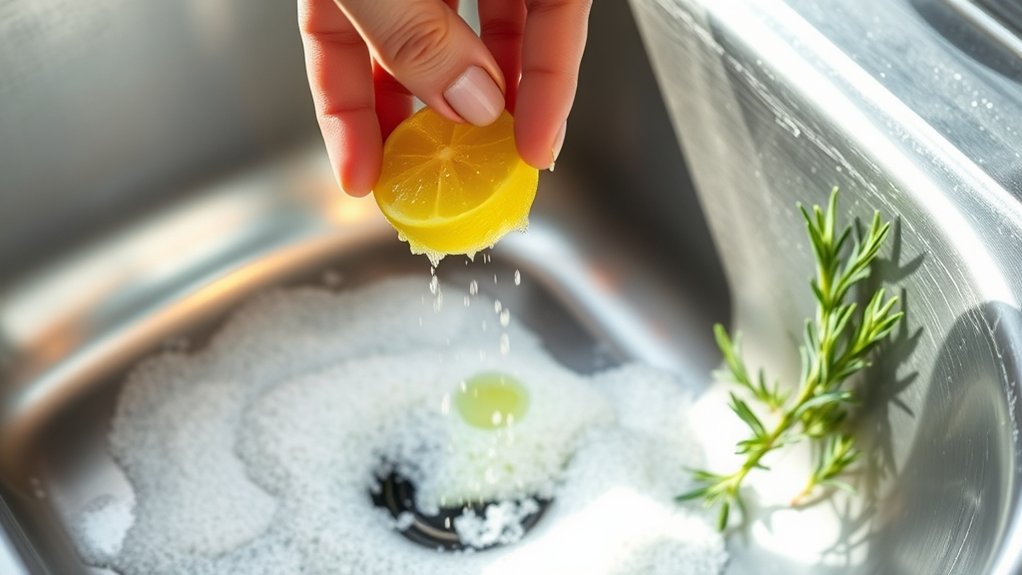
To use lemon, cut a lemon in half and scrub the sink with the cut sides, focusing on stains and buildup. Let it sit for a few minutes before rinsing with warm water for a bright, clean surface.
Essential oil uses are versatile; tea tree or eucalyptus oils are known for their antimicrobial effects. Add a few drops of your preferred essential oil to a cup of baking soda or vinegar, then sprinkle or pour this mixture into the sink.
Scrub gently with a sponge or brush, then rinse thoroughly. This method not only disinfects but also leaves your sink smelling fresh and revitalized naturally.
Make Your Own Natural Sink Cleaner Without Harsh Chemicals
Want to keep your sink sparkling clean without all those harsh chemicals? You can make your own natural sink cleaner with just a few simple ingredients like baking soda, vinegar, and lemon juice. It’s easy, budget-friendly, and safe for your family and the environment.
Just sprinkle some baking soda directly into your sink, then add a splash of vinegar. Watch it fizz—that’s the reaction helping to break down grime and stains. After it’s done fizzing, give it a good scrub with a sponge or brush. For a fresh, citrusy scent, squeeze some lemon juice over the area or toss in lemon peels. It’s a natural way to disinfect and leave your sink smelling great, all without any harsh chemicals.
Natural Cleaning Ingredients
Are harsh chemical cleaners really necessary to keep your kitchen sink spotless? Not at all. You can rely on natural cleaning ingredients that are both effective and gentle.
For example, baking soda acts as a gentle abrasive, while white vinegar disinfects and deodorizes. Lemon juice provides a fresh scent and natural antibacterial properties.
Essential oils like tea tree or eucalyptus add antimicrobial power and a pleasant aroma. When choosing kitchen gadgets or sink accessories, go for eco-friendly options like bamboo brushes or silicone scrubbers.
Remember, the key is understanding the purpose of each ingredient:
- Baking soda for scrubbing
- Vinegar for disinfecting
- Lemon for deodorizing
- Essential oils for antimicrobial effects
DIY Cleaning Recipes
Creating your own natural sink cleaner is simple and effective. You only need a few common ingredients you probably already have at home.
You can combine baking soda, vinegar, and essential oils to make a powerful, chemical-free cleaner. This DIY recipe promotes kitchen safety and helps keep your plumbing healthy by avoiding harsh chemicals that can damage pipes.
To keep your sink sparkling and odor-free, try this basic formula:
| Ingredient | Purpose |
|---|---|
| Baking soda | Scrubs and deodorizes |
| White vinegar | Cuts grease, disinfects |
| Lemon essential oil | Adds fresh scent, boosts cleaning |
Mix baking soda with a few drops of lemon oil, then pour vinegar over it. Scrub gently, rinse, and enjoy a naturally clean sink.
Safe Disinfection Methods
While harsh chemicals can seem effective, there are safe, natural methods to disinfect your kitchen sink without compromising health or the environment. To do this, consider these methods:
- Use a mixture of white vinegar and water to eliminate bacteria without damaging kitchen appliances or food storage containers.
- Sprinkle baking soda on surfaces, then scrub gently with a damp cloth to lift grime and neutralize odors.
- Rinse with hot water to flush out remaining bacteria and residues.
- Finish with a wipe using lemon juice or essential oils like tea tree for added antimicrobial power and a fresh scent.
These natural solutions keep your sink clean, safe for food storage, and free from harsh chemicals, ensuring your kitchen remains healthy and eco-friendly.
Daily Tips to Keep Your Kitchen Sink Clean and Germ-Free
Maintaining a clean and germ-free kitchen sink doesn’t require complex routines; simple daily habits can make a big difference. Start by rinsing the sink after each use to remove food particles and prevent buildup.
Rinse your sink daily to prevent buildup and keep it clean effortlessly.
Wipe down the surfaces with a natural disinfectant like vinegar or lemon juice to keep germs at bay.
Regularly check your kitchen decor and make sure no clutter piles up around the sink, as that can hide bacteria. Proper appliance maintenance, like cleaning the drain and disposal, helps prevent odors and bacteria growth.
Use a soft brush to scrub the sink basin weekly, paying attention to corners and seams where grime can hide. Always dry the sink with a clean cloth afterward to reduce moisture where bacteria thrive.
These small, consistent steps make your sink less inviting to germs and keep it looking fresh, supporting a healthier kitchen environment.
Common Mistakes When Disinfecting Your Sink Naturally and How to Avoid Them
A lot of people make mistakes when they’re trying to disinfect their sink naturally. For example, some might overuse harsh chemicals or forget to rinse properly afterward. These slip-ups can make the cleaning less effective or even damage your sink over time. That’s why it’s so important to pick the right methods and use them correctly.
Knowing what to avoid can really help you keep your sink clean and safe, without taking unnecessary risks. It’s all about finding that balance between being gentle and getting the job done right.
Overusing Harsh Chemicals
Using harsh chemicals to disinfect your sink might seem effective, but overdoing it can cause more harm than good. Relying heavily on synthetic cleaners can damage your plumbing, harm your skin, and pollute the environment. To avoid these issues, consider chemical alternatives that are safer and eco-friendly.
Here are four tips:
- Limit the use of concentrated disinfectants to prevent residue buildup.
- Opt for natural options like vinegar or baking soda instead of synthetic cleaners.
- Use disinfectants only when necessary, not as a daily routine.
- Follow instructions carefully to avoid overuse, which can lead to chemical exposure.
Neglecting Proper Rinsing
Even when you choose natural disinfectants like vinegar or baking soda, skipping proper rinsing can leave residues that reduce their effectiveness and compromise cleanliness. Failing to rinse thoroughly can cause leftover substances to cling to your sink and kitchen gadgets, creating a breeding ground for bacteria.
To keep your sink truly clean, make rinsing a regular part of your cleaning routine. This ensures all disinfectants are washed away. Neglecting this step can also leave streaks or spots, making your sink look less hygienic.
Be diligent about rinsing after each disinfecting session. This simple step guarantees no residue remains, maximizing the benefits of your natural disinfectants and keeping your kitchen safe and sparkling.
Using Inadequate Disinfectants
Choosing the right disinfectant is crucial because not all natural options are equally effective against germs. Relying on inadequate disinfectants can leave your sink open to bacteria and viruses.
Avoid the temptation of synthetic cleaners, which often contain chemicals that can be harmful to your health and the environment. To ensure proper sanitation, keep these points in mind:
- Using only vinegar or lemon may not kill all germs.
- Unproven natural disinfectants can give you a false sense of security.
- Ignoring the proper contact time reduces how well the disinfectant works.
- Choosing products without antimicrobial properties leaves bacteria behind.
Always choose natural disinfectants that are proven effective, and stay aware of the risks associated with synthetic cleaners and chemical hazards.
Comparing Natural Disinfectants: Which Works Best for Your Needs?
When it comes to disinfecting your kitchen sink naturally, understanding the strengths and limitations of each option is key. Different disinfectants work better depending on your needs, whether you’re focused on safety, eco-friendliness, or effectiveness.
For example, vinegar is great for everyday cleaning and can help with water filtration by reducing mineral buildup. However, it might not eliminate all germs completely.
Tea tree oil offers antimicrobial benefits but needs to be properly diluted to be safe and effective. Hydrogen peroxide is powerful and quick-acting, making it ideal for fast sanitation, but overuse can damage surfaces.
| Disinfectant | Best For | Limitations |
|---|---|---|
| Vinegar | Daily cleaning, eco-friendly | Less effective on bacteria |
| Tea Tree Oil | Natural antimicrobial | Must be diluted properly |
| Hydrogen Peroxide | Quick disinfection | Can damage surfaces over time |
Choose based on your kitchen style, water filtration needs, and safety preferences for a naturally clean sink.
When to Call a Professional for Deep Sink Cleaning
While regular cleaning keeps your sink looking fresh, there are times when professional deep cleaning is needed to really get rid of stubborn grime, mineral buildup, or mold that regular methods can’t handle. If you notice persistent stains, foul odors, or visible mold, it’s a sign your kitchen hygiene needs expert attention.
Deep cleaning pros use specialized tools and techniques to thoroughly sterilize surfaces, making sure your sink is hygienic and safe. Consider calling a professional if:
- You see lingering discoloration or mineral deposits even after cleaning.
- Mold or mildew keeps coming back quickly after surface cleaning.
- The sink drains slowly, which could mean hidden buildup.
- You want to ensure full sanitation for health reasons or to reduce allergens.
Getting professional help guarantees a deep clean, restoring your sink’s cleanliness and preventing future issues. When you’re unsure, investing in expert cleaning helps keep your kitchen hygiene at the highest standard.
Frequently Asked Questions
Are Natural Disinfectants as Effective as Chemical Cleaners?
Yes, natural disinfectants like plant-based solutions can be just as effective as chemical cleaners when used properly. They target germs effectively while offering a lower environmental impact, making them a healthier choice for your kitchen.
You can confidently use ingredients like vinegar or tea tree oil to disinfect surfaces, knowing you’re reducing harmful chemical exposure and supporting eco-friendly practices. Natural disinfectants provide a safe, sustainable way to keep your space clean.
How Often Should I Disinfect My Kitchen Sink Naturally?
You should disinfect your kitchen sink naturally at least once a day, balancing cleaning frequency with natural maintenance.
While it might seem like overkill, daily disinfecting helps prevent bacteria buildup, much like brushing your teeth.
Using natural disinfectants like vinegar or lemon keeps your sink sanitary without harsh chemicals.
Regular cleaning not only maintains hygiene but also helps preserve your sink’s appearance.
It’s a simple, effective way to prioritize health and eco-friendliness in your kitchen.
Can Natural Disinfectants Stain or Damage My Sink?
Natural disinfectants generally won’t stain or damage your sink if you consider surface staining and material compatibility. For example, vinegar may cause discoloration on certain surfaces, but most stainless steel or porcelain sinks handle it well.
Always test a small area first and avoid abrasive scrubbing. Using gentle, compatible solutions helps keep your sink clean and undamaged.
This way, you can maintain its appearance and longevity without using harsh chemicals.
Are Homemade Disinfectants Safe for All Types of Sinks?
Homemade disinfectants with eco-friendly ingredients are generally safe for most sinks, but you should double-check your sink material first.
For example, natural vinegar and baking soda work well with ceramic and stainless steel, while some stones like granite may need gentler solutions.
Using DIY cleaning methods helps you avoid harsh chemicals, but always test a small area first to prevent any potential damage.
How Do Natural Disinfectants Compare in Cost to Bleach?
Natural disinfectants are generally more affordable than bleach, especially when you consider ingredient availability. You might already have vinegar, baking soda, or lemon on hand, making the cost comparison even lower.
While bleach can be inexpensive at first, ongoing purchases add up. Natural ingredients often last longer and are multipurpose, which can save you money over time.
Plus, they’re safer for your home and the environment. That makes natural disinfectants not only a cost-effective choice but also an eco-friendly one.
Conclusion
So, next time you reach for that harsh bleach, remember your kitchen sink’s silent plea for a natural touch.
Ironically, the very ingredients you toss aside—lemon, vinegar, and baking soda—are the unsung heroes fighting germs while keeping your space fresh.
It’s almost poetic how simple, everyday items can outshine chemical cleaners, leaving your sink sparkling and your conscience clear.
Who knew that nature’s humble heroes could turn your kitchen into a germ-free oasis?
Using these natural remedies is a safe, effective way to disinfect your sink without relying on bleach.