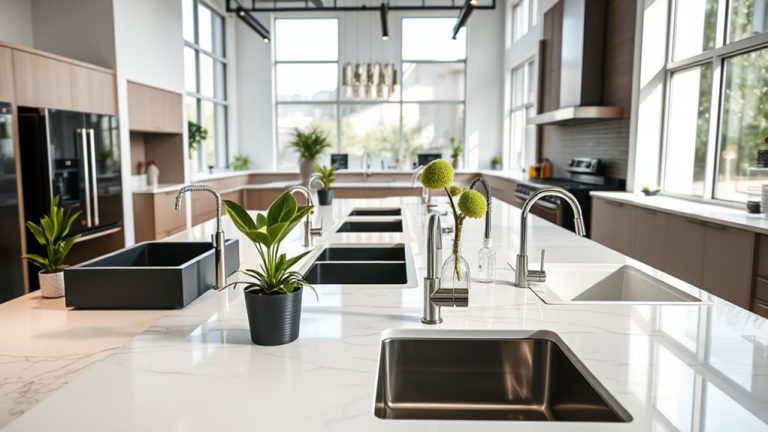
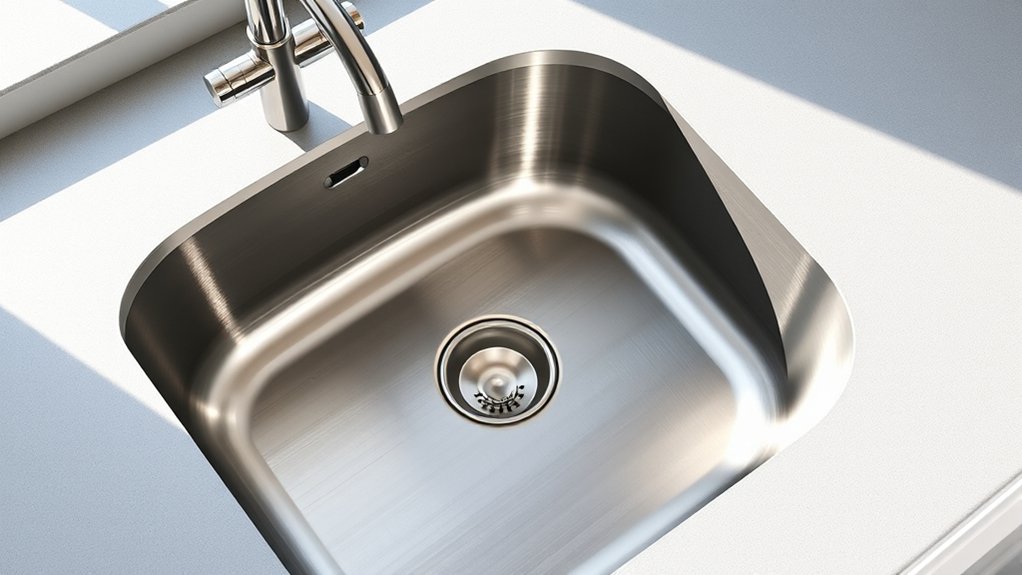
Best Material for a Kitchen Sink?
Are you overwhelmed by the endless options for your kitchen sink? You’re not alone—many people struggle to find the perfect balance between style, durability, and maintenance. Choosing the right material can make a huge difference in how your kitchen functions every day.
The best material for your kitchen sink depends on your needs and style. Durable options like stainless steel, composite granite, and fireclay are great for busy kitchens because they resist scratches, stains, and heat.
Consider aesthetics, maintenance, and eco-friendliness to find the right fit.
Remember, proper care extends your sink’s lifespan. If you want to investigate the pros, cons, and tips for choosing the perfect sink for your space, keep going.
Key Takeaways
- Stainless steel is highly durable, resistant to stains, scratches, and heat, making it perfect for heavy-use kitchens.
- Composite granite offers scratch and chip resistance with a modern look, great for busy households.
- Porcelain and fireclay provide classic, elegant appearances but may chip or stain over time with heavy use.
- Eco-friendly options like recycled stainless steel and composites are sustainable, durable, and easy to maintain.
- Proper installation, maintenance, and choosing the right material based on your kitchen needs will help ensure longevity and top performance.
How to Choose the Right Kitchen Sink Material for Your Needs
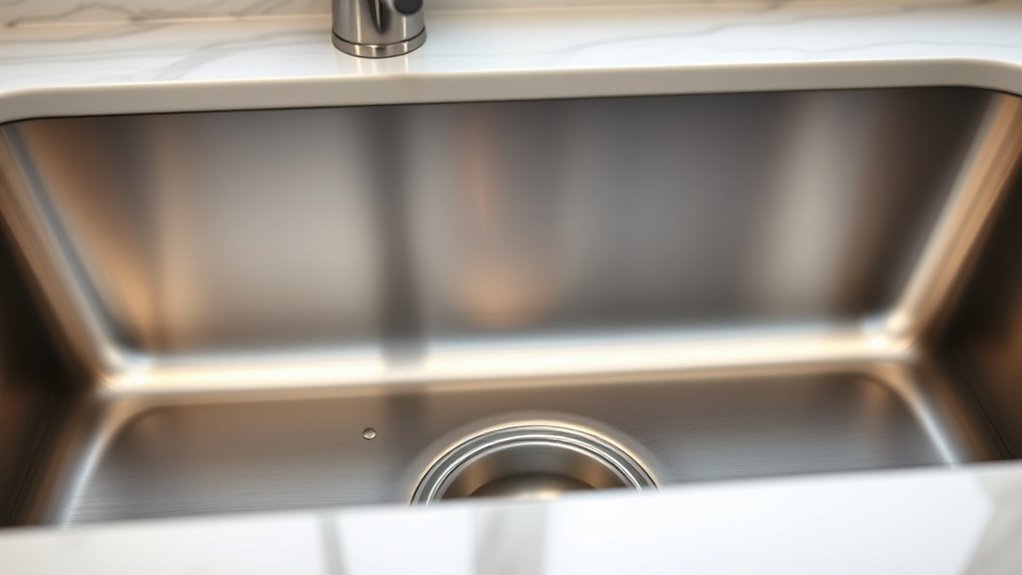
Choosing the right kitchen sink material depends on your daily habits and priorities. Think about how often you use your sink and what tasks you do most.
If you often wash large pots or heavy dishes, a durable material like stainless steel might be best because it resists impact and scratches. Consider your preferences for accessories too—some materials, like granite composite, work well with custom setups, making installation easier.
Water filtration options are important as well. If you want built-in filtration, look for materials that can easily integrate with filtration systems. Some materials resist staining or corrosion, which helps keep your sink long-lasting and safe.
Don’t forget about maintenance. Some surfaces are simpler to clean and stay hygienic longer. In the end, choose a sink that balances durability, accessory compatibility, and filtration needs to match your lifestyle and keep your kitchen running smoothly.
What Are the Most Common Kitchen Sink Materials?
When it comes to kitchen sinks, stainless steel, composite granite, and porcelain are by far the most common materials you’ll come across. They each have their own unique features, so it’s good to know what you’re getting into before making a decision.
Stainless steel sinks are popular because they’re durable, easy to clean, and usually more affordable. Plus, they tend to fit well with most kitchen styles. Composite granite sinks are a bit more resistant to scratching and chipping, and they have a nice, modern look. Porcelain sinks, on the other hand, offer a classic, elegant appearance but might require a little more care to keep them looking their best.
Understanding how durable each material is and what kind of maintenance they need can really help you pick the perfect sink for your kitchen. Knowing which types last longer and what factors can affect their longevity will guide you toward a choice that works well for your lifestyle.
Popular Material Types
When it comes to choosing a kitchen sink, some materials really stand out because of their durability, look, and how easy they are to maintain. Stainless steel is a popular pick, giving a sleek appearance, resisting stains, and cleaning up quickly.
Composite granite sinks are also great—they’re durable and have a warm, matte finish that hides scratches pretty well. Fireclay and porcelain sinks have a timeless vibe, with smooth, glossy surfaces that resist stains and heat.
These materials work well with accessories like cutting boards or colanders, making your sink more functional. Plus, choosing sinks that are compatible with water-saving fixtures helps conserve water without losing performance.
Think about your style, how often you use your sink, and how much effort you want to put into maintenance. That way, you can pick the best material for your kitchen.
Material Durability Factors
Understanding the durability of different kitchen sink materials helps you make a smart choice for your space. Durability factors include resistance to scratches, chips, and stains, which directly impact kitchen safety by preventing bacteria buildup and damage.
For example, stainless steel sinks are highly durable, resistant to water filtration issues, and easy to clean, making them a popular choice. On the other hand, porcelain sinks may chip or stain over time but offer a sleek look.
Composite materials are strong but can be prone to scratching if not cared for properly. Considering these factors ensures your sink withstands daily use, maintains hygiene, and supports water filtration needs.
Ultimately, this helps keep your kitchen safe and functional for years to come.
Which Materials Are the Most Durable and Easy to Maintain?
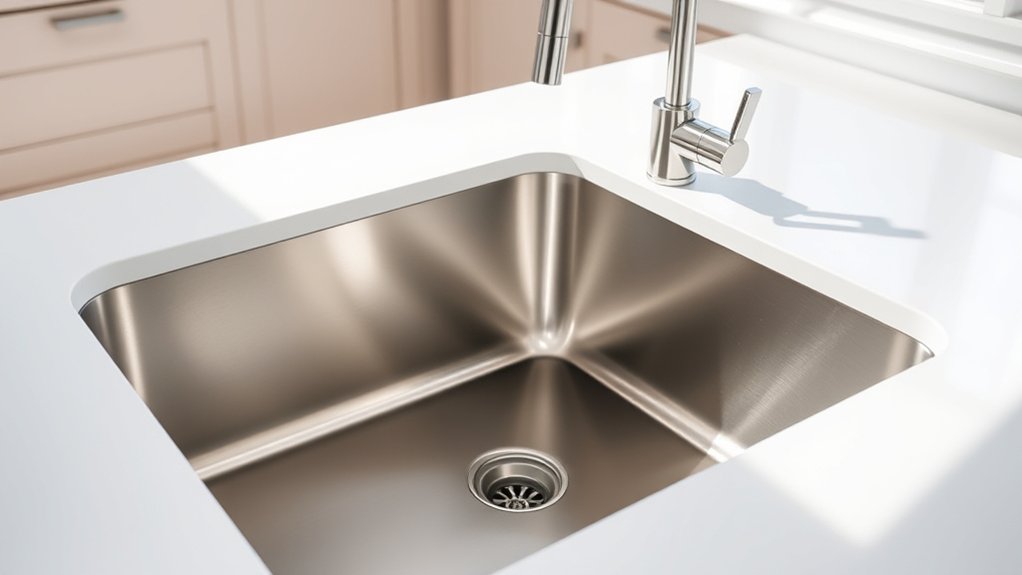
Choosing a durable and easy-to-maintain kitchen sink material is key for a hassle-free cooking and cleaning experience. Materials like stainless steel, composite granite, and fireclay stand out for their resilience and low upkeep.
- Stainless steel resists stains, rust, and scratches, making it perfect for busy kitchens. It also works well with various sink accessories, boosting functionality.
- Composite granite combines strength with a non-porous surface, which helps prevent staining and reduces bacteria buildup. Its durability means less maintenance over time.
- Fireclay offers a smooth, glossy finish that’s resistant to chipping and scratching, making cleaning routines easier.
These materials often have water-saving features like aerators that help conserve water during daily tasks. Picking the right material ensures your sink stays reliable, stylish, and easy to care for.
How Do Aesthetic Options and Finishes Affect Your Kitchen Style?
Your choice of sink color and finish really plays a big role in shaping your kitchen’s overall look. It can either blend seamlessly for a harmonious vibe or stand out for a bold contrast with your cabinets and countertops. Picking the right finish helps you achieve the style you’re going for, whether that’s sleek and modern, cozy and rustic, or timeless and traditional.
Thinking about how your sink matches or contrasts with the rest of your kitchen is key to pulling the whole look together. When everything works well together, it not only looks polished but also boosts your kitchen’s visual appeal. So, taking style compatibility into account can really make a difference in creating a space that feels just right for you.
Color Coordination and Harmony
The aesthetic options and finishes you choose for your kitchen sink can really influence your space’s overall style. Colors and textures are key to creating a harmonious look.
To keep things balanced, try matching or complementing your countertop and cabinet colors for a cohesive vibe.
Mixing different textures, like matte with glossy finishes, can add visual interest and keep the design lively.
You can go neutral for versatility or pick bold colors to make a statement piece that stands out.
Style Compatibility and Aesthetics
Aesthetic options and finishes play a crucial role in shaping your kitchen’s overall style, as they can either enhance or clash with your existing design elements. When choosing a sink, think about color options that complement your cabinets, countertops, and backsplash.
A sleek stainless steel sink works well with modern, minimalist styles, while a matte black finish can add sophistication to contemporary or industrial designs. For traditional kitchens, porcelain or farmhouse-style sinks with warm tones help create a cozy feel.
Style matching is key—make sure your sink’s finish and shape align with your overall theme. A unified look creates visual harmony, while mismatched finishes can create discord. Ultimately, selecting a sink that fits your aesthetic preferences enhances your kitchen’s style and makes the space feel cohesive.
What Is the Cost of Different Kitchen Sink Materials?
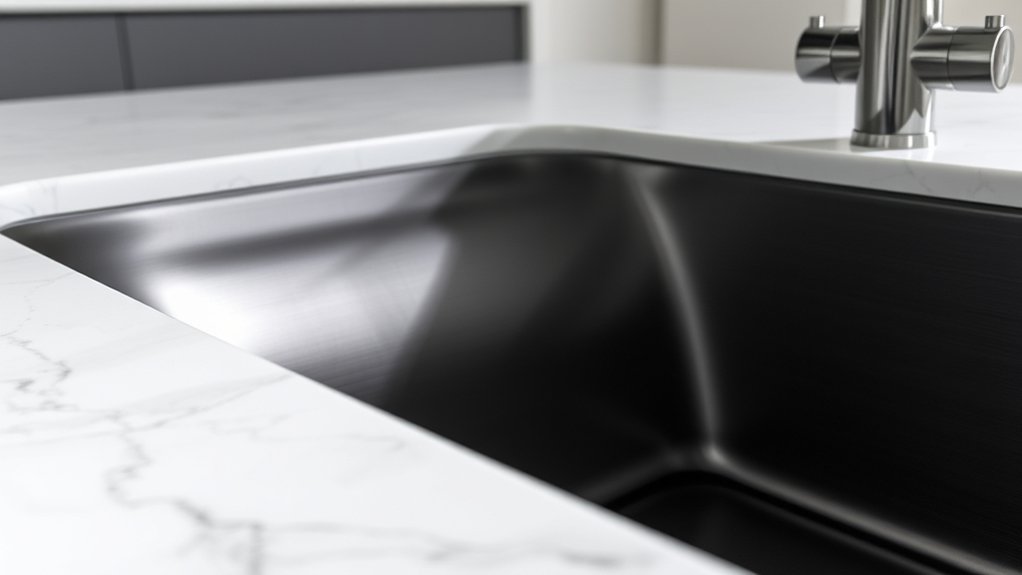
When comparing kitchen sink materials, cost can vary quite a bit depending on the type you pick. For instance, stainless steel sinks are usually the most affordable, fitting well into many kitchen styles and easy to install with existing plumbing fixtures.
On the other hand, composite granite sinks tend to be more expensive but they offer great durability and a sleek, modern look.
Consider these key points:
- Budget: Stainless steel sinks are budget-friendly, making them a good choice for cost-conscious renovations.
- Durability: Quartz and granite options cost more upfront but resist scratches and chips better.
- Design Flexibility: Materials like fireclay or copper can really elevate your kitchen’s look but often come with higher prices.
Ultimately, your choice depends on your budget, style preferences, and how much you’re willing to invest in both the look and longevity of your kitchen fixtures.
How Resistant Are Various Sinks to Stains, Scratches, and Heat?
Understanding how well your sink resists stains, scratches, and heat is essential for choosing the right material for your kitchen. Some materials, like stainless steel, are highly resistant to stains and scratches, making them easy to maintain. They also handle heat well, so hot pots won’t damage the surface.
Composite granite sinks resist scratches and stains better than traditional options and can withstand high temperatures, but they may show marks over time. Enamel-coated sinks are stylish and available in many color options, but they’re more prone to chipping and staining.
To guarantee longevity, consider installation tips such as proper support and avoiding abrasive cleaners. When selecting a material, think about how often you cook and clean, and choose one that aligns with your lifestyle.
Be aware that color options vary by material, so pick a hue that hides potential stains or scratches. This will help keep your sink looking good longer.
Are Eco-Friendly Sink Materials a Good Choice?
Are eco-friendly sink materials a good choice? Well, they often come with some pretty nice environmental benefits, but it’s worth thinking about how durable they are and what kind of maintenance they need. Sometimes, they can be more or less expensive, and finding them might be easier or harder depending on where you live.
Getting a good handle on these factors can help you decide if they’re a practical and sustainable option for your kitchen.
Environmental Benefits Overview
Are eco-friendly sink materials truly a wise choice for your kitchen? They often offer significant environmental benefits, making them an attractive option. By choosing these materials, you support:
1. Reduced waste
Many eco-friendly sinks are made through sustainable manufacturing, which minimizes harmful emissions and resource use.
2. Enhanced recycling
Some materials, like recycled stainless steel or composite options, can be recycled, promoting a circular use of resources.
3. Lower ecological footprint
Using sustainable materials helps decrease the environmental impact linked to raw extraction and manufacturing.
Choosing eco-friendly sinks aligns with a greener lifestyle, helping conserve resources and reduce pollution. The environmental benefits make these materials a thoughtful, responsible choice for your kitchen upgrade.
Durability and Maintenance
Wondering if eco-friendly sink materials can handle daily wear and tear? Many options, like recycled glass or bamboo composites, are surprisingly tough and resistant to scratches and stains.
Regular maintenance is simple—just clean with mild soap and water to keep your sink looking fresh. Using quality accessories, like protective mats or cutting boards, can help extend the life of eco-friendly materials.
Installing water filtration systems can reduce mineral buildup and deposits that might damage surfaces over time. While some eco-friendly options need a bit more care at first, they generally hold up well with routine maintenance.
Choosing durable, eco-conscious materials ensures your sink stays functional, attractive, and easy to care for in the long run.
Cost and Availability
While eco-friendly sink materials are durable and easy to maintain, many people wonder if they fit within a budget and are easy to find. The answer often depends on a few key factors:
- Cost: Eco-friendly options like recycled glass or bamboo can cost more upfront but might save you money in the long run because they last longer.
- Availability: Not all eco-friendly materials are stocked locally, so you may need to order them online or from specialty suppliers.
- Installation: Keep in mind that eco-friendly materials may need specific sink accessories or professional help, which can add to the overall cost.
Thinking about these factors can help you decide whether eco-friendly sinks are a practical choice for your kitchen renovation.
What Installation Considerations and Compatibility Should You Know?
Before installing a new kitchen sink, it’s important to check your current setup to make sure everything fits. Start by measuring the size and shape of your existing opening to see if the new sink will fit properly.
Next, look at your plumbing. Make sure your pipes and connections match the drain and water supply lines of the new sink. If you’re still using older materials like galvanized pipes, you might want to upgrade to avoid leaks or clogs.
When it comes to the sink installation, check if your countertop can support the weight of the new sink, especially if it’s made from heavy materials like stone or cast iron. Accurate measurements are key to prevent overhang or misalignment.
Don’t forget to consider the placement of the faucet and any accessories. Make sure they line up with your plumbing and cabinet layout for a smooth setup.
Taking these steps now can save you time later, help prevent issues, and ensure your new kitchen sink works perfectly.
Which Sink Materials Are Best for Heavy-Use or High-Traffic Kitchens?
Choosing the right sink material is crucial if your kitchen sees heavy use or experiences high traffic. You need durability, easy maintenance, and resistance to daily wear and tear. Materials like stainless steel, fireclay, and granite composite stand out because they handle heavy use well.
Selecting durable sink materials like stainless steel, fireclay, or granite composite ensures long-lasting performance in busy kitchens.
To keep your sink looking its best, follow these tips:
- Use stainless steel’s resilience to your advantage with regular cleaning to prevent stains and scratches.
- Opt for fireclay or granite composite if you want a surface that resists chipping and staining over time.
- Install water-saving fixtures to reduce water waste, especially in busy kitchens with frequent dishwashing.
Choosing durable materials along with proper cleaning and water-saving fixtures keeps your sink functional and attractive, even with constant use. This approach minimizes maintenance and helps keep your kitchen efficient and eco-friendly.
How Can You Care for and Extend the Life of Your Kitchen Sink?
Proper care can significantly extend the life of your kitchen sink, keeping it functional and looking great for years. Regular cleaning helps prevent grime, mineral buildup, and stains from forming.
Use gentle, non-abrasive cleaners suited to your sink’s material to avoid scratches or damage. For stainless steel sinks, wiping with a soft cloth and mild soap works well.
Composite sinks can be cleaned with a mixture of baking soda and water. Be sure to rinse thoroughly and dry after each use to prevent water spots.
Checking your material warranties can give you guidance on proper maintenance. Some warranties cover specific cleaning methods or repairs.
Avoid harsh chemicals or abrasive scrubbers that could damage your sink or void your warranty. With consistent care, your sink will stay durable and attractive.
A well-maintained sink remains a reliable and attractive centerpiece of your kitchen for many years.
Frequently Asked Questions
How Do Different Sink Materials Impact Water Sound Levels?
Different sink materials impact water sound levels quite a bit. Stainless steel sinks tend to be noisier but are durable and eco-friendly, especially when you add sound-absorbing pads.
Composite materials like granite or quartz help reduce noise and look great, adding a stylish touch to your kitchen. Fireclay and cast iron sinks also dampen sound well, offering durability along with quieter operation.
They’re excellent choices if you want a peaceful kitchen environment.
Are Certain Materials More Prone to Bacteria Buildup?
Did you know that uncoated, porous materials like cast iron can harbor bacteria more easily?
Certain materials are more prone to bacteria buildup because of porosity, which affects hygiene.
However, sinks with antibacterial coatings greatly reduce this risk by creating a less hospitable environment for bacteria.
What Are the Best Materials for a Farmhouse or Apron-Front Sink?
You should choose fireclay or cast iron for a farmhouse or apron-front sink because they match farmhouse styles with their timeless charm.
Fireclay is durable and easy to clean, making maintenance simpler. Cast iron offers longevity and a classic look.
Both materials resist stains and scratches, so your sink stays beautiful with minimal upkeep. That makes them perfect choices for a rustic kitchen style.
How Do Sink Materials Affect Plumbing Compatibility?
Like the foundation of a sturdy castle, sink materials directly influence plumbing compatibility. You’ll want to consider material durability and aesthetic appeal, as these factors determine how well your plumbing connects and lasts over time.
Stainless steel, for example, offers strength and versatile looks, ensuring smooth connections and long-lasting performance. Cast iron, while durable and charming, may require specific fittings.
Your choice impacts ease of installation and long-term maintenance, so pick wisely for a seamless fit.
Can Specific Materials Withstand Commercial Kitchen Use?
Yes, specific materials can withstand commercial kitchen use. Look for sinks made from durable materials like stainless steel, which offers excellent durability and resistance to heavy impacts, corrosion, and high temperatures.
These sinks also maintain a professional look, which is important for commercial spaces. Choosing high-quality, sturdy materials ensures your kitchen stays long-lasting and looks clean and modern despite constant heavy use.
Conclusion
Choosing the right kitchen sink material depends on your needs, style, and budget. For example, stainless steel remains popular because it’s durable and affordable, with over 70% of kitchens in new homes featuring it.
By considering factors like maintenance, aesthetics, and eco-friendliness, you can find a sink that fits perfectly. Don’t forget to think about how easy it is to clean and whether it matches your kitchen decor.
Remember, investing in quality and proper care can extend your sink’s lifespan. This way, your kitchen sink material, like stainless steel, will stay functional and beautiful for years to come.