How to Get Rid of Kitchen Sink Smells: Step-by-Step Guide
Many homeowners know the frustration of kitchen sink smells taking over their space. If you’re tired of battling unpleasant odors every time you use your sink, you’re not alone. Luckily, there are simple ways to freshen things up and keep your kitchen smelling clean.
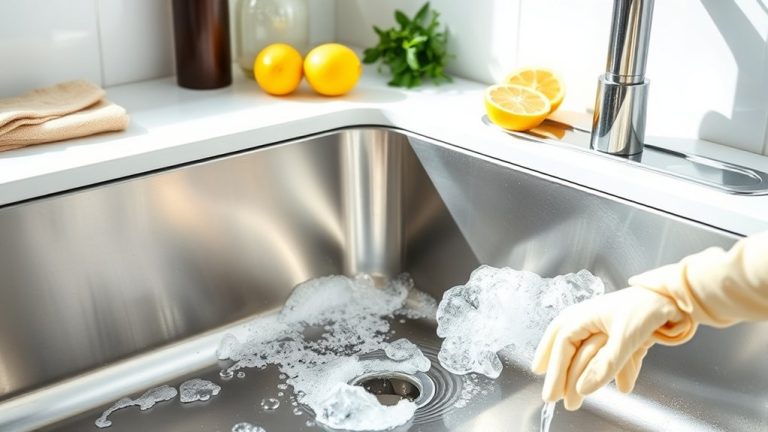
To eliminate kitchen sink smells, start by removing any visible food debris and rinse with hot water. Sprinkle baking soda into the drain, then pour vinegar and let it fizz for 15-30 minutes to neutralize odors. Follow with hot water to wash away residue.
Regularly clean your P-trap and avoid pouring grease down the drain. If odors persist, exploring natural remedies or professional help can make a difference—more tips await if you keep exploring.
Key Takeaways
- Remove visible debris and food particles from the sink and drain using a brush or toothbrush.
- Pour baking soda into the drain, then follow with vinegar. Let it fizz for a few minutes, then rinse with hot water.
- Regularly flush the drain with boiling or hot water to prevent buildup and odors.
- Clean the P-trap periodically with a brush and hot water, making sure it stays filled with water to block gases.
- Improve ventilation and use natural fresheners like lemon slices or citrus peels to keep your sink smelling fresh.
Why Do Kitchen Sink Smells Occur and How Can You Prevent Them?
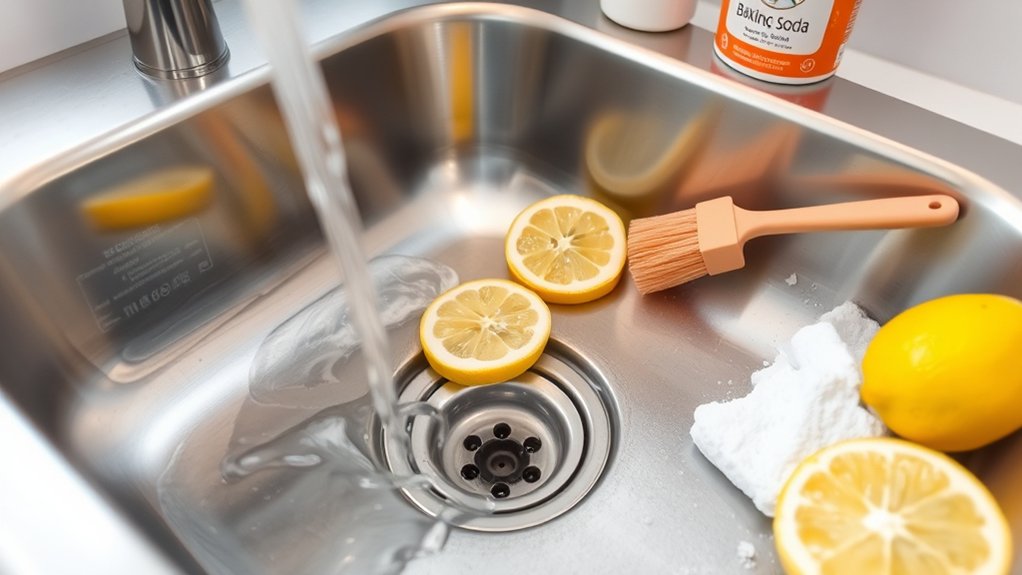
Kitchen sink smells often happen because food particles, grease, and soap scum build up in the drain or trap, creating a place for bacteria and mold to grow.
Your choice of sink materials and kitchen decor can also affect how easily odors develop. For example, stainless steel sinks are less porous, so they’re easier to clean and less likely to smell.
Choosing non-porous sinks like stainless steel helps prevent odors and makes cleaning easier.
Ceramic or composite sinks might trap debris in tiny pores, which can lead to lingering smells if you don’t maintain them properly.
To keep odors at bay, rinse your sink regularly with hot water. Using baking soda or vinegar helps break down residue and odors.
Keep the drain covered when you’re not using the sink to prevent debris from falling in.
Proper maintenance of your sink, no matter what material it’s made of, helps reduce bacteria growth and keeps your kitchen smelling fresh.
Consistent cleaning is the key to preventing those unpleasant odors from forming in the first place.
Identifying Common Causes of Sink Odors
You might notice a weird smell coming from your sink, and chances are, it’s because food debris has built up or maybe the drain is clogged. When gunk gets stuck, it creates a perfect environment for bacteria to grow, which can make the smell even worse.
Bacterial growth is a common culprit, especially if you’re not cleaning your drain regularly. So, recognizing these issues early can help you find the right fix quickly, whether that’s cleaning out the drain or tackling a clog.
Food Debris Accumulation
Food debris often sneaks past the drain strainer and settles in the pipes, creating a prime environment for odors to develop. When food scraps aren’t promptly disposed of or stored properly, they tend to linger around your sink area.
Poor organization of utensils can also cause crumbs and small particles to fall into the drain. Additionally, storing leftovers improperly allows them to decay, which increases foul smells.
Regularly cleaning your sink and being mindful of what goes down the drain helps prevent buildup. Use this table to identify common issues:
Clogged Drain Blockages
Have clogged drain blockages become a source of unpleasant odors in your sink? Over time, food particles, grease, and soap scum can build up and create stubborn blockages that trap debris and bacteria.
These clogs often go unnoticed until they produce foul smells that seep into your kitchen decor. Sometimes, improper appliance repair or neglecting routine maintenance worsens the problem, allowing waste to accumulate further.
To identify if a blockage is causing bad odors, check for slow drainage or gurgling sounds. Clearing these blockages typically involves using a plunger, drain snake, or enzyme-based cleaners.
Regular maintenance can prevent future clogs and keep your sink smelling fresh, avoiding the need for extensive appliance repair or costly plumbing services.
Bacterial Growth Buildup
Bacterial growth is a common culprit behind persistent sink odors, especially when moisture and organic matter build up unnoticed. When food particles, grease, and soap scum stay in your drain, bacteria thrive and produce unpleasant smells.
Poor air circulation around the sink can also trap moisture, creating the perfect environment for bacteria to grow. If your sink isn’t cleaned or dried regularly, these bacteria multiply quickly, making odors worse.
To prevent this, make sure you have good air flow by opening windows or using exhaust fans. Flushing the drain with hot water and a cleaning solution regularly helps keep bacteria in check. Keeping the area dry and well-ventilated is key to reducing bacterial buildup and eliminating those stubborn sink smells.
How to Clean Your Sink to Remove Odors Effectively
To get rid of those pesky sink odors, first, grab a cloth or brush and clear out any food debris stuck around the drain and on the sink surfaces. It’s always best to start with a clean slate!
Next up, sprinkle some baking soda directly into the drain. Let it sit for a few minutes — this helps break down any buildup and absorb odors. After that, pour a splash of vinegar down the drain. You’ll notice some fizzing — that’s normal and actually helps neutralize those smelly odors.
Finally, rinse everything thoroughly with hot water. This will wash away any remaining residue and leave your sink smelling fresh and clean. And there you go — your sink is now odor-free!
Remove Food Debris
Food debris often gets trapped in your sink’s drain and surrounding areas, causing unpleasant odors over time. To combat this, start by removing any visible food particles. Use a small brush or old toothbrush to scrub the drain and rims, loosening debris that’s stuck.
Keep your kitchen organized by regularly clearing out scraps and using ingredient substitutions to minimize waste. Proper kitchen organization reduces the chances of debris buildup. When cleaning, focus on the sink’s drain, strainer, and surrounding surfaces.
Here are some tips:
- Remove visible food scraps after each use
- Use a brush or toothbrush to clean the drain
- Clear out the strainer regularly
- Avoid piling debris in the sink
- Implement effective kitchen organization to prevent future buildup
Use Baking Soda
After removing visible food debris, the next step is to tackle lingering odors with a simple, natural solution: baking soda. Sprinkle a generous layer directly into your sink drain and around the basin.
Let it sit for about 15 minutes to absorb odors effectively. Baking soda not only neutralizes unpleasant smells but also helps clean your sink, keeping it fresh and hygienic.
This small step can also improve your kitchen decor, making your sink look cleaner and more inviting. For best results, follow up by scrubbing the sink with a damp cloth or sponge to distribute the baking soda evenly.
Regular use of baking soda helps maintain a fresh scent and prevents future odors from developing.
Flush With Vinegar
Vinegar is an effective natural cleaner that can quickly eliminate lingering odors from your sink. To use it, pour a generous amount of white vinegar directly into your drain, letting it sit for 15-30 minutes. This simple step works well no matter your kitchen design or sink material, whether stainless steel, porcelain, or composite.
The acidity breaks down odor-causing buildup and neutralizes smells. For the best results, follow up with hot water to flush out any residue. Using vinegar regularly helps prevent future odors and keeps your sink smelling fresh.
Try to use vinegar weekly to keep odors at bay. Just avoid mixing vinegar with bleach, as that can create fumes. For a deeper clean, consider combining vinegar with baking soda.
After flushing with vinegar, run hot water to rinse everything out. Adjust the amount of vinegar based on your sink’s size and material for the best cleaning power.
How Baking Soda and Vinegar Can Freshen Your Sink
Baking soda and vinegar are a simple yet effective duo for freshening up your kitchen sink. When you use these natural ingredients, you not only eliminate odors but also keep your sink looking clean and fresh.
This method works well no matter your sink type—stainless steel, porcelain, or composite. Start by sprinkling a generous amount of baking soda directly into the drain.
Next, pour in a cup of vinegar. It will fizz and loosen grime and odor-causing residues. Let the mixture sit for about 15 minutes to break down buildup and neutralize smells.
Finally, flush the sink with hot water to rinse everything away. Regularly using baking soda and vinegar keeps your sink smelling fresh and looking good.
This simple routine helps you maintain a clean sink, blending functionality with a nice, inviting appearance.
Dealing With Clogs and Bacterial Buildup That Cause Smells
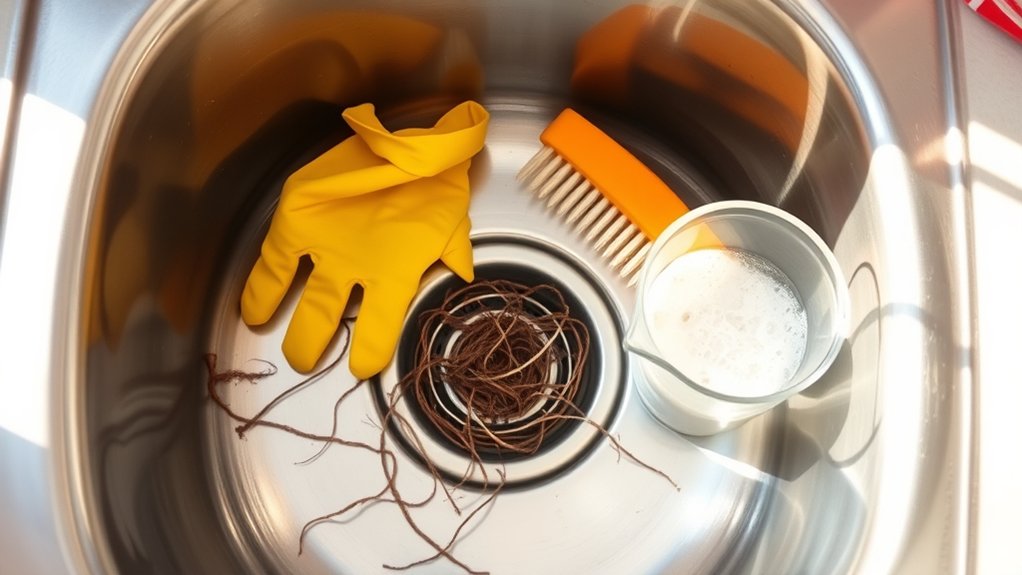
Clogs and bacterial buildup are common causes of persistent kitchen sink odors, and fixing them is key to keeping your space smelling fresh. When waste collects or bacteria grow, odors can get pretty overwhelming. Luckily, eco-friendly solutions and DIY remedies can help you tackle the problem safely and effectively.
Start by pouring boiling water down the drain to loosen any debris. Using a natural enzyme-based cleaner or a mix of baking soda and vinegar can break down buildup and kill bacteria. Regularly flushing with hot water also helps prevent future clogs.
Here are some helpful tips:
- Use an enzyme-based drain cleaner to naturally eliminate bacteria
- Pour boiling water weekly to clear residue
- Combine baking soda and vinegar as a DIY remedy
- Avoid chemical drain cleaners that can damage pipes
- Regularly clean the sink and drain area to prevent buildup
These simple steps keep your drain clear and odor-free without relying on harsh chemicals.
How to Maintain Your Drain and P-Trap for Long-Term Freshness
Want to keep your sink smelling fresh and clean? The key is to take good care of your drain and P-trap regularly. Giving them a good cleaning now and then helps stop any gunk from building up, which can cause bad odors. It’s also a good idea to check your P-trap periodically to make sure it’s functioning properly and isn’t clogged.
To keep things smelling nice for the long haul, try some simple preventative tricks. Running hot water down the drain after use can help wash away residue. You might also consider using enzyme-based cleaners—they’re great at breaking down organic build-up and keeping everything fresh. A little regular maintenance goes a long way in making sure your sink stays odor-free and smelling great!
Regular Drain Cleaning
Have you been neglecting regular drain maintenance? Keeping your drain clean is key to preventing odors and clogs. Regular cleaning helps maintain the freshness of your kitchen sink and keeps your P-trap functioning properly.
Use simple techniques to stay on top of this task. Pour boiling water weekly to flush out debris, and try baking soda and vinegar for natural cleaning.
Remove and clean your kitchen accessories regularly to prevent buildup. Also, avoid pouring grease down the drain and be mindful of food scraps that can cause odors.
Proper P-Trap Maintenance
Regularly inspecting and maintaining your P-trap is key to keeping your kitchen fresh. Start by checking for leaks or loose fittings and make sure everything is sealed properly to stop odors from escaping.
While inspecting, look for signs of corrosion or debris buildup that could block drainage or cause bad smells. Tighten any loose connections and replace damaged washers or seals to keep everything secure and airtight.
A good seal not only keeps odors out but also prevents sewer gases from entering your kitchen. Periodically clean the P-trap with a brush and hot water to remove buildup and keep it working well.
Consistent maintenance of your P-trap helps your sink stay fresh and odor-free over time.
Preventative Odor Measures
Maintaining your drain and P-trap proactively can significantly reduce odors in your kitchen. Good kitchen design includes choosing easy-to-clean sink materials like stainless steel or composite, which resist buildup.
Regularly flush your drain with hot water to prevent debris from accumulating. Using enzyme-based cleaners once a month helps break down organic matter. Avoid pouring grease or oil down the drain since these can solidify and trap odors.
Make sure your P-trap stays filled with water to block sewer gases effectively. Periodically check for leaks or cracks that could harbor bad smells. These simple preventative steps keep your sink fresh longer and help maintain a pleasant kitchen environment.
Choose durable sink materials suited for your kitchen design. Regularly flush drains with hot water and enzymatic cleaners. Avoid pouring grease or oil down the drain.
Keep the P-trap filled with water at all times. Check for leaks or cracks regularly.
Other Natural Remedies for Persistent Sink Odors
When persistent sink odors stick around despite basic cleaning, natural remedies can be quite effective. Eco-friendly solutions are a great place to start, using simple ingredients like baking soda and vinegar to neutralize odors.
Pour a cup of baking soda down the drain, then follow with a cup of vinegar. Let it fizz for a few minutes before flushing with hot water to wash away residues. Improving kitchen ventilation also helps reduce lingering smells.
Running the exhaust fan or opening windows allows fresh air to circulate and disperse odors more quickly. Placing lemon slices or citrus peels in the drain can add a pleasant scent and help break down grime.
These remedies are safe, inexpensive, and environmentally friendly—making them great alternatives to harsh chemicals. Consistently using these natural methods can keep your sink smelling fresh and prevent persistent odors.
When Is It Safe to Use Commercial Drain Cleaners?
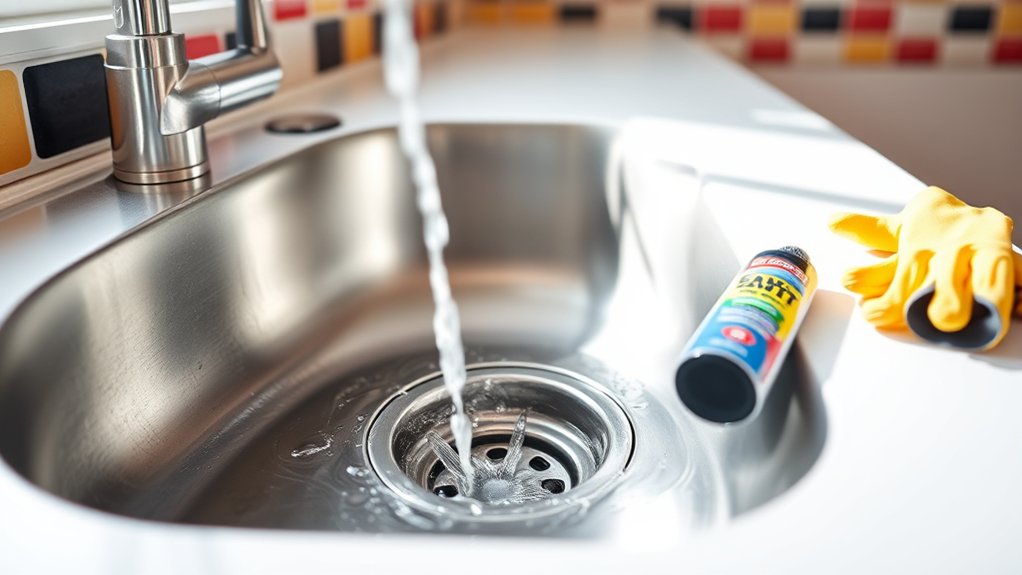
While natural remedies work well for most minor clogs and odors, there are times when commercial drain cleaners become necessary, especially for stubborn blockages or severe odors that don’t respond to gentle methods. Use them when you’ve tried plunger or hot water but the smell persists or your sink remains slow.
Sometimes natural remedies aren’t enough for stubborn clogs or bad odors. Commercial cleaners can be necessary.
However, it’s essential to use these products safely to protect your plumbing and kitchen decor. Only consider commercial cleaners if:
- You see standing water or persistent odors
- Natural methods failed after multiple attempts
- The clog is deep within the pipes
- You’re aware of your plumbing’s condition
- You’re comfortable with appliance repair basics
Always follow the manufacturer’s instructions carefully. Avoid mixing different chemicals and don’t use them if your pipes are old or damaged. Proper use of commercial drain cleaners prevents damage and keeps your sink functioning smoothly, maintaining your kitchen’s aesthetic appeal.
Tips for Regular Sink Maintenance to Keep Odors Away
Regular sink maintenance is key to preventing unpleasant odors from building up over time. Keeping up with cleaning helps your drain stay clear and your kitchen looking nice, making the space more inviting.
To stay on top of things, try flushing the drain with hot water and baking soda regularly. Don’t ignore small issues, as they can lead to bigger problems and costly repairs later on.
| Task | Frequency | Tips |
|---|---|---|
| Clear debris | Weekly | Use a drain brush or plunger to keep it tidy |
| Use baking soda & vinegar | Once a month | This combo cleans well and helps deodorize |
| Check for leaks | Monthly | Catch leaks early to prevent moisture buildup |
| Clean sink surface | Daily | Wipe with a damp cloth to match your decor |
| Inspect drain trap | Quarterly | Make sure there are no clogs or bad odors |
Sticking to these simple tips will help your sink stay fresh, odor-free, and looking great. Proper maintenance also reduces the chances of needing expensive repairs later.
Troubleshooting Persistent Sink Odors That Won’t Disappear
Persistent sink odors can be really frustrating, especially when regular cleaning doesn’t do the trick. When smells stick around, it’s time to look beyond just cleaning the surface.
Persistent sink odors can linger even after cleaning; explore hidden causes for lasting freshness.
These odors might come from hidden food debris in the drain trap or disposal, clogged pipes, or leftover residue in dish storage areas. To tackle stubborn smells, start by checking for any debris hidden in the drain or disposal.
Next, clean out your dish storage area to make sure mold or residue isn’t building up. Using enzyme-based cleaners can help break down organic matter that might be causing the smell.
It’s also a good idea to inspect your plumbing for leaks or blockages. Sometimes poor ventilation or airflow in your kitchen can make odors worse, so consider adjusting your kitchen design to improve these.
Taking care of these issues can help prevent odors from coming back. Proper dish storage and thoughtful kitchen layout can reduce trapped moisture and debris, keeping your sink fresher longer.
If the smell still won’t go away, it might be time to call in a professional plumber. They can help identify and fix any underlying problems causing persistent odors.
Frequently Asked Questions
Can a Faulty Garbage Disposal Cause Kitchen Sink Odors?
Yes, a faulty garbage disposal can cause kitchen sink odors because it might leak or trap food debris, leading to unpleasant smells.
To prevent odors, make sure your garbage disposal is working properly. Regularly clean it with ice and vinegar to keep it fresh.
Avoid putting greasy or fibrous waste down the drain, as these can cause clogs and bad smells.
Proper odor prevention involves maintaining your disposal and fixing any malfunctions quickly to keep your sink smelling clean.
How Often Should I Clean My Sink and Drain?
Ever wonder how often you should clean your sink and drain? For effective odor prevention, aim to do it weekly.
Try incorporating a routine that includes scrubbing the sink, removing debris, and flushing with hot water or vinegar.
Regular maintenance keeps odors at bay and helps your kitchen stay fresh. Don’t wait until smells become overwhelming—staying consistent with cleaning is your best defense.
Do Air Gaps or Vent Blockages Contribute to Sink Smells?
Yes, air gaps and vent blockages can cause sink smells. When you neglect air gap maintenance or ignore vent blockage prevention, odors can build up due to poor drainage or sewer gases escaping.
Regularly check and clean your air gaps, and make sure vents aren’t clogged. This helps air circulate properly, preventing foul smells and keeping your kitchen smelling fresh and clean.
Are There Specific Scents That Naturally Mask Sink Odors?
Imagine your kitchen as a garden, and natural fragrances are the sunshine that brightens it.
Yes, certain scents like lemon, peppermint, or eucalyptus naturally mask sink odors, acting as gentle scent masking agents.
These fragrances not only refresh the air but also create a welcoming atmosphere.
Add a few drops of essential oils or citrus peels to your drain to harness these natural aromas.
This simple trick transforms your space into a fragrant sanctuary, making your kitchen smell fresh and inviting.
How Can I Prevent Mold Growth in My Sink Area?
To prevent mold growth in your sink area, focus on good sink hygiene by cleaning regularly with soap and water, especially around the drain and faucet. Keep the area dry after use because mold loves moisture.
Use a mixture of vinegar and baking soda once a month for extra mold prevention. Make sure your space is well-ventilated and fix leaks quickly to reduce humidity.
Staying on top of these habits will help you keep your sink area clean and mold-free.
Conclusion
To keep your kitchen sink smelling fresh, stay proactive, attentive, and consistent. Regular cleaning helps prevent buildup, while natural remedies can keep odors at bay. Proper maintenance is key to avoiding clogs and bad smells.
Address odors promptly and troubleshoot issues thoroughly to prevent minor problems from becoming bigger ones. When possible, avoid harsh chemicals—they can sometimes do more harm than good.
By following these simple steps, you’ll ensure your sink stays clean, odor-free, and inviting. Keep up with routine care, stay vigilant, and enjoy a fresher, more pleasant kitchen every day.