Easy Steps for Cleaning Your Stainless Steel Kitchen Sink
Many people struggle with keeping their stainless steel kitchen sink looking spotless. It’s easy for fingerprints, water spots, and stains to make it look dull and dirty quickly. But don’t worry, you’re not alone in this—cleaning your sink can be simple and quick.
To quickly clean your stainless steel sink, start by rinsing it with warm water to loosen debris. Use a soft sponge with mild dish soap or a baking soda paste to scrub away stains and fingerprints gently. Rinse thoroughly and dry immediately with a microfiber cloth to prevent water spots.
For extra shine, buff with a stainless steel polish. Want to master long-lasting results? Keep exploring easy tips for a sparkling, spotless sink.
Key Takeaways
- Rinse the sink with warm water to loosen up debris and surface dirt before you start cleaning.
- Next, apply a mild dish soap or a baking soda paste, then gently scrub with a soft sponge or cloth.
- Rinse thoroughly to remove any soap or residue, making sure no deposits are left behind.
- Dry the sink immediately with a microfiber cloth to prevent water spots and streaks.
- For extra shine, buff it with a stainless steel polish or a little olive oil using a clean, dry cloth.
Common Problems With Stainless Steel Sinks (Water Spots, Stains, Fingerprints)
Stainless steel sinks are popular for their sleek look and durability, but they often come with common problems like water spots, stains, and fingerprints. One big issue is water hardness, which causes mineral deposits that leave spots on the surface.
Hard water can also lead to soap scum buildup, making your sink look dull and dirty. Plus, soap residue tends to stain and cling to the steel, especially if not cleaned quickly. Fingerprints are another common concern, especially in busy kitchens, making the sink look constantly smudged.
To fight these problems, it’s helpful to wipe down your sink regularly with a soft cloth. Using softened or filtered water can reduce water spots and soap scum. Also, removing soap residue and drying the sink after use helps prevent stains and fingerprint marks.
Taking these simple steps will keep your stainless steel sink looking shiny and new.
Tools and Supplies You Need to Clean Your Stainless Steel Sink
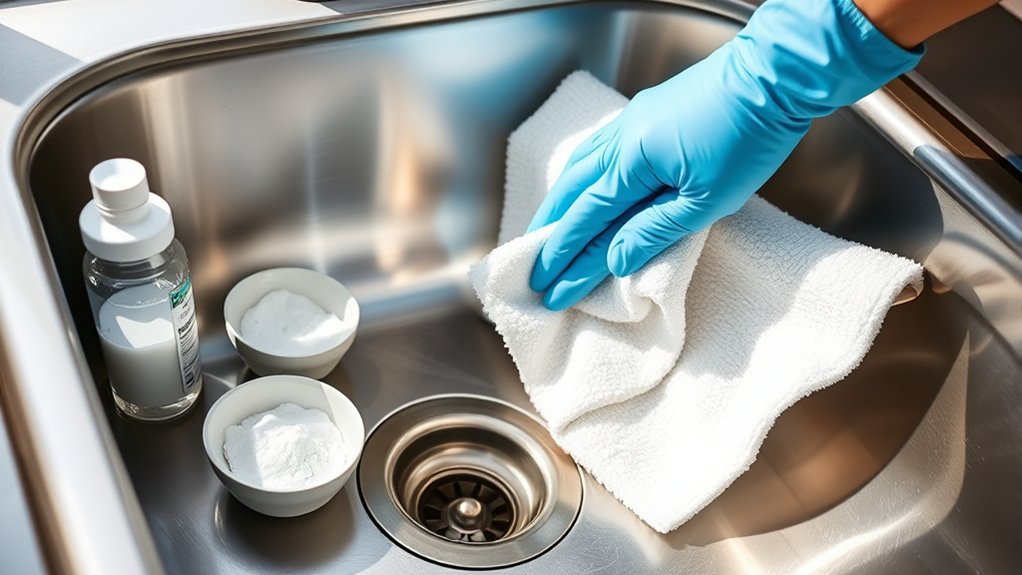
To make your sink shine like new, you’ll want to gather a few basic cleaning tools. A soft sponge or a microfiber cloth works great for everyday cleaning, and a gentle brush can help you tackle those stubborn spots.
For supplies, stock up on some mild dish soap—it’s gentle but effective. White vinegar and baking soda are fantastic for dealing with tougher stains and mineral deposits. And don’t forget to keep a stainless steel polish and a microfiber towel on hand for regular maintenance to keep your sink looking flawless.
Essential Cleaning Tools
Having the right tools on hand makes cleaning your stainless steel sink much easier. You’ll want a soft microfiber cloth to prevent scratches and a non-abrasive sponge for stubborn spots.
A gentle cleaner or a mix of baking soda and water works well without damaging your sink’s finish. A small, soft-bristled brush helps scrub around fixtures and tight corners.
Keep a spray bottle handy for quick rinses. For added shine, a stainless steel polish can restore your sink’s luster, complementing your kitchen decor.
If your sink was installed recently, guarantee you have a good quality sealant or cleaner suitable for new sink installation. These essential tools streamline the cleaning process, keeping your sink looking pristine and beautiful.
Recommended Cleaning Supplies
The right cleaning supplies make maintaining your sink quick and effective. For cleaning hacks that preserve your stainless steel finishes, keep a soft microfiber cloth and a gentle cleaner on hand.
Use a mild dish soap and warm water for daily touch-ups, avoiding abrasive scrubbers that can scratch surfaces. Baking soda is great for tackling stubborn stains without damaging the finish.
For tougher spots, a non-abrasive sponge works best. To remove fingerprints and smudges, a stainless steel cleaner or a mixture of vinegar and water can restore shine.
Avoid harsh chemicals that can corrode or dull the finish. Having these supplies ready guarantees you can effortlessly keep your sink looking pristine while protecting its sleek appearance.
Additional Maintenance Items
Gathering the right tools and supplies ensures you can clean your stainless steel sink efficiently and effectively. Besides basic cleaning products, consider additional maintenance items like a soft-bristle brush or microfiber cloth to avoid scratching the surface.
A non-abrasive cleaner can help remove stubborn stains without damaging the finish. You might also want a stainless steel polish to restore shine, especially if your sink complements your kitchen decor.
If your sink installation has led to tight corners or hard-to-reach spots, a small brush or toothbrush can make cleaning easier. Keeping these tools handy ensures your sink stays spotless and well-maintained.
Proper maintenance extends the lifespan of your sink and keeps it looking like new.
How to Remove Water Spots From Your Stainless Steel Sink
Water spots pop up pretty often on stainless steel sinks, and honestly, they can make your sink look dull and less shiny. But don’t worry—you can easily get rid of them! First, it’s good to identify the spots so you know what you’re dealing with. Once you’ve done that, you can try some simple tricks like wiping the spots with a vinegar solution or using a soft cloth. Want to know how to quickly bring back that beautiful shine? Let’s dive into some easy steps to make your sink look brand new again.
Identifying Water Spots
Water spots often appear as dull, cloudy circles or streaks on the surface of your stainless steel sink, making it look less appealing. To identify water spots, look for areas where the shine seems dulled or streaked, especially after drying or rinsing.
These spots are usually caused by mineral deposits left behind when water evaporates. Recognizing them is key to choosing the right cleaning techniques. Water spots tend to be more visible in areas with hard water or frequent use.
Pay attention to spots that don’t easily wipe away with a cloth. Accurate identification helps you determine whether cleaning techniques like wiping, polishing, or specialized cleaning products are necessary to restore your sink’s sleek appearance.
Effective Removal Techniques
To effectively remove water spots from your stainless steel sink, start by wiping the affected areas with a soft, damp cloth to loosen mineral deposits. Regular cleaning helps reduce stubborn spots and prevents buildup, so you won’t need to use harsh chemicals as often.
For eco-friendly results, try natural options like vinegar or baking soda, which are gentler on the environment. Use a mixture of equal parts vinegar and water to gently wipe spots away.
Buff the area with a microfiber cloth for a shiny finish, then rinse thoroughly to remove any residue. Avoid abrasive scrubbers that could scratch the surface, and dry immediately with a clean towel to stop new spots from forming.
Consistent maintenance keeps your sink looking spotless and is better for the environment.
Step-by-Step Guide to Cleaning and Scrubbing Your Sink
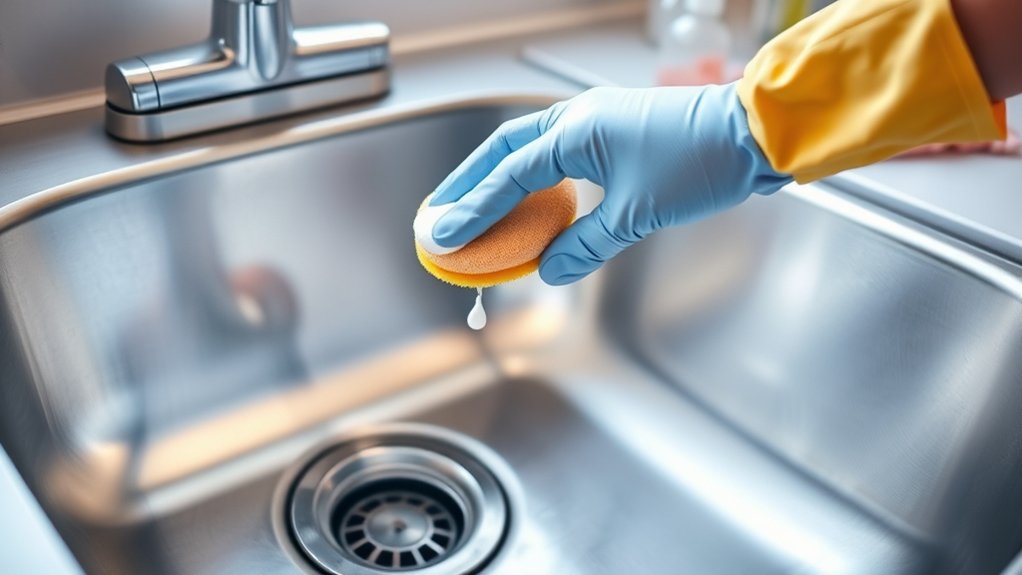
Before you start scrubbing, gather your cleaning supplies—like a gentle abrasive cleaner, a soft sponge or cloth, and a toothbrush for those hard-to-reach spots.
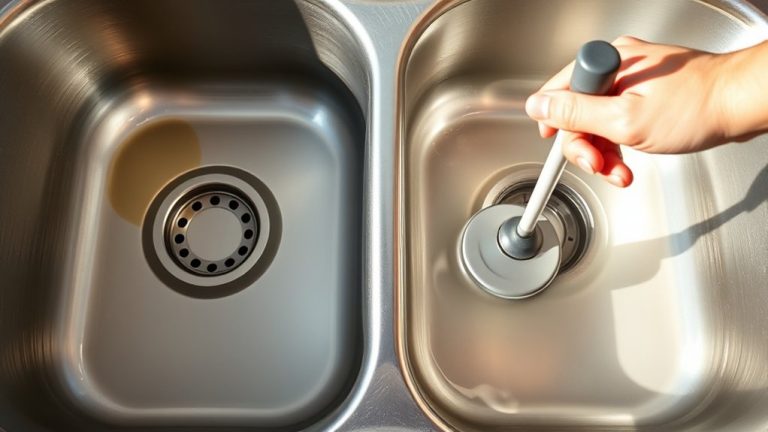
Begin by rinsing the sink with warm water to loosen any debris. Then, apply the cleaner evenly and use the sponge to scrub along the surface, paying attention to seams and edges.
For stubborn spots, gently scrub with the toothbrush. Keep in mind, stainless steel is durable and can be cleaned effectively without scratching if you use soft materials.
Follow the sink’s design trends by maintaining a smooth, streak-free finish, which makes it look sleek and modern.
Rinse thoroughly with water to remove all residue. Wipe dry with a clean cloth to prevent water spots.
Regular, gentle scrubbing helps preserve the sink’s shine and extends its lifespan, keeping it looking fresh and in line with current design trends.
Best Ways to Remove Fingerprints and Stubborn Stains
Fingerprints and stubborn stains can quickly mar the sleek look of your stainless steel sink, but tackling them doesn’t have to be complicated. To remove these marks effectively, use a gentle cleaner like white vinegar or a mixture of baking soda and water. These natural solutions won’t harm your plumbing issues or damage your kitchen decor.
Use gentle, natural cleaners like vinegar or baking soda to effortlessly remove stains and keep your stainless steel sink sparkling.
Try these tips:
- Wipe with a soft microfiber cloth dipped in vinegar for quick fingerprint removal.
- Use a baking soda paste for stubborn stains, then rinse thoroughly.
- Buff with olive oil or stainless steel polish to restore shine.
- Avoid abrasive scrubbers that scratch the surface.
- Regularly clean and dry your sink to prevent future stains and fingerprints.
Keeping your sink spotless improves your kitchen decor and prevents issues that could lead to plumbing problems. Consistent care makes stains easier to remove and keeps your stainless steel looking brand new.
How to Rinse and Dry Your Sink for a Streak-Free Shine
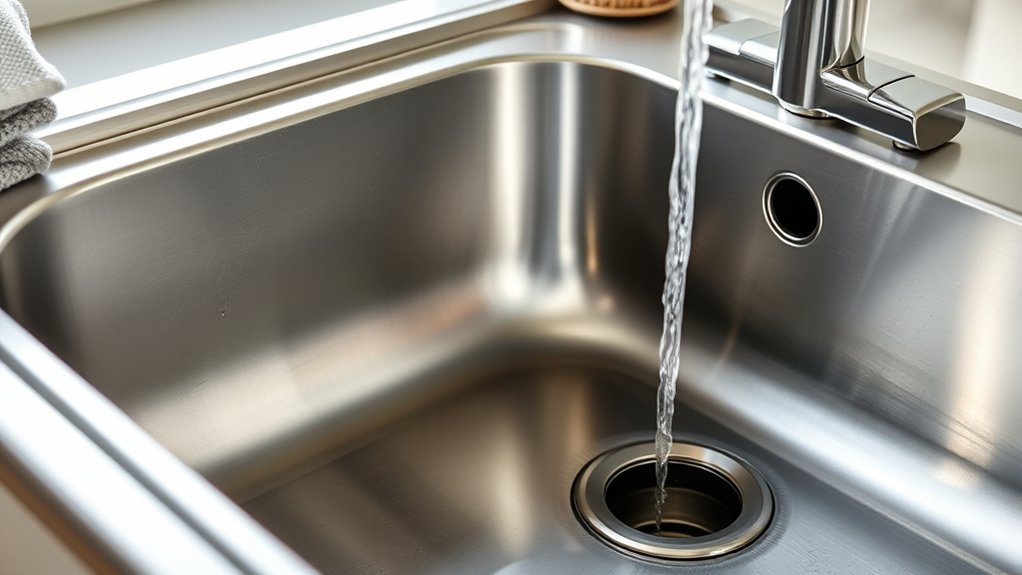
After removing fingerprints and stains, rinsing and drying your sink thoroughly is the final step to get a streak-free shine. Use a gentle stream of water to rinse all surfaces, making sure no residue is left behind.
Dry your sink with a soft microfiber cloth to prevent water spots that can take away from your kitchen’s look. Pay special attention to corners and edges where water tends to pool.
For an extra touch, use a clean, dry cloth to buff the surface gently. This will boost its shine and give it a polished appearance.
Keep sink accessories like soap dispensers and scrub brushes clean and dry too. This helps maintain a neat, tidy look and prevents buildup.
Visualize your sink’s perfect finish with this simple table:
| Aspect | Tips |
|---|---|
| Water Rinsing | Use gentle, even streams to remove debris |
| Drying | Pat dry with a microfiber cloth to avoid streaks |
| Accessories | Wipe down to prevent buildup |
| Final Touch | Buff for a polished, streak-free finish |
Natural vs. Commercial Cleaners for Stainless Steel Sinks
When it comes to cleaning your stainless steel sink, natural cleaners like vinegar and baking soda can do a great job. They’re safe, eco-friendly, and pretty effective — but, keep in mind, you might need to use them more often to keep your sink shining.
On the other hand, commercial cleaners usually pack a stronger punch. They often contain chemicals that can cut through grime more quickly, but they might also raise safety concerns and aren’t always the best for the environment. So, it’s worth thinking about your budget and how easily you can get these products when choosing the best option for your cleaning routine.
Effectiveness of Natural Cleaners
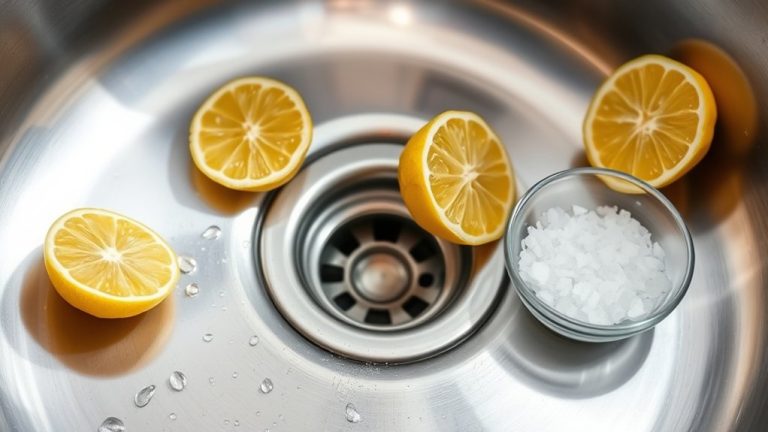
When comparing natural cleaners to commercial options, natural methods often stand out for being gentle yet effective. They can tackle stains, grime, and fingerprints while remaining eco-friendly solutions. DIY remedies like vinegar, baking soda, and lemon juice naturally break down mineral deposits and remove smudges without harsh chemicals.
You’ll find that natural cleaners are safe for your family and pets, and they reduce environmental impact. Plus, they usually cost less than store-bought options and help minimize exposure to synthetic fragrances and dyes.
They also offer versatile solutions for different stains and surfaces. While natural cleaners may require a bit more effort or patience, many users find they deliver excellent results, especially for everyday maintenance.
Their effectiveness shows that you don’t need commercial cleaners to keep your stainless steel sink shining bright.
Chemical Composition & Safety
Understanding the chemical makeup of cleaners helps you make safer choices for your stainless steel sink. Natural and commercial cleaners differ a lot in their composition, which affects safety.
Natural cleaners usually have ingredients like vinegar or baking soda. They’re gentle but still get the job done. Commercial cleaners might have harsher chemicals that can damage your sink over time or even pose health risks.
To decide what’s best, think about this:
| Natural Cleaners | Commercial Cleaners |
|---|---|
| Safer for skin and environment | Stronger but potentially hazardous |
| Gentle yet effective | May contain aggressive chemicals |
| Less likely to cause damage | Risk of corrosion if misused |
Picking products with clear, transparent ingredients helps you feel confident and keeps your sink safe and shiny.
Cost and Accessibility
Cost and accessibility are key factors to think about when choosing between natural and commercial cleaners for your stainless steel sink. Natural options are often budget-friendly and easy to find at local stores or around your home.
Commercial cleaners might be more convenient but can cost more and sometimes have harsher chemicals. If you’re looking to save, natural cleaners like vinegar or baking soda work well and are inexpensive.
You can also check local stores for affordable, ready-made cleaning products. Think about your budget and how easy it is to get the products when making your choice.
Here are some points to consider:
- Natural cleaners are usually cheaper
- Local stores stock affordable options
- Commercial cleaners may require a higher budget
- Natural options are easy to prepare at home
- Accessibility depends on your location
Daily and Weekly Tips to Maintain Your Sink’s Shine
To keep your stainless steel sink looking its best, make it a habit to wipe it down daily with a soft cloth or sponge. This simple step helps remove water spots, fingerprints, and minor stains, keeping it looking sleek.
Once a week, use a gentle cleaner or a mixture of vinegar and water to deep clean and restore shine. Incorporate stylish sink accessories like soap dispensers or mats to protect the surface and add to your kitchen decor.
Regularly cleaning your sink’s surface prevents grime buildup and keeps it looking pristine. After cleaning, dry the sink thoroughly to minimize water spots and streaks.
Sticking to this routine will ensure your sink stays shiny and inviting. It also enhances your overall kitchen ambiance, making your space feel fresh and well-maintained.
With these daily and weekly habits, your stainless steel sink remains a beautiful, functional centerpiece in your kitchen.
Avoid These Common Mistakes When Cleaning Your Stainless Steel Sink
Cleaning your stainless steel sink the wrong way can do more harm than good, so it’s important to avoid common mistakes that can damage its finish. Poor cleaning techniques can lead to scratches, streaks, or dullness.
First, don’t use abrasive scrubbers or steel wool, as they can scratch the surface. Avoid harsh chemicals like bleach or ammonia, which may discolor or corrode the finish.
Be cautious with sink accessories; using rough or unclean tools can cause damage. Also, never leave standing water or mineral deposits, which can stain or cause corrosion over time.
Finally, rinse thoroughly and dry the sink afterward to prevent water spots. To keep your sink looking its best, steer clear of these mistakes and adopt gentle, appropriate cleaning methods that protect the surface.
Proper care ensures your stainless steel sink remains shiny and durable for years.
How to Restore Shine and Remove Scratches Effectively
If your stainless steel sink has lost its shine or developed scratches, don’t worry—there are effective ways to restore its appearance. Start with simple cleaning techniques like using a mixture of baking soda and water to gently scrub the surface.
For deeper scratches, apply a stainless steel polish or a specialized scratch remover, following the product instructions carefully. Shine restoration often involves buffing the sink with a soft cloth or microfiber towel, which helps bring back its luster.
You can also use mineral oil or olive oil to boost shine after cleaning; simply apply a small amount and buff with a clean cloth. Avoid harsh abrasives that can worsen scratches or dull the finish.
Regular maintenance with gentle cleaning techniques and appropriate polish will keep your sink looking new and shiny. Remember, patience and consistency are key for effective shine restoration and scratch removal.
Frequently Asked Questions
Can I Use Bleach to Clean My Stainless Steel Sink?
You can use bleach to clean your stainless steel sink, but be cautious about bleach safety. It’s harsh and can damage the finish if not used properly.
Instead, consider alternative cleaning agents like vinegar or baking soda, which are gentler yet effective at removing stains and disinfecting.
Always rinse thoroughly after cleaning with bleach, and avoid leaving it on the surface for long periods. This helps protect your sink’s shine.
How Often Should I Deep Clean My Stainless Steel Sink?
Ever wonder how often you should deep clean your stainless steel sink? It’s best to do it once a month to keep it sparkling. Regular cleaning helps with polishing and removing stains, preventing buildup and dullness.
If you notice stubborn stains or water spots, consider deep cleaning sooner. Staying on top of maintenance keeps your sink looking brand new, making daily chores more pleasant and hygienic.
Are There Specific Brushes for Cleaning Stainless Steel Sinks?
Yes, there are specific brushes for cleaning stainless steel sinks. Stainless steel brushes are great because they clean gently without scratching the surface.
Use these brushes to scrub away grime and stains effectively while protecting your sink’s finish. Always pick a brush with soft or medium bristles to ensure gentle cleaning.
Avoid harsh scrubbers that could damage the stainless steel. This way, your sink stays shiny and scratch-free.
What Household Items Can Damage My Stainless Steel Sink?
Think of your sink as a delicate mirror reflecting your kitchen’s harmony. Dishwasher detergents can be too harsh, and abrasive sponges act like tiny sandpaper, both causing scratches and dullness.
Avoid these household items, as they can damage the finish and compromise its shine. Instead, use gentle cleaning methods to preserve your sink’s sleek, stainless steel beauty.
This way, your sink stays resilient and looks brand new for years to come.
How Do I Prevent Future Water Spots and Stains?
To prevent future water spots and stains, apply a water repellent or sealant designed for stainless steel. Wipe your sink dry after each use to minimize water pooling, which causes spots.
Regularly use gentle cleaning products to maintain stain prevention, and avoid abrasive scrubbers. These steps create a protective barrier, keeping your sink shiny and spot-free longer.
Consistent care guarantees your stainless steel sink stays looking its best.
Conclusion
With just a few simple steps, you can keep your stainless steel sink gleaming like a mirror, turning everyday cleaning into a moment of pride. Remember, consistency is your secret weapon—like a gentle tide that gradually restores shine and beauty.
By avoiding common mistakes and choosing the right cleaners, you’ll transform your sink from a battlefield of water spots and fingerprints into a masterpiece of cleanliness. Adopt these habits, and let your sink’s brilliance be your daily masterpiece.