How to Snake a Kitchen Sink With Garbage Disposal
Dealing with a clogged kitchen sink can be such a hassle, especially when your garbage disposal seems to be the culprit. Many people struggle with slow drains or unpleasant odors, and it’s a common problem that can feel overwhelming.
Luckily, snaking your kitchen sink with a garbage disposal isn’t as complicated as it looks.
To snake a kitchen sink with a garbage disposal, turn off the power and disconnect the disposal if necessary. Place a bucket under the P-trap, then loosen the slip nuts with pliers and remove the trap to clear any debris.
Use a drain snake to push through the pipes, rotating it to break up clogs. Afterward, reassemble everything and flush with hot water.
If you want more detailed steps, there’s plenty to investigate for a successful fix.
Key Takeaways
- Turn off the garbage disposal and disconnect the power before starting to avoid injury.
- Remove the P-trap and check for any visible debris or clogs. Clear out any buildup by hand if needed.
- Insert a drain snake into the drain opening and turn the handle clockwise to work through the pipe.
- Carefully push the snake past the clog, then pull it out while keeping the handle turning to break up the blockage.
- Rinse the drain with hot water and see if the flow is clear. Repeat the process if needed to fully clear the clog.
How Do Garbage Disposals Cause Sink Clogs?
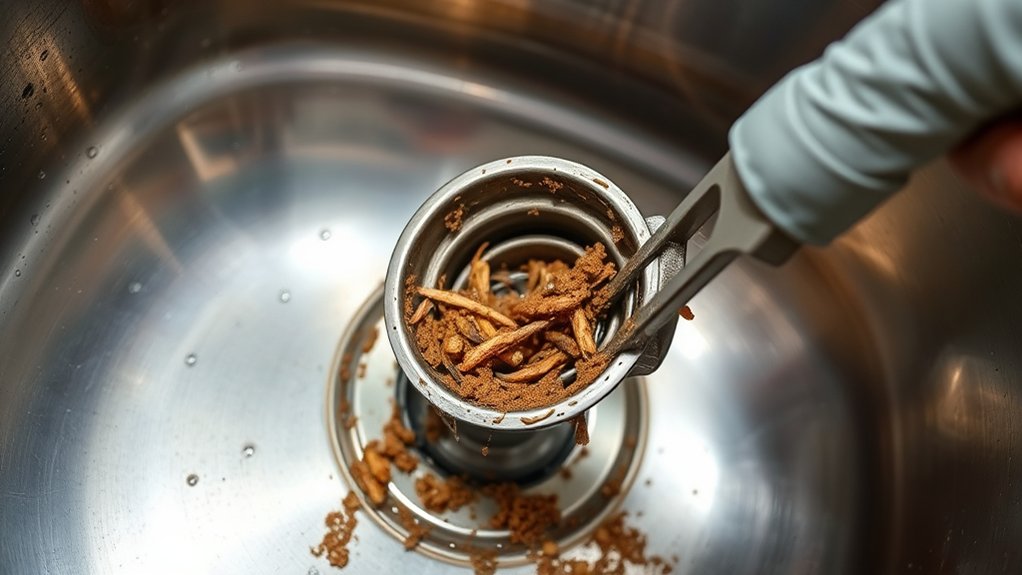
Garbage disposals are helpful, but they can also cause sink clogs if not used properly. When you put the wrong items into your disposal, it can lead to blockages that disrupt sink maintenance.
Hard or fibrous foods like chicken bones, fruit pits, or vegetable peels might seem harmless, but they can grind down into small particles that stick together or build up, causing clogs.
Hard or fibrous foods can cause clogs by breaking down into sticky or buildup-prone particles.
Grease and oil poured down the drain can cool and solidify, trapping debris and leading to buildup inside the pipes.
Overloading the disposal or not running enough water while using it can leave behind debris that sticks in the pipes, eventually causing clogs.
Proper sink maintenance means avoiding these common mistakes and cleaning the disposal area regularly.
Being mindful of what you put in your garbage disposal helps prevent blockages and keeps your pipes clear, so your sink works smoothly.
Signs Your Kitchen Sink Is Clogged With a Garbage Disposal
Have you noticed water draining slowly or standing still in your sink? That’s a clear sign your garbage disposal might be clogged. You may also hear gurgling sounds or notice unpleasant odors lingering despite regular cleaning.
If your sink’s water level remains high after running the disposal, it’s probably blocked somewhere in the drain. These issues can make your kitchen look untidy and suggest you might need appliance maintenance.
Ignoring these signs can lead to worse clogs or even pipe damage. A sluggish sink often means food debris or grease are building up, especially if you’ve been overloading it.
Spotting these signs early helps prevent costly repairs and keeps your kitchen running smoothly. Regularly checking your disposal and drain can save you from frustration and help your kitchen stay fresh and clean.
Tools You Need to Snake Your Kitchen Sink
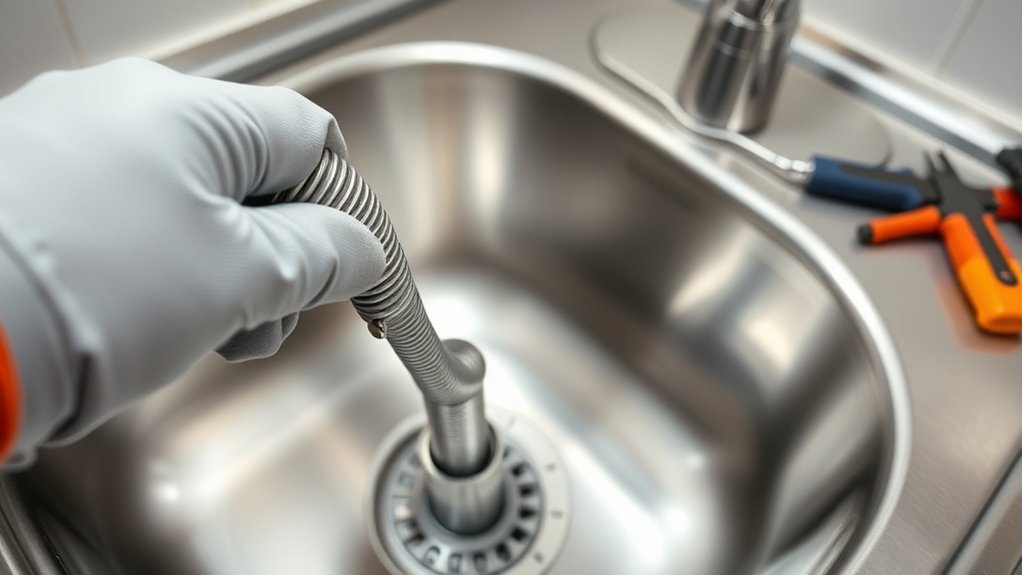
To get that stubborn clog out of your kitchen sink, you’ll want to have a few handy plumbing tools on hand—like a drain snake or auger. They’re pretty much your best friends when it comes to clearing those tough blockages.
And don’t forget to gear up with some safety equipment, like gloves and eye protection. It’s always better to stay safe while working with plumbing tools.
Once you’ve got everything ready, just follow the instructions for your drain snake or auger. With a little patience, you’ll have your sink draining smoothly again in no time!
Necessary Plumbing Tools
Before you start snaking your kitchen sink, it’s essential to gather the right tools. Having the proper plumbing tools helps you understand plumbing basics and makes pipe maintenance easier.
You’ll need a drain snake or auger, which is designed to reach deep into clogged pipes. A pair of slip-joint pliers helps loosen fittings or remove trap components.
A bucket is useful for catching water and debris during the process. A flashlight allows you to see inside the pipes clearly.
Furthermore, having a few rags or towels on hand helps keep the workspace clean. These tools are basic but crucial for clearing clogs efficiently.
They also help you understand your plumbing system, making pipe maintenance less intimidating and more manageable.
Safety Equipment Essentials
When snaking a kitchen sink, safety gear is just as important as the tools you use. Always wear personal protective equipment like gloves and safety goggles to protect your skin and eyes from debris or splashes.
If you’re planning to use chemical drain cleaners, handle them with extra caution. Wear gloves and avoid inhaling fumes because these chemicals can be harsh and irritating.
Make sure your workspace is well-ventilated, and keep chemicals away from children and pets. Never mix chemical drain cleaners with other substances, as dangerous reactions can happen.
Prioritizing safety helps prevent injuries and exposure, making your task safer and more effective. Stay alert and take precautions before starting your snake job.
Tool Usage Instructions
Having the right tools on hand is essential for effectively snaking your kitchen sink. Start with a plumber’s snake or drain auger, which is designed to reach deep into clogged pipes.
A pair of gloves and safety goggles protect you during kitchen cleaning and disposal maintenance. A flashlight helps you see inside the drain if needed.
Use pliers to remove the disposal cover or trap if necessary. A bucket can catch water or debris. When snaking, insert the auger into the drain and turn the handle clockwise, applying gentle pressure.
This breaks up or dislodges the clog. Proper tool usage guarantees quick, safe clearing of blockages, restoring your sink’s flow and keeping your kitchen clean.
How to Confirm and Diagnose a Sink Clog
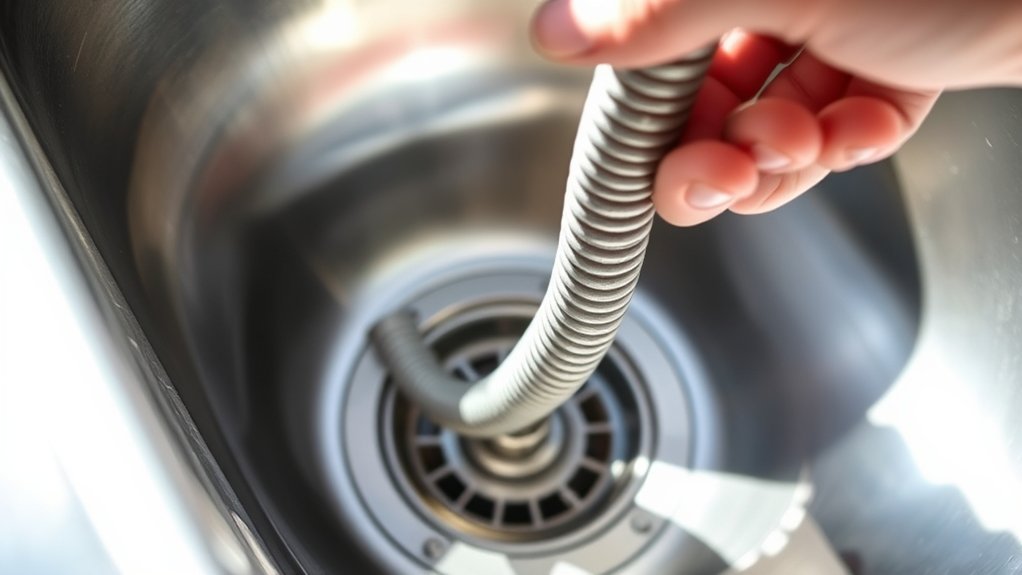
If your sink is draining slowly or if you’re noticing some weird smells, those are good signs there might be a clog. Take a close look at the drain area—see if you spot any visible blockages or buildup.
Once you’ve checked that out, you can get a better idea of what’s going on. If you see something obvious, it might just be a matter of cleaning it out. But if things still seem backed up, you might need to do a more thorough snaking to clear the clog completely.
Signs of a Blockage
A noticeable slowdown in your sink’s drainage is often the first sign of a clog. If water pools or drains slowly despite your regular appliance maintenance, it’s time to investigate further.
You might also notice foul odors or hear gurgling sounds when using the disposal, which can indicate trapped debris.
If water backs up in the sink even when only one side is used, it signals a blockage somewhere in the drain.
This issue can sometimes affect your kitchen decor, with water stains or mold appearing around the sink area.
Recognizing these signs early helps prevent bigger problems and keeps your kitchen looking its best.
Addressing clogs promptly ensures your sink stays functional and your space remains neat and inviting.
Inspecting the Drain Properly
To accurately diagnose a sink clog, start by inspecting the drain directly. Look for signs like slow drainage or foul odors, which can indicate buildup or pipe corrosion. Remove the drain cover and check for visible debris or blockages.
Use a flashlight to examine the pipe’s interior. Any discoloration or rust suggests pipe corrosion. Regular drain maintenance can prevent these issues, but if you notice persistent problems, a deeper inspection is needed.
| Symptom | Possible Cause | Action |
|---|---|---|
| Slow draining | Partial blockage | Clear with a snake or plunger |
| Foul smell | Bacterial buildup or debris | Clean drain thoroughly |
| Rusty pipes | Pipe corrosion | Consider replacement or repair |
How to Access and Clear the P-Trap and Pipe
Accessing and clearing the P-trap and pipe is pretty simple and just needs a few basic tools. Start by placing a bucket or container underneath the trap to catch any water or debris.
Place a bucket under the trap before loosening it to catch water and debris easily.
The P-trap is usually right below your sink drain and is designed to hold a small amount of water to block sewer gases. To get to it, loosen the slip nuts on both ends of the trap with adjustable pliers or a wrench.
Once you remove the trap, check inside for food waste, grease, or other debris that might be causing the clog. Clear out any buildup by hand or using a brush.
Next, inspect the pipe for further blockages, especially if food waste has built up in your kitchen drain and is affecting drainage. After cleaning, reassemble the trap, tighten the slip nuts securely, and run water to make sure the drain flows smoothly.
This simple step can restore proper drainage and help your sink work better.
Step-by-Step: Using a Drain Snake to Clear the Blockage
First things first, grab your drain snake and a pair of gloves. You want to make sure you have everything you need before you get started. Once you’ve got your tools, carefully insert the snake into the drain, turning it as you go to catch the clog. Don’t rush it—take your time to feel when you’ve hooked onto the blockage.
After you’ve caught the clog, slowly pull the snake out. It might be a bit messy, so go steady. When you’re done, run some water to see if the drain is clear and flowing smoothly. If the water runs freely, congratulations—you’ve successfully cleared the blockage!
Prepare Your Tools
Before you start snaking your drain, gather your essential tools to make sure everything goes smoothly. Having the right equipment helps you tackle the blockage effectively without any frustration.
Here’s what you’ll need:
| Tool | Purpose | Tip |
|---|---|---|
| Drain snake | Breaks up the clog | Use steady pressure |
| Gloves | Protect your hands | Keep clean |
| Bucket | Catch water or debris | Place it underneath |
| Flashlight | See inside the drain | Improve visibility |
| Pliers | Remove stuck items | Handle stubborn parts |
These tools are key for proper cleaning and can save you time. Remember, being well-prepared makes the job easier and helps prevent future drain issues.
Insert Snake Properly
Once you’ve gathered your tools, it’s time to properly insert the drain snake into your sink. Start by feeding the snake into the drain opening carefully, making sure you’re aligned with the pipe materials.
As you push the snake in, turn the handle clockwise to help it navigate through the bend and reach the clog. Be gentle to avoid damaging flexible or brittle pipes, especially if your drain involves older or PVC pipes.
Keep steady pressure as you advance the snake, feeling for resistance. When you feel the blockage, rotate the handle to break it up or latch onto it. Once the obstruction is engaged, slowly retract the snake while continuing to turn it.
Proper insertion guarantees effective clearing without damaging your plumbing.
Clear and Test Drain
After you’ve successfully engaged the clog with the snake, it’s important to clear the drain and test its flow. Carefully pull the snake out, making sure to remove any debris it may have brought up.
Run hot water for a few seconds to flush the pipe and clear out any residual residue. Check if the water drains smoothly; if it does, the blockage is gone.
If the drain still isn’t flowing well, repeat the snaking process. This step is key to preventing future clogs that could cause water backups and disrupt your kitchen’s look.
Once the drain flows freely, make sure to clean your tools thoroughly. A clear drain restores functionality and helps keep your kitchen tidy and efficient.
Regularly testing your sink’s flow is a simple way to keep everything running smoothly and looking great.
Safely Removing and Inspecting Your Garbage Disposal
To safely remove and inspect your garbage disposal, start by disconnecting the power to prevent accidents. Unplug the unit or turn off the circuit breaker.
Once powered down, use a wrench to loosen the mounting bolts and carefully lift out the disposal for inspection. This step is essential for proper maintenance and preparing for kitchen sink upgrades.
Here’s a quick guide to help you stay organized:
| Step | Tip | Caution |
|---|---|---|
| Turn off power | Make sure no electricity is flowing | Double-check with a tester |
| Disconnect plumbing | Loosen the drain connections | Be ready for water spill |
| Remove mounting assembly | Use the right tools | Keep track of parts |
| Inspect for damage or debris | Check blades and interior | Clean thoroughly |
Taking these steps makes the process safer, more efficient, and helps prolong the life of your garbage disposal.
Troubleshooting If Snaking Doesn’t Clear the Clog
If snaking your drain doesn’t clear the clog, it’s time to explore other options. Sometimes, stubborn blockages need a different approach, especially if your kitchen has intricate fixtures or custom cabinetry that make access tricky.
Start by checking your disposal for jams or obstructions, as these can cause persistent clogs even after snaking. You might need to remove debris manually or reset the appliance.
Also, think about the age and condition of your plumbing. Old pipes or buildup could be contributing to the problem. Regular maintenance like cleaning the disposal and pipes can help prevent future clogs.
If DIY methods don’t work, it’s a good idea to call in a professional plumber. They can save you time and help avoid damaging your kitchen decor.
Tips to Prevent Future Kitchen Sink Clogs
Preventing kitchen sink clogs is all about mindful habits and regular maintenance. First, avoid pouring grease or oil down the drain, as they solidify and cause blockages.
Use a strainer to catch food scraps and debris, preventing them from slipping into the pipes. During food prep, scrape plates into the trash instead of rinsing leftovers down the sink.
You can also add simple kitchen decor elements, like a small container for compost or waste, to remind yourself to dispose of food waste properly. Regularly run hot water through the disposal and drain to flush out grease buildup.
Avoid overloading the garbage disposal with fibrous vegetables or starchy foods, which can cause clogs. Keep your sink area tidy, and clean the drain stopper periodically to prevent buildup.
When to Call a Plumber for Sink Clogs
Sometimes, despite your best efforts, a sink clog can become stubborn or get worse quickly. If plunging or using a drain snake doesn’t clear the blockage, it’s time to call a plumber. Ignoring persistent clogs can lead to water damage and disrupt your kitchen decor, making your space less inviting.
Plus, frequent clogs might point to underlying plumbing issues or problems with your garbage disposal. This can affect your appliances and make maintenance more complicated.
You should call a plumber if:
- The clog persists after multiple tries at snaking or using chemical drain cleaners.
- You notice slow draining along with foul odors or gurgling sounds.
- Water backs up into other fixtures or the sink stays completely blocked despite your efforts.
Waiting too long can make the problem worse, leading to costly repairs. Knowing when to call a professional keeps your kitchen functional and looking good, while also protecting your plumbing.
Frequently Asked Questions
Can Using Chemical Drain Cleaners Damage My Garbage Disposal?
Using chemical drain cleaners can damage your garbage disposal because of their strong chemical reactions. These chemicals may cause corrosion, weakening the blades and internal parts over time.
You should avoid pouring harsh cleaners down your sink if you want to extend your disposal’s lifespan. Instead, try natural remedies like baking soda and vinegar or use a drain snake to clear clogs safely without risking damage.
How Often Should I Snake My Kitchen Sink?
You should snake your kitchen sink every year or whenever you notice slow drainage to prevent clogs. Regular drain cleaning and pipe maintenance help keep your plumbing in top shape and avoid major blockages.
If you experience persistent backups, don’t wait. Snaking sooner can save you from costly repairs. Make it part of your routine maintenance to guarantee smooth flow and extend the life of your garbage disposal and pipes.
Is It Safe to Use a Drain Snake on a Garbage Disposal?
Think of your drain as a delicate garden hose. Using a drain snake on a garbage disposal can be risky if you’re not careful.
It’s generally safe for drain cleaning if you avoid forcing the snake into the disposal’s motor. Always follow safety precautions: unplug the disposal, wear gloves, and gently guide the snake.
If you’re unsure, it’s best to consult a professional. Your plumbing is a sensitive garden that needs gentle tending.
What Are Signs of a Serious Plumbing Issue Beyond Clogs?
You might face serious plumbing issues if you notice persistent foul odors, slow drains even after clearing clogs, or water rising in your sink during laundry or toilet use.
Pipe corrosion can cause leaks or structural weakness, which might lead to bigger problems down the line. Sewer backups can cause sewage to overflow in your home, creating health hazards.
If you see any of these signs, it’s important to contact a professional plumber quickly. Doing so can help prevent extensive damage and save you from costly repairs.
Can a Clogged Sink Cause Damage to My Garbage Disposal Unit?
A clogged sink can definitely cause damage to your garbage disposal if you ignore it. Stubborn clogs can push water and debris into the disposal, putting stress on the motor and blades.
To avoid this, try to prevent clogs by steering clear of grease and fibrous foods. Regular maintenance of your disposal also helps keep everything running smoothly.
Proper upkeep reduces the chance of damage from lingering clogs, helping your disposal last longer and work better.
Conclusion
Remember, tackling a clogged sink yourself can save you money and time, but know your limits. If snaking your kitchen sink with a garbage disposal and basic fixes don’t work, don’t hesitate to call a professional.
As the saying goes, “A stitch in time saves nine,” so addressing issues early can prevent bigger problems later. Stay vigilant and maintain your disposal regularly.
By doing so, you’ll keep your kitchen running smoothly without unnecessary stress or costly repairs. Snake your kitchen sink with a garbage disposal promptly to keep things flowing smoothly.