6 Simple Steps to Use a Drain Snake for Kitchen Sink
Dealing with a clogged kitchen sink is one of those household frustrations that many people struggle with. It’s messy, time-consuming, and honestly, pretty annoying. But don’t worry—you’re not alone, and there’s a simple tool that can make this problem much easier to handle: a drain snake.
To use a drain snake on your kitchen sink, start by gathering your tools and clearing space. Insert the snake carefully, feeling for resistance to locate the clog. Rotate the handle gently to break up the blockage, applying steady pressure.
Once you feel it’s clear, pull out the snake and clean it thoroughly. Afterward, test your sink and follow simple tips to prevent future clogs. Keep going to find detailed steps to guarantee a smooth, clog-free drain.
Key Takeaways
- Gather your tools, like gloves, a drain snake, and a bucket, and clear the area around the sink so you have space to work.
- Insert the drain snake into the drain opening, pushing gently until you feel resistance that signals a clog.
- Turn the handle to twist and break up or hook onto the clog while pushing it in carefully.
- When the resistance eases, slowly pull the snake out, bringing any debris with it.
- Clean the snake thoroughly, dry it off, and store it in a dry spot for next time.
Gather Your Tools and Prepare Your Space

Have you gathered everything you need before tackling the clog? Starting with proper workspace organization helps you stay efficient and safe. Clear the area around your sink, removing any dishes or debris so you have easy access.
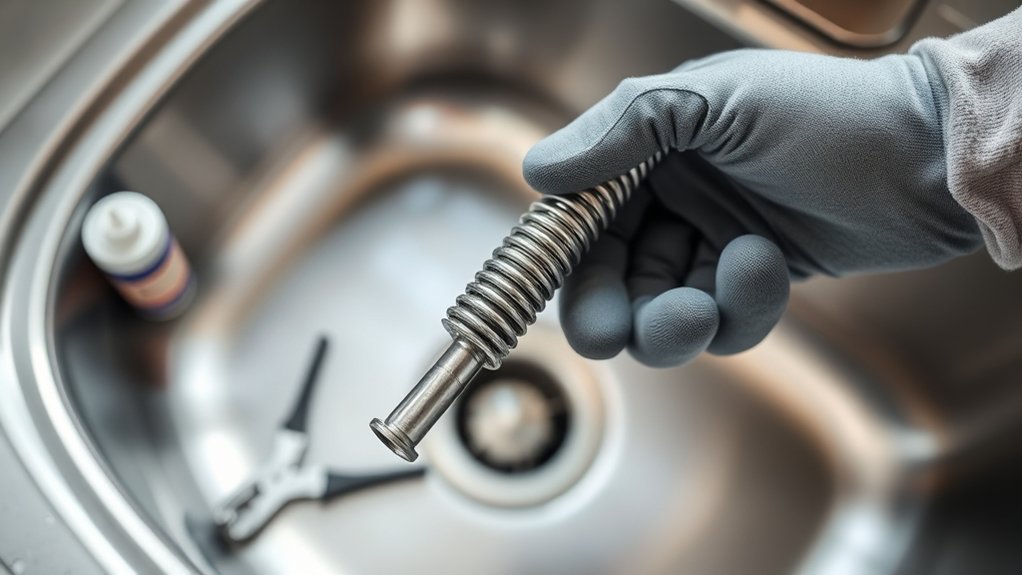
Check your tools to verify they’re in good condition. Tool maintenance is key for smooth operation and avoiding accidents. Keep your drain snake, gloves, and a bucket within reach.
Organize your workspace so you can move quickly from one step to the next. Having everything prepared minimizes interruptions and keeps the process straightforward.
Before you begin, inspect your tools for any damage or wear. Replace or repair anything that’s not in good shape. A tidy, organized workspace makes the job easier and reduces the risk of accidents or losing small parts.
Proper preparation ensures you’re ready to work efficiently and confidently when you start using the drain snake.
Understanding How a Drain Snake Clears Clogs
Understanding how a drain snake works helps you see why it’s effective at clearing clogs. When you insert the snake into your kitchen sink’s plumbing, it reaches the blockage caused by things like grease buildup, food debris, or soap scum.
The flexible, coiled design lets the snake navigate through the pipes and break up or hook onto the clog. As you turn the handle, the snake either dislodges the material or traps it so you can pull it out.
Unlike chemical drain cleaners, a drain snake physically removes the obstruction, making it a reliable tool for stubborn clogs. Knowing this process helps you appreciate how the tool interacts with the plumbing system to restore proper flow.
Insert and Reach the Blockage With Your Drain Snake

Find the blockage and gently insert the drain snake into the drain opening. Take your time and carefully feed the snake in—don’t rush. As you push it in, you might feel some resistance or even hit the clog—that’s normal. Just keep steady pressure, making sure the snake makes its way past any obstructions without putting too much force on the pipes.
Locate the Blockage
Before inserting the drain snake, you need to locate the blockage precisely. This step is crucial for effective plumbing repair and keeping your kitchen hygienic.
Start by removing any visible debris or standing water from the sink. Then, feel around the drain for resistance or unusual firmness, which can indicate where the clog is. Use a flashlight if needed to see deeper into the pipe.
Consider this table to help identify common blockage spots:
| Location | Signs of Blockage | Tips for Detection |
|---|---|---|
| Near the drain opening | Slow draining, gurgling | Use your hand or a tool to feel resistance |
| Middle of pipe | Foul odor, water backup | Listen for bubbling sounds |
| Downstream drain | Water backing into sink | Check for water pooling |
| Vent pipe | Slow drainage, odor | Inspect exterior vents |
| P-Trap | Visible debris, odor | Remove and check for clogs |
Locating the blockage helps you target your plumbing work effectively and keeps your kitchen clean.
Insert Carefully
Once you’ve identified approximately where the clog is, carefully insert the tip of the drain snake into the drain opening. Gently push it into the pipe, feeling for resistance as you approach the blockage.
Keep the snake steady to avoid damaging the pipe or pushing the clog further down. As you go, you might notice a slight decrease in resistance or a change in water flow, which means you’ve reached the clog.
Rotate the snake slowly to latch onto or break up the obstruction. Be patient and controlled, making sure not to force the tool. Proper insertion helps you reach the clog effectively and restore proper water flow without damaging the pipe.
Once you feel contact, you’re ready to work the snake and clear the clog.
Rotate and Push to Break Up the Clog
When you’re using the drain snake, try turning it gently as you push it forward. This little twist can really help loosen up the clog. Just keep a steady hand and push with a gentle but firm pressure.
Apply Gentle Rotation
To effectively break up the clog, gently rotate the drain snake while pushing it forward. This motion helps dislodge debris and prevents damage to your pipes, especially if corrosion has begun.
Avoid applying too much force or twisting aggressively, as this can worsen pipe corrosion or push the clog further down. Steady, gentle rotations allow the snake to grip and break apart the blockage naturally.
Be cautious if you’ve recently used chemical drain cleaners; these can weaken pipe material, making aggressive movements risky. Instead, focus on a slow, controlled rotation to avoid damaging sensitive pipe surfaces.
This careful approach minimizes the risk of pipe damage while making the clog easier to clear without resorting to harsh chemicals.
Push Firmly Forward
As you work with the drain snake, applying firm pressure while rotating and pushing forward can help break up stubborn clogs.
Make sure you have a good grip on the handle so you can control and put force into your movements.
Keep your hands steady and aligned with the snake’s direction to avoid slipping.
Use your body weight rather than just your arms to push the snake forward, which makes it more effective.
As you rotate, press firmly but steadily, applying consistent pressure to dislodge debris.
Be careful not to use too much force, as that could damage your pipes.
Focus on controlled, deliberate movements—rotating as you push—to help the snake grip and break apart the clog.
Patience and good technique are key to clearing the blockage efficiently.
Break Up Clogs
Rotating the drain snake while pushing forward is key to breaking up stubborn clogs. This motion helps dislodge debris stuck in pipes, whether they’re made of PVC, cast iron, or copper. Doing it right ensures your plumbing stays in good shape without damage.
To get the best results:
- Turn the snake clockwise as you push to break up compacted material.
- Apply steady pressure to avoid harming delicate pipes like PVC.
- When withdrawing the snake, rotate it in the opposite direction to lift loosened debris.
This combination of rotation and pressure clears clogs efficiently. It helps your sink drain smoothly again. Gentle but firm movements prevent damage and get the job done.
Pull Out and Clean Your Drain Snake
After you’ve successfully removed the drain snake from the drain, it’s important to clean it thoroughly before using it again. This step is key for proper drain snake maintenance and guarantees it’s ready for future use.
Start by wiping off any debris or residue with a cloth or paper towel. Then, rinse the snake under warm water to remove stubborn grime.
For a deeper clean, you can scrub the snake with an old toothbrush dipped in dish soap. Make sure to scrub the coils and handle to prevent buildup.
Dry the snake completely to prevent rust. Proper cleaning not only prolongs the life of your tool but also helps maintain effective clog removal in future uses.
Store the drain snake in a dry, accessible place. Regular cleaning after each use keeps your tool in top shape and guarantees it’s ready for the next clog.
Test Your Sink and Tips to Prevent Future Clogs
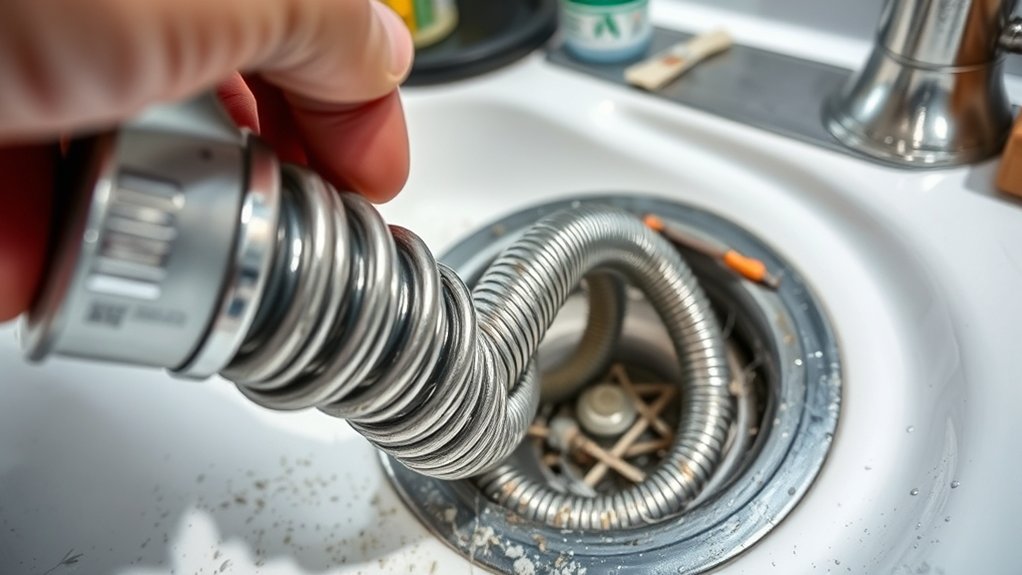
Once you’ve cleaned your drain snake, it’s important to test your sink to make sure the clog is fully gone and water flows smoothly. Run hot water for about 30 seconds to check the drainage. If water still pools or drains slowly, consider repeating the cleaning or inspecting the trap further.
To prevent future clogs, follow these simple tips:
- Regularly run hot water after washing greasy or starchy foods down the drain.
- Use a drain cover to catch food particles and debris during kitchen cleanup.
- Schedule monthly drain cleaning with a mixture of baking soda and vinegar to break down buildup.
These steps help avoid common sink issues, keep your drain working well, and extend your plumbing’s life. Proper drain maintenance can prevent stubborn clogs, reduce the need for harsh chemical cleaners, and keep your sink smelling fresh and clean.
Frequently Asked Questions
Can I Use a Drain Snake for Other Household Drains?
Yes, you can use a drain snake for other household drains like your bathtub or bathroom sink. It’s a versatile tool that clears clogs effectively.
If a drain snake isn’t suitable, consider alternative tools like a plunger or chemical remedies for minor blockages. For tough clogs, a drain snake is often the best choice because it’s more powerful and less harmful than harsh chemicals.
Using a drain snake helps you clear drains safely and efficiently. It’s a handy tool to have around for various household drain issues.
What Safety Precautions Should I Take When Using a Drain Snake?
When using a drain snake, wear protective gear like gloves and safety goggles to prevent injury from debris or splashes. It’s important to protect your eyes and hands during the process.
Always follow the proper technique by inserting the snake carefully and turning it gently. This helps prevent damage to your pipes and makes the job easier.
Keep your hands and face away from the moving parts of the snake, and work in a well-lit area. Good lighting helps you see what you’re doing and stay safe.
Taking these precautions ensures safe and effective cleaning without causing harm or damage.
How Often Should I Clean or Replace My Drain Snake?
You should clean your drain snake after each use to prevent buildup and bacteria.
Replace it if the cable becomes damaged or corroded, usually every couple of years depending on how often you use it.
Regular inspections and thorough cleaning with water and disinfectant are good maintenance tips.
When choosing a tool, go for one made of durable materials and the right size for your sink.
This will help ensure it works effectively and safely whenever you need it.
Is a Drain Snake Suitable for Very Stubborn or Old Clogs?
Think of stubborn clogs as a locked door. You might need more than just a key. A drain snake can often handle very stubborn or old clogs, but sometimes it’s like trying to pry open a tough lock.
Chemical alternatives may help in those cases. But if the clog keeps coming back or won’t budge, it’s best to call in a professional. They have the right tools and expertise to clear even the toughest blockages safely and effectively.
Can Using a Drain Snake Damage My Plumbing System?
Using a drain snake can potentially damage your plumbing if you’re careless, especially with delicate pipe materials like PVC or older pipes. If you force the snake into a drain that’s too small or use too much pressure, you risk cracking or displacing pipes.
Always choose the right drain size and be gentle. Proper technique minimizes damage and keeps your plumbing intact while clearing stubborn clogs effectively.
Conclusion
Now that you know how to use a drain snake, you’re ready to tackle those stubborn sink clogs yourself. With a little patience and the right steps, you can save both time and money.
Remember, regular maintenance can help prevent future blockages. So, why wait for a plumber when you can handle it on your own?
Give it a try and enjoy a smoothly flowing kitchen sink today with your new drain snake skills!