Can You Put Frozen Chicken in the Oven?
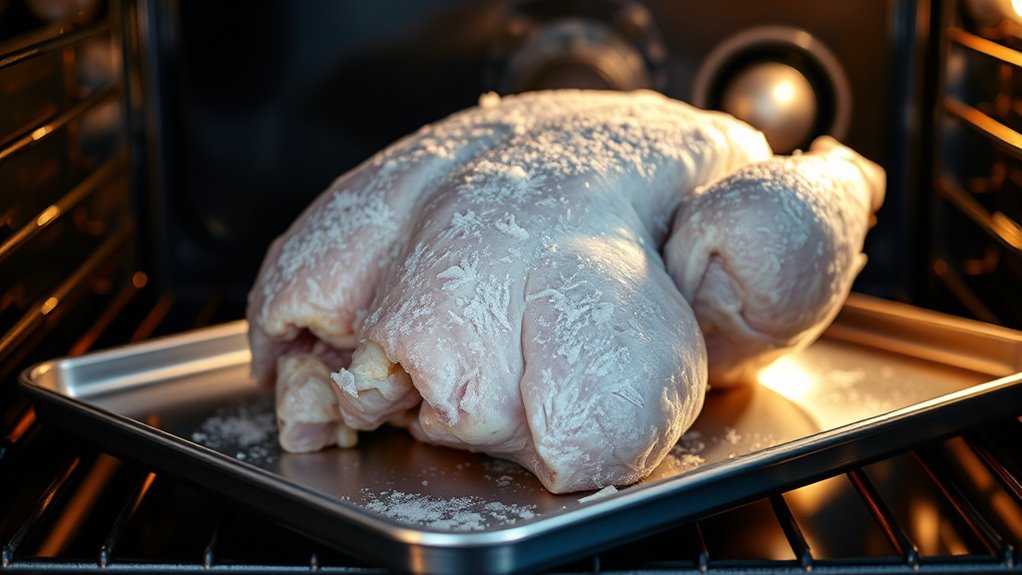
Many people struggle with busy schedules and often find themselves wondering if they can skip the thawing process when cooking chicken. You’re not alone—cooking frozen chicken in the oven is a common question.
The good news is, yes, you can put frozen chicken in the oven without thawing it first, as long as you follow safety guidelines.
Make sure the chicken reaches an internal temperature of 165°F to guarantee it’s cooked through and safe to eat. Use a meat thermometer to check doneness, and spread the pieces evenly on a baking sheet.
Proper handling, seasoning, and temperature control are key. Keep going to find essential tips for perfect baked frozen chicken.
Key Takeaways
- Yes, you can cook frozen chicken in the oven without thawing first, but it will take about 50% longer to cook thoroughly.
- Make sure the internal temperature reaches 165°F with a meat thermometer to ensure it’s safe to eat.
- Preheat your oven to 375°F to 400°F and spread the chicken evenly on a baking sheet for even cooking.
- Cover it with foil or bake uncovered, depending on whether you want more moisture or a crisper texture. Avoid overcrowding the pan.
- Handle raw chicken carefully, washing your hands and surfaces afterward to prevent cross-contamination.
Is It Safe to Cook Frozen Chicken in the Oven?
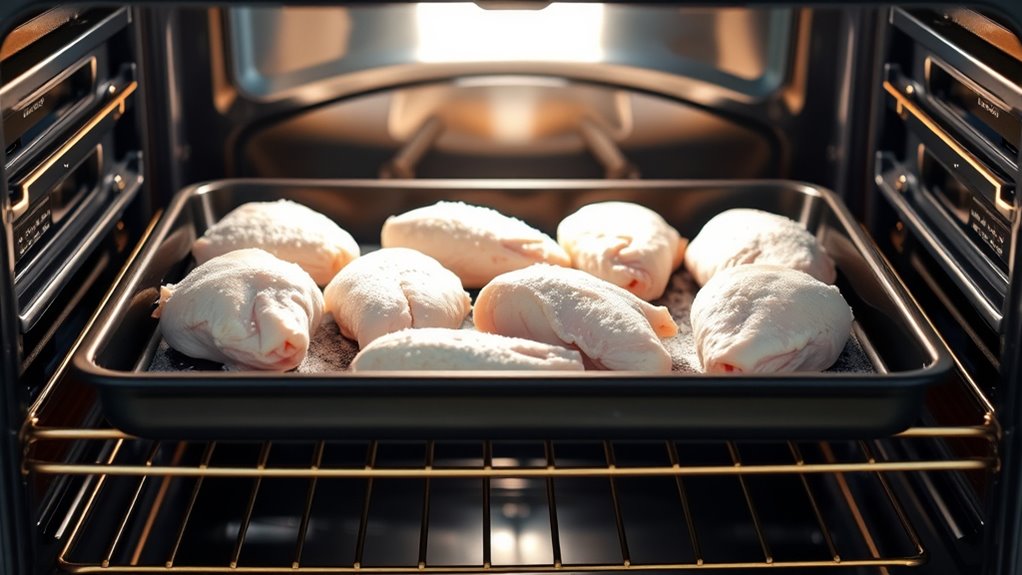
Cooking frozen chicken in the oven is safe as long as you follow proper food safety guidelines. You don’t need to thaw it first, but you must ensure it reaches an internal temperature of 165°F to eliminate bacteria.
Regarding marinating techniques, avoid adding marinade directly to frozen chicken, as it won’t absorb flavors properly. Instead, season or marinate the chicken after it’s partially cooked or once it’s thawed slightly.
Kitchen safety is key—use a reliable meat thermometer to check doneness and handle raw chicken carefully to prevent cross-contamination. Always wash your hands, utensils, and surfaces thoroughly after contact.
Keep the oven at the correct temperature, and don’t leave the chicken exposed to room temperature for too long. Following these steps helps you cook frozen chicken safely and ensures it’s both delicious and free from harmful bacteria.
How Long Does It Take to Bake Frozen Chicken?
Baking frozen chicken really depends on the size and cut of the chicken you’re working with. Since it’s frozen, you’ll need to give it a bit more time in the oven—usually about 50% longer than you’d cook thawed chicken. It’s a good idea to keep an eye on it so nothing gets overdone or underdone.
And hey, to be totally sure it’s cooked through, grab a meat thermometer. That way, you can check that the internal temperature has reached a safe level, and you’ll know your chicken is perfectly cooked and juicy!
Cooking Time Variations
Baking frozen chicken naturally takes longer than cooking it from thawed, but the exact time depends on the size and cut of the meat. Smaller pieces like breasts may take around 45-50 minutes, while larger cuts like thighs or whole chickens could need 1.5 to 2 hours.
Keep in mind that marination techniques are less effective with frozen meat, so plan accordingly if you want added flavor. To improve presentation ideas, consider slicing the cooked chicken and arranging it attractively on a platter.
Adjust cooking times based on the thickness and type of cut to prevent undercooking or overcooking. Remember, monitoring the internal temperature is key—avoid rushing, as frozen chicken needs a bit more time to cook thoroughly.
Ensuring Proper Doneness
To guarantee your frozen chicken is cooked safely and thoroughly, monitoring its internal temperature is key. Use a meat thermometer to ensure it reaches 165°F (75°C). Properly cooked chicken will be juicy and tender without any pink meat.
Consider marinade options beforehand to improve flavor, but avoid adding marinades that can cause uneven cooking if they’re too thick. Packaging considerations matter too—remove any plastic or foam containers before baking to prevent melting or chemical leaching.
Keep in mind that cooking times vary depending on the size and cut of the chicken. For evenly cooked results, flip or rotate the chicken during baking. Always double-check the internal temperature before serving to ensure safety and doneness.
What Are the Best Oven Settings for Baking Frozen Chicken?
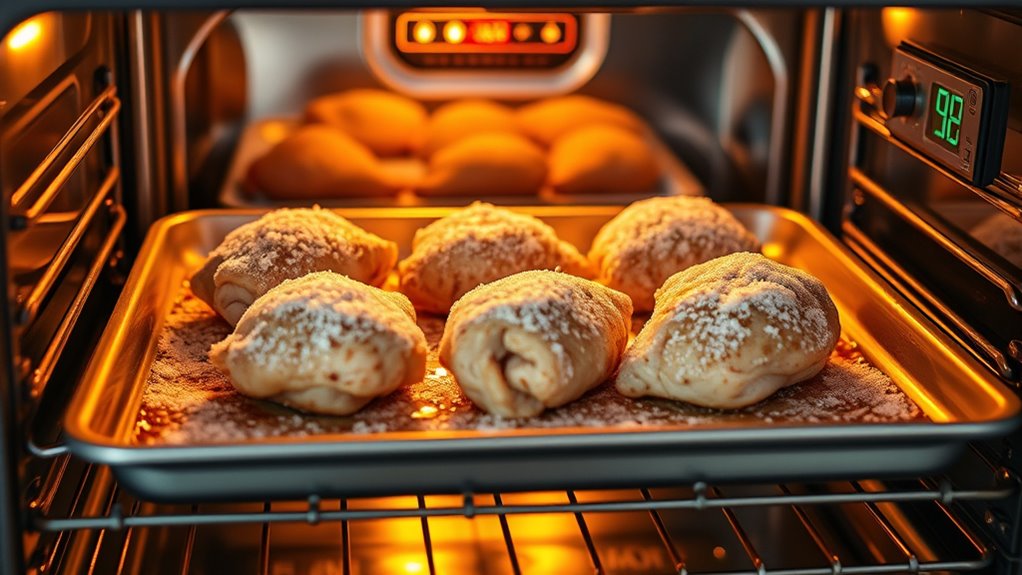
When baking frozen chicken, setting the right oven temperature is key to ensuring it cooks evenly and safely. A common recommendation is to preheat your oven to 375°F (190°C). This temp helps the chicken cook through without drying out.
If you like crispy skin, you can bump it up to 400°F (204°C) during the last few minutes of cooking. When preparing your chicken, marinating beforehand isn’t necessary for frozen cooking, but it can add flavor if you plan to marinate after thawing.
Use a baking dish or sheet with a rack to promote even heat circulation. Cover the chicken with foil if you want to keep it moist, or leave it uncovered for a crispy exterior.
Keep a meat thermometer nearby to check that the internal temperature reaches 165°F (74°C). These settings will help you get safe, flavorful, and evenly cooked frozen chicken.
Should You Thaw Chicken Before Baking? Pros and Cons
Deciding whether to thaw chicken before baking depends on your schedule and what you want to achieve. Thawing helps ensure more even cooking and better flavor absorption, especially if you’re marinating.
However, baking directly from frozen saves time and reduces the chance of bacterial growth during storage. If your chicken has been stored for a long time, thawing might be necessary for safety reasons.
Think about these points: Thawing allows for more uniform cooking and better texture. Baking from frozen is quicker but might lead to uneven doneness.
Marinating works best when the chicken is thawed and has fully absorbed flavors. Also, the longer the chicken has been stored, the higher the risk of spoilage, so thawing can be safer in those cases.
In the end, your choice depends on your timing, safety concerns, and flavor preferences.
How to Season Frozen Chicken Before Putting It in the Oven
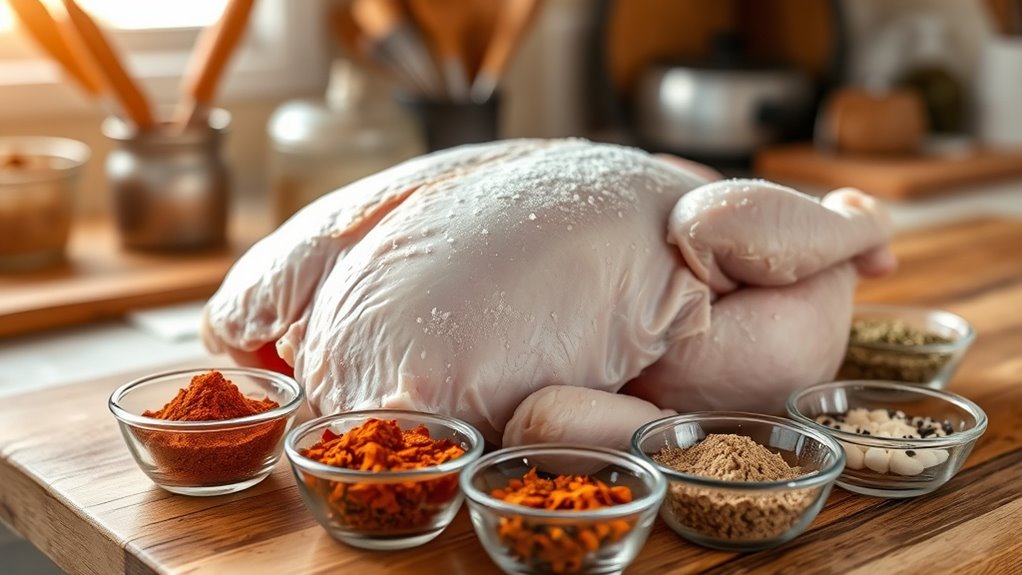
Seasoning frozen chicken can definitely boost its flavor, but the way you go about it is pretty important. You can choose to sprinkle your spices directly onto the chicken before cooking, or wait until it’s partially cooked to help the flavors soak in better.
If you decide to season it while it’s still frozen, just keep in mind that the spices might not stick as well and could be a bit uneven. For the best results, you might want to partially thaw the chicken first, then rub your favorite herbs and spices all over it. This way, the seasoning has a chance to really sink in and create that delicious, flavorful crust you’re after.
Either way, a little patience and the right technique can make a big difference in how tasty your oven-baked chicken turns out!
Thawing or Not
Is it better to thaw frozen chicken before seasoning and baking? Not necessarily. You can cook it straight from the freezer, but it might affect the flavor and texture.
If you decide to cook frozen chicken without thawing, here are some tips. Use marinating techniques designed for frozen meat to boost flavor. Adjust the cooking time so the chicken cooks evenly.
When grilling, start with lower heat to prevent burning the outside while the inside finishes cooking. For more even seasoning, apply salt and spices right before freezing or during cooking.
Keep in mind that not thawing can make it harder for seasonings to penetrate the meat and might mean longer cooking. Cooking from frozen is super convenient, but using the right techniques helps you get juicy, flavorful results.
Flavor Boosting Tips
Even when cooking frozen chicken straight from the freezer, you can still boost its flavor by applying seasonings effectively. Start with marinade techniques—brush the chicken with a simple marinade like olive oil, lemon juice, and herbs to add moisture and taste.
Since you’re working with frozen meat, use a basting brush or spray to evenly distribute the marinade. Consider using a roasting pan or baking dish with a rack to allow air circulation and ensure even cooking.
Season generously with salt, pepper, and spices directly onto the surface, pressing them into the chicken. If possible, let the chicken sit for a few minutes once seasoned to help the flavors penetrate, even if it’s still partially frozen.
How Do You Know When Frozen Chicken Is Fully Cooked?
To guarantee your frozen chicken is fully cooked, it’s important to use a reliable method to check its doneness. The best way is to use a meat thermometer; the internal temperature should reach 165°F (74°C).
Use a meat thermometer to ensure your frozen chicken reaches 165°F for safe, thorough cooking.
Visual cues alone can be misleading, so avoid relying solely on color. Make sure the juices run clear when you pierce the thickest part. Remember, proper marinating techniques can improve flavor and reduce cooking time, but they don’t replace thorough cooking.
Kitchen safety is critical. Never leave chicken partially cooked or undercooked, as it risks bacteria growth. Keep raw chicken separate from other foods to prevent cross-contamination.
Consider these tips to confirm doneness: Use a meat thermometer at the thickest part, check for clear juices, ensure the meat is no longer pink, and confirm the internal temperature. Avoid cutting into the chicken prematurely.
Tips for Ensuring Even Baking of Frozen Chicken
Ensuring your frozen chicken bakes evenly requires some simple preparation and technique. Start by preheating your oven to around 375°F to 400°F for consistent heat.
To promote even cooking, consider marinating techniques that help tenderize the meat and add flavor, even from frozen. You can use a simple marinade with oil, acid, and herbs, applying it once the chicken begins to thaw slightly during cooking.
If you don’t have the exact ingredients, substitutions like lemon juice for vinegar or garlic powder instead of fresh garlic work just as well. Spread the chicken out in a single layer on a baking sheet, giving each piece space to heat uniformly.
Covering the chicken with foil can prevent uneven browning, and turning pieces halfway through baking helps them cook evenly on all sides. Following these tips will help you achieve perfectly baked, evenly cooked frozen chicken.
Common Mistakes to Avoid When Baking Frozen Chicken
One mistake people often make is uneven cooking. This can cause some parts of the chicken to be underdone while others are overcooked, which isn’t ideal. To avoid this, make sure to spread the chicken out evenly on the baking sheet so it cooks uniformly.
Another thing to watch out for is improper seasoning. If you don’t season the chicken evenly before baking, some bites might be bland while others are overly salty or spicy. Just take a little extra time to apply your seasonings evenly – it’ll make a big difference in flavor and ensure every bite is delicious.
Uneven Cooking Risks
Baking frozen chicken without taking precautions can lead to uneven cooking, leaving some parts undercooked and potentially unsafe to eat. To prevent this, consider how kitchen temperature impacts cooking, as uneven heat can cause hot spots. Avoid common mistakes like neglecting to marinate techniques that promote even moisture distribution. Also, resist the urge to cook straight from freezer to oven without proper thawing, which can increase risks. Pay attention to how your oven heats and adjust accordingly.
Use a reliable oven thermometer to monitor temperature consistency. Make sure the chicken is evenly spaced on the baking sheet. Avoid overcrowding the pan, as this can trap cold spots. Let the chicken sit at room temperature briefly before cooking. Check internal temperature regularly to ensure it reaches a safe level.
Improper Seasoning Application
Applying seasoning properly is crucial for flavorful baked frozen chicken, but many people make common mistakes that can ruin the dish. One mistake is uneven seasoning, which affects the flavor and makes it inconsistent. When you don’t coat the chicken evenly, some parts can be bland while others are over-seasoned.
If you don’t give the seasoning enough time to absorb before baking, the chicken won’t develop full flavor. To fix this, sprinkle the seasonings evenly and gently pat the chicken to help the spices stick.
You can also let the seasoned chicken rest for a few minutes or brush it with a light oil to help the seasonings adhere better. Proper seasoning application ensures every bite is tasty and well-flavored.
Delicious Recipes for Frozen Chicken Baked in the Oven
Cooking frozen chicken in the oven can be both convenient and delicious if you follow the right techniques. To boost flavor, try simple marinading techniques before baking.
Even if the chicken is frozen, you can add a marinade directly onto it. This helps keep the meat moist and flavorful during cooking. Proper storage guidelines also guarantee your chicken stays fresh and safe, making your recipes even better.
Here are some ideas to get you started:
- Season with herbs and spices for a quick flavor boost
- Use lemon and garlic marinade for a zesty taste
- Brush with barbecue sauce during the last 10 minutes
- Top with sliced vegetables for added texture
- Apply a spice rub for a crispy crust
Safety Tips for Handling and Storing Frozen Chicken Before and After Cooking
To keep your chicken safe to eat, it’s important to handle and store it properly both before and after cooking. Always keep frozen chicken at 0°F or below in a well-maintained freezer.
Thaw it safely in the refrigerator instead of leaving it at room temperature. This helps prevent bacteria from growing and keeps your chicken safe.
After cooking, store leftovers in airtight containers and refrigerate within two hours. Proper storage helps preserve the safety and quality of your chicken.
Good kitchen safety also means washing your hands, utensils, and surfaces thoroughly after handling raw chicken to prevent cross-contamination.
| Step | Tip | Reason |
|---|---|---|
| Thaw in refrigerator | Plan ahead for slow, safe thawing | Prevents bacteria growth |
| Use marinating techniques | Marinate in the fridge, not on the counter | Keeps chicken safe and flavorful |
| Keep raw separate | Use separate cutting boards and utensils | Avoid cross-contamination |
| Cook thoroughly | Ensure internal temp reaches 165°F | Kills harmful bacteria |
| Store leftovers | Refrigerate within 2 hours | Preserves safety and quality |
Frequently Asked Questions
Can You Bake Frozen Chicken Without Any Seasoning?
Yes, you can bake frozen chicken without seasoning, but it won’t be very flavorful. Since marinating doesn’t work well on frozen chicken, you might want to add seasoning after it’s cooked.
You’ll need to adjust the cooking time—plan for about 50% longer—to make sure it’s fully cooked and safe to eat. Use a meat thermometer to check that the internal temperature reaches 165°F.
Proper cooking and seasoning will give you better flavor and make sure it’s safe to eat.
Does Baking Frozen Chicken Affect Its Texture and Flavor?
Baking frozen chicken can change its texture, making the meat less tender and a bit rubbery. You might also notice some flavor loss since the chicken doesn’t cook evenly, and the outer layers can dry out before the inside is fully cooked.
To reduce these effects, use a proper baking method. Consider seasoning or marinating the chicken beforehand to boost flavor and improve the overall texture.
Is It Necessary to Cover Frozen Chicken While Baking?
You don’t need to cover frozen chicken while baking, but doing so can help ensure even cooking and keep it moist.
For safety, it’s best to thaw the chicken first using methods like refrigeration or cold water to avoid bacteria.
Cooking directly from frozen is safe if you extend the cooking time and use a meat thermometer to reach 165°F.
Covering the chicken can help keep it juicy and promote even heat distribution.
Can You Use a Microwave to Defrost Chicken Before Oven Baking?
Think of defrosting chicken like warming up before a race—you want it ready, but not rushed. Yes, you can use a microwave to defrost chicken before baking, but it’s important to do it safely.
Use the microwave’s defrost setting, and make sure to cook the chicken immediately afterward. This helps prevent bacteria from growing. This kitchen technique ensures even cooking and keeps your meal safe and delicious.
How Do You Prevent Frozen Chicken From Sticking to the Baking Dish?
To prevent frozen chicken from sticking to the baking dish, start by applying a thin layer of cooking oil or non-stick spray. This helps create a barrier between the chicken and the dish.
You can also use a silicone baking mat or parchment paper for extra non-stick protection. These make cleanup easier and reduce the chances of sticking.
Make sure your dish is well-coated and preheated if needed. Properly preparing your baking dish ensures your chicken cooks evenly and doesn’t stick.
With these simple steps, your chicken will come out perfectly cooked and cleanup will be a breeze.
Conclusion
Now that you know how to safely bake frozen chicken, you can imagine the oven’s gentle heat transforming icy pieces into golden, tender bites. With a little patience and the right seasoning, you’ll fill your kitchen with mouthwatering aromas.
Picture the crispy edges and juicy interior coming together, creating a satisfying meal. Trust your instincts, avoid common mistakes, and enjoy the warm, comforting feeling of a perfectly baked frozen chicken ready to serve.