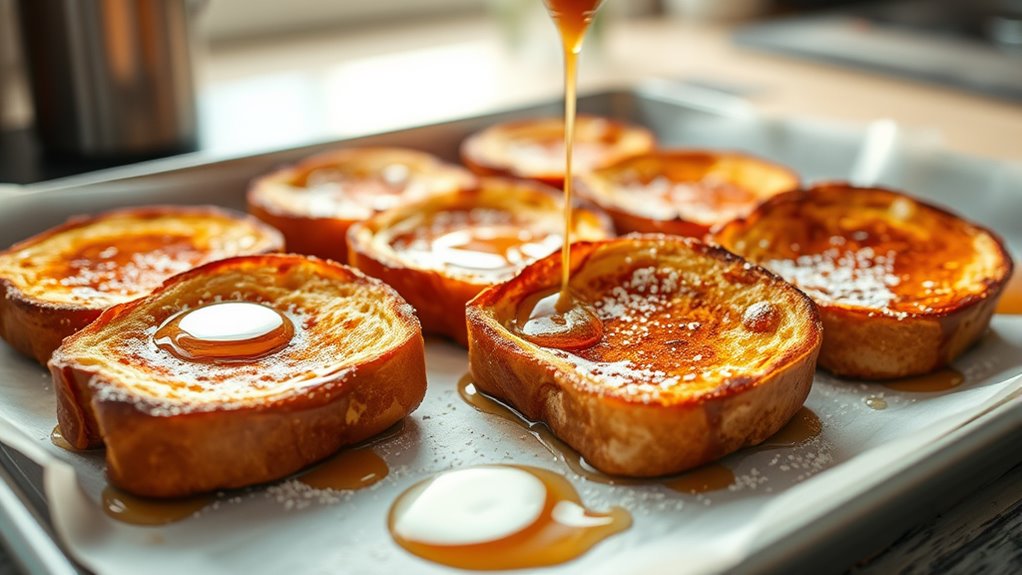
How You Make French Toast in the Oven
Many people love breakfast but struggle with making perfect French toast every time. It can be tricky to get that ideal balance of crispy edges and tender inside, especially without turning on the stove. If you’re tired of inconsistent results, baking French toast in the oven might be just what you need.
To make French toast in the oven, start by choosing sturdy bread like brioche or challah, and prepare a custard with eggs, milk, vanilla, cinnamon, and any preferred flavorings. Soak the bread in the custard, then assemble it in a baking dish, ensuring full coverage.
Bake at 375°F for 25-30 minutes until golden and tender. Top with your favorite toppings or store leftovers for later. Keep exploring to find tips for perfect results every time.
Key Takeaways
- Prepare a custard mixture with eggs, milk, vanilla, and cinnamon for soaking the bread slices.
- Layer slightly stale bread in a greased baking dish and pour the custard evenly over it.
- Cover and let the bread soak for at least 10 minutes so it can absorb the custard.
- Bake uncovered at 375°F (190°C) for 25-30 minutes until golden and cooked through.
- Check doneness with a food thermometer, making sure the internal temperature reaches 160°F for safety.
Which Bread Is Best for Oven French Toast?
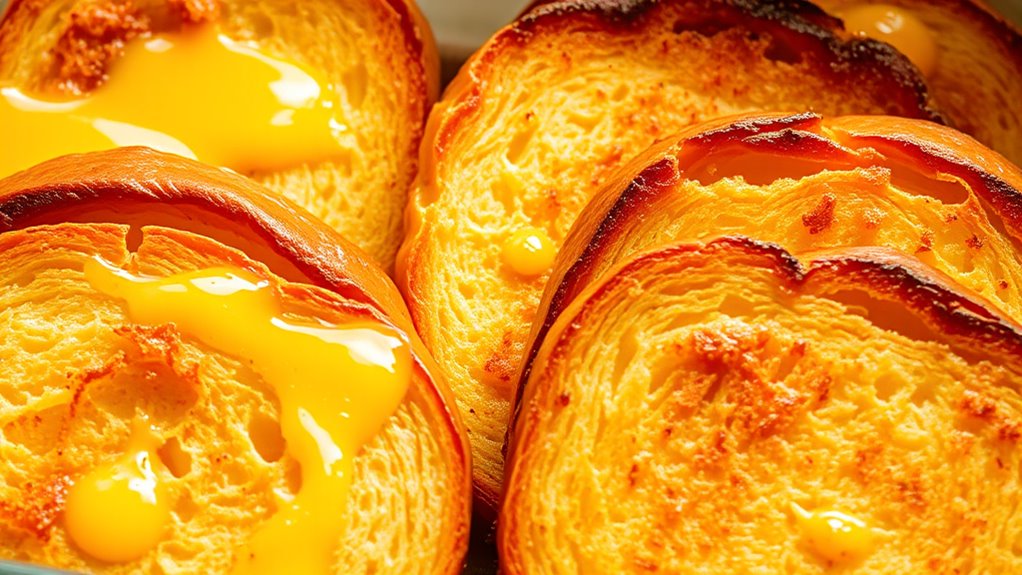
Choosing the right bread is essential for making delicious oven French toast. You want bread with the perfect texture—slightly stale or day-old bread works best because it absorbs the custard without falling apart.
Choosing slightly stale bread ensures perfect absorption and prevents falling apart in oven French toast.
Thick slices, like Texas toast or brioche, are ideal because they hold up well and create a hearty bite. The bread’s texture influences how well it soaks up the flavors, making each piece moist and tender.
When selecting bread, consider flavor combinations too. Sweeter breads like brioche or challah add richness, while plain white bread offers a neutral base that highlights toppings and syrups.
Whole grain or artisan loaves can add depth and complexity but may need a bit longer soaking time. Ultimately, it depends on whether you want a soft, custardy inside or a more substantial, chewy bite.
Picking the right bread sets the foundation for perfect oven French toast.
How Do You Prepare the Ingredients for Oven French Toast?
First things first, pick a good, sturdy bread like brioche or challah. These kinds of bread are perfect because they soak up all that custard without falling apart. So, it’s definitely worth choosing the right bread for your French toast.
Next up, you’ll want to make your custard mixture. Just whisk together some eggs, milk, vanilla, and a pinch of cinnamon until everything’s nice and smooth. It’s super easy, and once it’s ready, you’re all set to assemble your dish. Make sure to coat the bread evenly so every bite is flavorful and perfectly soaked.
Selecting the Bread
When preparing to make oven French toast, choosing the right bread is key to getting the best texture and flavor. You want bread that can soak up the custard without falling apart, so pick one with a good bread texture.
The gluten content is important because higher gluten helps keep the slices intact during baking. It’s best to use bread that’s slightly stale or a day old since it absorbs liquids better.
Here are some top options:
- Thick-cut brioche or challah for a rich, buttery flavor
- Texas toast for extra sturdiness
- French baguette for a crusty exterior
- Whole wheat or multigrain for added flavor and texture
Picking the right bread ensures your oven French toast turns out perfectly tender inside and crispy outside.
Preparing the Custard
To prepare the custard for oven French toast, whisk together eggs, milk, and seasonings until smooth. The goal is to get the right custard consistency — it should be slightly thick but still pourable.
For a flavor boost, add vanilla extract, cinnamon, or nutmeg to the mixture. Stir well to evenly distribute the spices and enhance the taste.
Here’s a quick guide:
| Ingredient | Purpose/Tip |
|---|---|
| Eggs | Base for custard, provides richness |
| Milk (or cream) | Creates smooth custard texture |
| Vanilla extract | Enhances flavor and aroma |
| Cinnamon/Nutmeg | Adds warmth and depth to the flavor |
| Seasonings | Adjust to taste for personalized flavor |
Mix everything thoroughly until you have a well-balanced, flavorful custard ready to soak your bread.
How Do You Make the Egg Mixture for French Toast?
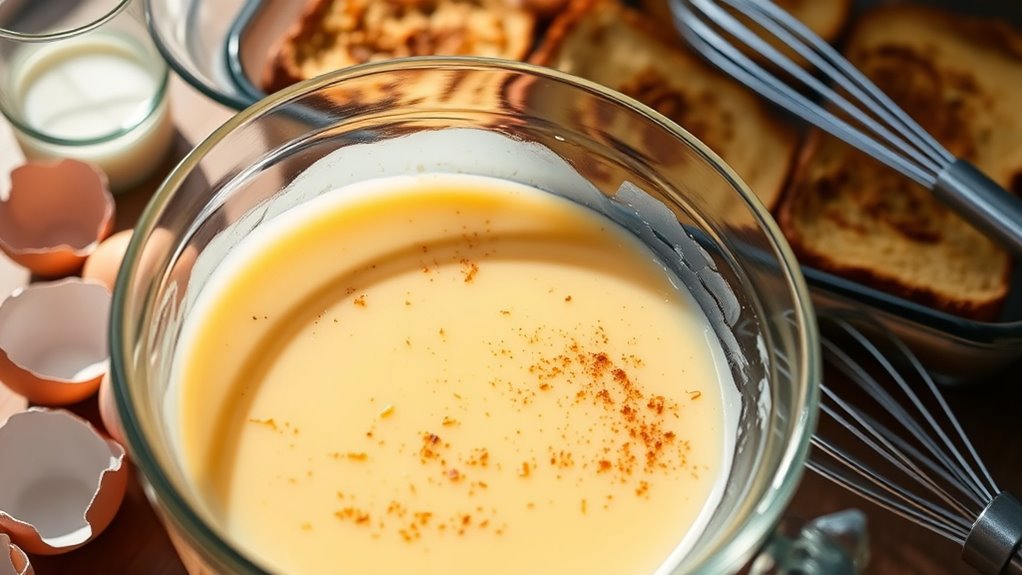
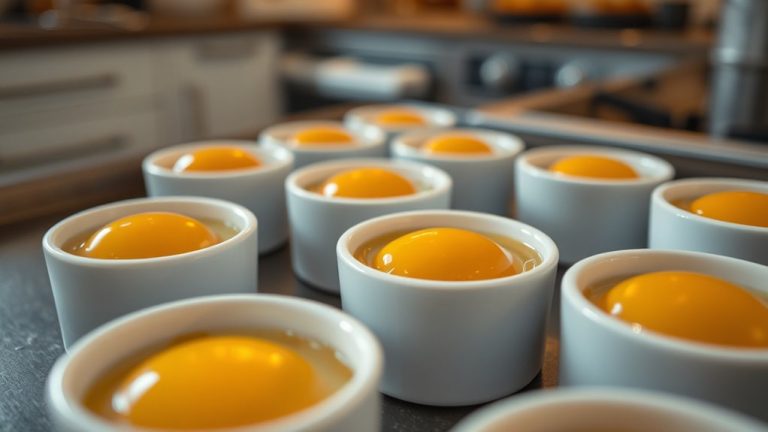
First off, grab some fresh eggs—they really make a difference in flavor and texture. Crack them into a bowl and give them a good whisk.
Next, add in some milk or cream to make the mixture nice and rich. If you want to give it a little extra flavor, toss in a splash of vanilla or a pinch of cinnamon.
And that’s pretty much it! These simple steps will give you a tasty, well-balanced egg mixture that’s perfect for soaking your bread and making delicious French toast.
Choosing the Right Eggs
Choosing the right eggs is key for a rich, flavorful French toast mixture. High-quality eggs give you better taste and texture, helping your dish stand out.
When picking eggs, go for fresh, organic, or farm-fresh options—they often turn out the best. Dairy choices also matter; you can use milk, cream, or plant-based options like almond or soy milk to customize the richness.
Use large eggs for consistent binding and flavor. Whisk them thoroughly to create a smooth, even mixture.
Adding Flavor and Cream
Adding flavor and cream to your egg mixture boosts the taste and richness of your French toast. To do this, add creative flavorings like vanilla extract, cinnamon, or nutmeg, which enhance the overall flavor.
For extra richness, choose from options like heavy cream or half-and-half, which give a silky texture that makes each bite more satisfying. You can also experiment with citrus zest or a splash of liqueur for unique twists.
Whisk these ingredients thoroughly into your beaten eggs to ensure even distribution. By customizing your mixture with these flavorful additions, your oven-baked French toast becomes more decadent and irresistible, appealing to a variety of tastes and preferences.
How Do You Assemble the French Toast in the Baking Dish?
Once you’ve prepared your bread and custard mixture, gently layer the slices in the baking dish, making sure they overlap slightly so they soak up the mixture evenly. This step is key for good egg soaking and custard layering, which gives the French toast its rich flavor and moist texture.
Carefully pour any remaining custard over the top, ensuring all slices are well-coated. To help the custard soak in better, press down gently on the slices. This encourages the custard to penetrate the bread.
Use a spatula or spoon to help spread the custard evenly. Arrange the slices in a single, slightly overlapping layer for uniform soaking. Cover the dish with plastic wrap to help the custard soak in even more.
Let the mixture sit for at least 10 minutes before baking. This approach guarantees your French toast will be flavorful and perfectly soaked.
What Are the Best Baking Temperature and Time Settings?
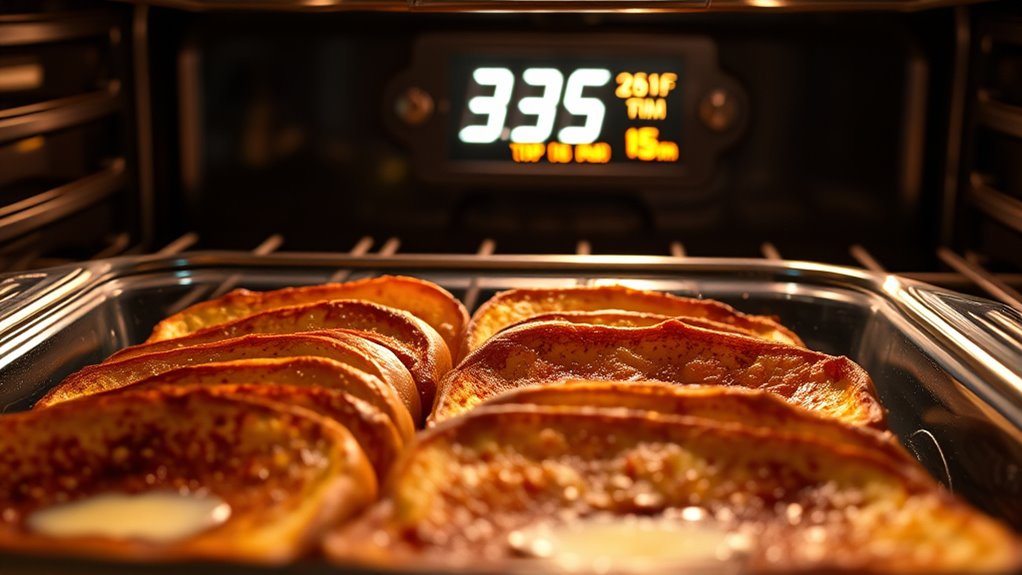
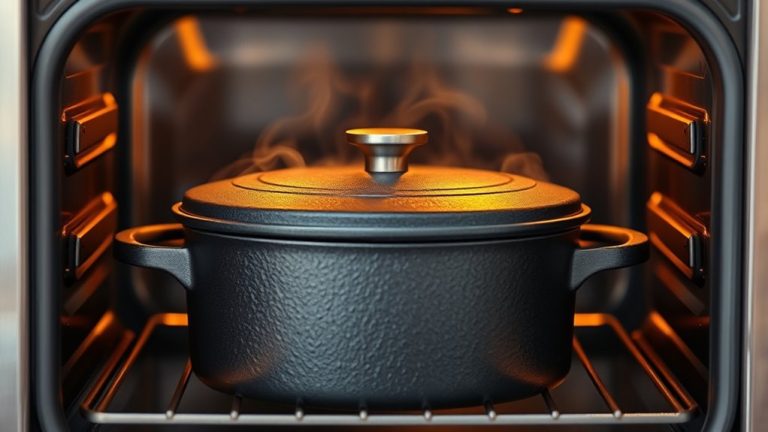
After covering the baking dish and letting the custard soak in, it’s time to set your oven to the right temperature. Preheat your oven to 375°F (190°C). This temp helps the custard cook evenly while giving the toast a nice golden-brown exterior.
Place a baking rack underneath your dish to promote even heat circulation and prevent sogginess. Using a rack also boosts flavor infusion because the air circulates around the toast, making it crispier.
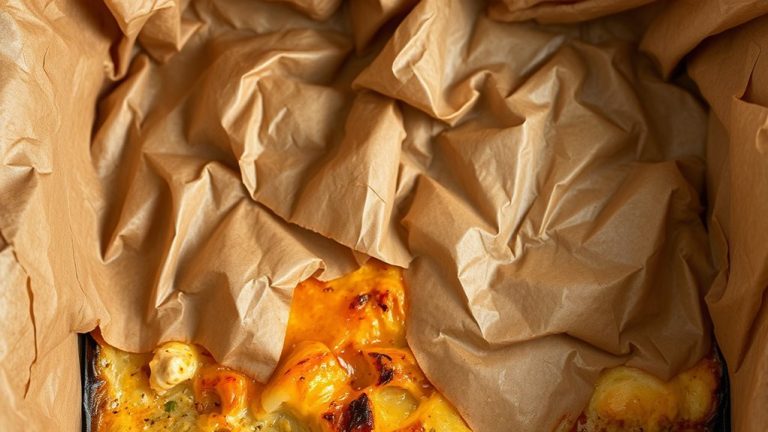
Bake uncovered for about 25 to 30 minutes, checking for a tender center and a lightly browned surface. If you want a crisper crust, leave it a few minutes longer, but don’t overbake to avoid dryness.
Keeping the right temperature and using the baking rack ensures your French toast cooks uniformly, with a perfect balance of crispness and custard flavor.
How Do You Know When Your French Toast Is Done?
You’ll know your French toast is ready when it turns a nice golden brown on top—looks pretty tempting, right? If you want to be super sure it’s cooked through, grab a food thermometer and check that the center hits about 160°F. That way, you know it’s perfectly cooked and safe to eat.
Or, if you don’t have a thermometer handy, just gently press the middle with a spatula or your finger. If it feels firm and springy rather than overly soft or wet, then your French toast is probably good to go. It’s all about finding that perfect balance between tender and cooked through!
Check for Golden Browning
How can you tell when your French toast has reached that perfect golden brown color? You’ll want to observe the edges and surface for a warm, inviting hue. The toast should develop a slight crispness, indicating it’s cooked through. If you used egg substitution or bread alternatives, keep an eye on the color, as they may brown differently.
Here are some tips to check for golden browning:
- Look for an even, rich golden tone across the surface.
- Gently lift a corner with tongs to see if it resists sticking and feels firm.
- Check if the edges are slightly crisp and browned.
- Avoid over-browning, which can signal burning or dryness.
These signs ensure your French toast is perfectly cooked and ready to enjoy.
Use a Food Thermometer
A reliable way to confirm your French toast is fully cooked is by using a food thermometer. Food safety is important, and checking the internal temperature guarantees your toast is safe to eat.
While oven baking generally cooks evenly, a thermometer provides precise confirmation. Insert it into the thickest part of a slice, avoiding the crust for an accurate reading.
The ideal temperature for fully cooked French toast is around 160°F (71°C). Using this kitchen tool takes the guesswork out of doneness and helps you avoid undercooked or overdone pieces.
Relying on a food thermometer not only guarantees safety but also ensures perfect texture and flavor. It’s a simple, effective step to achieve delicious, perfectly cooked French toast every time.
Test for Soft Center
To guarantee your French toast has a soft center, gently press down on the slice with a fork or spoon. If it feels firm, it needs more time; if it yields easily, it’s ready. Use your senses alongside cooking techniques to check doneness.
Look for a golden-brown exterior, which indicates proper caramelization. You can also insert a skewer or toothpick into the center—if it comes out clean or with moist crumbs, it’s done.
When testing, consider flavor combinations. A well-cooked center will balance the sweetness and richness of toppings. Remember, oven temperature and thickness influence cooking time.
Keep an eye on the texture and color to prevent overcooking. Perfectly cooked French toast should be tender inside with a nice crust outside.
How Can You Add Toppings and Extras to Make It Delicious?
Want to uplift your oven-made French toast? Adding toppings and extras is an easy way to boost flavor and texture.
Fruit toppings like fresh berries, sliced bananas, or apple slices brighten each bite with natural sweetness. Spread them over the hot French toast right after baking so they soften slightly and meld flavors.
Add fresh berries, bananas, or apple slices on hot French toast for a naturally sweet, softened, and flavor-melding topping.
For added crunch, sprinkle nuts and seeds such as chopped walnuts, almonds, chia seeds, or flaxseeds on top. These not only add texture but also boost nutritional value.
You can also drizzle syrup, honey, or chocolate sauce for extra sweetness. Dollop whipped cream or yogurt for creaminess. Just be mindful of the balance—don’t overload the toast so the toppings enhance rather than overpower.
Experiment with different combinations to find your favorite. These simple additions make your oven French toast more delicious, colorful, and satisfying with every bite.
How Should You Serve and Store Oven French Toast?
Once your oven French toast is baked to perfection, serve it while it’s still warm for the best flavor and texture. You can add fresh fruit, a dusting of powdered sugar, a drizzle of syrup, or a dollop of whipped cream to make it even more delicious.
For presentation, place it on a nice platter or individual plates and encourage everyone to enjoy it fresh. That way, it stays crispy and flavorful.
When storing leftovers, let the French toast cool completely. Keep it in an airtight container in the fridge for up to 2 days.
To reheat, use the oven or toaster oven for the best crispy results. If freezing, layer slices with parchment paper and store in a freezer-safe bag for up to a month. Reheat thoroughly before serving to keep that great flavor and texture.
What Common Mistakes Should You Avoid?
Even when your oven French toast turns out tasty, small mistakes can stop it from reaching its full potential. Common pitfalls include using the wrong bread or making ingredient swaps that change the texture and flavor.
For example, swapping regular milk for a non-dairy alternative without adjusting the recipe can cause uneven soaking or dryness. Over-soaking the bread makes it soggy, while under-soaking leaves it dry and bland.
Neglecting to preheat the oven or overcooking can also ruin the dish’s perfect consistency. Being mindful of these details helps ensure your French toast turns out just right.
| Mistake | Solution |
|---|---|
| Using the wrong bread | Choose thick, sturdy bread like brioche or challah. |
| Ingredient substitutions | Adjust liquid ratios when swapping ingredients. |
| Over/under-soaking | Soak just enough to absorb without becoming soggy. |
Avoid these common mistakes for perfectly baked French toast every time.
What Are Some Sweet and Savory Variations to Customize Your French Toast?
French toast is incredibly versatile, allowing you to customize it with a variety of sweet and savory toppings and fillings to suit your taste.
For a sweet twist, try adding syrup, fresh fruit, whipped cream, or a dusting of powdered sugar. These sweet toppings enhance the dish and make it perfect for breakfast or brunch.
If you prefer savory options, consider fillings like cheese, cooked bacon, sautéed mushrooms, or herbs. These savory fillings turn French toast into a hearty meal that’s great for lunch or dinner.
You can also combine both styles. Spread cream cheese and top with berries, or add ham and melted cheese before baking.
Experimenting with different toppings and fillings lets you create endless variations. This way, each batch of oven-made French toast is uniquely yours.
The key is balancing flavors and textures to match your mood or occasion.
Frequently Asked Questions
Can I Make French Toast in the Oven the Night Before?
Yes, you can make French toast in the oven the night before for easy breakfast planning and meal prepping.
Just assemble the French toast in a baking dish, soak the bread in your custard mixture, then cover and refrigerate overnight.
In the morning, all you need to do is pop it in the oven to bake.
This method saves time and guarantees your breakfast is ready to enjoy without any morning rush.
What Type of Baking Dish Is Best for Oven French Toast?
You should choose a shallow, rectangular casserole dish for oven French toast. Baking dishes like glass or ceramic work well because they heat evenly, helping everything cook consistently.
A casserole dish makes layering and serving easier. Plus, it’s oven-safe and simple to clean. Avoid deep or narrow dishes, which can prevent proper absorption and even cooking.
Sticking with a classic casserole dish will help you make perfect French toast every time.
How Do I Prevent French Toast From Becoming Soggy?
To prevent French toast from becoming soggy, focus on controlling moisture and keeping the bread’s texture in mind. Use slightly stale bread, which absorbs less moisture, and don’t soak it too long in the egg mixture.
Arrange the slices with space between them so they bake evenly. Also, make sure to bake at the right temperature to avoid excess moisture building up.
These simple steps help your French toast stay crisp on the outside and tender inside.
Can I Prepare French Toast Without Eggs?
Did you know nearly 5% of Americans avoid eggs? Yes, you can prepare French toast without eggs!
Vegan options like mashed bananas, silken tofu, or flaxseed mixed with water work well, giving a similar texture and flavor.
For gluten-free choices, just use gluten-free bread and plant-based milk. These swaps make your French toast just as tasty and inclusive for various diets.
How Do I Reheat Leftover Oven French Toast?
To reheat leftover oven French toast, preheat your oven to 350°F. Place the slices on a baking sheet and cover loosely with foil to keep them from drying out.
Reheat for about 10-15 minutes until warm. For extra flavor, sprinkle with cinnamon or drizzle with syrup before reheating.
Store leftovers in an airtight container in the fridge, and for the best taste, reheat within 1-2 days to keep it fresh.
Conclusion
Now that you know the secrets to perfect oven French toast, you’re ready to impress your family and friends. Whether it’s a cozy breakfast or a fancy brunch, you’ll be the star of the table.
Remember, even seasoned chefs can stumble without the right ingredients or timing. So don’t get discouraged if it’s not perfect on your first try. Practice makes perfect.
With a little effort, you’ll be serving up golden-brown French toast that looks and tastes amazing. It’s a dish that’s perfect for any occasion, especially when you want to make French toast in the oven.