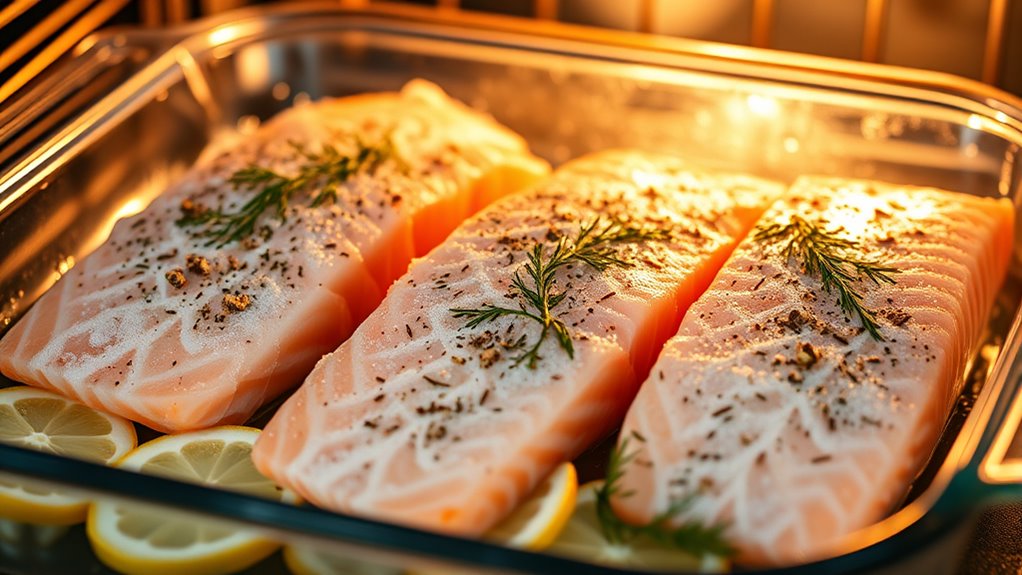
How You Cook Frozen Salmon in the Oven
Cooking frozen salmon in the oven can feel daunting, especially when you’re pressed for time or unsure how to get it just right. You’re not alone—many people struggle with perfectly cooking fish straight from the freezer. But don’t worry, with a few simple steps, you’ll be able to enjoy moist, flaky salmon without any hassle.
To cook frozen salmon in the oven, preheat your oven to 375°F and line a baking sheet with parchment or foil. Place the salmon skin-side down and season it lightly with herbs, lemon zest, or spices.
Bake for about 20-25 minutes, checking that the internal temperature reaches 145°F and the flesh is opaque and flaky. For more tips on seasoning and perfect results, keep going—you’re about to learn everything you need.
Key Takeaways
- Preheat your oven to 375°F (190°C) and line a baking sheet with parchment paper or foil.
- Place the frozen salmon skin-side down directly on the prepared baking sheet without thawing.
- Bake for 20-25 minutes, and check that the internal temperature reaches 145°F for safe, proper cooking.
- Brush the salmon with olive oil and season it with herbs, lemon zest, or spices before baking.
- Flake the salmon with a fork to make sure it’s cooked through and tender before serving.
How to Cook Frozen Salmon in the Oven : A Simple Guide
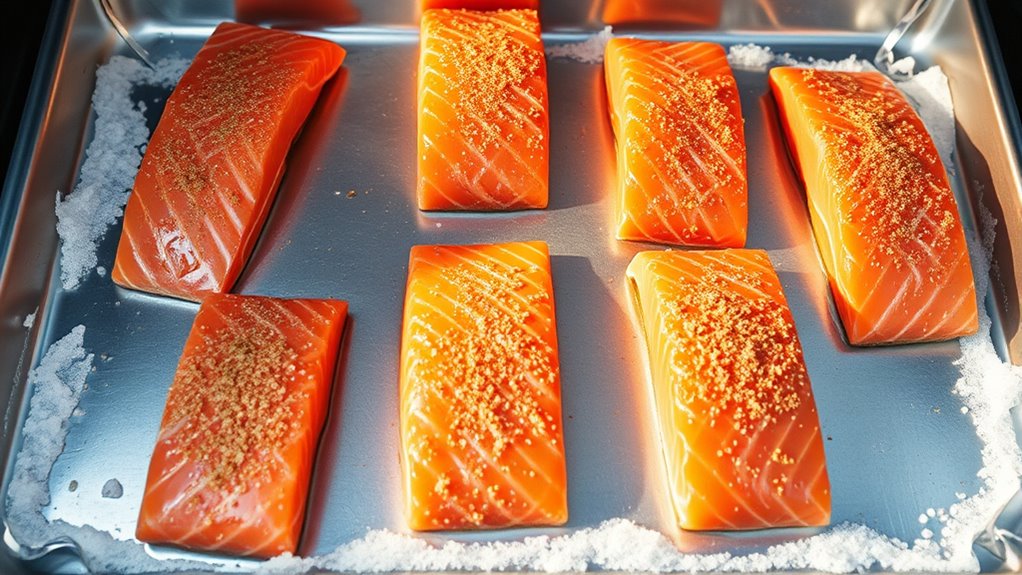
Cooking frozen salmon in the oven is simple and requires minimal prep. To ensure safety, always check that the salmon reaches an internal temperature of 145°F. This guarantees it’s cooked thoroughly and safe to eat.
Since you’re working with frozen fish, you can skip thawing to save time. Just keep in mind that cooking might be a bit uneven. You can swap ingredients like lemon juice or olive oil if you don’t have specific seasonings.
These additions boost flavor without complicating things. Place the frozen salmon on a baking sheet lined with parchment paper or foil for easy cleanup. You can season it lightly if you want, but be aware that some seasonings might be more potent when cooking from frozen.
Preparing Your Oven for Baking Frozen Salmon
Before placing your frozen salmon in the oven, you need to properly prepare your baking environment. Start by gathering essential kitchen tools like a baking sheet, parchment paper, or aluminum foil to prevent sticking. Having a sharp knife and tongs on hand makes handling the fish easier.
Preheat your oven to the recommended temperature, usually around 400°F (200°C), to ensure even cooking. If you don’t have fresh herbs or lemon for flavor, consider ingredient substitutions like dried herbs or lemon zest to improve taste.
Keep in mind that a lightly greased baking sheet helps with easy cleanup and prevents the salmon from sticking. Make sure your oven rack is positioned in the middle for uniform heat distribution.
Setting the Right Temperature and Time for Perfect Results
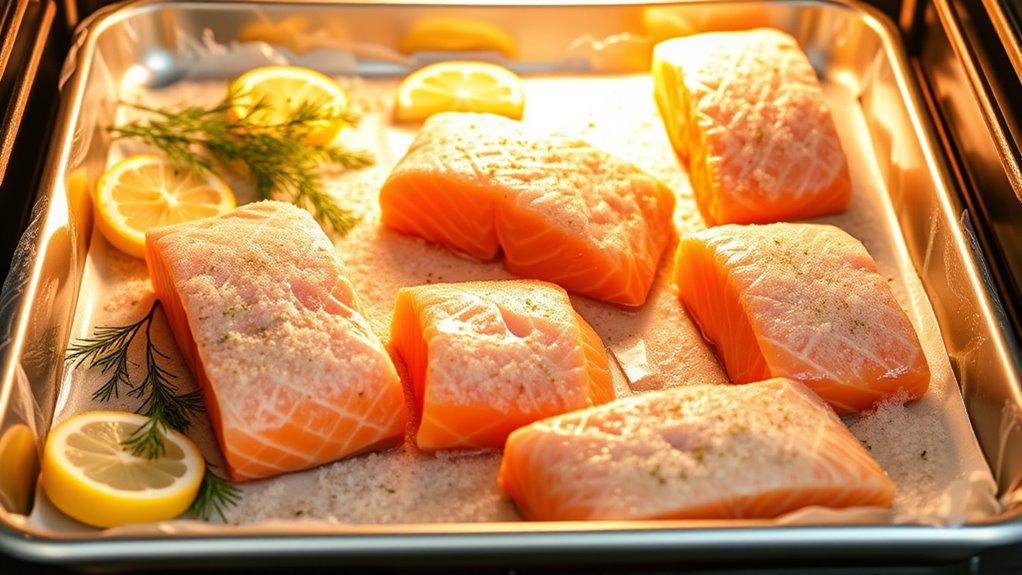
To achieve perfectly baked frozen salmon, it’s important to set the right oven temperature and cooking time. Proper temperature ensures safety and prevents undercooking or drying out your fish.
Typically, bake at 375°F (190°C) for about 20-25 minutes. Use a food thermometer to check doneness and make sure it’s safe to eat.
Here’s a quick guide:
| Temperature (°F) | Cooking Time | Notes |
|---|---|---|
| 350 | 25-30 min | Slightly slower, more tender |
| 375 | 20-25 min | Ideal balance of safety and flavor |
| 400 | 15-20 min | Faster, keep an eye on dryness |
| 425 | 10-15 min | Best for thinner fillets |
| 450 | 8-12 min | Not recommended for thick cuts |
Adjust the times slightly based on how thick your fillets are. Proper temperature and timing help maximize flavor and ensure your salmon is safe and delicious.
Seasoning Frozen Salmon for Maximum Flavor
Seasoning frozen salmon effectively can boost its flavor even before it hits the oven. Start by brushing the fish with olive oil to help the herbs and citrus zest stick.
Use herb blends like dill, parsley, or thyme to add freshness, or create your own mix for a personalized touch. Sprinkle citrus zest—lemon, lime, or orange—over the fillet to bring brightness and amplify the natural flavors.
You can also add salt, pepper, and a touch of garlic powder for depth. If you like a bit of heat, a pinch of red pepper flakes works well. Let the salmon sit for a few minutes to absorb the seasonings.
Don’t worry if it’s still partially frozen; the flavors will penetrate during cooking. This simple step guarantees every bite of your baked salmon is flavorful, aromatic, and perfectly seasoned, turning a basic dish into something special.
Step-by-Step: Baking Frozen Salmon in the Oven
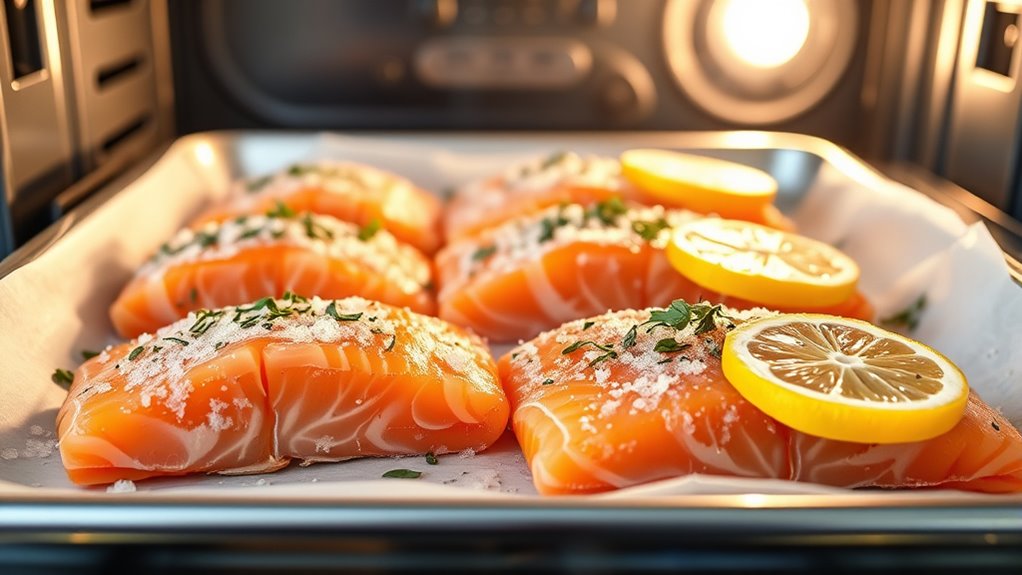
Baking frozen salmon can be super easy if you know the right way to do it. First off, there’s no need to thaw it beforehand—just take it straight from the freezer! If you’d like, you can season it before baking, but even without seasoning, it will turn out delicious.
Next, when you’re ready to bake, set your oven to a higher temperature, around 425°F (220°C), and keep an eye on the cooking time. Since the salmon is frozen, it’ll take a bit longer—roughly 15-20 minutes—so it stays moist and tender inside. Just remember to check that it’s cooked through, and you’ll end up with perfectly baked salmon straight from the freezer, no fuss needed!
Preparing the Salmon Properly
Before you start baking, make sure your frozen salmon was stored at the correct temperature. This helps prevent freezer burn and keeps it safe to eat.
Rinse the fillet under cold water to remove any ice glaze, which helps it cook evenly. Pat it dry thoroughly to avoid excess moisture that could affect the texture.
Handle the fish with clean utensils to stay safe and reduce the risk of foodborne illness. Proper storage and handling are key to maintaining seafood quality.
Baking Technique Tips
When baking frozen salmon, it’s important to follow the right technique to ensure it cooks evenly and stays moist. First, use a rimmed baking sheet and either aluminum foil or parchment paper for easy cleanup.
Don’t believe the myth that you need to thaw salmon first. Baking directly from frozen helps preserve its moisture. Preheat your oven to 425°F and lightly oil the fish or the baking sheet.
Place the salmon skin-side down, season as you like, and bake for 12 to 15 minutes depending on its thickness. Check if it’s done by gently flaking the fish with a fork.
Be careful not to overcook, as it can dry out the salmon. Keep an eye on it to get that perfect flaky texture every time.
Tips for Tender, Juicy Oven-Baked Salmon
Want to keep your oven-baked salmon tender and juicy? It all starts with how you thaw it. The best way is to let it slowly thaw in the fridge overnight—that way, it stays moist and flavorful.
When it’s time to season, go for simple and fresh flavors. A squeeze of lemon, some herbs, or a light marinade can really enhance the fish without overpowering it.
Following these easy steps will help ensure your salmon stays nice and moist, full of flavor, and perfectly cooked every time.
Proper Thawing Techniques
Proper thawing techniques are essential to keep your salmon tender and juicy when baking. Always prioritize safety when handling frozen seafood to prevent bacteria growth.
The best way is to transfer the salmon from the freezer to the fridge the night before cooking. This allows it to thaw slowly and evenly, which helps preserve texture and flavor while reducing the risk of overcooking.
If you’re short on time, you can place the sealed salmon in cold water, changing the water every 30 minutes until it’s thawed. Just avoid thawing at room temperature, as this can lead to bacterial growth.
Use cold water for quick, safe thawing. Never leave seafood out at room temperature. Proper refrigeration guarantees even thawing and keeps your food safe.
Optimal Seasoning Methods
Once your salmon is properly thawed, seasoning is key to making it tender and juicy after baking. Simple techniques like brushing with olive oil or lemon juice can boost flavor and moisture.
Stick to basic seasonings like salt, pepper, and fresh herbs such as dill or parsley. You can also try ingredient swaps like garlic powder or paprika for extra depth.
Avoid heavy marinades that might overpower the fish’s delicate texture. Light seasoning lets the natural flavor of the salmon shine through and keeps it moist.
How to Check If Your Salmon Is Done
Knowing how to check if your salmon is done is key to *guaranteeing* it’s perfectly cooked. Overcooking can ruin the flavor and texture, while undercooking can be unsafe, so timing really matters.
Look for visual cues like opaque flesh and flaking easily with a fork. You can also use a food thermometer to check the internal temperature; 145°F (63°C) is the safe minimum, according to cooking guidelines.
Check for opaque flesh and easy flaking, or use a thermometer at 145°F (63°C) for safe, perfect salmon.
Remember, proper storage before cooking is important to keep bacteria at bay and maintain freshness, which affects how the salmon cooks.
The flesh should be firm but still moist, not raw or mushy. It should turn opaque and lose its translucent appearance.
When you gently press it with a fork, it should flake apart easily. Monitoring these signs helps you cook your salmon perfectly and stay safe.
Regularly checking for doneness makes sure your meal is both delicious and safe to enjoy.
Easy Sauces and Garnishes for Oven-Cooked Salmon
Adding a simple sauce or garnish can really elevate your oven-cooked salmon from good to unforgettable. Picking the right sauce helps enhance the natural flavor and creates a well-balanced fish dish.
For a fresh, lively touch, try a lemon dill sauce—its brightness pairs perfectly with the richness of the salmon. A dollop of creamy dill sauce also works well, adding a cool, herbaceous note.
If you’re after a tangy twist, consider a honey mustard glaze, which brings both sweetness and acidity. For a more savory flavor, a simple garlic butter drizzle highlights the fish’s delicate texture.
Garnishes like chopped fresh herbs, lemon wedges, or a sprinkle of capers can boost both presentation and flavor without overpowering the dish. These easy sauces and garnishes let you customize your salmon for any occasion, making every meal memorable.
Common Mistakes to Avoid When Baking Frozen Salmon
Baking frozen salmon can be convenient, but it’s easy to make mistakes that affect the final result. One common error is not adjusting cooking times properly, which can lead to undercooked or overcooked fish. Remember, frozen seafood needs a slightly longer cooking time, so rushing can also compromise safety.
Another mistake is neglecting to season or add moisture, which can make the salmon dry or bland. Proper seasoning along with a bit of oil or broth helps lock in flavor and keeps the fish moist.
In conclusion, many people overlook the importance of safe handling. Always thaw or cook from frozen safely to avoid foodborne illness.
To avoid these pitfalls:
- Don’t forget to adjust cook times for frozen seafood
- Avoid skipping seasoning and moisture
- Prioritize proper handling for safety
Variations: Different Seasonings and Styles for Frozen Salmon
You can really jazz up your baked frozen salmon by playing around with different seasonings and marinades. For example, a simple lemon and dill marinade can add a fresh, zesty kick that brightens up the fish. Or, if you’re into more savory flavors, soy sauce mixed with a little ginger can give your salmon an Asian-inspired twist.
Don’t be afraid to get creative with spice combos too. Think about trying paprika and cumin for a smoky, earthy flavor, or garlic paired with fresh herbs for a classic, aromatic taste. Experimenting with these styles can help you discover your favorite way to enjoy salmon!
Flavorful Marinade Ideas
To improve the flavor of frozen salmon, try marinating it with different seasonings and styles that match your taste. The right marinade ingredients can elevate your dish and create exciting flavor pairings.
Opt for citrus-based marinades with lemon or lime for a fresh, bright taste. For a savory twist, use soy sauce, garlic, and ginger—perfect for an Asian-inspired flavor.
You can also experiment with herb-infused marinades using dill, parsley, or thyme to add a fragrant touch. These ingredients not only boost the salmon’s natural flavor but also help keep it moist during cooking.
Creative Spice Combinations
Exploring different spice combinations can turn frozen salmon into a culinary masterpiece. Spice blending lets you create unique flavor profiles that elevate your dish.
For a smoky, savory taste, try a mix of paprika, garlic powder, and cumin. If you like a fresh, herbal vibe, dill, parsley, and thyme work beautifully.
You can also combine lemon zest, black pepper, and coriander for a citrusy kick. Don’t be afraid to experiment—cinnamon and cumin add warmth, while chili powder and oregano give a bold, southwestern flair.
The key is balancing these flavors to enhance the natural richness of the salmon. Play around with different combos to find your signature style and keep your meals exciting.
Frequently Asked Questions
Can You Cook Frozen Salmon Without Thawing It First?
Yes, you can cook frozen salmon without thawing it first. To get the best flavor and keep the texture nice, start by seasoning the salmon straight from the freezer.
Cook it in a preheated oven at around 425°F, usually for 20-25 minutes depending on how thick the fillet is. Keep an eye on it so it doesn’t overcook.
When done, you’ll have moist, flavorful salmon with minimal effort. It’s an easy way to enjoy a healthy meal without the extra step of thawing.
How Can I Tell if Frozen Salmon Is Spoiled Before Cooking?
Don’t judge a book by its cover, but with frozen salmon, look for signs of freshness. Check for a sour smell, slimy texture, or discoloration—these are signs it’s spoiled.
Proper storage tips include keeping it at a consistent freezing temperature and sealing it tightly. If it smells off or feels sticky, it’s best to discard it.
When in doubt, trust your senses to keep your meal safe and delicious.
Is It Safe to Eat Undercooked Frozen Salmon?
Eating undercooked frozen salmon isn’t safe because it can harbor harmful bacteria or parasites.
For food safety, always cook salmon thoroughly until it reaches an internal temperature of 145°F (63°C). Use a food thermometer to check.
Follow proper cooking tips to guarantee the salmon is cooked evenly, keeping its flavor and safety. Never skip this step, especially with frozen fish, to prevent foodborne illnesses.
Can I Use Foil or Parchment Paper When Baking Frozen Salmon?
Imagine baking frozen salmon and wanting an easy clean-up. Using foil or parchment paper works perfectly.
You can definitely use foil alternatives like silicone baking mats or even lightly greased baking sheets, which make removal easy. Parchment paper options are also great; they prevent sticking and make cleanup a breeze.
Just make sure your chosen method can handle oven temperatures. With that, you’ll cook your salmon effortlessly while keeping your cookware pristine.
How Do Different Oven Types Affect Cooking Frozen Salmon?
Your oven type affects how you cook frozen salmon, especially when it comes to temperature and cooking time. Conventional ovens usually need higher heat and longer cooking to get even results.
Convection ovens, on the other hand, have a fan that circulates hot air, which helps cook the salmon faster and more evenly.
To avoid overcooking, keep a close eye on the salmon and adjust the oven settings based on your oven’s specific features. This way, you’ll get perfectly cooked salmon every time.
Conclusion
Now that you know how to bake frozen salmon perfectly, you can cook with confidence, season with creativity, and serve with pride. You can master the oven, customize the flavors, and avoid common mistakes.
You can enjoy a healthy, delicious meal anytime, anywhere. So, welcome the process, trust your instincts, and savor the delicious results.
Because when you cook frozen salmon right, you create a meal that’s simple, satisfying, and simply unforgettable.