What Types of Glass Go in the Oven?
Many people struggle with choosing the right glassware for baking and cooking in the oven. It can be confusing to know which types are safe and which might shatter or cause accidents. If you’re unsure about what glass goes in the oven, you’re not alone.
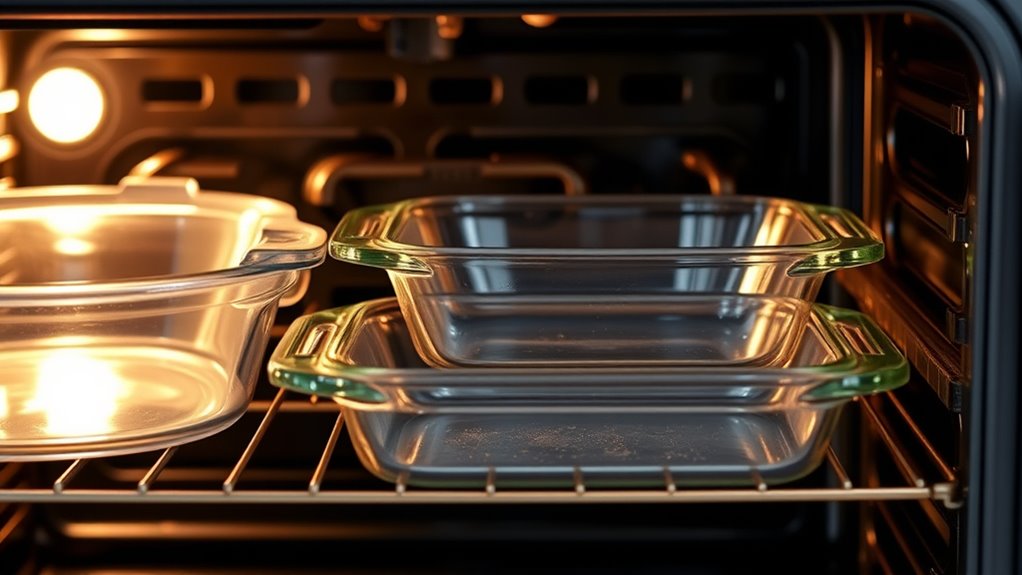
You can safely use borosilicate, heat-resistant, and some tempered glassware in the oven. Borosilicate glass is designed for high temperatures and distributes heat evenly, making it ideal. Always check labels for oven-safe symbols or material info.
Avoid decorative or thin glass that isn’t rated for oven use, as they can shatter.
To understand more about what makes certain glass safe and others risky, keep exploring the details ahead.
Key Takeaways
- Borosilicate glass is highly oven-safe because it resists heat well and doesn’t expand much when heated.
- Heat-resistant and tempered glassware can be oven-safe if they’re explicitly labeled, but not all tempered glass is suitable for the oven.
- Always look for oven symbols or labels to make sure your glassware is safe to use in the oven.
- Soda-lime glass can be used at moderate oven temperatures but isn’t as durable when exposed to sudden temperature changes.
- Avoid decorative, thin, or unmarked glassware, as they’re generally unsafe for oven use.
Are My Glass Dishes Safe for the Oven?
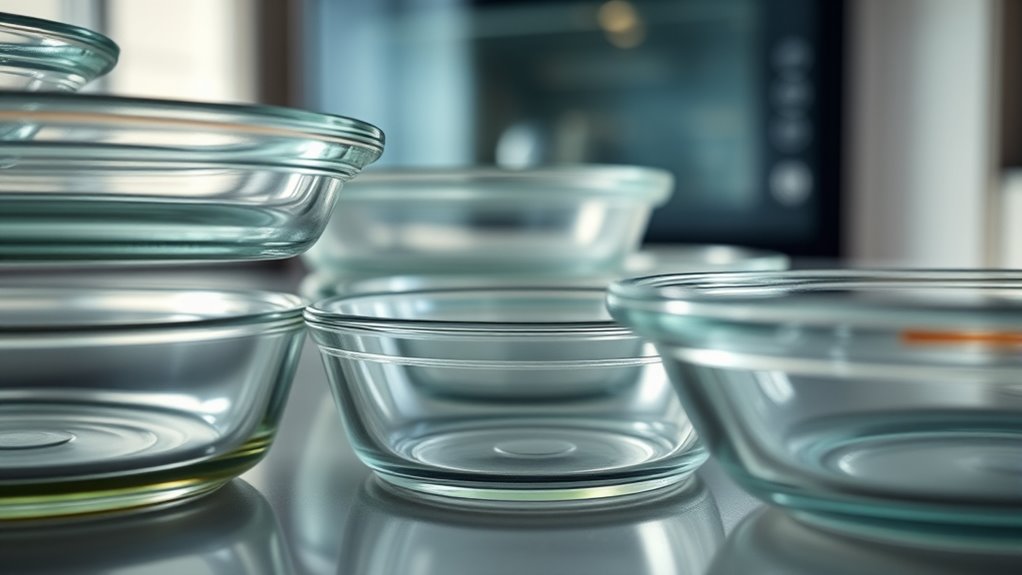
Are you unsure whether your glass dishes are oven-safe? Knowing the right oven glass types is key to safe cooking. Not all glass is created equal—some can handle high temperatures, while others may shatter or crack.
Generally, dishes made from borosilicate or tempered glass are designed for oven use. These materials handle heat better and are less likely to break. Always check for labels or symbols indicating oven safety before using your glassware.
If there’s no clear indication, it’s best to avoid putting it in the oven. Using unsafe glass could lead to accidents or breakage. Choosing the right oven-safe glass helps your food heat evenly and reduces risks.
What Makes Glass Oven-Safe? Key Material Properties
When it comes to glass that can handle the oven, the key thing is that it needs to stand up to high temperatures without cracking or breaking. Think of it like a tough cookie—your glass should be able to handle the heat without giving in.
To do that, look for materials that have really good temperature resistance and can handle thermal shock. Thermal shock happens when there’s a sudden change in temperature, like taking hot glass straight from the oven and placing it on a cool surface. If the glass can handle that kind of sudden change, it’s much more likely to be oven-safe.
Basically, these properties are what make glass truly suitable for oven use—so keep an eye out for those special qualities!
Temperature Resistance Capabilities
Regarding withstanding the intense heat of an oven, certain key material properties make glass safe for baking. Your glass’s composition plays a crucial role in its heat resistance, allowing it to endure high temperatures without cracking or breaking.
High-quality oven-safe glass typically contains borosilicate or tempered glass, known for their superior heat tolerance. These materials help the glass absorb and distribute heat evenly, reducing stress during cooking.
Stay confident knowing your oven glass can handle extreme temperatures without shattering. It maintains clarity and strength after repeated use.
This promotes safe, reliable baking experiences. Choosing the right glass with proper composition guarantees your dishes cook perfectly and your glass stays intact through every bake.
Thermal Shock Tolerance
Thermal shock tolerance is a key property that shows if glass can handle sudden temperature changes without cracking or breaking. When glass has low thermal expansion, it’s less likely to expand or contract quickly, which helps reduce stress during quick temperature shifts.
The composition of the glass really matters here. Materials like borosilicate glass are designed to handle thermal shocks because they have a balanced thermal expansion rate. This stability means they can withstand oven temperatures and rapid heating or cooling without damage.
If your glass has high thermal expansion or is made from a less resilient material, it’s more likely to crack under thermal stress. Picking glass with the right thermal shock tolerance ensures safer oven use and longer-lasting bakeware.
Types of Oven-Safe Glass: Borosilicate, Soda-Lime, and More
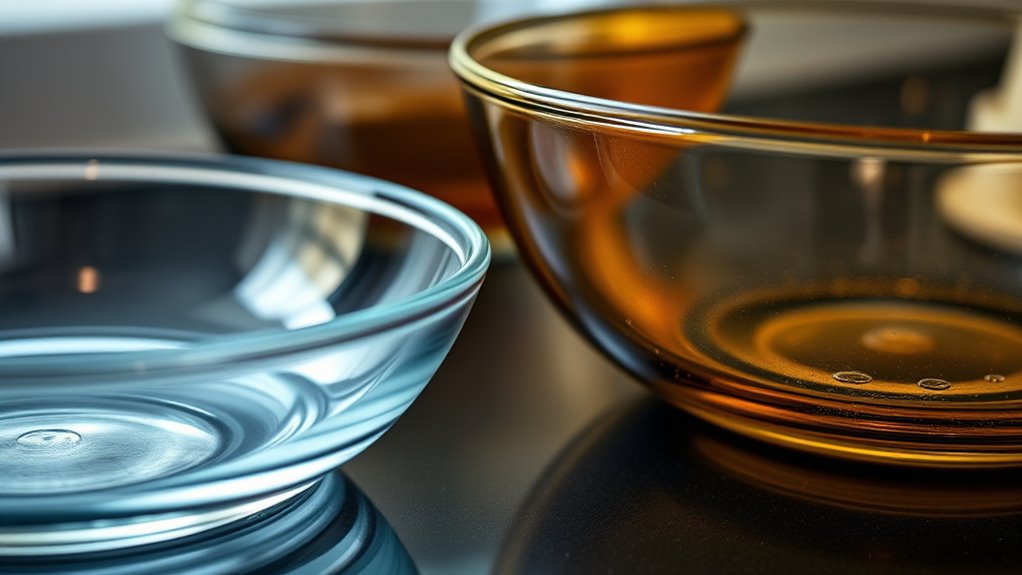
When choosing oven-safe glass, understanding the different types is essential to confirm safety and durability. Knowing your glass types helps you select the right piece for your cooking methods, avoiding accidents and damage. Borosilicate glass is a top choice. It withstands sudden temperature changes and is perfect for baking and roasting.
Soda-lime glass is more common and affordable. It’s suitable for gentle oven use but not for extreme thermal shocks. Other options include tempered glass, which is tough and safe for oven baking, and heat-resistant glassware designed specifically for high-temperature cooking.
Consider these key points:
- Borosilicate glass offers resilience for diverse cooking methods, especially when quick temperature shifts occur.
- Soda-lime glass is best for moderate oven use, providing affordability and convenience.
- Tempered and heat-resistant glass provide extra durability for frequent oven use and varied cooking styles.
Choosing the right glass type confirms your cookware performs safely across your favorite cooking methods.
How to Identify Oven-Safe Glassware at Home
To figure out if your glassware is oven-safe, a good first step is to look for any oven symbols on the bottom or on the packaging. These symbols are usually a little image of an oven or some kind of heat indicator that can give you a quick clue.
Next, take a look at the labels on the glass itself. Sometimes, manufacturers include information about whether the glass is heat-resistant or oven-safe. If you see words like “borosilicate,” “heat-resistant,” or “ovenproof,” that’s a good sign.
If you’re still not sure, there’s a simple test you can do at home. Just place the glass in a cold oven and then heat it gradually to the temperature you plan to use. Keep a close eye on it—if it doesn’t crack, shatter, or become cloudy, it’s probably safe for oven use. But remember, when in doubt, it’s always better to be cautious!
Look For Oven Symbols
Look for oven symbols or markings on the bottom or side of your glassware to verify it’s oven-safe. These symbols are your assurance that your glass can handle the heat without breaking or leaching harmful substances. Recognizing these symbols is essential for following oven safety tips and avoiding accidents.
When you see a clear, heat-resistant emblem, you can feel confident in your glass types comparison. It helps you know you’re using the right material for baking.
Feel empowered to cook safely, knowing your glassware is designed for oven use. It reduces the risk of unexpected breakage, protecting your kitchen and loved ones.
Enjoy peace of mind by trusting your glassware’s markings to guide your culinary adventures. Always double-check these symbols to confirm you’re choosing the right glass for your oven, preventing damage and ensuring successful baking.
Check Glass Material Labels
Checking the labels on your glassware is a simple way to see if it’s safe for oven use. Look for symbols or wording that indicate oven safety. Many brands include details about the material, helping you tell oven-safe glass apart from other types.
Labels might say “borosilicate” or mention “heat-resistant” features. If the label isn’t clear or is missing, check the manufacturer’s website or packaging for more info.
Good glassware will have clear, durable markings that confirm it’s suitable for baking or roasting. By verifying labels and understanding the material info, you can confidently use your glassware in the oven without worry.
Perform Safe Testing
Performing a safe test at home is a good way to see if your glassware can handle oven temperatures. Start by checking for any labels or manufacturer instructions to find the recommended temperature.
If you’re unsure, you can do a simple test. Gradually heat the glass in a cold oven, then set it to a low temperature like 200°F (93°C). Watch for cracks or warping—these signs mean it’s unsafe.
Remember, never expose glass to sudden temperature changes. Be cautious and trust your instincts when testing.
Keep these points in mind:
- Feel confident in your glassware’s durability
- Protect your kitchen from unexpected accidents
- Enjoy cooking with peace of mind
Which Glass Types Are Not Safe for the Oven: and Why
Not all glass types are suitable for use in the oven, and using the wrong kind can lead to dangerous situations. Non-oven safe glass often has poor temperature limits and can shatter or crack under high heat.
Using non-oven safe glass can cause shattering and safety hazards during baking.
This includes certain decorative or thin glassware, which aren’t designed to handle the rapid temperature changes of baking. If you ignore safety precautions, you risk glass breakage, burns, or even fire hazards.
Always check if a glass piece is labeled as oven safe. If it’s not, don’t try to use it in the oven. The key is understanding the glass’s temperature limitations and avoiding types that aren’t rated for oven use.
Using unsuitable glass can compromise your safety and damage your oven. For safe baking, stick to glassware specifically made for oven use and follow the manufacturer’s guidelines to prevent accidents.
Benefits of Using Pyrex and Similar Brands in Baking
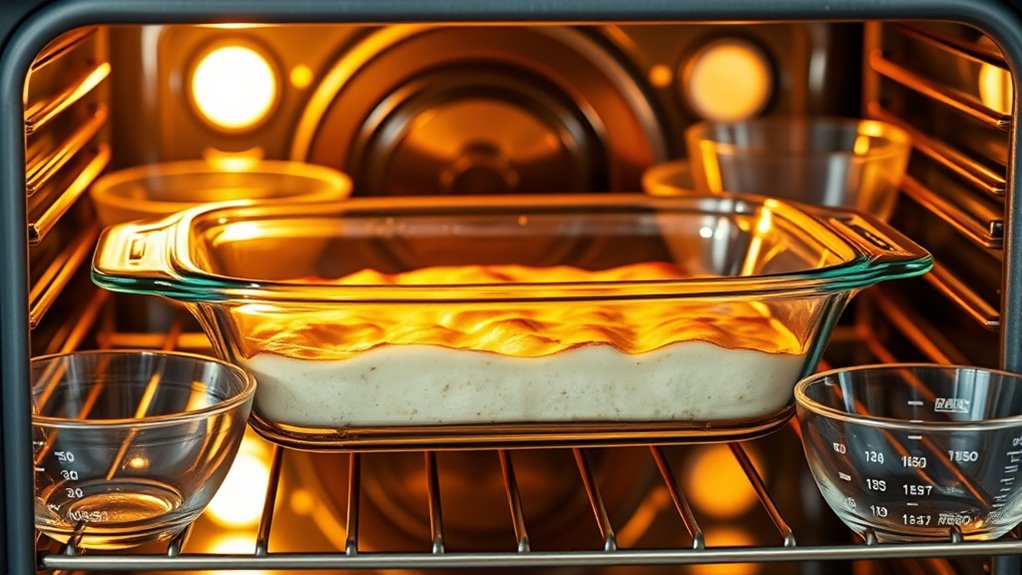
Using Pyrex and similar brands in baking offers many advantages, mainly because they’re built to handle high temperatures without breaking or warping. This means you can bake with confidence, knowing your dishes are safe and reliable.
These brands provide even heat distribution, which helps your baked goods cook uniformly. Plus, their clear design lets you keep an eye on your food without opening the oven, making monitoring easier.
Durability is another big plus. Your glassware resists scratches and minor impacts, so it lasts longer. And it’s versatile—you can go straight from oven to table, saving you time on cleanup.
Feel confident knowing your dish is less likely to crack unexpectedly. Enjoy the convenience of seeing your food cook without lifting the lid. Plus, investing in these brands can save you money over time since they hold up through many uses.
Can Tempered Glass Be Used in the Oven?
Can tempered glass be safely used in the oven? Generally, no. Tempered glass is designed to withstand impacts and thermal shock, but it’s not meant for oven use. Using it in the oven can weaken the glass, causing it to shatter or crack under high heat.
Some brands claim their tempered glass is oven-safe, but many experts recommend caution. For true oven safety, look for glass labeled as ovenproof, like borosilicate or specific tempered options tested for high temperatures.
If you decide to use tempered glass, make sure it’s explicitly marked as oven-safe by the manufacturer. Otherwise, you risk damaging the glass or creating a safety hazard.
Borosilicate vs. Soda-Lime Glass: What’s the Difference?
When you’re picking out oven glass, it’s important to think about how well it can handle heat, how durable it is, and how strong it feels. Borosilicate glass is pretty awesome because it can withstand higher temperatures and sudden thermal shocks much better than soda-lime glass. Soda-lime glass is more common and generally less resistant to extreme heat and rapid temperature changes. Knowing these differences can really help you choose the right type of glass for safe, long-lasting cookware that won’t crack or break easily.
Heat Resistance Capabilities
Understanding the heat resistance of different glass types is key when choosing ovenware, especially since not all glass can handle high temperatures equally well. Borosilicate glass has excellent heat properties because it expands very little when heated, so it’s resistant to cracking from sudden temperature changes.
On the other hand, soda-lime glass is more likely to crack or shatter if exposed to quick temperature shifts. Knowing how each type reacts to heat helps you avoid dangerous failures in your ovenware.
Keep in mind that understanding the heat expansion characteristics of your glass can prevent accidents and ensure safe, reliable use. Choosing the right glass guarantees peace of mind during your cooking adventures.
Durability and Strength
While heat resistance is important, durability and strength also play a big role in how well your ovenware holds up with daily use.
During strength testing, borosilicate glass consistently outperforms soda-lime glass because of its special composition. Borosilicate includes boron oxide, which makes it stronger and reduces thermal expansion.
This means it’s less likely to crack or break from sudden temperature changes or impacts. Soda-lime glass, which is common in everyday containers, is more fragile because it has higher levels of sodium and calcium.
These elements are less resistant to stress, making soda-lime glass more prone to damage.
If durability matters most to you, borosilicate glass is the better choice. It offers superior strength and resilience, making it ideal for oven use.
Knowing the differences in glass composition helps you pick ovenware that can stand up to regular, demanding use and last longer.
Common Mistakes When Using Glass in the Oven and How to Avoid Them
One common mistake is subjecting glass bakeware to sudden temperature changes, which can cause it to shatter or crack. To stay safe, it’s important to handle glass carefully and follow proper tips.
Rapid shifts from hot to cold or cold to hot are especially dangerous. For example, putting a hot dish directly into cold water can weaken the glass instantly.
Be mindful of these mistakes to avoid accidents: ignoring preheating instructions, using non-oven-safe glass that isn’t designed to withstand high temperatures, and handling glass with wet or greasy hands, which increases the risk of slips and breakage.
What to Do If Your Glass Dish Cracks or Shatters
If your glass dish cracks or shatters, safety should be your top priority. Cracked glass can weaken the dish’s structure, increasing the risk of further breakage or injury. If you notice a crack, carefully remove it from the oven and avoid using it again.
For a shattered dish, wear thick gloves to protect your hands from sharp edges. Use a broom and dustpan or vacuum to carefully sweep up the shards, making sure no pieces are left behind.
Never try to clean up shattered glass with your bare hands or rinse it down the sink, as small pieces can cause injuries or damage plumbing. Dispose of the broken glass in a sturdy, puncture-resistant container.
Frequently Asked Questions
Can Glass Dishes Go Directly From Freezer to Oven?
You shouldn’t put glass dishes directly from the freezer into the oven because it can cause thermal shock, which might make the glass crack or shatter.
Always check if your glass is freezer safe and let it come to room temperature first. This helps avoid sudden temperature changes that could damage the glass.
For safety, look at the manufacturer’s guidelines to confirm if your dish can go from freezer to oven before doing so.
Are There Specific Temperature Limits for Oven-Safe Glass?
Oven-safe glass usually has specific temperature limits, typically around 350°F to 450°F, depending on the brand and type. Always check the manufacturer’s ratings before using it in the oven.
It’s also important to avoid thermal shock, which happens when the glass experiences sudden temperature changes. This can cause it to crack or shatter.
To stay safe, gradually heat the glass and follow the manufacturer’s guidelines for maximum temperature limits. That way, you can use your glassware confidently and safely.
How Long Can Glass Dishes Stay in the Oven Safely?
You can typically keep glass dishes in the oven for up to 30 minutes to an hour, depending on the recipe and temperature.
Investigating oven safety tips shows that prolonged exposure might risk thermal shock or cracks.
To keep your glass dishes in good shape, always preheat your oven gradually and avoid sudden temperature changes.
Follow the manufacturer’s guidelines closely, and never leave glass in the oven longer than recommended to prevent damage or safety issues.
Can Glass Bakeware Be Used Under a Broiler?
You can use glass bakeware under a broiler if it’s labeled broiler-safe, but you need to follow broiler safety guidelines carefully.
Not all glass can handle the high heat of a broiler, so check the manufacturer’s instructions first. Look for glass with heat-resistant qualities like borosilicate.
Avoid sudden temperature changes to prevent cracking or shattering. Always keep a close eye on your bakeware to stay safe.
Is It Safe to Use Glass Lids in the Oven?
You can safely use glass lids in the oven if they’re made from oven-safe materials, but only if they’re specifically labeled as ovenproof.
Glass durability varies, so it’s important to check the lid’s heat resistance. Many glass lids aren’t designed to handle high oven temperatures, which can lead to cracking or shattering.
Always look at the manufacturer’s instructions to confirm your glass lid is oven safe before exposing it to heat.
Conclusion
In terms of oven-safe glass, knowing the differences between borosilicate and soda-lime glass can save you from accidents. Borosilicate glass is resistant to thermal shock, making it perfect for oven use.
Over 70% of home cooks have experienced a cracked or shattered dish because they used the wrong type of glass. Always double-check your glassware before baking and avoid sudden temperature changes.
Handle your oven-safe glass with care to keep your cooking safe and stress-free. Remember, choosing the right oven-safe glass is key to a successful and safe cooking experience.