How You Bake Steak in the Oven: A Step-by-Step Guide
Many people struggle with achieving that perfect, juicy steak at home. It’s easy to feel overwhelmed by all the cooking tips and techniques out there. If you’re looking for a simple way to get restaurant-quality results, baking steak in the oven might be just what you need.
To bake steak in the oven, start by choosing a well-marbled cut like ribeye or New York strip, and let it sit at room temperature. Season generously with salt and herbs, then preheat your oven to about 400°F.
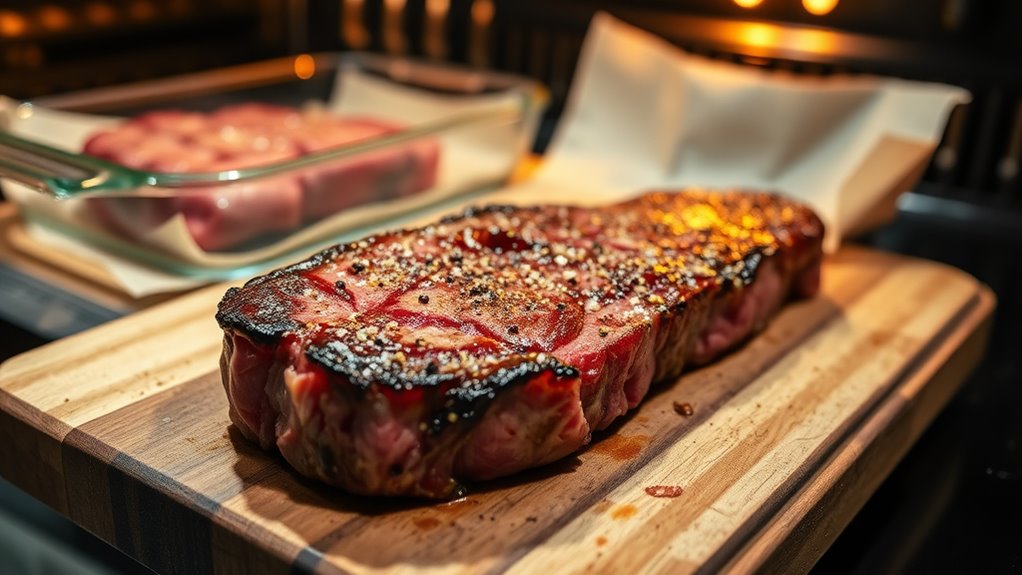
Sear the steak briefly in a hot skillet if you want an extra crust, then transfer it to a baking sheet. Bake until it reaches your desired doneness, rest it for a few minutes, and you’ll enjoy juicy, tender results.
Learn more tips to perfect your technique next.
Key Takeaways
- Select a high-quality, well-marbled steak and bring it to room temperature before cooking.
- Season the steak generously with salt, herbs, or marinades, then pat dry for a good sear.
- Preheat the oven to 375°F to 450°F depending on how well done you want your steak, and prepare a wire rack on a baking sheet.
- If you like, sear the steak in a hot skillet first, then transfer it to the oven to cook until it reaches your desired internal temperature.
- Let the steak rest for a few minutes after baking so the juices can redistribute, making it tender and flavorful.
How to Choose the Best Steak for Baking in the Oven
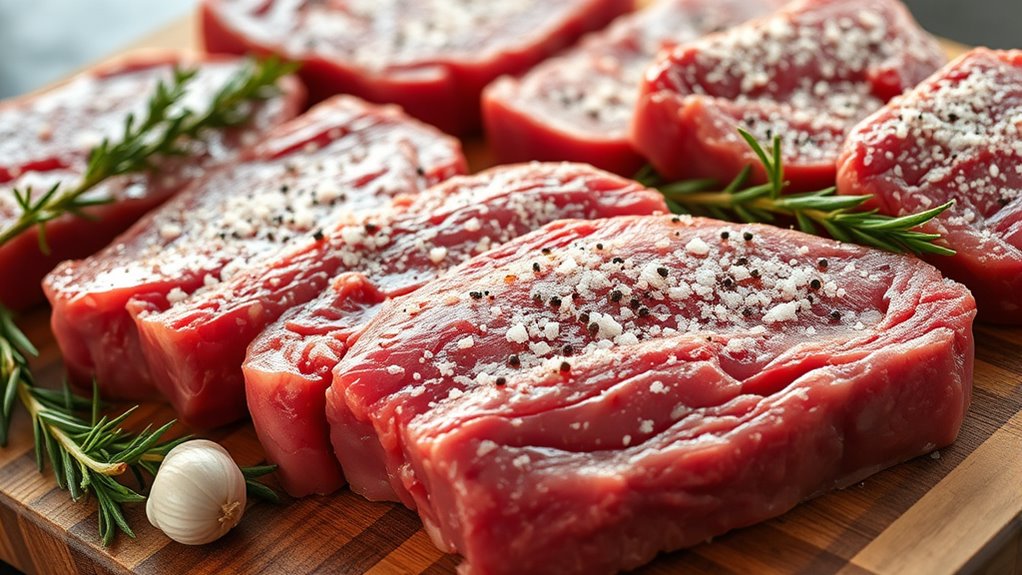
Choosing the right steak is key to getting a juicy, flavorful result when baking in the oven. Pay attention to marbling patterns because steaks with even fat distribution tend to be more tender and rich.
Look for visible streaks of fat within the muscle. These intramuscular fat deposits melt during cooking, boosting flavor and juiciness. When choosing cuts, go for tender options like ribeye, filet mignon, or New York strip, which hold up well to baking and stay moist.
Less fatty cuts such as sirloin or round can work if cooked carefully, but they’re leaner and might need extra seasoning or marinating. Think about the thickness of the steak too—thicker cuts help ensure even cooking and better control over how done it gets.
Preparing Your Steak for Oven Baking
Once you’ve picked out the perfect steak, the next step is to prepare it for oven baking. Start by letting it sit at room temperature for about 30 minutes so it cooks evenly.
Let the steak sit at room temperature for 30 minutes to ensure even cooking.
Consider marinades—simple oil, garlic, and herbs work well, but feel free to experiment with different flavors to suit your taste. Pat the steak dry with paper towels to ensure a good sear later.
Prepare your equipment, like preheating the oven, and get a baking sheet and wire rack ready if you have one. This helps promote even cooking. If you’re planning to sear first, have a hot skillet ready to go.
Whether you’re marinating or not, these steps make sure your steak is ready for the oven. It will cook more evenly, resulting in a tender, flavorful final dish.
Effective Seasoning Tips for Flavorful Oven-Baked Steak
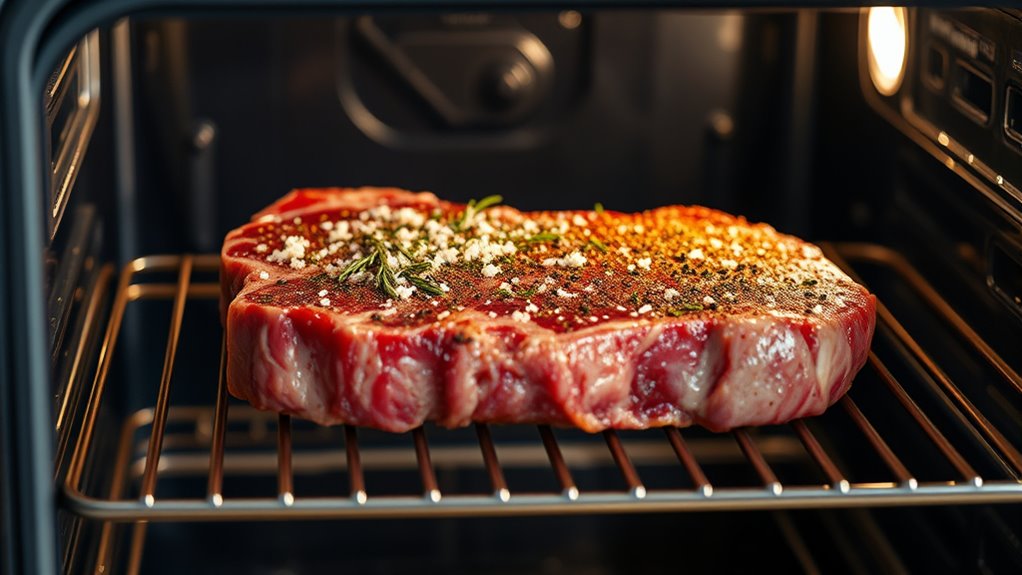
Looking to amp up the flavor of your oven-baked steak? It all starts with getting the salt just right. You want to season it enough so that every bite has a little extra punch, but not so much that it’s overwhelming. Trust me, a good balance makes all the difference.
Next, toss in some herbs like rosemary or thyme. They add this lovely, fresh aroma that really complements the meat. Plus, they give your steak that restaurant-quality touch without much effort. Follow these simple tips, and you’ll be surprised at how delicious your oven-baked steak can taste!
Perfect Salt Balance
Getting the salt right is key to bringing out the natural flavor of your oven-baked steak.
Achieving the perfect salt balance ensures your seasoning enhances the meat without overpowering it.
Start by evenly sprinkling salt directly onto the steak, using coarse salt for better coverage and texture.
Salt penetrates the meat, tenderizing it and boosting flavor.
Be careful not to oversalt; a light, even coating is enough.
Remember, you can always add more later, but you can’t remove excess salt.
Patience is important—let the salt sit for about 30 minutes before cooking to give it time to work its magic.
Proper seasoning techniques make all the difference in creating a flavorful, well-balanced oven-baked steak.
Enhancing With Herbs
Adding herbs to your steak really boosts its flavor and adds a more complex, aromatic profile. Herb marinades are a great way to infuse flavor while tenderizing the meat. You can use fresh herbs like rosemary, thyme, or parsley, or dried herbs if fresh aren’t available.
To get the most flavor, marinate your steak for at least an hour before baking. You can mix herbs directly into your seasoning blend or make an herb-infused oil for brushing on the meat.
Here’s a quick guide:
| Herb Type | Best Use | Flavor Profile |
|---|---|---|
| Rosemary | Roasted, baked steaks | Earthy, pine-like |
| Thyme | Marinades, rubs | Subtle, minty |
| Parsley | Garnish, seasoning | Fresh, slightly bitter |
How to Set the Oven Temperature for Baking Steak
Setting the right oven temperature is key to baking a perfect steak. It affects tenderness, flavor, and how well your marinade develops.
If you want a juicy, medium-rare steak, aim for about 400°F (200°C). For a more well-done steak, turn it up to 450°F (232°C). If you prefer a gentler cook, around 375°F (190°C) works well to avoid overcooking.
Think of your oven as a grill alternative—your temperature sets the stage for that smoky, charred flavor.
Here’s what to remember:
- High heat (450°F) for quick searing and a crispy exterior.
- Moderate heat (400°F) for even cooking and juicy results.
- Low heat (375°F) for gentle, slow baking—great after marinating.
How Long to Bake Steak Based on Thickness and Doneness
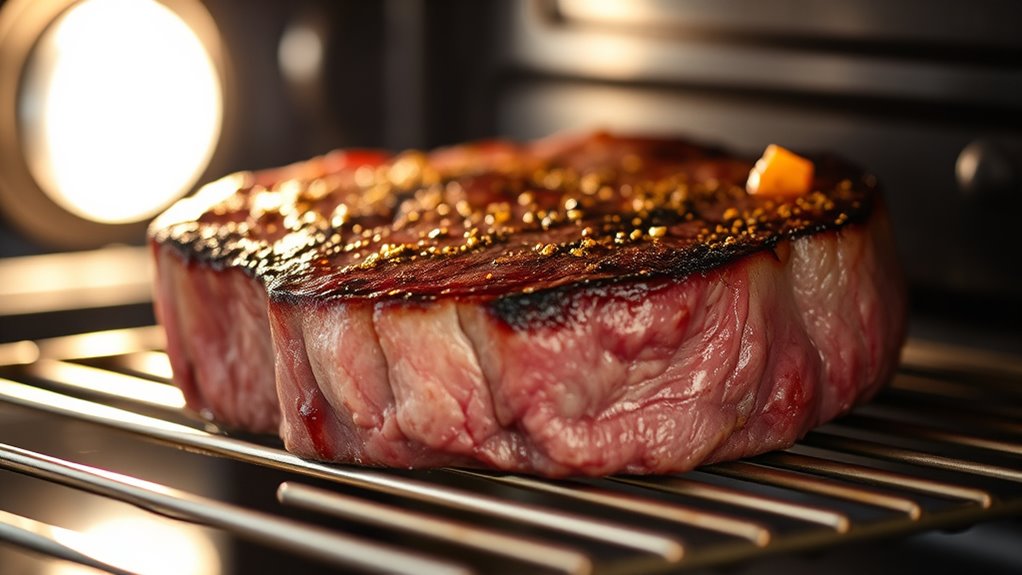
The baking time for steak mainly depends on how thick it is and how well-done you want it. Paying attention to these factors helps you get a perfect result.
Thicker cuts, like a 1.5-inch ribeye, usually take about 20-25 minutes for medium-rare. Thinner steaks, around ¾ inch, might only need 10-12 minutes.
Use consistent cooking techniques to ensure even heat distribution. Keep in mind that adjusting the bake time is key to reaching your preferred doneness.
Marinating or seasoning your steak beforehand can boost flavor, but it might also slightly change cooking time because of added moisture.
Be careful not to overcook, as it can make the steak less tender and less flavorful. Keep a close eye on the timing.
By understanding how thickness and doneness affect cooking, you can customize your baking process. This way, you’ll always get a juicy, flavorful steak.
Proper timing doesn’t just improve texture — it also helps preserve the flavors you add for the best taste every time.
Using a Meat Thermometer to Achieve Perfect Results
Using a meat thermometer is essential for making sure your steak hits the perfect level of doneness without guesswork. It’s the key to mastering your cooking techniques and boosting flavor.
When you use a thermometer, you can confidently:
- Achieve your desired doneness, from rare to well-done, every time.
- Prevent overcooking, keeping your steak juicy and tender.
- Unlock the full potential of flavor, as precise temperatures help preserve natural juices and seasonings.
Insert the thermometer into the thickest part of the steak, avoiding bone or fat. As the internal temperature rises, you’ll see exactly when to take your steak out of the oven.
This simple step boosts your cooking skills and ensures consistent results. Using a thermometer isn’t just about precision; it’s about creating a juicy, flavorful steak cooked exactly how you like it.
It’s the secret to culinary confidence in every bake.
Why Resting Your Steak After Baking Matters
Resting your steak after baking is pretty important because it helps lock in all those juicy flavors. When you let it sit for a few minutes, the juices have a chance to redistribute throughout the meat, so your steak stays moist and tasty.
Plus, resting gives the meat a little time to relax and become more tender. When the muscle fibers relax, the texture improves, making each bite more enjoyable. So, taking a moment to rest your steak really makes a noticeable difference in how it tastes and feels.
Juiciness Preservation Techniques
After you take your steak out of the oven, letting it rest allows the juices to redistribute throughout the meat, preventing them from spilling out when you cut into it. This step is crucial for juicy, flavorful bites.
To maximize juiciness, consider these techniques:
- Use a meat thermometer to avoid overcooking, locking in moisture.
- Cover the steak loosely with foil during resting to keep heat in without trapping moisture.
- Incorporate marinade techniques beforehand to improve flavor and moisture retention, using the right cooking utensils for even application.
Meat Tenderness Factors
When you let your steak rest after baking, it allows the muscle fibers to relax and reabsorb the juices that were pushed out during cooking. Resting improves meat tenderness by letting the proteins settle, making each bite more enjoyable.
Marbling analysis helps determine how tender your steak will be. Usually, higher fat content results in a more tender, flavorful piece. Also, your chosen cooking temperature impacts tenderness; higher temps can tighten muscle fibers, making the meat tougher if not rested properly.
Resting lets these fibers relax and reabsorb moisture, which improves overall tenderness. Skipping this step risks serving a steak that’s tough or dry, even if you cooked it well.
Proper resting ensures your steak reaches peak tenderness, maximizing flavor and juiciness.
Resting Duration Importance
Allowing your steak to rest for the right amount of time guarantees it stays juicy and tender. Resting lets the juices redistribute, preventing them from spilling out when you cut into it. This step is essential because even the best marinating techniques can’t make up for rushing the process. Use quality cooking equipment, like a resting rack, to promote even temperature release.
Remember these key points:
- Juice retention: Resting keeps your steak moist and flavorful.
- Texture perfection: It allows fibers to relax, making each bite tender.
- Enhanced flavor: Resting deepens the taste, boosting the effects of your marinade.
Skipping this step can leave your steak dry or unevenly cooked, undermining all your effort. Take your time—your taste buds will thank you.
Serving Ideas and Pairings for Oven-Baked Steak
Oven-baked steak pairs beautifully with a variety of side dishes and beverages that can elevate your meal. For added flavor, consider marinades like garlic herb or balsamic glaze, which complement the rich beef.
Oven-baked steak pairs perfectly with flavorful marinades and complementary side dishes for an elevated dining experience.
When planning pairings, think about contrasting textures and flavors to enhance your dining experience. Crispy roasted vegetables or a fresh green salad work well alongside the tender steak.
You can also choose beverages such as bold reds or craft beers to match the richness of your meat. For example, try pairing with Cabernet Sauvignon or Malbec.
Experiment with cooking methods like broiling or pan-searing before baking to create different textures. Select side dishes that balance the meal’s richness for the best experience.
Common Mistakes to Avoid When Baking Steak
Avoid overcooking your steak, because nobody wants a dry, tough piece of meat. It’s easy to get caught up in the moment, but taking the time to cook it just right makes all the difference. And hey, don’t skimp on quality—using good beef really boosts the flavor and tenderness, so it’s worth choosing the best you can find.
Also, remember to let your steak rest after baking. It might be tempting to dig right in, but giving it a few minutes helps keep all those juices locked in, making your steak juicy and perfectly cooked all the way through.
Overcooking the Meat
One of the most common mistakes when baking steak is overcooking it, which can turn a juicy cut into a tough, dry mess. To avoid this, pay close attention to your cooking temperature and timing.
Overcooking can happen if you set the oven too high or leave the steak in for too long. Here are some key points to help prevent that:
Use a reliable meat thermometer to check the internal temperature. This way, you can ensure you reach your desired doneness without going over.
Don’t skip marinade options; they can help keep your steak moist and flavorful, even if it’s a bit overcooked.
Remember that residual heat continues to cook the steak after you take it out of the oven. So, take it out just before it hits your target temperature.
Stay vigilant to keep your steak tender and juicy.
Using Low-Quality Steaks
Choosing the right quality of steak is key to getting a tasty baked result. Low-quality steaks tend to be tougher, fattier, and less flavorful, making it harder to get a satisfying bite.
Instead of relying only on marinades, consider upgrading to higher-grade cuts for better texture and taste. If you do use lower-quality meat, enhance it with flavorful marinades to improve tenderness and moisture.
Keep in mind that low-quality steaks may not respond well to alternative cooking methods like baking, as they can become dry or chewy. To avoid disappointment, prioritize quality cuts or be ready to marinate longer and season carefully.
Ultimately, starting with good meat makes your baking process easier and the final dish more enjoyable.
Ignoring Resting Time
Even if you perfectly cook your steak, skipping the resting period can cause juices to spill out when you cut into it, making it dry and less flavorful. Resting allows the meat’s marbling to redistribute the juices, which boosts tenderness.
Without resting, your steak can lose moisture, making it tough and less satisfying. Taking a few minutes to rest your steak guarantees a juicy, flavorful result that truly shows off your meat.
To avoid this mistake:
- Don’t ignore the influence of cooking temperature—overcooked steaks need more resting.
- Remember that well-marbled cuts benefit the most from resting to maximize flavor.
- Don’t cut into it too soon—resting keeps the juices in, not on your plate.
Troubleshooting: What to Do If Your Steak Isn’t Perfect
If your steak doesn’t turn out as you’d hoped, don’t panic—there are simple fixes to improve your results. First, think about the cooking techniques you used. If it’s undercooked, try finishing it briefly in the oven or searing it on the stovetop for extra heat.
If it’s overcooked, consider slicing it thinly for stir-fries or salads, where slight overcooking is less noticeable. To boost flavor, add a pat of butter, a sprinkle of fresh herbs, or a dash of finishing salt.
Resting your steak properly can also make a big difference in texture and juiciness. Make sure you’re allowing enough time before slicing. If the flavor feels dull, a quick marinade or a brush of flavorful oil can really enhance the taste.
Frequently Asked Questions
Can I Bake Steak From Frozen?
Yes, you can bake frozen steak, but it might take longer and won’t be as evenly cooked. To get the best results, start by preheating your oven and seasoning the frozen steak with baked steak tips in mind.
Keep in mind, baking from frozen can lead to uneven doneness, so use a meat thermometer. For juicy results, consider thawing the steak first if possible.
What Oven Rack Position Is Best for Baking Steak?
You should place the oven rack in the middle position for baking steak. This position provides even heat distribution, which is essential for different cooking temperatures depending on your meat’s thickness.
Thicker steaks need a slightly lower rack to avoid burning the exterior, while thinner cuts benefit from a higher position for quicker cooking. Adjust your rack position accordingly to get the perfect doneness and consistent results.
Should I Marinate My Steak Before Baking?
Yes, marinating your steak before baking boosts flavor infusion and tenderness.
For the best results, marinate the steak for at least 30 minutes to a few hours, depending on your marinade’s ingredients.
This allows the flavors to penetrate the meat without turning it overly soft. Keep in mind, longer marinating times can deepen flavor, but don’t overdo it, or the texture might suffer.
How Do I Prevent the Steak From Drying Out?
Think of your steak as a delicate dance partner—you want to keep it tender and moist. To prevent drying out, use proper cooking techniques like searing first, then baking at a moderate temperature.
Cover the steak with foil or baste it periodically to lock in moisture. Resting the meat after baking also helps maintain tenderness, making sure every bite stays juicy and flavorful.
Can I Oven-Bake a Stuffed or Topped Steak?
Yes, you can oven-bake stuffed or topped steak. For stuffed steak, fill it with cheese, herbs, or veggies before baking to keep it moist.
Topping options like mushrooms, onions, or garlic butter work well when added during or after baking. Just be careful not to overcook, as this can dry out the steak.
Covering the steak with foil helps retain moisture and boosts the flavor of your stuffed or topped steak.
Conclusion
Now that you know how to bake the perfect steak, remember that practice makes perfect. Each time you try, you’ll improve your skills and turn simple ingredients into a culinary masterpiece. Think of your oven as a magic wand that transforms raw meat into a tender, flavorful delight.
Don’t get discouraged if your first few attempts aren’t perfect. Every mistake is just a stepping stone toward mastering oven-baked steak. Keep experimenting and adjusting your technique.
Soon, you’ll become confident in your ability to create a delicious, perfectly baked steak every time. With a little patience and practice, you’ll be the go-to chef for oven-baked steak!