How You Cook Bacon in the Oven
Many people struggle with getting bacon just right—crispy, evenly cooked, and without a mess in the kitchen. If you’re tired of splattering stovetops and uneven results, cooking bacon in the oven might be your new best friend.
To cook bacon in the oven, preheat it to 400°F and line a baking sheet with foil or parchment for easy cleanup.
Lay the bacon slices flat in a single layer without overlapping, and place a wire rack on the sheet for extra crispiness if desired.
Bake for 12-20 minutes, depending on thickness, until crispy.
Transfer the bacon onto paper towels to drain excess fat.
If you want detailed tips and techniques, there’s more to investigate.
Key Takeaways
- Preheat your oven to 400°F and line a baking sheet with foil or parchment paper for easy cleanup.
- Arrange the bacon slices in a single layer on a wire rack or directly on the prepared sheet, making sure they don’t overlap.
- Bake for 12 to 25 minutes, depending on the thickness of your bacon and how crispy you like it. Keep an eye on it as it cooks.
- Use tongs to transfer the cooked bacon to paper towels to drain any excess fat.
- After it cools down, clean your baking sheet and tools with warm, soapy water to keep everything in good shape.
Why Oven-Baked Bacon Is the Easiest Method
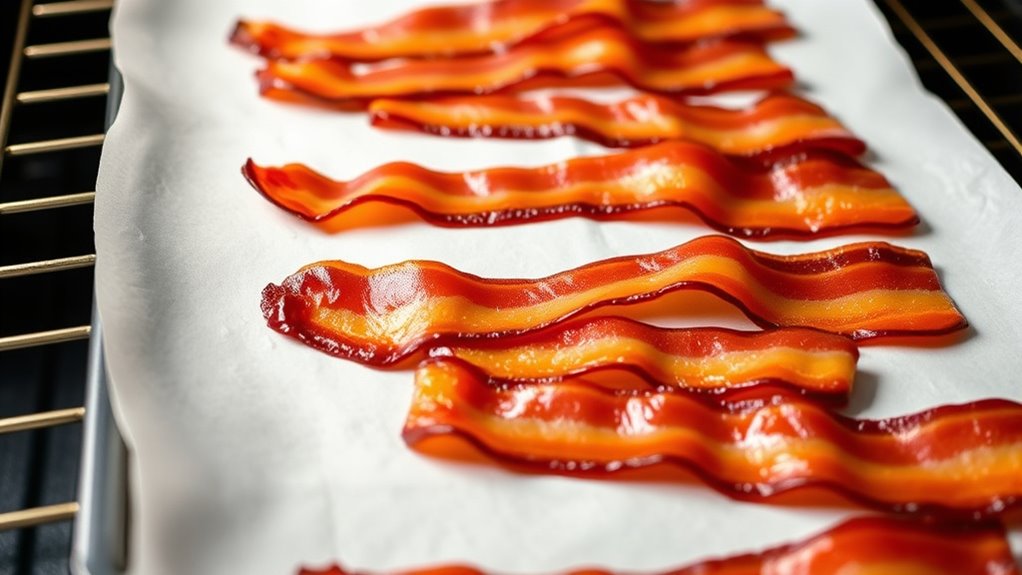
Oven-baked bacon is the easiest method because it requires minimal effort and cleanup. The oven provides consistent heat, so your bacon cooks evenly without you having to watch it closely. This means you can focus on other things while it cooks.
You don’t need to stand over the stove, flipping slices or dealing with splatters. Just lay the bacon on a baking sheet and let the oven handle the work. Cleanup is simple—remove the pan and toss or wash the foil or parchment paper lining it.
This method also reduces mess and saves you time scrubbing greasy pans. Plus, you can cook a large batch at once, which is perfect for breakfast or meal prep. Overall, oven baking makes crispy, evenly cooked bacon with less hassle and more efficiency.
Choosing the Best Baking Sheet and Tools for Crispy Bacon
Choosing the right baking sheet and tools is key to getting perfectly crispy bacon every time. The best results come from picking the right materials and essential kitchen gadgets.
Selecting the right tools ensures crispy, evenly cooked bacon every time.
Here are four tips to help you choose:
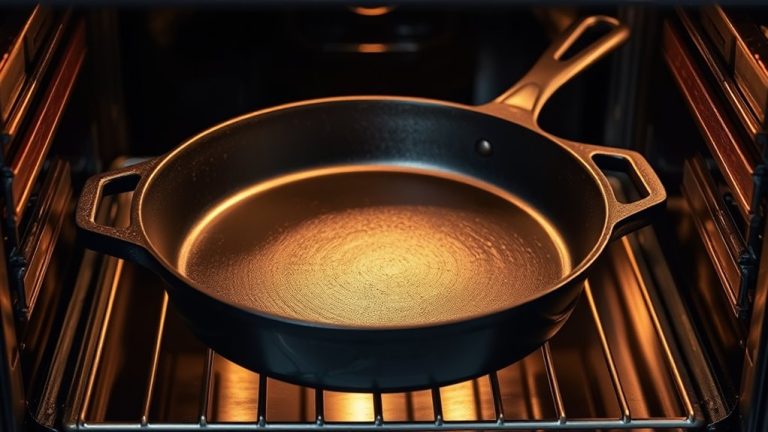
- Use a rimmed baking sheet made of sturdy metal like aluminum or stainless steel. This prevents grease spills and ensures even heat distribution.
- Pick a wire rack that fits inside the sheet. It lets fat drain away and air circulate, helping the bacon crisp up evenly.
- Consider investing in oven-safe tongs or a slotted spatula. They make handling the bacon easier and less messy.
- Avoid non-stick surfaces because they can warp at high temperatures and make cleanup harder.
How to Prepare Your Oven and Bacon for Even Results
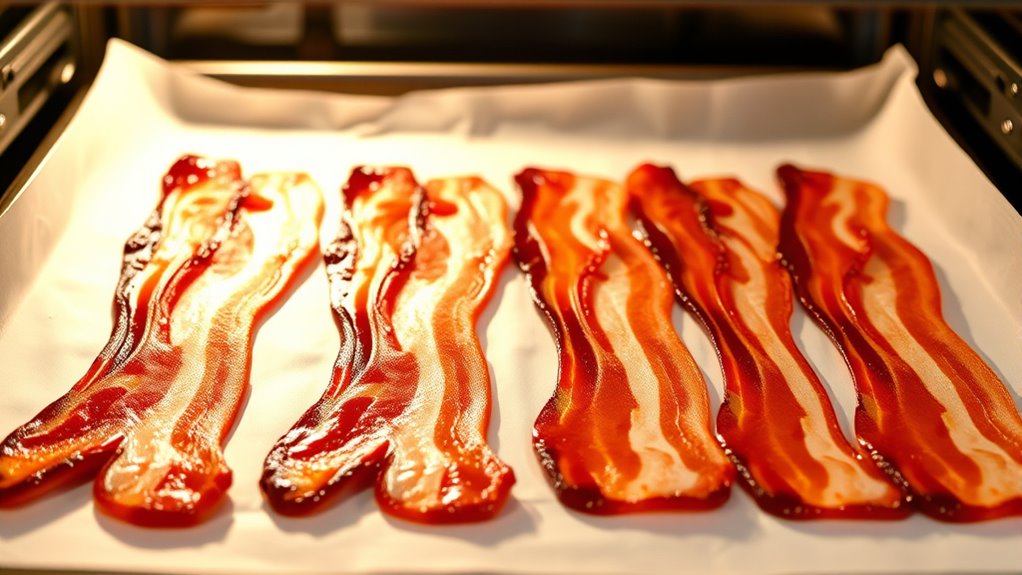
Before you pop the bacon in the oven, make sure to preheat it to the right temperature. It’s the best way to get everything cooked evenly and perfectly. Also, lining your baking sheet with aluminum foil is a smart move— it catches those drips and makes cleanup a breeze.
When you’re placing the bacon slices on the sheet, try to lay them out in a single layer. Give each piece a little space around it so they all crisp up nicely and evenly. Trust me, a little attention here makes a big difference!
Preheat Oven Properly
To ensure your bacon cooks evenly, start by preheating your oven to the right temperature—usually 400°F (200°C). Proper preheating helps maintain a consistent oven temperature, which affects how long it takes to cook and how crispy your bacon gets.
Here are four tips to preheat effectively: First, set the oven about 10 minutes before you start baking. This gives it enough time to reach the right temperature.
Next, use an oven thermometer to check that the temperature is accurate. This way, you know it’s truly preheated to 400°F.
Avoid opening the oven door during preheating, as this can let the heat escape and throw off the temperature.
Finally, adjust the oven rack to the middle position for even heat distribution, helping your bacon cook perfectly.
Use Aluminum Foil
Lining your baking sheet with aluminum foil is an easy way to guarantee even cooking and make cleanup simpler. The foil catches bacon grease, prevents messes, and speeds up cleanup.
It also helps distribute heat evenly across the bacon, so it gets crispy consistently. To manage bacon grease, place the foil underneath the bacon to catch drippings, which you can toss afterward.
This keeps grease from pooling on the pan and reduces smoke while baking. Using foil also minimizes sticking and makes removing the cooked bacon a lot easier.
For the best results, crumple the foil slightly before laying it flat. This helps prevent tears and gives a better surface for even heat transfer. Overall, aluminum foil makes your bacon baking process much easier.
Arrange Bacon Evenly
Ensuring the bacon cooks evenly starts with properly preparing your oven and arranging the slices. To get even cooking, focus on spacing and placement.
Here are the key steps:
Lay bacon strips flat on a baking sheet lined with foil or parchment paper, avoiding overlapping. Keep slices about ½ inch apart to promote even heat exposure.
Use tongs to position slices neatly, making sure they don’t touch or bunch up. Also, check your oven’s temperature beforehand so heat circulates evenly around each strip.
Step-by-Step: How to Bake Bacon in the Oven
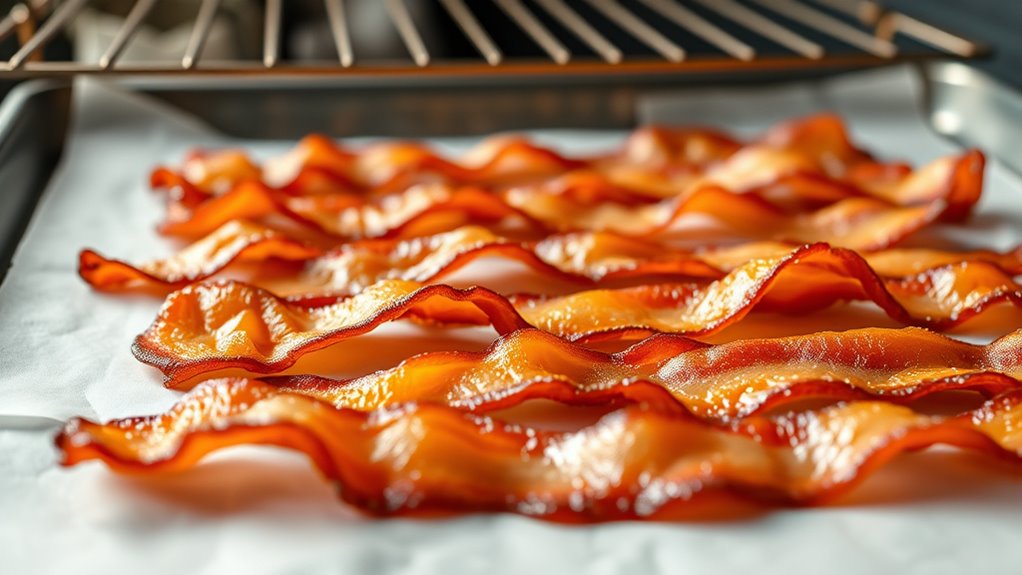
Preheat your oven to 400°F (200°C) and line a baking sheet with aluminum foil or parchment paper for easy cleanup. Place the bacon strips on the foil-lined sheet, making sure they don’t overlap.
For better results, use a cookware that distributes heat evenly. If you like, sprinkle some bacon seasoning over the slices for added flavor before baking.
Arrange the strips flat and straight to ensure they cook evenly. You can use a wire rack on the baking sheet if you want the bacon to crisp up even more, allowing fat to drain away.
Keep an eye on the bacon as it cooks because oven times can vary depending on thickness. Once it reaches your preferred crispness, use tongs to transfer it to a paper towel-lined plate to drain excess fat.
This method guarantees crispy, evenly cooked bacon with minimal mess.
How Long Should You Bake Bacon for Perfect Crispiness?
The amount of time you should bake bacon really depends on how thick the slices are and just how crispy you like it. If you’re aiming for that perfect crunch, it’s all about finding the right balance.
Making sure your oven is set to the right temperature is key to cooking the bacon evenly. Once that’s taken care of, you can just tweak the baking time based on how crispy you want it. Keep these tips in mind, and you’ll end up with perfectly baked bacon every single time!
Bacon Thickness Matters
Bacon thickness really affects how long you should bake it to get that perfect crispiness. Thicker cuts, like center-cut or thick-cut bacon, need more time to cook through, while thinner slices crisp up faster.
Different types of bacon may also call for adjustments in cooking techniques so you don’t end up burning or undercooking it.
Here are some general guidelines:
- Thin bacon: Bake for 12-15 minutes for crispiness.
- Regular-cut bacon: Usually needs about 15-20 minutes.
- Thick-cut bacon: Expect around 20-25 minutes.
- Extra-thick bacon: You might need 25-30 minutes—just keep a close eye.
Adjust your cooking time based on the bacon type and thickness. This way, you’ll get even, crispy results without overdoing it.
Oven Temperature Settings
Setting the right oven temperature is key to getting perfectly crispy bacon without burning it. The oven temperature you choose directly impacts how crispy your bacon gets and how long it takes to cook.
For crispy results, bake at 400°F (200°C). If you lower the temperature to 350°F, you’ll get chewier bacon. Higher temps can burn the bacon, while lower temps will take longer to cook.
Here’s a quick comparison:
| Temperature | Effect on Bacon | Ideal for |
|---|---|---|
| 350°F | Less crispy, more chewy | Gentle cooking, thick slices |
| 375°F | Balanced crispiness | Most bacon types |
| 400°F | Crispiest, quicker cooking | Thin slices, quick prep |
Adjust the oven setting based on how crispy you want your bacon. Keep in mind that bacon thickness and personal preferences can change how temperature affects the final result.
Desired Crispiness Level
Wondering how long to bake bacon for that perfect crunch? Cooking times can vary based on how crispy you like it.
For soft, chewy bacon, bake for 12-15 minutes. If you prefer crispy but tender bacon, aim for 15-20 minutes.
For extra crispy bacon, extend the baking time to 20-25 minutes. Keep an eye on it after 15 minutes to prevent burning and adjust the time as needed.
Tips for Achieving Evenly Crispy Oven-Baked Bacon
Achieving evenly crispy bacon in the oven is simple with a few key techniques to ensure each strip cooks evenly. First, line your baking sheet with parchment paper or foil to prevent sticking and make cleanup easier.
Place bacon strips in a single layer without overlapping, so air can circulate around each piece. For consistent crispiness, evenly distribute your seasoning beforehand, but avoid heavy coatings that could cause uneven cooking.
Keep an eye on the cooking time. Thin slices might need less time, while thicker cuts could take longer. If you have a wire rack, elevate the bacon to allow heat to surround it evenly.
Rotate the baking sheet halfway through cooking to promote uniform doneness. By sticking to a steady cooking time and proper placement, you’ll get perfectly crispy bacon every time with minimal fuss.
Troubleshooting Common Baking Bacon Problems
Baking bacon can sometimes lead to unexpected issues, but most problems are easy to fix. If your bacon is splattering too much, try using a foil-lined tray or a splatter guard to keep things tidy.
For uneven cooking, rotate the pan halfway through and double-check your oven’s temperature. If your bacon turns out too chewy or crispy, adjust the cooking time—shorten it for softer bacon and extend it for crunchier results.
Here are some common problems and simple solutions:
Common bacon issues and easy fixes for perfect results.
- Excessive splatter: Use a foil-lined tray or a splatter guard.
- Uneven doneness: Rotate the pan and verify your oven’s calibration.
- Too greasy: Drain excess fat during cooking or cook on a rack.
- Under or overcooked bacon: Adjust the cooking time and keep a close eye.
Flavor Variations and Different Cuts for Oven-Baked Bacon
Exploring flavor variations and different cuts of bacon lets you customize your oven-baked experience to match your taste. You can try thick-cut bacon for a heartier bite or regular slices for faster crisping.
Seasonings can really enhance the flavor. Dust your bacon with black pepper, brown sugar, or smoked paprika before baking for extra flavor. For a smoky touch, add a splash of liquid smoke or choose smoked bacon varieties.
Different cooking methods also impact the texture and flavor. Starting with a cold oven or lining your pan with foil can make a difference. You might even marinate bacon in maple syrup or soy sauce for a richer taste.
Mixing these seasoning techniques with various cuts helps you craft bacon that perfectly complements your dishes. Whether you like it sweet, spicy, smoky, or savory, adjusting cuts and flavors makes your oven-baked bacon just right for you.
How to Clean Up and Maintain Your Baking Equipment
After baking bacon, it’s important to clean your equipment thoroughly so it stays in good shape. Just use warm, soapy water to wash away the grease and any leftover residue. If you notice any stubborn spots, a little brush can do wonders to get those cleaned up.
And don’t forget, regular maintenance is key! Take a moment to inspect your pans and tools for any damage or wear. Replacing worn-out equipment when needed will help ensure your cooking stays safe, efficient, and enjoyable every time you bake.
Proper Equipment Cleaning Techniques
Keeping your baking equipment clean is essential for both safety and the best-tasting results. Proper cleaning techniques help prevent buildup and keep your tools in good shape.
Start by gathering your cleaning supplies, like non-abrasive sponges, mild dish soap, and warm water. Then, follow these simple steps:
- Remove any loose debris and scrape off excess grease.
- Wash baking sheets and pans using a sponge dipped in soapy water.
- Pay special attention to greasy spots to make sure they’re thoroughly cleaned.
- Dispose of grease responsibly, using designated containers or proper disposal methods.
Always wipe down your equipment after washing and avoid harsh chemicals that can damage surfaces. Proper cleaning not only keeps your tools in great shape but also ensures safe, delicious bacon every time.
Regular Maintenance Tips
Once you’ve cleaned your baking equipment thoroughly, maintaining it regularly keeps it in top shape. To keep your oven and baking sheets in good condition, always store bacon properly—sealed and refrigerated to prevent spoilage.
When disposing of grease, let it cool first before pouring it into a container for trash or recycling. Never pour grease down the drain, as it can cause clogs.
Wipe down your baking surfaces after each use to remove residual grease and bacon bits. Regularly check for any build-up or stains, and clean them promptly to prevent long-term damage.
Proper maintenance not only extends your equipment’s life but also keeps your cooking environment safe and hygienic.
Frequently Asked Questions About Oven-Cooked Bacon
Have questions about cooking bacon in the oven? You’re not alone. Here are answers to common questions to help make your experience safe and delicious:
- How do I guarantee oven safety while cooking bacon? Always keep the oven clean, avoid overcrowding, and watch for grease splatters that could cause fires.
- What’s the best way to store cooked bacon? Keep bacon in an airtight container in the fridge for up to a week, or freeze it for longer storage.
- Can I cook thick-cut bacon in the oven? Yes, but it may need a slightly longer cooking time. Keep an eye on it to prevent burning.
- How do I prevent grease from splattering? Use a rimmed baking sheet lined with foil or parchment paper, and consider placing a rack for even cooking.
These tips help you cook bacon safely and store leftovers properly, ensuring maximum flavor and freshness.
Frequently Asked Questions
Can I Cook Bacon in the Oven Without Lining the Pan?
Yes, you can cook bacon in the oven without lining the pan, but it might be messier and harder to clean.
To get that crispy bacon, set your oven to around 400°F (200°C). Place the bacon directly on the oven rack or a baking sheet without any foil.
Keep an eye on it because it can cook faster without a liner. Turn the bacon occasionally for even crispiness.
How Do I Prevent Bacon Grease Splatters in the Oven?
To prevent bacon grease splatters in the oven, you’ve got to tame the beast before it starts roaring. Use a wire rack on a baking sheet to raise the bacon, allowing grease to drip away safely.
Cover loosely with foil or a baking sheet, but leave space for steam to escape. These cooking tips keep grease contained, making cleanup easier and avoiding the mess from flying bacon grease.
Is It Safe to Bake Bacon on Aluminum Foil?
Yes, it’s safe to bake bacon on aluminum foil, but make sure to follow proper baking safety. Line your baking sheet with foil to catch drippings and keep things tidy.
Avoid covering the bacon completely with foil because it can trap heat and cause uneven cooking. Keep an eye on your oven to make sure everything turns out just right.
When handling hot foil or baking sheets, always use oven mitts to prevent burns. This way, you can enjoy perfectly cooked bacon without any worries.
Can I Bake Bacon in a Convection Oven?
Yes, you can bake bacon in a convection oven. Think of your convection oven as a gentle breeze that helps cook your bacon evenly, highlighting the benefits of this bacon baking technique.
The convection’s circulating heat crisps the bacon perfectly, reducing cooking time and excess grease. Adopt this method for crispy, delicious bacon with less fuss, making your breakfast routine more efficient and tasty.
How Do I Store Leftover Oven-Baked Bacon?
You should store leftover oven-baked bacon in an airtight container to keep its flavor and stay fresh.
Place the cooled bacon inside, and use paper towels between layers if needed to soak up any excess grease.
Keep the container in the fridge for up to a week.
For longer storage, you can freeze the bacon to keep it crispy and flavorful when reheating.
Conclusion
Remember, practice makes perfect, so don’t be discouraged if your first batch isn’t flawless. Baking bacon in the oven is a simple, hands-off method that rewards you with crispy, delicious results.
With the right tools and tips, you’ll become a pro in no time. Just keep your eye on the prize—perfect bacon every time—and enjoy the process as much as the tasty outcome.
Happy baking! Mastering how you cook bacon in the oven is easier than you think.