Accurately Calculate Kitchen Cabinet Costs
Many homeowners feel overwhelmed when trying to figure out kitchen cabinet costs. With so many options and hidden expenses, it’s easy to get lost in the details. But don’t worry—you’re not alone, and there are ways to make the process smoother.
To accurately calculate your kitchen cabinet costs, start by defining your size and layout needs. Then, research different materials and styles to understand price differences.
Factor in custom features, hardware, and accessories, and get detailed quotes for installation. Be sure to include hidden costs like labor and upgrades to avoid surprises.
Staying organized and asking the right questions guarantees you stick to your budget. Keep exploring to learn more tips for precise cost estimates.
Key Takeaways
- Determine your preferred cabinet style, materials, and finishes to set a clear baseline for costs.
- Get detailed quotes from suppliers that include materials, hardware, accessories, and installation fees.
- Think about custom features and upgrades, and consider how they might affect your material and labor costs.
- Use online calculators and design tools to estimate expenses based on your layout and choices.
- Set aside a contingency fund of 10-15% to cover unexpected costs and prevent going over budget.
How to Determine the Right Size and Layout for Your Kitchen Cabinets
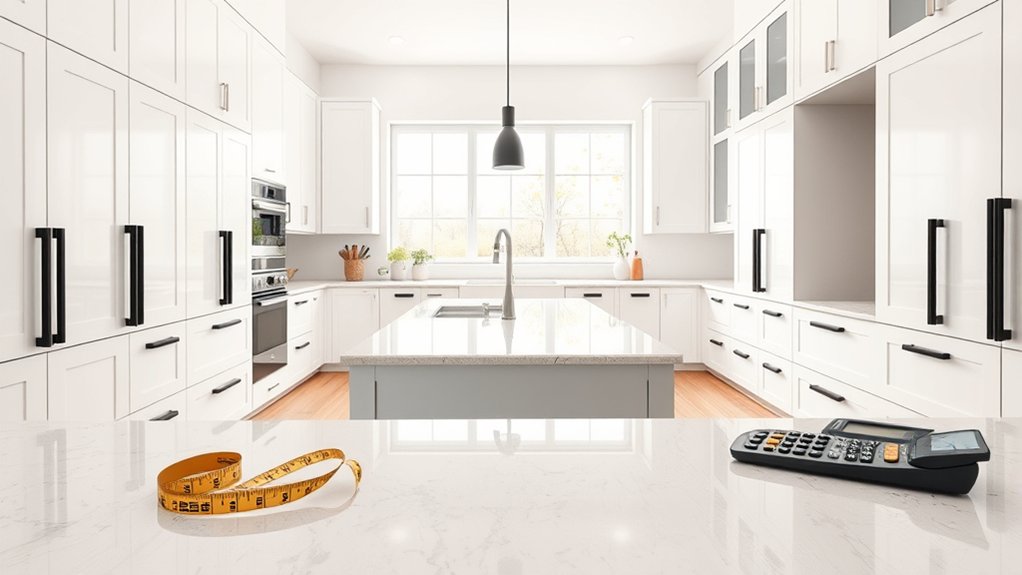
Choosing the right size and layout for your kitchen cabinets is key to creating a space that’s both functional and attractive. Proper cabinet sizing ensures everything fits comfortably and maximizes storage.
Start by carefully measuring your kitchen’s dimensions, including wall lengths, ceiling height, and existing appliances. Think about how you use your space—do you need more drawers or shelves? Planning for these details helps you create a practical layout.
Consider the flow of your kitchen to allow easy movement between zones. Standard cabinet heights and depths are a good starting point, but customizing sizes can better fit your needs. Make sure to plan for enough countertop space and easy access to frequently used items.
Don’t forget to leave room for appliances, windows, and doors. A well-thought-out layout reduces clutter and makes your kitchen more user-friendly. Focusing on the right cabinet sizes and a logical design helps you build a space that’s both efficient and visually balanced.
Which Cabinet Materials Offer the Best Value?
When evaluating cabinet materials for value, you’ll want to consider durability, cost, and appearance to find the best fit for your budget and needs. Solid hardwoods like oak and maple are durable and stand up well to daily use, but they tend to be more expensive.
Consider durability, cost, and appearance to choose the best cabinet materials for your budget and needs.
If you’re after a more affordable option with decent durability, MDF or plywood can work well. They’re less costly and resistant to warping, making them practical choices.
Eco-friendly options like bamboo or responsibly sourced FSC-certified wood offer sustainable choices without sacrificing quality. These materials often come at a similar price point and add an eco-conscious touch to your kitchen.
Ultimately, balancing durability and cost helps you choose materials that give you both value and longevity. Focusing on these factors ensures your investment leads to beautiful, durable cabinets that fit your budget and environmental priorities.
How Custom Features Impact Your Kitchen Cabinet Costs
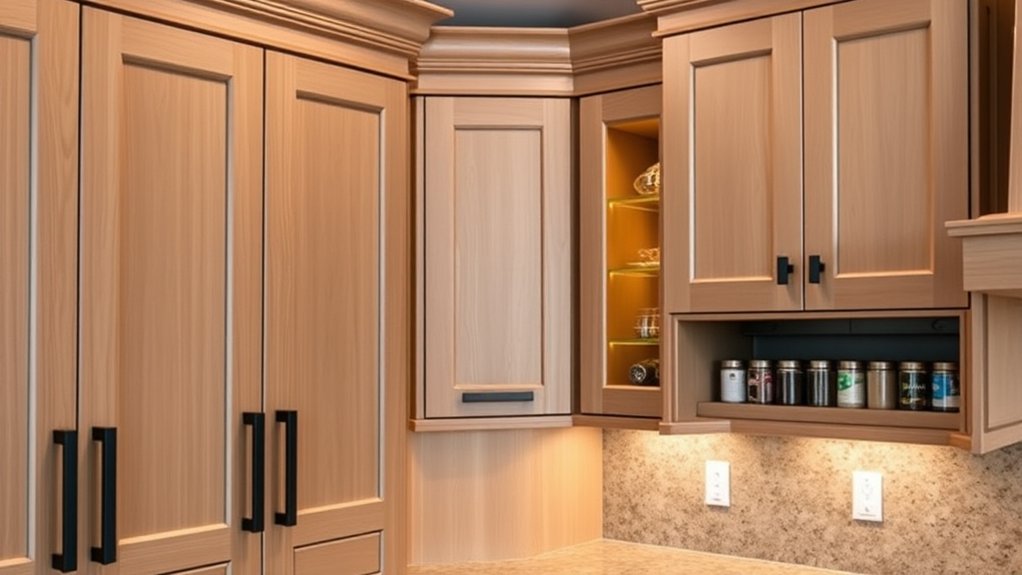
Adding custom features to your kitchen cabinets can really bump up the costs, mainly because of the extra materials you’ll need. The more detailed or unique you want your cabinets to be, the more you’ll end up paying for special components and finishes. While these upgrades can make your kitchen look amazing, it’s important to keep them in line with your budget so you don’t overspend.
Increased Material Expenses
Custom features can significantly increase your kitchen cabinet costs by requiring higher-quality or specialty materials. When sourcing these materials, you might need exotic woods, premium finishes, or custom hardware, all of which add to your expenses.
Material sourcing becomes more complex with custom features because you’re looking for specific qualities and aesthetics. Price fluctuations in raw materials can also impact your budget unexpectedly, especially if demand for certain woods or finishes rises.
These variations mean you should budget for higher costs than you initially anticipated. Choosing specialty materials not only improves the look and durability of your cabinets but also raises the overall price.
Being aware of these factors helps you plan better and avoid surprises when finalizing your project’s budget.
Enhanced Design Complexity
Complex design intricacy can significantly raise your kitchen cabinet costs because detailed features need more craftsmanship and specialized labor. For example, adding trendy elements like decorative moldings or intricate carvings will increase expenses.
More complex designs also mean careful color coordination, which might involve custom finishes or paintwork, pushing costs higher. When you choose unique features like glass inserts or special hardware, you’re paying for extra materials and skilled labor to do it right.
Cost Differences Among Popular Cabinet Styles and Finishes
The cost of kitchen cabinets varies a lot depending on the style and finish you pick. Your choice of cabinet style really impacts the price, with options like shaker, flat-panel, and raised-panel all differing in cost.
Finish options also matter, affecting both how your cabinets look and your budget. For example, paint finishes are usually cheaper than high-end stains or glazes that add texture and depth.
Material choices play a role too. Solid wood cabinets tend to be more expensive than engineered wood or MDF, especially with premium finishes.
Knowing these differences helps you plan your budget better so you can choose a cabinet style and finish that match your style and financial situation.
Estimating Installation and Labor Costs for Your Cabinets
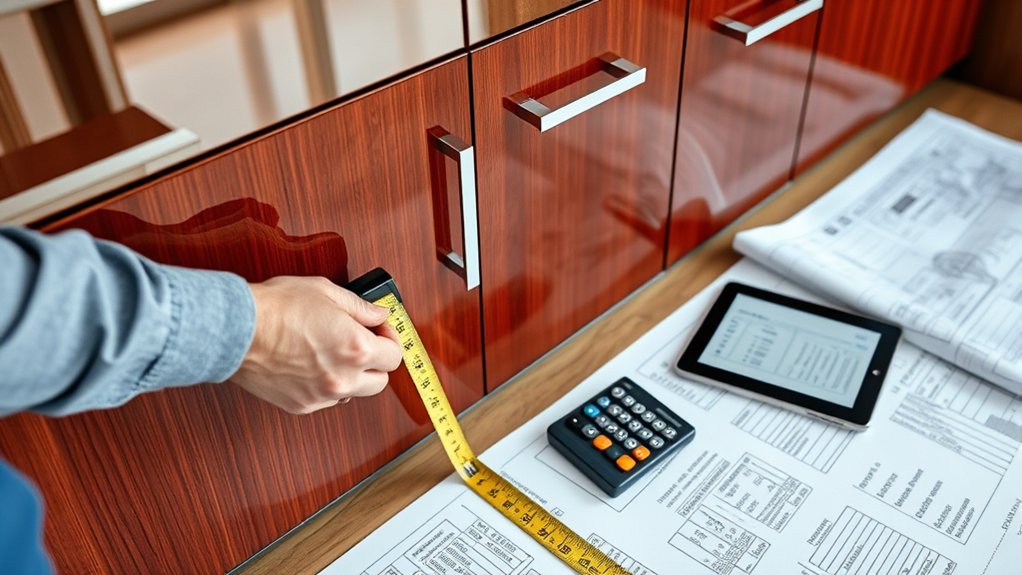
Once you’ve picked your cabinet style and finish, estimating the installation and labor costs is the next step. Your kitchen design plays a big role here, especially the layout and any custom features.
Labor costs can vary a lot depending on the project scope and local rates. To stay within budget, get detailed quotes from professional installers and ask what’s included, like removing old cabinets, adjustments, and finishing touches.
Labor costs vary by scope and location; get detailed quotes to include removal, adjustments, and finishing.
Keep in mind that simple designs usually cost less to install than complicated or custom setups. When planning your budget, also consider extra expenses like leveling, structural changes, or special fixtures.
Having accurate estimates early on helps prevent surprises and keeps your project on track financially. Knowing these costs upfront allows you to make smarter choices about your kitchen design and allocate funds wisely for materials and installation.
Additional Expenses: Hardware, Accessories, and More
When you’re picking out your kitchen cabinets, don’t forget that the hardware and accessories can really add up. There are so many styles and features to choose from, and some options might come with hidden costs you didn’t expect. It’s a good idea to keep these extra expenses in mind so you can make smarter choices and stay within your budget.
Hardware Options and Styles
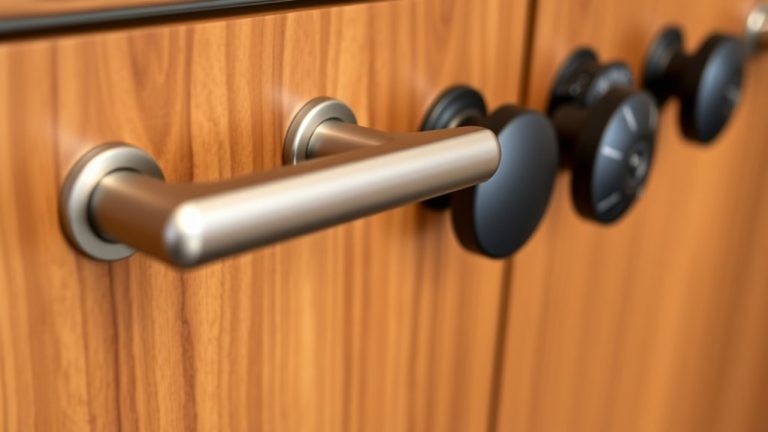
Choosing the right hardware can greatly affect your kitchen’s overall look and functionality, so it’s worth exploring the options out there. Hardware includes different styles, finishes, and features that match your cabinets.
For example, decorative finishes like brushed nickel, matte black, or antique brass can add character and style to your space. Cabinet accessories such as pull-out shelves or lazy Susans boost storage and convenience.
Handle styles range from sleek bar pulls to ornate knobs, influencing your cabinets’ appearance. These choices let you personalize your kitchen while staying within your budget.
Selecting hardware with decorative finishes can elevate your kitchen’s design, and adding cabinet accessories improves usability. Keep your overall theme and needs in mind when making your selections.
Accessory Choices and Features
After choosing your hardware and finishes, adding accessories can really boost your kitchen’s style and function. Decorative touches like crown molding or trims can give your cabinets extra personality and visual appeal.
Interior lighting is another great upgrade that improves visibility and sets the mood. Options like under-cabinet or inside-the-cabinet lights make tasks easier and highlight your cabinetry’s design.
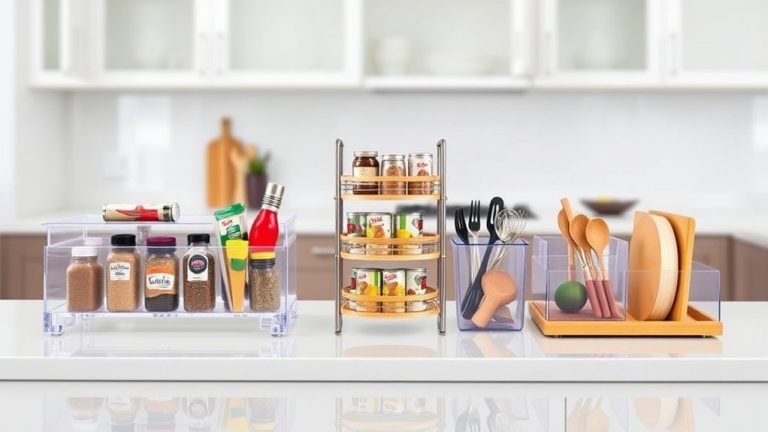
Small accessories like pull-out shelves, spice racks, or soft-close hinges also add convenience and a sleek look. Keep in mind, these upgrades can increase costs, so plan carefully to balance style, function, and your budget.
Hidden Costs to Consider
While budgeting for new kitchen cabinets, it’s easy to focus only on the main costs. But hidden expenses like hardware, accessories, and upgrades can quickly add up.
These hidden costs often trip up your budget if you don’t plan ahead. For example, you might forget about:
- Hardware upgrades, like knobs and pulls, that can change the entire look.
- Accessories such as soft-close hinges or pull-out shelves, which boost functionality but cost more.
- Extra features like interior organizers or custom finishes that improve usability but aren’t in your initial estimate.
Ignoring these hidden costs can lead to unexpected expenses that stretch your budget beyond what you planned. To avoid this, make sure to account for all potential upgrades and accessories during your planning.
How to Set a Realistic Budget for Your Kitchen Cabinets
Setting a realistic budget for your kitchen cabinets is key to keeping your project financially on track. Start by understanding your kitchen design goals, which will influence the style, materials, and features you choose.
Research costs for different cabinet types, finishes, and customization options. Decide how much you’re willing to spend overall and break that down into categories like materials, labor, and accessories.
Make sure to include a contingency fund, usually 10-15%, to cover unexpected expenses. Focus on your needs versus wants, and aim for quality within your budget.
Use online tools or talk to professionals to get accurate estimates. Setting a practical budget early on helps prevent overspending and makes decision-making easier.
A well-planned budget keeps your project realistic and achievable, making sure your dream kitchen stays within your financial limits.
Common Mistakes to Avoid When Calculating Cabinet Costs
One common mistake when calculating cabinet costs is only focusing on the upfront price of the cabinets themselves. You might think you’re done once you’ve picked a style and price point, but budget planning needs to include extra costs.
Focusing only on cabinet prices ignores hidden costs like materials, hardware, and installation fees.
To avoid surprises, keep these in mind:
- Material selection: Higher-quality materials last longer but cost more. Choosing cheaper options might save money at first, but could lead to higher maintenance or replacements later.
- Hardware and accessories: Drawer pulls, hinges, and other hardware can add up quickly and are often overlooked.
- Installation costs: Don’t forget labor expenses, which can significantly impact your overall budget.
Tools and Resources to Estimate Kitchen Cabinet Expenses
Estimating kitchen cabinet expenses gets easier when you use the right tools and resources. Online cost calculators can quickly give you an idea based on your chosen design trends and cabinet styles, helping you set a realistic budget early on.
Design trend websites and magazines are great for inspiration, whether you’re into modern, classic, or minimalist looks. They can guide your choices for materials and finishes.
Many retailers and manufacturers offer digital tools that let you customize cabinets with different colors. These help you visualize costs before you make a commitment.
Software like SketchUp or cabinet design apps can help you create detailed layouts. This ensures you consider all components and avoid surprises later.
Visiting showrooms or browsing supplier catalogs gives you firsthand insight into current trends and material prices. These resources let you compare options, refine your preferences, and plan accurately.
All of these tools empower you to stay within budget while achieving your desired look.
Key Questions to Ask Your Contractor or Supplier Before Finalizing Your Budget
Before you lock in your budget, it’s a good idea to ask your contractor or supplier about material costs upfront. You want to make sure there are no surprises along the way. It’s also helpful to get a clear idea of the installation timeline so you know when everything will be finished. And don’t forget to ask about warranty and service policies—these will help protect your investment in the long run. Asking these questions now can really help you make a more informed decision and keep unexpected expenses at bay.
Material Cost Transparency
Understanding the true cost of materials is key before finalizing your kitchen cabinet budget. To keep things transparent, ask your supplier or contractor these important questions:
- What materials do you use, and how do they compare in durability?
- Can you share details about the supplier’s reputation and sourcing practices?
- Are there hidden costs with certain materials or finishes?
Focusing on material durability helps you avoid future repairs. Knowing the supplier’s reputation ensures quality and honesty. Clear answers to these questions give you confidence that the costs reflect the actual material quality. This transparency helps prevent surprises and keeps your budget on track.
Ultimately, understanding material costs protects your investment and ensures a durable, high-quality finish for your cabinets.
Installation Timeline Details
Wondering how long your kitchen cabinet project will take can help you stay on budget and avoid surprises. Ask your contractor or supplier for a clear installation timeline, including key milestones like cabinet delivery, wall prep, and final adjustments.
Knowing the schedule lets you coordinate your kitchen decor updates and plan for appliance integration smoothly. Find out if there are any potential delays, such as supply chain issues or contractor availability, that could extend the timeline.
A detailed timeline helps you allocate funds properly and prevents unexpected costs. Clarify whether the project includes finishing touches like hardware installation or touch-ups so there are no surprises later.
Being informed about the installation schedule keeps your project on track and your budget intact.
Warranty and Service Policies
Have you asked your contractor or supplier about their warranty and service policies? Knowing this is essential to avoid unexpected costs later.
First, find out what the warranty covers and how long it lasts. Then, ask about their response time—how quickly will they handle issues?
Next, clarify the process for making claims or requesting repairs. Good warranty policies protect your investment by covering manufacturing defects or damages.
A quick service response helps prevent delays and frustration. Understanding these policies can give you confidence in your contractor or supplier.
Don’t settle for vague guarantees. Get clear, written details on warranty coverage and service response so you can make informed budget decisions.
Frequently Asked Questions
How Do Regional Price Differences Affect Cabinet Costs?
Regional pricing and local market differences really affect cabinet costs. If you’re in an area with higher living expenses or demand, prices are usually higher, which impacts your overall budget.
On the other hand, regions with competitive markets or lower costs often have more affordable options. It’s a good idea to compare local suppliers and consider these regional price differences to get a more accurate estimate.
Adjusting your budget to reflect these variations helps you make smarter decisions and avoid unexpected expenses down the line.
Are There Hidden Fees in Cabinet Installation?
Hidden fees can sneak up on you like a shadow in the dark, so always ask about all costs upfront.
Some installation charges aren’t always clear, and you might pay extra for delivery, adjustments, or unexpected labor.
To avoid surprises, get a detailed quote and clarify what’s included.
Being proactive helps you spot hidden fees and keeps your budget intact, ensuring your dream kitchen doesn’t become a nightmare.
How Do Warranty and Maintenance Costs Impact Overall Expenses?
Warranty coverage and maintenance costs significantly affect your overall expenses. Having good warranty coverage means you’re protected against unexpected repairs, which can save you money in the long run.
On the other hand, neglecting maintenance can lead to deterioration, resulting in costly fixes later. Regular upkeep helps prevent these expenses and keeps your cabinets in great shape.
When planning your budget, make sure to include both warranty coverage and ongoing maintenance costs. This way, you’ll get a more accurate idea of your total investment in kitchen cabinets.
Can Remodeling Timelines Influence Cabinet Pricing?
Remodeling timelines definitely influence cabinet pricing because shorter schedules often mean higher costs. This happens due to rushed material procurement, supplier negotiations, and labor.
If you’re flexible with material trends, you can extend timelines and potentially get better deals and discounts. Rushing the project might also limit your options, which can increase costs.
What Financing Options Are Available for Kitchen Cabinet Projects?
You can explore financing options like home equity loans, personal loans, or credit cards to pay for your kitchen cabinet project.
When choosing, think about the cabinet materials and current design trends to make sure your investment boosts both style and value.
Some lenders might offer special rates for home improvements, so it’s worth checking out those options.
Be sure to compare different terms and interest rates.
Plan your budget based on the cabinet materials and trendy designs you want for the best results.
Conclusion
By carefully considering your choices and asking the right questions, you’ll master the art of accurately calculating kitchen cabinet costs, much like a seasoned merchant in a bustling bazaar. Remember to balance your dream design with your budget, and don’t shy away from utilizing tools and resources for guidance.
With a little savvy, you’ll transform your kitchen into a stylish, functional space that’s worth every penny—without falling prey to the pitfalls of poor planning. Accurate kitchen cabinet costs are achievable when you plan wisely and stay informed.