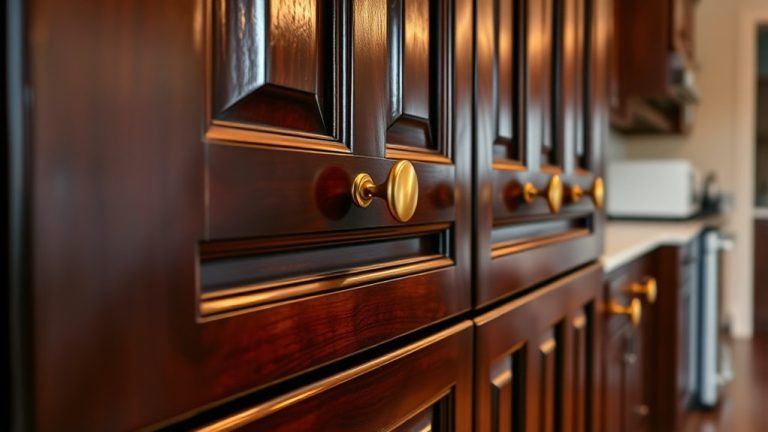
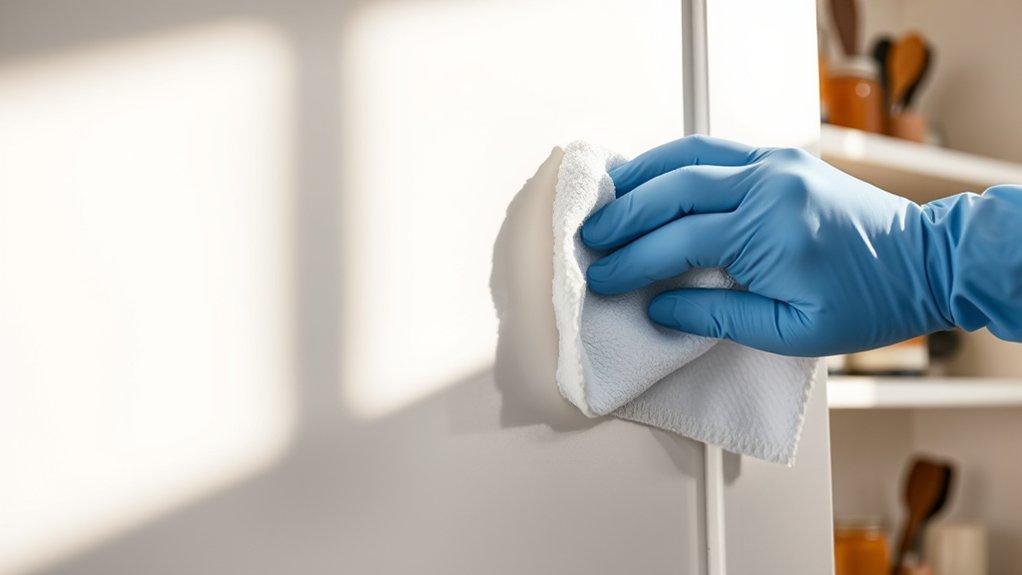
7 Simple Steps to Clean Kitchen Cabinet Doors
Many people struggle with keeping their kitchen cabinet doors looking clean and fresh. It can feel overwhelming to remove grease, fingerprints, and dust regularly, but you’re not alone in facing this challenge. Luckily, a few simple steps can make the task easier and even enjoyable.
To clean kitchen cabinet doors quickly, start by gathering your supplies like a soft cloth, mild cleaner, and scrub brush. Remove dust and loose dirt first to create a clean surface.
Choose a gentle cleaner suitable for your cabinet material and test it in a hidden spot. Wipe down carefully, focusing on grease and fingerprints, then dry and buff for a polished look.
Regular maintenance keeps your cabinets looking new—continue for more tips to keep your cabinets pristine.
Key Takeaways
- Remove all hardware and dust the cabinet surfaces with a microfiber cloth or duster.
- Test a gentle cleaner on hidden spots first to make sure it won’t damage the finish.
- Wipe down the cabinet doors with a soft cloth dipped in warm water and mild dish soap, following the grain.
- Rinse with a damp cloth to get rid of soap residue, then dry thoroughly to avoid streaks.
- Finish up by buffing the doors with a clean, dry cloth for a shiny, polished look.
Gather the Right Supplies for Cleaning Kitchen Cabinets
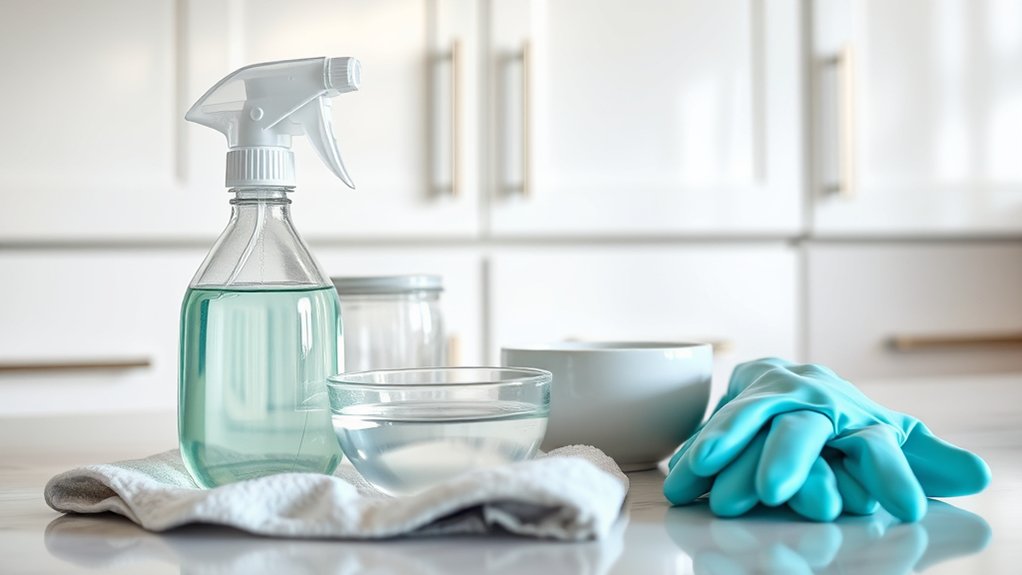
Before you start cleaning, gather all the necessary supplies to make things easier and smoother. You’ll want a soft cloth, a mild cleaner, and a gentle scrub brush or sponge ready to go.
Don’t forget to check your cabinet hardware—handles and knobs—so you can clean or tighten them if needed. Having a dedicated cleaning cloth for cabinets helps prevent cross-contamination with other surfaces.
Keep a small bucket or spray bottle nearby for quick touch-ups. It’s also helpful to review your cleaning schedule, so you know how often to maintain your cabinets and plan ahead.
This way, you won’t overlook any details and can keep your kitchen looking fresh. Having everything organized saves time and reduces frustration.
When supplies are ready and in place, the cleaning process becomes more efficient and thorough. Prepare in advance, and you’ll find it much easier to achieve sparkling, well-maintained cabinets.
Remove Dust and Loose Dirt Before Cleaning
Since dust and loose dirt can interfere with a thorough clean, it’s important to remove them first. Clearing away dust and dirt creates a clean surface, making the rest of your cleaning more effective.
Removing dust and dirt first ensures a cleaner, more effective cabinet cleaning process.
Start by using a soft microfiber cloth or duster to gently wipe down cabinet doors, capturing loose dust and dirt. For stubborn debris, lightly dampen the cloth with water or a gentle cleaner, then wipe again to lift dirt without scratching.
Pay special attention to corners, edges, and crevices where dust tends to gather. This initial step ensures a dust-free surface, preventing dirt from spreading or settling deeper during cleaning.
Removing loose dirt and dust is a simple but essential part of preparing your cabinets for a deeper clean. These quick steps help improve dust removal and dirt elimination, setting the stage for a sparkling, fresh finish.
Choose the Best Cleaning Solution for Your Cabinet Material
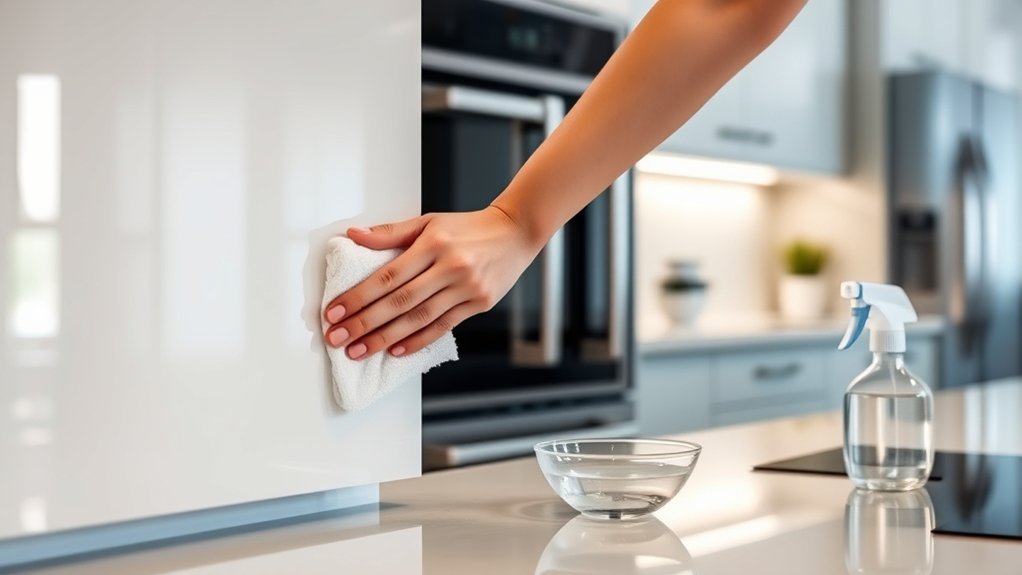
When it comes to cleaning your cabinets, it’s important to pick the right solution based on the material. Using the wrong cleaner can actually cause damage, so it’s best to be cautious. Before you go full force, try testing a small, hidden spot first to make sure it’s safe.
Choosing the right cleaning solution will help keep your cabinets looking great without any risk of harm. It’s all about giving your cabinets the gentle care they deserve!
Different Materials, Different Cleaners
Are you aware that the type of material on your kitchen cabinet doors determines the best cleaning method? Different materials need specific cleaning agents to avoid damage.
For wood finishes, stick to gentle cleaners like diluted dish soap or specialized wood cleaners to keep the finish looking good. If your cabinets are laminate or painted, use a mild all-purpose cleaner to prevent peeling or scratches.
Metal or stainless steel surfaces respond well to glass cleaners or vinegar solutions. Matching cleaners to materials helps maintain your cabinets’ appearance and longevity.
Here’s a quick guide:
- Use gentle, non-abrasive cleaning agents for wood finishes.
- Opt for mild cleaners for painted or laminate surfaces.
- Choose vinegar-based solutions or glass cleaners for metal or stainless steel.
Testing Solutions Safely
Before applying any cleaning solution to your cabinet doors, it’s important to test it in a small, hidden area first. This is a key safety step to prevent damage or discoloration.
Use testing methods like applying a small amount of the cleaner on an inconspicuous spot, then wait a few minutes to see if there are any reactions. Check for fading, bubbling, or warping, especially on delicate materials like wood or laminate.
If no issues show up, you can go ahead and clean the rest of your cabinets. Always read the manufacturer’s instructions and follow safety precautions to avoid harmful fumes or surface damage.
Testing solutions safely helps you find the best cleaner for your cabinet material without risking costly mistakes.
Wipe Down and Clean Your Cabinets Without Damage
To clean your cabinet doors without causing damage, use gentle, non-abrasive materials and cleaning solutions. Start by removing loose dust with a soft microfiber cloth.
Next, mix warm water with a few drops of dish soap to create a mild cleaning solution. When wiping, be careful around hardware and decorative accents—use a soft cloth to avoid loosening or scratching these details.
Here are three tips to help you clean effectively:
- Wipe in the direction of the wood grain to prevent streaks and damage.
- Avoid harsh chemicals that can strip finishes or discolor surfaces.
- Use a clean, damp cloth to remove soap residue, then dry immediately with a soft towel.
Remove Grease and Fingerprints for a Sparkling Finish
Ever wonder how to make your kitchen cabinets look truly spotless and gleaming? The key is removing grease and fingerprints that dull the surface.
Start by applying a gentle solution of warm water and a few drops of dish soap, which won’t harm your cabinet paint. Use a soft cloth or sponge to wipe down the doors, paying special attention to areas with visible smudges.
For stubborn grease, mix baking soda with water to create a natural, effective scrub. Don’t forget your hardware—remove handles and knobs, then clean them separately with warm soapy water or a vinegar solution.
Be sure to dry everything thoroughly to prevent streaks. This routine not only restores the shine but also helps keep your cabinet paint looking fresh.
Regularly cleaning your hardware keeps it polished and grime-free, giving your cabinets an overall sparkling finish.
Dry and Buff to Achieve a Fresh, Polished Look
After you’ve cleaned the cabinets, grab a soft, dry cloth and give them a good wipe to dry everything off. This helps prevent any streaks or water spots from forming. Once they’re dry, take a clean cloth and gently buff the surface in small, circular motions. This extra step really brings out a nice, polished shine. Doing it this way leaves your cabinets looking fresh, clean, and perfectly finished.
Proper Drying Techniques
Once you’ve thoroughly cleaned your cabinet doors, proper drying and buffing are key to getting that fresh, polished look. Start by choosing your drying method: either air drying or towel drying.
For air drying, leave the doors open in a well-ventilated space so moisture can naturally evaporate. If you prefer towel drying, gently pat the surfaces with a soft, lint-free cloth to absorb excess water without scratching.
To finish up, follow these simple steps:
- Use a clean, dry towel or cloth to thoroughly dry all surfaces.
- Lightly buff the doors with a soft cloth to remove any streaks or water spots.
- Let the cabinets air dry completely before applying any polish or finishing touches.
This process will give you a spotless, shiny look.
Effective Buffing Methods
To achieve a flawless, polished finish on your kitchen cabinet doors, effective buffing is essential. Start with the right polishing techniques, using gentle, circular motions to smooth out any remaining surface imperfections.
Use soft buffing tools like microfiber cloths or specialized buffing pads to avoid scratching the surface. Dry the cabinets thoroughly before buffing to prevent streaks.
Once dry, apply light pressure and move the buffing tool consistently across the surface for an even shine. For a high-gloss look, repeat the process with a clean cloth.
Keep Your Cabinets Looking New With Regular Maintenance
Regular maintenance is key to keeping your kitchen cabinet doors looking like new. To do this effectively, focus on three main tasks.
First, regularly clean the cabinet hardware to prevent buildup and tarnish. Use a gentle cleaner and a soft cloth for the best results.
Second, inspect your cabinets for any signs of wear or damage. Address issues promptly to keep them looking their best.
Third, consider applying fresh paint or touch-up using proper painting techniques to refresh the surface and keep your cabinets vibrant. When painting, lightly sand for smoothness and use a high-quality primer to help the paint stick better.
Also, remember to tighten or replace loose hardware regularly to prevent further damage.
By sticking to these routines, you’ll extend the life of your cabinets and keep them looking fresh.
Consistent maintenance not only preserves their beauty but also helps avoid costly repairs or replacements later on.
Frequently Asked Questions
How Often Should I Clean My Kitchen Cabinet Doors?
You should clean your kitchen cabinet doors at least once a month to keep them looking fresh. During interior cleaning, don’t forget to wipe down cabinet hardware, as grease and grime can build up.
Regular cleaning helps prevent dirt from settling and keeps your kitchen spotless. If you notice sticky spots or spills, clean them immediately to maintain the cabinets’ appearance and extend their lifespan.
Can I Use Vinegar on All Cabinet Types?
Vinegar cleaning feels like a gentle rain washing away grime, but you need to verify your cabinet material first. For wooden doors, dilute vinegar to avoid damage.
Laminate or painted surfaces usually tolerate it well. You can use vinegar on most cabinet types, but always test a small hidden spot first.
Think of it as a delicate dance—knowing your material guarantees a safe, sparkling finish without any missteps.
What Should I Avoid Using on Painted Cabinets?
You should avoid using harsh chemical cleaners on painted cabinets because they can damage the painted finishes.
Instead, stick to gentle, non-abrasive cleaners like a soft cloth with mild soap and water.
Chemical cleaners often contain ingredients that can cause paint to peel or fade over time.
Always test a small, hidden area first to make sure the cleaner won’t harm your painted cabinets.
This helps keep their appearance and longevity intact.
How Do I Remove Tough Stains Without Damage?
Think of tough stains as stubborn weeds in your garden; they require gentle yet effective removal.
To tackle stain removal without damage prevention, use a mixture of warm water and mild dish soap, applying it with a soft cloth.
For stubborn spots, a baking soda paste works wonders. Always test a small area first, and avoid harsh chemicals that might damage your cabinets’ finish.
Patience is your best tool here.
Are There Eco-Friendly Cleaning Options Available?
Yes, eco-friendly cleaning options are available for your kitchen cabinets. You can choose eco-friendly products that are free from harsh chemicals, making them safe for your family and the environment.
Natural remedies like a mixture of vinegar and water or baking soda paste work effectively without causing damage. These solutions are affordable, non-toxic, and gentle.
They help keep your cabinets clean and well-maintained while supporting eco-conscious living.
Conclusion
Keeping your kitchen cabinets spotless not only boosts your space’s appearance but also extends their lifespan. Did you know that regular cleaning can prevent buildup that causes 70% of cabinet damage?
By following these simple steps, you’ll maintain a fresh, polished look and save money on costly repairs. Make cleaning a routine, and enjoy a brighter, more inviting kitchen every day.
Your cabinets will thank you for the extra care, especially when you focus on keeping them clean with these easy tips.