Understanding Frameless Kitchen Cabinets: A Complete Guide
Are you tired of traditional kitchen cabinets that feel bulky and outdated? You’re not alone—many people struggle with finding storage solutions that are both functional and stylish.
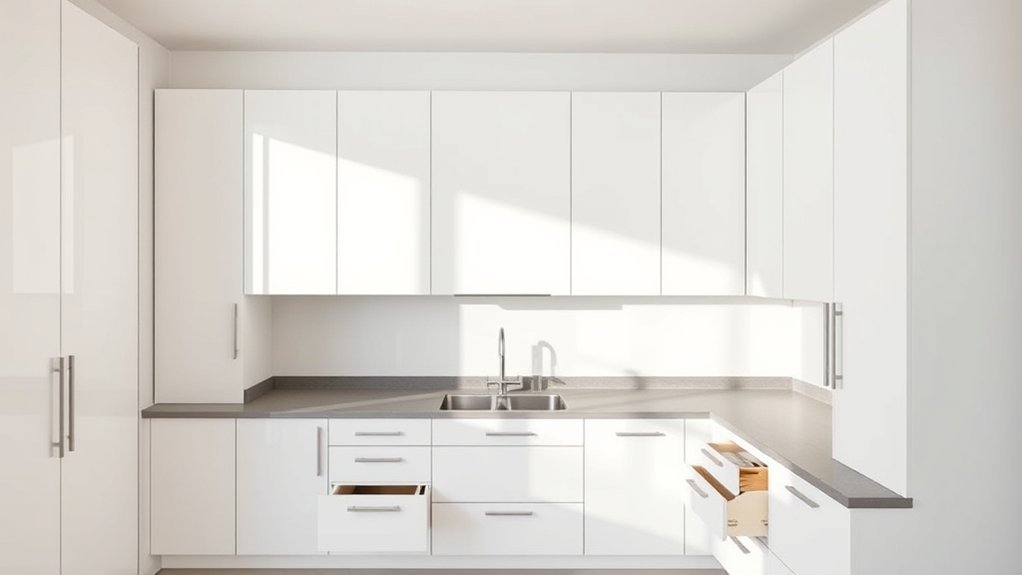
Understanding frameless kitchen cabinets can be a game-changer for your space. They feature a sleek, modern look without a face frame, providing easy access and maximizing storage.
They are popular in contemporary designs for their smooth surfaces and minimalist appeal. While they may cost more and require high-quality hardware, they offer benefits like bright interior lighting and simple customization.
If you want to explore more about their materials, installation tips, and design ideas, you’ll find valuable insights to help you decide if they’re right for your kitchen.
Key Takeaways
- Frameless kitchen cabinets don’t have face frames, giving you a sleek, modern look. They also make it easier to access everything and maximize your storage space.
- These cabinets work great for contemporary, minimalist designs but need high-quality hardware to stay durable and operate smoothly.
- Materials like plywood and MDF are common choices—they affect how long your cabinets last, how good the finish looks, and their overall durability.
- Proper planning, accurate measurements, and careful installation are key to making sure your cabinets work well and match your kitchen’s style.
- Regular maintenance and hardware adjustments help prevent misalignment and keep your cabinets performing well for years to come.
What Are Frameless Kitchen Cabinets and How Do They Differ?
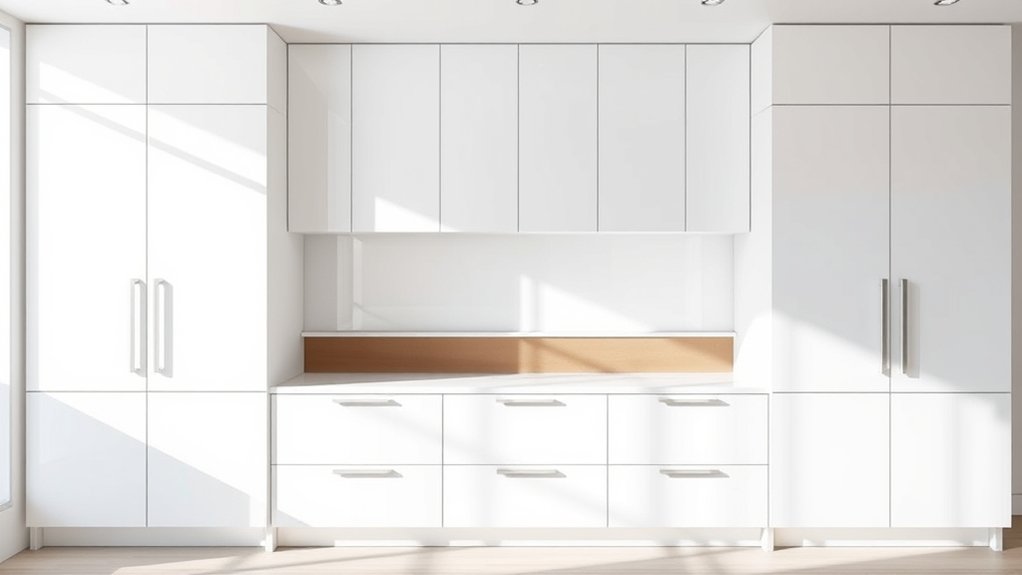
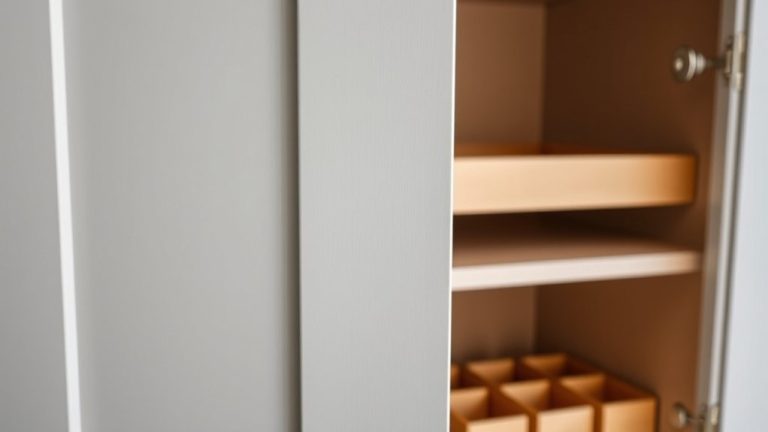
Have you ever wondered what makes frameless kitchen cabinets different from traditional framed styles? The main difference is in how they’re built. Frameless cabinets don’t have a face frame, giving them a sleek, modern look. Instead, the cabinet box itself forms the entire structure.
This design makes interior storage more accessible and spacious. It also makes it easier to install hardware like handles and knobs because the full cabinet face is exposed. Plus, you get a smooth surface perfect for adding interior lighting.
You can hide lighting behind panels or under cabinets for a clean, contemporary feel. Without a face frame, the focus shifts to the cabinet doors and hardware you choose. This setup not only maximizes storage but also creates a minimalist look that’s great for modern kitchens.
Are Frameless Cabinets Right for Your Kitchen? Pros and Cons
Deciding whether frameless cabinets are right for your kitchen depends on your priorities and style preferences. They give a sleek, modern look with easier access and consistent cabinet doors.
However, they often need high-quality hardware for smooth operation. Lighting can also be easier to install because of the flat surfaces.
On the downside, frameless cabinets may be less durable without face frames. This can make them more vulnerable to damage over time. They also tend to be more expensive upfront.
| Pros | Cons | Best For |
|---|---|---|
| Sleek, modern design | Less durable without face frames | Contemporary kitchens |
| Easier cabinet access | Higher initial cost | Minimalist aesthetic |
| Simplified lighting installation | Requires quality hardware | Open, bright spaces |
Key Factors to Consider Before Choosing Frameless Cabinets
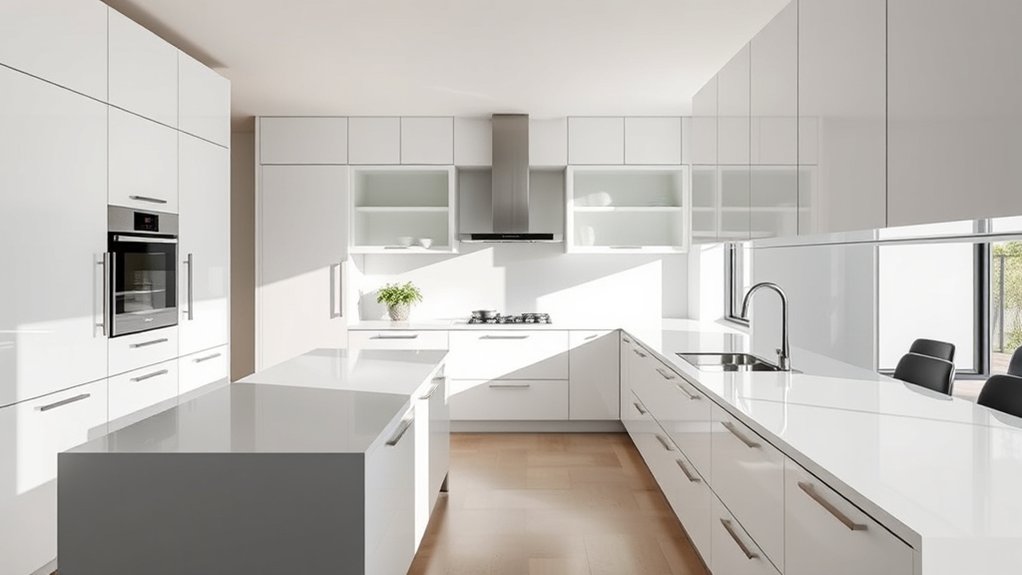
Before you decide on frameless cabinets, it’s a good idea to think about the material’s durability and quality. You want something that’s going to last and stand up to daily use, right? So, taking a closer look at the materials can save you a lot of hassle down the line.
Budget is another big factor. It’s important to find options that fit within your financial plan so you don’t end up overspending. Luckily, there are plenty of choices out there at different price points, so you can find something that works for you.
And don’t forget about style! Make sure the design of the cabinets matches your kitchen’s overall look. That way, everything comes together nicely for a cohesive, polished appearance.
Material Durability and Quality
When choosing frameless kitchen cabinets, it’s important to consider material durability and quality because these affect how long they last and how well they perform.
High-quality materials like plywood, MDF, or particleboard with water-resistant finishes help your cabinets handle daily use without problems. Look for sturdy hardware like soft-close hinges and durable drawer slides to boost functionality and lifespan.
The material you pick also impacts color options; solid, well-finished surfaces make it easier to get vibrant, lasting finishes that won’t chip or peel over time. Avoid cheap, low-grade materials that might warp or break down quickly.
Investing in good quality construction and hardware means your cabinets will stay sturdy, attractive, and functional for years. It’s a smart long-term choice for your kitchen.
Budget and Cost Factors
Budget and cost are key factors to consider when choosing frameless kitchen cabinets, as they directly impact your options and overall project scope. Planning your budget carefully helps you make smarter choices and avoid surprises later on.
When comparing costs, keep in mind that material quality and finish can significantly influence the price. Custom options usually cost more than stock cabinets, affecting your overall budget.
Installation costs can vary based on how complex the job is and the rates of your contractor. Plus, adding features like soft-close hinges or high-end hardware will increase expenses.
Design Compatibility and Style
Considering your kitchen’s overall style and existing design elements is key when choosing frameless cabinets, as they have a sleek, modern look that might not fit every aesthetic. To keep things harmonious, pay attention to color coordination; neutral tones like whites, grays, or bold blacks often work well with frameless designs.
If you want to add some personality, think about using contrasting colors for a striking effect. Hardware also plays a big role—sleek, minimal handles or push-to-open mechanisms enhance the contemporary vibe. Your hardware choice can blend in seamlessly or make a statement.
Ultimately, matching your cabinet style with your kitchen’s theme and your personal taste helps create a cohesive, stylish space that feels both functional and visually appealing.
How to Measure and Plan for Frameless Kitchen Cabinets
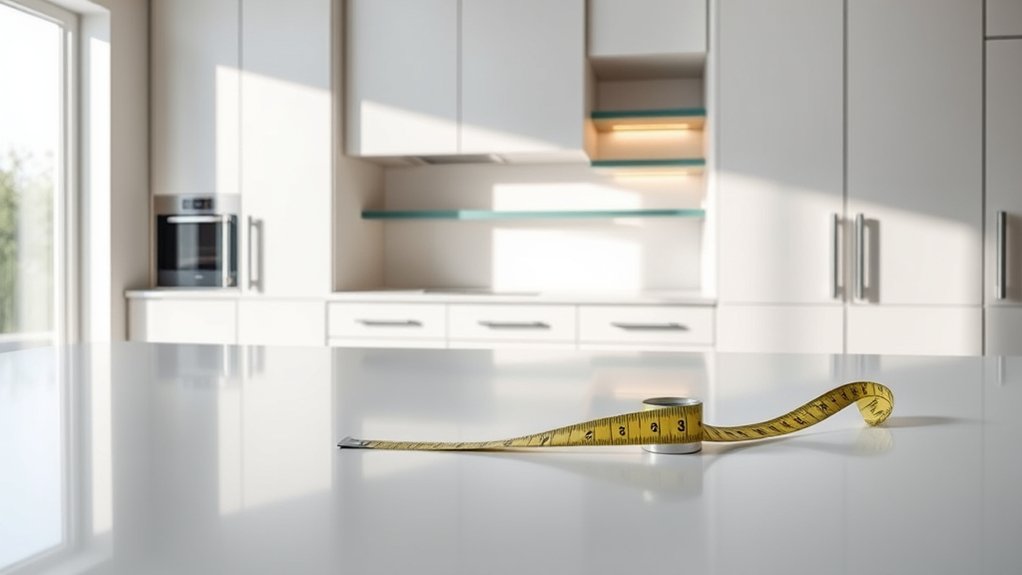
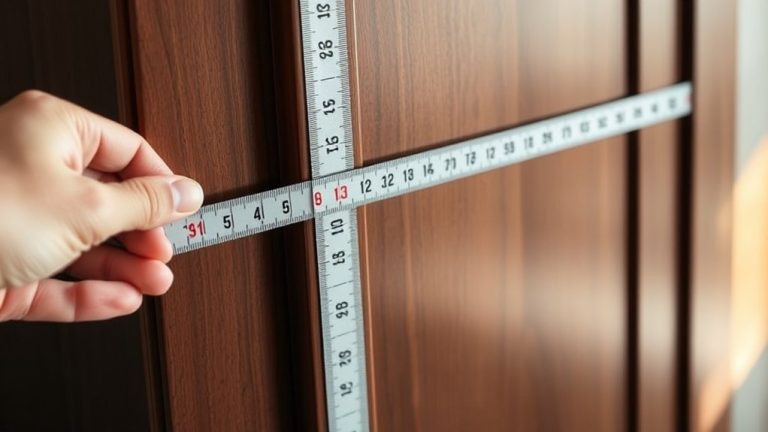
Accurately measuring and planning for frameless kitchen cabinets is key to ensuring a perfect fit and a functional layout. Start by carefully measuring your space—include wall length, ceiling height, and door openings.
Next, create a detailed floor plan that considers your appliances and makes sure there’s enough clearance for cabinet doors and drawers. Think about adding cabinet accessories like pull-out shelves or spice racks to maximize storage.
Don’t forget to plan your kitchen lighting. Position fixtures so they effectively illuminate your work areas. Before buying anything, double-check your measurements and layout to avoid costly mistakes.
Use these steps as a guide:
- Measure all relevant dimensions precisely.
- Sketch a detailed layout, including appliances and lighting fixtures.
- Incorporate cabinet accessories for optimized storage.
- Review your plan to ensure everything fits and functions smoothly.
Best Materials and Finishes for Frameless Cabinets
Choosing the right materials and finishes can really boost the durability and look of your frameless kitchen cabinets. For a sleek, modern vibe, go for high-quality laminated or veneer finishes—they’re great at resisting moisture and scratches.
Solid wood options are durable too, but they might need a bit more upkeep. When it comes to decorative hardware, simple handles or push-to-open mechanisms work well to keep that clean, frameless look. These choices also make your cabinets more functional and stylish.
Interior lighting is key for highlighting your cabinets’ finishes and setting the mood. Inside, LED strips or spotlights add a touch of elegance and make it easier to see what’s inside. Matte or high-gloss finishes can totally change the vibe—matte gives a modern feel, while gloss adds vibrancy.
How to Install Frameless Kitchen Cabinets: A Step-by-Step Guide
Before you dive into installing your frameless cabinets, it’s a good idea to clear out the space and take some accurate measurements. Getting these details right from the start makes the whole process much smoother. Once everything’s cleared and measured, you can start mounting the cabinets, making sure they stay level and lined up properly. Taking your time with the prep and installation will really pay off with a professional-looking finish.
Preparing the Space
To ensure a smooth installation, start by clearing and measuring your space thoroughly. Accurate measurements help with color coordination and make sure your cabinets fit perfectly.
Next, plan the layout to maximize functionality. Clear out furniture and obstacles first. Then, measure wall and floor dimensions precisely.
Mark where you want the cabinets to go, leaving enough space between units. Finally, check that walls and surfaces are level to avoid any misalignment during installation.
Installing the Cabinets
Wondering how to start installing your frameless kitchen cabinets? Begin by measuring and marking where each cabinet will go. Use a level to make sure everything is properly aligned.
Secure the cabinets to the wall studs with screws, focusing on stability. Attach cabinet hardware like handles or knobs after the cabinets are mounted.
For interior lighting, install fixtures or under-cabinet LEDs before closing up the cabinets completely. Here’s a quick guide:
| Step | Action |
|---|---|
| 1 | Measure and mark placement |
| 2 | Secure cabinets to studs |
| 3 | Install interior lighting fixtures |
| 4 | Attach cabinet hardware |
| 5 | Check alignment and adjust |
This organized approach helps you achieve a professional finish and a functional setup.
Tips to Maintain and Care for Frameless Cabinets
Maintaining the sleek look of frameless kitchen cabinets requires regular care and attention. To keep them looking fresh, follow these simple tips.
- Cleaning tips: Use a soft cloth and a gentle cleaner like mild soap and water to wipe down surfaces regularly. Avoid harsh chemicals that could damage the finish.
- Hardware maintenance: Check handles, hinges, and pulls periodically. Tighten loose screws and lubricate moving parts to prevent wear and ensure smooth operation.
- Avoid moisture buildup: Keep cabinets dry to prevent warping or swelling. Wipe away spills immediately and use a dry cloth after cleaning.
- Prevent scratches: Be cautious when placing sharp or heavy objects on or near the surfaces. Using pads or protective mats can help prevent nicks and scratches.
Common Challenges With Frameless Cabinets and How to Fix Them
While frameless cabinets offer a sleek, modern look, they can present specific challenges that need attention. One common issue is misaligned doors or drawers, often caused by loose or low-quality hardware. Upgrading to high-quality hardware can improve stability and make operation easier.
If doors still don’t align properly, custom adjustments like tweaking hinges or adding shims might be necessary. These steps help ensure a proper fit and smooth functioning. The absence of a face frame can make cabinets less forgiving if measurements are slightly off during installation.
To fix this, consider adding subtle support strips or reinforcing panels. These modifications boost durability and help prevent future problems. Regularly inspecting your hardware and upgrading when needed can stop sagging or misalignment from happening.
Are Frameless Kitchen Cabinets Worth the Cost? A Value Breakdown
Although frameless cabinets can pose some installation and maintenance challenges, many homeowners find that their sleek appearance and modern functionality justify the investment. When considering if they’re worth the cost, think about these factors:
- Cabinet hardware: Frameless cabinets often feature streamlined hardware, making them easier to update and customize to match your style.
- Interior lighting: Their flat surfaces improve lighting distribution, which helps brighten the inside of cabinets and creates a more inviting kitchen.
- Maximized storage: Without face frames, you get more storage space and easier access to your belongings, adding value through efficiency.
- Durability: High-quality frameless cabinets are built to last, which can reduce replacement costs over time.
While the initial expense is higher, the modern design, improved functionality, and customization options can make frameless cabinets a worthwhile investment for your kitchen.
How to Incorporate Frameless Cabinets Into Your Kitchen Style
Incorporating frameless cabinets into your kitchen style is a great way to get a sleek, modern look that works with lots of design themes.
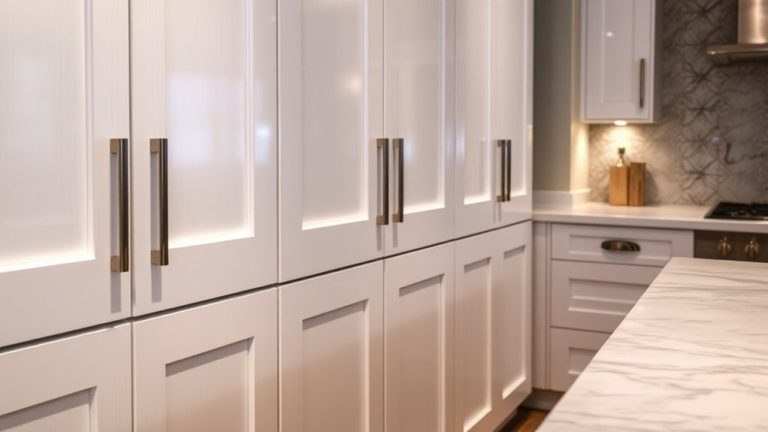
To boost their minimalist vibe, pick decorative hardware that adds a subtle touch of elegance or makes a bold statement, depending on your style.
Keep hardware simple with sleek handles or choose handleless designs with touch-to-open features for a clean look.
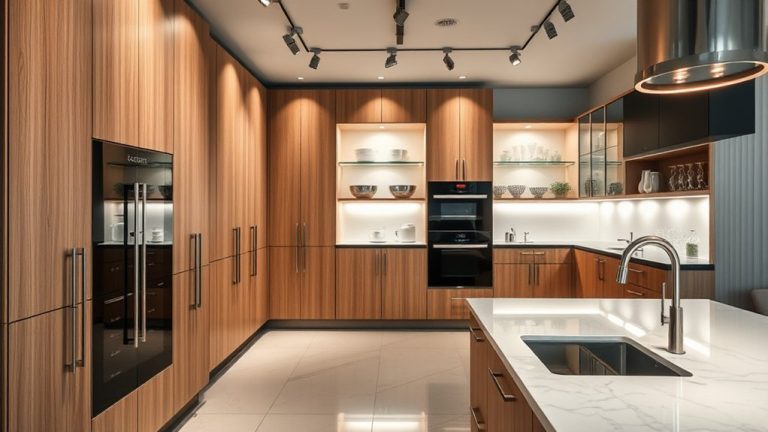
Lighting is key too—install LED strip lights under cabinets or inside glass-front sections to add ambiance and highlight those smooth, seamless surfaces.
Thoughtful lighting can make your space feel brighter and more inviting while emphasizing the frameless design’s clean lines.
Balance your cabinetry with materials like stone countertops or textured backsplashes to add visual interest and depth.
By carefully choosing hardware and lighting, you can seamlessly incorporate frameless cabinets into your kitchen’s overall style.
This creates a contemporary, cohesive look that reflects your personal taste.
Frequently Asked Questions
Can Frameless Cabinets Be Customized for Unique Kitchen Layouts?
Yes, frameless cabinets can be customized for unique kitchen layouts. They give you lots of design flexibility, so you can adjust sizes, shapes, and finishes to fit your space perfectly.
Just keep in mind that installation might be a bit tricky because precise measurements are really important for a seamless fit. Working with a professional can help ensure your customizations are done accurately.
This way, you can make the most of frameless cabinets’ versatility for your one-of-a-kind kitchen design.
How Do Frameless Cabinets Impact Kitchen Resale Value?
You’ll be pleased to know that frameless cabinets can boost your kitchen’s resale value by up to 15%, thanks to their sleek, modern look. When it comes to kitchen design, they appeal to buyers looking for contemporary styles.
Material durability is key, as frameless cabinets are often made from sturdy materials that last longer. This combination makes your kitchen more attractive to potential buyers, increasing its overall market value.
Are Frameless Cabinets Suitable for Heavy-Duty Storage Needs?
Yes, frameless cabinets can handle heavy-duty storage needs, but it’s important to consider their durability and weight limits.
They often have thicker panels and sturdy hardware, making them suitable for storing heavy items like pots and pans.
Just be sure to check the specific cabinet’s weight capacity to ensure it meets your needs.
Proper installation and quality materials are also key to maximizing their durability and load-bearing ability for heavy use.
What Are the Best Hinge Options for Frameless Cabinet Doors?
For frameless cabinet doors, the best hinge options are European-style concealed hinges, known for their durability and smooth operation. They make installation easy and are highly adjustable, helping your doors stay perfectly aligned.
Look for hinges with soft-close features for extra convenience. These hinges are built to handle regular use, making them perfect for a sleek, modern look.
Plus, they offer long-lasting performance, so your cabinets will stay looking great and functioning smoothly for years to come.
How Do Frameless Cabinets Perform in High-Moisture Environments?
Frameless cabinets perform well in high-moisture environments because they are resistant to moisture and made from durable materials. Unlike framed cabinets, their smooth design prevents water from getting trapped, making them easier to clean and less likely to develop mold.
Choose moisture-resistant materials like marine-grade plywood or high-quality MDF with waterproof coatings. With the right materials and sealing, frameless cabinets can handle humidity and water exposure in kitchens, bathrooms, or laundry rooms effectively.
Conclusion
Considering frameless kitchen cabinets could transform your space with sleek, modern appeal. Did you know that homes with updated kitchens see an average 10-15% increase in resale value?
By understanding their benefits and challenges, you can make an informed choice that fits your style and budget. Whether you prioritize aesthetics or functionality, frameless cabinets offer a contemporary look that’s worth the investment.
Ready to upgrade? Your dream kitchen is just a decision away, and choosing frameless kitchen cabinets might be the perfect way to achieve that modern, stylish vibe.