10 Tips on How Kitchen Cabinet Handles Should Be Placed
Many homeowners struggle with finding the perfect placement for kitchen cabinet handles, making their space look less polished and harder to use. You’re not alone—getting this just right can be tricky, but it’s totally doable with a few simple tips.
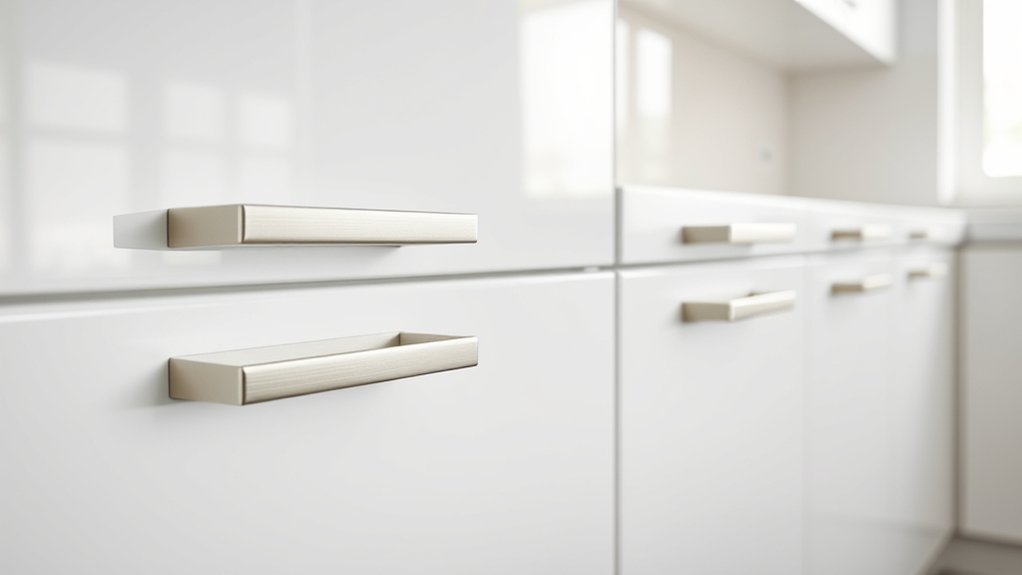
To guarantee your kitchen handles are both functional and stylish, place handles near the bottom edge of upper cabinets and the top edge of lower cabinets for easy access. Use consistent measurements, like 2.5–3 inches below the top of upper cabinets, and confirm spacing is even across all doors and drawers.
Match handle material with your cabinet style and consider your kitchen’s overall design. To find out more tips on perfect handle placement, keep exploring these ideas.
Key Takeaways
- Position handles on drawers centered or just slightly above the middle for the best look and easy use.
- Place upper cabinet handles near the bottom edge and lower cabinet handles near the top for better accessibility.
- Use consistent measurements and tools like a level to keep handles aligned and evenly spaced.
- Match handle material and finish with your cabinet style for a cohesive look.
- Focus on ergonomic placement to make your kitchen safer, easier to use, and more visually appealing.
How to Determine the Best Handle Placement for Your Kitchen Cabinets
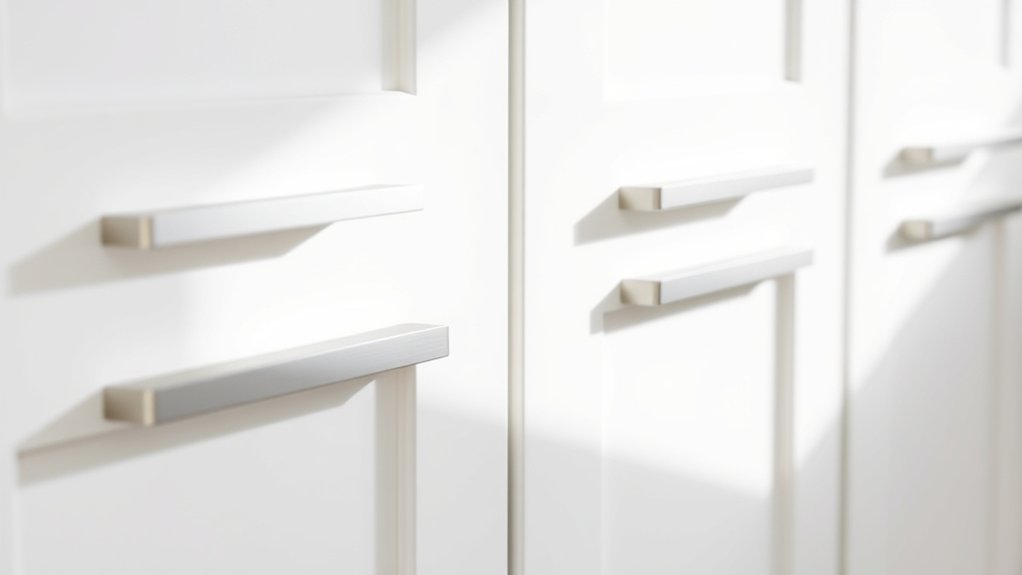
Determining the best handle placement for your kitchen cabinets depends on both functionality and aesthetics. The handle styles you pick influence how your cabinets look and how easy they are to open.
Choosing handle placement enhances your kitchen’s style and ease of use.
For a sleek, modern look, you might go for minimalist handles or push-to-open systems, which reduce visual clutter. Traditional handle styles like pulls or knobs can add charm, but their placement is key.
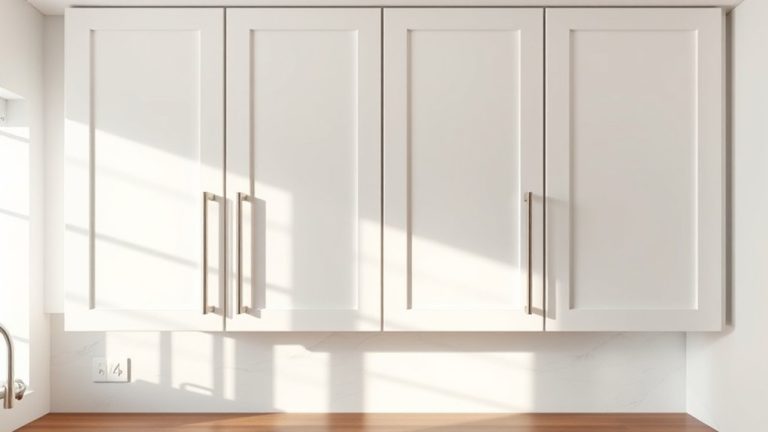
Usually, for upper cabinets, handles should be installed near the bottom edge for easy access. On lower cabinets, placing handles near the top makes them easier to open. Think about your overall cabinet style too—symmetry and alignment create a cohesive look.
Also, consider reach and comfort. Handles placed too high or low can cause strain. By choosing the right handle styles and placement, you’ll improve both how your kitchen looks and how it feels to use.
Where Should Handles Go on Different Types of Cabinets?
Choosing the right handle placement depends on the type of cabinet you’re working with, as each needs a slightly different approach to look good and be easy to use.
For drawers, place handles horizontally in the center or slightly above the middle for balance and accessibility.
For cabinet doors, vertical placement along the outer edge offers a sleek look and makes opening easy.
When thinking about decorative accents, consider the handle material—metal, wood, or ceramic—and match or contrast it with your cabinet finish.
To guide your placement, focus on functionality first—make sure opening is easy based on size and use.
Next, think about aesthetics—use handle placement to highlight decorative details or create visual flow.
Finally, aim for design harmony by aligning handle positions with other hardware and the overall style of your cabinets.
Why Handle Placement Matters for Safety and Accessibility
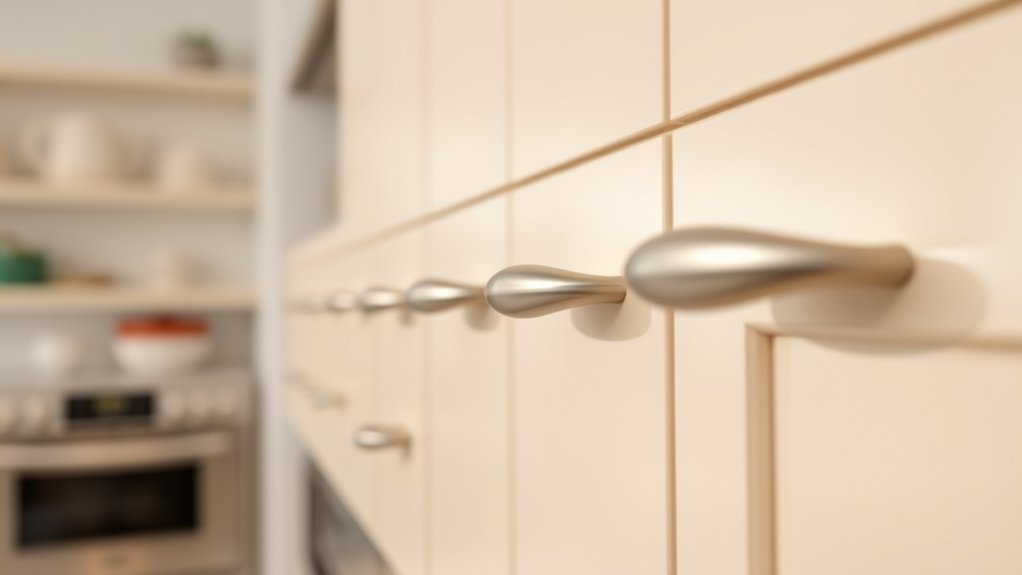
Proper handle placement isn’t just about style; it directly affects safety and accessibility in your kitchen. Correct placement makes it easier to open cabinets comfortably, reducing strain and lowering the chance of accidents.
Ergonomic design is key. Placing handles where you naturally grasp them minimizes awkward movements and makes using your kitchen safer, especially for those with limited mobility.
Handle placement also influences visual balance. Well-positioned handles make cabinets look more organized and your kitchen feel more harmonious. When handles are in the right spots, everything appears streamlined and inviting.
On the other hand, improper placement can cause difficulty opening doors or drawers, increasing the risk of bumps or injuries. It can also create visual clutter, making your kitchen look chaotic.
By thoughtfully choosing handle positions, you make your kitchen safer and easier for everyone to use. Plus, it helps maintain a cohesive, attractive look.
Proper handle placement isn’t just functional. It’s essential for creating a safe, accessible, and beautiful kitchen.
How to Measure and Mark Handle Locations Exactly
First off, grab a good tape measure or a ruler — anything that gives you a precise measurement. Take your time to figure out exactly where you want the handles to go. Once you’ve got that, use a pencil to lightly mark those spots. It’s a good idea to double-check your measurements and marks before you start drilling, just to make sure everything lines up perfectly. That way, your handles will be nice and straight, and everything will look just right.
Use Precise Measuring Tools
To guarantee your cabinet handles are perfectly aligned, you need to use precise measuring tools. Accurate measurements help ensure handle styles match your design and color scheme, creating a cohesive look.
Here are three essential tools:
- Tape measure – for measuring exact distances between handles and edges.
- Level – to make sure handles are straight horizontally, preventing crooked placement.
- Pencil and ruler – for marking precise points based on your measurements.
Using these tools helps you avoid guesswork and guarantees uniform placement. This is especially important if handles come in different styles and finishes. Precise measurements also prevent mismatched handle positions that can disrupt your cabinets’ visual flow.
Mark Handle Positions Clearly
Once you have your measurements, the next step is to mark the handle positions clearly on your cabinets. Use a pencil to make small, precise marks at the exact points where each handle will be installed.
Consider the handle material, as some materials may require different marking techniques to avoid damage. Confirm your marks align with your desired handle rotation, whether horizontal or vertical, so handles sit comfortably and look uniform.
Use a ruler or level to double-check that your marks are straight and evenly spaced. Clear markings prevent mistakes during drilling and help you stay consistent across all cabinets.
Take your time to verify each mark before proceeding. Accurate markings are key to achieving professional-looking results.
Double Check Before Drilling
After marking your handle positions, it’s important to double-check each measurement and mark before drilling. Make sure your handle material and design match your cabinet style for a cohesive look. To avoid mistakes, follow these steps:
- Verify measurements against the cabinet’s dimensions and your handle material to keep everything consistent.
- Confirm handle design orientation, especially if handles are asymmetrical, so they sit correctly.
- Use a level or straight edge to check that all marks are perfectly aligned, preventing crooked handles.
Taking these extra steps helps you achieve a professional look and avoid costly errors. Double-checking ensures your handle placement is precise, making your kitchen more functional and attractive.
Choosing the Right Handle Height for Comfort and Ease
Finding the right handle height is key for comfort and ease in your kitchen. Proper placement helps reduce strain and makes opening cabinets effortless.
Handles should usually be positioned about 2.5 to 3 inches below the top edge of upper cabinets or around 1.5 inches above the bottom edge of lower cabinets.
The material and color of your handles also affect comfort and style. For instance, smooth metal handles feel comfortable and add a sleek look, while wooden handles bring warmth.
Here’s a simple guide to help you pick the best handle height:
| Handle Material | Handle Color | Ideal Placement |
|---|---|---|
| Metal | Silver | 2.5–3 inches below top edge |
| Wood | Natural | 1.5 inches above bottom edge |
| Plastic | Bright hues | Match existing cabinetry accents |
Adjust the handle height based on what feels comfortable for you, your cabinet size, and your style preferences. This way, your kitchen will be both functional and stylish.
Common Handle Placement Mistakes and How to Avoid Them
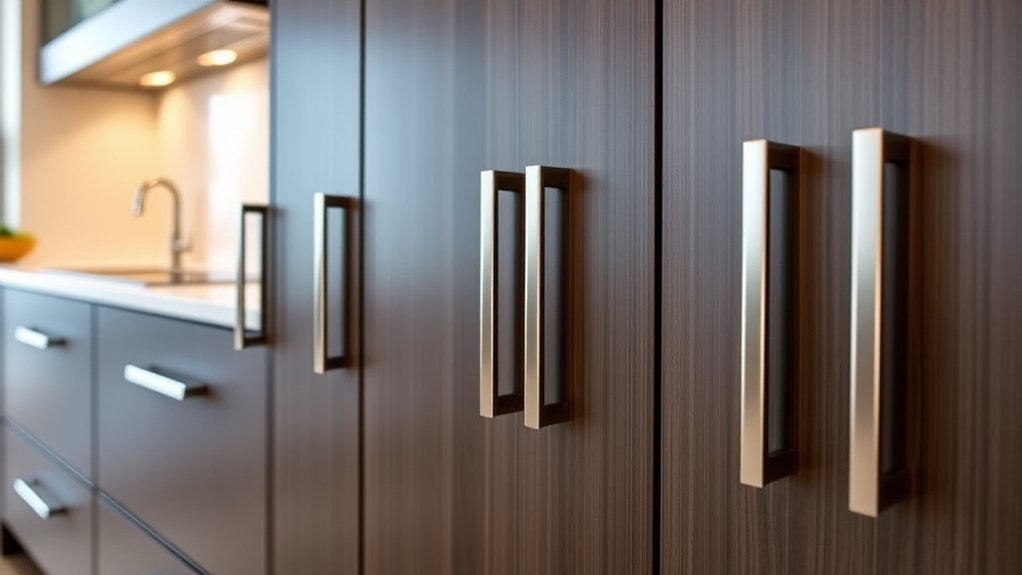
Avoid making common mistakes like placing handles too high or too low, or not keeping the spacing consistent. These small errors can make your cabinets look uneven and less polished. It’s easy to overlook these details, but they really make a difference in the overall look.
Also, think about how you use your cabinets daily. If you ignore your needs, the handles might end up in awkward spots that make opening or closing doors uncomfortable or impractical. Paying attention to these little things helps you create a balanced, functional, and user-friendly design that looks great and works well for you.
Misaligned Handle Heights
Misaligned handle heights can make your cabinets look uneven and disrupt the overall look of your kitchen. To keep things looking tidy, make sure handles are placed at consistent heights across all cabinets. Here are some helpful tips:
- Measure from the top or bottom edge consistently for all handles to keep them uniform.
- Pick handle materials that match your cabinet finish, and think about handle color to create a cohesive look.
- Use a level to double-check the heights before drilling to avoid accidental misalignments.
Proper handle placement not only improves the visual harmony but also makes kitchen tasks easier. Pay attention to handle color and material choices to match your style, whether you prefer sleek metal or warm wood. Remember, a small detail like handle height can make a big difference in your kitchen’s overall appeal.
Inconsistent Handle Spacing
Inconsistent handle spacing is a common mistake that can make your cabinets look uneven and unprofessional. When handles aren’t evenly spaced, it disrupts the overall cabinet look and draws unwanted attention.
To avoid this, measure carefully before installing handles. Keep consistent distances between handles, especially on similar cabinet types.
Use this table to guide your spacing:
| Handle Type | Ideal Spacing | Notes |
|---|---|---|
| Upper Cabinets | 2-3 inches apart | Keep uniform for symmetry |
| Lower Cabinets | 2-3 inches apart | Ensure smooth flow |
| Drawers | 1-2 inches apart | Match handle alignment |
Ignoring Functionality Needs
While aesthetic appeal is important, overlooking your daily needs can lead to inconvenient handle placements. Ignoring functionality can cause frustration and reduce efficiency in your kitchen. To avoid this, consider these key points:
- Place handles where they’re easiest to grasp, especially on frequently used drawers and cabinets.
- Balance decorative accents with practical needs, making sure handles don’t hinder opening or closing.
- Keep up with aesthetic trends without sacrificing comfort. Handles should complement your design but remain user-friendly.
Failing to prioritize these aspects can result in handles that look good but are awkward to use. Always think about how you’ll interact with your cabinets daily, blending style with function for a practical, attractive kitchen.
How to Use Symmetry and Asymmetry to Improve Your Kitchen Look
Using symmetry and asymmetry effectively can really boost your kitchen’s look. Symmetry creates a balanced, orderly vibe that feels harmonious, especially when handles align with decorative accents or matching cabinet doors.
For example, placing handles at the same height and using consistent colors makes everything look clean and cohesive. Asymmetry adds visual interest and a modern touch.
You can do this by varying handle placement or mixing different styles on opposite cabinets, giving your kitchen a bit of personality. To keep things unified, add contrasting yet complementary decorative accents and coordinate your colors throughout.
Balance is key. Use symmetry for a classic, tidy look, and turn to asymmetry to highlight focal points or create a more lively atmosphere. When you apply these principles thoughtfully, your kitchen will be both visually appealing and well-organized, reflecting your style while staying practical.
Adapting Handle Placement for Different Kitchen Styles and Materials
When you’re thinking about handle placement, it’s all about enhancing your kitchen’s vibe—whether it’s sleek and modern, cozy and rustic, or classic traditional. The goal is to make everything look intentional and stylish.
And don’t forget about matching your handles with your cabinets. Picking handles that go well with your cabinet material can really tie the whole look together. It’s a simple trick that makes your kitchen feel more cohesive and polished. So, take some time to choose the right materials and placement—they’ll make a big difference!
Complementing Kitchen Aesthetics
Choosing the right handle placement can really boost your kitchen’s overall look by matching it with your style and materials. Think about how handle placement complements your kitchen color and cabinet design.
Modern kitchens with sleek, minimal cabinets usually look best with handles that are flush or integrated, which keeps the lines clean and simple.
Rustic or traditional styles shine with handles placed at the edges or centers, showcasing craftsmanship and warmth.
Strategic handle placement can also highlight color contrast, drawing attention to certain cabinet sections or creating visual balance.
Matching Material Compatibility
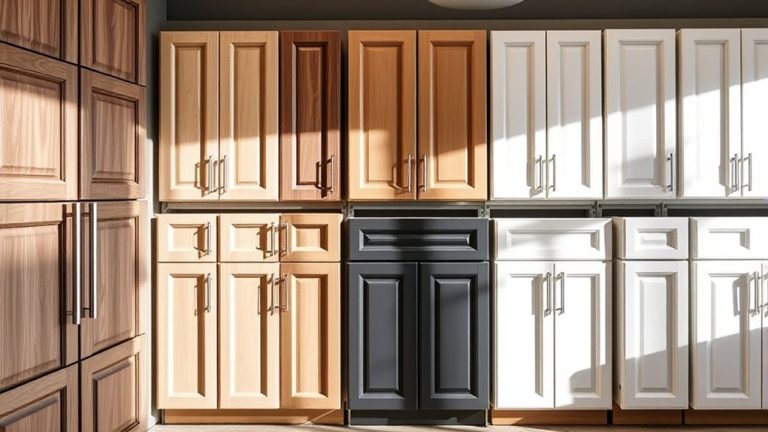
Matching handle placement to your kitchen’s materials and style requires thoughtful consideration, as different surfaces and finishes respond best to specific hardware arrangements. Material pairing is essential; for example, matte finishes suit modern cabinets, while polished handles complement traditional wood.
Finish coordination guarantees a cohesive look. Matching handle finishes with your cabinet surface boosts visual harmony. For sleek, minimalist kitchens, opt for handle placement that emphasizes clean lines, like flush or recessed handles.
In contrast, ornate or vintage styles may benefit from prominent, decorative hardware. Always consider the texture and durability of your materials to ensure your handles won’t damage delicate surfaces.
Proper placement that respects material compatibility not only lifts your kitchen’s aesthetic but also improves functionality, making daily use more comfortable.
Tips for Installing Handles Like a Pro
Installing cabinet handles like a pro starts with careful measurement and precise placement. This helps your handles look great and stay functional. To get professional results:
- Use a measuring tape to mark handle positions at consistent heights, keeping in mind your cabinet style and symmetry.
- Double-check your markings with a level to make sure everything lines up straight. Crooked handles can really distract from your decor.
- Drill holes carefully, and keep your workspace tidy so dust doesn’t settle on your handles. This makes cleaning easier later on.
Getting the placement right not only boosts your kitchen’s look but also makes cleaning and maintenance simpler. Remember, well-installed handles give your kitchen a cohesive feel, so take your time measuring. Proper installation also helps prevent damage and makes future cleaning easier.
Following these tips turns a simple task into a satisfying DIY project. It can really elevate your kitchen’s style and functionality.
Final Checklist for a Perfect Handle Installation
Before you finish installing your handles, it’s important to go through a final checklist to make sure everything is just right. First, double-check that all handles are aligned correctly, matching your chosen height and spacing for a cohesive look.
Make sure each handle is securely fastened, with no looseness that could affect your kitchen organization or safety. Verify that handles are straight and level, since misaligned handles can make cooking less efficient.
Take a moment to clean off any fingerprints, dust, or debris from the handles so your cabinets look sharp. Then, assess the overall kitchen organization, making sure handles are easy to reach and functional for daily use.
Finally, test each handle by opening and closing the cabinets to ensure smooth operation. A well-installed handle not only looks good but also makes your kitchen more practical and enjoyable to work in.
Frequently Asked Questions
What Are Popular Handle Placement Trends in Modern Kitchens?
In modern kitchens, popular handle placement trends include positioning handles vertically on tall cabinets and horizontally on drawers for a sleek look.
You’ll see decorative accents and varied handle styles, like minimalist bar pulls or statement knobs, adding to the overall design.
Many prefer placing handles at comfortable heights, often centered or aligned with other hardware, creating a cohesive and functional aesthetic that complements your kitchen’s contemporary vibe.
How Can Handle Placement Influence Kitchen Cabinet Longevity?
Handle placement greatly influences your cabinet’s longevity. Proper handle material choices, like sturdy metals or durable plastics, help prevent wear and tear over time.
Using correct handle installation techniques, such as secure screws and aligned positioning, reduces strain on the cabinet doors. This helps prevent loosening or damage.
When you pay attention to these details, your cabinets stay functional and look great longer. Plus, it saves you maintenance and replacement costs down the line.
Are There Ergonomic Considerations for Handle Placement?
Yes, ergonomic considerations are important when placing handles. You should position handles at a height that feels comfortable, helping to reduce strain on your wrist and arm during use.
Make sure handles are easy to reach without stretching or awkward bending, especially for lower or upper cabinets. Proper placement helps minimize fatigue, improve safety, and make your kitchen more comfortable to work in.
This also promotes better handle accessibility for everyone using the space.
Can Handle Placement Affect Cabinet Door Functionality?
Imagine opening your cabinet and feeling the smooth, cool handle in your hand. The handle placement truly influences its functionality. If handles are put in the wrong spot, doors might swing open strangely or scrape against nearby cabinets.
Handle material and color also matter. A heavy metal handle placed too high can strain your wrist, while a sleek, matching handle makes opening easier. Proper placement ensures effortless access and a cohesive look.
How Do Handle Choices Impact Overall Kitchen Design Harmony?
Your handle choices really impact your kitchen’s overall look and feel. Picking the right materials, like brushed nickel for a modern vibe or brass for something vintage, helps tie everything together.
Make sure to install your handles correctly to keep things consistent and balanced. Well-chosen handles and proper placement give your kitchen a polished, cohesive look.
Those small details—like style and placement—can really elevate your space’s aesthetic and make it feel inviting.
Conclusion
Getting your handle placement right can really boost your kitchen’s style and functionality. Properly positioned handles can also reduce strain and make tasks safer.
By following these tips, you’ll create a space that’s both beautiful and practical. Well-placed handles don’t just look great—they make everyday tasks easier.
Take your time and measure carefully. Enjoy the process because your perfect kitchen is just a handle away!