5 Steps to Unclog a Kitchen Sink Without Garbage Disposal
Dealing with a clogged kitchen sink can be really frustrating, especially when you’re trying to get dinner on the table or clean up quickly. Many people struggle with this common issue and feel stuck trying to fix it on their own.
Luckily, you’re not alone, and there are simple steps you can take without calling a plumber or using a garbage disposal.
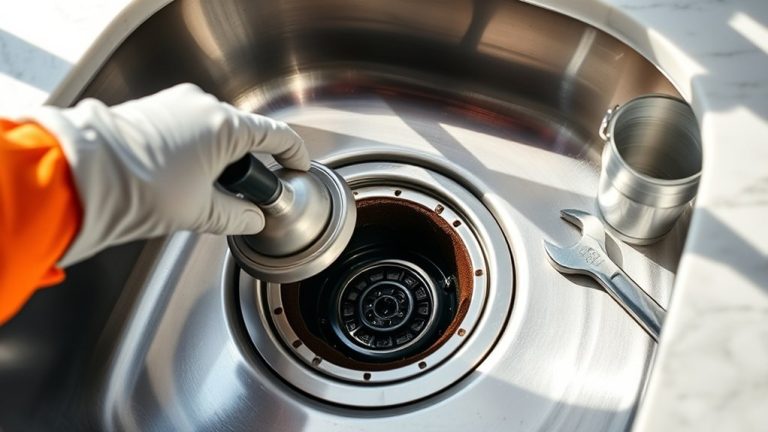
Start by inspecting your sink for buildup using a flashlight, and remove any visible debris. Use a plunger with a tight seal and plunge firmly for 10-15 seconds, repeating if needed.
Try pouring half a cup each of baking soda and vinegar down the drain, cover it, and wait 10-15 minutes before flushing with hot water.
If the clog persists, remove and clean the P-trap.
If you’re still stuck, learn more about what steps to take next.
Key Takeaways
- Check the drain for buildup, debris, or grease to figure out what’s causing the clog before trying to clear it.
- Use a plunger with a tight seal and make firm, steady plunges to loosen minor blockages.
- Pour baking soda into the drain, then follow with vinegar. Cover the drain and wait 10-15 minutes before flushing with hot water.
- Remove and clean the P-trap by loosening the slip nuts, clearing out debris, and rinsing it thoroughly.
- If DIY methods don’t work or the clog gets worse, it’s best to contact a plumber.
How to Diagnose Why Your Kitchen Sink Is Clogged
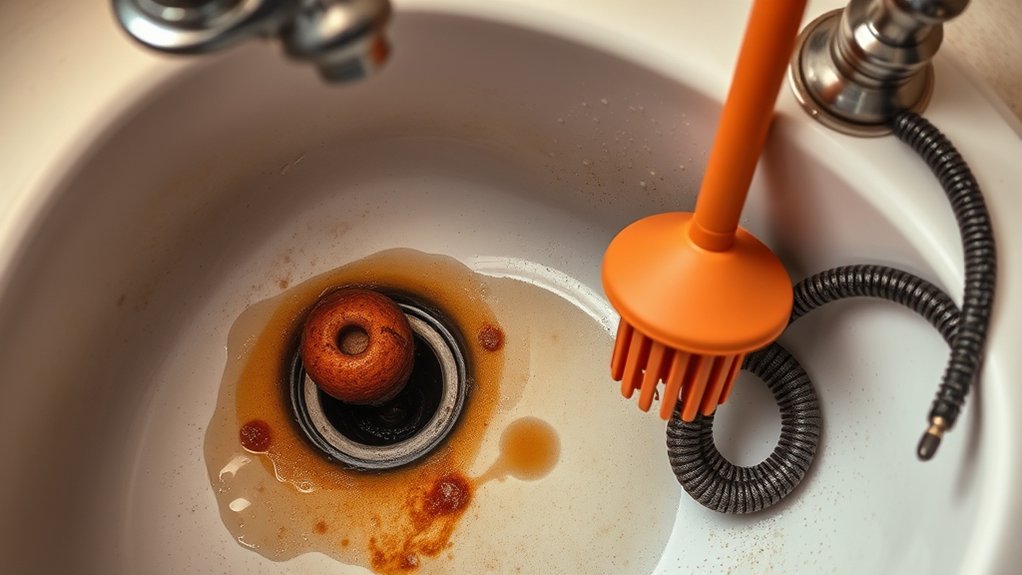
To effectively unclog your kitchen sink, you first need to figure out what’s causing the blockage. Start by inspecting the drain for signs of buildup or debris.
Proper drain maintenance involves understanding what usually causes clogs—grease, food particles, or soap scum. Use a flashlight to look down the drain if needed.
Understanding common causes like grease, food, and soap scum helps prevent and address drain clogs effectively.
Check whether water drains slowly or is completely backed up. Slow drainage might mean the clog is further down the pipe, while a full blockage suggests it’s closer to the surface.
Sometimes, lifting out visible debris with a gloved hand or a tool can help. Knowing what’s blocking the drain helps you pick the right method to clear it.
Avoid rushing into solutions without diagnosing the root cause, as this can lead to unnecessary damage or ineffective repairs.
How to Use a Plunger to Unclog Your Kitchen Sink
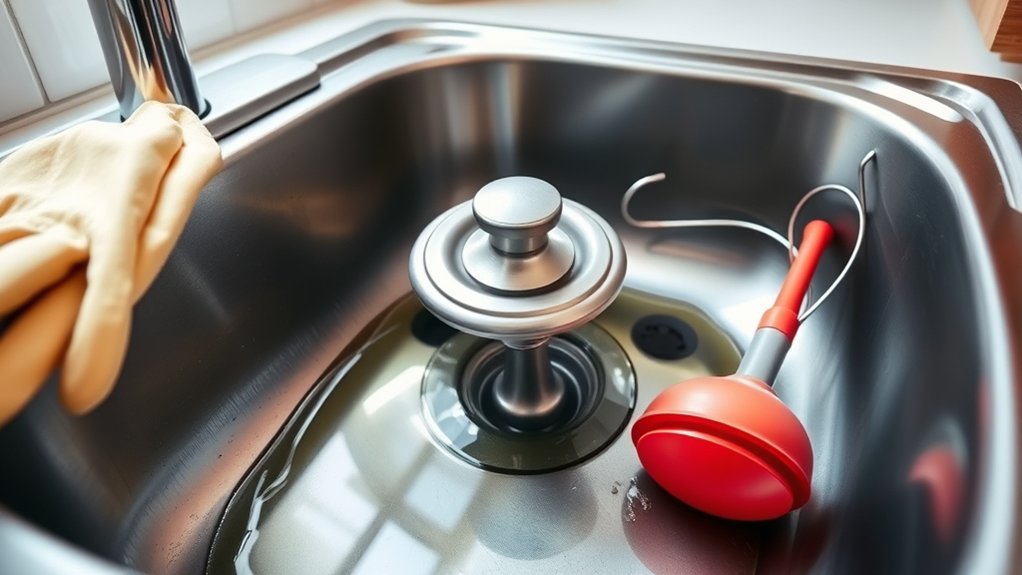
When your kitchen sink is clogged, a plunger can be a quick and effective way to clear it. Make sure the rubber cup covers the drain completely to create a tight seal.
Use firm, steady plunges—about 10 to 15—without applying too much force. Keep a little water in the sink to help generate pressure.
Avoid thinking you need to plunge aggressively or that a plunger works on all types of clogs. Some blockages might need different methods.
Remember, a cup-shaped plunger works best for sinks, not toilets. Keep a consistent rhythm and check if the water starts to drain.
If the clog doesn’t clear, try repeating the process a few more times. Be patient and careful to avoid damaging your pipes.
Using the right plunger technique can save you effort and prevent unnecessary chemical use. It’s a simple, effective first step for minor kitchen sink clogs.
Using Baking Soda and Vinegar to Clear Minor Clogs
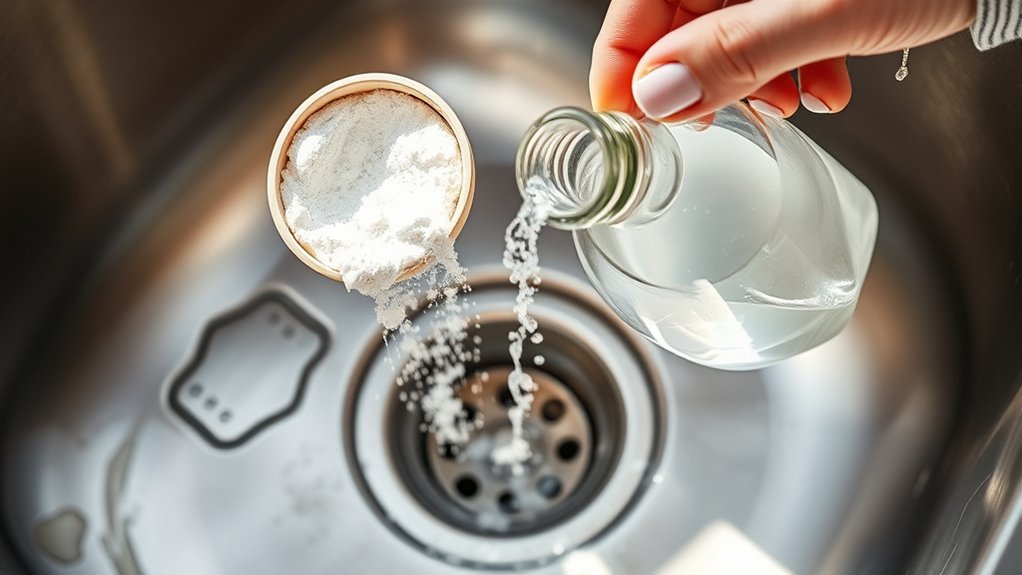
If your kitchen sink has a minor clog, using baking soda and vinegar can often do the trick without harsh chemicals. This simple method is a popular DIY plumbing tip and a safe alternative drain cleaner.
First, pour about half a cup of baking soda directly into the drain. Follow with half a cup of vinegar, which will fizz and bubble, helping to loosen debris. Cover the drain to keep the reaction concentrated for 10-15 minutes.
Then, flush with hot water to clear the clog. Here’s a quick comparison:
| Method | Effectiveness | Safety |
|---|---|---|
| Baking soda & vinegar | Great for minor clogs | Safe and eco-friendly |
| Chemical drain cleaners | Strong but potentially harmful | Can damage pipes over time |
This method is a cost-effective DIY plumbing tip and is often enough to clear minor blockages without needing professional help.
How to Remove and Clean the P-Trap for a Deep Sink Clean
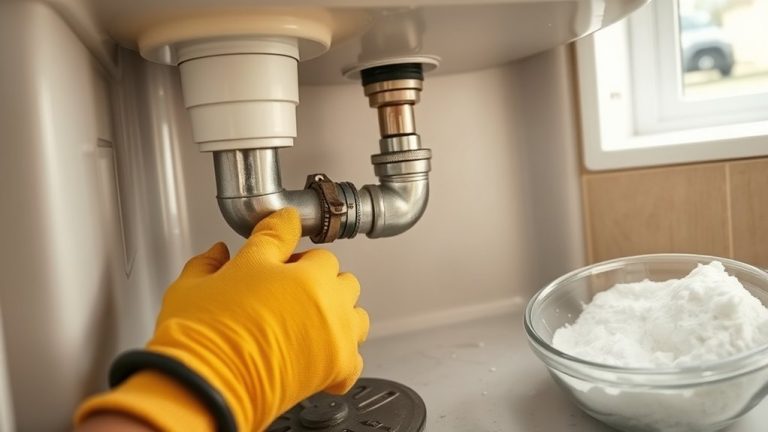
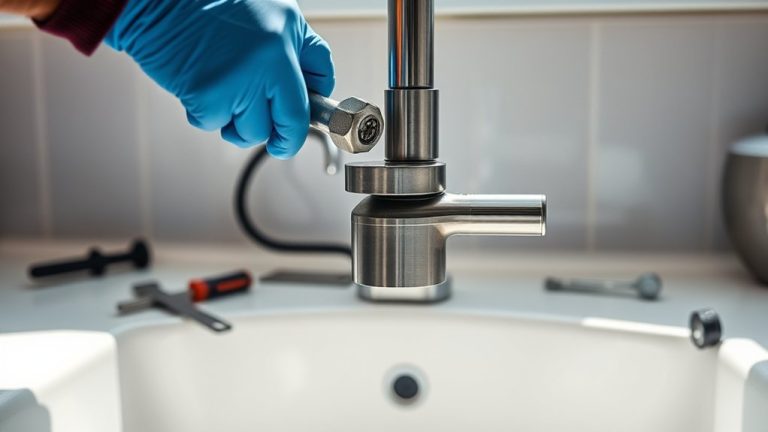
Removing and cleaning the P-trap is a key step when deep cleaning your sink, especially if there are stubborn odors or clogs. First, place a bucket or large bowl underneath the P-trap to catch any water and debris.
Use a wrench or pliers to loosen the slip nuts on both ends of the trap. Carefully remove the P-trap and check it for blockages or buildup.
While it’s out, clean out any debris, grease, or gunk with a brush or an old cloth. Rinse the trap thoroughly with warm water to remove any residue.
Check the connecting pipes for clogs while the trap is off. Once everything is clean, reattach the P-trap securely, tightening the slip nuts but not overtightening.
Proper maintenance of the P-trap helps keep your sink draining smoothly and prevents odors. Regular cleaning is a good habit for a deep sink clean and avoiding future clogs.
When to Call a Plumber and What Next Steps to Take
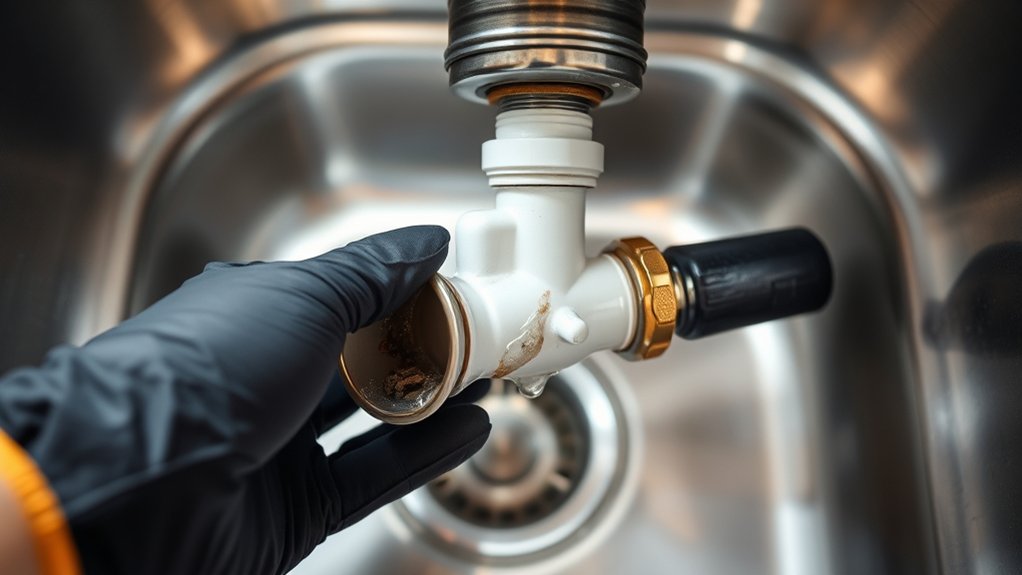
Sometimes, despite your best efforts, a stubborn clog or persistent odor signals that it’s time to call in a professional plumber. If your attempts with common household tools like plungers or drain snakes don’t work, it’s a clear sign to seek expert help. A plumber can assess whether your issue needs alternative drainage solutions, like high-pressure water jets or pipe inspection cameras. Knowing when to call a plumber can prevent further damage to your pipes or fixtures.
If you notice slow draining that worsens or recurring odors, don’t keep trying to fix it yourself. Instead, schedule a professional inspection. They’ll identify underlying problems and suggest the best course of action. While some minor clogs are easy to handle with household tools, persistent issues often need specialized equipment.
Recognizing the right moment to involve a pro saves you time, money, and stress in the long run.
Frequently Asked Questions
Can Food Debris Cause Kitchen Sink Clogs?
Yes, food debris can cause kitchen sink clogs. When food builds up, it can block the pipes, especially if it sticks to grease or other residues.
Over time, this buildup narrows the pipe, slowing drainage and eventually causing a clog. Regularly cleaning your sink and avoiding large food scraps down the drain helps prevent these issues.
Keeping your pipes clear is easier when you’re mindful about what goes down the drain and cleaning your sink frequently.
Is It Safe to Use Chemical Drain Cleaners?
Using chemical drain cleaners can be risky because of chemical safety concerns. Imagine pouring a powerful chemical into your sink, only to find it damages your pipes or causes skin irritation.
Toxic chemicals in these cleaners can harm your plumbing and pose health hazards. It’s safer to try mechanical methods first or opt for eco-friendly solutions.
This reduces exposure to harmful substances and helps avoid potential damage to your plumbing system.
How Often Should I Clean My Sink’s Drain?
You should clean your sink’s drain at least once a month to keep it working well and prevent clogs. Setting up a regular cleaning routine makes it easier to stop debris and soap scum from building up.
Use hot water and natural cleaners like baking soda and vinegar to keep your drain clear. Stay away from harsh chemicals since they can damage your pipes over time.
Cleaning your drain regularly helps your sink stay fresh and clog-free, making your daily routine smoother.
What Tools Are Best for Unclogging a Sink?
Ever felt that sinking feeling of a clogged drain? For effective unclogging, you’ll want a sturdy plunger and a drain snake.
Use plunger techniques first—cover the drain, create a seal, and push with steady pressure. If that doesn’t work, a drain snake helps break up stubborn clogs deeper in the pipe.
Both tools are essential for tackling different clog types and restoring your sink’s flow quickly.
How Do I Prevent Future Kitchen Sink Clogs?
To prevent future kitchen sink clogs, focus on regular maintenance and avoiding buildup. Use a drain strainer to catch food particles and debris, and steer clear of pouring grease or oil down the drain.
Regularly flush your sink with hot water or a mix of baking soda and vinegar to help break down any buildup. These simple habits help keep your drain clear and reduce the chances of clogs.
Conclusion
Now that you know these simple steps, you’re ready to tackle kitchen sink clogs on your own. Remember, sometimes the problem runs deeper than what’s visible, and calling in a professional might be the best move.
Do you want to keep struggling with stubborn clogs or take control and maintain your home’s plumbing? With a little effort, you can keep your sink flowing smoothly and save money in the process.
Using these tips for unclogging a kitchen sink without a garbage disposal can make a big difference.