
5 Simple Steps to Clean Your Kitchen Sink Faucet Head
Many homeowners know the frustration of a stubborn, clogged kitchen sink faucet head. You’re not alone—keeping your faucet clean and flowing smoothly can be a real challenge. But don’t worry, with a simple routine, you can restore its shine and function easily.
To clean your kitchen sink faucet head, start by removing the aerator and soaking it in vinegar for about 30 minutes to loosen mineral deposits.
Next, scrub away grime with an old toothbrush, focusing on edges and crevices. Rinse the aerator thoroughly before reattaching.
Then, soak the faucet head in vinegar or lemon juice for 1-2 hours to break down buildup.
Finally, flush the faucet to clear any remaining debris.
Keep exploring for more tips to keep your faucet flowing smoothly.
Key Takeaways
- Unscrew and remove the aerator from the faucet head.
- Soak the aerator in vinegar or lemon juice for 30 minutes to dissolve mineral deposits.
- Scrub the aerator and faucet head with a toothbrush to remove grime and debris.
- Rinse all parts thoroughly with warm water to clear residual deposits.
- Reattach the aerator and run water to flush out any remaining buildup.
Why Your Faucet Head Gets Clogged and How to Diagnose It
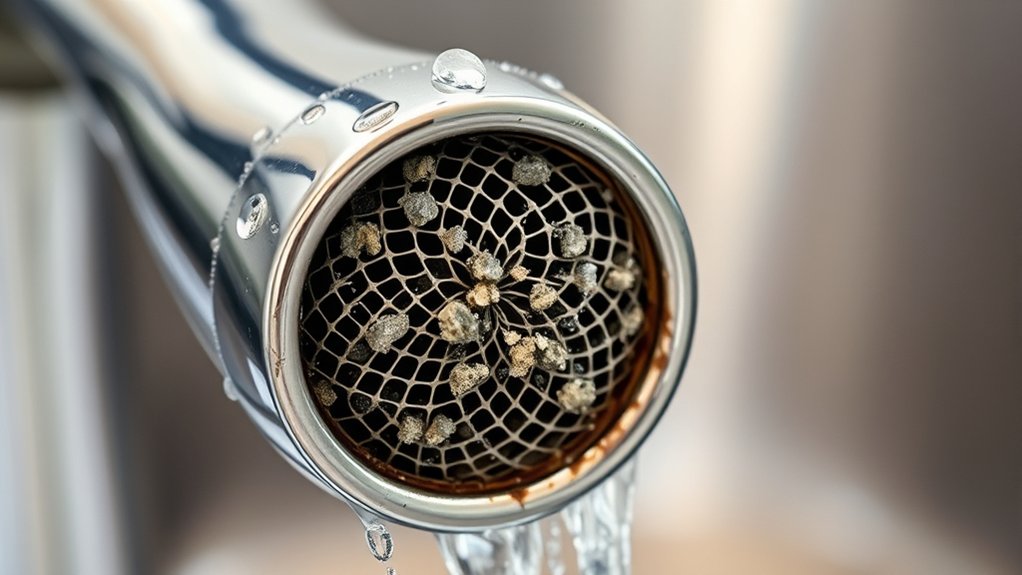
Your faucet head can get clogged because mineral deposits, dirt, and debris build up over time, blocking water flow. This buildup affects water pressure, making it feel weaker than usual.
The clogging often happens because of hard water, which leaves mineral deposits that stick to the inside of the faucet.
The design of your faucet also plays a role; some styles have small openings or complex aerators that trap debris more easily. To diagnose the problem, turn on the tap and watch the water flow.
If it’s weak or uneven, that’s a sign of a blockage.
Remove the faucet head and check inside for visible buildup or sediment. If water pressure drops suddenly or stays inconsistent even after cleaning, it’s probably due to these deposits.
Your faucet might need a thorough cleaning or even a replacement, especially if the design makes clogging more likely.
How to Remove Mineral Deposits and Soap Scum From Your Faucet Head
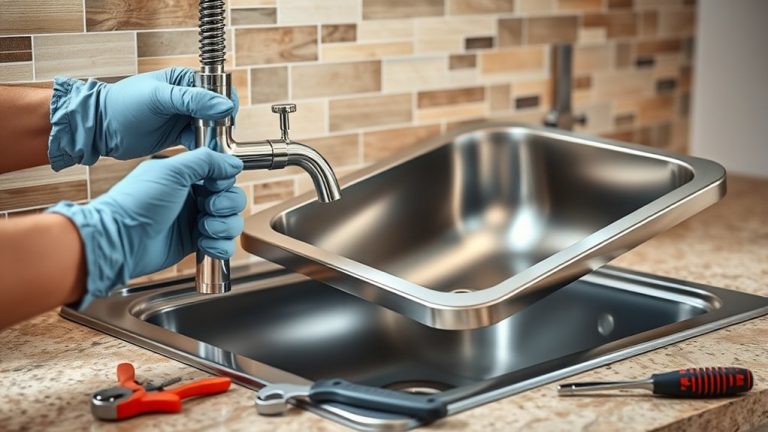
Mineral deposits and soap scum can build up quickly on your faucet head, making the water flow weaker even after diagnosing a clog. To fix this, start by removing the aerator. Unscrew it carefully, and you’ll probably see mineral and soap scum buildup blocking the tiny holes.
Soaking the aerator in vinegar for about 30 minutes helps loosen these deposits. After soaking, scrub away any remaining residue with an old toothbrush. Rinse the aerator thoroughly before putting it back in place.
This process restores water pressure by clearing out the mineral deposits blocking the spray holes. Regularly removing and cleaning the aerator prevents future buildup, ensuring smooth water flow and a clean, shiny faucet head.
The Best Way to Soak and Clean Your Faucet Head With Vinegar or Lemon Juice

To effectively loosen stubborn mineral deposits and soap scum, soaking the faucet head in vinegar or lemon juice is one of the best methods. These DIY cleaning solutions are eco-friendly and break down buildup without harsh chemicals.
Here’s how to do it: Remove the faucet head or secure it in a plastic bag filled with vinegar or lemon juice. Submerge the affected parts completely and let them soak for 1-2 hours.
For stubborn deposits, gently agitate or swirl the faucet head during soaking. After soaking, rinse thoroughly with warm water to wash away loosened deposits and residue.
This simple process not only cleans effectively but also minimizes environmental impact. Vinegar and lemon juice are natural, affordable, and safe options for keeping your faucet spotless.
Using these eco-friendly methods helps you maintain a clean kitchen while reducing reliance on chemical cleaners.
Scrubbing Away Grime With a Toothbrush for a Sparkling Finish
Once the initial soaking has loosened the grime, it’s time to focus on scrubbing away any remaining buildup. Use a toothbrush with firm bristles to target stubborn spots around the faucet head.
Adopt effective brushing techniques, such as small circular motions, to maximize grime removal without damaging surfaces. Pay close attention to crevices and hard-to-reach areas where grime tends to gather.
Here’s a quick guide to help you with your scrubbing:
| Technique | Purpose |
|---|---|
| Small circular motions | Effective grime removal |
| Applying consistent pressure | Ensures no spots are missed |
| Focused scrubbing on edges | Clears buildup from tight spaces |
Using a toothbrush makes it easier to reach tricky spots, helping you achieve a thorough clean and a sparkling finish. Keep at it until all grime is gone for that fresh, shiny look you want.
How to Rinse, Flush, and Maintain a Clog-Free Faucet for Long-Lasting Shine

Regularly rinsing and flushing your faucet is key to keeping it working smoothly and looking shiny. This helps prevent clogs and keeps the water pressure just right. The faucet aerator is the main thing to focus on because it can trap debris and slow down flow.
Here’s what you should do:
- Remove the faucet aerator and soak it in vinegar to break down mineral deposits.
- Rinse it well under running water to wash away any loosened debris.
- Reattach the aerator, then turn on the water to flush out any leftover buildup.
- Make sure to check the aerator periodically for clogs so your water stays steady and the faucet stays sparkling.
Regular maintenance keeps your faucet running efficiently, helps avoid clogs, and keeps it shining. Proper flushing and cleaning of the aerator are essential for steady water flow and preventing mineral buildup that can reduce pressure.
Frequently Asked Questions
How Often Should I Clean My Kitchen Sink Faucet Head?
You should clean your kitchen sink faucet head at least once a month to keep the water flow smooth. Regular cleaning helps prevent mineral deposits from building up.
Mineral buildup can clog the aerator and slow down the water pressure. If you notice a big drop in water flow or see deposits, clean it more often.
Keeping the faucet head clear of buildup ensures steady water flow and helps it last longer. This keeps your kitchen running efficiently and makes cleaning easier.
Can I Use Commercial Cleaners Instead of Vinegar or Lemon Juice?
Think of commercial cleaners as the secret weapon of the cleaning world. You can use chemical cleaners instead of vinegar or lemon juice, but be cautious. They can be effective, yet harsh and sometimes damaging.
For stubborn buildup, consider professional services for thorough cleaning. Always follow the product instructions carefully and test on a small area first.
This way, you stay safe while keeping your faucet sparkling and free of buildup.
Is It Safe to Disassemble My Faucet Head Myself?
Yes, you can disassemble your faucet head yourself if you’re comfortable with DIY repairs, but just be careful. Follow the instructions carefully and use the right tools to avoid causing damage.
If you’re unsure or run into tricky parts, it’s safer to hire a professional. Disassembling the faucet incorrectly could lead to leaks or other problems later on.
Knowing your limits is important to prevent costly repairs down the line. When in doubt, it’s always a good idea to consult a professional.
What Tools Do I Need for Cleaning My Faucet Head?
You’ll need basic tools like an adjustable wrench, a small brush, and vinegar or lemon juice for cleaning your faucet head.
Regular cleaning helps prevent buildup, making disassembly safer and easier. Before you start, make sure the water supply is turned off to avoid leaks.
Use the tools carefully and follow safety guidelines. With the right tools and routine cleaning, you’ll keep your faucet working smoothly and extend its lifespan.
How Can I Prevent Future Buildup on My Faucet Head?
An ounce of prevention is worth a pound of cure. To keep your faucet head clear, wipe it down regularly and remove mineral deposits with a vinegar-soaked cloth.
Using a filter can help reduce mineral buildup, which not only extends the faucet’s life but also improves water pressure.
Try to avoid letting water sit stagnant, as buildup over time can cause water pressure issues. Consistent maintenance keeps your faucet working smoothly.
Conclusion
Now that you’ve mastered the art of cleaning your faucet head, imagine it gleaming so brightly that even the grimiest grime feels shy and retreats in shame. With just a few simple steps, your sink will be the envy of all your kitchen appliances—shining like a celebrity at a red carpet event.
Bid farewell to stubborn clogs and soap scum, and hello to a faucet so spotless it practically demands a standing ovation every time you turn it on. Keep your kitchen looking fresh and inviting with a clean, sparkling kitchen sink faucet head.