10 Essential Tips to Choose the Perfect Kitchen Sink
Finding the perfect kitchen sink can feel overwhelming with so many options out there. Many people struggle to balance style, functionality, and durability without making costly mistakes. You’re not alone—choosing the right sink is a common challenge in updating or renovating a kitchen.
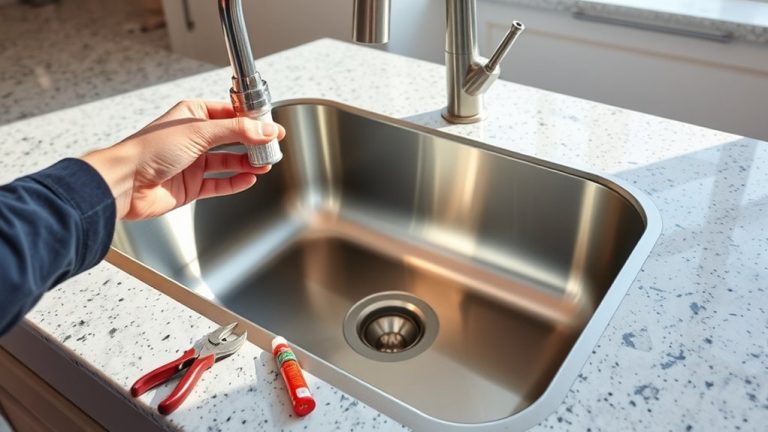
To choose the perfect kitchen sink, first assess your daily needs and style preferences, considering size, functionality, and design harmony.
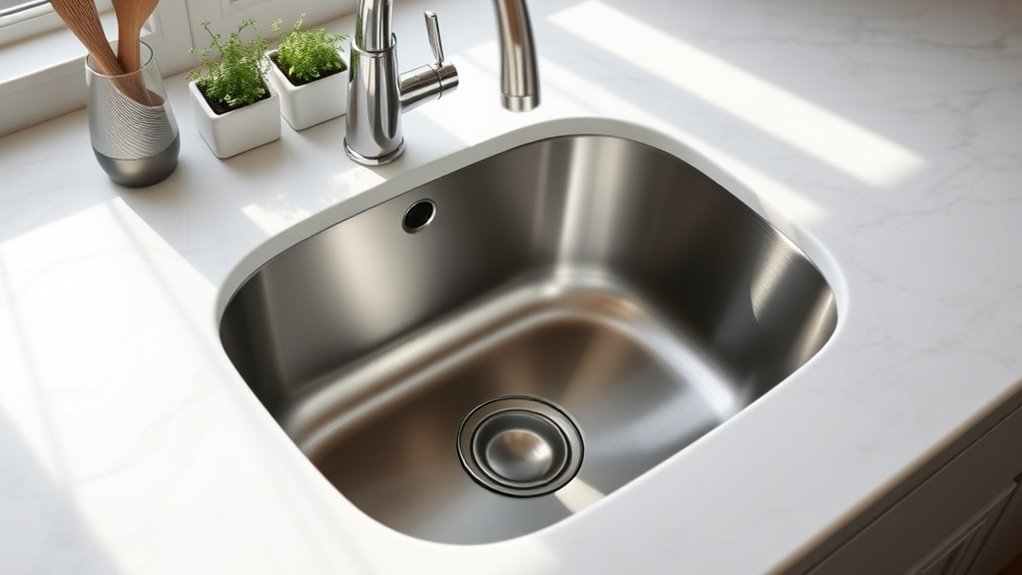
Pick durable materials like stainless steel or composite that resist stains and scratches, guaranteeing long-lasting beauty.
Confirm the sink fits your space and plumbing, and select an installation method that complements your kitchen layout.
Keep maintenance simple with easy-to-clean surfaces and features.
If you keep these tips in mind, you’ll find a sink that suits both your lifestyle and budget seamlessly.
Key Takeaways
- Think about your daily routines and the space you have. This will help you pick the right size, style, and configuration for your kitchen workflow.
- Go for durable, eco-friendly materials like stainless steel, composite granite, or fireclay. They’re long-lasting and easy to keep clean.
- Make sure the sink’s installation type—top-mount, under-mount, or farmhouse—fits well with your cabinetry and plumbing setup.
- Look for features like deep bowls, integrated accessories, and surfaces that are simple to clean. They’ll boost both function and style.
- Set a realistic budget, do some research on quality brands, and choose options that will stay durable and satisfying over time.
Figure Out Your Kitchen Sink Needs and Style
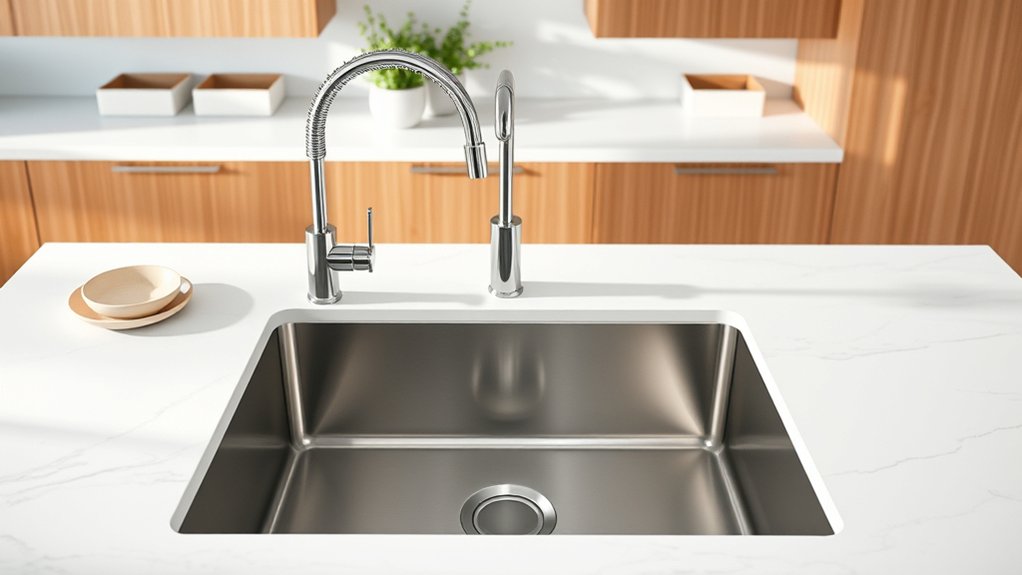
Before choosing a kitchen sink, it’s important to figure out what you need it to do and match it to your overall kitchen style. Think about how you use your sink daily—do you need extra deep bowls for large pots or a double basin for multitasking?
Your style also matters. Sleek, modern kitchens might go for minimalist designs, while farmhouse styles could lean toward vintage looks. When exploring options, consider colors that complement your cabinetry and countertops to create a cohesive look.
Brand reputation is just as important. Choosing reputable brands ensures quality, reliable performance, and good customer service. Well-known brands often offer a variety of styles and colors, making it easier to find a sink that fits both your needs and aesthetic.
Choose Durable Materials That Look Great
Selecting a durable material for your kitchen sink is essential because it guarantees your sink withstands daily wear and tear without losing its appeal. You want a surface that’s tough, yet visually appealing. Consider these options:
Choosing a durable, stylish sink ensures long-lasting beauty and resilience for everyday kitchen use.
- Stainless steel: Known for durability, it’s resistant to stains and heat. Many eco-friendly options are available, making it an environmentally conscious choice.
- Composite granite: Offers strength and a modern look with color customization options. This allows you to match or contrast your kitchen decor easily.
- Fireclay: Combines resilience with a classic aesthetic. Its glossy finish resists scratches and stains, and it comes in various colors to suit your style.
Choosing these materials guarantees longevity and style. By selecting eco-friendly options and considering color customization, you can create a sustainable, personalized kitchen centerpiece that stands up to daily use.
Pick the Right Size and Depth for Your Space
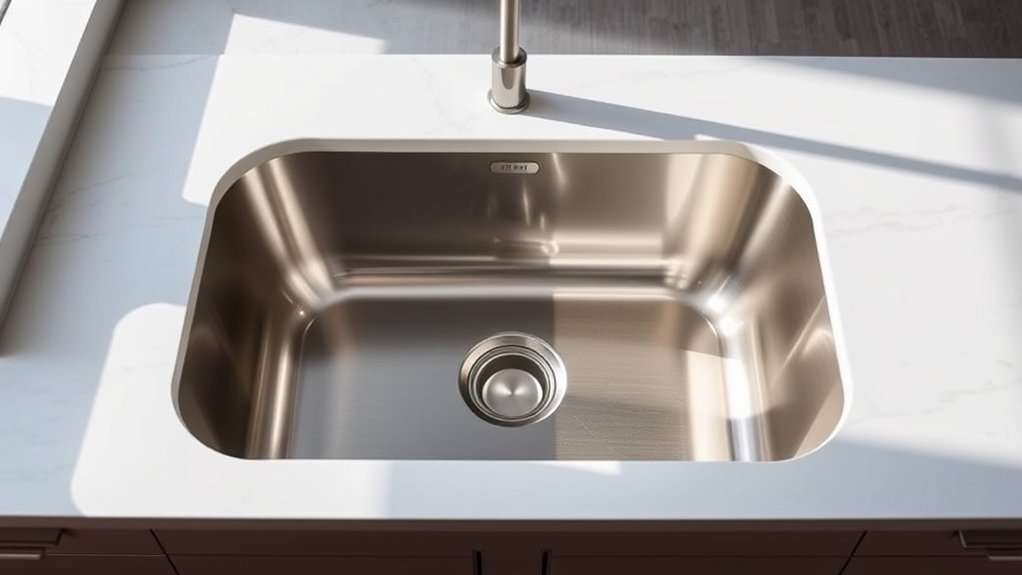
When you’re picking out a sink, it’s all about finding the right size and depth for your space. First things first, grab a tape measure and check out your kitchen area to make sure the sink will fit comfortably. You don’t want it to be too tight or take up too much room.
Think about how you usually use your sink day-to-day. If you’re often washing big pots or a bunch of dishes at once, a deeper basin can make your life a lot easier. But don’t forget to also consider how accessible it is—make sure it’s practical for your needs without making your workspace feel cramped.
Measure Your Kitchen Space
Measuring your kitchen space accurately is key to selecting a sink that fits perfectly and works well. Start by checking out your available counter space to make sure the sink won’t crowd other appliances or workspace.
Next, think about plumbing, including where your existing pipes are located. This can help you avoid costly modifications down the line.
To get it right, measure the width, length, and depth of your current sink area. Also, consider extra counter space around the sink for prep work and drying.
Finally, check the placement of plumbing fixtures to ensure your new sink lines up properly and doesn’t interfere with existing setups.
Consider Usage and Accessibility
Choosing the right size and depth for your kitchen sink depends on how you use your space daily. If you often wash large pots or bakeware, go for a deeper, larger sink that can handle these tasks comfortably.
For a cleaner look, consider sink styles that blend seamlessly with your kitchen’s design. Think about accessibility—if you have mobility concerns or cook often, a lower or more ergonomic sink height can really make a difference.
Picking a size that promotes water efficiency helps cut down on water waste and lowers your utility bills. Remember, a well-chosen sink balances functionality with style to make your kitchen more efficient and attractive.
Prioritize your daily routines to choose a size and depth that truly fit your lifestyle.
Select Installation Options Compatible With Your Kitchen
Evaluating your kitchen’s layout and existing plumbing is key when choosing sink installation options. Your decision should match your kitchen decor and ensure plumbing compatibility.
First, think about whether you want a top-mount, under-mount, or farmhouse style. Each has different installation requirements.
Next, check if your current plumbing can support the new sink without expensive changes. Some sinks need specific drain setups or extra water lines.
Finally, consider how the sink fits with your cabinets and countertop space. Make sure it doesn’t block movement or appliances.
Keep Your Sink Clean and Easy to Maintain
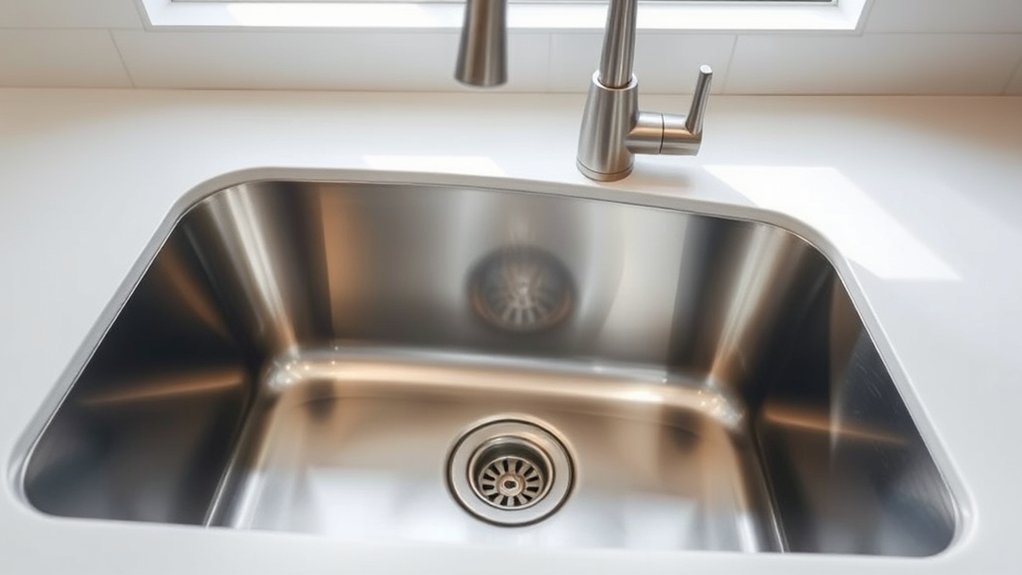
Once you’ve installed your sink properly, keeping it clean becomes much easier. Establishing simple cleaning routines prevents buildup and keeps your sink looking new.
Regularly rinse the sink after use to remove food particles and soap residue. Use a gentle, non-abrasive cleaner or a mixture of baking soda and water to scrub the surface weekly, which helps prevent stains.
Wipe down the sink with a soft cloth to avoid water spots and mineral deposits. To prevent stains, address spills promptly—especially with acidic substances like lemon juice or vinegar.
Avoid harsh chemicals that can damage your sink’s finish. Installing a sink mat or grid can also protect the surface from scratches and stains.
Consistent maintenance not only keeps your sink hygienic but also reduces the effort needed for deep cleaning. With these routines, your sink stays shiny, stain-free, and easy to maintain over time.
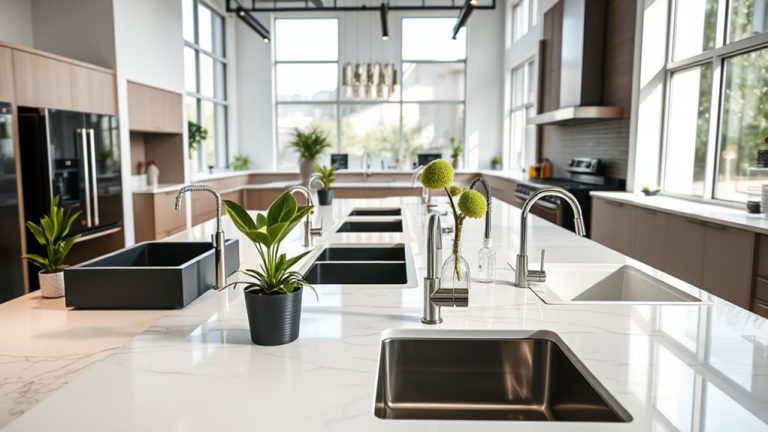
Explore Popular Kitchen Sink Styles and Features
When you’re choosing a kitchen sink, it’s good to think about popular materials like stainless steel, porcelain, or composite. Each has its own look and price point, so you can pick one that fits your style and budget.
As for the shape, you might consider a single or double bowl. Double bowls can be super handy if you need to wash and rinse at the same time, while single bowls give you a more open space. Plus, there are features like built-in drainboards or soundproofing that can make your daily chores a lot easier.
Taking the time to explore these options will help you find a sink that’s both functional and matches the overall vibe of your kitchen.
Popular Material Options
Choosing the right material for your kitchen sink is important because it influences both the style and durability of your space. Popular options include stainless steel, which is durable, affordable, and fits many styles. You might also consider composite granite, known for its eco-friendly options and scratch resistance.
For a sleek, modern look, fireclay sinks offer innovative designs and a glossy finish.
Here are some key options:
- Stainless Steel: Classic, resilient, budget-friendly.
- Composite Granite: Eco-friendly options, durable, noise-reducing.
- Fireclay: Stylish, resistant to staining, easy to clean.
Choose based on your needs, style, and environmental preferences for a perfect fit.
Common Sink Shapes
Kitchen sink shapes come in many styles to match different looks and needs. Common options are rectangular, undermount, and farmhouse styles, each with its own unique appearance and features.
Rectangular sinks are versatile and work well in modern kitchens, while farmhouse models add a rustic charm with their deep basins. Round and oval shapes bring softness and elegance, often pairing beautifully with vintage finishes for a timeless feel.
If you’re eco-conscious, look for options made from sustainable materials—they often come in various shapes too. Vintage finishes pair nicely with rounded or farmhouse shapes, enhancing classic kitchen decor.
Choosing the right shape ensures your sink matches your style and makes your daily tasks easier.
Notable Feature Sets
Exploring popular kitchen sink styles reveals a variety of features designed to improve functionality and aesthetics. Notable feature sets include innovative options like eco-friendly materials, smart sink features, and versatile design elements.
For example, you might consider eco-friendly materials like recycled stainless steel or sustainable composites to reduce environmental impact. Smart sink features such as touchless faucets, built-in soap dispensers, or integrated drainage systems can add convenience.
Design versatility includes options like deep bowls, multi-tiered sinks, or integrated accessories to optimize space and workflow. Choosing a sink with these features guarantees a balance of sustainability, modern technology, and practical design, making your kitchen both functional and stylish.
Match Your Sink to Your Kitchen’s Design and Style
To create a cohesive look in your space, it’s important to pick a sink that matches your overall kitchen design and style. Think about color coordination—choose a sink shade that harmonizes with your cabinets, countertops, and backsplash.
Choose a sink that complements your kitchen’s design and color scheme for a harmonious, polished look.
For a sleek, modern kitchen, stainless steel or matte black sinks work really well. Farmhouse or vintage styles might call for porcelain or farmhouse sinks with softer tones.
Make sure your faucet style and finish match or complement your sink for a unified look. For example, a shiny chrome faucet pairs nicely with stainless steel sinks, while matte black fixtures can enhance dark or matte-finish sinks.
Consider your kitchen’s overall aesthetic, whether it’s minimalist, rustic, or traditional. Select a sink that boosts your design without clashing.
This attention to detail helps your kitchen feel well-coordinated and visually appealing.
Find a Quality Sink That Fits Your Budget
Choosing a sink that fits your budget doesn’t mean sacrificing quality. There are plenty of affordable options that still offer durability and style.
To find the right fit, start by researching brand reputation. Look for brands with good reviews and proven reliability.
Next, set a clear budget range. Know what you’re willing to spend and stick to it.
Finally, compare features and materials. Balance cost with qualities like corrosion resistance and how easy it is to clean.
Questions to Ask Before Buying a Kitchen Sink?
Thinking about buying a new kitchen sink? Before you make your decision, it’s good to ask yourself a few questions. First off, consider the material—how durable is it? You want a sink that will stand up to everyday use and last for years.
Next, think about the size and fit. Will it work well with your countertop? You don’t want something too big or too small that doesn’t sit right. Also, take a look at the installation requirements. Will you be able to set it up easily, or will you need extra help or tools?
Asking these questions can help you find a sink that not only matches your needs but also fits your space perfectly. That way, you’ll enjoy your new kitchen upgrade without any surprises down the line.
Material and Durability
When selecting a kitchen sink, understanding the materials and their durability is essential because these factors directly influence how long your sink will last and how well it will withstand daily use. You should consider:
- The material’s resistance to scratches, stains, and chipping, ensuring it can handle regular use without damage.
- Eco-friendly options, like recycled stainless steel or sustainable composite materials, if caring for the environment is important to you.
- The potential for a custom design, which might affect your choice based on your style preferences and functional needs.
Durable materials such as stainless steel or fireclay offer longevity, while composite options can give you a good mix of strength and style. Choose wisely to make sure your sink stands the test of time.
Size and Fit
Ensuring your kitchen sink fits perfectly means asking the right questions about size and fit. First, measure your countertop space carefully to check *countertop compatibility* and avoid models that are too big or small.
Next, think about the size of your cookware and daily tasks to pick the right bowl dimensions, whether single or double. Consider how it will fit within your cabinetry and nearby appliances, leaving room for movement and other fixtures.
Also, evaluate water efficiency—choosing a size that reduces splashing or overflow can save water and make cleanup easier. Remember, a well-fitting sink not only works better but also looks great, so take your measurements carefully before buying.
This careful planning will help your new sink complement your kitchen perfectly.
Installation Requirements
Are you aware of the specific installation requirements for your new kitchen sink? Knowing these details ensures a smooth setup.
First, check your plumbing connections: Will your existing pipes line up with the sink’s drain and water supply?
Second, evaluate the mounting hardware: Does the sink come with the necessary brackets, clips, or adhesives?
Third, consider the cabinet space—make sure it can support the weight and fit the sink comfortably.
Also, verify if any modifications to your countertop or cabinetry are needed.
Understanding these requirements beforehand helps prevent surprises during installation.
Clear communication with your supplier about mounting hardware compatibility and plumbing connections saves time and effort, making your sink upgrade hassle-free.
Ensure Long-Term Satisfaction With Your Choice
Choosing a kitchen sink is an investment that should serve you well for years to come, so it’s essential to think beyond immediate appearance and cost. To guarantee long-term satisfaction, consider how your sink fits with your kitchen aesthetics and how it can be customized to meet your needs.
Opt for durable materials like stainless steel or composite granite that resist scratches and stains. Think about features that improve functionality, such as deep bowls or multiple basins, which can be tailored through sink customization options.
Also, assess how easy it is to maintain and clean your chosen sink to prevent future frustration. Don’t forget to factor in your lifestyle and usage habits—if you cook often, a larger, more versatile sink might be worth the investment.
Taking these steps helps you select a sink that remains attractive and functional, providing satisfaction long after installation.
Frequently Asked Questions
How Do I Determine the Best Sink Shape for My Kitchen?
To figure out the best sink shape for your kitchen, think about how it looks and how it fits with your overall decor. Consider the space you have available and what tasks you do most often.
A double basin can be really handy for multitasking, while a single basin helps save space. Check out different materials like stainless steel or composite to see which feels more durable and matches your style.
Pick a shape that looks good but also works well with your daily routines, making your kitchen both functional and attractive.
What Are the Most Common Installation Mistakes to Avoid?
Did you know that improper installation accounts for over 30% of kitchen sink issues? To avoid common mistakes, make sure your sink fits your countertop clearance and matches faucet compatibility.
Misaligned or poorly sealed sinks can cause leaks and damage, so double-check measurements before you start. It’s also important to follow the manufacturer’s instructions carefully.
Hiring a professional can help prevent errors, saving you time and money. Plus, it ensures your sink functions perfectly and looks great.
How Often Should I Replace My Kitchen Sink?
You should consider replacing your kitchen sink every 10 to 15 years, depending on how well you clean and the material’s durability. Regular cleaning helps prevent stains and buildup, which can extend its life.
If you notice cracks, chips, or persistent leaks even after cleaning, it’s probably time to replace it. Choosing a durable material like stainless steel or composite can help it last longer and reduce how often you need to swap it out.
Staying on top of maintenance and choosing sturdy materials can keep your kitchen sink functional and stylish for years to come.
Are There Eco-Friendly Sink Options Available?
Yes, eco-friendly sink options are available. You can choose sinks made from recycled materials like reclaimed steel or glass, which helps reduce waste and environmental impact.
Look for sinks with biodegradable finishes that break down naturally. This minimizes harmful residues and is better for the environment.
These choices help you create a sustainable kitchen, reducing your carbon footprint while still being functional and stylish. Eco-conscious sinks are a smart, responsible addition to any environmentally aware home.
What Warranties or Guarantees Should I Look For?
When choosing a kitchen sink, look for warranty coverage that protects against defects and guarantees longevity. A good warranty offers at least 1-5 years of coverage, depending on the material.
Also, check if there’s a satisfaction guarantee so you can feel confident in your purchase. These guarantees give you peace of mind and show that the manufacturer believes in their product.
Having a solid warranty makes your investment more secure and helps you avoid unexpected costs down the line.
Conclusion
Choosing the perfect kitchen sink is like planting a sturdy tree in your garden. It takes thought, the right fit, and care to make it thrive.
When you pick a sink that matches your needs, complements your style, and lasts over time, it becomes the centerpiece of your kitchen.
Trust your instincts, ask the right questions, and you’ll see your kitchen transform into a beautiful, functional space.
And with the right kitchen sink, your kitchen will truly become a place you love for years to come.