Effective Ways to Get Rid of Small Ants Around Your Kitchen Sink
Dealing with small ants around your kitchen sink can be really frustrating. You’re not alone—many people struggle with these tiny pests invading their space. Luckily, there are simple, effective ways to get rid of them and keep your kitchen ant-free.
To get rid of small ants around your kitchen sink, start by identifying their entry points and sealing cracks to block their access. Keep your sink and surrounding areas clean and dry, and fix any leaks to remove water sources they depend on.
Use natural repellents like vinegar or peppermint, or set commercial bait traps to eliminate ants effectively. If you follow these steps, you’ll find more proven strategies that can help keep your kitchen ant-free.
Key Takeaways
- Identify and seal entry points and scent trails so ants can’t get into your kitchen sink area. This helps stop them before they even start.
- Keep the sink and nearby surfaces clean and dry. Removing water and food leftovers makes the area less appealing to ants.
- Store food in airtight containers and fix leaks around the sink. This cuts off their water and food sources.
- Use natural repellents like vinegar, peppermint oil, or cinnamon to keep ants away from the area.
- Place commercial ant baits or traps near entry points for targeted, long-lasting control.
Why Tiny Ants Are Invading Your Kitchen Sink
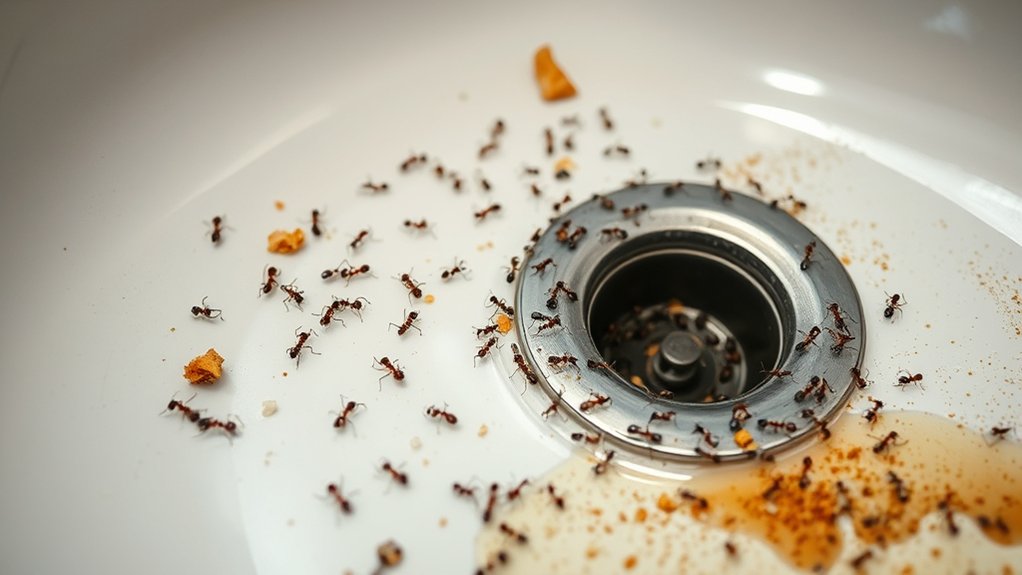
Tiny ants often invade your kitchen sink because it provides a reliable source of water and food. Their behavior is driven by the need to find nourishment and moisture, which their colonies depend on for survival.
These ants usually come from nearby colonies hidden within walls, cabinets, or outdoor areas close to your home. Understanding where they come from helps explain why they’re so persistent. They’re constantly foraging to support their queen and colony members.
Ants originate from hidden colonies nearby, persistently foraging to sustain their queen and colony members.
Small ants are attracted to sweet residues, greasy spills, or tiny crumbs around your sink. These act as their food sources. Their movement patterns are strategic—they follow trails to ensure efficient foraging, often leading back to their hidden nests.
Recognizing this behavior and the colony origins behind their invasion can help you target the source more effectively. This can ultimately help you control and prevent further ant intrusion around your kitchen sink.
How to Find Where the Ants Are Coming From
To effectively eliminate ants from around your kitchen sink, you first need to find where they’re coming from and the main trail they follow. Watching their behavior helps a lot; notice where they gather or move steadily.
Follow their trail carefully, as ants usually leave a scent trail that guides others. Look for tiny cracks, gaps, or holes near plumbing fixtures, baseboards, or under the sink where they can sneak in unnoticed.
Use a flashlight to spot them more easily, especially in dark corners or behind appliances. Pay attention to areas with moisture because ants often follow water sources.
Tracking their movement over a few hours will give you a clear trail map, showing their entry and exit points. Identifying their trail is key to targeting your control efforts effectively.
Once you know where they’re coming from, focus on sealing those entry points and applying targeted ant control measures.
Quick Natural Remedies to Get Rid of Tiny Ants
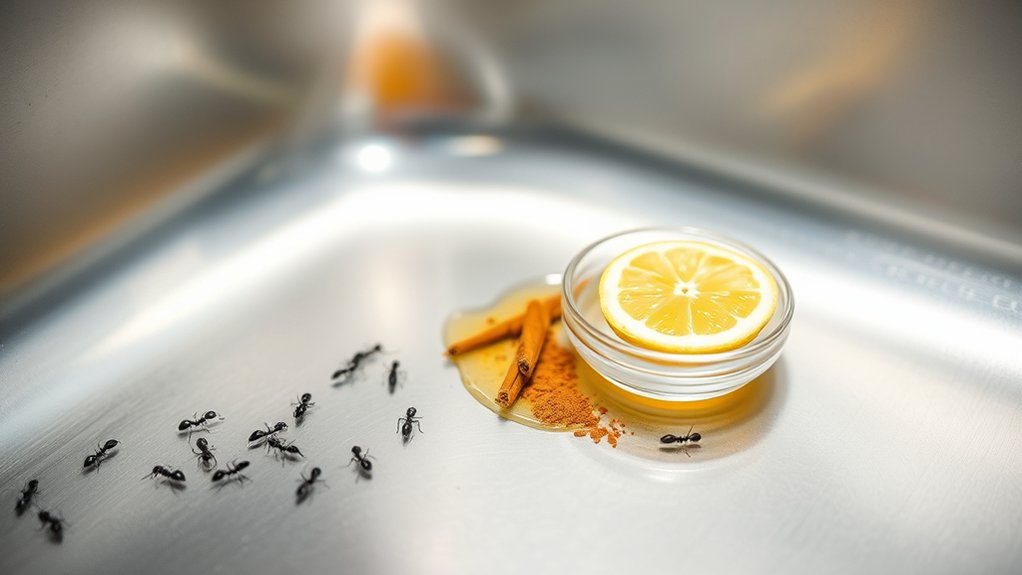
If you’re looking for quick and natural ways to eliminate tiny ants around your kitchen sink, there are several effective remedies you can try without using harsh chemicals. First, identify the ant species, because some natural deterrents work better on certain types.
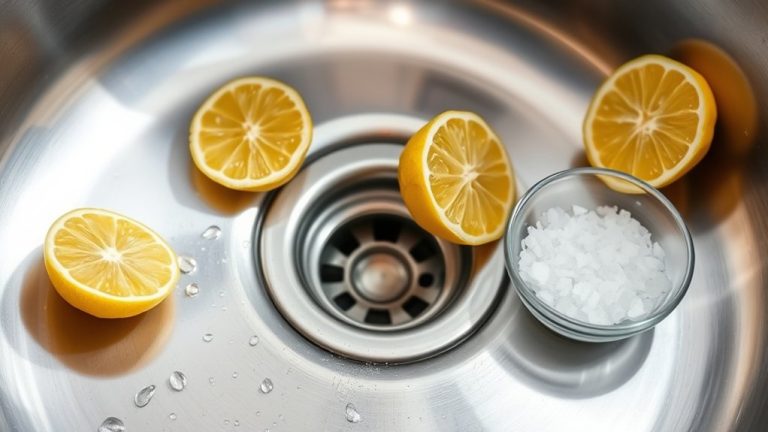
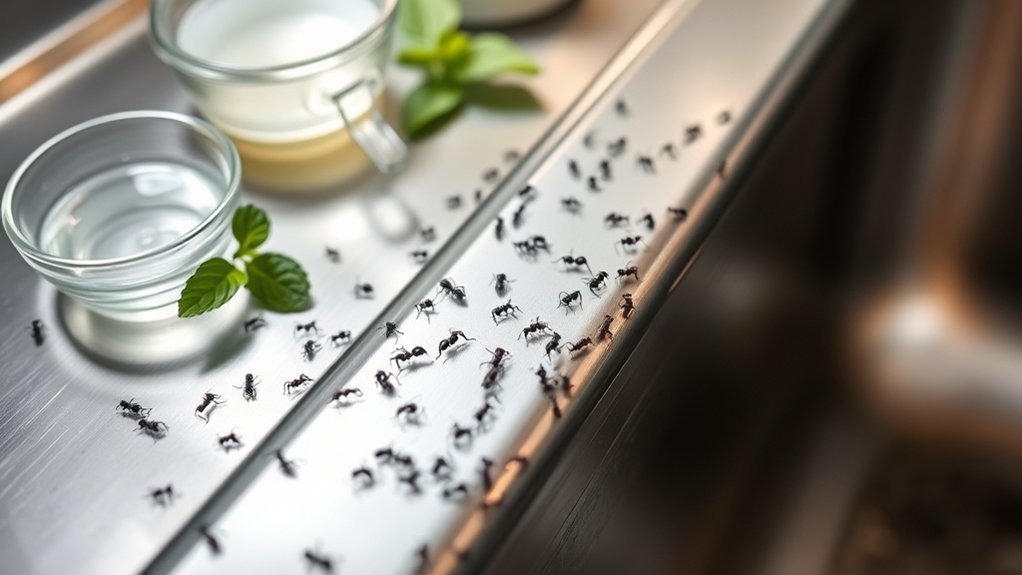
Vinegar solutions are great because they disrupt the scent trails that ants follow, making it harder for them to navigate. You can also create a barrier using cinnamon, peppermint oil, or citrus peels—these natural repellents help keep ants away without toxic chemicals.
Spraying a mixture of water with a few drops of peppermint or tea tree oil directly at entry points can discourage ants from coming inside. Additionally, sealing cracks and crevices around your sink prevents new ants from gaining access.
These quick natural remedies are safe, inexpensive, and effective. When combined with proper cleaning habits, they can help you keep tiny ants at bay without resorting to harmful chemicals.
Best Commercial Baits and Traps for Ant Control
When it comes to controlling ants around your kitchen sink, commercial baits and traps are a handy, targeted solution. They work by taking advantage of ant colony behavior, drawing ants in with bait they carry back to feed the colony. This helps get to the root of the problem.
Here are four top options to consider:
- Gel Baits – Easy to place near entry points and great for targeting foraging ants.
- Station Traps – Sealed containers with attractants that ants can’t escape from.
- Liquid Baits – Effective for reaching deep-seated nests and providing long-lasting control.
- Ant Bait Stations – Pre-filled, pest-repellent stations that attract and kill ants in one step.
Using these commercial products can disrupt ant colony behavior and reduce their numbers. Always follow the instructions on the label for safe and effective use, and consider combining them with pest repellents for extra protection.
How Cleaning Your Sink Can Prevent Ants
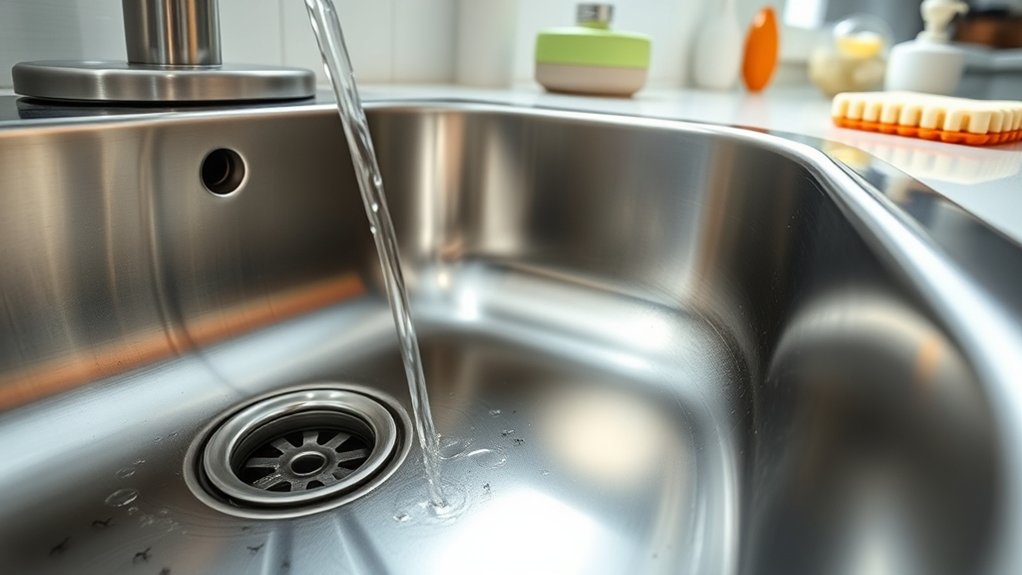
Commercial baits and traps can help cut down on ant numbers, but keeping your sink clean is key to stopping new infestations. Ants are drawn to food residues and moisture, so if your sink isn’t tidy, it becomes a magnet for them.
Keeping your sink clean and dry prevents ants from being attracted to food residues and moisture.
Regularly scrub the sink and nearby surfaces to get rid of food crumbs, grease, and soap scum. Wipe down drains and faucets to remove moisture, which ants seek out as a water source.
Things like standing water, spills, and crumbs make your sink even more attractive to ants. By keeping everything dry and clean, you take away their main attractions.
Consistent cleaning messes with the ants’ ability to find food and water, making your home less inviting for nesting. A clean sink is a simple, effective way to prevent future ant problems.
Sealing Cracks and Gaps to Block Ant Entry Points
Cracks and gaps around your kitchen sink are easy entry points for ants looking for food and moisture. To keep them out, focus on sealing these openings and filling gaps.
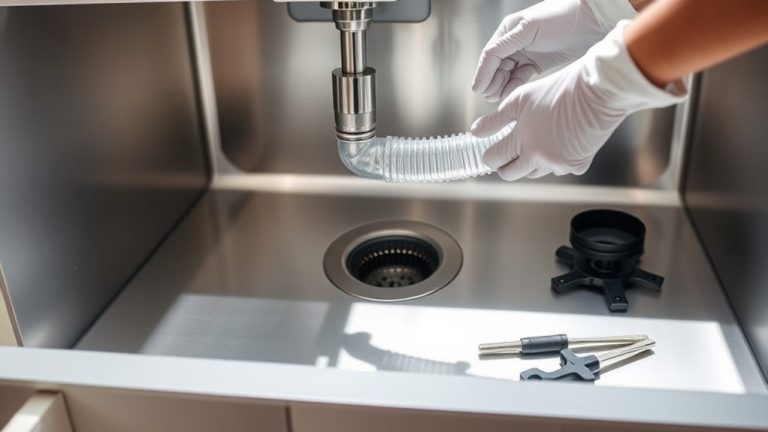
First, find all the visible cracks and gaps. Then, use a good-quality sealant or caulk to fill small cracks and gaps, creating a solid barrier.
Pay special attention to areas around pipes and edges, where ants can slip through easily. Check these spots regularly and reseal any new cracks as soon as you see them.
Sealing these openings stops ants from getting in and also prevents moisture from building up behind walls, which can attract them. Keep your sink area dry and well-maintained to support these efforts.
Filling gaps creates a physical barrier that ants can’t cross, lowering their chances of getting inside. Regular maintenance is key to keeping your kitchen ant-free and protecting your home from future invasions.
How to Block Ant Trails and Keep Them Out
Ant trails serve as pathways that guide ants directly to food sources, making it essential to disrupt these routes to prevent further infestation. Understanding ant behavior helps you identify their trails, which often run along walls, counters, or under appliances.
Ant trails guide them to food; disrupting these routes prevents further infestation and keeps your kitchen ant-free.
To block these trails, start by wiping them away with soapy water or a vinegar solution. This trail disruption confuses the ants, disrupting their navigation and discouraging others from following the same route.
Furthermore, sealing any entry points nearby prevents new trails from forming. Use caulk or weather stripping to close gaps around pipes, counters, or baseboards.
Regularly cleaning surfaces to remove pheromone trails also interrupts their communication. By actively disrupting ant trails, you make your kitchen less attractive and harder for ants to locate food.
This effectively reduces their presence over time. Consistently applying these steps helps keep your kitchen ant-free.
Maintaining a Long-Term Ant-Free Kitchen Environment
Keeping your kitchen free of ants for the long haul really comes down to a few simple habits. Regular cleaning is key—make sure you wipe down counters and sweep the floors often to get rid of crumbs and spills that ants love. It’s those tiny food bits that can attract them, so staying on top of cleaning makes a big difference.
Another thing to keep in mind is sealing up your food properly. Use airtight containers for snacks, grains, and other tempting treats. Also, don’t forget to fix any water leaks or drips, since ants are also drawn to moisture. Addressing these little issues helps prevent ants from finding easy access to food and water.
Regular Kitchen Cleaning
Have you ever wondered how regular cleaning can keep those tiny invaders at bay? Consistently maintaining your kitchen prevents ants from establishing a foothold. Here are four tips:
- Keep your kitchen organized by decluttering countertops and cabinets, leaving no crumbs or spills behind.
- Wipe down all surfaces daily, especially around the sink and pest-prone fixtures, to remove food residues.
- Regularly inspect and clean pest-resistant fixtures, ensuring there are no gaps or leaks that attract ants.
- Mop the floors weekly with a vinegar solution to eliminate scent trails ants follow.
Seal Food Containers
Sealing food containers is a simple way to stop tiny invaders from entering your kitchen. Proper storage keeps ants from accessing crumbs or sugary residues that attract them.
Use airtight containers for everything—cereal, snacks, and leftovers. This helps keep food fresh and prevents ants from finding easy snacks in your cabinets.
When you store food securely, you’re reducing the temptation for ants to forage inside. Check containers regularly for leaks or gaps and reseal if needed.
Focusing on container sealing creates a barrier that blocks ants’ access to food. It makes your kitchen less appealing and helps prevent future infestations.
Consistent food storage habits are key to keeping your kitchen ant-free.
Fix Water Leaks
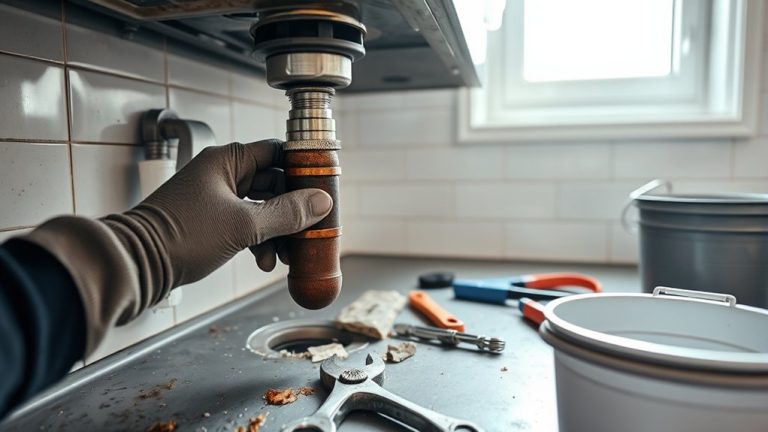
Fixing water leaks around your kitchen sink is a practical way to create an environment that discourages ants from sticking around. Since ants are attracted to moisture, water damage can bring them in and give them a constant water source.
To prevent this, check for leaks regularly and fix them quickly. You can tighten or replace leaking pipes and fittings as needed. Inspect the sink’s seals and caulking for cracks and reapply if necessary.
Fix dripping faucets to get rid of persistent moisture. Also, address water stains or damage on cabinets right away. These steps cut down on water sources that attract ants, making your kitchen less inviting.
Keeping the area dry disrupts their behavior and helps you stay ant-free in the long run.
When to Call Pest Control for Ant Infestations
Sometimes, despite your best efforts, ant problems stick around or get worse. That’s a clear sign it’s time to call in the pros. If you’ve tried cleaning, sealing entry points, and removing food sources but the ants keep coming back, don’t wait too long.
Persistent ant problems after DIY efforts indicate it’s time to call the professionals.
It’s important to identify the ant species because different types need specific treatments. A pest control professional can figure out what kind of ants are invading your home and suggest the best solution.
Make sure you hire a licensed pest control operator. Licensing means they’ve had proper training and follow safe, effective methods. If you notice a big infestation or ants in hard-to-reach spots, it’s time to seek help.
DIY measures that don’t work after a few weeks are a good reason to call in the experts. Pest control pros can quickly assess the situation, eliminate the colony, and prevent future invasions.
When your efforts aren’t enough, trusting licensed professionals is the best way to get your home back to normal and peace of mind.
Tips to Prevent Tiny Ants Around Your Kitchen Sink in the Future
To keep tiny ants from invading your kitchen sink area, you need to adopt proactive habits that eliminate their entry points and remove attractants. Start by understanding ant species identification and their behavior patterns to target your efforts effectively. Recognizing which ants are invading helps you choose the right treatment and prevention methods.
Here are four tips to prevent future infestations:
- Seal cracks and crevices around sinks, pipes, and countertops to block entry points.
- Keep your kitchen clean and dry, especially around the sink, to remove food sources and water attractants.
- Store sweet or greasy foods in airtight containers to prevent attracting ants.
- Regularly inspect for signs of new ant activity and address issues promptly before they spread.
Frequently Asked Questions
Are Tiny Ants Harmful to My Health?
Tiny ants generally aren’t harmful to your health directly, but their presence can pose risks. Their behavior often leads them to contaminated food and surfaces, increasing the chance of bacteria and germs spreading.
While they don’t bite or sting, their trails can carry pathogens, which may cause health issues if ingested. So, even if they seem harmless, it’s wise to eliminate them to keep your kitchen clean and safe.
How Long Does It Take to Eliminate Ant Infestations?
It usually takes a few days to a few weeks to get rid of ant infestations, depending on the ant type and how bad the problem is.
During this time, keep an eye on the ant life cycle and watch for activity to see if things are improving.
Consistent treatment and prevention—like sealing entry points and cleaning up food sources—can help break their life cycle and speed up the process.
Patience and persistence are really important to successfully eliminate ants.
Can DIY Methods Completely Eradicate Tiny Ants?
Imagine you’ve tried natural repellents like vinegar or lemon juice, and household hygiene is spot-on, yet those tiny ants persist. DIY methods can significantly reduce ants, but complete eradication often needs professional help.
While natural repellents can temporarily deter ants, maintaining consistent household hygiene helps prevent new infestations. For some, DIY solutions work quite well, but in stubborn cases, combining them with professional treatments ensures the ants are fully gone.
Do Certain Foods Attract Ants More Than Others?
Certain foods do attract ants more than others because of their food preferences, which influence ant behavior. Sugary items like honey, syrup, and fruit attract ants quickly because they seek out sweet sources.
Protein-rich foods and greasy snacks also draw them in. To prevent infestations, keep these foods sealed tightly and clean up crumbs promptly.
Understanding ant behavior helps you identify what attracts them and reduces their presence around your kitchen sink.
How Often Should I Reapply Ant Prevention Treatments?
You should reapply ant prevention treatments every two to four weeks to keep ants at bay. Even if you don’t see ants, regular treatment ensures ongoing protection, especially if conditions favor ant activity.
Overcoming the idea that one application is enough, consistent reapplication helps maintain a barrier. This frequency prevents new ants from invading and keeps your kitchen sink area clean and ant-free without constant worry.
Conclusion
Now that you know the secrets behind tiny ant invasions, you’re ready to take control. But keep in mind, these little pests are stubborn and clever—they might just find new ways in.
Will your next move be enough to keep them out forever? Stay vigilant, keep up your efforts, and don’t let your kitchen become their new home.
The battle against ants isn’t over yet. The outcome is in your hands. Are you ready to win the fight against small ants around your kitchen sink?