Get Rid of Sewer Smells in Your Kitchen Sink: A Step-by-Step Guide
Dealing with sewer smells in your kitchen sink is a common frustration that many people struggle with. It can make your entire kitchen feel less fresh and even interfere with your daily routines. If you’re tired of battling that unpleasant odor, you’re not alone—and there are simple, effective ways to tackle it.
To get rid of sewer smells in your kitchen sink, start by pouring boiling water down the drain to loosen grime.
Next, mix ½ cup baking soda with 1 cup vinegar and pour it into the drain, letting it fizz for 10-15 minutes before flushing with hot water.
Regularly clean your P-trap and consider using drain covers.
If you want to uncover more effective tips and troubleshooting, keep going for a complete guide.
Key Takeaways
- Pour boiling water weekly to flush out grime and reduce odor buildup in the drain.
- Use a baking soda and vinegar mixture to naturally neutralize sewer gases.
- Regularly clean and inspect the P-trap for debris, mold, or leaks that could be causing odors.
- Make sure your ventilation is proper and check vent pipes for any obstructions to prevent trapped smells.
- If odors stick around after trying these DIY tips, don’t hesitate to schedule a professional inspection.
Quick Fixes to Eliminate Sewer Smells in Your Kitchen Sink

If your kitchen sink smells like sewer, quick fixes can often solve the problem without calling a pro. Start by pouring boiling water down the drain to loosen grime and flush out odors.
Pour boiling water down the drain to loosen grime and eliminate sewer odors quickly.
Next, mix half a cup of baking soda with a cup of vinegar. Pour it into the drain and let it fizz for 10-15 minutes before rinsing with hot water.
Regularly cleaning the drain trap can help prevent future odors. Also, check your kitchen decor—poor ventilation can trap smells and make them worse.
Keep the area dry and well-ventilated to reduce lingering sewer smells. Using a drain cover can trap debris and stop odors from escaping.
These simple steps not only get rid of bad smells but also help keep your kitchen hygienic. With some regular maintenance, you’ll enjoy fresher air and cleaner appliances every day.
What Causes Sewer Odors in Your Kitchen Sink?
Many factors can cause sewer odors to seep into your kitchen sink, even after you’ve tried quick fixes. One common cause is a dried-out P-trap, which prevents sewer gases from escaping into your kitchen. If you haven’t been using your sink often, the water in the trap can evaporate, allowing smells to rise.
Poor appliance maintenance can also lead to buildup of organic debris or mold inside pipes, creating unpleasant odors. Improper plumbing connections or a clogged drain can trap wastewater and cause foul smells to linger.
Your kitchen decor might inadvertently contribute if you have open cabinets or insufficient ventilation, trapping odors nearby. Regularly inspecting and maintaining your plumbing, including clearing out debris and ensuring proper sealing, can help prevent these odors.
How to Use Baking Soda and Vinegar to Neutralize Smells
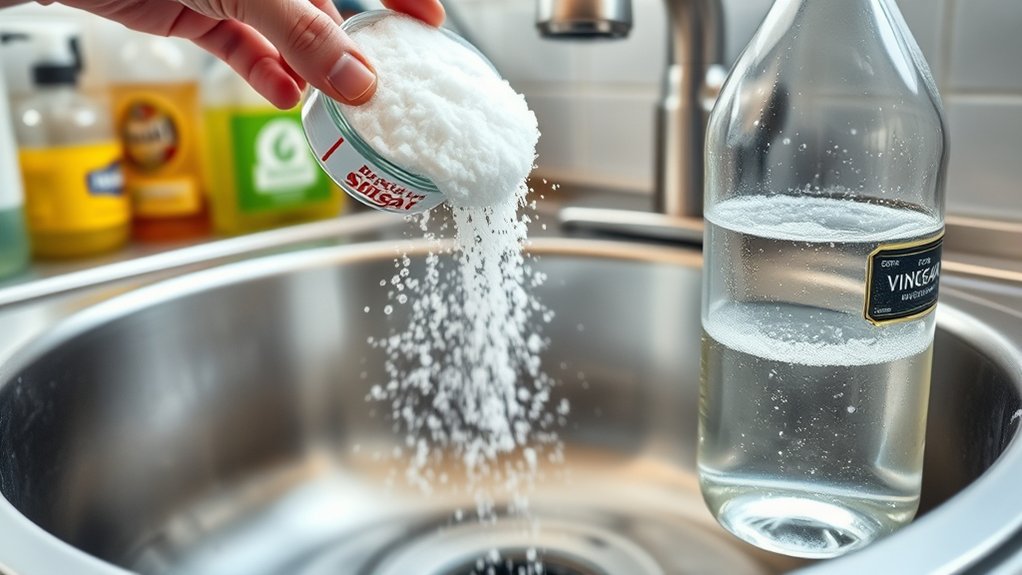
If you’re dealing with a stubborn sewer smell, a simple trick is to use baking soda and vinegar. First, just pour some baking soda directly into your drain, making sure to cover the opening well. It might look like a lot, but it’s okay—it’s all part of the plan!
Next, pour in some vinegar. You’ll notice it fizzing and bubbling—that’s the reaction helping to break down any odors and buildup in your pipes. It’s like giving your drain a little natural scrub from the inside out, leaving everything smelling fresh and clean.
Baking Soda Application Method
Using baking soda and vinegar together creates a natural, effective way to neutralize sewer odors in your kitchen sink.
Start by pouring about half a cup of baking soda directly into the drain. This helps absorb odors because baking soda naturally neutralizes acidic smells.
Follow that by pouring a cup of vinegar into the drain. It activates a fizzing reaction that loosens debris and bacteria causing the odors.
Let the mixture sit for 15 to 30 minutes so the baking soda can fully absorb the odors. After that, flush the drain with hot water to wash away the loosened grime.
This simple method effectively tackles sewer smells and keeps your sink smelling fresh using natural ingredients.
Vinegar Reaction Process
When you pour vinegar into your drain after adding baking soda, a fizzy reaction happens that helps break down and loosen debris, bacteria, and odors. This reaction is caused by vinegar fermentation, which produces carbon dioxide gas, creating the bubbling effect.
The acidity of vinegar reacts with the alkaline baking soda, starting a neutralization process that balances pH levels in your drain. This pH balancing helps eliminate bad smells by breaking down organic material and neutralizing odor-causing compounds.
The fizzing action also agitates the buildup, making it easier to flush away. As a result, your drain becomes cleaner and less likely to have sewer smells. This simple reaction is a natural way to keep your kitchen sink fresh without using harsh chemicals.
How to Clear Clogs and Buildup That Lead to Odors
To keep those nasty odors at bay, the first thing you want to do is clear out any food scraps or debris stuck in the drain. It’s a quick step that makes a big difference.
Then, grab some baking soda and vinegar—these are your best friends for tackling clogs and buildup. Just sprinkle the baking soda into the drain, pour in some vinegar, and let it fizz away. It’s a simple, natural way to keep your sink smelling fresh and running smoothly.
Remove Kitchen Debris
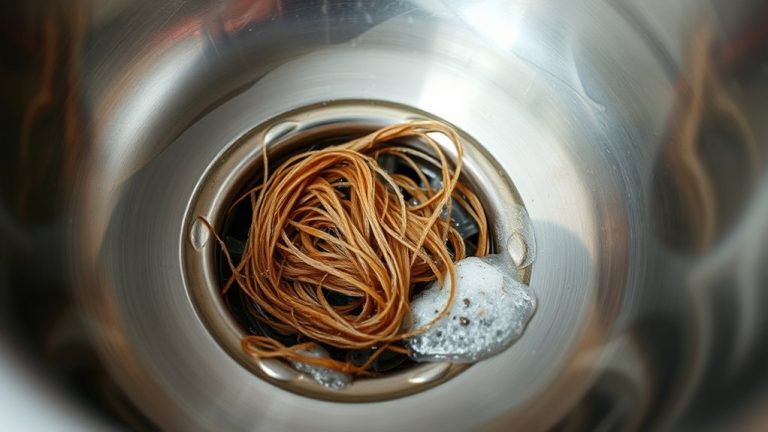
Kitchen debris like food particles, grease, and soap scum can quickly build up in your sink’s trap and pipes, causing stubborn odors. Regularly removing this debris is key to keeping your sink smelling fresh.
Clear out any visible food scraps and wipe down the area around the drain to prevent buildup. When organizing your kitchen decor, consider adding a strainer to catch debris before it slips down the drain.
This simple tip aligns with good cooking practices, helping prevent clogs and odors from forming. Be mindful of what you dispose of, avoiding greasy or starchy items that cling to pipe walls.
Keeping your pipes clear isn’t just about hygiene; it’s also about maintaining a clean, inviting space that supports your daily cooking and kitchen decor.
Use Baking Soda & Vinegar
If you notice persistent odors or slow drainage, a simple mix of baking soda and vinegar can do the trick. It’s great for breaking down clogs and removing buildup that cause bad smells.
Start by pouring about half a cup of baking soda into your garbage disposal or drain. Then add a cup of vinegar, which will fizz and loosen debris.
Let the mixture sit for 15-20 minutes so it can work on breaking down grease and grime. After that, rinse with hot water to flush out any residues.
To keep odors at bay, consider wrapping pipe insulation around the drain pipes. It helps maintain temperature and reduces moisture buildup.
Regular use of baking soda and vinegar keeps your pipes clean, cuts down on smells, and even helps your garbage disposal last longer.
How to Check If Your Kitchen Sink Ventilation Is Working Properly
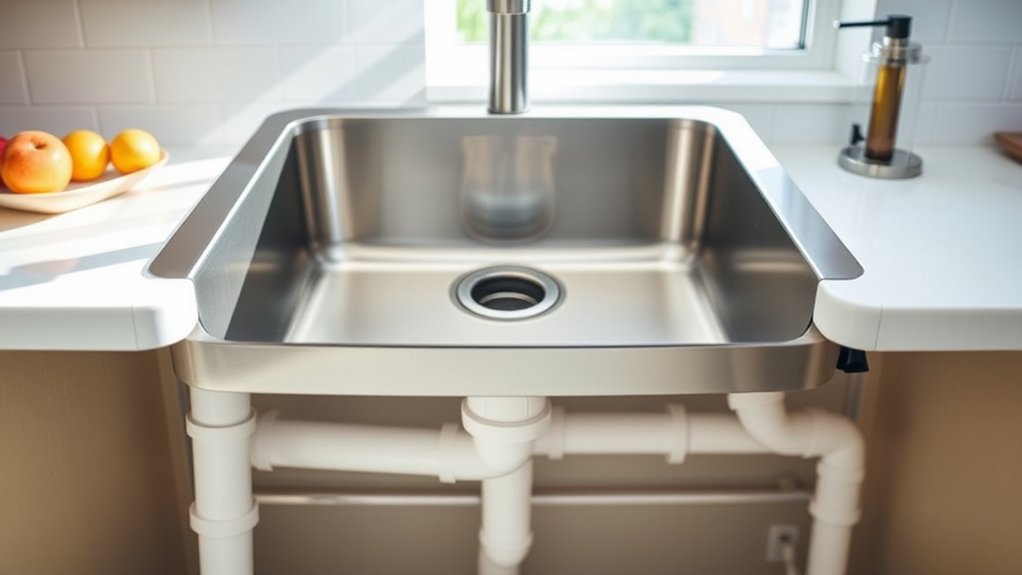
Wondering whether your kitchen sink ventilation is working properly? A blocked or faulty vent can cause sewer smells and slow drainage. To check, focus on these key signs:
- Gurgling sounds: When you drain water, listen for unusual noises. They can indicate vent issues.
- Poor drainage: Water drains slowly, or you notice water levels rising in the sink. These are signs of vent problems.
- Persistent odors: Sewer smells that linger despite using baking soda and vinegar might mean the vent is blocked.
Start by inspecting the vent pipe, usually located on your roof or wall. Make sure it’s clear of debris or obstructions. Also, check if your sink installation includes proper venting. Inadequate venting can cause odors and affect your kitchen décor.
If your vent seems clogged or damaged, consider professional cleaning or repairs. Proper ventilation is essential for eliminating sewer smells and keeping your kitchen fresh.
How to Clean and Maintain Your Drain and P-Trap
Regularly cleaning and maintaining your drain and P-trap is key to preventing clogs and odors. Over time, materials like PVC or metal can collect debris, soap scum, and grease, which cause bad smells.
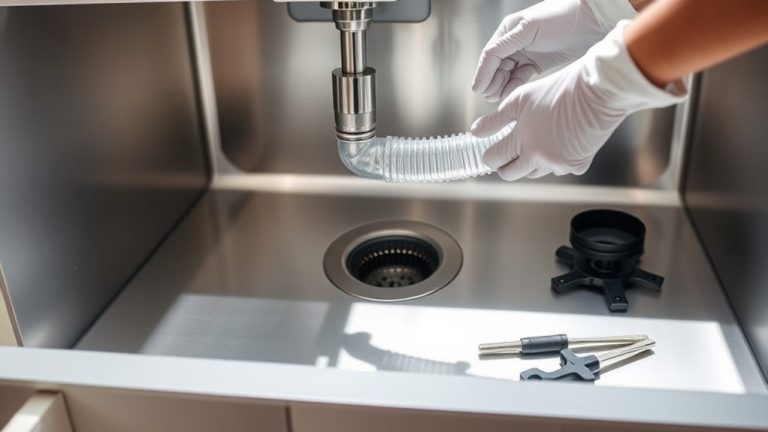
Start by placing a bucket under the P-trap and unscrewing the fittings to remove it. Clear out any buildup and rinse everything thoroughly. While you’re at it, check the pipe insulation around your drain.
Proper insulation helps prevent temperature changes that can cause condensation and mold growth, both of which contribute to odors. Use a brush and a mix of baking soda and vinegar to scrub the P-trap and pipes.
Regular maintenance also means checking for leaks and making sure fittings are tight. With consistent care, you’ll keep your drain clear, prevent bad smells, and ensure your kitchen sink works smoothly.
When and How to Use Commercial Drain Cleaners Safely
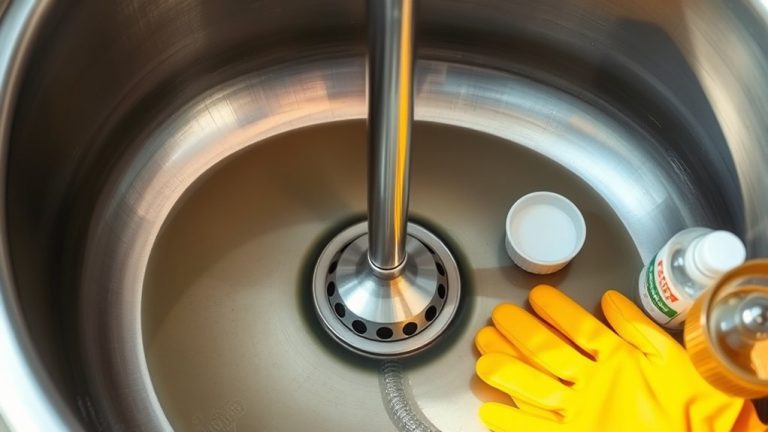
Commercial drain cleaners can be effective for stubborn clogs, but they should only be used when necessary and with caution. Always read the label carefully to understand how to apply them properly, and wear gloves and eye protection to ensure chemical safety. Use these products sparingly, as overuse can damage your pipes and harm the environment.
Use drain cleaners cautiously, follow instructions, and limit use to protect pipes and the environment.
To use drain cleaners safely, follow these steps:
- Assess the clog: If water drains slowly but doesn’t stop completely, try mechanical methods first.
- Follow instructions: Pour the recommended amount, and avoid mixing different chemical cleaners.
- Limit frequency: Use commercial cleaners no more than once every few months to reduce environmental impact and prevent pipe damage.
Prevent Future Sewer Smells With Regular Drain Maintenance
While chemical drain cleaners can clear stubborn clogs, ongoing sewer odors often come from overlooked maintenance. To prevent future smells, set up a regular drain cleaning routine.
Pour boiling water down the drain weekly to flush out buildup. Use a mixture of baking soda and vinegar monthly to break down grease and debris. Keep your sink area tidy, as clutter can trap grime and worsen odors.
Adding fresh, odor-neutralizing elements into your kitchen decor helps too. Herbs or bowls filled with baking soda can naturally absorb smells. Rinsing dishes thoroughly also prevents grease from piling up in your pipes.
Don’t forget to inspect and clean the P-trap under your sink regularly. Removing debris or buildup keeps things flowing smoothly. These simple habits not only keep your drain smelling fresh but also make your kitchen more inviting.
Staying consistent with maintenance saves you from bigger cleaning problems later. Plus, it creates a cleaner, more pleasant cooking space for everyone.
Troubleshooting Persistent Odors That Won’t Go Away
When those stubborn odors just won’t go away, the first thing you want to do is figure out exactly where the smell is coming from. Sometimes, it’s as simple as checking your pipes for any blockages or buildup. And don’t forget to take a look at your ventilation system—making sure it’s working properly can make a big difference. Fixing these issues often does the trick and can finally get rid of those persistent sewer smells for good.
Identify Source of Odors
Persistent sewer smells in your kitchen sink often come from hidden sources that need to be identified. Start with a thorough sewer inspection to check for leaks or cracks that might be releasing odors.
Next, inspect your P-trap and drain for buildup or dried-out seals, which can emit foul smells. Also, think about recent pipe renovations or aging pipes that could be causing leaks or misalignments trapping odors.
These issues are often overlooked but are key sources of persistent smells. Finding the exact cause helps you target repairs effectively, whether it’s resealing a dry trap or scheduling professional pipe work.
Taking these steps will help eliminate stubborn sewer odors and bring freshness back to your kitchen.
Check for Blockages
Blockages in your drain can trap debris and waste, creating the perfect environment for foul odors to linger. Start by inspecting your drain material, like PVC or metal pipes, for any visible clogs or buildup.
If you can’t see the blockage, try removing the trap beneath the sink for a pipe inspection. Look for grime, food particles, or grease that might be causing the smell.
Use a flashlight if needed to get a clear view inside the pipes. Clear out any debris you find, then flush the drain with hot water or a mix of vinegar and baking soda to help dissolve leftover buildup.
Regularly checking for obstructions helps keep your drain clear and odor-free.
Maintain Proper Ventilation
If odors stick around even after clearing blockages, improving ventilation can help get rid of the smell. Better air quality reduces sewer odors and makes it easier to perceive fresh air.
To do this effectively, try these steps:
- Open windows and doors to boost airflow, letting fresh air replace the stale, odor-filled air.
- Use exhaust fans or range hoods during and after cooking to vent odors outside.
- Install an air purifier with a carbon filter to keep the air clean and reduce sewer smell buildup.
These actions help maintain proper ventilation, which is key to controlling persistent sewer odors. Improving air quality makes your kitchen less welcoming to sewer smells and enhances overall odor perception.
When to Call a Plumber for Sewer Odor Problems
Knowing when to call a plumber for sewer odor problems is key to avoiding health risks and costly repairs. If you notice persistent sewer gas smells or if your attempts to get rid of the odor don’t work, it’s time to reach out to a professional.
Warning signs include strong, lingering odors even after cleaning, bubbling drains, or water backups. These often mean there’s a blocked vent or sewer line issue that needs expert diagnosis.
| Situation | Action to Take | Urgency |
|---|---|---|
| Persistent sewer gas smell | Call a plumber right away | High – health risk |
| Bubbling or gurgling drains | Schedule a professional inspection | Medium – potential clog |
| Water backups in sink or tub | Contact a plumber promptly | High – sanitation risk |
| Unusual odors despite cleaning | Consult a plumbing expert | Medium – hidden issues |
| Sudden, strong sewer smell | Seek urgent plumbing help | Critical – safety concern |
If these signs keep happening, getting professional help ensures safe, lasting solutions to sewer odor problems.
Frequently Asked Questions
Can Food Waste Cause Sewer Smells in My Kitchen Sink?
Yes, food waste can cause sewer smells in your kitchen sink. When you toss food into the garbage disposal, it can lead to a buildup of food debris and grease.
This buildup may emit unpleasant odors over time. Foul smells can seep through your drain if the garbage isn’t cleaned regularly.
Cleaning your disposal often and avoiding putting too much food waste down the drain can help keep your sink smelling fresh.
How Often Should I Clean My Kitchen Drain to Prevent Odors?
You should clean your kitchen drain at least once a month to prevent odors. Regular drain cleaning helps remove buildup of food particles, grease, and debris that cause unpleasant smells.
To improve odor prevention, try pouring boiling water or a mix of baking soda and vinegar down your drain weekly. This simple step keeps things fresh and helps prevent bad smells.
Consistent maintenance keeps your drain clear, minimizes odors, and makes sure your kitchen stays fresh and odor-free.
Are There Natural Remedies for Long-Lasting Sewer Smells?
Sure, herbal remedies and essential oils are your friends here. You might think they’ll banish that persistent sewer smell forever, but don’t be fooled—these natural remedies can help mask odors longer than chemical ones.
Try pouring a mixture of tea tree oil or eucalyptus into your drain, or sprinkle baking soda with a few drops of essential oil. They’re eco-friendly, but expect some smells to linger stubbornly.
How Do I Identify a Cracked or Damaged P-Trap?
To identify a cracked or damaged P-trap, start with a careful inspection. Look for visible cracks, leaks, or rust, which can indicate pipe corrosion.
Check for water pooling around the trap or foul odors escaping. These signs often point to a problem with the P-trap’s condition.
If you notice any damage or corrosion, it’s probably time to replace the P-trap. Regular inspections help catch issues early and prevent sewer smells and costly repairs.
Can Sewer Smells Indicate a Larger Plumbing Issue?
Yes, sewer smells can point to a bigger plumbing problem. If you keep noticing those odors, it’s a sign you should check your plumbing. It could be due to damaged seals, vent blockages, or cracked pipes.
These issues can let sewer gases escape into your home, which is not only unpleasant but potentially harmful. Ignoring the smell might lead to bigger, more costly problems down the line.
It’s a good idea to inspect your plumbing system and fix leaks or blockages quickly. Doing so can prevent further damage and keep your home smelling fresh and safe.
Conclusion
With these simple steps, you can banish sewer smells from your kitchen sink and turn your space back into a fresh oasis. Think of your drain as a silent guardian—when it’s clean and clear, it keeps unwanted odors at bay like a fortress. Regular maintenance acts as your shield, ensuring your kitchen stays a sanctuary of cleanliness.
Keep up with these tips, and your sink will stay as welcoming as a sunny morning, free of unwanted scents. A clean and odor-free sink isn’t just nicer to look at; it makes your entire kitchen feel fresher.
By taking care of your drain, you’ll prevent sewer smells from creeping back in. Consistent upkeep keeps your sink smelling great and your kitchen feeling inviting.